Category: Blaze Media
Kamala Harris buys $8.15M seaside mansion after fearmongering about rising sea levels
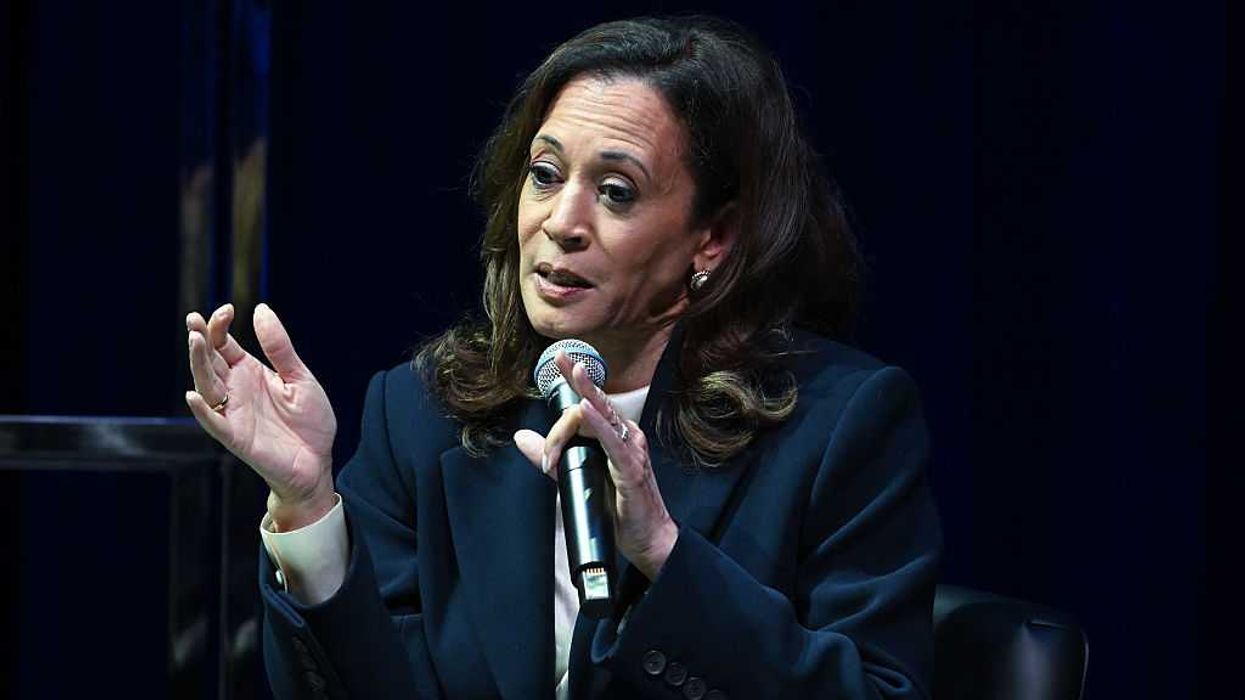
Former Vice President Kamala Harris spent years fearmongering about so-called climate change. Her recent seaside acquisition suggests she may not have been as serious about the supposed threat as she previously let on.
During her first failed presidential campaign where she proposed the U.S. blow $10 trillion on tackling the professed problem, Harris wrote, “Our oceans are warming. Sea levels are rising. Pollution is threatening our air and water. Droughts are hurting our crops. Fires are burning our forests. Extreme weather is destroying our communities. We are poisoning the planet.”
‘To live in a coastal community is to live on the front lines of the climate crisis.’
Harris previously pushed legislation that would annually award $50 million in grants to various entities for the purposes of “carrying out climate-resilient living shoreline projects” and, in her words, “mitigat[ing] against sea level rise.”
When announcing in 2023 that the Biden-Harris administration was recommending $562 million in funding to make communities and the economy more resilient to the alleged climate change, Harris told a crowd at the University of Miami, “To live in a coastal community is to live on the front lines of the climate crisis.”
The Washington Free Beacon highlighted that the Biden-Harris administration also pushed a study the same year that claimed that “24%-75% of California’s beaches may become completely eroded” due to sea-level rises.
Despite Harris’ participation in the rising-sea hysteria that proved fellow Democrat Al Gore a poor prognosticator, she has reportedly purchased an $8.15 million oceanside mansion in Malibu, California.
RELATED: Al Gore wrong again: Study delivers good news for Arctic ice trends, bad news for climate hucksters
 Photo by Roxanne McCann/Getty Images.
A Zillow listing for the 4,000 square foot, four-bedroom home indicates that the property has a pool, a hot tub, a sauna, a cold plunge, a professional gym, a landscaped water feature, a “private putting and chipping green with a bunker,” a guest house, and “breathtaking ocean, island, and city views.”
The property, which sold on Dec. 2, is located in Point Dume, an affluent neighborhood with private, gated beaches. According to the New York Post, the community is populated by Hollywood and Silicon Valley elites.
Harris, who is reportedly contemplating a third White House bid, did not respond to Blaze News’ request for comment.
Fortunately for Harris and contrary to her past claims about rising sea levels, a study published last year in the Journal of Marine Science and Engineering indicated that the average sea level rise in 2020 was roughly 0.059 inches a year, which works out to about 6 inches per century.
One of the paper’s co-authors told the Post in September, “This is significantly lower than the 3 to 4 mm/year often reported by climate scientists in scientific literature and the media.”
Such a rate might explain why Al Gore’s 2006 prediction of a 20-foot rise in the global sea level “in the near future” has yet to manifest.
Like Blaze News? Bypass the censors, sign up for our newsletters, and get stories like this direct to your inbox. Sign up here!
Kamala Harris buys $8.15M seaside mansion after fearmongering about rising sea levels
Former Vice President Kamala Harris spent years fearmongering about so-called climate change. Her recent seaside acquisition suggests she may not have been as serious about the supposed threat as she previously let on.
During her first failed presidential campaign where she proposed the U.S. blow $10 trillion on tackling the professed problem, Harris wrote, “Our oceans are warming. Sea levels are rising. Pollution is threatening our air and water. Droughts are hurting our crops. Fires are burning our forests. Extreme weather is destroying our communities. We are poisoning the planet.”
‘To live in a coastal community is to live on the front lines of the climate crisis.’
Harris previously pushed legislation that would annually award $50 million in grants to various entities for the purposes of “carrying out climate-resilient living shoreline projects” and, in her words, “mitigat[ing] against sea level rise.”
When announcing in 2023 that the Biden-Harris administration was recommending $562 million in funding to make communities and the economy more resilient to the alleged climate change, Harris told a crowd at the University of Miami, “To live in a coastal community is to live on the front lines of the climate crisis.”
The Washington Free Beacon highlighted that the Biden-Harris administration also pushed a study the same year that claimed that “24%-75% of California’s beaches may become completely eroded” due to sea-level rises.
Despite Harris’ participation in the rising-sea hysteria that proved fellow Democrat Al Gore a poor prognosticator, she has reportedly purchased an $8.15 million oceanside mansion in Malibu, California.
RELATED: Al Gore wrong again: Study delivers good news for Arctic ice trends, bad news for climate hucksters
Photo by Roxanne McCann/Getty Images.
A Zillow listing for the 4,000 square foot, four-bedroom home indicates that the property has a pool, a hot tub, a sauna, a cold plunge, a professional gym, a landscaped water feature, a “private putting and chipping green with a bunker,” a guest house, and “breathtaking ocean, island, and city views.”
The property, which sold on Dec. 2, is located in Point Dume, an affluent neighborhood with private, gated beaches. According to the New York Post, the community is populated by Hollywood and Silicon Valley elites.
Harris, who is reportedly contemplating a third White House bid, did not respond to Blaze News’ request for comment.
Fortunately for Harris and contrary to her past claims about rising sea levels, a study published last year in the Journal of Marine Science and Engineering indicated that the average sea level rise in 2020 was roughly 0.059 inches a year, which works out to about 6 inches per century.
One of the paper’s co-authors told the Post in September, “This is significantly lower than the 3 to 4 mm/year often reported by climate scientists in scientific literature and the media.”
Such a rate might explain why Al Gore’s 2006 prediction of a 20-foot rise in the global sea level “in the near future” has yet to manifest.
Like Blaze News? Bypass the censors, sign up for our newsletters, and get stories like this direct to your inbox. Sign up here!
From ‘hands up, don’t shoot’ to ‘drive, baby, drive’

The shooting death of Renee Macklin Good in Minneapolis, Minnesota, has quickly become a rallying point in the broader political battle over immigration enforcement under the Trump administration.
It should also be a lesson for the rest of us to wait for all the facts before making judgments and especially to beware of media narratives that try to simplify complicated events.
When journalists and commentators repeat an unverified transcription as fact, they do more than simplify a complex event. They create a moral narrative that can endanger real people.
Videos of the shooting, which took place on January 7, have been widely circulated, including one taken by Jonathan Ross, the ICE agent who fired the fatal shot. You would think that since the shooting, or the circumstances surrounding it, are on video, it would be easy to determine responsibility for Good’s death.
But instead, we have evidence once again that eyewitnesses — in this case all of us who have watched the videos — cannot be depended upon to get the story straight.
I am talking in particular about the near-universally repeated narrative that Good’s wife, Becca, shouted, “Drive, baby, drive!” in the split second before Good was killed. The phrase appears to have traveled with early write-ups of the Alpha News-distributed agent-perspective video, then hardened into “fact” as larger outlets repeated it. That goes for everyone from right-wing Just the News (“Drive, baby! Drive, drive!”) to left-wing CNN (the more common “Drive, baby, drive!”).
From the time I first read this representation, I began publicly questioning the interpretation by posting comments online. I’ve listened to the audio hundreds of times by now, and there is no way I can hear those words. Instead, I watch Becca Good hear an officer shout, “Get out of the f**king car” at her wife, try the passenger door handle and realize it is locked, and then recognize that Renee is preparing to accelerate. At that point, she screams either “Do not drive!” or more likely “Don’t drive!”
Not only do the words fit the audio pattern better, but they also make more sense as a response to the circumstances. Yet throughout the media, everyone repeats the “drive, baby, drive” narrative without any hesitation. I later heard commentator Megyn Kelly argue that Becca Good should be arrested — even suggesting felony liability — based on the assumption that she urged her wife to flee.
Kelly went so far as to say that Becca Good should be in custody now, but that claim depends entirely on a transcription that may not be accurate. What if the wife never even said, “drive, baby, drive” at all? What if it was all just a media invention?
It’s not like that has never happened before. Do you remember “hands up, don’t shoot”?
That was the media narrative to describe the shooting of Michael Brown by a Ferguson, Missouri, policeman in 2014. The progressive left picked up the battle cry and accused Officer Darren Wilson of killing the teenager while he was in the act of surrender.
It wasn’t true, but it took weeks for the truth to come out — that Brown had approached Wilson in his patrol car and tried to wrestle the officer’s gun away from him. Shooting Brown was the only way for Wilson to protect himself and others. Yet because of the media narrative, Wilson was put in danger of arrest and of worse — as angry mobs in Ferguson sought justice based on a fairy tale.
Now, 12 years later, another shorthand narrative was out of control. Unable to find any outlet that had questioned the transcription as I had, I turned to an AI-based audio analysis tool, ChatGPT, to examine the clip more rigorously than the human ear alone allows.
Using slowed playback and spectrogram analysis, it reported its results. Bottom line (short answer):
- The audio does not support “drive baby drive.”
- It is far more consistent with “don’t drive” (or “do not drive”) spoken urgently.
- I would rate confidence moderate to high, given the recording quality.
Asked why “drive, baby, drive” does not fit the sound signature on the audio, ChatGPT responded:
I isolated the quoted moment from the clearest clip available to me and examined it as a time-frequency spectrogram (a standard way to visualize speech). The widely repeated phrase “drive baby drive” doesn’t match what’s in the recording. The utterance is too short for three words, and the audio lacks the distinct consonant bursts you would expect for “baby” (two clear “b” onsets). The sound pattern is more consistent with a prohibitive command such as “don’t drive” or “do not drive,” delivered urgently.
RELATED: Renee Good had 4 gunshot wounds, including in the head, new report shows
 Photo by Chip Somodevilla/Getty Images
I’m not asking anyone to treat AI as an oracle — only to notice what happens when the slowed audio and the spectrogram don’t match the confident captioning. Perhaps ChatGPT and I are both wrong. But I don’t think so. After repeated playback, I could not hear anything resembling the word “baby.” And if the argument is that the audio portion of the video recording is too ambiguous for a definitive conclusion, then that point should have been made to the hundreds of media outlets that ran with the “drive, baby, drive” narrative — not with me for questioning it.
Deciding whether Officer Ross was justified in shooting Renee Good does not hinge on what Becca Good said in a moment of panic. But public judgment — and calls for criminal punishment — clearly have. When journalists and commentators repeat an unverified transcription as fact, they do more than simplify a complex event. They create a moral narrative that can endanger real people.
If the audio is ambiguous, that ambiguity should have been reported as such from the beginning. If it is not, then the words attributed to Becca Good deserve correction. Even if I’m wrong about the exact words, the larger point stands: If the audio is ambiguous, it should never have been presented as a definitive quote — and certainly not used to justify calls for prosecution.
In cases like this, restraint is not just appropriate. It is the responsibility that journalists owe their readers. And readers should demand the same restraint from those who claim to inform them.
Editor’s note: This article was originally published by RealClearPolitics and made available via RealClearWire.
Sara Gonzales rips new autistic Barbie doll: ‘We need to end DEI in toys’

Mattel released a Barbie doll this past week that has sparked an important discussion about what representation looks like in doll form — and why a pretty girl wearing headphones and a cute outfit might not be representative of a severe autism diagnosis, or why we shouldn’t be celebrating something we can try to understand and prevent.
“President Trump ended DEI in the government, and I was really, really, glad about that, but it appears there was more work to be done. We need to end the DEI in toys,” BlazeTV host Sara Gonzales says on “Sara Gonzales Unfiltered.”
In Mattel’s press release on the new Barbie doll, it writes, “The autistic Barbie doll features elbow and wrist articulation, enabling stimming, hand flapping, and other hand gestures that some members of the autistic community use to process sensory information or express excitement.”
It also writes that her eyes are “shifted slightly to the side, which reflects how some members of the autistic community may avoid direct eye contact.”
“I’m not making fun of people with autism. I actually think it’s terrible. And I’ve done a lot to try to help get us to the place where we can figure out what is causing autism, but we are at this weird place where the left is like, ‘Actually it’s great if people are autistic. Actually I love that my family member’s autistic. I hope we get more autistic people,’” Gonzales comments.
“I want to solve what’s happening to people. I want to solve why so many people are being diagnosed with autism, why so many people can’t make direct eye contact, why so many people need noise-canceling headphones,” she continues.
“It’s absurd. It’s absolutely absurd,” she adds.
Want more from Sara Gonzales?
To enjoy more of Sara’s no-holds-barred takes on news and culture, subscribe to BlazeTV — the largest multi-platform network of voices who love America, defend the Constitution, and live the American dream.
Meet The Judge Who Was Trump’s Biggest Legal Nemesis In His First Year
‘Animus towards the President’
‘Pegged as a pedophile sympathizer’: Pro-LGBTQ founder of Montessori school accused of grooming, exploiting child under 13

The founder and board president of a new K-12 Montessori school in Illinois has been arrested on charges of grooming and exploiting a young child.
On January 9, Effingham police officers moved quickly to arrest 32-year-old Dakota “Kody” Czerwonka of Montrose after receiving a report that a student at Crossroads Montessori School had received “inappropriate electronic messages.” Czerwonka was “immediately identified” as the suspect, Effingham PD said in a statement.
He even unsuccessfully ran for the Illinois House in 2020 on a platform of environmental, economic, social, LGBTQ+, and racial ‘justice.’
Details of the case are scarce, but court records show Czerwonka has been charged with grooming and exploiting a child under 13/exposing self, both Class 4 felonies. He is scheduled to appear in court again on January 29.
Prosecutors also filed to deny Czerwonka pretrial release from custody. At his initial court appearance on Monday, the court agreed with the petition, claiming that Czerwonka poses “a real and present threat to the community and … the minor victim” that “no condition or combination of conditions can mitigate.”
Effingham police confirmed that they “support” his ongoing pretrial detention.
“After reviewing the content of the case after it was reported to our Department, Officers immediately identified a very real safety risk and promptly effected an arrest of the subject, thereby eliminating any further opportunities for this individual to be in contact with other students or children. I’m very pleased with their efforts. They showed dedication to ensuring the safety of our community through these actions,” said a statement from Police Chief Kurt Davis.
The office of an attorney who appeared with Czerwonka in court did not respond to Blaze News’ request for comment.
Czerwonka has a long history of far-left political activism. He even unsuccessfully ran for the Illinois House in 2020 on a platform of environmental, economic, social, LGBTQ+, and racial “justice,” according to an X profile for his independent campaign.
Posts from that account express support for Sen. Bernie Sanders (I-Vt.) and Rep. Alexandria Ocasio-Cortez (D-N.Y.). One post calls to “tear … down” the Electoral College.
Another X account linked to Czerwonka includes sexually charged images as well as LGBTQ+ propaganda. In 2020, Czerwonka even bragged that he had been “pegged as a pedophile sympathizer” on another social media platform for praising “Cuties,” a controversial movie previously available on Netflix that sexualizes young girls.
Crossroads Montessori School just opened last fall. In a July Facebook post, the school gave a short introduction of Czerwonka, describing him as someone who “brings a deep passion for empowering students through authentic Montessori education.”
“Kody has worn many hats.. teacher, nonprofit leader, advocate.. and now leads Crossroads with a vision to build a student-centered learning environment grounded in curiosity, independence, and compassion. Outside the classroom, Kody enjoys hiking, film, kayaking, and learning something new every day,” the post continued.
“He believes education is most powerful when it’s collaborative: not just teaching students, but growing alongside them.”
The school did not respond to Blaze News’ request for comment.
Like Blaze News? Bypass the censors, sign up for our newsletters, and get stories like this direct to your inbox. Sign up here!
Hollywood Stars Put Big Money Behind Climate Activists Who Stormed Congressional Baseball Game, Tax Filings Show

A fund backed by Hollywood stars including Jeremy Strong and Chelsea Handler provided nearly all of the funding for Climate Defiance, the far-left group that carries out illegal demonstrations like storming the field at the Congressional Baseball Game to “defeat” what it calls “fossil fuel fascism,” tax filings reviewed by the Washington Free Beacon show.
The post Hollywood Stars Put Big Money Behind Climate Activists Who Stormed Congressional Baseball Game, Tax Filings Show appeared first on .
From historic dream to living nightmare: A TRUE haunted plantation story

Haunted houses are prime material for horror movies, but is there any truth behind the idea? Can physical spaces really be inhabited by evil spirits?
On this episode of “Strange Encounters,” a podcast on biblical spiritual warfare, BlazeTV host Rick Burgess interviews Eric Davis about his bone-chilling book “Deliverance at Springhill Plantation.”
The book follows the true story of Eric and his wife, Cindy, and their paranormal experiences after purchasing what they thought was the plantation home of their dreams.
After two decades of grinding through a failing marriage, an antebellum-era plantation sitting on 34 acres of rolling green property in Alabama seemed like the perfect place for Eric and Cindy — both history buffs and antique collectors — to reconnect and begin anew. But they were hardly settled before the horrors started unfolding.
One morning shortly after moving in, Eric saw a moving fog — like “dry ice” — traveling from the barn to the old hospital on the property, where the original owner, who was a doctor, used to treat wounded soldiers during the Civil War.
“There was an absolute feeling of absolute evil all over me. I felt the electricity of evil,” he says.
A short while later, Eric saw a physical manifestation of a demon near the same barn. Eric was sitting on the front porch watching his wife go out to feed the cats, when suddenly he saw a man with “long, white hair” dressed in Civil War-era clothing approach her. At first, Eric thought it was an oddball neighbor, but when he made eye contact with the being, it “[disappeared] into a puff of smoke.”
But then things got even darker. One morning while sitting on his couch, Eric was overcome with a sudden and deep hatred for his wife. “I would have loved to seen her dead,” he confesses.
Eric’s animosity toward Cindy was so tangible, the entire family recognized it as demonic oppression. That night, they walked through the home burning sage, anointing doors with oil, and reading aloud from Psalm 91.
“I’m anointing the doors and screaming for [the demons] to get out of my house and get out of our lives,” Eric recounts.
Then Eric walked to the top of the staircase, where there was a “small cubby hole door.”
“I felt a big time pressure behind that door, and I jerked the door open. Naomi [Eric’s daughter] put the sage in. I put my head in there and screamed, ‘Get out of here in the name of Jesus!’ And in the back of my attic was a very, very loud scream. It was like a woman screamed,” he recounts.
“I heard the sounds of barking dogs in the house. … The sage would be lit, and all of a sudden, this cold draft of air would just blow it right out. … It took probably two hours to get the smoke out of my house, but at the end of that night, everything was gone.”
The next several months were uneventful, and Eric’s family settled back into everyday life, believing the demonic activity had been driven out for good.
Then one day, Zoe, the family dog, started randomly whining and growling. “I turn, and out of the wall in my bedroom within six foot of me appears a black figure floating. … It very much looked almost like the Grim Reaper the way it looked. It was dark. It was levitating. It had sleeves. It had a hood. Had no face inside it, no hands, no feet,” Eric tells Rick.
“I screamed, ‘Get out in the name of Jesus!’ … I chased it downstairs and out of the house, and it left.”
At this point, Eric was utterly crushed in spirit by the warfare waged against his family. Having nowhere to turn, he “looked up to the night sky” and cried out, “God, where are you?”
“And suddenly this peace comes on me. I don’t know how to explain it. This peace was on me, and I heard one word,” says Eric.
That word was “church.”
Even though Eric and his family were believers, it had been many years since they’d belonged to a local congregation.
Eric reached out to a local church and told one of the people on staff what was going on inside his home. After Sunday service one day, several members of the church came over and “went to war in [the] house.”
Eric, who was standing outside with his family, says he could “feel [the demons] as they’re leaving.”
One of the women in the church group then shared a word the Lord had given her.
“She said there’s unforgiveness in this house,” says Eric.
“I pointed at Cindy, and Cindy pointed at me, and we released forgiveness toward each other. And when that happened, everything broke.”
“That was the root” that was permitting the darkness to temporarily flee but come roaring right back, Eric explains. “You can rebuke Satan in the name of Jesus all day long, but if you’ve got unrepented unforgiveness in your heart, nothing’s going to change,” he says.
But final deliverance for the Davis’ home wouldn’t come until eight months later after one final demonic siege.
To hear how Eric’s harrowing tale ends, watch the full episode above.
Want more from Rick Burgess?
To enjoy more bold talk and big laughs, subscribe to BlazeTV — the largest multi-platform network of voices who love America, defend the Constitution, and live the American dream.
Judges now veto Trump prosecutors after the Senate stalls confirmations

One of the core executive powers is the authority to prosecute criminals. Article II of the Constitution assigns “the executive power” — all of it — to the president of the United States. In practice, the power to execute the laws against those who have violated them is delegated by the president to the attorney general, the Department of Justice she heads, and the 93 U.S. attorneys spread across the country.
Yet since he took office for the second time last January, President Trump and his attorney general, Pam Bondi, have had a heck of a time getting their people in place.
The criminal prosecution work of the US attorneys’ offices does not abate while Washington plays out its slow-walking games.
Of the roughly 50 U.S. attorney nominations the president has sent to the Senate, fewer than half — just 19 — had been confirmed by December 15, and all of those but three were confirmed en masse in October, some 10 months after Trump took office. Although another 13 were confirmed en masse on December 18, 14 are still awaiting confirmation as we approach the one-year mark of Trump’s second term.
A good bit of the holdup is caused by the Senate’s “blue-slip” process, whereby nominations will not be considered unless both senators from the nominee’s home state return a blue slip allowing the nominee to be considered.
Originally designed to allow input from the elected senators who presumably are most familiar with the nominee’s qualifications and temperament — the “advice” part of the “advice and consent” process mentioned in the Constitution — the refusal to return a blue slip has become an obstructionist tactic deployed by Democratic senators bent on blocking as much of Trump’s agenda as they can.
But the criminal prosecution work of the U.S. attorneys’ offices does not abate while Washington plays out its slow-walking games, and the president of the United States — the nation’s top executive and chief law enforcement officer, who has the constitutional duty to “take care that the laws be faithfully executed” — needs to have people in charge of those offices.
RELATED: The ‘blue-slip block’ is GOP cowardice masquerading as tradition
 Al Drago/Bloomberg via Getty Images
Democratic obstruction
The Constitution’s default rule for the appointment of U.S. attorneys is presidential nomination followed by Senate confirmation. But because U.S. attorneys are “inferior officers” in the Constitution’s language, Congress can allow for appointments by the president alone, by the heads of the executive departments, or by the courts of law. It has done so by allowing the attorney general to appoint “interim” U.S. attorneys for up to 120 days to fill vacancies.
But after the 120-day period expires, the interim can remain in charge of the office only if the district court in that jurisdiction approves. Six of the U.S. attorneys appointed to interim positions have been rejected by their respective district courts: Bill Essayli in the Central District of California, Julianne Murray in the District of Delaware, Sigal Chattah in the District of Nevada, Alina Habba in the District of New Jersey, Ryan Ellison in the District of New Mexico, and John Sarcone in the Northern District of New York. Not surprisingly, five of these district courts are overwhelmingly stacked with Democrat-appointed judges, another outgrowth of the more aggressive “blue-slip” policy that has been deployed by Democratic senators in the last decade.
The Nevada District Court has seven judges, for example, and all seven were appointed by either President Obama or President Biden. It’s the same situation with the Northern District of New York, where all five judges on that court were appointed by Obama or Biden. The New Jersey District Court has 17 judges, and all but two (both George W. Bush appointees, not Trump appointees) were appointed by either Obama or Biden. The Central District of California has 28 judges, and fewer than one-third were appointed by Republicans. And five of the seven federal judges in New Mexico were appointed by Obama or Biden.
Alina Habba, who brought the indictment against Rep. LaMonica McIver (D-N.J.) for interfering with Immigration and Customs Enforcement enforcement operations, was famously disqualified by the District Court in New Jersey after the cumulative 120-day period expired. And Lindsey Halligan — the interim U.S. attorney in the Eastern District of Virginia who obtained the high-profile indictments of former FBI Director James Comey for allegedly lying to Congress and of New York Attorney General Letitia James for allegedly falsely claiming a home in Virginia as her personal residence in order to obtain a more favorable mortgage interest rate — was disqualified by her local district court after the 120-day interim period in that office expired.
The bigger obstacle
The Department of Justice has said it will challenge these disqualifications on appeal. One issue will be whether the 120-day limit on the interim appointment authority is cumulative or successive. That is, if someone is appointed as interim U.S. attorney and then resigns before the expiration of the 120 days, does the attorney general get to appoint a new, different interim to fill the new vacancy for another 120 days, or does the new interim appointee only get to serve until the original 120-day clock expires?
The practice has been the latter, but that leaves the president without someone to exercise his executive authority in charge of the office, as long as the obstruction tactics in the Senate hold. That seems to be a big threat to the president’s ability to take care that the laws be faithfully executed and therefore a big Article II executive authority problem.
An even bigger obstacle for Trump, though one that has not received much attention, is the separation-of-powers problem lurking in this statutory scheme, which requires approval by the district court at the conclusion of the 120-day period.
Yes, the Constitution’s text allows for the appointment of inferior officers by the courts of law, which would technically allow Congress to create a scheme whereby the courts appoint the prosecutors who prosecute cases before them.
There is nothing in the records of sparse debate during the 1787 federal convention to suggest the drafters had such an interbranch appointment authority in mind however. Rather it would seem more likely that they intended inferior executive officers to be appointed by the president alone, or the heads of the executive departments, and inferior judicial officers to be appointed by the courts of law.
RELATED: Ketanji Brown Jackson still can’t define ‘woman,’ yet rewrites sex law
 Photo by Arturo Holmes/Getty Images for ESSENCE
When it upheld the independent prosecutor law in the 1988 case of Morrison v. Olson, which had provided for the appointment by a “Special Division” of the U.S. Court of Appeals for the D.C. Circuit, the Supreme Court rejected that interbranch argument, but it also pointed out that the independent prosecutor statute was designed to allow for investigation and prosecution of high-ranking officials in the executive branch, and the interbranch appointment process therefore avoided the obvious conflicts of interest.
No such conflict exists in the run-of-the-mill appointment (or rejection) by district courts of interim U.S. attorneys at the expiration of the 120-day interim period. The interbranch appointment authority raises serious separation-of-powers concerns, and the Supreme Court has been particularly solicitous of them in recent years. It also raises serious concerns about the president’s ability to take care that the laws be faithfully executed when the people executing them are not the ones he has chosen.
A century ago, in the case of Humphrey’s Executor v. the United States, the Supreme Court upheld congressional restrictions on the ability of the president to remove executive branch officials. But already on the Supreme Court’s docket this term is a case, Trump v. Slaughter, in which most observers rightly predict that it will overrule that old, New Deal-era case and restore a large measure of control of the executive branch to the head of that branch, the president — the only member of the entire executive branch that we the people actually elect.
If the Slaughter case ends up slaughtering the bad constitutional law from Humphrey’s Executor, it does not take much imagination to conclude that the question of judges appointing prosecutors who appear before them — that is, those officials who exercise the core executive function of prosecuting crimes — should also be in for a very serious reconsideration.
Editor’s note: A version of this article appeared originally at the American Mind.
Darwinism is a dead end — and biologists know it
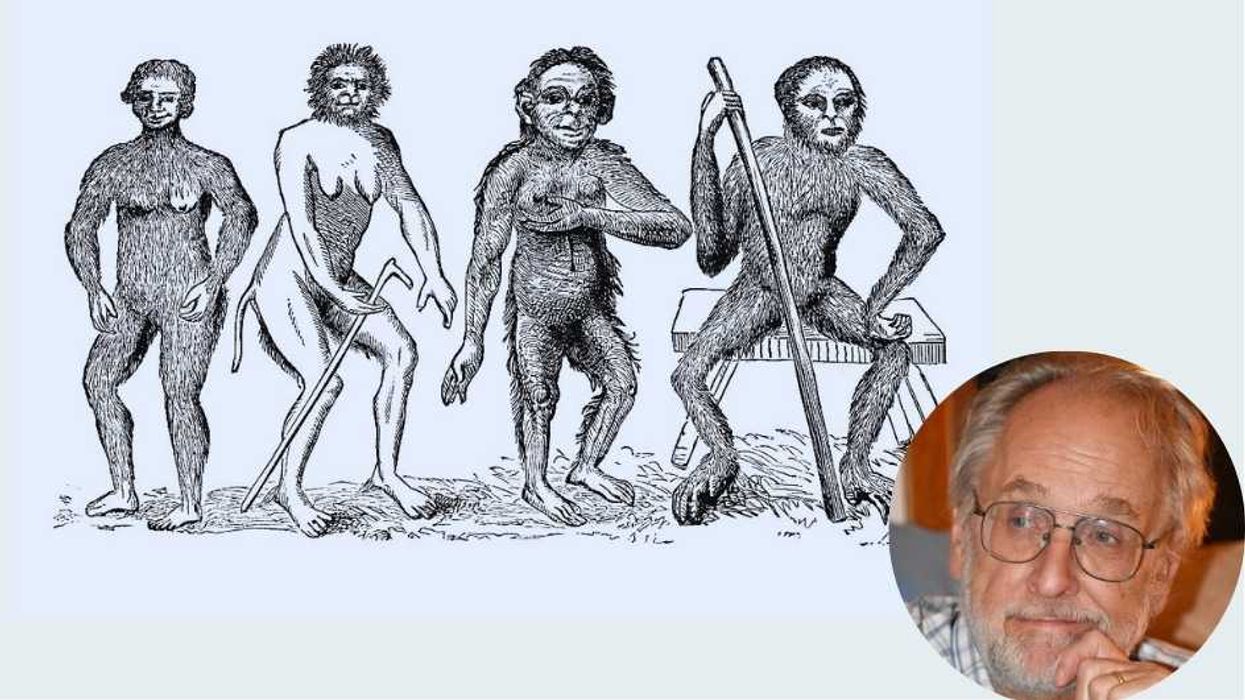
For more than a century, Darwinism has enjoyed a peculiar privilege. It is not merely taught as a scientific theory; it is treated as a final authority. Question it, and you are not mistaken — you are suspect, a heathen guilty of fidelity to first principles.
And yet the deeper one looks, the less sense it makes.
Darwinism is not merely incomplete; it is internally inconsistent. It claims to explain life while excluding what life most plainly displays.
Dr. J. Scott Turner, an American physiologist with decades of serious biological research behind him, is not a Bible-thumping believer or a culture-war activist. He is a scientist who followed the evidence where it led — and discovered that modern Darwinism could not follow him there, a conclusion he shared with me in a recent interview.
‘Marvelous contrivances’
The trouble, Turner explains, began with a quiet but decisive shift. Darwin’s original theory centered on organisms — living, striving creatures with what Darwin himself called “marvelous contrivances.” Modern Darwinism replaced them with something colder. Genes took center stage. Organisms were pushed aside.
Neo-Darwinism, Turner argues, became “a form of gene determinism embedded in a statistical framework that largely shoved organisms off the stage.” What disappeared with them were the qualities that make life recognizably alive: “intentionality, intelligence, and purposefulness.” What passed for progress was, in fact, reduction.
Christians have long sensed this loss, even without the language to name it. They were told that purpose was an illusion, design an accident, and meaning a projection — that life was nothing more than chemistry with better branding. Turner’s work shows what happens when that story is taken seriously.
Termite testimony
His research on termite colonies posed a problem Darwinism could not absorb. The termites were not merely adapting to their environment. They were building it — massive mounds precisely regulated for temperature and humidity, engineered for their own survival. The environment was not selecting them. They were shaping it.
“The old idea that organisms adapt to environments is only half the story,” Turner explains. “Organisms also adapt environments to themselves.” This is not unique to termites. Coral reefs, beaver dams, and human cities all tell the same story. Life has always been an active force, not a passive one.
Once organisms shape the conditions of their own survival, the Darwinian account begins to strain. Selection still operates, but it is no longer blind or passive. It is infused with preference — with direction, with desire.
Darwinism has no language for that.
Faced with obvious design — termite mounds, bird flight, the cantilevered structure of mammalian bones — modern Darwinism retreats into qualifiers. Design becomes “apparent” design. Purpose becomes “as if” purpose. Intelligence is reduced to coincidence wearing a lab coat.
RELATED: Science’s God-denying narrative just got crushed again
 Mongkolchon Akesin/iStock/Getty Images Plus
Darwin vs. design
Turner refuses the dodge. “I couldn’t support the notion of ‘apparent’ design or ‘apparent’ intentionality any more,” he says. “These weren’t illusions. They were fundamental properties of life.”
That refusal has consequences.
Darwinism is not merely incomplete; it is internally inconsistent. It claims to explain life while excluding what life most plainly displays. It demands silence precisely where the evidence speaks.
This is why Turner concludes — without theatrics or bitterness — that Darwinism cannot be true. Not because evolution is false, but because Darwinism lacks the conceptual tools to describe what evolution actually entails.
The hardest line Darwinism draws is at meaning.
Turner is blunt about this. Darwinism’s deepest limitation is not scientific but metaphysical. It operates within what he calls an “epistemic bubble” — a closed system that refuses to admit evidence challenging its assumptions.
That is not how science advances. It is how dogma survives.
An overdue truce
Christians are often told that faith and science are natural enemies. Turner’s work suggests something more unsettling: the conflict was never necessary. It was constructed.
Between militant Darwinism and intelligent-design polemics lies a broad, neglected middle ground — one Turner openly occupies, along with scientists and philosophers like Stuart Kauffman and Terrence Deacon, as well as researchers working on the Extended Evolutionary Synthesis — who accept evolution while rejecting the dogma that purpose and agency are illusions.
Here, intelligence is neither smuggled in from theology nor erased by materialism. It is treated as a real feature of living systems.
This view has ancient roots. Turner describes himself as an Aristotelian — not an atomist, reducing life to particles and chance, nor a Platonist, locating purpose outside the world altogether. Aristotle began with what could be observed: living things striving toward ends. That vision sits comfortably alongside religious belief, which has always held that life is ordered, directed, and intelligible. Turner’s approach simply takes life as it appears — purposeful, directed, alive.
For Christians, this matters.
A world without purpose is corrosive. It erodes responsibility, dignity, and moral meaning. It tells us that desire is a delusion and intention an error — that life is busy, but empty.
Darwinism promised a grand explanation. What it delivered was a grand refusal. And yet faith remains — not as an intrusion, but as a witness to reality.