

Category: Blaze Media
Mamdani housing official decries ‘white middle-class homeowners’ for stalling ‘renter justice’ in resurfaced video
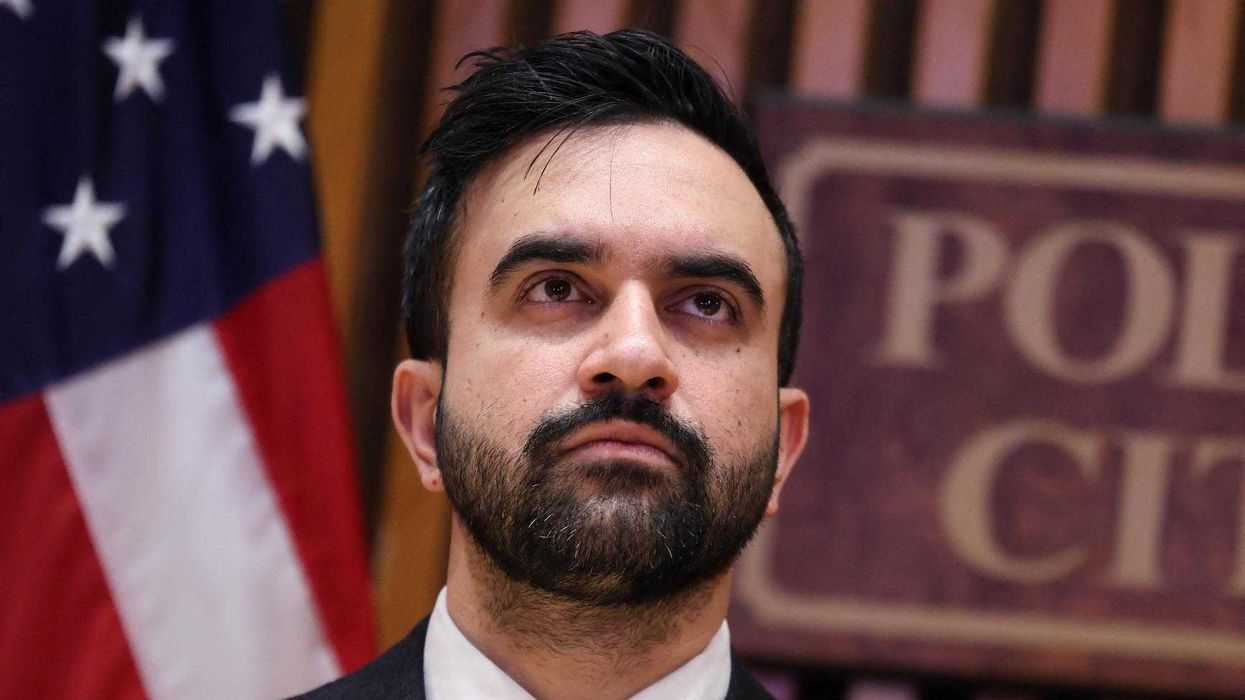
New York City Mayor Zohran Mamdani’s administration got hit with another blow in the form of a resurfaced video of more extremist comments from its top housing official.
Cea Weaver has been previously criticized for her socialist schemes on housing, but the newest video shows her taking aim at “white, middle-class homeowners.”
‘Unless we can undermine the institution of homeownership … it’s a really difficult organizing situation we find ourselves in.’
“I think that United States public policy has done a really, really, really good job of pitting cash-poor homeowners and working-class homeowners and middle-class homeowners against renters, and we need to figure out how to navigate that as organizers,” said Weaver in a video shared by the Free Beacon.
She went on to say that the real threat to “renter justice” was not institutional investors like BlackRock, but rather smaller-scale investors who own numerous housing units.
“It’s just this challenging dynamic,” she continued in the 2021 interview with Briahna Joy Gray. “White, middle-class homeowners are a huge problem for a renter justice movement.
She added, “Unless we can undermine the institution of homeownership and seek to provide stability in other ways, I don’t know — it’s a really difficult organizing situation we find ourselves in.”
Mamdani tapped the socialist housing activist to lead his Office to Protect Tenants, leading many to unearth her previous statements espousing statist schemes to erase private ownership of housing.
“I think the reality is, is that for centuries we’ve really treated property as an individualized good and not a collective good,” Weaver said in one video interview. “And transitioning to treating it as a collective good and towards a model of shared equity will require that we think about it differently. And it will mean that families, especially white families but some [people of color] families who are homeowners as well, are going to have a different relationship to property than the one that we currently have.”
In the latest resurfaced video, Weaver went on to say that massive taxation would be necessary to fund expanded social service programs.
“We need a national movement to pass universal rent control to limit landlords’ ability to endlessly profit on our homes, to give tenants the right to form a tenants’ union where they live, and to really block evictions,” she added. “But rent control is not enough. People need money. We need to tax billionaires and transform that into cash assistance for renters. And we need to chip away at home ownership, and that means — that means Medicare for All, that means, like, a deep investment in real social service programs.”
RELATED: ‘You have to be completely out of your f***ing mind’: Eric Adams rips into Mamdani aide
Even some on the left have recoiled at the extremism from Mamdani’s administration and the comments from Weaver associating homeownership with white supremacy.
“Homeownership is how immigrants, Black, Brown, and working-class New Yorkers built stability and generational wealth despite every obstacle,” said former NYC Mayor Eric Adams, a Democrat, on social media.
“You have to be completely out of your f***ing mind to call that ‘white supremacy,'” he continued. “That level of thinking only comes from extreme privilege and total detachment from reality.”
Like Blaze News? Bypass the censors, sign up for our newsletters, and get stories like this direct to your inbox. Sign up here!
Ariana Grande exposes Hollywood hypocrisy with anti-ICE pin at Golden Globes

In 2017, an Australian-American yoga teacher named Justine Damond called the police because she heard strange noises in the alley behind her house and thought someone was being hurt.
When she called 911, police officers showed up to her house.
One of their names was Mohamed Noor, and he was an immigrant from Somalia. While she was talking to the other police officers, Noor shot through the driver’s open window at Damond and hit her in the chest, killing her immediately.
He was sentenced to only 12 years in prison.
“Now you might not have ever heard that story because there were no riots. There were no protests. Nothing burned down. There was no shouts and insistence upon saying her name or rest in power. Your favorite social justice activist, your racially conscious pastor, didn’t post anything about her,” BlazeTV host Allie Beth Stuckey says on “Relatable.”
“And in fact, in 2021, the Minnesota Supreme Court overturned Noor’s murder conviction due to insufficient evidence, sending the case back to the district court where he would be sentenced instead for the manslaughter conviction,” she continues.
Noor testified that the loud noises made him fear for his life, and that’s why he shot her.
“So he was spooked. He wasn’t approached with a vehicle. This woman wasn’t armed. She came outside in her pajamas,” Stuckey says.
“Now I want you to ask yourself, if this had been an ICE agent who killed a liberal woman, or if this had been a white police officer who killed a black man … Minneapolis would have burned,” she continues.
In comparison, $1.5 million has been raised for Renee Nicole Good — who drove her car at an ICE officer in protest and was shot and killed as a result.
And celebrities like Ariana Grande are wearing pins to the Golden Globes that say “ICE Out.”
“The Golden Globes had a border. Like it had a hedge, and it’s got dogs, and it’s got guards. It’s got armed security officers. Like if I tried to go in there and cause chaos … someone would have been shot for doing that possibly. They at least would have been tackled,” Stuckey comments.
“What do you think Ariana Grande’s house looks like? Do you think her gates are open? Do you think that she has a lock on her door? Do you think that she has bodyguards?” she continues.
“These people believe that they deserve security and that normal Americans who can’t afford to live in gated mansion communities deserve to bear the brunt of it and that innocent moms and dads in Minnesota deserve to be stolen from by Somalian migrants,” she says, adding, “That’s what they believe.”
Want more from Allie Beth Stuckey?
To enjoy more of Allie’s upbeat and in-depth coverage of culture, news, and theology from a Christian, conservative perspective, subscribe to BlazeTV — the largest multi-platform network of voices who love America, defend the Constitution, and live the American dream.
‘We’re hot on their trail’: Trump zeros in on leakers after IT contractor allegedly spills Venezuela secrets to reporter
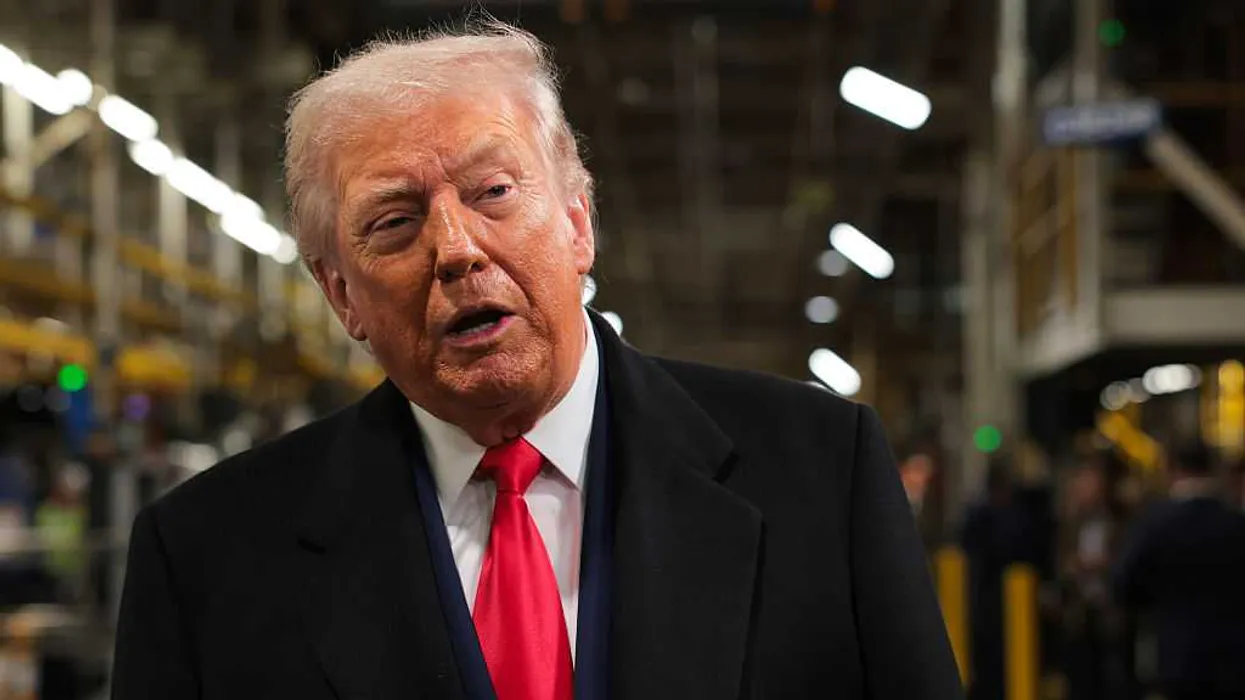
The Trump administration revealed that a government contractor leaked information about the military operation in Venezuela earlier this month.
‘There could be some others, and we’ll let you know about that. We’re hot on their trail.’
The Washington Post reported on Wednesday that the FBI searched the home of one of its reporters, claiming the raid was part of an investigation into Aurelio Perez-Lugones.
Perez-Lugones is a Maryland resident who was working as a systems engineer and information technology specialist for a government contracting company when federal authorities arrested him. He has maintained Top Secret security clearance since at least 2000, according to a January 9 affidavit.
Federal prosecutors accused Perez-Lugones of printing screenshots of a Top Secret report, as well as writing classified information on a notepad and taking the sheets of paper home. When authorities searched his home last week, they allegedly found multiple documents that were marked as Secret, including a document found in his lunch box.
The criminal complaint claimed the documents were related to “national defense.” However it did not specify any details, such as whether the information pertained to the United States’ recent operation in Venezuela.
FBI Director Kash Patel shared a statement on Wednesday about the recent arrest of the leaker and that individual’s ties to the Washington Post.
 Photographer: Graeme Sloan/Bloomberg via Getty Images
“This morning the @FBI and partners executed a search warrant of an individual at the Washington Post who was found to allegedly be obtaining and reporting classified, sensitive military information from a government contractor — endangering our warfighters and compromising America’s national security,” Patel wrote.
During an interview with Fox News, Attorney General Pam Bondi described the leaker as an IT contractor who had been working with the Department of War and allegedly leaked information related to “a foreign adversary.”
“The great men and women of the FBI executed a search warrant at the direction of Kash Patel and my office on the reporter’s home, seizing the devices that contained classified material regarding our foreign adversaries,” Bondi stated.
RELATED: Online sleuths spot numerous signs that a US strike on Iran is imminent
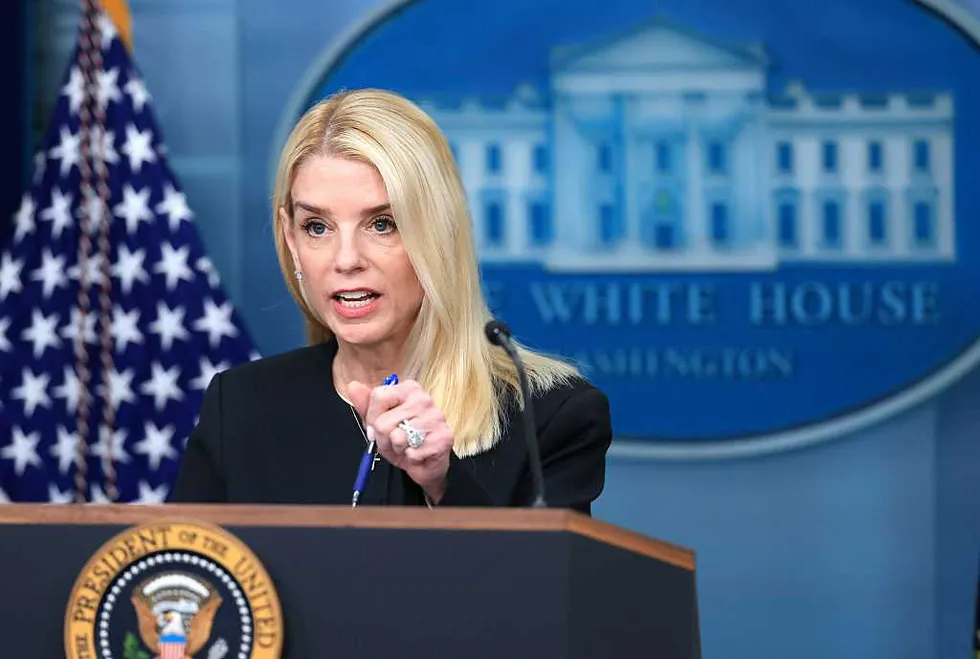 Attorney General Pam Bondi. Photo by Joe Raedle/Getty Images
President Donald Trump also addressed news about the alleged leak, describing the suspect as the “leaker on Venezuela.”
“A very bad leaker. So there could be some others, and we’ll let you know about that. We’re hot on their trail,” Trump told reporters at the White House on Wednesday, adding that the alleged leaker would “probably be in jail for a long time.”
Trump officials have confirmed that the suspected leaker is in custody.
Like Blaze News? Bypass the censors, sign up for our newsletters, and get stories like this direct to your inbox. Sign up here!
Is Zuckerberg’s Metaverse ending? Meta decimates staff, sours on VR.

Mark Zuckerberg’s Metaverse may not be the next big thing after all.
It hasn’t been that long since the Metaverse was the place to be, with celebrities like Snoop Dogg saying he would start a new record label and social media giants the Nelk Boys promising fans exclusive experiences.
Several sources are reporting that Reality Labs, Meta’s division that works on virtual reality headsets, smart glasses, and wristbands, is dumping around 10% of its workforce.
‘About 80% of users are reportedly under the age of 16 years old.’
The New York Times reports this could amount to somewhere around 1,000-1,500 employees and “disproportionately” affect those who work on the Metaverse and virtual-reality-based social media networking. Bloomberg’s report echoed similar numbers and said Meta is cutting back on virtual reality investments. A Meta spokesperson told Return the Bloomberg report is accurate.
CEO Zuckerberg may no longer think his prized avatar world is the future. He reportedly wants money reallocated from VR goggles and the Metaverse toward his wearables division, to push smart glasses and wristband computing.
For example, Meta is famously partnered with Ray-Ban glasses for video recording and AI integration into the user’s point of view.
RELATED: Zuckerberg names ex-White House deputy Meta’s new president — and Trump LOVES it
It is difficult to gauge the active users in the Metaverse. In 2022, the internet was rife with stories of barren online wastelands such as Decentraland and Sandbox’s $1.3 billion disaster that was garnering fewer than 1,000 daily active users.
As Blaze News reported in December, Meta had recently revealed it spent $77 billion on its overall VR strategy that included Meta Quest hardware (headsets) and Meta Horizon, its Metaverse social platform.
“We said last month that we were shifting some of our investment from Metaverse toward wearables,” a Meta spokesperson told Return. “This is part of that effort, and we plan to reinvest the savings to support the growth of wearables this year.”
Current estimates have the active user count for the Metaverse, overall, at somewhere between 400 and 600 million. About 80% of users are reportedly under the age of 16 years old, and half of all users are under 13.
Last year, the company said it had significant growth in sales for its VR headsets and increased payment volume on its platform by 12%. This came with a 10% overall increase in monthly time spent on its media apps, Meta’s VP of Metaverse content, Samantha Ryan, wrote in 2024.
RELATED: Charlie Kirk murder online role play banned from Grand Theft Auto: ‘Tasteless, unacceptable’
Still, Zuckerberg has made it clear that the company is shifting toward its wearable technology and AI, including what it takes to power it.
With plans to build new massive data centers, Zuckerberg has promised to deliver “personal superintelligence,” confirming in recent remarks that the company will continue to “invest in and finance Meta’s AI and infrastructure.”
The company says it will focus on experiences with mobile phones for the Metaverse, instead of VR headsets.
Like Blaze News? Bypass the censors, sign up for our newsletters, and get stories like this direct to your inbox. Sign up here!
Why speed limits don’t make our highways safer

Speed limits are the most ignored law in America. Everyone knows it, everyone does it, and politicians pretend they don’t.
Yet despite near-universal noncompliance, speed limits keep trending upward. That sounds backward — but there’s a reason. And if we want safer, smarter roads, we need to be honest about how limits are set, why they fail, and what would actually fix them.
Speed limits aren’t broken because speed itself is dangerous. They’re broken because the system is disconnected from reality.
This isn’t about reckless driving. It’s about reality. America’s speed policy is built on outdated assumptions, inconsistent enforcement, and political fights that have little to do with safety. Dig into the data and one thing becomes clear: The current system isn’t working.
And no — an American Autobahn isn’t coming anytime soon.
The risk everyone ignores
Speed limits aren’t chosen on a whim. They’re usually based on the 85th percentile rule: Engineers measure how fast drivers already travel, and the speed that 85% stay under becomes the benchmark.
In theory, this reflects real-world behavior. In practice, when most drivers already exceed posted limits, every traffic study pushes numbers higher. It becomes a feedback loop: People speed, limits rise, people keep speeding. The result isn’t safer roads — it’s inconsistency, which is far more dangerous than speed alone.
Safety debates fixate on top speed, but the real danger is speed variability — the difference between how fast vehicles are moving relative to each other.
A road where some drivers do 55 mph and others do 80 mph is dangerous not because of the fastest car, but because of the difference. High variability leads to congestion, abrupt lane changes, tailgating, and road rage. Uniform speeds are far safer. America fails here because limits don’t match behavior, enforcement is sporadic, and real-world speeds vary wildly.
Unsafe at any speed
Some argue we should simply raise limits to match reality. But the data doesn’t support that.
Outdated limits do breed distrust, but raising limits without fixing enforcement, road design, and driver training only widens speed differences. There’s also a political ceiling: Higher limits face resistance that has little to do with safety.
Insurance companies have long resisted higher limits. Greater speeds can mean more severe crashes, higher payouts, and larger claims — so insurers lobby accordingly.
Then there’s Vision Zero and its “safety over speed” movement, which prioritizes lower limits, stricter enforcement, and speed cameras to reduce fatalities. Critics argue it oversimplifies the problem by blaming speed while ignoring poor infrastructure, distracted driving, and inconsistent enforcement. The result is a political stalemate divorced from what actually works.
Why we can’t drive 55 … or 85
The Autobahn always comes up in these debates, and for good reason. It works because everything aligns.
German driver training is rigorous, emphasizing lane discipline and high-speed control. Left lanes are strictly for passing. Roads are engineered for sustained speed. Enforcement is consistent and focused on the right behaviors — tailgating, lane blocking, and distraction.
You can’t copy just one piece of that system and expect the same result.
The national 55 mph limit of the 1970s was widely ignored and eventually repealed. Safety gains were modest and short-lived, while frustration and economic costs were substantial. Arbitrary limits without public trust don’t last.
RELATED: Mandatory speed limiters for all new cars — will American drivers stand for it?
 Vintage Images/Getty Images
Brake check
Do speed limits actually work?
Yes — but only when they align with road design, real driving behavior, consistent enforcement, competent driver training, and low speed variability. Right now, America misses on nearly all counts.
Speed limits aren’t broken because speed itself is dangerous. They’re broken because the system is disconnected from reality. The solution isn’t simply raising or lowering numbers — it’s aligning engineering, enforcement, training, and expectations.
America’s biggest problem isn’t speed. It’s inconsistency. Until that changes, noncompliance will continue — and so will preventable crashes. Smarter speed policy won’t come from politics. It will come from practical engineering, and that would save more lives than any number posted on a roadside sign.
Sara Gonzales mocks Clinton statement in Epstein investigation: ‘You can’t make this up’
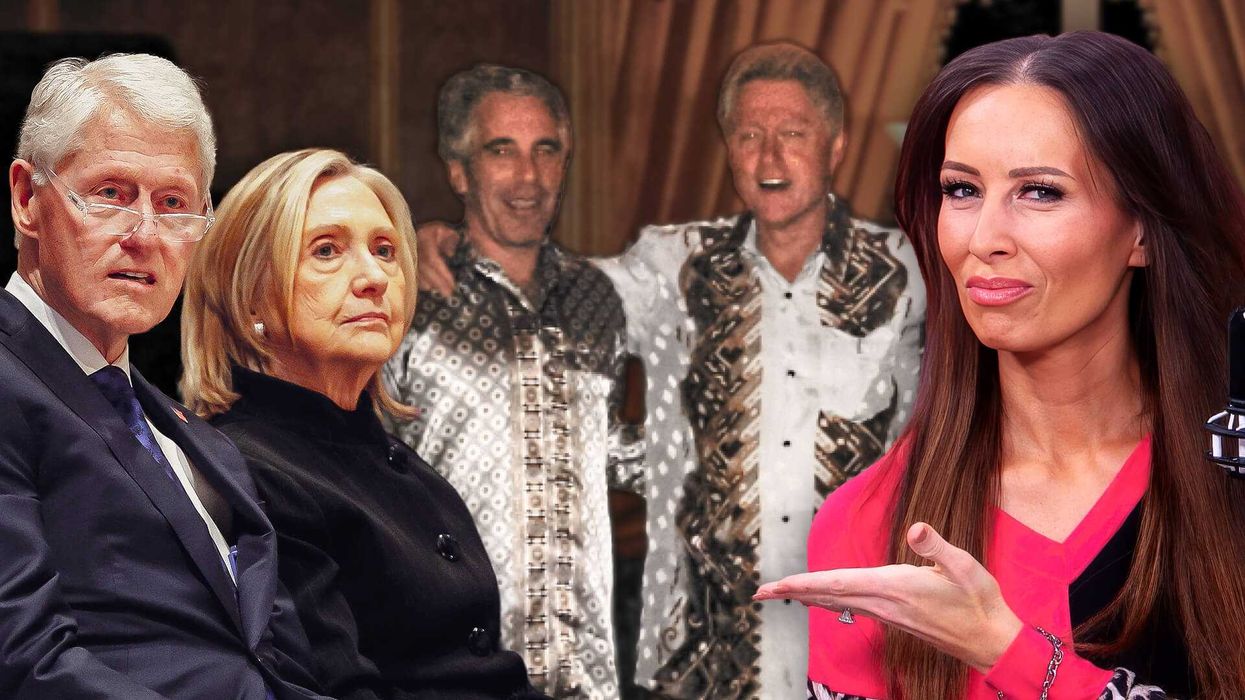
When Hillary Clinton was asked to sit for a sworn deposition on Wednesday morning as a part of the House’s bipartisan probe into Jeffrey Epstein, she refused to appear. Her husband, former President Bill Clinton, also defied a subpoena to appear before the House Oversight Committee.
Now the House Oversight Committee will begin contempt of Congress proceedings.
“Now on the one hand, it’s rather upsetting to see more Democrats use this situation as just another political pawn. But on the other, Donald Trump has the opportunity to do the funniest thing ever and finally make good on one of his biggest campaign promises,” BlazeTV host Sara Gonzales says.
“And now remember, the Democrats said, ‘Oh, it’s the Republicans who don’t want to investigate. It’s the Republicans who don’t want to release the files.’ Actually it’s the Republicans right here who are trying to investigate. The Republicans run the House,” she continues.
“And Bill and Hillary Clinton right there, kind of key figures in this whole thing. They should probably tell us what they know,” she says, adding, “I mean, hey, Democrats, if we’re serious about getting to the bottom of this, we should hear from those two evil ghouls on the screen, shouldn’t we?”
Rep. James Comer (R-Ky.) has announced he will be moving to hold the pair in contempt — but they don’t appear to be willing to go quietly.
“This past year has seen our government engage in unprecedented acts, including against our own citizens. People have been seized by masked federal agents from their homes, their workplaces, and the streets of their communities. Students and scientists with visas permitting them to study and work here have been deported without due process,” a statement from the Clintons began.
“The people who laid siege to the U.S. Capitol have been pardoned and called heroes, agencies vital to the country’s national security have been dismantled,” the statement continued.
Finally after pointing out more grievances they have with the Trump administration, they wrote, “Every person has to decide when they have seen or had enough and are ready to fight for this country, its principles, and its people, no matter the consequences. For us, now is that time.”
“I mean, you just couldn’t make that up if you tried,” Gonzales laughs.
Want more from Sara Gonzales?
To enjoy more of Sara’s no-holds-barred takes on news and culture, subscribe to BlazeTV — the largest multi-platform network of voices who love America, defend the Constitution, and live the American dream.
Minneapolis chaos escalates: Federal prison guards in riot gear block hateful mob after another ICE shooting
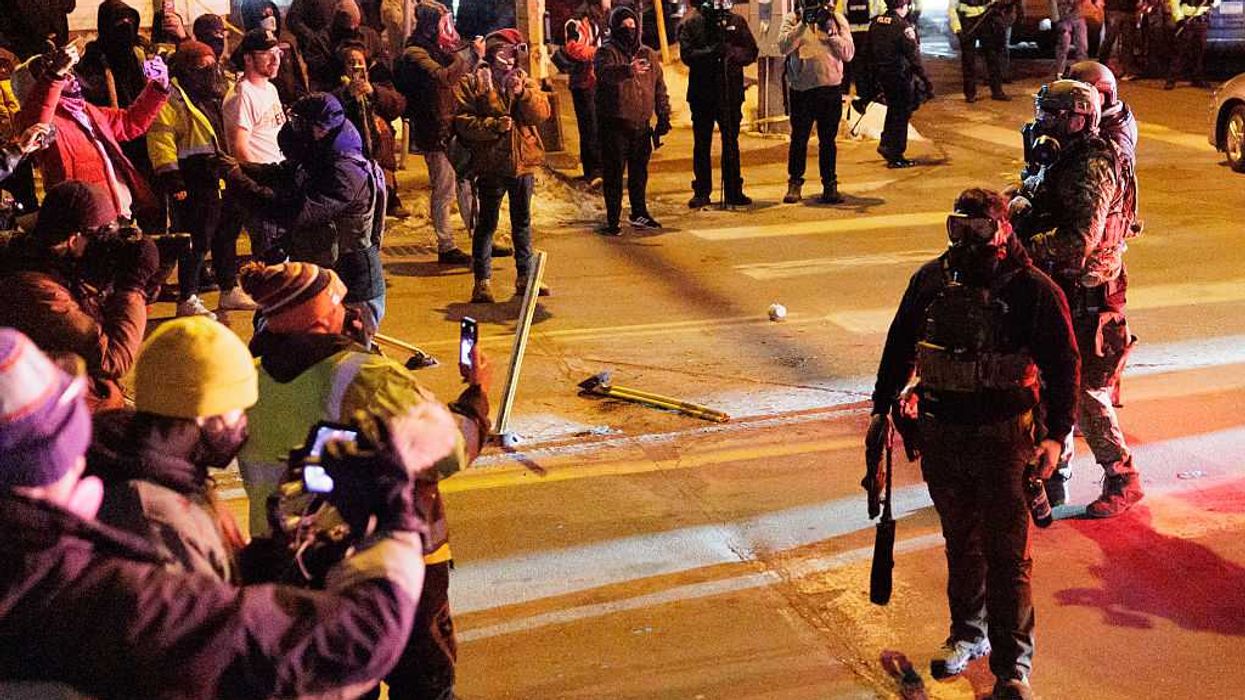
Tensions are rising rapidly in Minneapolis, Minnesota, after yet another ICE-involved shooting.
On Wednesday night, video footage from journalist Nick Sortor went viral, showing one of the latest developments in the conflict.
‘This federal response is growing every day. Send in the MARINES next!’
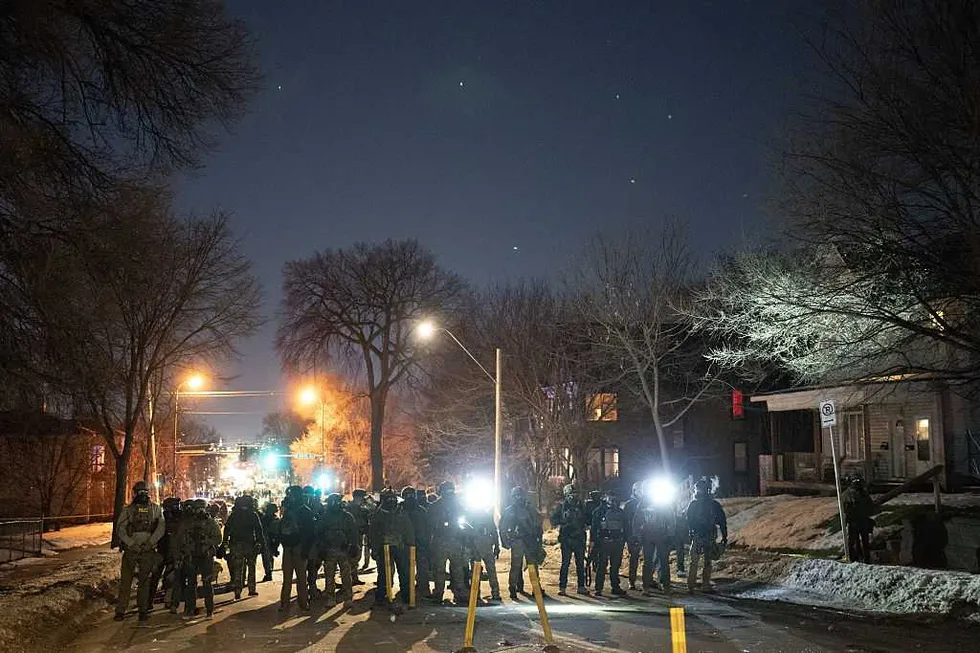
The video shows federal officers with identification indicating that they are from the Bureau of Prisons, a major development in the federal government’s efforts to control the situation. The prison guards are wearing riot gear and blockading a street to keep a rowdy crowd of rioters from the DHS agents behind them.
Other videos from the area appear to show rioters breaking into police vehicles and stealing police equipment. Some also reportedly threw rocks, ice, and incendiary devices at officers.
 Photographer: Victor J. Blue/Bloomberg via Getty Images
“This federal response is growing every day. Send in the MARINES next!” Sortor captioned the BOP video, in part.
Sortor attributed this development to Attorney General Pam Bondi. Blaze News has reached out to the DOJ for comment.
At the end, the video pans around to show a view of dozens of protesters near the line of guards.
One rioter can be heard shouting, “Why the f**k are you here?” and “What more do you f**king want?” before some in the crowd begin chanting, “They’re not qualified!” at the guards.
The video was posted just hours after an ICE agent was “ambushed by three individuals” and was forced to fire a defensive shot at an illegal Venezuelan alien during an attempted arrest, DHS claimed.
The alien suffered a non-life-threatening gunshot wound to the leg and was taken to the hospital, as was the ICE officer.
Trump threatened to invoke the Insurrection Act on Thursday morning given the rising tensions between law enforcement and the increasingly violent rioters.
Like Blaze News? Bypass the censors, sign up for our newsletters, and get stories like this direct to your inbox. Sign up here!
Senators Urge DOJ To Probe ISIS-Linked Somali ‘Nonprofit’ After Omar Tried To Earmark $1M For It
 Notably, Generation Hope MN founder Abdirahman Warsame’s older brother, Abdirizak Mohamed Warsame, was arrested in 2015 for alleged preparing to move to Syria to join ISIS, a terrorist organization.
Americans aren’t arguing any more — we’re speaking different languages
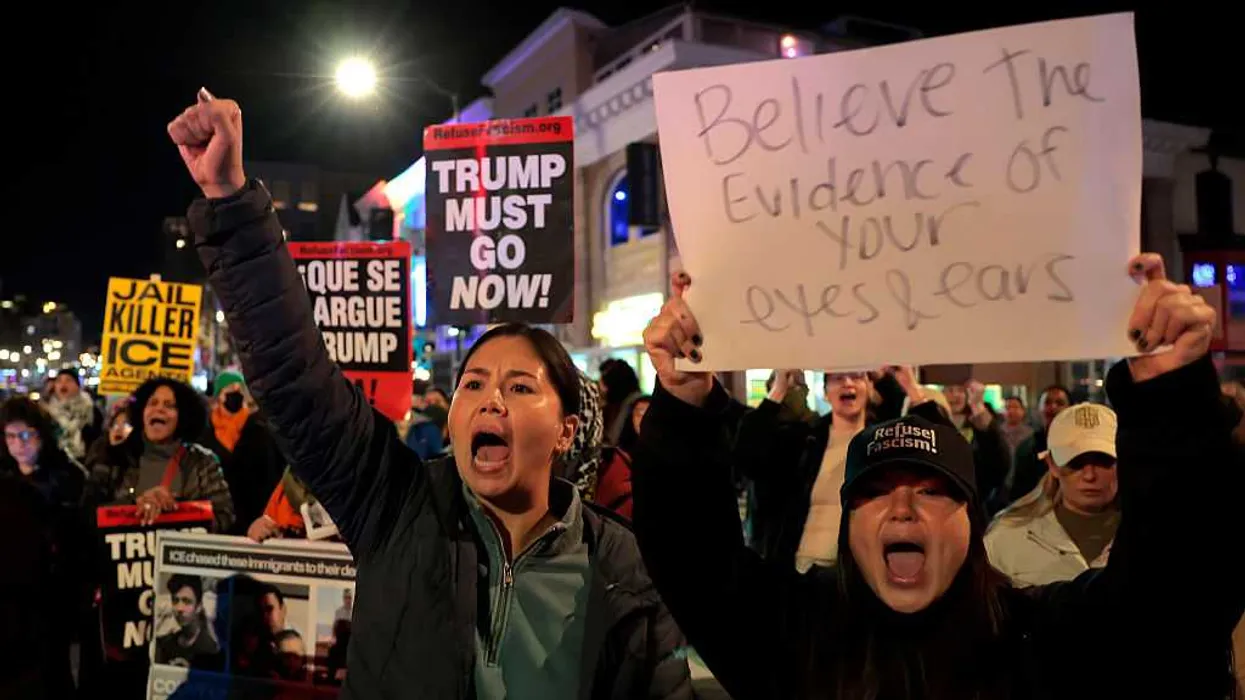
A few days ago, I found myself in a text exchange about two women killed by agents of the state.
One was Renée Nicole Good, a 37-year-old activist mother shot last week by an ICE agent in Minneapolis. The other was Ashli Babbitt, a 36-year-old U.S. Air Force veteran shot by a Capitol Police lieutenant inside the Speaker’s Lobby on January 6, 2021.
Are words being used to think — or to show whose side someone is on?
I asked what I thought was a simple moral question: Does the state ever have the moral right to kill an unarmed person who poses no immediate lethal threat?
I did not try to provoke. I did not claim the cases were the same. I said plainly that the facts, motives, and political contexts differed. My own answer was no. The purpose was not to merge the stories, but to test whether the same moral rule applied in both cases.
I was asking my friend to reason with me.
The response was not an argument. It came as a rush of narrative detail, moral verdicts, and firm insistence that the question itself was illegitimate. “Not comparable.” “Straw man.” The stories did not clarify the rule. They aimed to shut down the conversation.
But what struck me most was not the emotion. It was the disconnect.
I asked about a principle. I received a story. I tested a rule. I got a verdict. We used the same words — justice, murder, authority — but those words did very different work.
The exchange failed not because of tone or ideology. It failed because we spoke different civic languages. More troubling, we no longer agree on what civic language is for.
More than a failure of civility
For years, we have blamed polarization and tribalism. We shout past one another. We retreat into bubbles. All of that is true. But the deeper problem runs deeper than disagreement.
We no longer share a civic vocabulary shaped by common expectations about clarity, restraint, and universality.
We still speak words that are recognizably English. But we use the same words to reach very different ends.
One civic language treats words as tools for reasoning. Call it “principled” or “rule-based.” Questions test limits and consistency. Moral claims aim at rules that apply beyond one case. Disagreement is normal. When someone asks, “What rule applies here?” the question is not an attack. It is the point.
This language shapes law, constitutional argument, philosophy, and journalism at its best. Words like “justified” or “legitimate” refer to standards that others can test and challenge. If a claim fails under scrutiny, it loses force.
The other civic language works differently. Call it “narrative” or “moral-emergency” language. Here, words signal alignment more than reasoning. Stories carry moral weight on their own. Urgency overrides abstraction. Questions feel like invalidation. Consistency tests sound like hostility.
RELATED: The day the media taught me it’s always wrong to be right
 treety via iStock/Getty Images
In this mode, terms drift. “Murder” no longer means unlawful killing. It means moral outrage. “Straw man” stops meaning logical distortion and starts meaning emotional offense. “Not comparable” does not mean analytically distinct. It means do not apply your framework here.
Neither language is dishonest. That is the danger. Each serves a different purpose. The breakdown comes when speakers assume they are having the same kind of conversation.
The principled speaker hears evasion: “You didn’t answer my question.” The moral-emergency speaker hears bad faith: “You don’t care.”
Both walk away convinced the other is unreasonable.
Moral certainty over moral reasoning
Social media did not create this divide, but it rewards one language and punishes the other. Platforms favor speed over reflection, story over rule, accusation over inquiry. Moral certainty spreads faster than moral reasoning. Over time, abstraction starts to feel cruel and questions feel aggressive.
That is why so many political arguments stall at the same point. Facts do not resolve them because facts are not the dispute. The real question is whether rule-testing is even allowed. Once someone frames an issue as a moral emergency, universality itself looks suspect.
A simple test helps. Is this person using words to reason toward a general rule, or to signal moral alignment in a crisis?
Put more simply: Are words being used to think — or to show whose side someone is on?
RELATED: I don’t need your civil war
 Photo by Tom Williams/CQ-Roll Call Inc. via Getty Images
Once you see this, many conversations make sense. You understand why certain questions trigger anger. You see why consistency tests go unanswered. You recognize when dialogue cannot move forward, no matter how careful you sound.
This does not mean outrage is always wrong. It does not mean people should stop caring. It does mean we need better civic literacy about how language works. Sometimes restraint is a virtue. Walking away is not cowardice. Declining to argue is not surrender.
What cannot work is trying to make a principled argument within a moral-emergency frame.
America’s founders understood this. They designed institutions to slow decisions, force deliberation, and channel arguments into forms governed by rules rather than passion.
If we fail to see that we now speak different civic languages, we will lose the ability to talk calmly about the ideas and ideals that should bind us together. The alternative is full adoption of moral-emergency language — where persuasion gives way to force.
Too many Americans have already chosen that path.
Trump threatens Insurrection Act after ambushed ICE agent shoots illegal alien: ‘Put an end to the travesty’
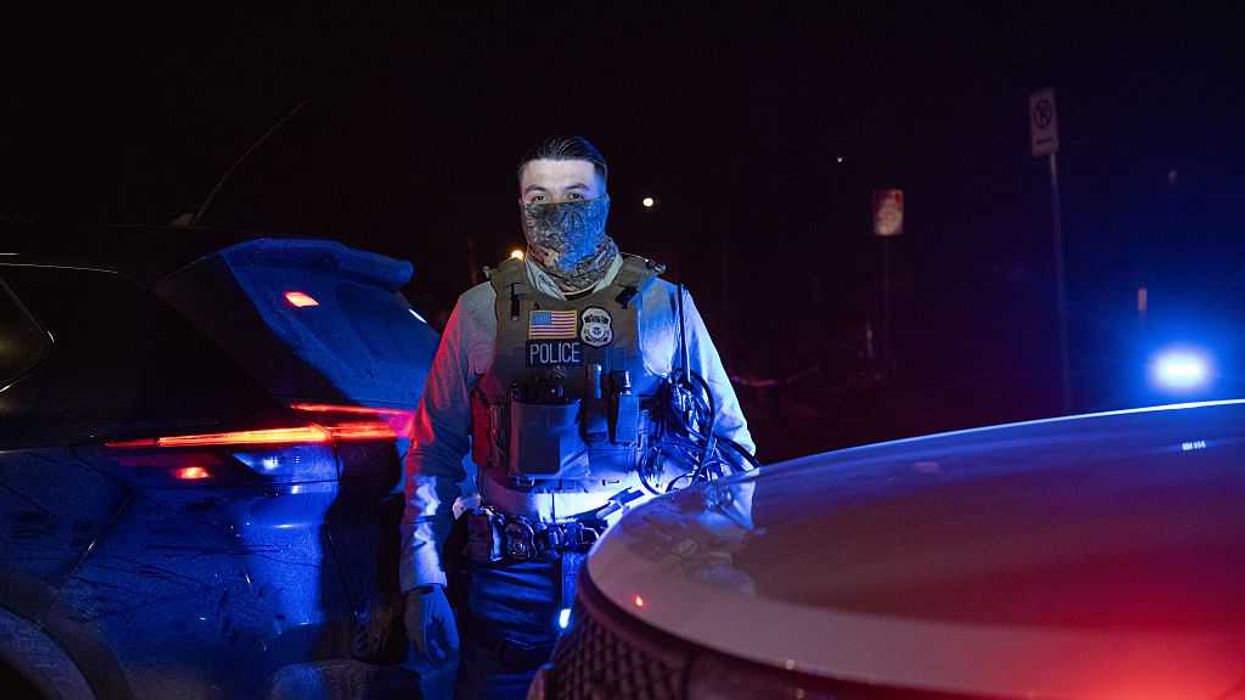
Despite their vilification by Democrat officials and an 8,000% increase in death threats, U.S. Immigration and Customs Enforcement agents continue in Minneapolis and other dangerous sanctuary jurisdictions to make arrests — 70% of which are reportedly of criminal illegal aliens charged or convicted of a crime in the United States.
When attempting to make one such arrest on Wednesday evening, a federal law enforcement officer was savagely attacked not only by the illegal alien he was pursuing but by a pair of onlookers who apparently felt compelled to frustrate the administration of justice.
‘Minnesota insurrection is a direct result of a FAILED governor and a TERRIBLE mayor encouraging violence.’
The incident resulted in an apparent defensive shooting, which radicals seized upon as yet another excuse to attack police, engage in wanton destruction, and altogether ramp up what the Department of Justice is now referring to as an “insurrection.”
The shooting
The Department of Homeland Security indicated that around 6:50 p.m. local time, federal agents attempted to arrest an illegal alien from Venezuela. The suspect peeled away in his vehicle and fled the scene but ultimately crashed into a parked car.
While the suspect proceeded to take off running, an agent, who has been identified as an ICE officer by U.S. Customs and Border Protection Commander Gregory Bovino, caught up with the Venezuelan in the 600 block of 24th Avenue North.
When the ICE officer attempted once again to make the arrest, “the subject began to resist and violently assault the officer,” said the DHS.
Seeing the two men struggling on the ground, two individuals exited a nearby apartment and allegedly began attacking the officer with a shovel and a broom handle, enabling the illegal alien to break free.
The Venezuelan allegedly proceeded to use one of the two improvised hitting implements to strike the outnumbered officer.
RELATED: Blocking ICE with ‘micro-intifada’: Good’s group taught de-arrest, cop-car chaos before her death
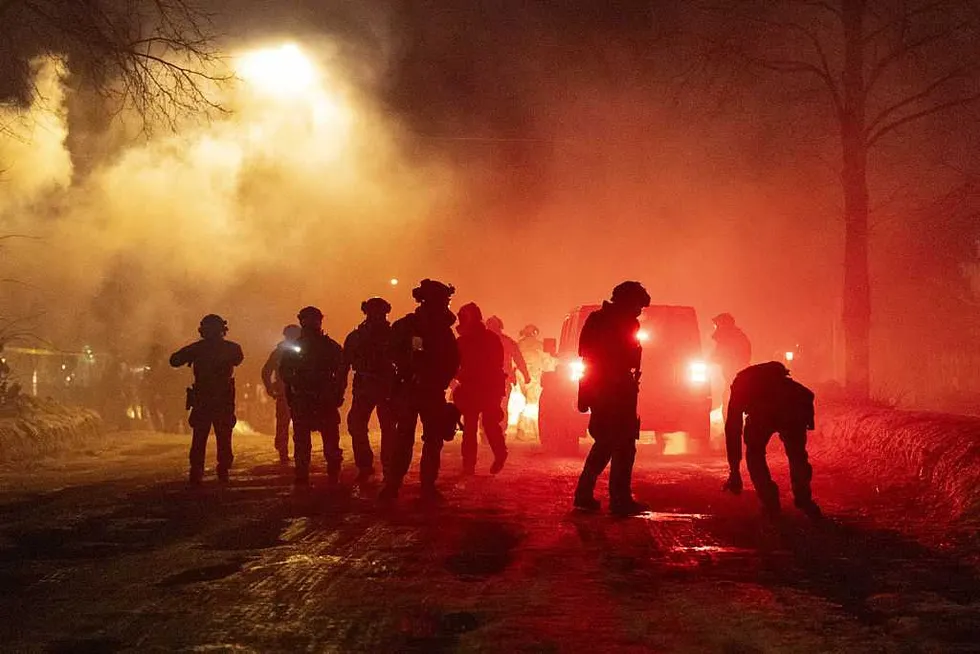 Photo by Mostafa Bassim/Anadolu via Getty Image
“Fearing for his life and safety as he was being ambushed by three individuals, the officer fired a defensive shot to defend his life,” said the DHS.
The two alleged attackers and the Venezuelan — who sustained a non-life-threatening gunshot wound to the leg — reportedly barricaded themselves in the apartment but were ultimately flushed out. The illegal alien and the officer were taken to the hospital, and the two suspected attackers were placed in custody.
Minneapolis police were ultimately joined at the scene by the Minnesota Bureau of Criminal Apprehension and the FBI.
Minneapolis Police Chief Brian O’Hara confirmed that a broom and a snow shovel were found at the scene of the struggle and indicated “at least one person may have assaulted federal law enforcement.”
The Minneapolis reflex
O’Hara indicated that in the wake of the struggle and shooting, a mob assembled and began “engaging in unlawful acts.”
In addition to pelting law enforcement officers with incendiary devices, ice, rocks, and other projectiles, rioters ransacked and vandalized federal vehicles, videos showed.
Mayor Jacob Frey (D) wasted no time in fanning the flames, referring to ICE during a press conference on Wednesday night as an invading force that’s supposedly rounding up American citizens.
“I’ve seen conduct from ICE that is disgusting and is intolerable,” said Frey.
After demonizing ICE and championing anti-ICE protests, Frey suggested that radicals “taking the bait” weren’t helping.
Gov. Tim Walz (D) also responded with mixed signals, characterizing federal agents as villains and recommending resistance but also suggesting that Minnesotans should remain peaceful.
“You’re angry. I’m angry. Angry is not a strong enough word,” Walz said in a video address on Wednesday night. “You are not powerless, you are not helpless, and you are certainly not alone. All across Minnesota people are learning about opportunities, not just to resist, but to help people who are in danger.”
The Justice Department evidently saw the signal through the noise and accused the two Minnesota Democratic Party leaders of incitement.
“ICE operates in thousands of counties without incident. Men and women doing their jobs, protecting us from criminal aliens,” said Deputy Attorney General Todd Blanche. “Minnesota insurrection is a direct result of a FAILED governor and a TERRIBLE mayor encouraging violence against law enforcement. It’s disgusting.”
“Walz and Frey,” continued Blanche. “I’m focused on stopping YOU from your terrorism by whatever means necessary. This is not a threat. It’s a promise.”
President Donald Trump threatened on Thursday morning to invoke the Insurrection Act “if the corrupt politicians of Minnesota don’t obey the law and stop the professional agitators and insurrectionists from attacking the Patriots of I.C.E., who are only trying to do their job.”
Trump noted that many presidents have utilized the Insurrection Act of 1807 and that it would “quickly put an end to the travesty that is taking place in that once great state.”
Like Blaze News? Bypass the censors, sign up for our newsletters, and get stories like this direct to your inbox. Sign up here!





