

Category: Relatable
Ex-porn star shares the shocking moment she realized the industry encourages pedophilia
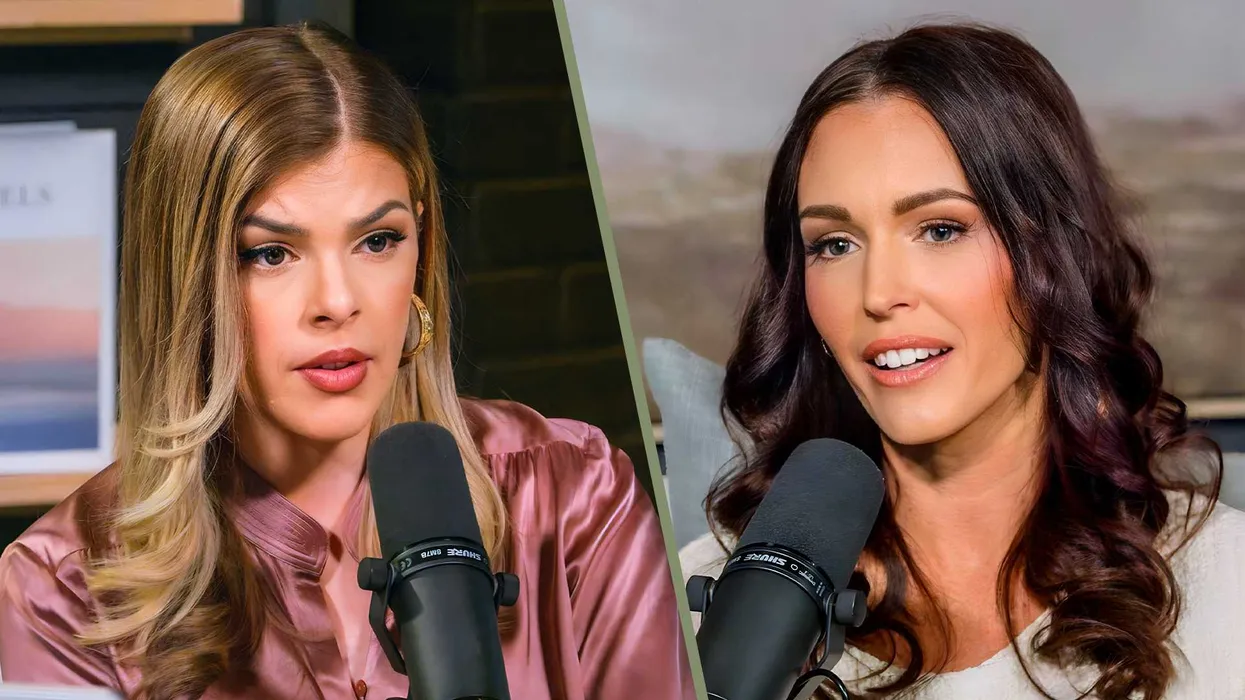
Brittni De La Mora spent seven years in the adult film industry before walking away for good in December 2012. A profound encounter with Jesus on an airplane — while flying to film what would become her final scene — gave her the strength and conviction to leave permanently and fully embrace her Christian faith.
Today, she and her husband, Pastor Richard De La Mora, co-lead Love Always Ministries and direct Jesus Loves Porn Stars, two outreach-focused ministries dedicated to helping people break free from pornography addiction and reaching those still working in the adult entertainment industry with the gospel.
On a recent episode of “Relatable,” Allie Beth Stuckey invited Brittni to share her amazing story — including the first time she realized that the porn industry was so much darker than just producing adult films.
Brittni was just 18 years old when she became an adult film star. Her success was immediate — but not necessarily because of talent. It was her age that made her so marketable.
“When I first started off in the industry, the reason why I was getting booked so much is because I was 18 years old, and I looked like a little girl,” she says.
“They would put me in pigtails and costume jewelry and schoolgirl outfits and have me say, ‘Oh, I’m barely 18.”’
It wasn’t long before “a light flickered” on in Brittni’s mind.
“I was like, ‘Do you guys realize this is encouraging pedophilia?”’ she recounts, noting that she immediately went to her agent and demanded that she not be booked for these kinds of shoots anymore.
Now that Brittni is on the other side of the industry and helping others escape, she sees the full sinister picture.
“Now that I’m out, I see that pornography really is a drug,” she says. “It releases so much dopamine in your brain, and eventually what you watch on porn does not fill you anymore, and so now you have to go re-enact those things in real life.”
But there comes a day when even re-enactment fails to satisfy. The addiction then begins to demand novelty.
“It starts off by hiring escorts, and then that’s not enough. And then people are doing things to children,” says Brittni.
“I truly blame pornography for [pedophilia] because what they’re watching, they’re feeding their soul — and then they start craving that because eventually it’s just not enough anymore.”
Brittni recounts watching a documentary of a man who was caught with “6,000 images of child pornography.”
“He started off watching the ‘morally acceptable’ scenes — the husband and wife — and then started watching the young teenage 18- year-old with the old man. And eventually that wasn’t enough,” she says.
To hear Brittni’s full story — from her tumultuous childhood and her entrance into the adult film industry to her Christian conversion and eventual exit from pornography — watch the episode above.
Want more from Allie Beth Stuckey?
To enjoy more of Allie’s upbeat and in-depth coverage of culture, news, and theology from a Christian, conservative perspective, subscribe to BlazeTV — the largest multi-platform network of voices who love America, defend the Constitution, and live the American dream.
Allie Beth Stuckey busts 3 ‘Christian’ myths deceiving believers today

Just because something sounds Christian doesn’t mean that it is. Nobody knows this better than BlazeTV host Allie Beth Stuckey, who frequently exposes lies wrapped in Christian-sounding language
On this episode of “Relatable,” Allie unravels three common “Christian mythical mottos” and shines a light on the deception underneath.
Myth #1: “Christianity is a relationship. It’s not a religion.”
Allie acknowledges that this phrase is usually employed with good intentions — typically when Christians are evangelizing specifically to people who have “come out of legalism” or are brand-new to Christianity and are “confused about some of the rules and the standards.”
In these cases, the evangelizer is most often trying to push someone “into daily conversation with and pursuit of Jesus.”
“And there is part of that that is really true and really good,” says Allie.
“Christianity says that you can have a relationship with God right now, no matter what you’ve done or who you are, by grace through faith in Jesus. Okay? So yes, Christianity is a relationship,” she concedes.
But that doesn’t change the fact that it is “also a religion.”
“If you look at the roots of the word ‘religion,’ you can go all the way back to the ancient use of the Latin word, which is relegere,” meaning “to go through again — especially in thought or in word,” Allie explains.
“I love this connection because it implies a routine, a habit, a discipline of repetition that turns an isolated belief into a pattern of thought that dictates a person’s life.”
Another closely related Latin word — religāre — means to “bind again or to tie back.”
“You’ll notice the shared prefix in these words, which is re-. It’s the prefix that we see in repeat, rehearse, rebound, redo. Re- … means to do it again, to repeat,” says Allie.
“Christian religion is the practice of rebinding ourselves to the things of God … rebinding ourselves through grace-filled effort — Holy Spirit-inspired effort — to His wisdom, His ways, the good things of the Christian life.”
Citing the book of James, which explicitly refers to Christianity as a “religion,” Allie concludes, “Scripture does not preach that our Christian faith is not a religion; rather, it’s the one true religion. Religion and relationship in Christianity are not pitted against each other.”
Myth #2: “God answers all of our prayers; the answer might just be no.”
“It is true that God says no; it is not true that God answers every prayer,” Allie says frankly.
The Bible, she explains, explicitly outlines several “kinds of people” whose prayers God may ignore: “those who have personal and selfish motives” (James 4:3); “those who remain in sin and will not heed God’s law” (John 9:31; Proverbs 28:9); “those who offer unworthy service to God” (Malachi 1:8-9); “those who reject God’s call or have no faith” (James 1:6-7); “those who are violent” (Isaiah 1:15); “those who are self-righteous” (Luke 18:11-14); and “those who mistreat God’s people (Micah 3: 2, 4).
“There are several other passages that we could go through that indicate that God sometimes does not hear or does not respond at all to certain prayers due to a person’s heart condition, motives, or relationship with Him,” says Allie.
For Christians, however, who the Bible says are free to approach God’s throne with confidence (Hebrews 4:16), she says it’s difficult to determine whether or not God answers all their prayers.
“I simply don’t know for sure that the answer is always that God is responding to every single prayer that a Christian has … but we do know for sure that for the nonbeliever, it is not true that God hears and answers every prayer,” Allie says.
Myth #3: “Share the gospel; when necessary, use words.”
This maxim expresses the idea that “we preach the gospel by just how we treat people” and that “preaching at people and trying to push religion down their throats is not something that’s going to be convincing,” says Allie.
“It is true that your life serves as an inspiration. It is true that what we do absolutely matters and how we live our life is a testimony to what we believe — 100%.”
But this doesn’t excuse us from the biblical mandate to take the gospel to all nations.
“We are called to preach the gospel with our words. If anyone could have preached the gospel only using deeds, it would have been Jesus, because Jesus perfectly lived out the gospel in his actions. And yet he didn’t just do the deeds. … He constantly preached the gospel using his words,” says Allie.
Between Jesus’ example and the many verses that call believers to speak the gospel (Romans 10:14, 17; 2 Timothy 4:1-2), there is no escaping the reality that Christianity is “a word-based faith.”
“The Bible obviously strongly affirms that our actions, our love, our holy living must back up our message and that hypocrisy undermines it, and it also repeatedly emphasizes the gospel itself must be verbally proclaimed,” Allie concludes.
To hear more, watch the episode above.
Want more from Allie Beth Stuckey?
To enjoy more of Allie’s upbeat and in-depth coverage of culture, news, and theology from a Christian, conservative perspective, subscribe to BlazeTV — the largest multi-platform network of voices who love America, defend the Constitution, and live the American dream.
She stood up for women’s soccer. Her team called her racist.

Former professional soccer player Elizabeth Eddy made headlines when she wrote an op-ed in the New York Post calling for clear biological sex eligibility standards in the National Women’s Soccer League to protect the fairness of women’s soccer — but it was not received well by her fellow players.
Eddy received intense backlash from her Angel City FC teammates, who publicly accused the piece of being harmful, transphobic, and racially motivated.
Unlike those teammates, BlazeTV host Allie Beth Stuckey is grateful to Eddy for sounding the alarm on what’s really going on in women’s sports.
“She did not back down,” Stuckey says, before asking Eddy about the initial response to her article.
“What ended up happening is, the article came out … and then before every game, our captains get sent out to the press to do media. … And the two captains shared their thoughts on the article, and they spoke on behalf of the team and the organization,” Eddy tells Stuckey.
“And that was really, really hard to hear because I’d had conversations with both of them in the past, and I was really close with both of them to the point where they were both invited to our wedding. One of them helped my fiancé plan the proposal,” she continues.
And while the article was not “racist” or “transphobic,” her teammates still claimed it was.
“I’ve had a lot of convos with my teammates in the past few days, and they are hurt and they are harmed by the article, and also they are disgusted by some of the things that were said in the article, and it’s really important for me to say that,” one of her teammates said at the press conference.
“And we don’t agree with the things written for a plethora of reasons, but mostly the undertones come across as transphobic and racist as well,” her teammate added.
“I was 100% shocked because … the words I wrote, there’s no way that could be conceived,” Eddy explains.
“Were you able to have a private conversation with them? … After they accused you, racist, transphobic, all of these things, were you able to have a reasonable discussion to be able to say, ‘Well, no, this is what I meant, and this is why it’s not racist,’ or was that not able to happen?” Stuckey asks.
While Eddy admits that those teammates who publicly discussed her article were not willing to have a private discussion with her, she did hear from multiple teammates that they didn’t stand by what the captain said.
“Were you disappointed by any people who said, ‘I completely agree with you, I support you, but I could never do that’?” Stuckey asks.
“Yeah, there’s a part of me that’s like, come on, because if you do, it snowballs and this thing actually changes in a shorter time frame than not. But at the same time, I can totally empathize with them because it was so hard for me to do this,” Eddy answers.
“I was waffling for months about it,” she adds.
Want more from Allie Beth Stuckey?
To enjoy more of Allie’s upbeat and in-depth coverage of culture, news, and theology from a Christian, conservative perspective, subscribe to BlazeTV — the largest multi-platform network of voices who love America, defend the Constitution, and live the American dream.
Allie Beth Stuckey takes down absurd motherhood lies spouted on ‘The View’
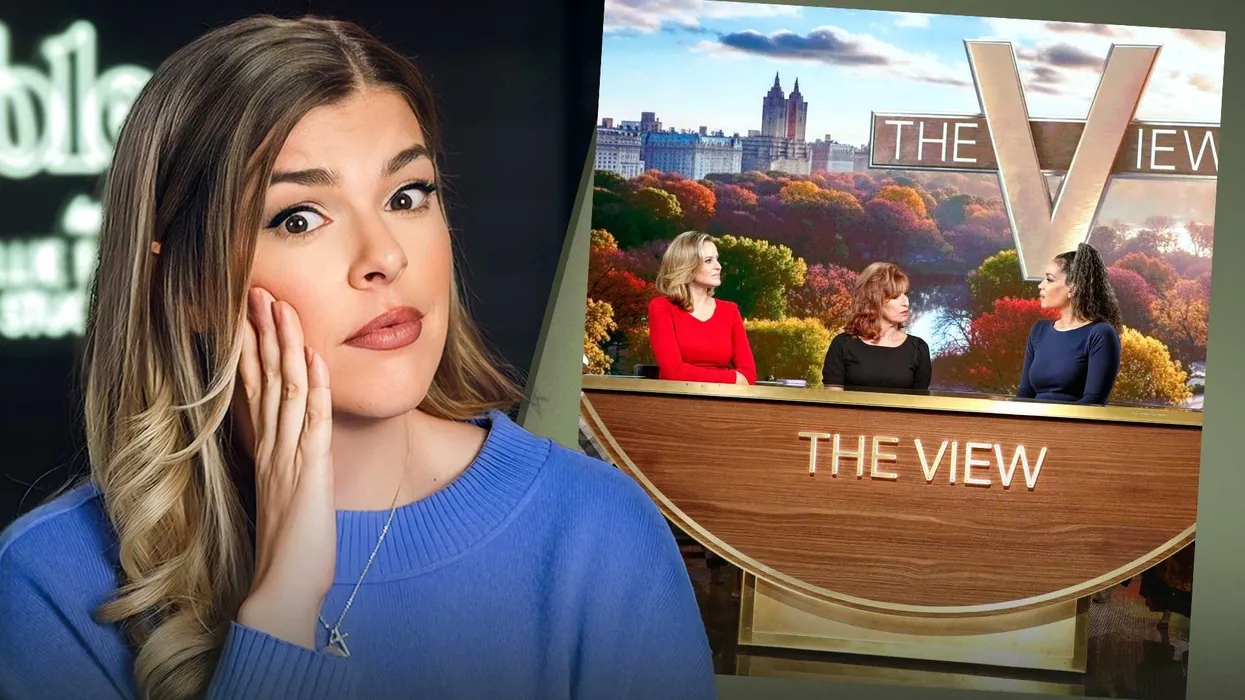
When conservative mother Isabel Brown spoke at the Conservative Political Action Conference, she used the platform to champion having more children — a cause BlazeTV host Allie Beth Stuckey of “Relatable” can easily get behind.
However, not everyone appreciated Brown’s stance, particularly the women of “The View.”
“I think it’s just really reckless to be suggesting that people should have children when you now know, in this country, there’s this affordability crisis. And for a two-person household, a married household, you need over $400,000 for child care,” Sunny Hostin explained to the panel.
Hostin went on to claim that Brown was “advocating for people to be born into poverty,” where those children will not be educated, housed, or fed.
“At the same time … this government is cutting all of the services that would allow people to have families and big families,” she added.
Stuckey calls Hostin’s statement “over-the-top, inaccurate, and absurd.”
“No one said that having children comes without sacrifices and comes without some form of what people may call inconvenience. But the idea that you have to be making almost half a million dollars a year to be able to just survive with children is absurd,” she says.
“It’s not true today. It has never been true in all of history,” she adds.
But Hostin wasn’t the only one on the panel who criticized Brown’s statement.
“I gave our girl Isabel a little Google,” Whitney Cummings said. “She has a baby. She has a 1-year-old. Of course, she thinks everyone should have a lot of kids. She has a 1-year-old that sleeps all day.”
“I also was like, ‘I’m going to have a bunch more kids.’ Wait till your kid is up and walking and you spend most of your day trying to get its shoes on. You’re probably going to rethink how many kids you have,” Cummings added.
“I must be doing motherhood wrong because, see, my 1-year-olds were awake all day, and they took a nap for a couple hours in the afternoon, but they were awake. Are you thinking about a 1-month-old? A 1-year-old is a toddler,” Stuckey responds.
“Having a 1-year-old is, like, one of the most challenging times because they’re so mobile, they’re so energetic, and yet they can’t just sit there and be entertained by a book for very long. And so, that’s crazy,” she continues.
Stuckey, who has three children of her own, believes that Hostin and Cummings are actually just placing convenience and luxury over children — much like other women in the “child-free movement.”
Stuckey plays a clip one woman posted on TikTok of herself discussing how wonderful it is to lie around all day and prioritize her own needs instead of having children.
“That’s such a superficial and selfish reason not to have kids,” she says.
Want more from Allie Beth Stuckey?
To enjoy more of Allie’s upbeat and in-depth coverage of culture, news, and theology from a Christian, conservative perspective, subscribe to BlazeTV — the largest multi-platform network of voices who love America, defend the Constitution, and live the American dream.
‘They’re scared’ — Allie Beth Stuckey fires back at Hillary Clinton’s hit piece on the biblical movement she helped ignite

Yesterday, the Atlantic ran an op-ed by Hillary Clinton titled “MAGA’s War on Empathy,” in which the former Secretary of State accused the MAGA movement of twisting bedrock Christian values and embracing a worldview where “compassion is weak and cruelty is strong,” connecting specifically “hard-right Christian influencers” to the violence we’ve seen in Minneapolis.
One of the people in Clinton’s crosshairs is Blaze Media’s own Allie Beth Stuckey, host of the Christian podcast “Relatable.”
Among many grievances, the twice-defeated Democrat took issue with Stuckey’s critical analysis of the sermon delivered on January 21 last year by Episcopal Bishop Mariann Edgar Budde during a post-inauguration interfaith Service of Prayer for the Nation. Budde’s preaching was interpreted by many conservatives, including Stuckey, as a politicization of faith to push progressive views on immigration and LGBTQ+ issues.
“The right-wing Christian podcaster Allie Beth Stuckey called the sermon ‘toxic empathy that is in complete opposition to God’s Word and in support of the most satanic, destructive ideas ever conjured up.’ Toxic empathy! What an oxymoron. I don’t know if the phrase reflects moral blindness or moral bankruptcy, but either way it’s appalling,” Clinton wrote, explicitly describing herself as a Christian.
Now Stuckey fires back at the self-proclaimed devout Mrs. Clinton. In this special “Relatable” episode, she dismisses the hit piece as proof progressives are losing their grip, doubles down on biblical truth over “toxic empathy,” and celebrates the attack as a backhanded compliment.
“First, I just want to make an announcement. I want to announce that I love my life. I love living. I’m happy to be here. That is an important declaration to make anytime you get in the crosshairs of the Clintons, which, to my astonishment, I am,” Stuckey quips, alluding to widely circulated conspiracy narratives tying the Clintons to mysterious deaths.
Though character assassinations like Clinton’s are never ideal, Stuckey celebrates them as proof her message is hitting its mark.
“This article might mention me by name, but it is not actually about me,” she says, “because the truth is, if it weren’t for all of you, Hillary Clinton would not care about me. It is because of your presence, because of your courage, because of your resolve, your influence over this and future generations that Clinton is writing this article.”
And she’s not the first to shoot an arrow at Stuckey. Since her book “Toxic Empathy: How Progressives Exploit Christian Compassion” hit the New York Times bestseller list in October 2024, left-wing outlets have been running hit piece after hit piece accusing Stuckey of politically weaponizing the Christian faith.
“The deeper reason [for these attacks] is so incredibly clear to me,” she says, “and that is that we are over the target.”
“We have gotten to the heart of progressive manipulation. We looked at their lies straight in the face that abortion is health care, that trans women are women, that no human being is illegal, and we said, ‘No, I see what you’re doing,’” she continues.
“And now they’re afraid,” she declares.
From 2020 until now, this movement that refuses to allow “emotion to paralyze … critical thinking” has continued to grow, and progressives, realizing that they’re rapidly losing their “monopoly on female compassion,” are in full panic mode, she argues.
“They don’t trot out former Secretary of State, former presidential candidate Hillary Clinton, unless they are really worried.”
To Clinton — who seemed to reduce Christianity to mere neighborly love — Stuckey sets the record straight on the faith’s highest virtue: “[Love] is inextricably intertwined with the truth.”
“God is love — 1 John 4:8. He gets to define it. And He tells us what it is in 1 Corinthians 13, and in verse 6, we read that love ‘never rejoices in wrongdoing, but rejoices with the truth,’” she quotes. “So you cannot have in Christianity love without truth.”
But toxic empathy throws genuine love to the wolves.
“You are so deeply in one person’s feelings that you no longer can think objectively. You no longer consider the person on the other side of the equation, and then you make decisions based on how much you feel for one person rather than on what is true and moral and just,” Stuckey illustrates, giving the example of pro-choicers who, in the name of empathy for the mother, neglect to consider “the existence, the rights, and the pain of the baby inside the womb.”
Love and truth: “This is the dichotomy that Jesus represented. Not unconditional empathy toward every purported victim group,” she clarifies.
Ultimately, Stuckey is grateful for Clinton’s polemic.
“She’s put more eyes on [“Toxic Empathy”],” she says.
But for her, it’s never been about selling books.
“It is about getting Christian women to see what is logically and factually and, most importantly, biblically true about some of the biggest issues of our day and to be able to stand confidently in that,” she says.
She concludes by encouraging Christians to take heart when the Enemy assaults them, reading from Luke 6:22: “Blessed are you when people hate you and when they exclude you and when they revile you and spurn your name as evil on account of the Son of Man!”
Want more from Allie Beth Stuckey?
To enjoy more of Allie’s upbeat and in-depth coverage of culture, news, and theology from a Christian, conservative perspective, subscribe to BlazeTV — the largest multi-platform network of voices who love America, defend the Constitution, and live the American dream.
Flirty chat to suicide in hours: The deadly new wave of AI-powered sextortion scams targeting American teens
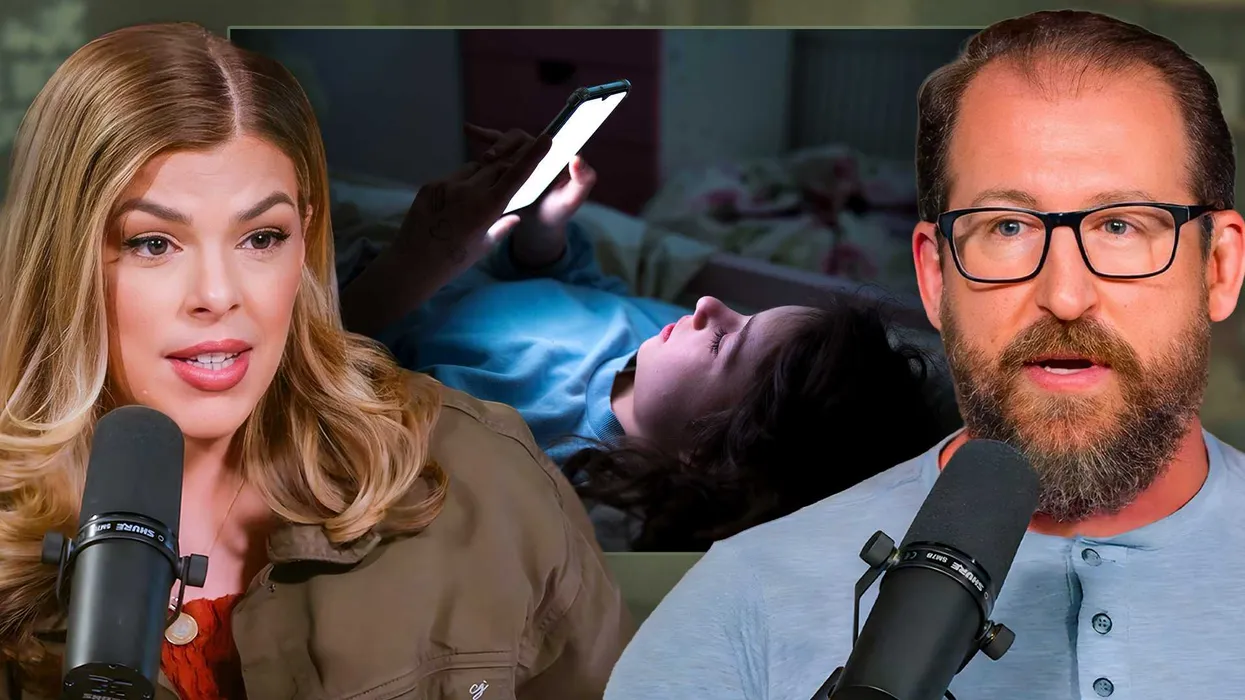
Ben Gillenwater is an IT expert with 30 years of experience and the creator behind the “family IT guy” accounts on social media, where he shares tips with parents on how to protect their kids online from harmful content, predators, and addictive algorithms, among other virtual risks.
But most importantly, Ben is a dad. Five years ago, he gave his 5-year-old son an iPad, the results of which were so disturbing, it launched him into his current role as a full-time content creator dedicated to protecting children from the dangers of the digital world.
On this episode of “Relatable” with Allie Beth Stuckey, Ben dives into the online perils facing today’s children — including one so sinister, it’ll forever change the way you think about child predators.
When most people think of online groomers, they picture creepy men in basements posing as minors in an effort to lure children into secretly meeting up with them. But some groomers have no intention of ever making physical contact with their victims. Their sole intention is to get rich off of creating chaos and ruining lives from afar.
Gillenwater gives the example of Jordan DeMay — a 17-year-old high school student from Michigan, who tragically died by suicide in 2022 after falling victim to a sextortion scam.
“Good kid, good family, good school records, had a girlfriend,” he says.
Then one day, an attractive girl messaged him on social media and struck up a flirtatious conversation that culminated in her sending nude photos. Jordan was asked to return the favor, and when he did, it was revealed that the images of the girl were stolen or fake and that she was actually a Nigerian gang. The two brothers behind the operation — Samuel and Samson Ogoshi — threatened to blackmail DeMay by sending his explicit photos to his family, friends, and school contacts if he didn’t wire them money, spurring DeMay to take his own life.
This entire sextortion scam — from initial contact to DeMay’s suicide — occurred in less than six hours.
DeMay’s tormentors, says Gillenwater, are part of a broad network of Nigerian cybercriminals called “the Yahoo Boys.” They’re the same people behind the Nigerian prince scams that have conned hundreds of thousands — perhaps even millions — of people into wiring money with fake promises of huge inheritances or riches, only to demand endless upfront “fees” that leave victims with nothing.
Whether they’re posing as wealthy princes or attractive women, their strategy is the same: “identify weakness in people,” Gillenwater says.
Back in the ’80s and ’90s when the digital world was just ramping up, these cybercriminals were able to dupe people using only “poorly worded emails,” but today, thanks to advances in technology, their predatory empire is built on “very well-worded and well-informed AI-powered hunting programs,” meaning their schemes have only gotten darker and more effective.
“Teenage boys specifically are targeted for this [sextortion scam] in particular, and they exploit their biology,” says Gillenwater.
“What they do when establishing the initial connection is they study all of your friends on Instagram and gather up your whole network so they know everybody you go to school with … everybody you go to church with … every family member … that’s how they blackmail you is they’re going to send your naked photo to all those people,” he explains.
Sadly this nefarious kind of operation isn’t exclusive to Nigeria.
“There’s South American gangs, there’s Asian gangs, there’s African gangs, there’s European gangs. It’s a very high-profit, very low-effort endeavor, part of which is automated,” says Gillenwater.
But cybercriminals are just one threat in the vast, dark web of online child predation. In the next part of the interview, Gillenwater dives into some shocking statistics regarding the “traditional creep,” who targets vulnerable kids online for sexual exploitation.
To hear more and learn tips that will help you protect your kids online, watch the full episode above.
Want more from Allie Beth Stuckey?
To enjoy more of Allie’s upbeat and in-depth coverage of culture, news, and theology from a Christian, conservative perspective, subscribe to BlazeTV — the largest multi-platform network of voices who love America, defend the Constitution, and live the American dream.
The crisis of ‘trembling pastors’: Why church leaders are ignoring core theology because it’s ‘political’

At Turning Point USA’s annual AmFest, BlazeTV host Allie Beth Stuckey and Senior Director of TPUSA Faith Lucas Miles dove into one the most pressing spiritual issues facing our nation right now: weak pastors.
Miles calls them “trembling pastors.” They aren’t necessarily “traitorous” in that they’re deliberately spreading ideas antithetical to Scripture, but they also aren’t “true pastors” willing to boldly speak truth no matter the cost.
These men, fearful of dividing their congregations or financial loss, steer clear of politically charged subjects.
But the problem with that approach is that so many political issues today are theological at their core. Abortion, marriage, gender, race, and justice have deep spiritual implications, but because these issues appear on the ballot, many pastors turn a blind eye to them and fail to lead their congregations.
But Allie and Miles argue that truth only prevails when pastors courageously lead in all areas.
“I remember one of the things that Charlie [Kirk] said to me is that courage is easy. All you have to do is say yes. You don’t have to have a degree on the wall; you don’t have to have a bunch of money; you don’t have to have good looks. You just have to be willing to say, like, ‘Here I am, Lord. Send me,”’ says Miles.
“I think we need more pastors to do that. … What we’re trying to do at TPUSA Faith is be that voice coming alongside of them and saying, ‘Rise up, you mighty valiant warrior. It’s time to get in the fight here.”’
One type of weak pastor Allie says she sees a lot of are those unwilling to touch anything related to race. They’ve “got it on abortion; they’ve got it on marriage and gender,” she says, but “the racial social justice stuff” is where they “totally fumble the ball.”
This was especially apparent during 2020, when the death of George Floyd set off a social justice movement that razed entire cities to the ground. During that time, there were so many pastors who “sounded so much like BLM or the world when it came to race and justice,” she tells Miles.
Miles says that while he has grace for the pastors who posted black BLM squares before it came out that it was “Marxist, anti-family, anti-God organization,” his sympathy ends with those who never repented.
“I’ve not seen one of these guys go back and repent of that and actually acknowledge this,” he says.
While it’s easy to write this off as pride, part of the problem is lack of education.
Many of these pastors simply “don’t know the history of liberation theology. They don’t know that it’s a hybrid between Marxism and Christianity. They don’t know about James Cone. They don’t know about this idea of crucifying the white Jesus,” says Miles.
To learn more about how TPUSA Faith is walking alongside pastors, educating and encouraging them to boldly proclaim truth and, as Charlie Kirk is famous for saying, “make heaven crowded,” watch the full interview above.
Want more from Allie Beth Stuckey?
To enjoy more of Allie’s upbeat and in-depth coverage of culture, news, and theology from a Christian, conservative perspective, subscribe to BlazeTV — the largest multi-platform network of voices who love America, defend the Constitution, and live the American dream.
2025: Triumphs, tragedies, and lasting legacies — Allie Beth Stuckey’s year in review

Without question, 2025 was anything but dull. Trump made a historic return to the White House. Biden regime policies were thankfully booted out the door. Left-wing violence reached astonishing heights. Natural disasters ravaged parts of the country. Infighting in conservatism burned bridges and fractured the MAGA base.
It’s been a wild year full of ups and downs. On this episode of “Relatable,” Allie Beth Stuckey revisits four defining moments of 2025.
1. Trump’s inauguration
On January 20, 2025, Donald Trump was sworn into the presidency for his second term.
It was quite an eventful occasion. The sound system failed just as Carrie Underwood began “America the Beautiful.” But the blonde country icon didn’t skip a beat, launching into an a cappella performance and hitting every note with her usual precision and cadence.
“That was beautiful,” Allie says.
However, controversy erupted when Trump took his oath. Unlike the majority of presidents before him, he did not put his hand on the Bible, leading many to brand it a scandal. But Allie says there was nothing significant or covert about it. The fact that the Trump family provided their own family Bible for the ceremony is proof that he wasn’t making any sort of anti-Bible statement.
2. Vatican elects the first American pope
On May 8, 2025, following the death of Pope Francis, white smoke billowed from the Sistine Chapel, announcing that the successor had been named. It was Cardinal Robert Francis Prevost, who selected the name Pope Leo XIV. Born and raised in Chicago, Illinois, he is the first-ever American pope.
“It’s a really important historical moment — not just in the Catholic Church, but really in the West in general,” Allie says.
“Unfortunately, Pope Leo has some progressive views on some things that I would call unbiblical views on some things that I don’t love,” she adds.
3. Loss of four prominent Protestant leaders
The year 2025 sadly saw four courageous evangelicals pass away.
On May 26, Duck Dynasty patriarch, BlazeTV host, and devout Christ-follower Phil Robertson passed away at the age of 79 after a long battle with Alzheimer’s disease.
John MacArthur, an 86-year-old evangelical pastor and theologian, then died on July 14. He died from pneumonia after being hospitalized.
The following month on August 21, James Dobson — psychologist, author, and founder of the conservative Christian ministry Focus on the Family — passed away at age 89 from undisclosed causes.
And finally, reformed Baptist preacher and speaker Voddie Baucham Jr. passed away from an undisclosed emergency medical incident on September 25, 2025. He was only 56 years old.
“I mean, this is, like, just a generation of faithful evangelical Protestant pastors and leaders that we lost,” Allie says.
“Their legacy lives on, and God ordained all of their days, knew exactly when they were going to pass, but it’s still sad for all of us, but especially their families.”
4. Murder of Charlie Kirk
Lastly, 2025 will go down in history as the year when our beloved Charlie Kirk was murdered while speaking at a Turning Point USA event. On September 10, the TPUSA founder was struck in the neck by an assassin’s bullet on the Utah Valley University campus where he was launching his TPUSA 2025 tour. He left behind his wife, Erika, and their two children, as well as the TPUSA empire that has only exploded in growth since his death.
“I will never forget that day,” says Allie, who was friends with Charlie.
“This renewed interest in [God] that we all saw at Charlie’s memorial, that we all saw on college campuses, it is happening,” she encourages.
“It seems like the love of many has grown cold really fast — like we so quickly went from this unified moment at the memorial to conspiracies, to accusations, to slander, to gossip, to division.”
But revival is still happening. Maybe it’s not as loud and bold as it appeared in the beginning, but it’s happening nonetheless. “When we get to the other side of eternity, we are going to see this incredible, complex, interwoven tapestry of all of these little unseen and unsung moments in the lives of believers that culminated in someone’s salvation, and angels rejoicing because of that,” Allie says.
To hear more of Allie’s 2025 recap, watch the episode above.
Want more from Allie Beth Stuckey?
To enjoy more of Allie’s upbeat and in-depth coverage of culture, news, and theology from a Christian, conservative perspective, subscribe to BlazeTV — the largest multi-platform network of voices who love America, defend the Constitution, and live the American dream.
Chosen at 13 to be the pastor’s ‘maiden’: Sex-cult survivor shares her horrifying story
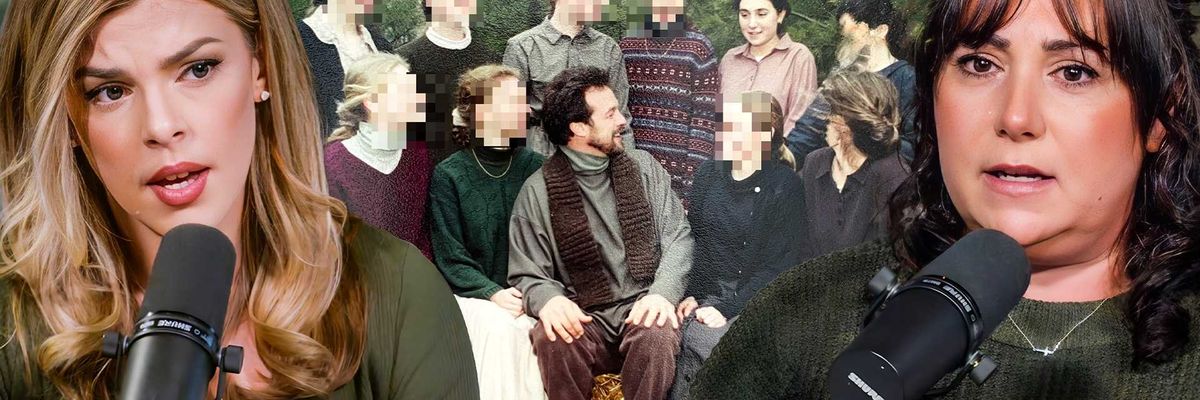
When Lindsay Tornambe was just 11 years old, her parents and four siblings moved out to remote Minnesota to join a religious compound called River Road Fellowship. The group was led by a man named Victor Barnard, who claimed that God had ordained him to gather and shepherd the fragmented people of the Way International — a deeply heretical “Christian” sect — after its founder Victor Paul Wierwille died in 1985.
At first, things were almost idyllic. Lindsay spent her days playing with the other kids, tending to animals, and skating on the frozen lake. But it wasn’t long before Barnard’s sinister intentions shattered the pastoral facade he had created, condemning Lindsay and other victims to years-long servitude in a sex cult.
On this episode of “Relatable,” Allie Beth Stuckey interviews Lindsay about her decade as a “maiden” in a cult whose leader is currently serving a 30-year prison sentence.
After secretly grooming Lindsay, Victor, who had taken off his wedding ring, claiming he was “married to the church” like Christ, reportedly preached a sermon from the passage in Exodus where God commands the Israelites to “give” Him their firstborns, meaning redemption through small payments or temple service.
As many cult leaders do, however, Victor reportedly twisted the passage to mean that parents must literally give their firstborn daughters over to him.
“He read off a list of names. Mine was on there,” says Lindsay.
This all happened during the early 2000s, amid lingering influences from the 1999 “Summer of Love” — a notorious period in the Way International when leadership allegedly encouraged widespread sexual promiscuity among members, including married people, as a supposed expression of “God’s love.”
Victor, however, didn’t frame the girls’ role as sexual. They were merely being asked to serve Christ and the church. Lindsay, after seeing her friends eagerly volunteer, consented to being a “maiden,” having no idea what awaited her.
She, along with nine other young girls, was then removed from her family home and taken to live in Victor’s private living compound. The maidens were assigned different duties, like gardening, cooking, cleaning, and assisting Victor with various tasks, many of which were intimate.
“Things in the beginning were kind of okay,” says Lindsay, noting that she initially believed her time as a maiden was temporary.
“I was under the impression that I would serve there and live at the camp … and then I would go home and be homeschooled,” she says.
But a shepherdess who helped oversee the young girls told 13-year-old Lindsay, who had expressed excitement about returning home to her family, that her role as a maiden was a lifetime commitment. “You’re not going home. This is your home now,” she said.
“It was shortly after that that I was raped by Victor for the first time,” says Lindsay, adding that he justified his actions by claiming that “Jesus Christ had Mary Magdalene and the apostle Paul had Phoebe” as sexual partners.
He also claimed that “even though he would be having sex with me, I could remain a virgin spiritually,” she adds.
This abuse, which was often accompanied by physical and emotional abuse, lasted for years, she says.
Eventually, fear and manipulation brainwashed Lindsay into believing she genuinely loved her captor. “One thing that Victor would tell us is that the more we dedicated ourselves to him in this life and to God, the better place in heaven we would have, and so I think the thought of not being in heaven with the maidens and with Victor really scared me,” she says.
But Lindsay’s sympathetic view of Victor was a ticking time bomb.
In 2008, after most of the girls had been moved to another remote location in Washington state, one of the maidens was deported to Brazil after her student visa expired. Victor sent other maidens to live for temporary periods in Brazil alongside her.
When it was Lindsay’s turn to go, she was exposed to the outside world for the first time since her family had joined the commune. The taste of freedom was intoxicating.
When she returned to Washington, the maidens had started their own cleaning business. As a housemaid, Lindsay got another taste of life outside the cult, as she studied family pictures on walls and heard secular music drifting from radios.
This view of the outside world had already begun to sour Lindsay’s feelings for Victor, but then news came that he, still legally married to his wife, who lived next door to him, had been sleeping with married women in the community.
In Minnesota, it is against the law for pastors to have sexual relations with their congregants, so one of the women in the commune reported Victor to the police and even shared some information about his “maidens,” forcing him to flee. The infidelity broke up the original commune in Minnesota, sending Lindsay’s family back to their home state.
Lindsay, deeply disturbed by Victor’s philandering but still unaware of her own abuse, decided she was done being a maiden. Even though fellow maidens and Victor pleaded with her to stay — calling her Judas and accusing her of not loving God — Lindsay’s mind was made up.
She called her parents, who were still committed to the Way International and Victor, and they agreed to allow her to come home.
“They gave me $500 and bought me a train ticket, and I took Amtrak all the way from Washington state to 30th Street Station in Philadelphia,” says Lindsay.
Re-entering secular society at 23 proved difficult and confusing for Lindsay. “At that point, I thought the only way to make a man happy was to sleep with him, and so I slept around a lot. I lived in a lot of sin,” she says.
“I just was really interested in exploring and living life and making friends and getting away from my parents, because they were still supporting Victor.”
While her outside life looked fun and exciting, Lindsay’s internal world grew darker over the years, as she reckoned with her past life in the cult.
“I just kept thinking over and over again: If God is a God of love that I read and believed for so long, why would he let this happen to me? If heaven is so great, why don’t I kill myself now and not live in this internal pain that I feel?” she admits.
To quell the pain, Lindsay experimented with a gamut of “remedies” — self-love programs, crystals, witchcraft, even self-harm.
“I always came up feeling so empty, so unsatisfied,” she says.
But despite Lindsay’s doubt and sin, God was working in ways she couldn’t see. Single motherhood, unexpected friendships, and perfect timing wove together and allowed Lindsay to distinguish the real God from the phony one who had been used to warp and manipulate her as a child.
To hear the beautiful story of Lindsay’s redemption, including where her family is today and the trial that landed Victor behind bars, watch the full interview above.
Want more from Allie Beth Stuckey?
To enjoy more of Allie’s upbeat and in-depth coverage of culture, news, and theology from a Christian, conservative perspective, subscribe to BlazeTV — the largest multi-platform network of voices who love America, defend the Constitution, and live the American dream.
Liberals in nuclear meltdown mode after 2026 ‘Color of the Year’ is announced
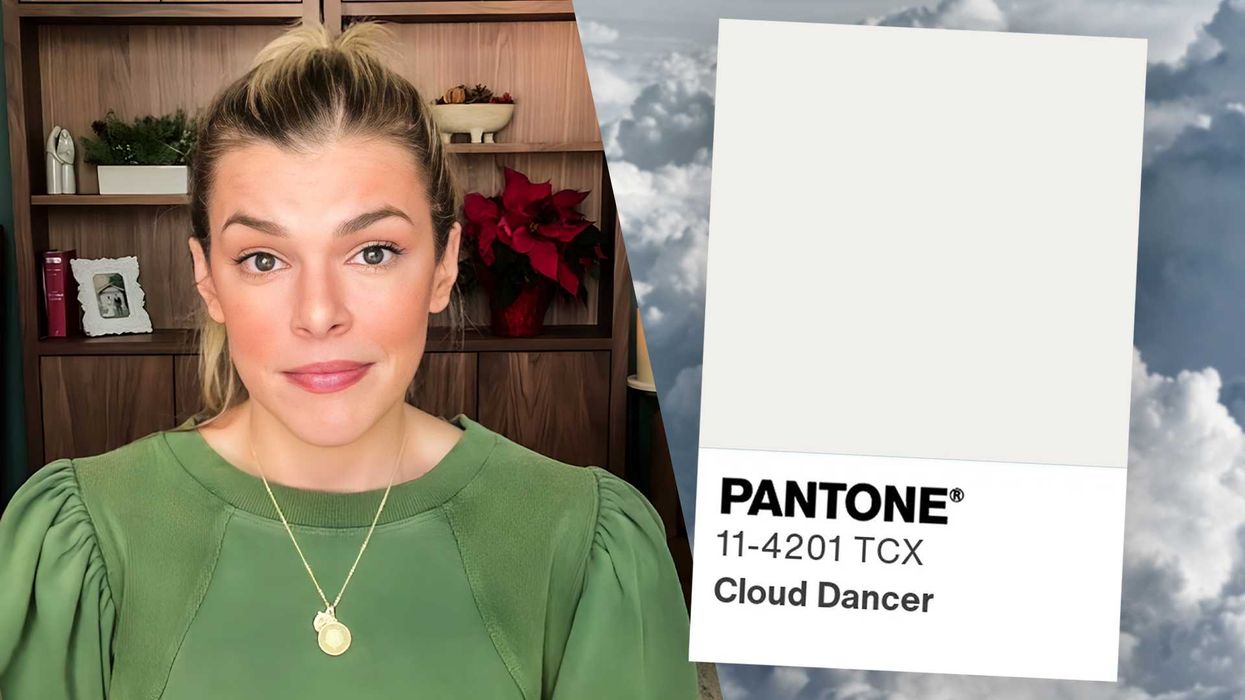
Liberals across the nation are in full tantrum mode after a shade of white was declared 2026’s top hue.
On December 4, Pantone LLC — which is considered the global authority on color standardization — announced “Cloud Dancer,” described as a “billowy white imbued with serenity,” as its 2026 Color of the Year.
“Similar to a blank canvas, Cloud Dancer signifies our desire for a fresh start. … An airy white hue, PANTONE 11-4201 Cloud Dancer opens up space for creativity, allowing our imagination to drift so that new insights and bold ideas can emerge and take shape,” wrote Pantone Vice President Laurie Pressman.
Pantone Executive Director Leatrice Eiseman echoed the VP’s words: “The cacophony that surrounds us has become overwhelming, making it harder to hear the voices of our inner selves. A conscious statement of simplification, Cloud Dancer enhances our focus, providing release from the distraction of external influences.”
Despite these rationales and Pressman’s statement that skin color “did not factor into” Pantone’s selection, furious liberals are accusing the company of being tone-deaf and racist.
Allie Beth Stuckey dives into the hilariously absurd reactions of several unhinged lefties.
X user @svviftlet tweeted:
In another social media video, two girls denounced Pantone’s Color of the Year, claiming it gives “Sydney Sweeney has good genes vibes.”
Back in July, Sweeney was lambasted for starring in an American Eagle denim commercial using the double entendre that Sydney Sweeney has good jeans/genes.
“You’re not allowed to say if you have blonde hair and blue eyes that you have good genes. … She clearly does have good genes. She’s beautiful,” scoffs Allie, “but if you’re a white person, you can’t say that.”
In another video, Feng Shui expert Katie Rogers literally set her Pantone color swatches on fire:
Another Instagram reel features influencer Charlotte Palermino, who ironically filmed her video in an off-white sweater in front of white-colored walls, whining, “It’s giving conservative.”
“It’s literally just a color, okay? It’s an inanimate color,” says Allie, “and the subliminal message is far more offensive than any supposed message that Pantone is communicating.”
The message these social media users are hammering is that “it’s not okay to be white. … You need to be ashamed of that, that white — having white skin — symbolizes something bad, that we need to reject the color of our skin.”
“In this age of self-confidence and self-love, it’s only white people who have to hate themselves or associate their skin color with the collective sins of people who lived elsewhere at a different time? No,” Allie says.
She encourages everyone, but especially Christians, to reject this social justice nonsense. “It’s completely unbiblical. That is not just. Justice is impartial. Justice is individual. Justice is direct. You don’t carry the sins of someone who kind of looked like you,” she says.
To see the videos and hear more of Allie’s commentary, watch the video above.
Want more from Allie Beth Stuckey?
To enjoy more of Allie’s upbeat and in-depth coverage of culture, news, and theology from a Christian, conservative perspective, subscribe to BlazeTV — the largest multi-platform network of voices who love America, defend the Constitution, and live the American dream.





