

Category: Renee nicole good
Renee Good had 4 gunshot wounds, including in the head, new report shows
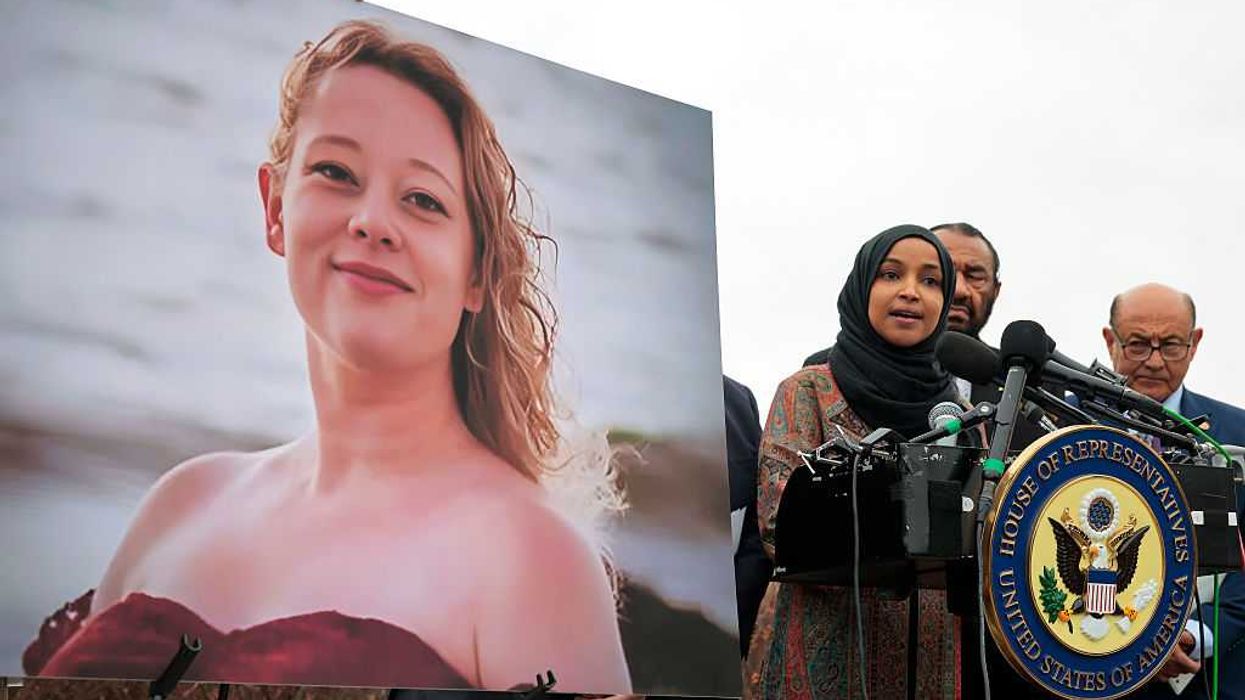
New information has surfaced regarding the January 7 death of Renee Nicole Good, who was shot by an Immigration and Customs Enforcement officer after obstructing a deportation operation and ultimately endangering the officers’ lives.
The Minnesota Star Tribune reported that Good suffered four gunshot wounds, contradicting earlier reports of the January 7 incident that said she had three gunshot wounds.
Good was brought out of the vehicle to a snowbank and then the sidewalk to get ‘separation from an escalating scene involving law enforcement and bystanders.’
Citing the Minneapolis Fire Department’s incident report acquired through a state Data Practices Act request, the Tribune reported that paramedics found Good unresponsive, not breathing, and with an “inconsistent” and “irregular” pulse.
Good was brought out of the vehicle to a snowbank and then the sidewalk to get “separation from an escalating scene involving law enforcement and bystanders,” the Tribune wrote.
RELATED: ‘That’s what the Bible tells us’: Renee Good’s former in-law surprises CNN host with his message
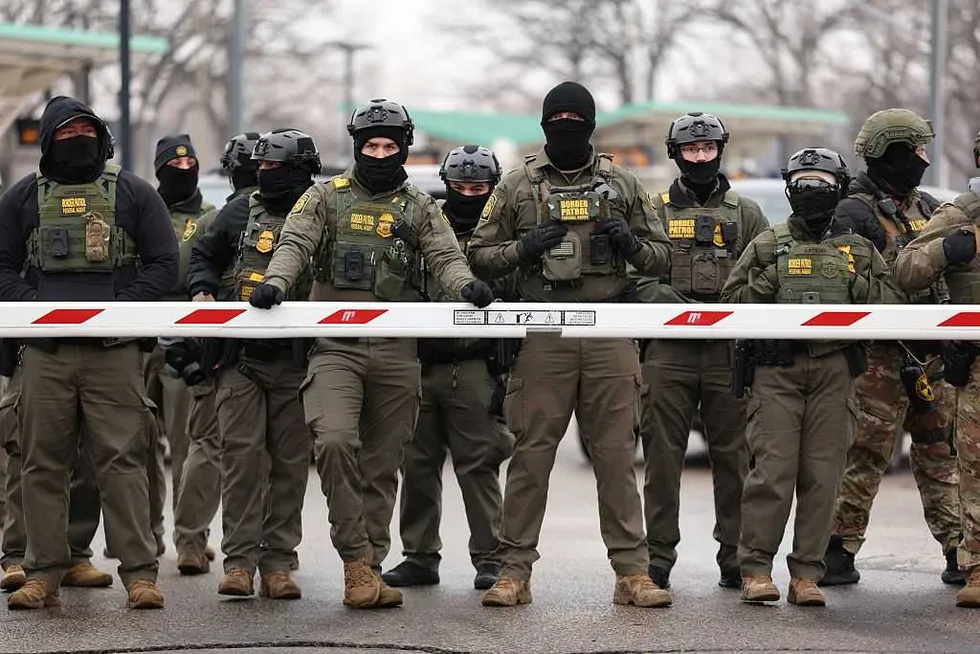 Photo by CHARLY TRIBALLEAU / AFP via Getty Images
According to the Star Tribune, the incident report said that Good had two gunshot wounds to her right chest, one on her left forearm, and one “with protruding tissue on the left side of [her] head.”
Blood was flowing out of her left ear, according to the outlet’s summary of the report.
Lifesaving efforts were given at the scene of the shooting, in the ambulance on the way to the hospital, and at the hospital, Hennepin County Medical Center. These efforts were stopped around 10:30 a.m.
Like Blaze News? Bypass the censors, sign up for our newsletters, and get stories like this direct to your inbox. Sign up here!
Americans aren’t arguing any more — we’re speaking different languages
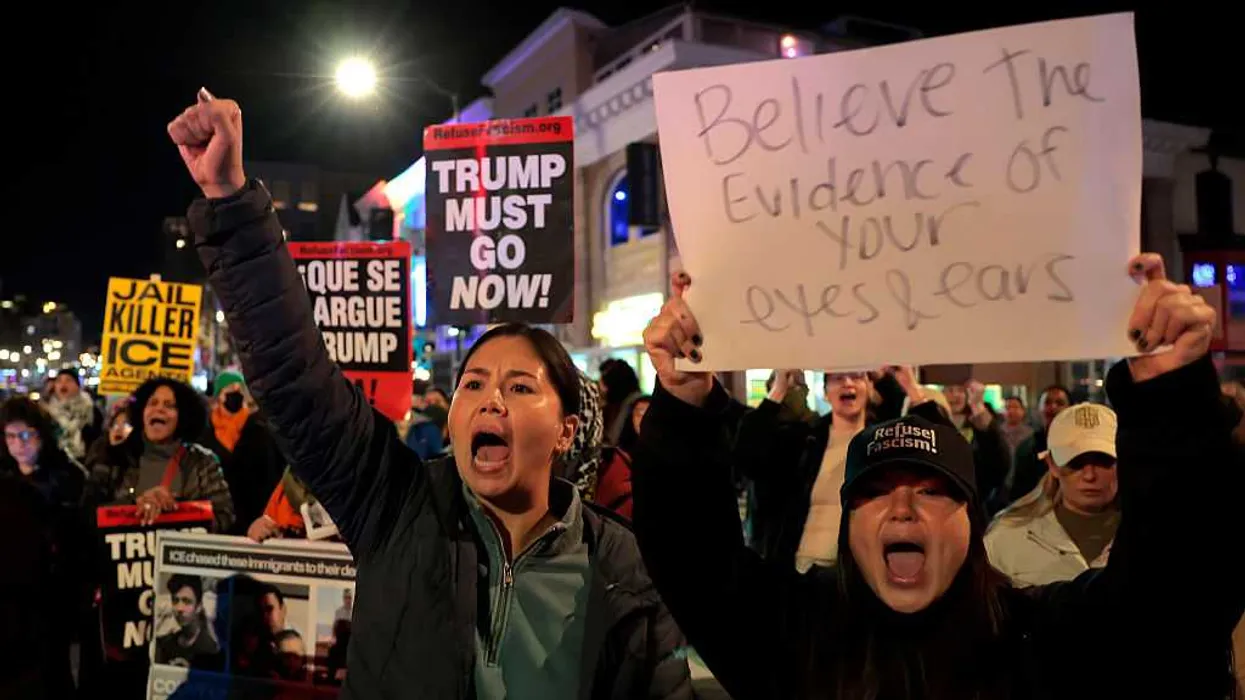
A few days ago, I found myself in a text exchange about two women killed by agents of the state.
One was Renée Nicole Good, a 37-year-old activist mother shot last week by an ICE agent in Minneapolis. The other was Ashli Babbitt, a 36-year-old U.S. Air Force veteran shot by a Capitol Police lieutenant inside the Speaker’s Lobby on January 6, 2021.
Are words being used to think — or to show whose side someone is on?
I asked what I thought was a simple moral question: Does the state ever have the moral right to kill an unarmed person who poses no immediate lethal threat?
I did not try to provoke. I did not claim the cases were the same. I said plainly that the facts, motives, and political contexts differed. My own answer was no. The purpose was not to merge the stories, but to test whether the same moral rule applied in both cases.
I was asking my friend to reason with me.
The response was not an argument. It came as a rush of narrative detail, moral verdicts, and firm insistence that the question itself was illegitimate. “Not comparable.” “Straw man.” The stories did not clarify the rule. They aimed to shut down the conversation.
But what struck me most was not the emotion. It was the disconnect.
I asked about a principle. I received a story. I tested a rule. I got a verdict. We used the same words — justice, murder, authority — but those words did very different work.
The exchange failed not because of tone or ideology. It failed because we spoke different civic languages. More troubling, we no longer agree on what civic language is for.
More than a failure of civility
For years, we have blamed polarization and tribalism. We shout past one another. We retreat into bubbles. All of that is true. But the deeper problem runs deeper than disagreement.
We no longer share a civic vocabulary shaped by common expectations about clarity, restraint, and universality.
We still speak words that are recognizably English. But we use the same words to reach very different ends.
One civic language treats words as tools for reasoning. Call it “principled” or “rule-based.” Questions test limits and consistency. Moral claims aim at rules that apply beyond one case. Disagreement is normal. When someone asks, “What rule applies here?” the question is not an attack. It is the point.
This language shapes law, constitutional argument, philosophy, and journalism at its best. Words like “justified” or “legitimate” refer to standards that others can test and challenge. If a claim fails under scrutiny, it loses force.
The other civic language works differently. Call it “narrative” or “moral-emergency” language. Here, words signal alignment more than reasoning. Stories carry moral weight on their own. Urgency overrides abstraction. Questions feel like invalidation. Consistency tests sound like hostility.
RELATED: The day the media taught me it’s always wrong to be right
 treety via iStock/Getty Images
In this mode, terms drift. “Murder” no longer means unlawful killing. It means moral outrage. “Straw man” stops meaning logical distortion and starts meaning emotional offense. “Not comparable” does not mean analytically distinct. It means do not apply your framework here.
Neither language is dishonest. That is the danger. Each serves a different purpose. The breakdown comes when speakers assume they are having the same kind of conversation.
The principled speaker hears evasion: “You didn’t answer my question.” The moral-emergency speaker hears bad faith: “You don’t care.”
Both walk away convinced the other is unreasonable.
Moral certainty over moral reasoning
Social media did not create this divide, but it rewards one language and punishes the other. Platforms favor speed over reflection, story over rule, accusation over inquiry. Moral certainty spreads faster than moral reasoning. Over time, abstraction starts to feel cruel and questions feel aggressive.
That is why so many political arguments stall at the same point. Facts do not resolve them because facts are not the dispute. The real question is whether rule-testing is even allowed. Once someone frames an issue as a moral emergency, universality itself looks suspect.
A simple test helps. Is this person using words to reason toward a general rule, or to signal moral alignment in a crisis?
Put more simply: Are words being used to think — or to show whose side someone is on?
RELATED: I don’t need your civil war
 Photo by Tom Williams/CQ-Roll Call Inc. via Getty Images
Once you see this, many conversations make sense. You understand why certain questions trigger anger. You see why consistency tests go unanswered. You recognize when dialogue cannot move forward, no matter how careful you sound.
This does not mean outrage is always wrong. It does not mean people should stop caring. It does mean we need better civic literacy about how language works. Sometimes restraint is a virtue. Walking away is not cowardice. Declining to argue is not surrender.
What cannot work is trying to make a principled argument within a moral-emergency frame.
America’s founders understood this. They designed institutions to slow decisions, force deliberation, and channel arguments into forms governed by rules rather than passion.
If we fail to see that we now speak different civic languages, we will lose the ability to talk calmly about the ideas and ideals that should bind us together. The alternative is full adoption of moral-emergency language — where persuasion gives way to force.
Too many Americans have already chosen that path.
‘Don’t make a bad decision’: ICE officer warns smug leftists allegedly trailing agents in their SUVs
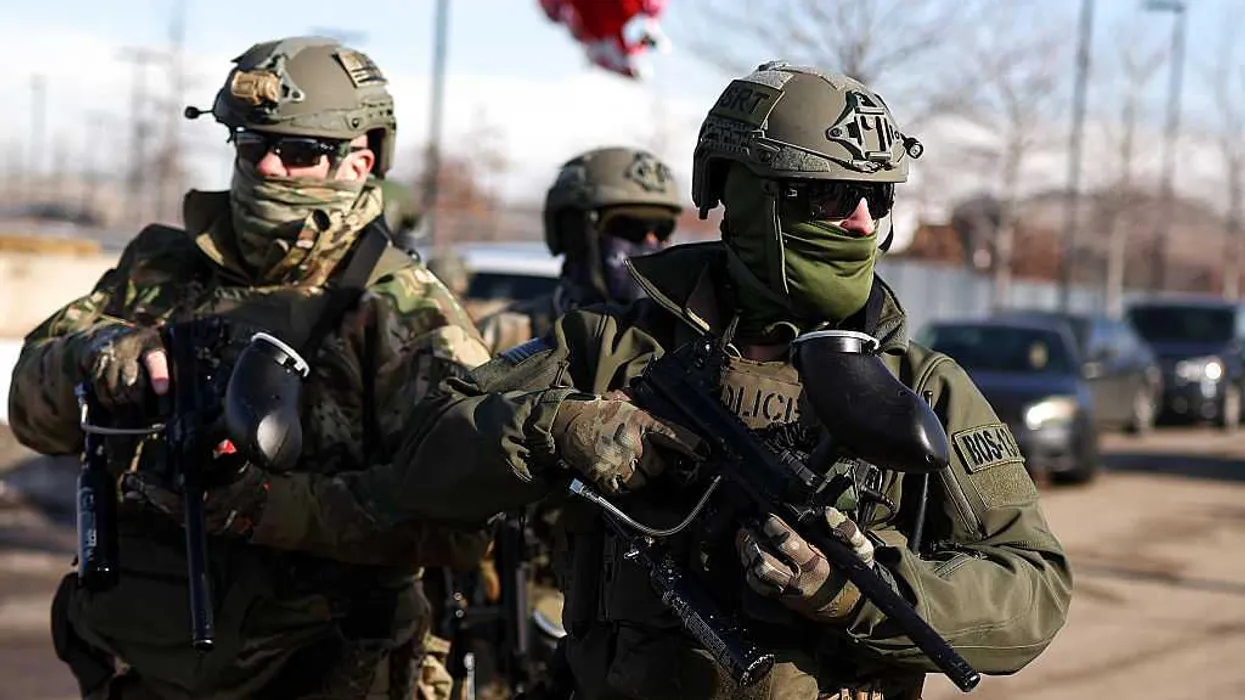
Tensions are running high in Minneapolis after an ICE officer shot and killed a leftist who struck him with her vehicle on Wednesday.
Renee Nicole Good, a mother of three who was part of the local “ICE Watch,” had reportedly been trailing ICE agents in her SUV. Good was later confronted by an ICE officer who ordered her to exit her vehicle. She refused to cooperate, then turned and accelerated her vehicle toward another agent, who fatally shot her.
‘Don’t interfere.’
Just days after the shooting, ICE agents were filmed confronting another leftist woman in an SUV, pleading with her not to “make a bad decision.”
“If I continually see you following us, interfering with us, honking your horn, blocking our cars, you’ll have a very high probability of making a really bad decision of being arrested today,” the ICE officer warned.
RELATED: VIDEO: Unhinged anti-ICE extremists hurl profanities at agents in Minneapolis: ‘Get the f**k out!’
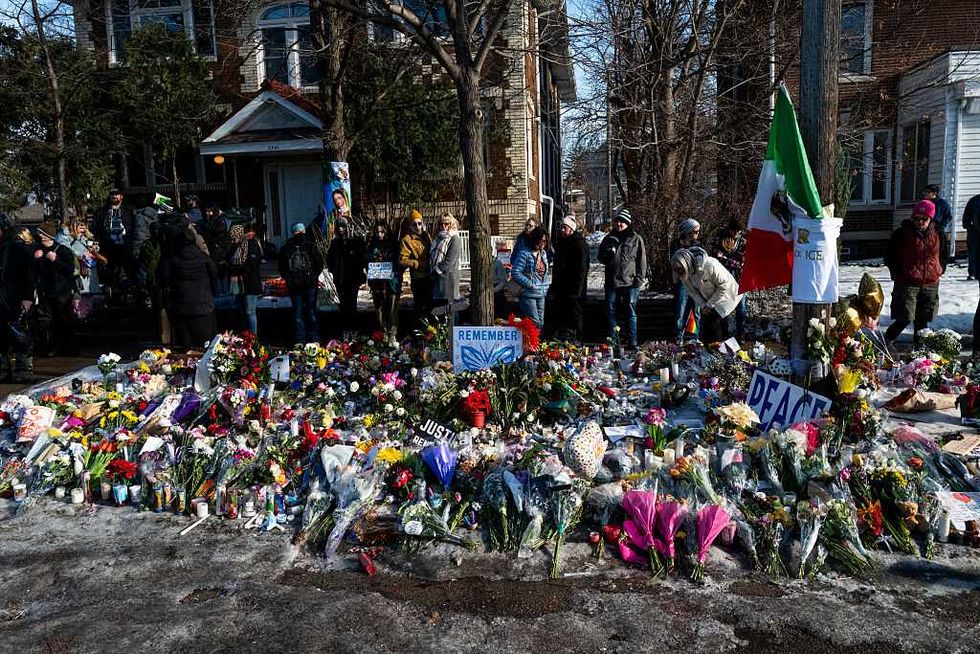 Photo by Stephen Maturen/Getty Images
The woman gave a smug response to the agent’s warning, telling him to have a “terrible day.”
“Well, bad decisions, that’s funny coming from you,” she said. After the agent told her to “have a great day,” she replied with, “I hope you have a terrible day.”
The officer walked away from her car to speak with another woman sitting in the passenger seat of an SUV that had allegedly been trailing the officers. The woman filmed the officer but refused to lower her window to speak with him as a car horn blared in the background.
RELATED: Trump team calls out ‘depravity’ of Jimmy Kimmel’s response to lethal ICE shooting
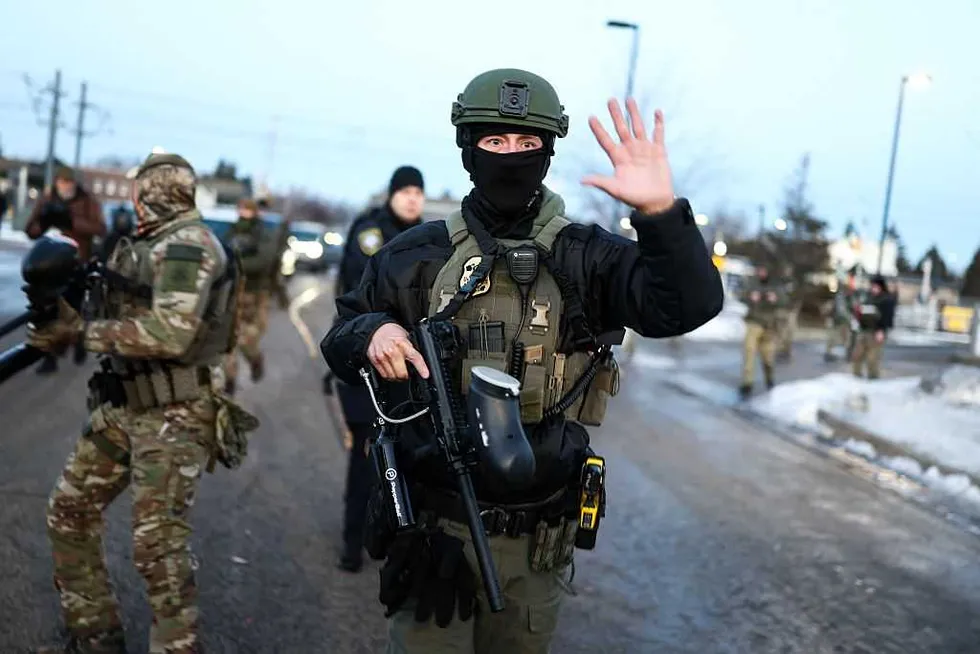 Photo by CHARLY TRIBALLEAU/AFP via Getty Images
“Don’t make a bad decision today,” the officer told the other leftist. “Don’t interfere.”
Like Blaze News? Bypass the censors, sign up for our newsletters, and get stories like this direct to your inbox. Sign up here!





