

Category: Return
Anthropic says its own new model is too dangerous for the public — but not these Big Tech companies

Anthropic is sending out a warning that its artificial intelligence model is sophisticated enough to undo decades of research.
The company operates Claude, the AI chatbot that has been ripped off and turned into a free, public model, and is hoping to get together with a consortium of tech companies to button up the security measures ahead of its release.
‘It has found vulnerabilities, and in some cases crafted exploits.’
Anthropic’s Mythos model of Claude AI will only be available to 40 select companies to be used for the power of good, the company claims.
It represents “the starting point for what we think will be an industry change point, or reckoning, with what needs to happen now,” said Logan Graham, head of Anthropic’s vulnerability testing team.
The company fears that its new AI model is so good at finding cracks in cybersecurity that it must only be shared with companies it deems capable and responsible enough to prepare for possible attacks when Mythos goes public.
“This model is good at finding vulnerabilities that would be well understood and findable by security researchers,” Graham said. “At the same time, it has found vulnerabilities, and in some cases crafted exploits, sophisticated enough that they were both missed by literally decades of security researchers, as well as all the automated tools designed to find them.”
RELATED: How to power the AI race without losing control
 Samyukta Lakshmi/Bloomberg/Getty Images
Anthropic will reportedly commit up to $100 million in credits for the project, meaning the amount of money it would typically charge for such a volume of its chatbot’s usage.
Labeled Project Glasswing, the initiative to shore up cybersecurity will grant Mythos access to handpicked companies chosen largely from Big Tech like Amazon, Apple, Google, and Microsoft. The group is rounded out by internet infrastructure and cybersecurity giants like Broadcom, Cisco, CrowdStrike, Nvidia, and Palo Alto Networks, along with financial titan JPMorgan Chase and key open-source nonprofit the Linux Foundation.
This is not the first time an AI company has warned its product is too dangerous for the public, and looking back, readers can gauge whether or not Claude may be as dangerous as its creators purport it to be.
In 2019, OpenAI sent out a warning ahead of its release of GPT-2, claiming that its capabilities — now vastly eclipsed by later models — could be used to mass-produce propaganda or misleading text.
As Wired reported at the time, OpenAI said GPT-2 was too risky to be released to the general public.
RELATED: Claude, Anthropic’s AI assistant, slammed by Elon Musk for anti-white responses to simple prompts
Claude has been in the news for alleged missteps, leaks, and accidental postings throughout the past year, and while it may not be a household name yet, it has raced its way through the tech sector as a go-to for “agentic” work building software, apps, and even companies.
In addition to its model being open-sourced and used by the general public for free, the company has been noted for “accidental” postings of its own code.
Anthropic “accidentally uploaded a file to a public repository that’s just meant to help developers understand how to use their product” and “exposed some of the source code of Claude,” reporter Aaron Holmes explained recently.
Proprietary information was further leaked in another alleged accidental posting, this time through a blog draft that revealed “internal source code.”
The company seems poised for consistent marketing battles, both willing and unwilling, from its high-stakes lawsuit against the federal government labeling it a supply chain risk to the blowback it has received from putting a woman closely linked to the cultish Effective Altruism movement in charge of its AI’s “Constitution.”
Like Blaze News? Bypass the censors, sign up for our newsletters, and get stories like this direct to your inbox. Sign up here!
Burchett claims alien ‘machinery’ could destroy us in ‘a blink of an eye’
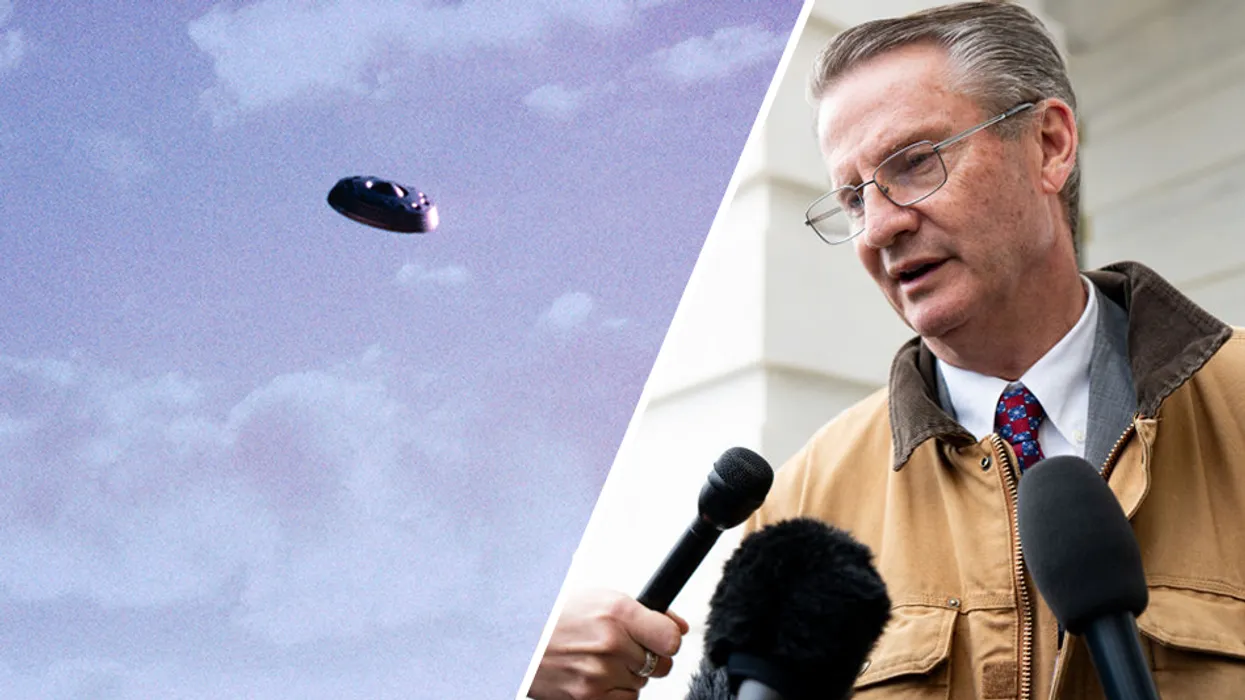
The loose-lipped Republican politician made fresh, wild assertions about classified government meetings, the alleged existence of alien programs, and secret forced breeding programs crossing aliens and humans.
Rep. Tim Burchett (R-Tenn.) continued his recent extraterrestrial revelations in a recent interview, just as NASA is circling the moon.
‘This is what the guy told me.’
During a discussion with TMZ hosts Harvey Levin and Charles Latibeaudiere, Burchett was asked to elaborate on a closed-door meeting he had in a “secure setting” with an unnamed official.
Burchett quickly told the hosts that the individual “gave addresses, they gave times and dates,” and that the people who were in the meeting included those from the “executive branch of previous presidents, not this current president.”
After those remarks, TMZ’s Levin got more specific, asking directly about reports of “pieces of machinery” and “life” that were alleged found and did not “seem earthly.”
Levin asked Burchett to address the existence of either or both.
“I’d say you’d be safe to say both,” the Republican replied.
RELATED: ‘I’m not suicidal’: Rep. Burchett says US would fall apart if we heard truth about UFOs
Pushing things further, TMZ asked Burchett if it was true that “a member of our government” told him that a piece of alien machinery “interacted in some form with people.”
Burchett simply replied, “Yeah, they have … it’s pretty wild.”
“I’m not going to lie to you,” the 61-year-old continued, claiming he would even take a polygraph test to prove it. “This is what the guy told me.”
Burchett then recalled an interaction he had with a “very high-ranking naval official” who allegedly described underwater crafts to him that were the size of “a football field moving at over 200 miles an hour.”
Burchett’s story placed the meeting at his own office and concluded with the military official pulling him “up close” and saying, “Tim, they’re real.”
The official then left out the side door, which Burchett said “nobody ever uses,” describing it as “kind of weird.”
RELATED: Elon Musk announces plans for PERMANENT lunar city
 Andrew Harnik/Getty Images
Burchett actually dispelled any idea that Earth is in danger, saying he did not believe there was an imminent threat just because the unknown forces could destroy humanity if they so chose to.
“I don’t think we’re at danger of this. I mean, if these things exist, as I think they do, they could have destroyed us with a blink of an eye. I just don’t see that,” the congressman explained.
He then added, “But I do think they have the technology and the capabilities of something that we can’t understand or we can’t grasp.”
The eyebrow-raising interview concluded with Burchett commenting on recent remarks by former Rep. Matt Gaetz (R-Fla.).
Gaetz had told host Benny Johnson about “enforced breeding programs” that involved “captured aliens” who were forced to breed with humans “to create some hybrid race that could engage in intergalactic communication.”
“That’s a true story,” Burchett claimed. The congressman said that he, Gaetz, and Rep. Anna Paulina Luna (R-Fla.) went to an unspecified location in Florida, where the group of politicians was first turned away. That was until Gaetz “made a phone call to somebody at the Pentagon.”
“All of a sudden they opened the doors,” Burchett recalled.
It was then that a group of pilots allegedly told the politicians about the breeding program.
Like Blaze News? Bypass the censors, sign up for our newsletters, and get stories like this direct to your inbox. Sign up here!
Burchett claims alien ‘machinery’ could destroy us in ‘a blink of an eye’
The loose-lipped Republican politician made fresh, wild assertions about classified government meetings, the alleged existence of alien programs, and secret forced breeding programs crossing aliens and humans.
Rep. Tim Burchett (R-Tenn.) continued his recent extraterrestrial revelations in a recent interview, just as NASA is circling the moon.
‘This is what the guy told me.’
During a discussion with TMZ hosts Harvey Levin and Charles Latibeaudiere, Burchett was asked to elaborate on a closed-door meeting he had in a “secure setting” with an unnamed official.
Burchett quickly told the hosts that the individual “gave addresses, they gave times and dates,” and that the people who were in the meeting included those from the “executive branch of previous presidents, not this current president.”
After those remarks, TMZ’s Levin got more specific, asking directly about reports of “pieces of machinery” and “life” that were alleged found and did not “seem earthly.”
Levin asked Burchett to address the existence of either or both.
“I’d say you’d be safe to say both,” the Republican replied.
RELATED: ‘I’m not suicidal’: Rep. Burchett says US would fall apart if we heard truth about UFOs
Pushing things further, TMZ asked Burchett if it was true that “a member of our government” told him that a piece of alien machinery “interacted in some form with people.”
Burchett simply replied, “Yeah, they have … it’s pretty wild.”
“I’m not going to lie to you,” the 61-year-old continued, claiming he would even take a polygraph test to prove it. “This is what the guy told me.”
Burchett then recalled an interaction he had with a “very high-ranking naval official” who allegedly described underwater crafts to him that were the size of “a football field moving at over 200 miles an hour.”
Burchett’s story placed the meeting at his own office and concluded with the military official pulling him “up close” and saying, “Tim, they’re real.”
The official then left out the side door, which Burchett said “nobody ever uses,” describing it as “kind of weird.”
RELATED: Elon Musk announces plans for PERMANENT lunar city
Andrew Harnik/Getty Images
Burchett actually dispelled any idea that Earth is in danger, saying he did not believe there was an imminent threat just because the unknown forces could destroy humanity if they so chose to.
“I don’t think we’re at danger of this. I mean, if these things exist, as I think they do, they could have destroyed us with a blink of an eye. I just don’t see that,” the congressman explained.
He then added, “But I do think they have the technology and the capabilities of something that we can’t understand or we can’t grasp.”
The eyebrow-raising interview concluded with Burchett commenting on recent remarks by former Rep. Matt Gaetz (R-Fla.).
Gaetz had told host Benny Johnson about “enforced breeding programs” that involved “captured aliens” who were forced to breed with humans “to create some hybrid race that could engage in intergalactic communication.”
“That’s a true story,” Burchett claimed. The congressman said that he, Gaetz, and Rep. Anna Paulina Luna (R-Fla.) went to an unspecified location in Florida, where the group of politicians was first turned away. That was until Gaetz “made a phone call to somebody at the Pentagon.”
“All of a sudden they opened the doors,” Burchett recalled.
It was then that a group of pilots allegedly told the politicians about the breeding program.
Like Blaze News? Bypass the censors, sign up for our newsletters, and get stories like this direct to your inbox. Sign up here!
NASA’s Victor Glover shares gospel as he circles dark side of the moon: ‘Love God with all that you are’
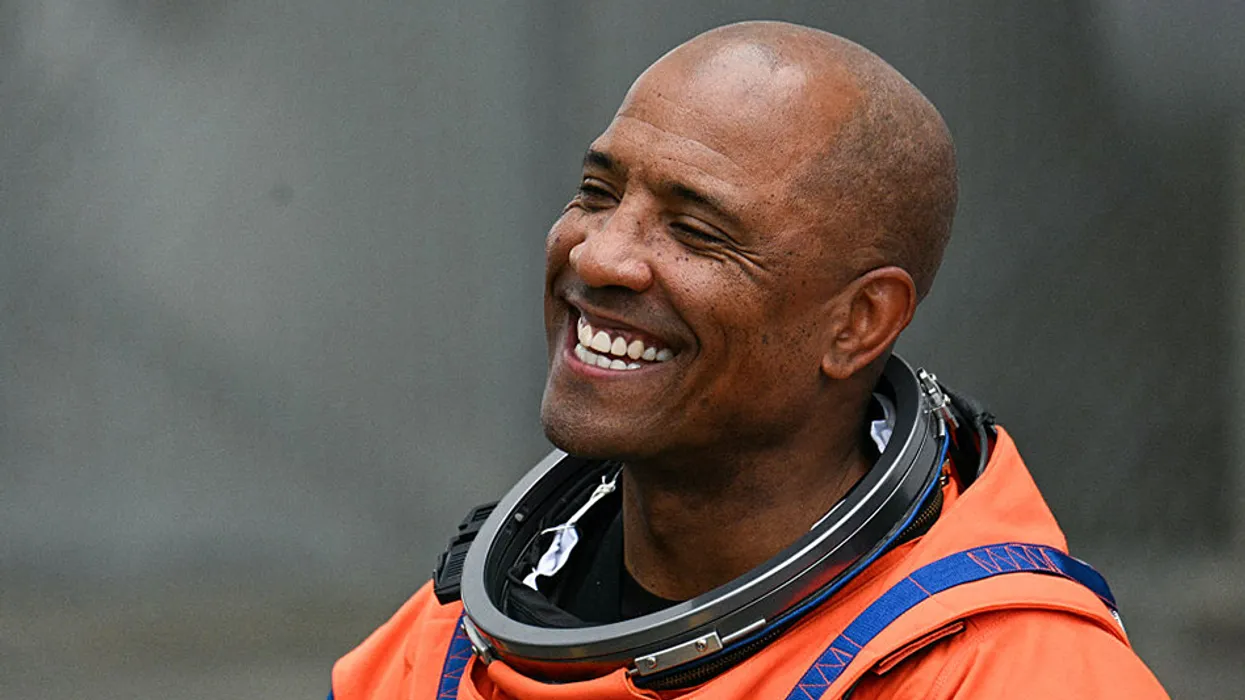
NASA’s Artemis II pilot found time to speak about Christ and Christianity before circumnavigating the moon on Monday.
Before Victor Glover and his fellow crew members traversed the dark side of the moon, losing radio signal as they went out of Earth’s line of sight, Glover said he wanted to remind Earth-dwellers about one of the “most important mysteries” in the world.
‘We love you from the moon.’
In a message to NASA’s mission control, with the radio transmission broadcasted live, Glover revealed he was talking about “love.”
“Christ said in response to ‘what was the greatest command’ that it was to love God with all that you are. And he, also being a great teacher, said the second is equal to it, and that is to love your neighbor as yourself,” Glover stated.
He concluded the transmission, marked at 6:44 p.m. ET, by saying, “And so as we prepare to go out of radio communication, we’re still going to feel your love from Earth. And to all of you down there on Earth and around Earth: We love you from the moon.”
After a pause, mission control responded: “Houston copies. We’ll see you on the other side.”
“We will see you on the other side,” Glover affirmed.
RELATED: NASA astronaut gives very American response to DEI questioning
According to NASA’s log, the crew had just witnessed an “Earthset” three minutes earlier, the moment Earth drops below the lunar horizon.
This marked the beginning of about 40 minutes of darkness as the astronauts traveled behind the moon, which blocks the radio signals from NASA’s network.
The Artemis II crew reached 252,756 miles beyond our planet 18 minutes later, at 7:02 p.m., at a new human record for the maximum distance attained from Earth.
By 8:35 p.m., the crew entered a solar eclipse that lasted about an hour, before beginning their trip back home.
Glover has been full of memorable and insightful quotes throughout the mission, including the remarks he made before Easter. Glover spoke on video alongside his crew members about “the beauty of creation” over the weekend, saying that from his perspective, he could see Earth as one whole, and it reminded him of Scripture.
“When I read the Bible and I look at all of the amazing things that were done for us who were created … you have this amazing place — this spaceship. You guys are talking to us because we’re in a spaceship really far from Earth. But you’re on a spaceship called Earth that was created to give us a place to live in the universe — in the cosmos,” Glover explained.
Astonishingly, without having prepared remarks, Glover delivered an extemporaneous motivational speech to all those listening.
“Maybe the distance we are from you makes you think what we’re doing is special, but we’re the same distance from you. And I’m trying to tell you — just trust me: You are special. In all of this emptiness — this is a whole bunch of nothing, this thing we call the universe — you have this oasis, this beautiful place that we get to exist together.”
Like Blaze News? Bypass the censors, sign up for our newsletters, and get stories like this direct to your inbox. Sign up here!
Sam Altman described as ‘sociopath’ by board member in brutal insider report: ‘He’s unconstrained by truth’
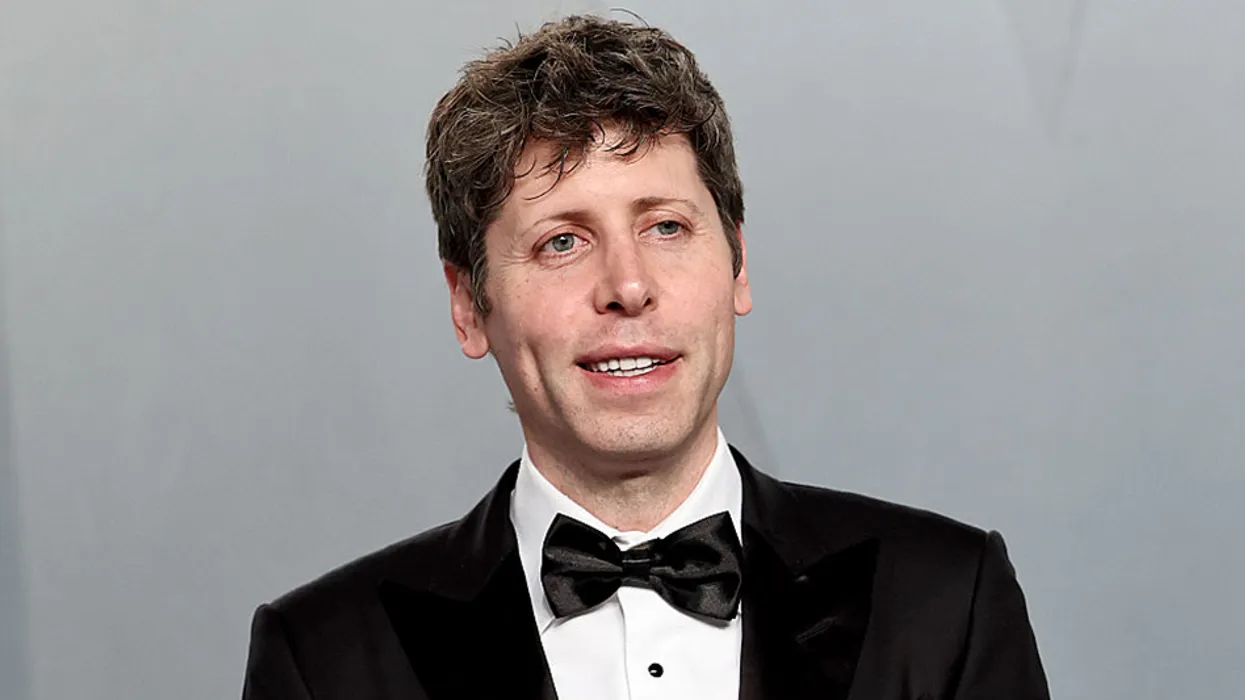
OpenAI CEO Sam Altman was dragged through the mud in a new in-depth report that features former colleagues and current board members referring to him as sociopath and a liar.
Altman, 40, has yet to respond to claims made in a recent report, some of which were uncovered in secret memos to OpenAI’s board members.
‘He is a sociopath. He would do anything.’
According to the New Yorker, OpenAI’s chief scientist, Ilya Sutskever, sent the memos to three other board members in 2023. One of the memos about Altman began with a list titled “Sam exhibits a consistent pattern of.” The first item on the list was “lying.”
The memos also alleged that Altman misrepresented facts to executives and board members while deceiving them about safety protocols. Unfortunately for Altman, the claims did not stop there.
“He’s unconstrained by truth,” a board member told the New Yorker. “He has two traits that are almost never seen in the same person. The first is a strong desire to please people, to be liked in any given interaction. The second is almost a sociopathic lack of concern for the consequences that may come from deceiving someone.”
The outlet said that the unnamed board member was not the only person to describe Altman as “sociopathic” without being prompted. Not long before his 2013 suicide, according to the New Yorker, coder Aaron Swartz warned at least one friend about Altman, whom Swartz had known from their time together at Y Combinator. His warning: “You need to understand that Sam can never be trusted. He is a sociopath. He would do anything.”
Sutskever additionally implied that he did not think Altman should have power over others, saying, “I don’t think Sam is the guy who should have his finger on the button.”
Others described him as more ambitious than anything else.
RELATED: Sam Altman tells BlackRock he wants AI on a meter ‘like electricity or water’
Former OpenAI board member Sue Yoon said Altman was “not this Machiavellian villain” but was able to convince himself of his own sales pitches.
“He’s too caught up in his own self-belief,” she reportedly said. “So he does things that, if you live in the real world, make no sense. But he doesn’t live in the real world.”
Other anonymous colleagues cited by the New Yorker said that Sutskever and similar detractors were simply aspiring to take Altman’s throne. Still, even many neutral comments did not help Altman’s portrayal in the report.
“He’s unbelievably persuasive. Like, Jedi mind tricks,” a tech executive colleague of Altman’s reportedly said. “He’s just next-level.”
At the same time, OpenAI is allegedly in the midst of unleashing superintelligence that Altman himself says will be so disruptive that it will require a new social contract.
RELATED: Sexting with chatbots is too far, OpenAI decides
 Anna Moneymaker/Getty Images
Altman told Axios that there would be widespread job loss and a threat of cyberattacks coupled with social unrest.
“I suspect in the next year,” he said, “we will see significant threats we have to mitigate from cyber.”
Altman proposed a new deal with citizens that includes a public wealth fund, taxes on “automated labor,” a 32-hour workweek, and the “right to AI.”
That confirms previous reports that Altman wanted to put AI on a meter like electricity or water, to both democratize its usage and limit the possibility of overburdening the electrical grid.
OpenAI did not respond to Return’s request for comment about the claims made about Altman and who they were coming from.
Like Blaze News? Bypass the censors, sign up for our newsletters, and get stories like this direct to your inbox. Sign up here!
NASA astronaut gives very American response to DEI questioning
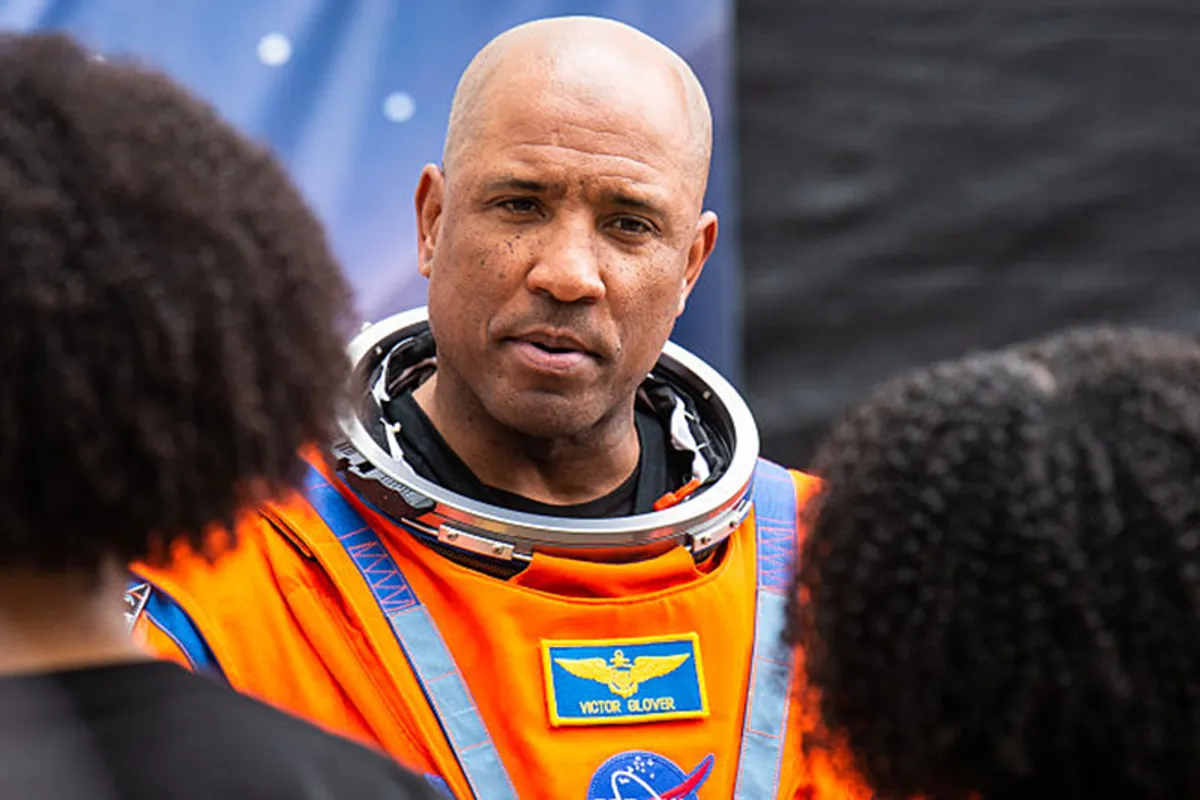
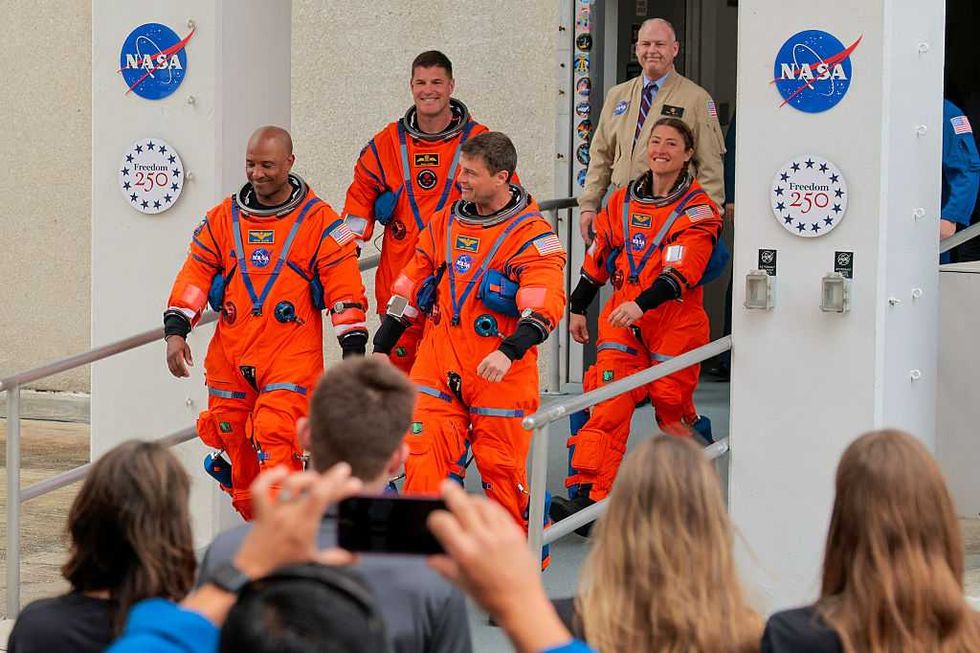
Before the Artemis II mission blasted off to go around the moon, the astronauts were faced with one more earthly question about diversity and representation.
The last-ditch struggle session-style question came while the astronauts were in preflight quarantine, literally unable to escape the woke query.
‘It’s the story of humanity, not black history, not women’s history.’
Just three days before the launch on Sunday, the astronauts fielded questions, with a focus on race and gender coming from Spectrum News’ Anthony Leone. He asked, “There are so many firsts here for this mission. The first commander of a returned manned mission to the moon. The first black man, the first woman, the first Canadian to visit the moon. What do these firsts mean to each of you?”
The first to answer was Artemis II commander Reid Wiseman, who squashed any idea of self praise:
“We are not doing this for the superlatives. We’re doing this because it’s a unique opportunity. We are going for all and by all. This is what NASA embodies.”
Next it was pilot Victor Glover who completely rejected the premise, going viral for his response.
“I want to highlight, I guess maybe one facet of this is the tension,” Glover explained.
“This dichotomy between happiness that a young woman can look at Christina and just physicalize her, her passion or her interest, or even if it’s not something she wants to do, she can just be like, ‘girl power.’ And that’s awesome. And that young brown boys and girls can look at me and go, ‘Hey, he looks like me, and he’s doing what?’ And that’s great, I love that,” Glover continued.
However, the astronaut then revealed he has grown tired of race being the first thing mentioned about his accomplishments:
“I also hope we are pushing the other direction that one day we don’t have to talk about these firsts, that one day this is just —” Glover paused to reset for emphasis. “Listen to this: that this is the human history. It’s about human history. It’s the story of humanity, not black history, not women’s history, but that it becomes human history.”
RELATED: The return to the moon starts NOW: ‘Exploration is what we do’
Glover then passed the mic to Christina Koch, Artemis II mission specialist. Koch did not disappoint either, telling reporters that the mission is “not about celebrating any one individual.”
“If there is something to celebrate, it’s that we are at a time when everyone who has a dream gets to work equally hard to achieve that dream … if we are not going for all and by all, we aren’t truly answering all of humanity’s call to explore. That, to me, is what’s worth celebrating.”
While the NASA astronauts all focused on the bigger picture rather than celebrating race or gender politics, the fourth crew member, Canadian mission specialist Jeremy Hansen, took a different route.
While Hansen began by saying the mission is an acknowledgment of “anybody who shows up” and is able to contribute something meaningful, he quickly pivoted to give progressives an answer to be proud of.
“I’m wearing a Canadian patch here that was designed by an Anishinaabe artist in Canada, and it just represents some of the beauty of indigenous culture and their perspective on the moon and the seven sacred laws and just the richness of doing something together and how inviting that is.”
The Anishinaabe refers to a grouping of native tribes that surrounded the Great Lakes region. Including the Algonquin and Mississauga people, as well as groups of smaller tribes, it is an oft-cited moniker favored by activists pursuing their political endeavors.
RELATED: America returns to the moon: How to watch Artemis II launch
 Chip Somodevilla/Getty Images
Glover is a devout Christian; he has been adamant about his faith and even asked for prayers regarding his moon mission. His brazen unwillingness to compromise on presenting his views has made him stand out throughout the mission lead-up.
“I want to use the abilities that God has given me to do my job well and support my crewmates and mission and NASA,” he said in a 2020 Christian Chronicle interview; in remarks to Christianity Today, Glover said that he “very intentionally” puts “God at the front” of his missions because “it’s the way I try to live my life as well.”
Like Blaze News? Bypass the censors, sign up for our newsletters, and get stories like this direct to your inbox. Sign up here!
Bombshell report claims China is transforming old jets for new war

Multiple sources have claimed that the Chinese government is suspiciously repositioning its military assets, signaling possible future activity around Taiwan.
The reports come from the Mitchell Institute for Aerospace Studies, which tracks Chinese military might and defense systems.
‘We are concerned by the increased pressure from Beijing, including military activity around Taiwan.’
The China Airpower Tracker reportedly showed lines of typically retired Chinese fighter jets, which have drawn suspicion from experts. The J-6 fighter (also known as the Shenyang J-6) was first developed in the late 1950s.
China retired the line of jets in the late 1990s, but now, experts say, China is retrofitting the old fighters to serve as unmanned craft and staging them at six air bases close to the Taiwan Strait. Mitchell Institute senior fellow J. Michael Dahm told Reuters that approximately 200 obsolete fighters were being converted to drones.
The drones could be used to “attack Taiwan, U.S., or allied targets in large numbers, effectively overwhelming air defenses,” Dahm claimed.
At the same time, the Mitchell Institute is not the only source noticing some of China’s militaristic anomalies.
RELATED: I saw the sky light up over Dubai. The real shock came next.
 MARK RALSTON/AFP/Getty Images
In a March 17 report, Japan’s National Institute for Defense Studies noticed “small swept-wing aircraft parked on the same apron” as the newer J-16 multi-role fighter at Zhangzhou’s Longtian Airport, “presumed to be a J-6 fighter (equipped with auxiliary fuel tanks).”
The NIDS concluded that “there is no immediately apparent rational explanation for the presence of J-6s at forward airfields. The co-existence of state-of-the-art multi-role fighters and obsolete fighters cannot be explained simply by a fleet modernization program,” the report continued. “Rather, it suggests that they may be assigned different missions.”
Noting that the J-6 is no longer capable of enduring modern air-to-air battles, the report said it is “not technically implausible” that it could be recommissioned into service following a conversion to an “unmanned configuration.”
RELATED: The only Iran plan that doesn’t end with a 20-year hangover
 Photo DigitalGlobe/Getty Images
“We are concerned by the increased pressure from Beijing, including military activity around Taiwan that raises the risk of miscalculation,” Sen. Jeanne Shaheen (D-N.H.), ranking member of the Senate Foreign Relations Committee, said in a recent Taiwan briefing.
Taiwanese Deputy Minister Hsu Szu-chien said he hoped the United States would soon expedite a process for arm sales to his country.
“This would greatly facilitate our efforts to secure funding for the special defense budget,” said Szu-chien.
Reuters also reported that the U.S. is preparing an arm sales package to Taiwan worth $14 billion.
Like Blaze News? Bypass the censors, sign up for our newsletters, and get stories like this direct to your inbox. Sign up here!
Jeffrey Epstein was BANNED from Xbox Live — for harassing other gamers
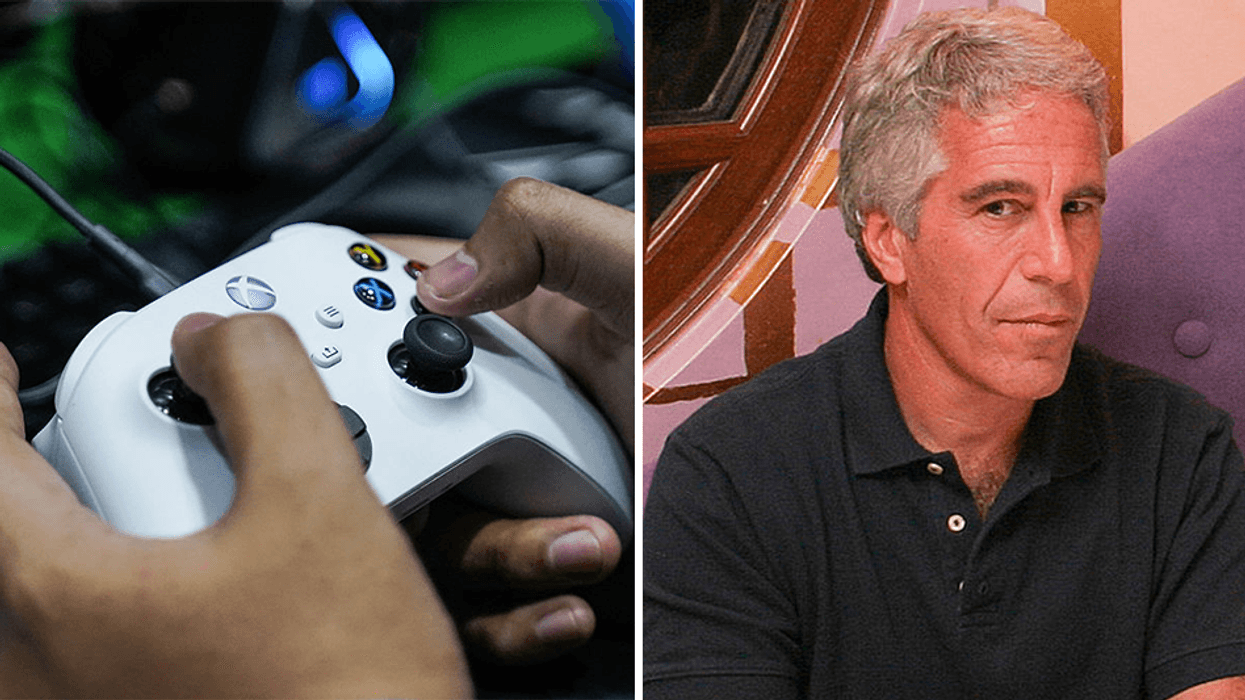
Whatever the scope of Bill Gates’ relationship with Jeffrey Epstein, Microsoft seemingly had at least a few reasons to ban the shadowy financier and sex abuser from its gaming platform.
Although Epstein was first convicted of sexual abuse crimes in 2008, it appears he had several more years of gaming left in him.
‘”Severe, repeated, and/or excessive” mistreatment of his peers.’
While most were likely gearing up for the Christmas season at the time, Epstein may have been hitting Microsoft’s online gaming platform Xbox Live hard around the holidays. It was Thursday, December 19, 2013, when Epstein got an email from the service that informed him he was getting permanently banned. The document has been made available by the Department of Justice.
The email to Epstein was labeled a “Notice of permanent enforcement action” for “Harassment, threats, and/or abuse” from xlcm@microsoft.com, which has been noted online as Xbox’s official policy and enforcement team.
The ban came as a result of “severe, repeated, and/or excessive” mistreatment of his peers, the email said. It also provided a list of Epstein’s possible conduct that could have initiated the ban:
- Threats of death, harm, property damage, or any other act of violence or vandalism
- Verbal abuse or profanity directed at other players
- Griefing
- Extortion or manipulation
- Libel, defamation, or slander
- Display or transmission of personally identifiable information, such as name, address, phone number, or IP address
- Stalking
But that wasn’t all.
RELATED: 25 years later, the gaming console that caused so much chaos is still No. 1
That same day, Epstein received another email to his connected account, jeevacation@gmail.com; the sender has been redacted.
This email informed him that he had been permanently suspended from Xbox Live due to the New York Attorney General’s partnership with Microsoft, which prohibits the service from having “New York registered sex offenders” on its platform.
This was done to “minimize the risk to others, particularly children,” the email stated.
While Epstein was already a registered sex offender years prior, it seems that he did not join the Xbox platform until 2012.
RELATED: OOF: Mark Zuckerberg’s losing metaverse bet cost Meta $77B
 Photo by JOHN GURZINSKI/AFP via Getty Images
This is evidenced by a 2012 “Welcome to Xbox LIVE” email he received, which was also made available by the DOJ.
Other video game-related emails include Epstein asking his assistant Lesley Groff if he has “an Xbox 360 Kinect?” in 2014, and there is another email from 2016 that talks about setting up an Xbox One that was purchased as a gift.
Like Blaze News? Bypass the censors, sign up for our newsletters, and get stories like this direct to your inbox. Sign up here!
TikTok and Snapchat dodge trial on harm-to-kids lawsuit

TikTok will no longer be on trial when it comes to a lawsuit that claims Instagram, Snapchat, TikTok, and YouTube have platforms that are addicting and harmful to children.
The lawsuit, which involves a 19-year-old plaintiff going only by KGM, says the social networks caused her to become addicted to the apps and led to depression and suicidal thoughts.
‘New families every day … are speaking out and bringing Big Tech to court for its deliberately harmful products.’
TikTok has reportedly decided to settle and agreed in principle just hours before jury selection started in Los Angeles this week. Bloomberg Law reported that along with TikTok, Snap Inc. — owner of Snapchat — also reached a confidential settlement with the woman on January 20.
“Plaintiff KGM and defendant TikTok have reached an agreement in principle to settle her case,” Joseph VanZandt, the woman’s attorney, reportedly said in a statement.
The trial, which will continue with the other social media companies later this year, is just one of many that claim the sites are harmful, addictive, and otherwise have failed to protect children.
RELATED: Google’s new motto: Don’t be Christian
While this is the first case to go to trial, there are thousands of complaints from users and families that have sparked other lawsuits in Santa Fe, New Mexico, New York City, and the Northern District of California.
For example, in the Northern District of California, Instagram, Snapchat, TikTok, and YouTube were accused of “relentlessly” pursuing growth and “recklessly” ignoring the impacts their products have on children’s mental health.
In that case, Instagram’s former head of safety and well-being testified that Meta had a “17x” strike policy toward those who reportedly engaged in “trafficking of humans for sex.”
“You could incur 16 violations for prostitution and sexual solicitation, and upon the 17th violation, your account would be suspended,” the former employee claimed, citing internal documents.
Meta strongly denied the claims, stating, “We strongly disagree with these allegations, which rely on cherry-picked quotes and misinformed opinions in an attempt to present a deliberately misleading picture.”
“The full record will show that for over a decade, we have listened to parents, researched issues that matter most, and made real changes to protect teens,” Meta went on.
RELATED: Matt Damon: Netflix dumbs down movies for attention-impaired phone addicts
 Photo by Matt Cardy/Getty Images
The settlement between TikTok and KGM should come as no surprise, said Sacha Haworth, executive director of the Tech Oversight Project.
“This was only the first case — there are hundreds of parents and school districts in the social media addiction trials that [have started], and sadly, new families every day who are speaking out and bringing Big Tech to court for its deliberately harmful products,” she said in a statement provided to Blaze News.
If social media apps are found guilty in these trials, it could set a huge precedent for high-value settlements and possibly lead to sweeping regulation for how the sites handle youth accounts.
Like Blaze News? Bypass the censors, sign up for our newsletters, and get stories like this direct to your inbox. Sign up here!
Amazon BAILS on its cashierless grocery stores, betting you’d rather have crazy-fast delivery

What once cost Amazon over $13 billion is now turning into a big headache for the tech company.
Back in 2017, Amazon acquired Whole Foods for a price tag of $13.7 billion with the intention of making its own brick-and-mortar grocery stores under the brands Amazon Fresh and Amazon Go.
‘Fresh groceries now make up nine of the top 10 most-ordered items.’
Amazon Go was meant to be the future: a cashierless and seamless Amazon experience where shoppers simply scan on their way out. In fact, the stores mirror a mid-2000s IBM commercial about online commerce.
By 2023, expansion had been slowed, with some locations closing, CoStar reported at the time, and Amazon taking out a $720 million impairment charge.
On Tuesday, Amazon announced it is fully closing all Amazon Fresh and Amazon Go locations. Although some will be retrofitted to become Whole Foods Market stores, Amazon is making a big shift toward grocery delivery.
RELATED: Cattle rancher battles Amazon data center accused of poisoning water supply, causing miscarriages
 Michael Nagle/Bloomberg via Getty Images
Amazon said in its press release that it already offers grocery deliveries in 5,000 cities and towns, with several thousand receiving same-day deliveries. Same-day service seems to be the company’s core expansion project for 2026.
The shift appeared to be a profit-driven move after sales through same-day deliveries increased by 40x since January 2025.
“Fresh groceries now make up nine of the top 10 most-ordered items in areas where perishable groceries are available for Same-Day Delivery,” Amazon explained.
 Michael Nagle/Bloomberg via Getty Images
At the same, Amazon says it will be “taking convenience even further” with the introduction of an “ultra-fast” delivery option that brings thousands of “essential items,” including fresh food, to customers in 30 minutes or less. The offer is essentially a mobile convenience store experience.
While Fresh and Go may have not been the shining stars Amazon hoped they would be, its investment in Whole Foods Market has certainly paid off. The company boasted 40% sales growth since 2017, year-over-year increases in customer traffic, and expansion from around 460 locations in 2017 to over 550 currently.
Like Blaze News? Bypass the censors, sign up for our newsletters, and get stories like this direct to your inbox. Sign up here!





