

Category: Rfk jr
Ozempic no replacement for willpower when it comes to weight loss

A new meta-study — a study of studies — reveals an inconvenient truth about weight loss itself: Willpower still matters. Manufacturers of GLP-1 injectables like Wegovy and Ozempic would prefer we forget that, since forgetting it is profitable.
The counter-claim — that diets and exercise are no match for our genes and environment — is one fat-positivity influencers have pushed for years. Now it has been eagerly adopted by companies like Novo Nordisk and Eli Lilly to market their new, lizard-venom-derived blockbuster drugs.
People who stop taking weight-loss drugs regain weight at an average rate of 0.4 kilograms per month — roughly 10 pounds per year.
Business is booming. One in eight American adults have taken a weight-loss drug at one time — and this is only the beginning. Uptake remains far below its theoretical ceiling: More than 70% of U.S. adults are overweight or obese, including roughly 40% who are clinically obese.
Shred-pilled?
What comes next is obvious. Adoption will surge as delivery methods improve, especially pills. People don’t like needles. Pills are much easier to swallow.
Just before Christmas, the Food and Drug Administration approved a pill version of Wegovy, imaginatively branded the Wegovy Pill. Pill versions of competing drugs, including Mounjaro, are expected to follow this year.
Some time ago, I predicted that a weight-loss drugmaker would become the largest company in the world within a decade. I made that prediction when Novo Nordisk — the Danish maker of Wegovy and Ozempic — became Europe’s most valuable company, with a market capitalization of roughly $570 billion, more than $200 billion greater than Denmark’s entire GDP. (It has since fallen a few spots.) I now refine that forecast: The pharmaceutical company that perfects the weight-loss pill — balancing results, side effects, and cost — will be the largest company on Earth.
There are already more than one billion obese people worldwide. There is no obvious reason why every one of them couldn’t be prescribed a daily pill.
RELATED: Fat chance! Obese immigrants make America sicker
 Gilles Mingasson/Getty Images
Chubby checkers
Which brings us back to the meta-study. One of the central unanswered questions surrounding these drugs is what happens when patients stop taking them. Does the weight stay off — or does it return?
In practice, many people don’t stay on them long. Roughly half of users discontinue weight-loss drugs within a year, most often citing cost and side effects, which can include severe gastrointestinal distress, vision problems, and — in rare cases — death.
What happens after discontinuation matters enormously. If the weight returns, many users will be forced to remain on these drugs indefinitely — possibly for decades — to avoid relapse. Pharmaceutical executives have generally been reluctant to acknowledge this implication, though some have done so candidly.
Habit-forming
The researchers behind the new meta-study asked a sharper question still: How does stopping weight-loss drugs compare with stopping traditional interventions like diet and exercise?
The answer is stark. People who stop taking weight-loss drugs regain weight at an average rate of 0.4 kilograms per month — roughly 10 pounds per year. That is four times faster than the weight regain seen in people who stop exercising and restricting calories.
Four times.
The explanation is not mysterious. Pills do not build habits. Diet and exercise do. With drugs, appetite suppression is outsourced to chemistry rather than cultivated through discipline. Remove the compound, and users are left with the same reserves of willpower they had before. Evidence so far suggests that changes to brain chemistry, hormone signaling, and metabolism fade along with the drug itself.
Even when people who diet and exercise relapse, the habits they developed tend to soften the fall. That counts for something.
None of this is to deny that weight-loss drugs can be a valuable tool. For many severely obese people, they may represent the only realistic chance of meaningful weight reduction. If we want to reduce the burden of chronic disease, drugs like Wegovy will have a role to play.
But their rise should not excuse the abandonment of harder truths. Sustainable weight loss still depends on choices, habits, and character — and on reshaping a food environment that makes bad choices effortless and good ones rare. Pharmaceuticals may assist that work. They cannot replace it.
‘A giant step back’: Liberals rage against red meat after new food pyramid guidelines release
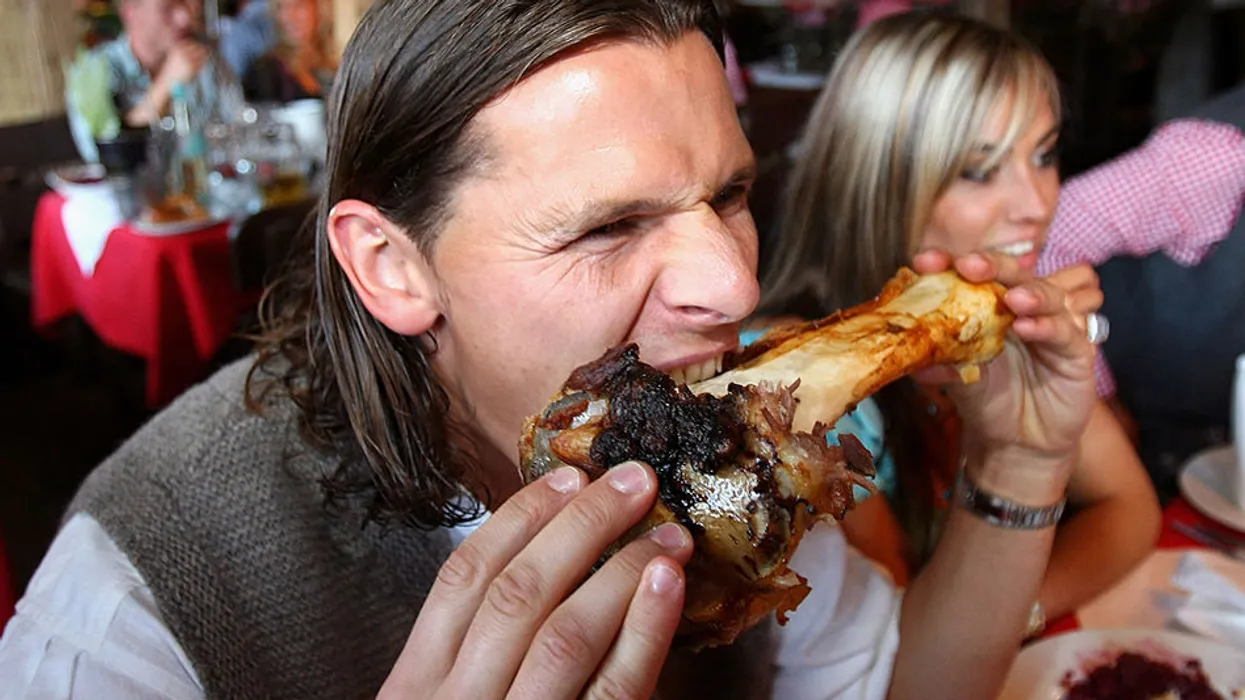
Eating real food is not quite that simple, and might even constitute “bowing to Big Meat,” depending on who you ask.
After Health and Human Services Secretary Robert F. Kennedy Jr. and his department dropped the new federal dietary guidelines — which have been historically referred to as the food pyramid — the recommendation of eating “real food,” including red meat and full-fat dairy, was seen as an attack by many in the dietary sphere.
‘Beef is responsible for 20 times more greenhouse gas emissions per gram of protein than beans.’
The new guidelines emphasized protein (from meat and vegetables), dairy, fruit, and some grains as part of a healthy diet. While some cleverly accused HHS of copying a popular “South Park” scene where scientists simply “flip the pyramid” to solve America’s health crisis, others decided to criticize the guidelines for promoting animal meat intake.
Meat puppets
MS Now, formerly MSNBC, argued that Americans already eat too much meat and claimed that most meat consumed in the country “is already fake.” This was argued by citing an article that claimed selective breeding of cows and chickens constitutes altering “genetic makeup.”
The Physicians Committee for Responsible Medicine spoke out against the new federal guidelines too. The group reportedly criticized the promotion of meat and dairy products, labeling the foods as “principal drivers of cardiovascular disease, diabetes and obesity.”
 Photo by EMMANUEL DUNAND/AFP via Getty Images
I scream
Food Navigator USA took a slightly different approach and claimed the shift in dietary advice was the HHS “bowing to Big Meat” and the dairy industry.
The outlet cited the president of the Physicians Committee for Responsible Medicine, Neal Barnard, who said the guidelines “unjustly condemned processed foods.”
An article from Truthout cited vegan dietitian Ashley Kitchens who unironically claimed the food pyramid was being flipped upside down, calling it “complete ignorance” to encourage more meat and dairy consumption.
“It’s a giant step back from decades of evidence-based nutrition research and science,” Kitchens said.
Butter face
The Center for Science in the Public Interest echoed similar sentiments and said the dietary advice from Kennedy’s HHS is “harmful” for emphasizing “animal protein, butter, and full-fat dairy.”
It is “guidance that undermines both the saturated fat limit” and previous dietary advice to emphasize “plant-based proteins.”
RELATED: RFK Jr. steals the show after hilarious quacking ringtone interrupts White House briefing
 Photo by Martin Pope/SOPA Images/LightRocket via Getty Images
Furthermore, Vox called the apparent attitude of the HHS toward vegan diets “hostile and stigmatizing,” while Stanford nutrition expert Christopher Gardner said the promotion of red meat goes against “decades and decades of evidence and research.”
Climate kooks
Lastly, a perhaps predictable approach was taken by Bloomberg, who criticized the guidelines for prioritizing animal products because of how their production affects climate.
“Beef is responsible for 20 times more greenhouse gas emissions per gram of protein than beans, peas and lentils,” the outlet wrote.
This consensus against animal protein from dietary conglomerates in coalition with left-wing news outlets is sure to fuel the widespread belief that the powers that be are pushing toward a world without the luxury of beef.
This is typically argued from an ideological and political standpoint by groups like the World Economic Forum, for example, in articles like “Why eating less meat is the best way to tackle climate change,” “Why you should be eating less meat,” and “You will be eating replacement meats within 20 years. Here’s why.”
Like Blaze News? Bypass the censors, sign up for our newsletters, and get stories like this direct to your inbox. Sign up here!
‘Eat real food’: Trump administration flips ‘corrupt food pyramid,’ encourages meat and veggies over bread and oatmeal

In the ongoing effort to make America healthy again, Health and Human Services Secretary Robert F. Kennedy Jr. and other members of the Trump administration gathered for a special press conference on Wednesday to announce a major overhaul of dietary guidelines
The guidelines, promoted under the simple command to “eat real food,” introduce a “new pyramid” that prioritizes protein, dairy, healthy fats, and fruits and vegetables over whole grains, which is essentially an upside-down version of the conventional food pyramid most people are familiar with.
‘These guidelines replace corporate-driven assumptions with common-sense goals and gold-standard scientific integrity.’
“These guidelines replace corporate-driven assumptions with common-sense goals and gold-standard scientific integrity,” Kennedy said at the press conference.
He added that they will “revolutionize our nation’s food culture and make America healthy again.”
RELATED: Trump administration overhauls childhood vax schedule. Here’s the downsized version
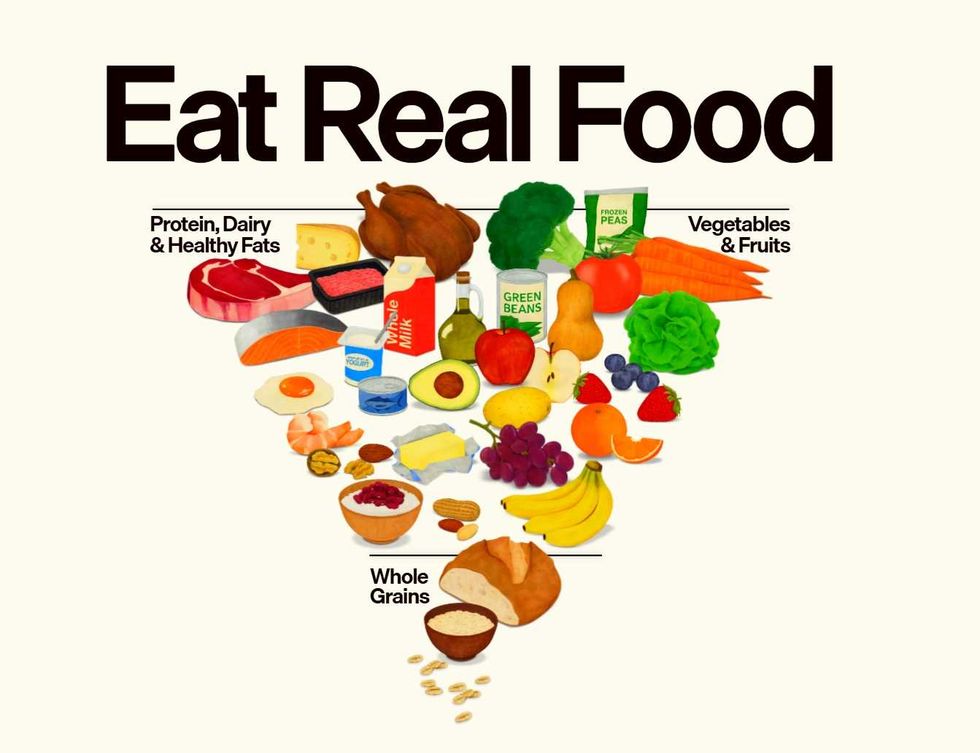 Screenshot of government website
“For decades, we’ve been fed a corrupt food pyramid that has had a myopic focus on demonizing natural healthy saturated fats, telling you not to eat eggs and steak, and ignoring a giant blind spot: refined carbohydrates, added sugars, ultra-processed food,” Food and Drug Administration Commissioner Dr. Marty Makary said.
Secretary of Agriculture Brooke Rollins said, “A healthy meal is within reach for all American families. These new dietary guidelines are a framework which is meant to be customized to meet the needs, the preferences, and the financial status of all American families.”
The inverted pyramid is the result of many studies conducted by the government to challenge the current paradigm and address our nation’s health problems. The guidelines were published in multiple documents, including a series of appendices that is over 400 pages long.
Some users on social media joked that HHS was copying a “South Park” bit in which scientists, at the behest of character Eric Cartman, “flip the pyramid” to reveal the “true” nutritional standards.
The old food pyramid originated in Sweden in the 1970s and was later adapted by the United States Department of Agriculture in 1992.
Like Blaze News? Bypass the censors, sign up for our newsletters, and get stories like this direct to your inbox. Sign up here!





