Category: Rick burgess
‘Gibberish’ in the pew? Rick Burgess confronts the tongues controversy in Pentecostal churches

On a recent episode of “Strange Encounters” — a podcast on spiritual warfare — BlazeTV host Rick Burgess received a message from a listener who was disturbed by what he had been seeing in the Pentecostal church.
He wrote, “The Pentecostals seem to me to be mocking the Holy Spirit by running around the church speaking in gibberish, knocking people down, etc. Is this some sort of demonic type of behavior that is not honoring the Spirit of the Lord or just confused people who have twisted Scripture and clearly don’t seem to follow it?”
Rick addresses the controversial issue of speaking in tongues by first pointing out different denominations’ preferences for one specific part of the Holy Trinity.
“Conservative Presbyterians, you see a more stoic, reverent representation and a lot — a lot — a lot of talk about the Father. … If you were to go to a traditional, say, Baptist church, you’re going to hear a lot about the Son,” he says.
“And then you get into the charismatics … your Pentecostals, your Church of God, and it’s almost like the Holy Spirit is their favorite.”
The issue of speaking in tongues, Rick explains, begins with “[taking] God as he is.”
“We should be worshipping God the Father, God the Son, God the Holy Spirit,” he says.
Rick points out that speaking in tongues is often treated by denominations that embrace it as something that makes them “superior” to other Christians.
“Some go even further to say that to speak in tongues is to prove that you are truly redeemed. Scripture would not agree with that,” he says.
So what does Scripture say about speaking in tongues?
Rick refers to the apostle Paul’s advice in 1 Corinthians 14:
Follow the way of love and eagerly desire gifts of the Spirit, especially prophecy. For anyone who speaks in a tongue does not speak to people but to God. Indeed, no one understands them; they utter mysteries by the Spirit. But the one who prophesies speaks to people for their strengthening, encouraging and comfort. Anyone who speaks in a tongue edifies themselves, but the one who prophesies edifies the church. I would like every one of you to speak in tongues, but I would rather have you prophesy. The one who prophesies is greater than the one who speaks in tongues, unless someone interprets, so that the church may be edified.
Rick unpacks Paul’s teaching: “Is speaking in tongues real? Yeah, it is. Is it some gift that … is beneficial to the church? Not really.”
“If it’s just a bunch of gibberish with no one to interpret and you’re making a scene in the church and drawing attention to yourself and it has no benefit to the rest of the church, then Paul doesn’t seem to think much of it at all,” he continues.
However, Rick is conflicted about whether or not speaking in uninterpreted tongues in church is overtly demonic.
“I don’t really know the answer to that. It feels to me that any time that we are singing praise songs that have bad theology, preaching messages that are not biblically sound, and, I guess I would say, and speaking in tongues in a way that is in conflict with Scripture, I think at the heart of all that is demonic activity,” he says.
“Because let me tell you, [demons] would love to come inside the church if they have been invited.”
To hear more, watch the episode above.
Want more from Rick Burgess?
To enjoy more bold talk and big laughs, subscribe to BlazeTV — the largest multi-platform network of voices who love America, defend the Constitution, and live the American dream.
‘This kind only comes out by prayer’ — the REAL reason the disciples failed to cast out a demon
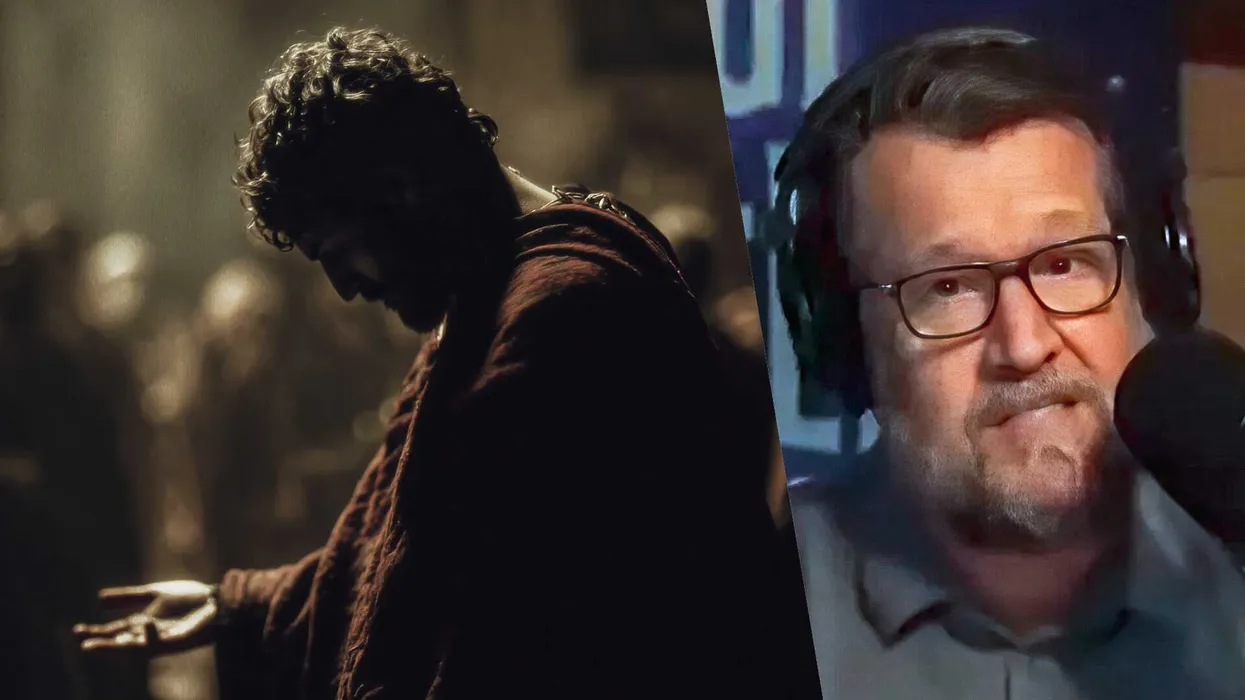
When BlazeTV host Rick Burgess first read the story of Jesus casting out a demon from a young boy after the disciples had been unsuccessful, he was confused.
“I remember the first time that I heard it … I didn’t understand it. I thought, well, are they different kinds of demons you’re supposed to do different things to? And why didn’t the disciples know this?” he reflected on a recent episode of “Strange Encounters.”
While many interpret this story to mean that there are different ranks or strengths of demons, with more powerful ones requiring specific disciplines, Rick says this misses the main point.
The disciples’ issue was never tactics or strategy; it was self-reliance.
According to the three gospel accounts in Matthew, Mark, and Luke, Jesus stumbled upon his disciples arguing with the religious elite after they had been unsuccessful at casting out a demon from a young, mute boy, who would convulse, foam at the mouth, and self-harm as a result of being possessed.
After speaking with the boy’s father, who uttered the famous words “I believe, help my unbelief” (Mark 9:24), Jesus cast out the demon and restored the boy to health. Afterwards He privately addressed His disciples, who were upset that they were not able to do it themselves, as they had previously been casting demons out successfully.
Jesus told them that “this kind can only come out by prayer” (Mark 9:29 — with some manuscripts adding “and fasting”).
But contrary to popular belief, this isn’t Jesus saying there are different strategies for different demons, says Rick.
He argues that the disciples “let their power go to their head” and had stopped “consecrating themselves under the authority of Jesus.”
“These disciples started thinking they were casting out demons. They’ve never cast out a demon. Jesus cast out demons,” says Rick.
“Even when a human being casts out a demon, the human being brings the demon to Jesus. You and I have no ability to cast a demon out of anyone — not by our own strength. The only thing that gives the redeemed power against demons is Jesus,” he continues.
Even the highest ranking angels rely on the authority of Jesus to rebuke the demonic.
Rick references the story from Jude where the archangel Michael is disputing Satan over the body of Moses. Rather than attacking Satan with harsh accusations or trying to condemn him on his own authority, Michael simply said: “The Lord rebuke you!”
“He rebuked Satan by bringing in Jesus,” says Rick.
The disciples, he argues, should have done the same thing when they were attempting to rid the boy of the unclean spirit.
“The disciples have no ability to cast out demons unless they access the power of Jesus, and they had stopped doing that. They started thinking they had the power,” Rick explains, “and Jesus is saying, ‘Y’all better get back to prayer. You better get back to fasting. And you better get back to concentrating on me.’”
To hear more of Rick’s spiritual analysis, watch the episode above.
Want more from Rick and Bubba?
To enjoy more legendary comedy, political arguments, and lessons in common sense, subscribe to BlazeTV — the largest multi-platform network of voices who love America, defend the Constitution, and live the American dream.
AI Christian songs are topping charts — but is ‘soulless’ music a demonic trap for believers?
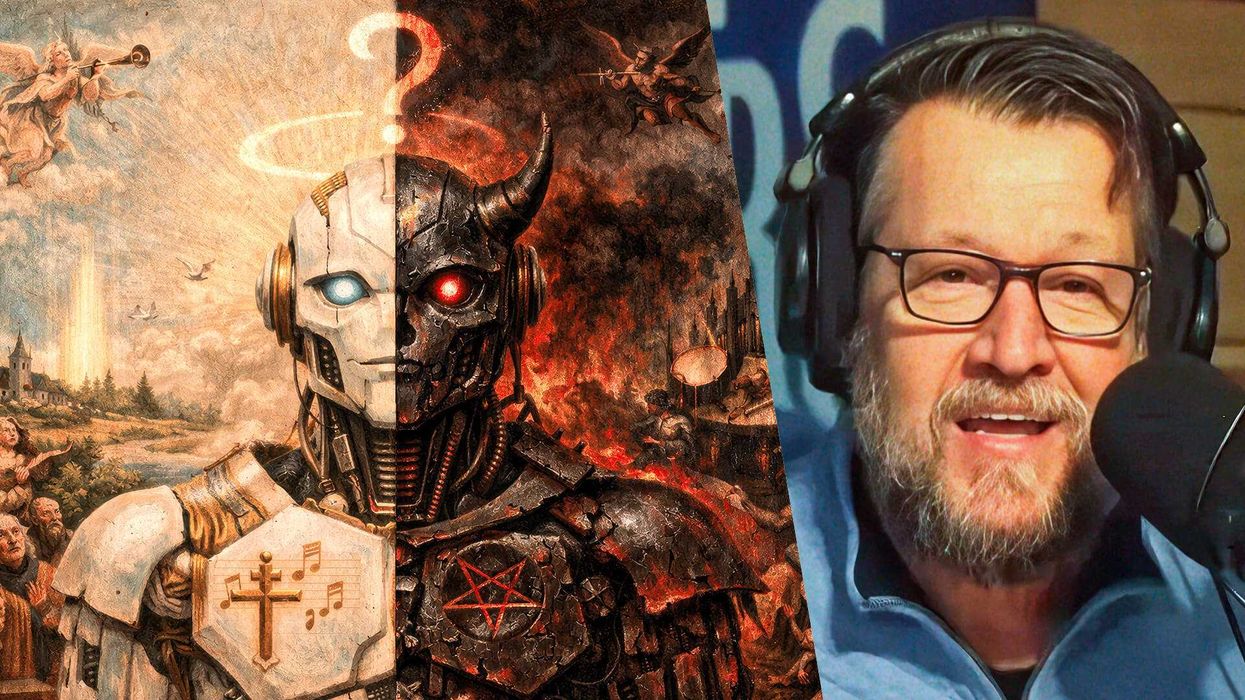
In late 2025, two songs by “Christian artist” Solomon Ray — “Find Your Rest” and “Goodbye Temptation” — topped Billboard’s gospel digital song sales chart and iTunes’ Christian music songs chart, reaching the No. 1 and No. 2 spots.
Christians across the globe deeply resonate with Ray’s Southern revival style and emotive, biblically solid lyrics. In just a matter of weeks, Ray’s music has amassed hundreds of thousands of monthly Spotify listeners, millions of streams, and significant YouTube views.
There’s only one problem: Solomon Ray isn’t a real person. It’s an AI generation.
Despite their popularity, Ray’s songs have sparked intense ethical and theological debate in the Christian music community — drawing criticism from artists like Forrest Frank over issues of authenticity, the absence of the Holy Spirit, and whether AI can truly convey genuine faith or soul in worship music.
On this episode of “Strange Encounters,” Rick Burgess addresses the controversy.
Rick acknowledges that while there’s certainly room to disagree on this issue, “something about it in my spirit … doesn’t seem right.”
“The first thing that we have to consider,” he says, “is that Solomon Ray has no soul; he has no spirit; he isn’t real. The pictures we see of him are not real. They’re like watching an animation of someone.”
Even though Rick gives credit where it’s due — “they’re good songs,” he admits — he nonetheless feels that Christians who engage with this music are flirting with something sinister.
Many proponents of Ray’s music, however, argue that because the songs were allegedly written by Christopher “Topher” Townsend, the conservative Christian hip-hop artist who created Solomon Ray, it shouldn’t matter who — or what — sings the lyrics. AI, they contend, is simply the next “evolutionary step in music.”
But Rick disagrees.
“It may be true [that AI is the next evolutionary step in music], but there’s something that’s also kind of dishonest about it,” he says, “because when you read [the] Spotify profile, Solomon Ray is a ‘Mississippi-made soul singer carrying a Southern soul revival into the present.’”
“No, he’s not,” he says bluntly.
“We’re starting to blur the lines of reality and truth.”
Rick quotes popular Christian music artist Forrest Frank, who echoed these concerns when he said, “At minimum, AI does not have the Holy Spirit inside of it. So I think that it’s really weird to be opening up your spirit to something that has no spirit.”
If artificial intelligence and Christendom continue to intersect — and they almost certainly will — Rick is concerned about what else our spirits will be subjected to.
“How many sermons are we going to start hearing that no longer feature[] a man of God sitting down with the word of God, praying for the Holy Spirit to inspire him for his next message, as opposed to getting down to the computer, saying, ‘Here’s what I need to speak on Sunday. Crank me out a sermon’?” he wonders.
He cites a recent book by Pastor Todd Korpi titled “AI Goes to Church: Pastoral Wisdom for Artificial Intelligence”: “The biggest threat to creation at the hands of AI is in how it continues to feed our appetite for consumption and progress. AI-generated music is faster, easier to produce than a studio album that requires real musicians, songwriters, audio engineers, the relational part of making music. … AI might continue this trend of disconnection and preference for the convenience of a disembodied interaction that has shaped the last decade.”
Rick agrees with Korpi’s warning. When it comes to AI music, “we’re dealing with something that’s disembodied. That feels demonic to me,” he says.
“The adversary and his demons love to manipulate scripture,” he reminds us, referring to the fall of Adam and Eve in the garden and Satan’s temptation of Jesus in the wilderness.
“The apostle Paul warned Timothy that these days were coming — that people would begin to look for pastors — and I would say musicians and singers — that tickle their ears and satisfy their desires, as opposed to being rebuked by scripture, to being convicted, to being drawn into the holiness of God for praise and worship,” says Rick.
“I’m just concerned that disembodied AI-generated messages and music may not bring me into the awe-ness of God and how awesome He is because it’s those spirit-inspired things about God that always bring me into worship … and it just seems like if I want to manipulate scripture and manipulate theology, AI sure does give me an easy path in.”
To hear more of Rick’s analysis, watch the full episode above.
Want more from Rick Burgess?
To enjoy more bold talk and big laughs, subscribe to BlazeTV — the largest multi-platform network of voices who love America, defend the Constitution, and live the American dream.
From historic dream to living nightmare: A TRUE haunted plantation story
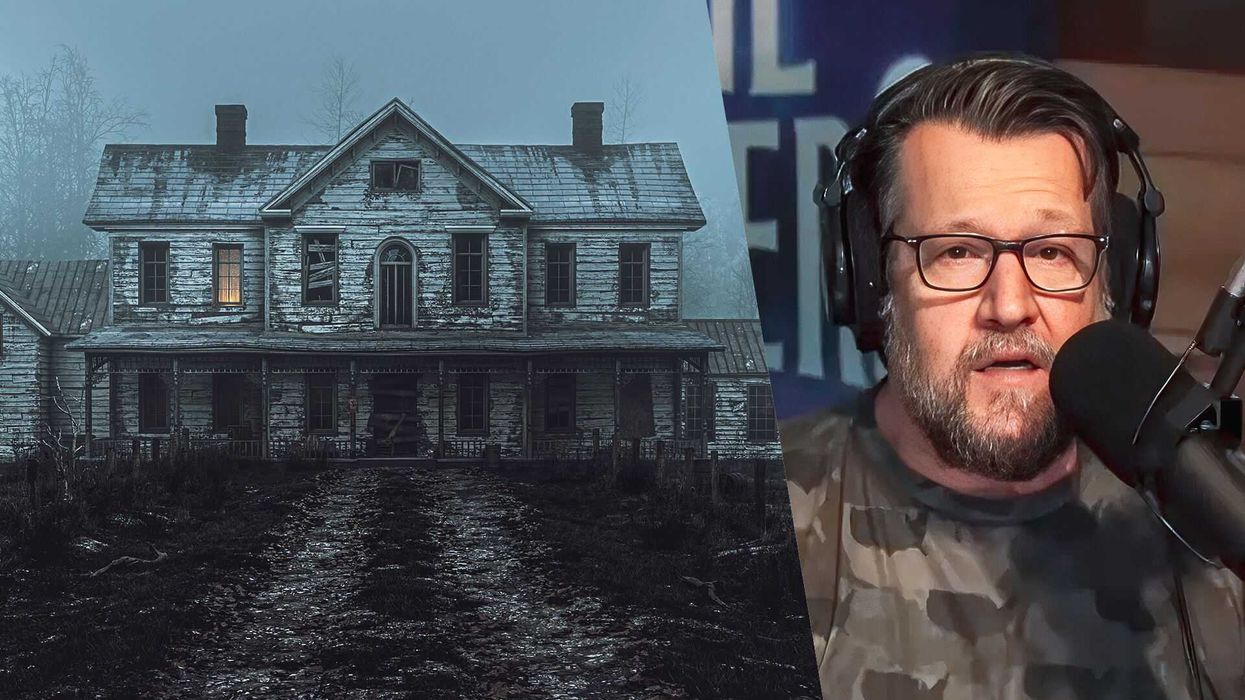
Haunted houses are prime material for horror movies, but is there any truth behind the idea? Can physical spaces really be inhabited by evil spirits?
On this episode of “Strange Encounters,” a podcast on biblical spiritual warfare, BlazeTV host Rick Burgess interviews Eric Davis about his bone-chilling book “Deliverance at Springhill Plantation.”
The book follows the true story of Eric and his wife, Cindy, and their paranormal experiences after purchasing what they thought was the plantation home of their dreams.
After two decades of grinding through a failing marriage, an antebellum-era plantation sitting on 34 acres of rolling green property in Alabama seemed like the perfect place for Eric and Cindy — both history buffs and antique collectors — to reconnect and begin anew. But they were hardly settled before the horrors started unfolding.
One morning shortly after moving in, Eric saw a moving fog — like “dry ice” — traveling from the barn to the old hospital on the property, where the original owner, who was a doctor, used to treat wounded soldiers during the Civil War.
“There was an absolute feeling of absolute evil all over me. I felt the electricity of evil,” he says.
A short while later, Eric saw a physical manifestation of a demon near the same barn. Eric was sitting on the front porch watching his wife go out to feed the cats, when suddenly he saw a man with “long, white hair” dressed in Civil War-era clothing approach her. At first, Eric thought it was an oddball neighbor, but when he made eye contact with the being, it “[disappeared] into a puff of smoke.”
But then things got even darker. One morning while sitting on his couch, Eric was overcome with a sudden and deep hatred for his wife. “I would have loved to seen her dead,” he confesses.
Eric’s animosity toward Cindy was so tangible, the entire family recognized it as demonic oppression. That night, they walked through the home burning sage, anointing doors with oil, and reading aloud from Psalm 91.
“I’m anointing the doors and screaming for [the demons] to get out of my house and get out of our lives,” Eric recounts.
Then Eric walked to the top of the staircase, where there was a “small cubby hole door.”
“I felt a big time pressure behind that door, and I jerked the door open. Naomi [Eric’s daughter] put the sage in. I put my head in there and screamed, ‘Get out of here in the name of Jesus!’ And in the back of my attic was a very, very loud scream. It was like a woman screamed,” he recounts.
“I heard the sounds of barking dogs in the house. … The sage would be lit, and all of a sudden, this cold draft of air would just blow it right out. … It took probably two hours to get the smoke out of my house, but at the end of that night, everything was gone.”
The next several months were uneventful, and Eric’s family settled back into everyday life, believing the demonic activity had been driven out for good.
Then one day, Zoe, the family dog, started randomly whining and growling. “I turn, and out of the wall in my bedroom within six foot of me appears a black figure floating. … It very much looked almost like the Grim Reaper the way it looked. It was dark. It was levitating. It had sleeves. It had a hood. Had no face inside it, no hands, no feet,” Eric tells Rick.
“I screamed, ‘Get out in the name of Jesus!’ … I chased it downstairs and out of the house, and it left.”
At this point, Eric was utterly crushed in spirit by the warfare waged against his family. Having nowhere to turn, he “looked up to the night sky” and cried out, “God, where are you?”
“And suddenly this peace comes on me. I don’t know how to explain it. This peace was on me, and I heard one word,” says Eric.
That word was “church.”
Even though Eric and his family were believers, it had been many years since they’d belonged to a local congregation.
Eric reached out to a local church and told one of the people on staff what was going on inside his home. After Sunday service one day, several members of the church came over and “went to war in [the] house.”
Eric, who was standing outside with his family, says he could “feel [the demons] as they’re leaving.”
One of the women in the church group then shared a word the Lord had given her.
“She said there’s unforgiveness in this house,” says Eric.
“I pointed at Cindy, and Cindy pointed at me, and we released forgiveness toward each other. And when that happened, everything broke.”
“That was the root” that was permitting the darkness to temporarily flee but come roaring right back, Eric explains. “You can rebuke Satan in the name of Jesus all day long, but if you’ve got unrepented unforgiveness in your heart, nothing’s going to change,” he says.
But final deliverance for the Davis’ home wouldn’t come until eight months later after one final demonic siege.
To hear how Eric’s harrowing tale ends, watch the full episode above.
Want more from Rick Burgess?
To enjoy more bold talk and big laughs, subscribe to BlazeTV — the largest multi-platform network of voices who love America, defend the Constitution, and live the American dream.
Why kids can’t stop yelling ‘six seven’: This ‘innocent’ internet fad has roots so demonic, you’ll gasp
The youth are always cooking up some new saying, joke, or dance move that makes older generations scratch their heads and shrug. Most of the time, these trends are innocent and silly, but there’s one that’s wildly popular right now that has a much deeper meaning than most realize.
Earlier this year, a song titled “Doot Doot (6 7)” by Philadelphia rapper Skrilla went viral on social media, sparking a trend where kids randomly yell “six seven.” The phrase gained explosive traction through youth basketball culture — syncing with highlight reels of 6’7″ NBA star LaMelo Ball and viral courtside chants at games — before spreading widely among children.
While the phrase in the song is speculated to be a reference to 67th Street in Philly, the meaning behind the internet trend is ambiguous, with some interpreting it to mean “whatever” or “so-so.” Most agree, however, that it’s just a nonsensical, internet-fad slang phrase intended to be absurd and annoying.
Rick Burgess, BlazeTV host of the spiritual warfare podcast “Strange Encounters,” however, says parents who dismiss this trend as the foolish whims of adolescents have the wool pulled over their eyes.
The phrase “six seven” in Skrilla’s song may be pitched as a reference to a street in Philadelphia to squash any skepticism surrounding the viral phrase that has our youth in a chokehold, but it’s really a dark Easter egg pointing to the sinister beliefs of the artist.
Rick plays a clip that’s gone viral of Pastor Nathan Bentley at LifePoint Church in San Tan Valley, Arizona, warning that Skrilla is “a self-confessed member” of the Church of Satan, who has boldly admitted in podcast interviews that he worships pagan gods — even sacrificing animals to them for career success in Hollywood.
“He talks about since he’s really dedicated himself to this, since he’s begun to put blood oaths into it, his career took off,” Bentley said from the pulpit.
And it’s true. Last year, on the “No Jumper” podcast with Adam Grandmaison, Skrilla admitted to sacrificing animals as part of his religion.
Bentley also pointed out the song’s strange combination of sex and drug themes and the iconic “Baby Shark” earworm composed for children. “Now, tell me, why would a rapper, who’s got this hardcore persona, who’s singing about things that are very mature and whatnot, throw in the middle of his song the ‘Baby Shark’ thing?” Bentley asked, positing that the artist’s explicit intention was to lure children.
Rick, who dove into the research himself, confirms everything Bentley warned of.
“It’s ugly, ugly stuff,” he sighs.
“Do you want your children doing some sort of ritual with six and seven that comes out of a pagan religion … and includes worship of pagan gods, animal blood sacrifices, omens, mysticism, [and] blood oaths?” Rick asks.
If the answer is no, he encourages squashing this trend in our homes.
“The demons that I think are clearly at the root of this six-seven thing — I think one of the things that they have banked on is that all of us, as parents and grandparents, will think it’s cute and will determine it is no big deal,” he says.
“And if you let it continue with your children and grandchildren, that’s certainly your decision. … But I would go find out everything I could possibly find out about ‘six seven.’ … And I pray that your children are not about to experience a strange encounter.”
To learn more, watch the full episode above.
Want more from Rick Burgess?
To enjoy more bold talk and big laughs, subscribe to BlazeTV — the largest multi-platform network of voices who love America, defend the Constitution, and live the American dream.