

Category: Roblox
AI in education: Innovation or a predator’s playground?
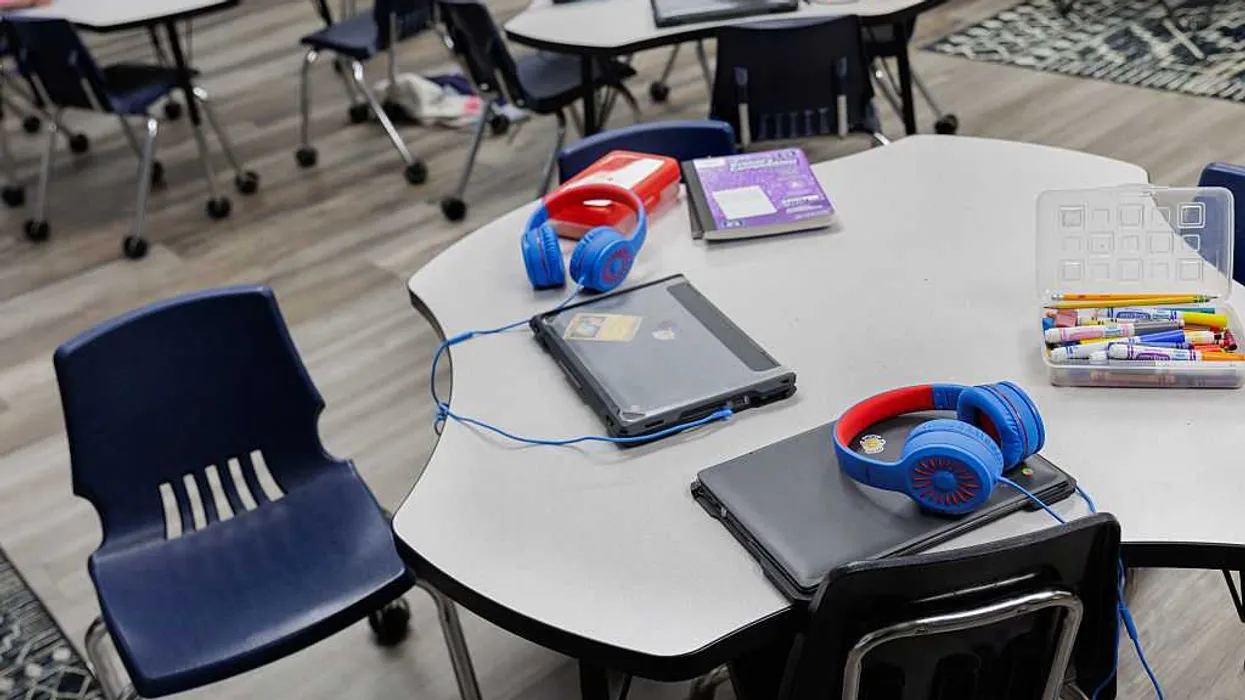
For years, parents have been warned to monitor their children’s online activity, limit social media, and guard against predatory digital spaces. That guidance is now colliding with a very different message from policymakers and technology leaders: Artificial intelligence must be introduced earlier and more broadly in schools.
When risky platforms enter through schools, they inherit an unearned legitimacy, conditioning parents to trust tools they would never allow at home.
On its face, this goal sounds reasonable. But what began as a policy push has quickly turned into something far more concerning — a rush by major tech companies to brand themselves as “AI Education Partners,” gaining access to public education under the banner of innovation, often without parents being fully informed or given the ability to opt out. When risky platforms enter through schools, they inherit an unearned legitimacy, conditioning parents to trust tools they would never allow at home.
AI in education is being sold as inevitable and benevolent. Behind the buzzwords lies a harder truth: AI is becoming a back door for Big Tech to access children and sidestep parental authority.
Platforms already under fire for child safety
At the center of this debate are three companies — Meta, Snap, and Roblox — all now positioning themselves as AI education partners while facing active litigation and investigations tied to child exploitation, predatory behavior, and failures to protect minors.
Meta is facing lawsuits and regulatory actions related to child exploitation, unsafe platform design, and illegal data practices. Internal company documents revealed that Meta’s AI chatbots were permitted to engage minors in flirtatious, intimate, and even health-related conversations — policies the company only revised after media exposure.
European consumer watchdogs have also accused Meta of sweeping data collection practices that go far beyond what users reasonably expect, using behavioral data to profile emotional state, sexual identity, and vulnerability to addiction. Regulators argue that meaningful consent is impossible at such a scale. Meta has also claimed in U.S. courts that publicly available content can be used to train AI under “fair use,” raising serious questions about how student classroom work could be treated once ingested by AI systems.
Snapchat is facing lawsuits from multiple states, including Kansas, New Mexico, Utah, and others, alleging that its platform exposes minors to drug and weapons dealing, sexual exploitation, and severe mental health harm. In January 2025, federal regulators escalated concerns by referring a complaint involving Snapchat’s AI chatbot to the Department of Justice.
Despite this record, Snap signed on as an AI education partner, promising “in-app educational programming directed toward teens to raise awareness on safe and responsible use of AI technologies.”
Roblox, long flagged by parents for safety concerns, is being sued by multiple states, including Iowa, Louisiana, Texas, Tennessee, and Kentucky, over allegations that it enabled predators to groom and exploit children. Yet Roblox now seeks classroom access as an “AI learning” platform.
If these platforms are too dangerous for children at home, they are too dangerous to normalize at school. Allowing companies with a history of child-safety failures to integrate themselves into classrooms is negligent and dangerous.
The contradiction no one wants to address
The danger becomes clearer when you step outside the classroom.
Across the country, states including Florida, Tennessee, Louisiana, and Connecticut are restricting minors’ access to social media through age verification, parental consent, and limits on addictive features. At the federal level, the bipartisan Kids Off Social Media Act seeks to bar social media access for children under 13 and restrict algorithmic targeting of teens.
For more than a century, the Supreme Court has recognized that parents — not the state and not corporations — hold the fundamental right to direct their children’s education.
When Big Tech gains access to classrooms without transparency or consent, that authority is eroded. Parents are told to restrict social media at home while schools integrate the same platforms through AI. The result is families being sidelined while Big Tech reduces their children to data sources.
RELATED: Why every conservative parent should be watching California right now
 Photo by AaronP/Bauer-Griffin/GC Images/Getty Images
This dangerous escalation must meet a clear boundary. Some platforms endanger children, others monetize them, and some expose their data. None of them belong in classrooms without strict, enforceable guardrails.
Parents do not need more promises. They need enforceable limits, transparency, and the unquestioned right to say no. The Constitution has long recognized that the right to direct a child’s education belongs to parents, not Silicon Valley. That authority does not stop at the classroom door.
If artificial intelligence is going to enter our classrooms, it must do so on the terms of families,not tech companies.
Parents, think twice: The dark side of Christmas tech gifts for children

While the children may be nestled all snug in their beds, with visions of iPhones dancing in their heads, I hope, dear parents, that you will think twice about the gift of technology this Christmas.
No doubt a shiny new smartphone, Nintendo Switch, Meta Virtual Reality headset, or cool AI toy will be at the top of many children’s and teens’ Christmas lists this year. However, these “gifts” can arrive with hidden costs: anxiety, sleep loss, social pressures, addictive algorithms, exposure to pornography, a connection to predators, and development of a gaming addiction.
Many parents buy the myth that their child is immune from online risks or think that relying solely on parental controls will be enough.
To that end, Enough Is Enough just released its Naughty and Nice List of Holiday Gifts for Children and Teens that provides a much-needed guide of gifts to buy and to avoid. Perhaps it’s no surprise, but AI toys, smartphones, and Roblox gift cards are on the “naughty” list.
Even in my own family, I know that resisting the pressure to give tech products is strong. My grandsons want Roblox gift cards, so they can continue to play the online games they have enjoyed for years.
But the so-called “reward” of tech does not always outweigh the risks. The reality is that the online exploitation of minor children is a global pandemic, and it’s growing exponentially worse, year after year.
At the very foundation, an internet-connected device is literally handing a child both the good, bad, and dangerous digital world — no guardrails, no safety net, no filters. A gaming platform will inevitably lead to increased screen time, possibly even leading to an online gaming disorder — now a DSM-5 mental disorder. Virtual reality is designed to feel real and may even become preferable to a teen.
Digging deeper, the risks are even greater than parents might realize. Many parents buy the myth that their child is immune from online risks or think that relying solely on parental controls will be enough.
But consider these sobering facts:
- Younger and younger children are being targeted “on an industrial scale” by internet groomers, with a three-fold increase in imagery showing 7- to 10-year-olds.
- Global financial sextortion is one of the fastest growing crimes targeting children, in particular minor-aged boys.
- The Surgeon General’s Advisory on Social Media and Youth Mental Health indicated social media could pose a “profound risk of harm” to the mental health and well-being of children, stating it’s a “defining public health challenge of our times.”
Predators use social media and even online gaming sites to groom children. A California man was recently sentenced for luring minors through Snapchat before sexually assaulting them. The FBI reported that a 22-year-old man used Discord to groom minors and sexually extort them.
The aforementioned Roblox — a gaming platform extremely popular with children — enables predators to contact children and is facing over 35 lawsuits as a result. The platform was described by Hindenburg Research as an “X-rated pedophile’s hellscape.”
Parents should rethink buying Roblox gift cards this holiday season.
Moreover a congressional hearing where two Meta whistleblowers testified confirmed every parent’s worst nightmare: If their children have used Meta’s virtual reality devices, their children have likely been sexually exploited.
RELATED: How smartphones expose your kids to predators — and why Congress must step in
 Matt Cardy/Getty Images
Parents need to be aware of the growing trend of AI toys, falsely marketed as safe and educational for kids as young as 2. Most AI toys are powered by the same AI technology that has already harmed children, and the embedded chatbots are programmed to listen and speak with the child like a trusted friend and mimic human emotions. Examples include: Loona Robot Dog and Smart Teddy.
Recently, an AI teddy bear marketed to children told a tester “where to find knives, pills, and matches when asked … spoke graphically about sex positions, sexual kinks, and ‘teacher-student role-play.’”
As our society becomes increasingly tech-focused, parents are becoming more aware of the negative impact tech can have on their children. But can they win the battle with their kids over the latest tech and more tech time?
Schools nationwide are rapidly embracing smartphone-free schools because they are distracting to students. Many schools are reporting success, and even students themselves have seen the benefits of not having their phones on them during school hours.
Some parents are wisely rethinking handing their phones to their children as a way to calm or distract them. One couple used a smartphone to pacify their 6-month-old daughter, saying they’d hand it to her frequently. Despite that the phone worked to calm the little girl down, the parents eventually realized it wasn’t what they intended, saying their daughter was “zoned in” on the phone.
They may think you’re the Grinch, but the rewards of a tech-free holiday are great.
You may be asking: If not an internet-connected tech gift, what do you suggest?
I realize that deciding on something else to give will take a little creativity.
Many children — especially older ones — enjoy experiences. Teens may relish time spent with their families taking a cooking class, going bowling, going to sporting events, or trying out an axe-throwing venue. Children of any age could appreciate an outing to a retro arcade, new board games, books, or art kits.
Even an outing to their favorite restaurant — where quality time can be spent with mom or dad — is a great option. In lieu of a material present, some families have successfully planned a place to visit or vacation together.
Instead of using the holidays to reinforce potentially unhealthy tech habits or introduce new tech gifts, consider delaying tech by not giving in to the notion that children need tech to be happy and productive. Grandparents my age remember fondly a merry childhood well before the computer and internet technologies were invented.
They may think you’re the Grinch, but the rewards of a tech-free holiday are great. And maybe, just maybe, your children will have sugarplums instead of iPhones dancing in their heads.





