Category: Robots
Roomba maker iRobot files for bankruptcy, putting it in Chinese hands
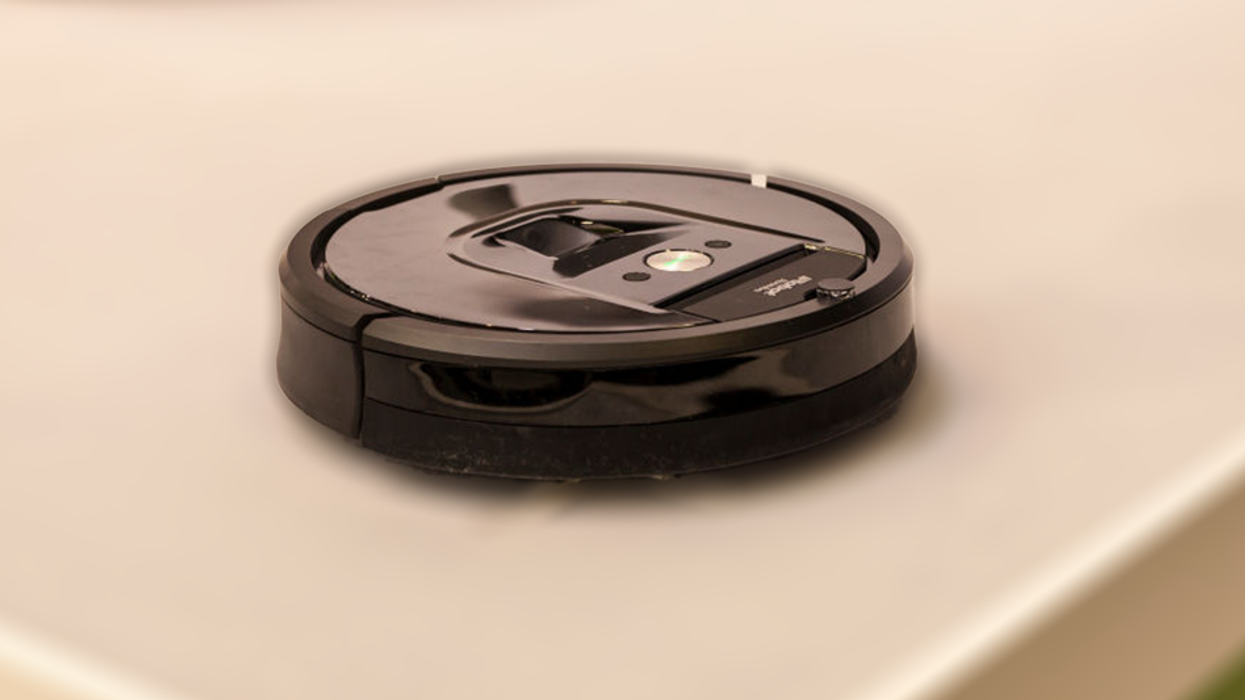
Autonomous vacuums could go extinct unless they are made in the United States.
This is the harsh reality affecting companies like iRobot, the creator of Roomba, which just filed bankruptcy.
‘… with no anticipated disruption to its app functionality.’
Despite the company generating over $680 million in 2024, iRobot has been crippled by U.S. tariffs. Due to a 46% import tariff on Vietnam, iRobot’s costs were raised by $23 million in 2025, according to Reuters, which reviewed the court filings.
The court filings also reportedly noted that while Roomba is still dominating in U.S. and Japanese markets, it lost too much money on price reductions and investments in technological upgrades in order to maintain pace with its competitors.
According to the Verge, the company said it will continue to operate “with no anticipated disruption to its app functionality, customer programs, global partners, supply chain relationships, or ongoing product support.”
Simply put, after more than 20 years on the market, the Roomba is able to operate without online connectivity.
The bankruptcy will put iRobot under Chinese control moving forward, with the manufacturing company that controls its debt.
RELATED: The ultimate Return guide to escaping the surveillance state
 Photo by: Andrew Lipovsky/NBCU Photo Bank/NBCUniversal via Getty Images via Getty Images
Court documents reportedly showed that Picea, a Chinese manufacturer, purchased iRobot while taking its debt on board, which is estimated to be about $190 million. The vacuum company took on the debt in 2023 to refinance its operations, Reuters claimed.
The debt came even after Amazon paid a $94 million termination fee after backing out of a $1.7 billion acquisition deal in 2024, according to the New York Times.
It has not been that long since iRobot had a massive market value at $3.56 billion in 2021; it is now estimated to be worth just $140 million.
New owners Picea will take 100% ownership of the company and cancel the $190 million in debt, while also canceling a $74 million debt that iRobot owed through a manufacturing agreement.
RELATED: The AI takeover isn’t coming — it’s already here
Not only did iRobot need to deal with Vietnamese tariffs, other manufacturing that was established in Malaysia in 2019 was also likely affected.
It was not announced that Roomba had cut manufacturing from the country, and if it remained, would likely have been subjected to a 24% tariff rate from the Trump administration, which included taxing machinery and electronics.
Like Blaze News? Bypass the censors, sign up for our newsletters, and get stories like this direct to your inbox. Sign up here!
NO HANDS: New Japanese firm trains robots without human input
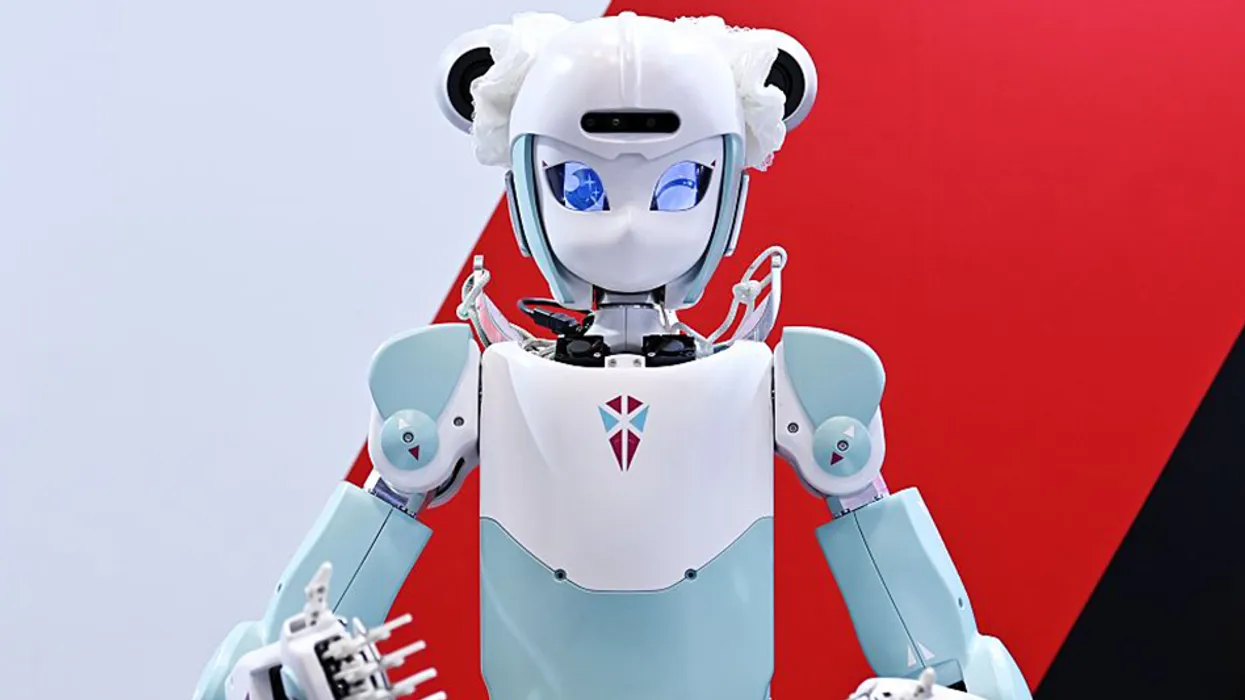
A Japanese tech firm says it is moving toward superintelligence with a big step forward in AI.
Integral AI, which is led by a former Google AI employee, announced in a press release that it had made significant progress with its artificial general intelligence model, which can now acquire new skills without human intervention.
‘Integral AI’s model architecture grows, abstracts, plans, and acts as a unified system.’
The AI system allegedly learns its new skills “safely, efficiently, and reliably,” the company said, while claiming that the AI had surpassed its defined markers and testing protocols.
As such, the AGI is allegedly capable of autonomous skill learning without using pre-existing datasets or human intervention. Integral also said the system is able to develop a “safe and reliable mastery” of skills, meaning that it does produce any “catastrophic risks or unintended side effects.”
What those risks or side effects might be is unclear.
RELATED: Artificial intelligence is not your friend
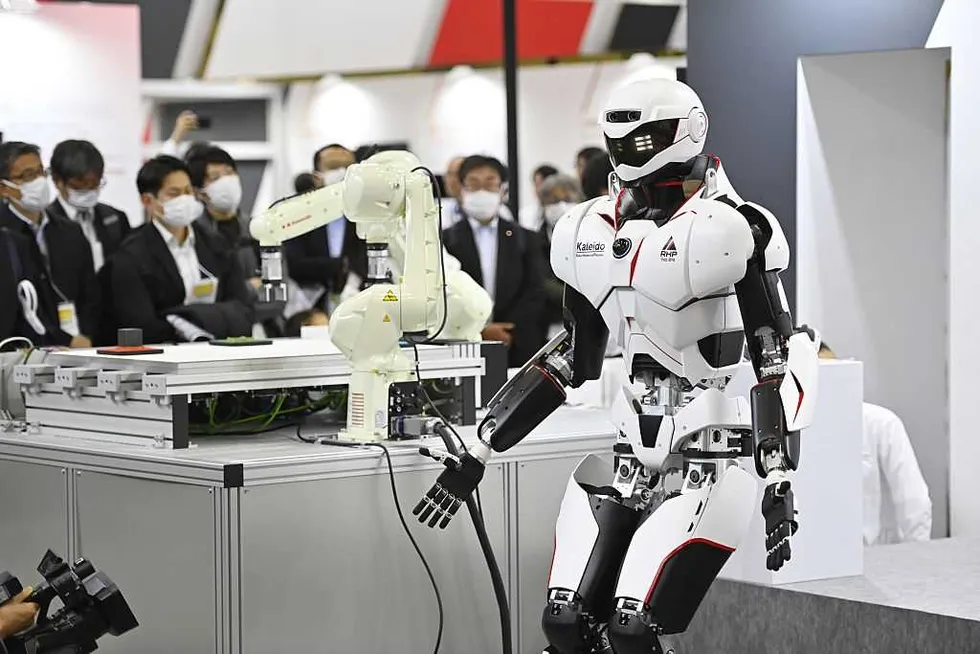 Photo by David Mareuil/Anadolu via Getty Images
The last parameter, which Integral AI said its system adhered to, was to be energy-efficient. The system was tasked with limiting its energy expenditure to that of a human seeking to acquire the same skill.
“These principles served as fundamental cornerstones and developmental benchmarks during the inception and testing of this first-in-its-class AGI learning system,” the press release said. Integral added that the system marked a “fundamental leap beyond the limits of current AI technologies.”
The Tokyo tech company also claimed its achievement was the next step toward “superintelligence” and marked a new era for humanity, with the AI’s learning process allegedly mirroring the complexity of human thought.
“Integral AI’s model architecture grows, abstracts, plans, and acts as a unified system,” the company wrote, adding that the system will serve as the groundwork for “unprecedented adaptability,” particularly in the field of robotics.
This means that with the help of this AGI, autonomous robots would be able to observe and learn in the real world and conceivably pick up new skills in real-world environments without the help of pesky humans.
RELATED: ART? Beeple puts Elon Musk and Mark Zuckerberg heads on robot dogs that ‘poop’ $100K NFTs
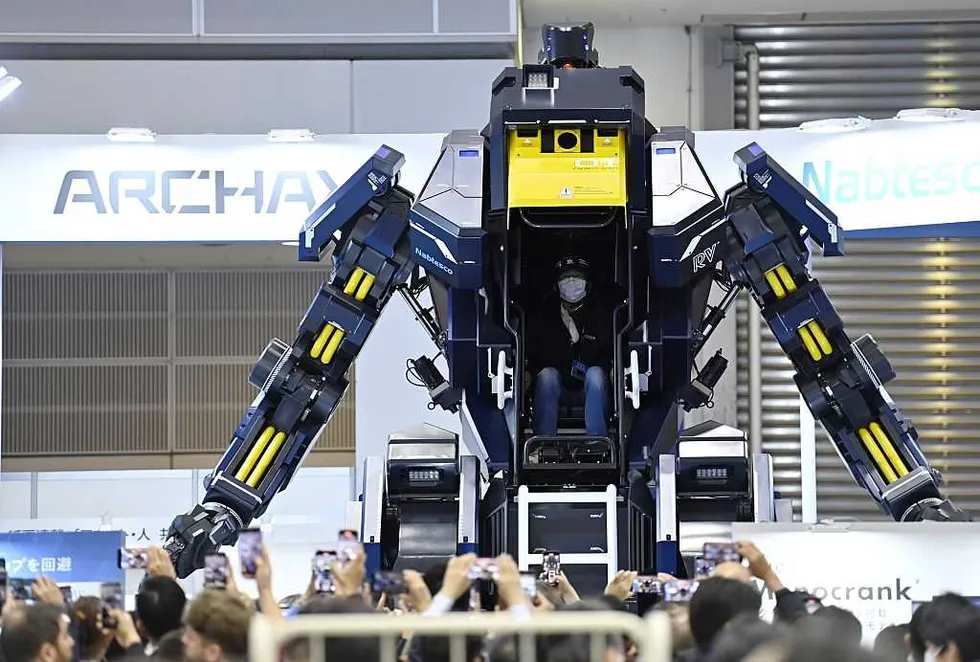 Photo by David Mareuil/Anadolu via Getty Images
Jad Tarifi, CEO and co-founder of Integral AI, called the announcement “more than just a technical achievement” that is “the next chapter in the story of human civilization.”
“Our mission now is to scale this AGI-capable model, still in its infancy, toward embodied superintelligence that expands freedom and collective agency,” Tarifi added.
According to Interesting Engineering, the Lebanese founder said he worked at Google for a decade before starting his own company. He allegedly chose Japan over Silicon Valley because of Japan’s position as a world leader in robotics.
Like Blaze News? Bypass the censors, sign up for our newsletters, and get stories like this direct to your inbox. Sign up here!
US NEXT? Sightings of humanoid robots spike on the streets of Moscow
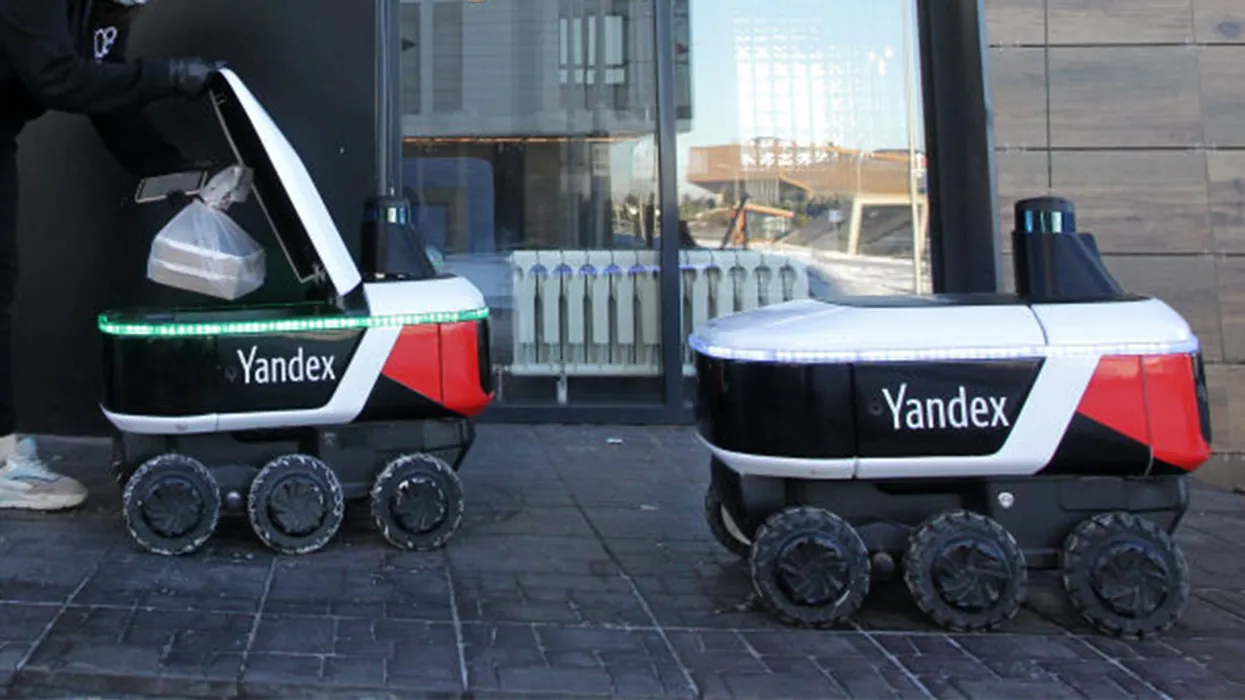
Delivery robots have been promoted in Moscow since around 2019, through Russia’s version of Uber Eats.
The Yandex.Eats app from tech giant and search engine company Yandex released a citywide fleet of 20 robots across the city that year.
‘Yandex plans to release around 1,300 robots per month by the end of 2027.’
By 2023, Yandex added another 50 robots from its third-generation production line, touting a delivery proficiency rating of 87% of orders delivered between eight and 12 minutes.
“About 15 delivery robots are enough to deliver food and groceries in a residential area with a population of 5,000 people,” Yandex said at the time, per RT.
However, what started as a few rectangular robots wheeling through the streets has seemingly spiraled into what will become thousands of bots, including both harmless-looking buggies and, perhaps more frightening, bipedal bots.
The news comes as sightings of humanoid robots in Russia are increasing.
RELATED: Cybernetics promised a merger of human and computer. Then why do we feel so out of the loop?
According to TAdvisor, Yandex plans to release around 1,300 robots per month by the end of 2027, for a whopping total of approximately 20,000 machines. The goal is to have a massive fleet of bots for deliveries, as well as supply couriers to other companies, while reducing the cost of shipping.
At the same time, Yandex also announced development of humanoid robots. Videos have recently popped up of a smaller bot walking alongside a delivery bot in 2024, but it is hard to tell if it was real or a human in costume.
RT recently shared a video of a seemingly real bipedal bot running through the streets of Moscow with a delivery on its back. The bot also took time to dance with an old man, for some reason.
However, it is hard to believe that any Russian autonomous bots are ready for mass production given the recent demo showcased at a technology event in Moscow.
RELATED: ‘You’re robbing me’: Morgan Freeman slams Tilly Norwood, AI voice clones
Aldol, a robot developed by a company of the same name, was described as Russia’s first anthropomorphic bot powered by AI.
Last week, the robot was brought on stage and took a few shaky steps while waving to the audience before tumbling robo-face-first onto the floor. Two presenters dragged the robot off stage as if they were rescuing a wounded comrade, while at the same time a third member of the team struggled to put a curtain back into place to hide the debacle.
Still, Yandex is hoping it can expand its robots into fields like medicine, while simultaneously perfecting the use of its delivery bots. The company plans to have a robot at each point of contact before a delivery gets to the human recipient.
The plan, to be showcased at the company’s own offices, is to have an automated process in which a humanoid robot picks up an order and packs it onto a wheeled delivery bot. Then, the wheeled bot takes the order to another humanoid bot on the receiving end, which then delivers it to the customer.
Like Blaze News? Bypass the censors, sign up for our newsletters, and get stories like this direct to your inbox. Sign up here!