

Category: Surveillance state
An ‘ankle bracelet’ for your car? AZ pushes new tech for serial speeders

Watch out, speed demons — the open road might be getting a little less free.
Arizona, known for its sun-soaked, sprawling highways, may soon become the first state to offer a high-tech alternative for habitual speeders: a “digital ankle bracelet” for your car.
With this new technology, Arizona may be taking the first step toward a future where cars themselves enforce the law.
Lawmakers are considering a bill that would allow drivers at risk of losing their licenses to keep their privileges by installing devices that actively prevent their vehicles from exceeding posted speed limits.
The proposal, spearheaded by Republican state Representative Quang Nguyen, would let drivers voluntarily equip their cars with speed-limiting technology. The system relies on a combination of GPS and cellular signals to determine the legal speed on any given road. Electronics connected to the car’s engine control unit then prevent the vehicle from exceeding that limit, no matter how hard the driver presses the accelerator.
Speed bump
For practical reasons, the technology does include an override mode that permits a temporary 10 mph boost up to three times per month, giving drivers a limited margin to react in emergencies or avoid accidents.
Nguyen estimates the devices would cost around $250 to install, with a daily operating fee of roughly $4. He has been working closely with companies that manufacture the technology, including Smart Start and LifeSafer, to ensure the system is effective and reliable. This makes me wonder if he owns a piece of the company or has stock in the company.
Under the bill, which Nguyen plans to formally introduce when the state legislature reconvenes in January, participation is optional — probably Nguyen’s earlier attempt to make it mandatory was a nonstarter.
Slow lane
Arizona is not alone in exploring this approach. Virginia, Washington State, and Washington, D.C., have already enacted similar laws. In Virginia, courts can require drivers with multiple speeding violations or reckless driving convictions to install electronic speed-limiting devices as an alternative to license suspension. Washington State has adopted a comparable program, giving judges discretion to mandate the technology for repeat offenders while monitoring compliance.
In Washington D.C., the program is more limited but aims to reduce repeat speeding among drivers with multiple moving violations. Meanwhile, Wisconsin is currently considering similar legislation.
These programs highlight a growing trend: Rather than grounding drivers entirely, some states are experimenting with technology as a way to enforce safe driving without taking away mobility. Proponents argue that these devices could prevent serious accidents while still allowing drivers to maintain employment, care for families, and perform other essential daily tasks. The technology also provides courts with a tangible tool to ensure compliance, rather than relying solely on citations and license suspensions.
RELATED: Spinning out at Discount Tire’s Treadwell test track
 Discount Tire
Machine learning
However, critics remain cautious. Some transportation and safety experts question whether the technology is advanced enough to accurately detect all posted speed limits. GPS mapping errors, temporary speed changes in construction zones, or malfunctioning sensors could cause a car to slow unexpectedly or fail to limit speed when needed, creating new safety risks. Privacy advocates also worry about how these devices track and store location data, raising concerns about government overreach or potential misuse.
From a practical standpoint, the legislation raises fundamental questions about the balance between personal responsibility and technological enforcement. Supporters argue it offers a lifeline to drivers who repeatedly violate speed laws but are otherwise safe, while critics maintain that it may encourage riskier behavior by transferring accountability from the individual to the machine.
There’s also the question of fairness. Not all drivers have access to new technology or the financial resources to participate in a program that charges daily operating fees. While $4 per day may seem modest, over a month or a year, it could be prohibitive for some families, effectively limiting the program to more affluent drivers. Additionally, the optional nature of the program could create inconsistencies across jurisdictions, leaving some habitual offenders unmonitored while others are under constant technological supervision.
Whether the measure passes will depend not only on lawmakers’ assessment of safety and effectiveness but also on public perception. Speeding remains the most common moving violation in the United States, and habitual offenders are a persistent concern for states nationwide. With this new technology, Arizona may be taking the first step toward a future where cars themselves enforce the law — but whether that future is practical, safe, or desirable remains up for debate.
At the very least, it’s a bold experiment in road safety and personal responsibility, one that could reshape the way states think about controlling speed without grounding drivers entirely. As the legislature prepares to weigh the bill, motorists, safety experts, and privacy advocates alike will be watching closely, asking the same question: Can a car truly keep its driver out of trouble, or is this just another way to shift accountability from human judgment to technology?
Flock Safety: Is any driver safe from its AI-powered surveillance?
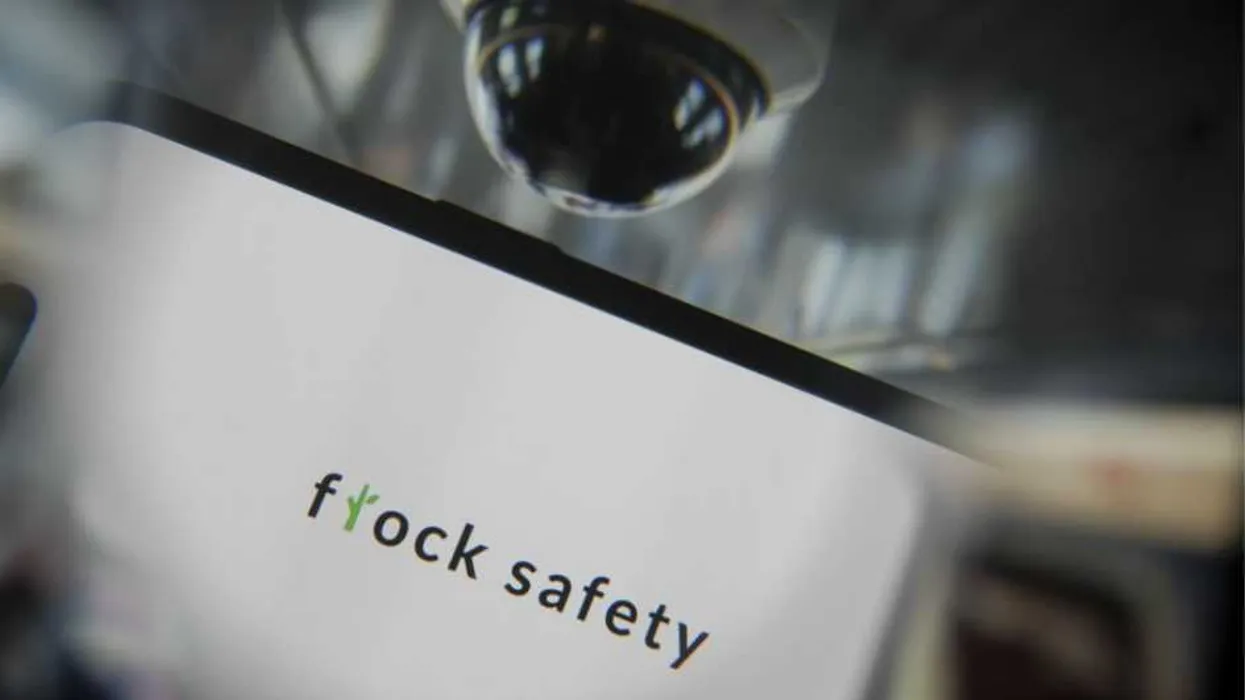
Buckle up, America — because if you’re driving anywhere in this country, you’re already under surveillance.
I’m not talking about speed traps or red-light cameras. I’m talking about Flock Safety cameras, those sleek, solar-powered, AI-driven spies perched on poles in your neighborhood, outside your kid’s school, at the grocery store, and along every major road.
The Institute for Justice has filed a federal lawsuit arguing that Flock effectively builds detailed, warrantless movement profiles of ordinary people.
These cameras are not just reading your license plate. They’re building a digital DNA profile of your vehicle — make, model, color, dents, bumper stickers, roof racks, even temporary tags — and logging where you’ve been, when, and with whom you’ve traveled.
And guess who has 24/7 access? Your local police, HOAs, apartment complexes, and private businesses — all without a warrant, without your consent, and often without you even knowing they exist.
Worse than you think
I’ve been warning drivers for decades about government overreach, from cashless tolls to black-box data recorders. But Flock Safety? This is next-level.
Founded in 2017 in Atlanta, Flock has exploded into a $3.5 billion surveillance empire with over 900 employees and a single goal: blanket every city in America with cameras. As of 2024, it has already deployed 40,000 to 60,000 units across 42 states in more than 5,000 communities. That’s not a pilot program. That’s a national tracking grid.
Here’s how it works — and why it should terrify every freedom-loving American.
Pure surveillance tools
Flock’s Falcon and Sparrow cameras don’t enforce speed or traffic laws. They’re pure surveillance tools.
Mounted on utility poles, traffic signals, or private property, they use automated license plate recognition (ALPR) and Vehicle Fingerprint™ technology to capture high-resolution images of your vehicle’s rear, including the license plate with state, number, and expiration, plus the make, model, year, color, and unique identifiers like dents, decals, roof racks, spare tires, even paper plates. They record the time, date, and GPS location, using infrared imaging for 24/7 operation, even at 100 mph from 75 feet away.
The data is uploaded instantly via cellular networks to Flock’s cloud servers, stored for 30 days, and accessible through a web portal by any approved user. That includes police departments across state lines through Flock’s TALON investigative platform. Drive from Georgia to New York, and every Flock camera you pass logs your journey. No warrant needed in most states.
RELATED: Why states are quietly moving to restrict how much you drive
 F8 Imaging/Getty Images
Staggering scale
The scale is staggering. Milwaukee has 219 cameras with 100 more planned. Riverside County, California, uses 309 cameras to scan 27.5 million vehicles monthly. Norfolk, Virginia, has over 170 units. Raleigh, North Carolina, has 25 and counting.
Nationwide, Flock claims it logs over one billion vehicle scans per month. These cameras cost $2,500 per year per unit, are solar-powered with no wiring required, and can be installed in hours. HOAs love them, schools want them, police can’t get enough, and new units go up daily, often without public notice or approval.
Flock CEO Garrett Langley loves to brag about Flock’s crime-stopping potential. But what he doesn’t mention is that you’re tracked whether you’re a criminal or not.
No opting out
There’s no true opt-out for the public — every passing car is still scanned and logged — but some neighborhoods and agencies use Flock’s SafeList feature to avoid nuisance alerts. SafeList doesn’t exempt anyone from being recorded. It simply tells the system not to flag certain familiar plates (residents, staff, permitted vehicles) as suspicious. The camera still captures the vehicle, stores the image, and makes it searchable; it just won’t trigger an alert for those approved plates.
Flock cameras can photograph more than a license plate — sometimes the interior of a car, passengers, or bumper stickers — but this varies by angle and lighting, and the system is not designed to gather facial images.
Privacy nightmare
This is a privacy nightmare. The ACLU and Electronic Frontier Foundation call it mass surveillance. A small-town cop in Ohio can search your plate and see everywhere you’ve driven in Florida. Rogue officers have abused ALPR before, stalking exes, journalists, activists. Data breaches? Flock says its cloud is secure, but we’ve heard that before.
A 2024 Norfolk, Virginia, ruling initially held that Flock’s system amounted to a Fourth Amendment search requiring a warrant. But that decision was later reversed on appeal. Meanwhile, the Institute for Justice has filed a federal lawsuit arguing that Flock effectively builds detailed, warrantless movement profiles of ordinary people. If that case succeeds, it would be a true game-changer.
Yes, finding a kidnapped child or stolen car is good. But at what cost? This creates a chilling effect: Will you avoid a protest, a church, a gun shop, a clinic, knowing you’re being logged? This isn’t safety. This is control.
Fighting back
So what can you do right now? Start by finding the cameras — contact your police, city council, or HOA and ask where the Flock cameras are and who has access.
Demand transparency: Push for public hearings, warrant requirements, data deletion after 24 hours, and no sharing outside your jurisdiction. Support the fighters like the ACLU, EFF, and Institute for Justice. Spot the cameras yourself — look for black poles with tilted solar panels and a small camera box.
It’s time to post your opinions on X, call your reps, show up at meetings — let’s stop the surveillance.
Flock’s CEO dreams of a camera in every U.S. city. But liberty isn’t free, and it shouldn’t come with a tracking device.
Drop your thoughts below — I read every comment. Share this information with every driver you know. Because if we don’t fight now, soon there’ll be nowhere left to hide.





