

Category: Tyranny
Conservatives can’t barbecue their way through national collapse

Conservatives want to be left alone. They have families, jobs, churches, hobbies. They love their country, but they stay busy and comfortable. Politics feels like something for other people — activists, ideologues, the perpetually aggrieved. The left may dream of tearing the system down in a fiery Marxist revolution, but one solid vote every couple of years or so should keep the crazies in check. Then it’s back to work, back to Little League, back to the barbecue.
That belief sustained many on the right for decades. It has become a liability.
A vote followed by retreat no longer suffices. Saving the country requires engagement, sacrifice, and the willingness to place political reality over personal comfort.
The sunshine conservative lives under the assumption that the American system more or less runs itself, that excesses can be corrected with minimal effort, and that power remains constrained by shared norms. Those assumptions no longer hold. The times that try men’s souls have returned, and the sunshine conservative is about to discover that comfort carries a cost.
For years, a bipartisan consensus reshaped the country through mass immigration. Call it conspiracy if you like, but incentives explain it better.
Democrats saw a reliable path to permanent power. Immigrants arrive without wealth, social capital, or political leverage. They gravitate toward the party that promises redistribution and protection. Every program — health care, housing, loans, benefits — tilts toward newcomers. Open borders grow government, entrench dependency, and expand the progressive patronage machine.
Republican incentives looked different but proved just as corrosive. Conservative voters opposed mass immigration, legal and illegal alike, but party leadership feared one thing above all else: being called racist.
Progressive programming successfully framed the idea of America as a homeland — run for the benefit of its people — as morally suspect. Any attempt to articulate national interest became “nativism.” Chamber of Commerce Republicans exploited that fear, importing millions of workers willing to accept suppressed wages while silencing critics through ritual denunciation.
While the country changed, conservatives largely stood aside. The transformation unsettled them, but lawn care got cheaper and food delivery faster. The sunshine conservative preferred comfort to confrontation. Political activism felt vulgar. Winners, after all, make money and buy boats.
Now the bill has come due.
Human trafficking. Drug flows. Violent crime. Overcrowded hospitals. Stagnant wages. Exploding housing costs. The social fabric frays under the weight of policies designed to benefit elites while disciplining everyone else.
RELATED: Aristotle’s ancient guide to tyranny reads like a modern manual
 Blaze Media Illustration
The Trump administration’s effort to remove the worst offenders collides with a system addicted to inflow. Obvious solutions exist — employer enforcement, E-Verify, ending the H-1B visa scam, taxing remittances heavily — but those measures threaten donor interests. Instead, enforcement proceeds piecemeal, state by state, criminal by criminal.
Each attempt to exercise authority triggers panic among mainstream conservatives. They fret about optics. They warn about norms. They clutch abstractions while the left shoots at or runs over federal agents, storms churches, and treats public order as optional. Establishment voices agonize over power even as their opponents wield it without hesitation.
A friend of mine returned from the Global War on Terror with what doctors labeled post-traumatic stress disorder. The diagnosis missed the point. His trauma didn’t come from violence alone. It came from clarity. He had lived in a world where stakes mattered, where power operated openly, where failure carried consequences. Returning to a culture submerged in therapeutic language, pronouns, and safe spaces proved disorienting. Everyone else lived inside a fantasy and demanded that he play along.
Eventually, he learned to stay quiet. He still regards much of what surrounds him as childish and unmoored from reality.
That reaction mirrors what many feel toward sunshine conservatives. They cling to a story about politics that bears no resemblance to how power functions. When confronted with evidence, they demand that reality conform to their narrative. It never does. That narrative existed to pacify them, to make them manageable. They defend it with the same fervor with which the left defends its own delusions.
Each crisis cracks the façade. An assassination. A church invasion. A city surrendered to disorder. Every time, a few more conservatives wake up — only to be swarmed by those demanding a return to small talk about tax rates and process. The problem never lay with those who saw the danger. It lay with those insisting everyone else look away.
RELATED: The left’s ‘fascism’ routine is a permission slip for violence
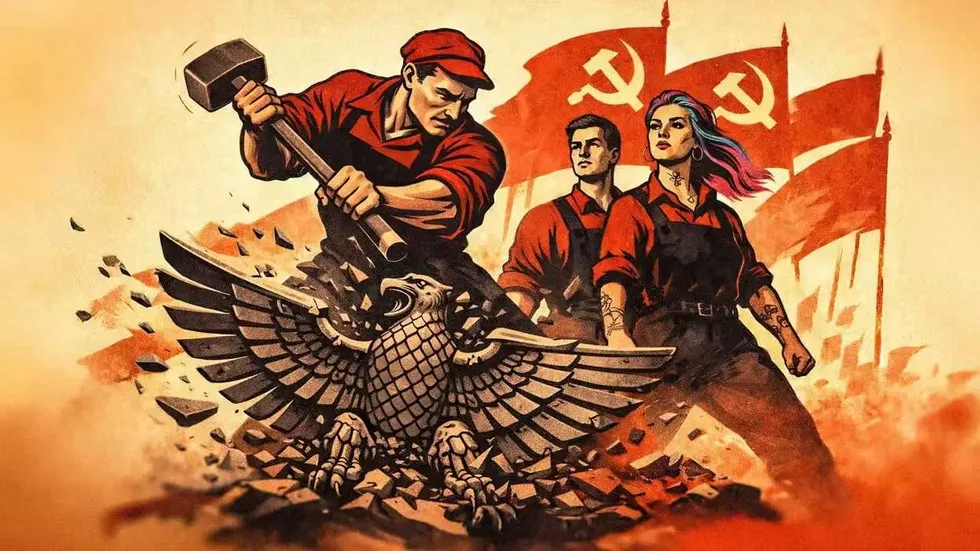 Blaze Media Illustration
The question no longer concerns policy tweaks. It concerns survival. One side believes the country deserves preservation and repair. The other treats it as illegitimate and disposable. That divide cannot be bridged by nostalgia or proceduralism.
The sunshine conservative era has ended. Saving the country requires engagement, sacrifice, and the willingness to place political reality over personal comfort. It requires choosing the future of one’s children over quarterly returns. It requires the disciplined use of power to defend the nation’s institutions, borders, and communities — even when that makes polite society uncomfortable.
A vote followed by retreat no longer suffices. The fantasy that it does belongs with other comforting lies. The right can either shed it or be ruled by those who never believed it in the first place.
Aristotle’s ancient guide to tyranny reads like a modern manual

In “Politics,” Aristotle explains that political rule comes in three basic forms: rule of one, rule of the few, and rule of the many. Each form has a healthy and a degenerate expression. Monarchy and tyranny describe rule by one. Aristocracy and oligarchy describe rule by the few. Polity and democracy describe rule by the many.
What separates the good from the bad in each category is not structure but motive. A king governs for the common good. A tyrant governs for himself.
Despite the millennia that separate us from Aristotle, the philosopher’s portrait of tyranny feels uncomfortably contemporary.
Aristotle does more than classify regimes. He explains, in cold and unsentimental terms, how tyrants preserve power once they seize it. His warnings, written more than 2,000 years ago, read less like ancient theory and more like a field manual.
The tyrant begins by eliminating rivals. He fears competition, especially from men of spirit and competence. Anyone admired for virtue, courage, or leadership poses a danger because excellence inspires imitation. Such men are removed through exile, execution, or disgrace.
Next the tyrant attacks institutions that allow citizens to form bonds. Aristotle lists common meals, clubs, educational gatherings, literary societies, and discussion groups. Any shared practice that fosters trust, loyalty, or independent thought threatens despotic rule. Organization creates solidarity, and solidarity creates resistance.
The tyrant also forces citizens to live publicly. Privacy breeds conspiracy. Public life enables surveillance. Aristotle describes rulers who compel their subjects to remain visible so that dissent never escapes notice. Long before Bentham’s panopticon, Aristotle understood that constant observation disciplines behavior.
Surveillance alone does not suffice. Tyrants cultivate networks of informers to uncover thoughts that cannot be seen. Citizens learn to treat one another as potential threats. Suspicion replaces trust. Speech becomes guarded. Silence becomes safety.
Aristotle could not have imagined digital surveillance, but he would have recognized its function. Technology merely perfects a strategy the ancients already understood.
Social bonds must then be weakened. The tyrant sows discord between neighbors, friends, and families. These relationships form the first line of resistance to centralized power. When trust dissolves at the most intimate level, organized opposition becomes nearly impossible.
Poverty also serves the tyrant. Aristotle observes that despots deliberately exhaust their populations with endless labor. The goal is not productivity but distraction. Citizens too busy to rest or reflect lack the energy to conspire.
He cites the construction of the Egyptian pyramids as an example of forced labor designed less to achieve a purpose than to consume a people’s strength. The task glorifies the ruler while leaving the population depleted.
War further strengthens despotism. Constant external threat convinces citizens that they need a strong ruler to survive. Crisis suspends normal limits. Emergency justifies control. Under perpetual conflict, organization becomes treason.
Aristotle claims that tyranny, the degenerated rule of one, borrows from the worst features of democracy. Despots empower groups unlikely to organize independently against them. He mentions women and slaves not as moral judgments but as political calculations within the ancient world.
The logic remains familiar. Tyrants elevate those dependent on the regime and hostile to existing social hierarchies. Dependence fosters loyalty. Resentment supplies enforcement.
Flattery plays a crucial role. Tyrants surround themselves with sycophants who inflate their ego and confirm their righteousness. Men willing to abase themselves rise quickly. Men of honor refuse to flatter and therefore remain dangerous.
Flattery becomes a sorting mechanism. Those who value dignity exclude themselves. Those who crave favor advance.
Aristotle adds that tyrants prefer foreigners to citizens. Citizens possess memory, tradition, and moral expectation. They know how things once were and how they ought to be. Foreigners lack these attachments, and they are happy to flatter the ruler who elevated them.
This arrangement benefits both sides. The tyrant gains enforcers without local allegiance. The foreigner gains status, wealth, and protection. Without the ruler, he has nothing.
RELATED: Do you want Caesar? Because this is how you get Caesar.
 Blaze Media Illustration
Despite the millennia that separate us from Aristotle, his description of tyranny feels uncomfortably contemporary. Surveillance now operates through algorithms and cellphone cameras rather than forcing everyone to live at the city gates, but the purpose remains unchanged. Security replaces liberty. Total observation replaces trust.
Our institutions remove ambitious and virtuous individuals while elevating compliant managerial drones. Debt binds the population to endless labor. Work consumes life without building independence. Citizens remain busy, anxious, poor, and isolated.
Cultural and political authorities weaken family, denigrate religion, and discourage independent association. Community dissolves into administration. Loyalty transfers from neighbors to systems.
Ruling classes increasingly rely on populations with little connection to national history or tradition. These groups have no reason to defend inherited norms and every incentive to please those who grant them status.
Some details differ but the formula for tyranny does not. Aristotle understood tyranny because he understood human nature. His analysis endures because the same impulses govern power in every age.
There is nothing new under the sun.





