Category: Unashamed
Why modern rejection of God goes back to ancient church heresy: The Robertsons break it down

There was a time when God revealed himself in astonishing, tangible ways.
In the Old Testament, he led the Israelites through the wilderness by appearing as a pillar of cloud and fire; he descended on Mount Sinai with thunder, lightning, thick smoke, and a loud trumpet blast to deliver the Ten Commandments; he took the prophet Elijah to heaven in a whirlwind with a chariot and horses of fire; and the list goes on.
But since the coming of Jesus, God has been much more subtle in how he reveals himself. Many Christian testimonies include encounters with God, but they are usually experienced in quiet, personal moments.
John Luke Robertson believes this is why so many people today refuse to believe in God. On this episode of “Unashamed,” he joins Al Robertson, Zach Dasher, and Christian Huff to unpack exactly that.
John Luke points out that Jesus’ own life and ministry were clearly marked by subtlety.
“He could have said at 12 years old, ‘I’m the Messiah,’ and started it from there, but He waited till He was 30,” he explains.
Even after his ministry began, Jesus often told people — including his disciples and those he healed — to keep his miracles secret. Multiple times in the Gospels, he is recorded saying “my time has not yet come” when people tried to force his hand or make him king too soon.
When he finally faced the cross, Jesus still remained subtle in admitting his divinity, responding to direct questions like “Are you the Son of God?” or “Are you the King of the Jews?” with humble affirmations such as, “You have said so” or “you say that I am.”
“All the way up till the very end, he didn’t have this big reveal of who he was. … And I think we see that same thing with God now,” says John Luke.
John Luke recalls hearing an atheist explain that he doesn’t believe in God because if he were real, “He would have revealed himself more openly.”
But if you look back through history, this isn’t a modern issue. For centuries people have been demanding more obvious or dramatic power.
“I was just reading this book talking about the same thing,” says Christian. “It was these two early historians … and they were saying they don’t believe the gospel and Jesus because they’re like, ‘After the resurrection, why would he appear to women and to peasants? … Why would he not appear to Caesar and Pilate and all these powerful people?”’
In the next segment of the show, the panel moves deeper into how this expectation of a more dramatic, public revelation of God has roots in ancient heresies that the early church had to confront — errors that still influence skeptical thinking today.
To hear it, watch the episode above.
Want more from the Robertsons?
To enjoy more on God, guns, ducks, and inspiring stories of faith and family, subscribe to BlazeTV — the largest multi-platform network of voices who love America, defend the Constitution, and live the American dream.
When is anger righteous? The Robertson brothers share Phil’s rule.

Scripture has many warnings about anger. Ephesians 4:31 tells us to put away “all bitterness and wrath and anger and clamor.” Psalm 37:8 warns against anger and wrath. James 1:20 says “the anger of man does not produce the righteousness of God.”
And yet, anger is an emotion we all experience. Even Jesus himself expressed it at times.
So how do we know when our anger is righteous and when it leads us into rebellion against God?
On a recent episode of “Unashamed,” Al and Jase addressed this very question, drawing on the longstanding wisdom of their father, Phil Robertson — the late beloved patriarch of the family.
The key, they explain, is examining what the anger is rooted in. Righteous anger, when boiled down, is ultimately an overflow of love rather than hate.
Al shares a personal example.
“My dad … became angry at me when the lifestyle that I was living was against the covenant of our family,” he reflects.
“I took that as I was being forsaken and shunned by him, … but I was 180 degrees wrong. The only reason he had that conversation is because he did love me.”
When Al finally turned from his prodigal ways, his father’s anger immediately gave way, revealing the deep love that had fueled it all along.
“When I came back, guess who was right there waiting — not with hate, not with forsakenness, not with separation, but, ‘Welcome home, son’? The same dad,” he says. “Why? Because his love for me never stopped.”
“A lot of times people think anger is a sin, but it’s not a sin. Anger can lead you to sin,” Al continues, noting that the Bible mentions anger “over 600 times,” but “85% of the 600 times, God is the one who’s angry.”
To hear the Robertsons dive deeper into the powerful tension between God’s love and wrath — especially how they beautifully intersect at the cross — watch the episode above.
Want more from the Robertsons?
To enjoy more on God, guns, ducks, and inspiring stories of faith and family, subscribe to BlazeTV — the largest multi-platform network of voices who love America, defend the Constitution, and live the American dream.
Lisa Harper’s heartbreaking yet miraculous adoption journey reduces the Robertsons to tears on ‘Unashamed’
Throughout scripture, God, who calls Himself a “father to the fatherless,” pulls no punches about His heart toward orphans: They are to be cared for.
Many faithful believers choose to live out this holy commandment through the adoption of a child. But while the redemption of a broken situation is a beautiful and joyful thing to behold, few talk about the pain that often accompanies adoption.
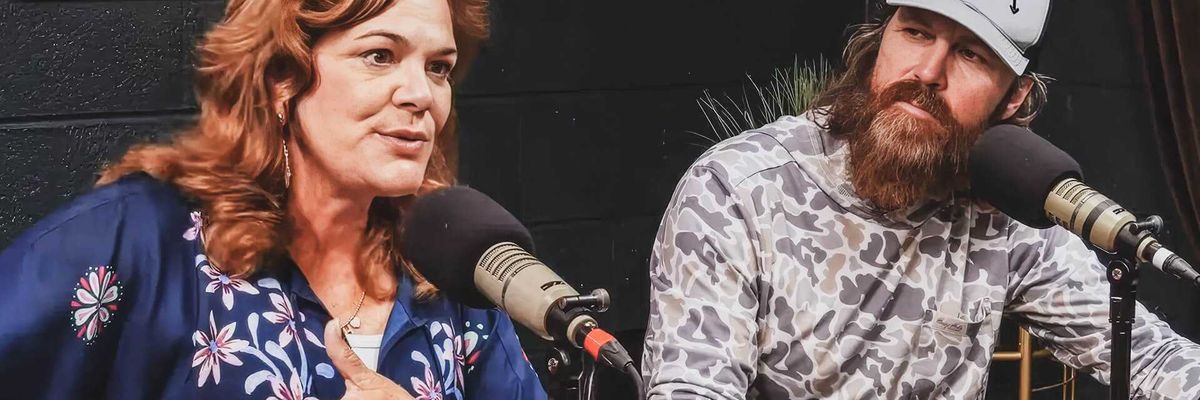
On this episode of “Unashamed,” the Robertsons speak with bestselling author and podcaster Lisa Harper about her adoption story.
After hearing a sermon on the passage in James about the importance of widow and orphan care, Lisa, a single woman in her 40s at the time, felt convicted to act.
After several years of wrestling, Lisa found herself prepared to adopt a baby from Haiti. “I got written into a story of a precious little girl who was a crack addict and had gotten pregnant,” says Lisa, noting that she “spent Christmas that year in a crack house.”
Right before she was set to bring her baby home, however, the adoption “fell apart at the 11th hour.”
Lisa returned home utterly crushed.
But two weeks later, something miraculous happened. Lisa received a phone call from a friend who was in Haiti working on building a communal kitchen to help feed children in a particular village. While she was there, a young mother in the village died of AIDS, leaving behind a sickly daughter with no one to care for her.
She told Lisa that the Lord spoke to her “clear as a bell in that ER room … ’Lisa Harper’s supposed to be that little girl’s mama.’”
Lisa, still mourning the loss of the first child, boldly and faithfully said, “Sign me up.”
“Missy’s 16 now, healthy as a horse,” Lisa says through tears. “She’s not my hope. Jesus is my hope, but she is tangible grace.”
“Missy does not have an orphan spirit. I had an orphan’s spirit,” she says, recalling her years of wrestling with feeling undeserving of God’s invitation to be part of his eternal family.
By the end of Lisa’s story, Jase, Al, and Zach Dasher are all wiping tears from their eyes. To hear it in full, watch the episode above.
Want more from the Robertsons?
To enjoy more on God, guns, ducks, and inspiring stories of faith and family, subscribe to BlazeTV — the largest multi-platform network of voices who love America, defend the Constitution, and live the American dream.
The Robertsons open up about pornography: Childhood exposures and the road to freedom
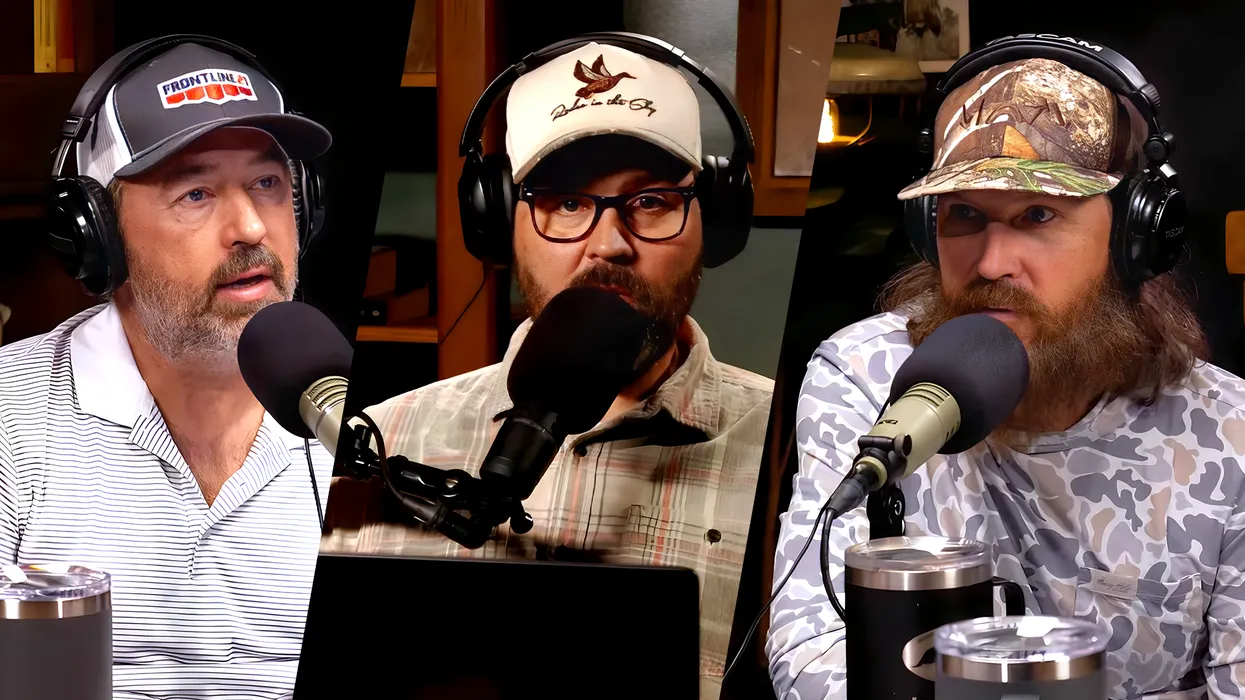
On a recent episode of “Unashamed,” the Robertson brothers and Zach Dasher dove headfirst into the infamous P-word.
Pornography has become an epidemic that enslaves millions and millions of people, most often boys and men. While it’s technically been around for millennia, the digital age has brought porn into the mainstream and made it nearly impossible to avoid. It’s on our televisions; it’s on our phones; even artificial intelligence has fused with the industry in ways that can only be described as sick and depraved.
Today, many boys are exposed to porn long before they hit puberty.
Al, who grew up in an era where pornography was still confined to magazines, says he first encountered it at a “very young” age — “probably 7 or 8 years old” — while living next door to the bar Phil owned and operated before his radical conversion to Christianity. This early exposure caused Al to struggle for years, even into his marriage.
Zach Dasher has a similar story. When he was just 11 years old, his friend’s older brother put on an adult movie with the intention of introducing the younger boys to pornography. Years later, Zach learned from renowned Christian counselor Dr. Trent Langhofer that exposure to pornography before puberty has “the same effect on you as being sexually molested.”
“It made a lot of sense to me because that was an imprint in me that I dealt with for years. … I think that that early exposure probably set me on a trajectory of sin for many years,” he says.
Jase, who was lucky enough to avoid exposure in his early years, says that he sees pornography as an issue that roots back to creation. God created Adam and said, “It’s not good for the man to be alone,” so out of His kindness, He created Eve and subsequently marriage and sex. Pornography, however, is a perversion of God’s good design.
Not only does it isolate man, which God already said wasn’t good, it also taints his view of reality, and harms his relationships, especially the one with his wife, Jase explains.
Al says something that helped him think differently about pornography was having his own daughters and wrestling with the reality that every girl on a magazine page or a screen is not only someone’s daughter but also an image bearer of God. “You start thinking like Jesus thinks,” he says.
Zach found freedom in not just learning the truth but by taking action. Accountability was key in helping him break the cycle. Confession is the first step, he says, and if you’re married, it needs to be to your wife. “Now you’ve got skin in the game,” he says.
“And then after the confession, you have to find new rhythms … we are what we consume.”
“If you consume something different, then you will become something different. You will worship what you behold. And so if you’re beholding entertainment, then that’s what you will eventually begin to worship,” he warns.
Freedom is “truth coupled with discipline.”
To hear more of the panel’s honest conversation, watch the episode above.
Want more from the Robertsons?
To enjoy more on God, guns, ducks, and inspiring stories of faith and family, subscribe to BlazeTV — the largest multi-platform network of voices who love America, defend the Constitution, and live the American dream.