

Category: cancer
Cancer care is becoming another Wall Street extraction industry

Across rural America, families are learning a hard lesson. The biggest threat to their local hospital or cancer clinic no longer comes from distance, workforce shortages, or regulation. It comes from private equity.
Over the past two decades, private equity firms have quietly bought hundreds of cancer clinics, oncology practices, and community hospitals. They promise efficiency and stability. Many communities experience something else: consolidation, higher costs, fewer doctors, and the slow erosion of care. When profit targets fall short, clinics close. Patients travel hours for treatment — or go without it altogether.
The same forces that hollowed out manufacturing towns and family farms are now targeting essential health care.
This shift reflects a deeper failure: treating health care as a financial asset rather than a public obligation.
Private equity follows a familiar playbook. Firms acquire medical practices with borrowed money, cut staffing, increase billing, extract profits, and sell within a few years. That model rewards investors. It fails patients who need long-term care and towns that depend on a single hospital or cancer center.
The collapse of 21st-century oncology shows how destructive this approach can be. After private equity took control, the company expanded rapidly across the Southeast while piling on debt. Pressure to generate revenue intensified. Federal investigators later uncovered widespread abuse, including unnecessary testing and illegal billing. The company paid more than $86 million in fraud settlements to the federal government and patients before filing for bankruptcy.
Entire regions lost access to cancer care with little warning. Investors exited. Patients were left to deal with the fallout.
Rural communities suffer the most. In cities, the loss of a clinic often means longer wait times. In rural America, it can mean the end of cancer care entirely. Patients face long drives, delayed treatment, or impossible choices between health and family obligations.
The same pattern appears in rural hospitals owned by Apollo Global Management through its control of LifePoint Health. After the acquisition, hospitals took on heavy debt. Executives sold real estate to raise cash, cut staffing, reduced services, and closed cancer centers. In New Mexico, state officials opened an investigation after reports that an Apollo-owned hospital denied or delayed cancer care for low-income patients.
RELATED: The hidden hospital scam driving up drug prices, coming to a state near you
 amphotora / Getty Images
Defenders of private equity claim these firms rescue independent practices from hospital monopolies. In reality, they replace local control with corporate control.
Doctors lose authority to distant executives who never set foot in the affected communities. The language of independence disguises a transfer of power away from patients and physicians and toward investors.
Conservatives should recognize this for what it is. An elite financial class is extracting wealth from essential local institutions and leaving weaker communities behind. The same forces that hollowed out manufacturing towns and family farms are now targeting essential health care.
Cancer care should not function as a short-term investment. Rural hospitals should not exist to satisfy quarterly return targets. A system that allows this will continue to fail the people who rely on it most.
The answer is accountability, not a government takeover of medicine. Regulators must enforce antitrust laws. Policymakers should strengthen protections that preserve medical judgment from corporate interference. Communities deserve transparency about who owns their hospitals and who controls decisions about their care.
Health care depends on trust and continuity. When financialization dominates cancer care, rural Americans lose both. And once these institutions disappear, rebuilding them proves far harder than protecting them in the first place.
‘It’s a death sentence’: Former Republican senator reveals tragic cancer diagnosis
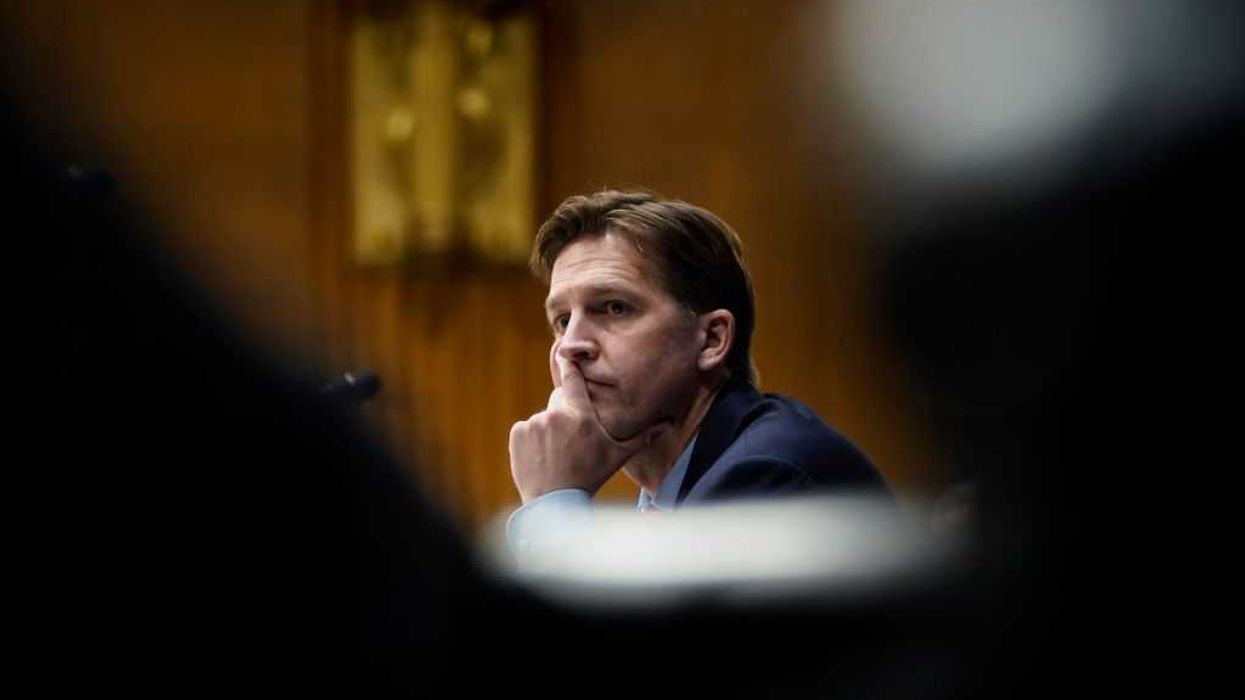
Former Republican Sen. Ben Sasse of Nebraska announced his terminal diagnosis on Tuesday.
The tragic news was shared in a post on X, where Sasse conceded that he is “gonna die.” Sasse revealed his diagnosis is metastasized stage-four pancreatic cancer, but in the same breath proclaimed his deep faith and hope in Christ.
‘The process of dying is still something to be lived.’
“This is a tough note to write, but since a bunch of you have started to suspect something, I’ll cut to the chase: Last week I was diagnosed with metastasized, stage-four pancreatic cancer, and am gonna die,” Sasse wrote. “Advanced pancreatic is nasty stuff; it’s a death sentence. But I already had a death sentence before last week too — we all do.”
“I’m blessed with amazing siblings and half-a-dozen buddies that are genuinely brothers,” Sasse added. “As one of them put it, ‘Sure, you’re on the clock, but we’re all on the clock.’ Death is a wicked thief, and the bastard pursues us all.
RELATED: Republican senator announces retirement, citing exhaustion: ‘I feel like a sprinter in a marathon’
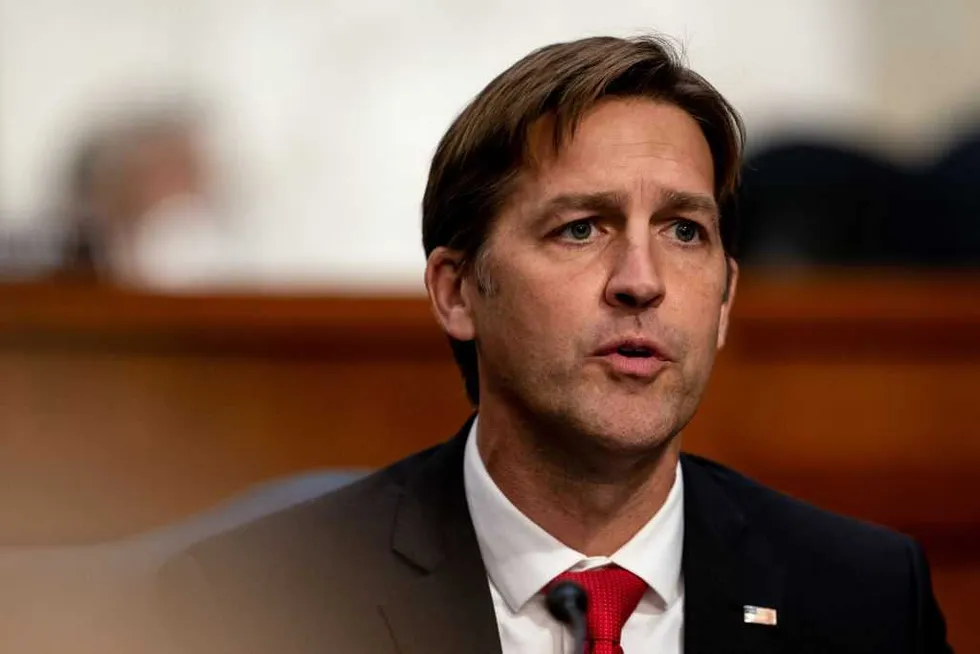 Erin Schaff-Pool/Getty Images
In the message, Sasse reflected on his many personal and professional accomplishments throughout his 53 years of life, expressing deep gratitude and admiration for his family. Sasse also wrote about the difficulty of navigating tragedy during Christmas, which he described as “a time to orient our hearts toward the hope of what’s to come.”
“Not an abstract hope in fanciful human goodness; not hope in vague hallmark-sappy spirituality; not a bootstrapped hope in our own strength (what foolishness is the evaporating-muscle I once prided myself in),” Sasse said.
“Nope — often we lazily say ‘hope’ when what we mean is ‘optimism.’ To be clear, optimism is great, and it’s absolutely necessary, but it’s insufficient. It’s not the kinda thing that holds up when you tell your daughters you’re not going to walk them down the aisle. Nor telling your mom and pops they’re gonna bury their son.”
RELATED: ‘Unnecessary and protracted’: Elise Stefanik drops out of New York governor’s race
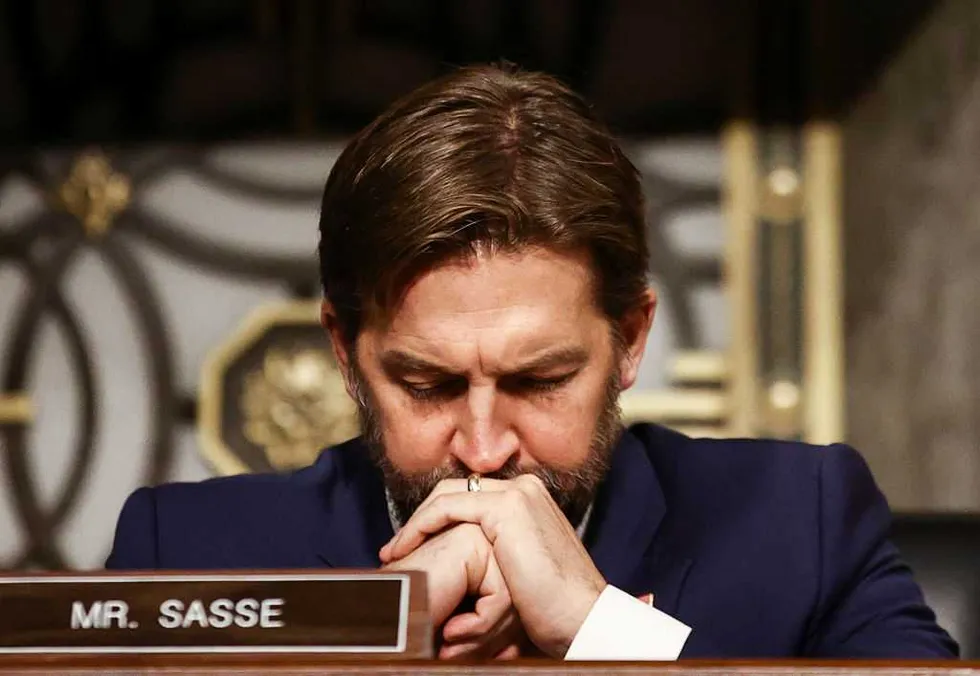 Photo by HANNAH MCKAY/POOL/AFP via Getty Images)
In addition to leaning on God and his family, Sasse said he will pursue medical intervention.
“Death and dying aren’t the same — the process of dying is still something to be lived,” Sasse said. “We’re zealously embracing a lot of gallows humor in our house, and I’ve pledged to do my part to run through the irreverent tape.”
“But for now, as our family faces the reality of treatments, but more importantly as we celebrate Christmas, we wish you peace: ‘The people walking in darkness have seen a great light; on those living in the land of deep darkness a light has dawned. … For to us a son is given (Isaiah 9).”
Like Blaze News? Bypass the censors, sign up for our newsletters, and get stories like this direct to your inbox. Sign up here!





