

Category: Cuba
Pope Leo asks US, Cuba to engage in ‘sincere and effective dialogue’
Pope Leo XIV on Sunday pressed the U.S. and Cuba to enter “a sincere and effective dialogue” following a recent rough patch in the two countries’ relations. “I have received the greatly troubling news regarding an increase in tensions between Cuba and the United States of America, two neighboring countries,” the pope said in a…
Cuba next? Trump admin eying possible regime change after Maduro arrest: Report
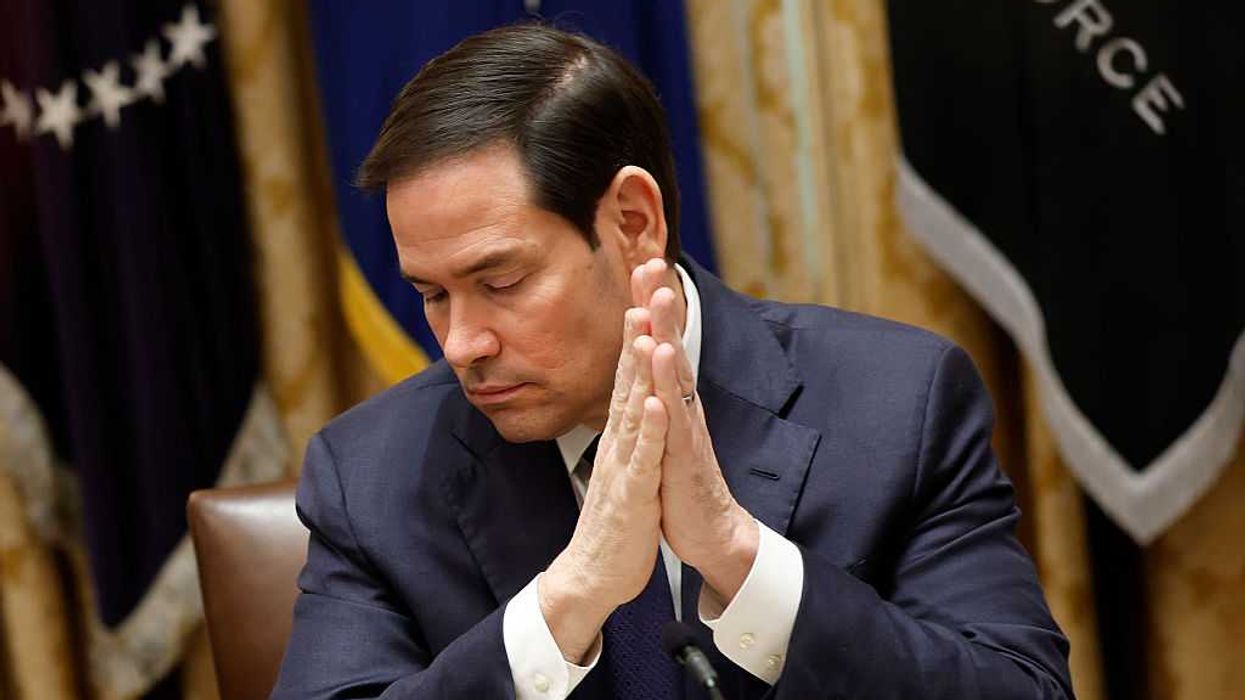
The Trump administration indicated in its National Security Strategy that “after years of neglect, the United States will reassert and enforce the Monroe Doctrine to restore American preeminence in the Western Hemisphere.”
Making abundantly clear to all that this was not empty rhetoric, the U.S. kicked off 2026 by militarily deposing Venezuelan dictator Nicolás Maduro.
Maduro was the first leftist dictator removed from power this year, but he may not be the last.
Sources familiar with the matter told the Wall Street Journal that now with a blueprint for surgical governmental restructures in the region, the Trump administration is searching for well-placed insiders in Cuba who could help oust the island nation’s communist regime by the end of the year.
‘I strongly suggest they make a deal, BEFORE IT IS TOO LATE.’
That strategy appears, after all, to have worked in Caracas, Venezuela, where an asset within Maduro’s inner circle furnished American intelligence personnel with critical information about the leftist leader’s habits, travels, and whereabouts, according to administration officials.
It’s unclear if that asset was Maduro’s vice president, now acting President Delcy Rodríguez, whom four sources familiar with the discussions told the Guardian signaled a willingness to cooperate with the Trump administration ahead of the military extraction.
RELATED: The truth behind Trump’s Venezuela plan: It’s not about Maduro at all
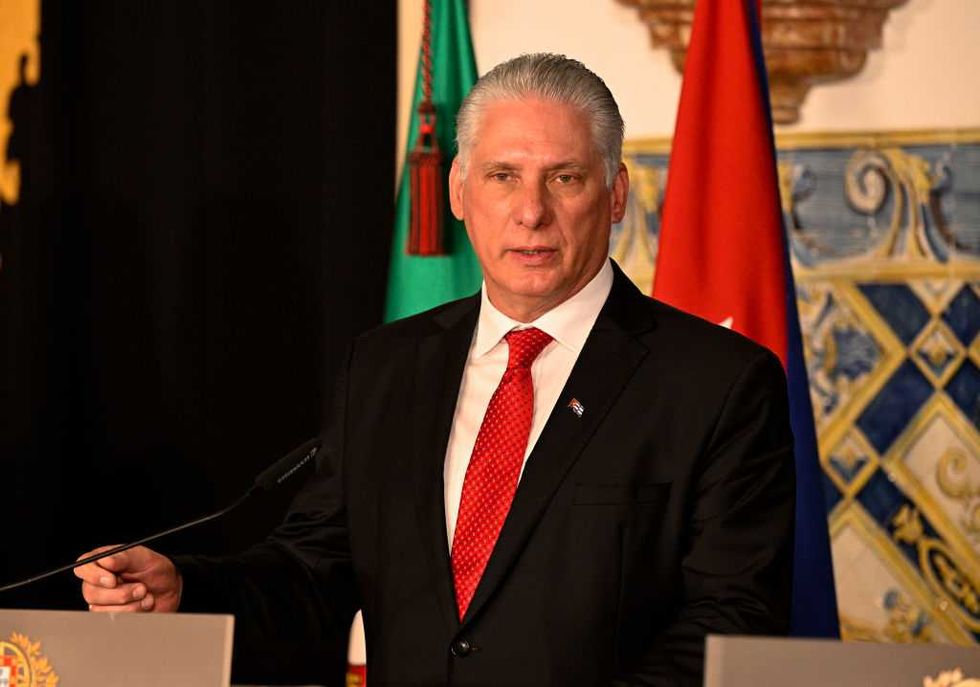 Photo by Horacio Villalobos#Corbis/Corbis via Getty Images
One U.S. official told the Journal that in recent meetings with Cuban exiles and civic groups, Trump administration officials have brainstormed possible individuals within the current Cuban regime who have an appetite for change and might want to make a deal.
The sense is that the time is ripe for a shakeup in the Stalinist island nation in light of its economic instability and loss of a key ally in Caracas.
Secretary of State Marco Rubio, the son of Cuban immigrants, said earlier this month, “I think Cuba is going to be something we’ll end up talking about, because Cuba is a failing nation right now, a very badly failing nation, and we want to help the people.”
“If I lived in Havana, and I was in the government, I’d be concerned,” added Rubio.
Cuba — which has suffered rolling blackouts in recent months and years — has long relied on Venezuela for subsidized oil, which has made up around 70% of its total oil imports.
In the wake of Maduro’s removal, Pavel Vidal, a former Cuban central bank economist who teaches at Javeriana University, told NBC News, “If oil supply were to cease entirely, the Cuban economy would grind to a halt.”
Senior U.S. officials told the Journal that the U.S. plans to further undermine the Cuban regime by restricting its access to Venezuelan oil.
“Cuba lived, for many years, on large amounts of OIL and MONEY from Venezuela,” Trump noted in a Truth Social post on Jan. 11. “THERE WILL BE NO MORE OIL OR MONEY GOING TO CUBA — ZERO! I strongly suggest they make a deal, BEFORE IT IS TOO LATE.”
The State Department said in a statement that it is in America’s national security interests for Cuba “to be competently run by a democratic government and to refuse to host our adversaries’ military and intelligence services.”
Rubio made a point of noting last week that the Cuban regime was “illegitimate.”
Like Blaze News? Bypass the censors, sign up for our newsletters, and get stories like this direct to your inbox. Sign up here!
How Trump’s capture of Venezuelan oil leaves America’s adversaries sputtering
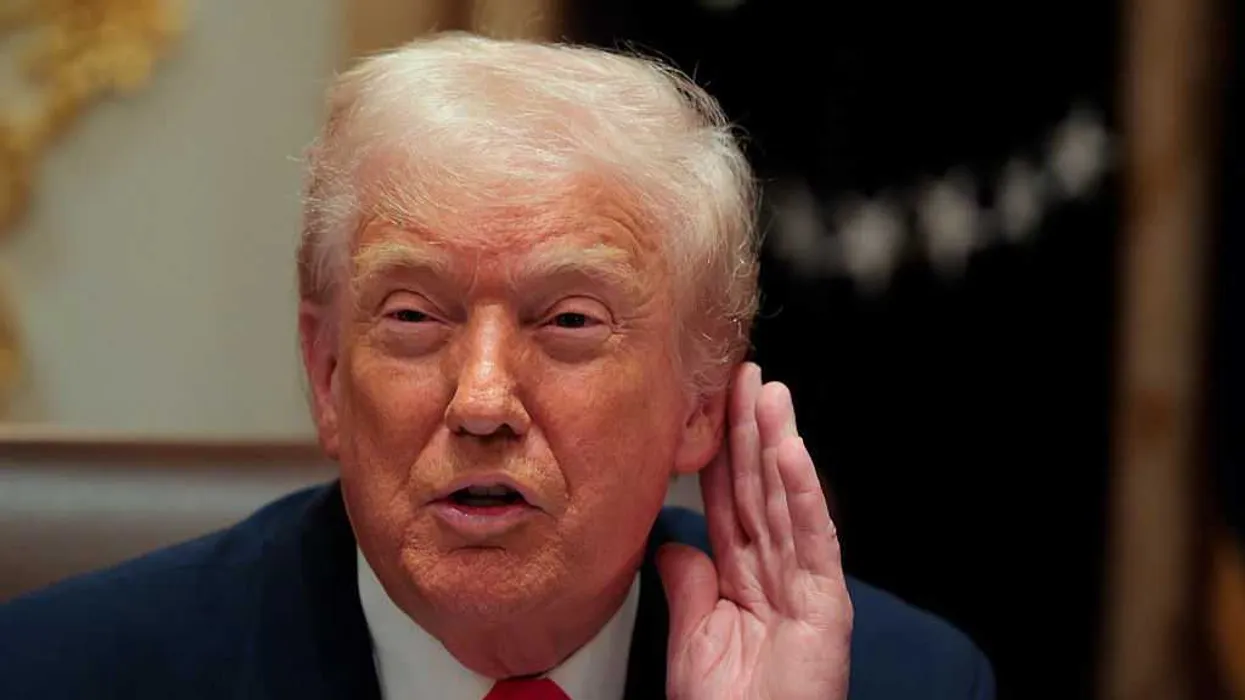
The U.S. military deposed Venezuelan dictator Nicolás Maduro on Saturday, bringing him to New York City to face drug, narco-terrorism, and weapons charges.
Days later, President Donald Trump — who last month ordered a naval blockade of sanctioned oil tankers into Venezuela and has been in talks with the vestigial Maduro regime about opening up to American oil companies — announced that “Interim Authorities in Venezuela will be turning over between 30 and 50 MILLION Barrels of High Quality, Sanctioned Oil, to the United States of America” to be sold at market price for the supposed benefit of the American and Venezuelan people.
‘After years of neglect, the United States will reassert and enforce the Monroe Doctrine to restore American preeminence in the Western Hemisphere.’
The geopolitical implications of America’s removal of Maduro and Washington’s increasing oversight of Venezuela’s oil sector are far-reaching.
In addition to demonstrating the reluctance of certain American adversaries to support one another with anything beyond strongly worded statements, Trump’s reassertion of U.S. influence over Venezuelan energy and his removal of the leftist dictator serve to undermine the communist regimes in China and Cuba as well as to threaten Russia’s ability to finance military aggression in the medium to long term.
“The recent actions taken by the U.S. in Caracas were motivated by a desire to show greater assertiveness by the U.S. against China and Russia’s efforts in Latin America,” David Detomasi, a professor of international business at Queen’s University who has written extensively on the geopolitics of oil, suggested to Blaze News.
“Because much of Venezuela’s oil exports ended up in Chinese and/or Russian hands, gaining control over those exports was an important goal,” Detomasi added.
The Trump administration indicated in its National Security Strategy that “after years of neglect, the United States will reassert and enforce the Monroe Doctrine to restore American preeminence in the Western Hemisphere, and to protect our homeland and our access to key geographies throughout the region.”
RELATED: From Monroe to ‘Donroe’: America enforces its back yard again
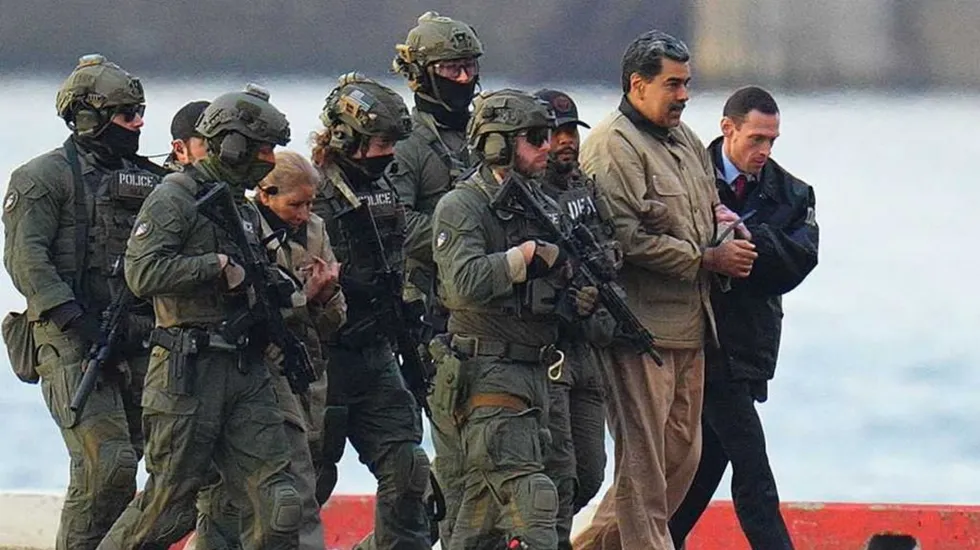 Photo by XNY/Star Max/GC Images
To this end, the administration indicated it would “deny non-Hemispheric competitors the ability to position forces or other threatening capabilities, or to own or control strategically vital assets, in our Hemisphere.”
Venezuela is home to the largest proven oil reserves in the world, with an estimated 303 billion barrels as of 2024.
Despite this natural abundance, output has been nowhere close to what it could be, owing to the nationalization of oil assets under Hugo Chávez in the mid 2000s and other ruinous leftist policies that have since starved the industry of investment, expertise, and infrastructural support. Since the 1970s, when the country was producing 3.5 million barrels of oil a day, daily output has dropped to 1.1 million barrels.
While output has dropped from 7% to 1% of global oil production since the 1970s, Venezuelan oil exports have nevertheless proven valuable for nations antipathetic to the United States, China and Cuba in particular.
China
The Chinese foreign ministry condemned the recent American actions in Venezuela, stating that “such hegemonic acts of the U.S. seriously violate international law and Venezuela’s sovereignty, and threaten peace and security in Latin America and the Caribbean region.”
China, here throwing rocks from a glass house, announced in 2023 the elevation of the China-Venezuela relationship to an “all-weather strategic partnership” and indicated Beijing would back Venezuela’s “just cause against external interference.”
In addition to having its “all-weather” partnership exposed as an undefended fair-weather compact and losing a key ally in Caracas, China now faces the possibility of losing a significant source of energy.
Chinese imports of Venezuelan oil reportedly hit 470,000 barrels per day last year, accounting for around 4.5% of China’s maritime crude imports. In November, Venezuela reportedly sent as many as 746,000 barrels per day to China.
Reuters indicated that a portion of these imports goes to paying down Venezuela’s debt to China, believed to be in excess of $10 billion.
J. Michael Waller, senior analyst for strategy at the Center for Security Policy, recently noted that “depending on the figures, and factoring in Venezuelan oil shipped to China under a false flag like Malaysia, Venezuela and Iran together provide as much as 30-35% of China’s present oil imports.”
RELATED: The Venezuela crisis was never just about drugs
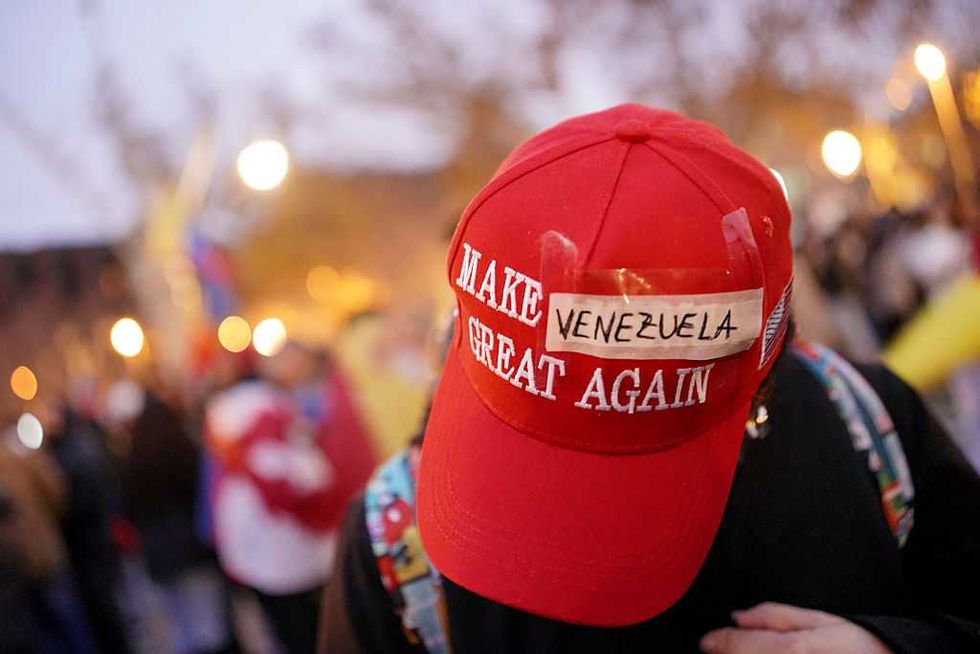 Photo by Manaure Quintero / AFP via Getty Images
Diana Furchtgott-Roth, an economist and the director of the Heritage Foundation’s Center for Energy, Climate, and Environment, told Blaze News that China wants to buy all the oil it can since it already has coal and doesn’t produce much oil or natural gas.
‘China is not going to send its military to defend Venezuela, and neither is Russia.’
In addition to depriving China of a critical source of energy or at the very least regulating its flow, the economist suggested that the restoration of American influence over Venezuelan energy and the potential of Caracas ramping up oil production may also diminish a key source of China’s geopolitical power.
“If there’s more oil around, it might lose geopolitical power in terms of the demand for its wind turbines, its solar panels, and its electric batteries that go in the electric vehicles,” Furchtgott-Roth said.
As of 2024, China reportedly manufactured 92% of the world’s solar panels and 82% of wind turbines.
Andrés Martínez-Fernández, senior policy analyst for Latin America at the Heritage Foundation, told Blaze News that many of Maduro’s fellow travelers remain in power, so it is presently unclear whether Caracas will keep China cut off or resist its influence.
Martínez-Fernández suggested, however, that ultimately “extricating that Chinese influence and presence in our hemisphere” would amount to a massive victory, serving also to weaken BRICS and reveal how such anti-American alliances “collapse once they’re tested by the strength of the United States.”
“When it comes to it, China is not going to send its military to defend Venezuela, and neither is Russia, even when they have substantial interests there,” Martínez-Fernández said.
Cuba
Whereas Maduro’s ouster and the premier exercise of the “Donroe Doctrine” spell trouble for Beijing, they could prove catastrophic for the regime in Cuba.
Cuban President Miguel Díaz-Canel suggested this week that “it is urgent that the international community mobilize, organize, and coordinate in denouncing this flagrant act of state terrorism and the illegal, immoral, and criminal kidnapping of a legitimate president.”
Díaz-Canel’s sense of urgency is understandable granted that Cuba — which has suffered rolling blackouts in recent months and years — relies on Venezuela for subsidized oil.
“If oil supply were to cease entirely, the Cuban economy would grind to a halt,” Pavel Vidal, a former Cuban central bank economist who teaches at Javeriana University, told NBC News. “This would represent a devastating blow to a Cuban economy already in recession for six years and lacking the productive capacity, competitiveness and foreign currency to replace these flows.”
Bert Hoffmann, a political scientist at the German Institute of Global and Area Studies, told Euronews, “Over the last months, Venezuelan oil still made up 70% of Cuba’s total oil imports, with Mexico and Russia sharing the rest.”
‘Cuba looks like it’s ready to fall.’
In addition to Cuba’s energy dependence on Venezuela, Díaz-Canel’s regime was closely linked with Maduro’s, with Cuban intelligence and security services lending a hand in Caracas.
When asked about whether the U.S. should give other countries in the region the Venezuela treatment, Martínez-Fernández said, “By doing what we did in Venezuela, we are helping to cut off lifelines to the more dramatic and dangerous threats beyond Venezuela in our hemisphere.”
Weeks ahead of Maduro’s capture, Secretary of State Marco Rubio made clear that bringing down Cuba’s communist government is the policy of the United States.
“I think every administration would love to see a different type of situation in Cuba. Cuba is a disaster. It’s a disaster. It’s not just because they’re Marxists and because they’re terrorists,” Rubio said. “They’re incompetent. These are incompetent people, and they’ve destroyed that country.”
Trump told reporters on Sunday, “Cuba always survived because of Venezuela. Now they won’t have that money coming in.”
“Cuba looks like it’s ready to fall,” Trump said. “I don’t know if they’re going to hold out.”
Russia
Russia’s foreign ministry characterized the recent American actions in Caracas as “destructive foreign interference” and urged the Trump administration to “reconsider their position.”
While Russia, like China and Cuba, had a close strategic partnership with Maduro’s regime, it does not similarly rely on Venezuelan oil. Nevertheless, the crackdown in Caracas could nevertheless have profound consequences for Moscow.
RELATED: Tulsi Gabbard warns: Powerful foreign allies eager to pull US into war with Russia
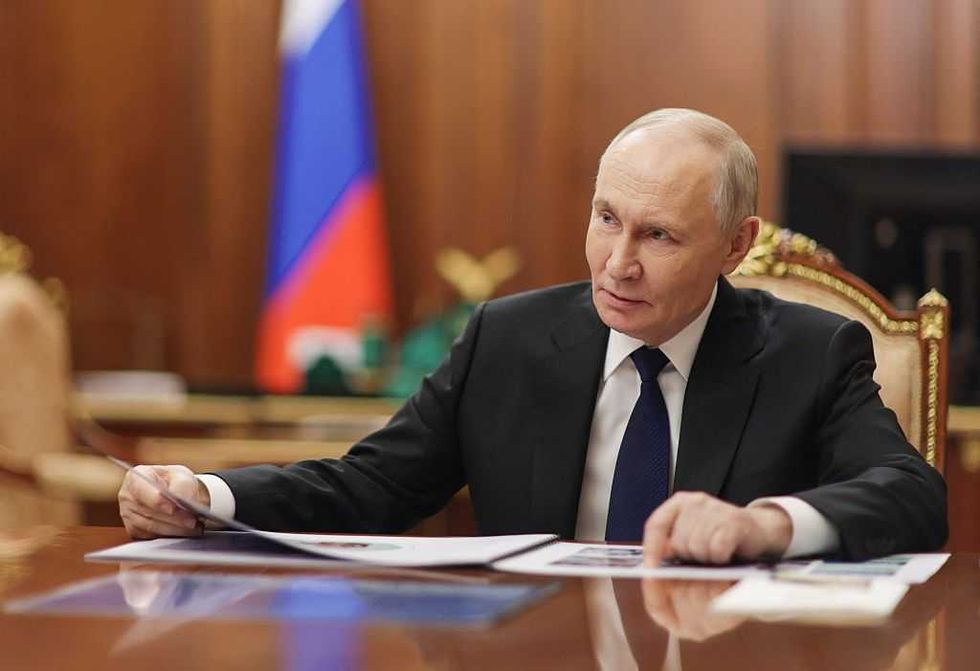 Photo by Mikhail METZEL / POOL / AFP via Getty Images
Furchtgott-Roth recently wrote that “Russia, reliant on oil revenues to fund military operations, will suffer if expanded Venezuelan output pushes prices lower.”
Income from Russia’s oil and gas exports amounts to nearly one-third of the country’s federal revenues.
When asked about the timeline for such consequence, Furchtgott-Roth told Blaze News that the consequences could be felt in Moscow in the near future, even though it might take years for Venezuela to significantly increase oil production.
“Prices are set on the basis of expectations of future supply. So as soon as people see that the conditions are in place for Venezuelan oil to be produced in greater quantities, prices will adjust, presumably down lower than they would have been otherwise,” the economist said.
‘They might want to take similar kinds of actions in their neighboring countries.’
While Maduro’s ouster and the potential U.S.-led energy renaissance in Venezuela could profoundly impact Russia, Moscow’s response has been rather muted, amounting to little more than heated blather before the United Nations.
Neil Melvin, a political scientist at the Royal United Services Institute, told Deutsche Welle that “Russia’s support for Venezuela has been more symbolic than practical.”
Although Russia’s influence and relations in the Western Hemisphere have been impacted, Melvin suspects that Moscow does not want to offend Washington with heavy criticism at a time when the U.S. is working to bring the war in Ukraine to an end.
The relative Russian silence on America’s shake-up in Latin America might also have something to do with its own geopolitical ambitions.
Professor Detomasi told Blaze News that while the U.S. action in Caracas might give China and Russia “pause in the operations in Latin America,” they “will use the U.S. action as a justification if and when they might want to take similar kinds of actions in their neighboring countries.”
Like Blaze News? Bypass the censors, sign up for our newsletters, and get stories like this direct to your inbox. Sign up here!
1619 Project’s Nikole Hannah-Jones Mourns Cop-Killer Who Escaped to Cuba
Given Nikole Hannah-Jones’s status as a celebrity big-foot at the New York Times—winner of the 2020 Pulitzer Prize for her “1619 Project,” winner of a $625,000 MacArthur Foundation “genius” grant, occupant of the Knight Chair in Race and Journalism at Howard University backed by “nearly $20 million” from the Knight Foundation, the John D. and Catherine T. MacArthur Foundation, and the Ford Foundation—you might think that if she discovered a woman wrongfully convicted of murder, she’d marshal the investigative resources necessary to make a thorough case for a presidential pardon, or for legal action to dismiss or overturn the conviction.
The post 1619 Project’s Nikole Hannah-Jones Mourns Cop-Killer Who Escaped to Cuba appeared first on .
Potemkin Power: Why Russia Is the Real Loser in the New Geopolitics
There is no International rules-based order. It is only a comforting phantasm of peripheral nations. The real law of the…





