

Category: Breitbart
‘Reminiscent of the Manhattan Project’: Trump administration launches massive next-gen AI program
As the AI arms race continues at breakneck pace, the United States is stepping up its game to stay on the cutting edge of information technology. To that end, the Trump administration is launching a new initiative: the Genesis Mission.
On Monday, the White House announced the creation of the Genesis Mission under the purview of the Department of Energy.
‘The Genesis Mission marks a defining moment for the next era of American science.’
The Genesis Mission is described as a “national effort to accelerate the application of AI for transformative scientific discovery focused on pressing challenges.”
RELATED: Trump’s AI plan prioritizes innovation over regulation
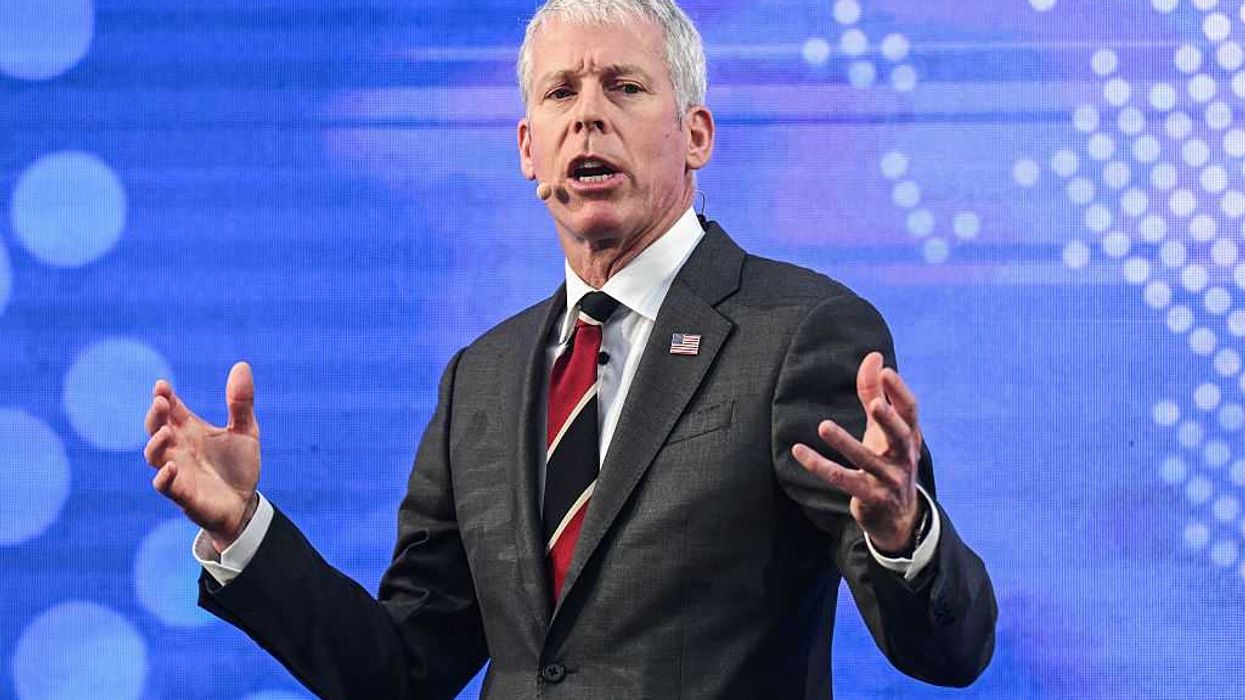
 Photo by Win McNamee/Getty Images
More concretely, the Department of Energy has been ordered to “build an integrated AI platform to harness federal scientific datasets.”
In its announcement on X, the Department of Energy said the Genesis Mission will be “reminiscent of the Manhattan Project and Apollo programs.”
In the promotional video, the DOE suggested that this initiative is not unlike what visionaries such as G.W. Liebniz, Claude Shannon, and Alan Turing could have only dreamed of in their scientific endeavors to understand the world.
Dr. Dario Gil, undersecretary for science and Genesis Mission director, said in a press release: “The Genesis Mission marks a defining moment for the next era of American science. We are linking the nation’s most advanced facilities, data, and computing into one closed-loop system to create a scientific instrument for the ages, an engine for discovery that doubles R&D productivity and solves challenges once thought impossible.”
Energy Secretary Chris Wright explained the scope and goal of the project: “This Genesis Mission is going to bring together industry, the national labs, data sets all tied together in a closed-loop system to just rapidly advance the pace of scientific and engineering progress.”
“It will be transformative,” Wright added.
This announcement comes just months after the Trump administration’s AI Action Plan, a comprehensive plan to win the global AI race.
Like Blaze News? Bypass the censors, sign up for our newsletters, and get stories like this direct to your inbox. Sign up here!
Panthers transgender cheerleader gets cut from team — then blames exactly what you’d expect

The first transgender cheerleader in the NFL has been ousted from the organization over his gender identity, the dancer claimed.
While male cheerleaders recently sprung into existence in the NFL, Justine Lindsay became the first alleged transgender cheerleader in the league for the Carolina Panthers in 2022.
‘Why the hell would I not wanna come back.’
At the time, the Panthers organization defended the move, saying the TopCats cheer squad members are “hired based on their qualifications and abilities.”
The team told NPR, “We wish all the TopCats, including Justine Lindsay, an incredible season.”
Now more than halfway through the 2025 season, Lindsay claims the reason he was let go by the organization was because he is transgender.
“I was cut because I’m trans,” the cheerleader said during an Instagram live broadcast, according to Them.
“I don’t wanna hear nobody saying ‘She didn’t wanna come back.’ Why the hell would I not wanna come back to an organization that I’ve been a part of for three years?” Lindsay added.
Despite reportedly being “devastated” and “hurt,” the cheerleader pinpointed one person within the organization who was to blame.
 (L-R) Justine Lindsay and NFL Commissioner Roger Goodell attend a Night of Pride with GLAAD and NFL on February 8, 2023, in Phoenix, Arizona. (Photo by Daniel Boczarski/Getty Images for GLAAD)
Lindsay fingered a new Panthers cheerleading coach as the reason for the departure, citing prior interactions with the woman.
“When she came over to our organization, I was like, ‘Oh hell, here we go. Imma have to deal with the same mess that I dealt with two years prior,'” Lindsay claimed.
The 33-year-old accused the team of not “looking at the bigger picture” as far as who the cheerleader was “changing lives for.”
“It was like a big slap in the face to not only me but for the youth,” Lindsay added, before allegedly saying he was cut off after President Trump’s re-election.
The North Carolina native confirmed in August that he had been released by the team but did not provide details surrounding the move. Instead, he provided the following statement to OutSports and insulted the president.
“For now, I’m focusing on my pageantry work and community involvement, striving to be recognized not just as an NFL cheerleader, but as someone making a positive impact, especially during these uncertain times,” he said.
Lindsay called being in the NFL a “stepping stone” before adding, “Don’t let a president who is delusional stop them from reaching their goals whether they are trans, African-American, not American, etc.”
RELATED: Here are all the NFL teams that haven’t virtue-signaled for Pride Month
 Carolina Panthers cheerleaders prior to the NFL 2025 game against the Atlanta Falcons at Bank of America Stadium on September 21, 2025, in Charlotte, North Carolina. Photo by Kara Durrette/Getty Images
In 2023, Lindsay said he wanted to influence youth through his position and compared his fight to become an NFL cheerleader with becoming a doctor.
“Everything that I’m going through now, it’s bigger than me,” he told Elle. “I’m setting things up for the younger generation. No one is going to stop this show.”
“I want to change the narrative for my trans sisters and brothers, just to [let them] know that if you have a goal, go for it,” he said. “Turn that dream into a reality. Be an NFL cheerleader or a doctor or a nurse or whatever you set your mind to.”
Lindsay says his exodus from the Panthers “doesn’t mean I’m not still with the NFL” and claimed he still has “a lot of great connections” in the league.
“It’s just a slap in the face,” he complained.
Panthers ownership group Tepper Sports Entertainment did not respond to a request for comment.
Like Blaze News? Bypass the censors, sign up for our newsletters, and get stories like this direct to your inbox. Sign up here!
Chip Roy’s immigration blitz hits the lawless left and the squish right
Let’s face it: Republicans are staring at a wipeout in the midterm elections. The economy is battered, GOP leadership looks unfocused, and swing voters show signs of fatigue with the endless drama surrounding Trump. The trend lines point in one direction.
But another truth sits alongside it: Republican voters still want a reason to show up. The base will not match the left’s turnout intensity unless the party gives them a fight worth having. And no issue energizes the conservative electorate more than immigration. If Republicans intend to use their remaining political capital, this is where to use it.
At a minimum, Trump should return to his original 2015 promise: Pause immigration and restore sanity to a system voters believe is broken beyond recognition.
Last week, Rep. Chip Roy (R-Texas) introduced exactly that fight.
What the PAUSE Act does
Roy’s PAUSE Act freezes all legal immigration — except temporary tourist admissions — until the federal government establishes permanent enforcement against illegal entry and against categories of immigration voters have opposed for years. The bill sets clear conditions for lifting the moratorium.
- Reversing Plyler v. Doe, allowing states and localities to deny illegal aliens access to public schools.
- Reforming birthright citizenship so that minors receive citizenship only when at least one parent is a U.S. citizen or green card holder.
- Ending chain migration and the diversity visa program; limiting entries to spouses and unmarried minor children; ending extended-family preference categories.
- Prohibiting the entry of Sharia-law adherents, Chinese Communist Party members, known or suspected terrorists, and members of foreign terrorist organizations.
- Barring noncitizens from accessing means-tested federal benefits such as SNAP, SSI, TANF, Medicaid, Medicare, WIC, federal student loans, and public housing.
- Ending adjustment of status for H-1B visa holders and abolishing the unconstitutional optional practical training program that displaces American tech workers.
The bill accomplishes all of this in fewer than 10 pages. Original co-sponsors include Reps. Keith Self (R-Texas), Brandon Gill (R-Texas), Andy Biggs (R-Ariz.), Lauren Boebert (R-Colo.), Eli Crane (R-Ariz.), and Andy Ogles (R-Tenn.).
A long-delayed agenda
Conservatives have pushed these reforms for nearly two decades. Some ideas surfaced in the Trump years through executive actions, but courts blocked several and entrenched others — especially anchor-baby citizenship and taxpayer-funded K-12 education for illegal aliens.
Other essential reforms, such as ending optional practical training, halting visas from China, or barring Sharia-law adherents, were never attempted.
RELATED: Trump can’t call it ‘mission accomplished’ yet
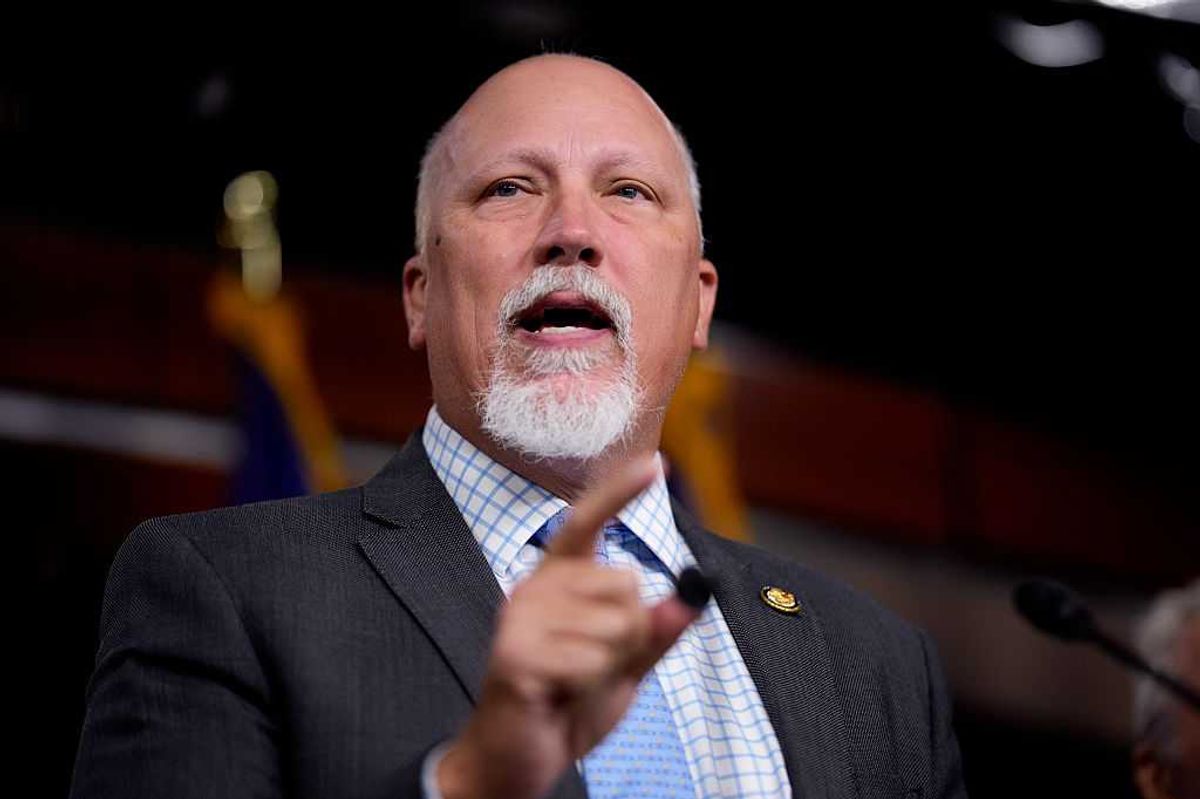
 Photo by Anna Moneymaker/Getty Images
The genius of Roy’s bill is simple: It creates a standing incentive for courts, presidents, and future Congresses. If judges want legal immigration to continue, they must revisit the policies that created the crisis in the first place.
Staring at political reality
If Trump focused his attention on this bill — and forced congressional Republicans to choose — he could unite conservatives heading into primary season. A transformational immigration fight would energize GOP voters at a moment when the party shows weakness across the map.
Democrats have over-performed by an average of 15 points in recent special elections. That surge alarmed Republicans enough that they pulled Rep. Elise Stefanik (R-N.Y.) from consideration for U.N. ambassador for fear of losing her district, which Trump carried by 15 points. Democrats are now pouring money into Tennessee’s 7th Congressional District, which Trump carried by 20. A party that cannot defend safe seats is a party in trouble.
If Republicans can’t win in red America during a bad economy, it’s not because voters demand new talking points. It’s because the party has failed to deliver on the core issues that animate its base.
RELATED: The right must choose: Fight the real war, or cosplay revolution online
 wildpixel via iStock/Getty Images
The choice ahead
Trump could offer a fresh economic vision or finally follow through on repealing Obamacare. But at a minimum, he should return to his original 2015 promise: Pause immigration and restore sanity to a system voters believe is broken beyond recognition.
The window is closing. If Republicans refuse to use the power they still possess, they will lose it — not gradually, but suddenly.
The PAUSE Act gives them a chance to reverse that trajectory. The question is whether they will take it.
KELLY COURT-MARTIAL? Pentagon Threatens Action Against Senator Over ‘Refuse Illegal Orders’ Video

The Department of War announced Monday that it has launched a formal review into allegations of misconduct against Democratic Sen.
WATCH NOW: First Lady Melania Trump Welcomes White House Christmas Tree

First Lady Melania Trump is set to welcome the official White House Christmas tree early Monday afternoon in a holiday tradition that marks the start of the season in Washington.

Northwestern Professor Uses Biomedicine Class to Claim Israel Deliberately Killed Its Own Citizens on Oct 7, Lecture Slides Show
A Northwestern University professor turned her biomedicine course into an anti-Israel lecture accusing the Jewish state of killing its own people on Oct. 7, 2023, excusing Hamas terrorism, and arguing that Israel does not have the right to self-defense, according to lecture slides obtained by the Washington Free Beacon.
The post Northwestern Professor Uses Biomedicine Class to Claim Israel Deliberately Killed Its Own Citizens on Oct 7, Lecture Slides Show appeared first on .
The Spectator P.M. Ep. 171: Meghan Markle Demands to Be Called by Her Title Everywhere
Anyone expecting Meghan Markle’s presence is formally greeted by someone announcing her as “Meghan, Duchess of Sussex.” A recent interview…
When Public Service Really Matters
Government shutdowns carry with them many risks, both political and physical. One major risk comes from the air travel industry…
TDS Now Resembles Orwell’s ‘Two Minutes Hate’
Some complain that “Orwellian” has become the most overused phrase in current political discourse, but I beg to disagree. Although…
Strong Lake-Effect Snowstorm To Bring White Thanksgiving To Midwest, Northeast
Thanksgiving travel could face major disruptions





