Category: socialism
Socialist Mamdani’s tax assault on NYC’s rich begins — claims Adams forced his hand with fiscal crisis
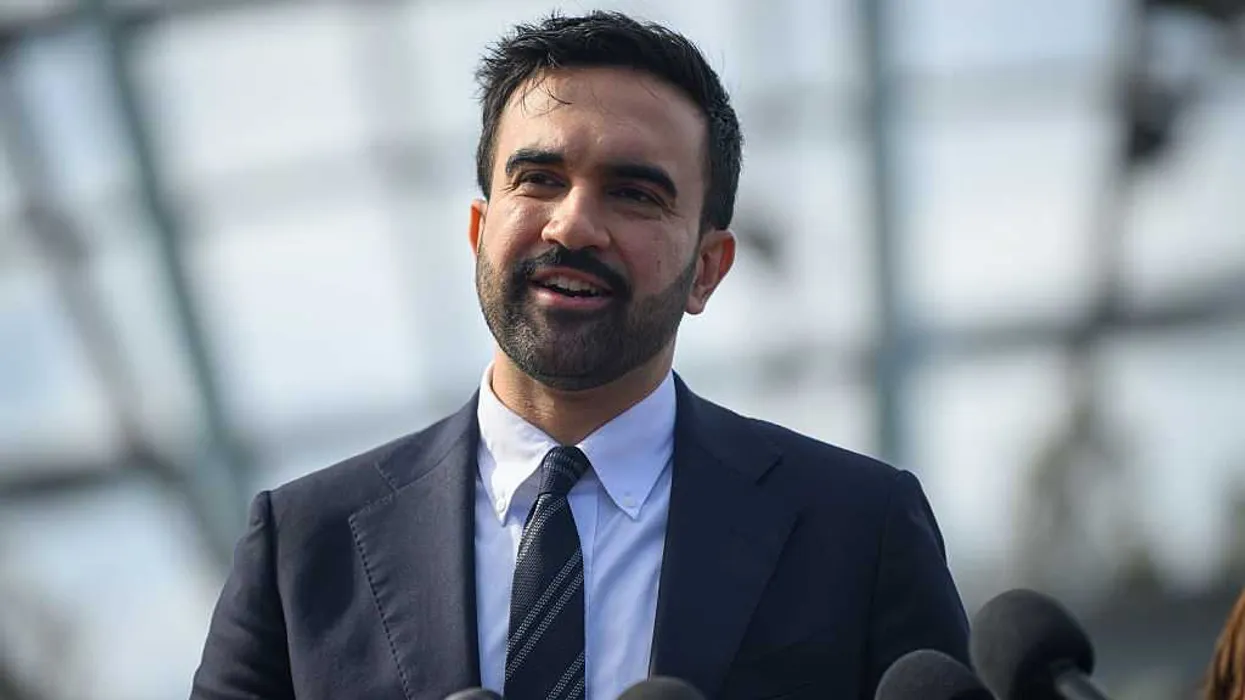
New York City’s newly inaugurated mayor, Democratic Socialist Zohran Mamdani, revealed plans to increase taxes on “the richest New Yorkers” less than one month into his term, blaming former Mayor Eric Adams (D) for a budget shortfall.
On Thursday, Mamdani held a press conference to detail the “Adams Budget Crisis,” claiming that the former mayor “misled and misinformed” New Yorkers about the “true state” of the city’s finances.
‘And here’s the part socialists hate saying out loud: “Free” is a lie.’
“I will be blunt: New York City is facing a serious fiscal crisis. There is a massive fiscal deficit in our city’s budget to the tune of at least $12 billion. We did not arrive at this place by accident. This crisis has a name and a chief architect,” Mamdani said.
“This is the Adams Budget Crisis.”
He accused Adams of handing the new administration “a poisoned chalice” by “systematically” under-budgeting necessary services, including rental assistance, shelter, and special education.
“Knowing his time in office was likely coming to an end, Mayor Adams chose political self-preservation over fiscal responsibility. This is not just bad governance. It is negligence,” Mamdani remarked.
“The Adams administration dramatically and intentionally understated the problem.”
Mamdani vowed to balance the budget over two fiscal years by implementing “bold solutions,” including “recalibrating the broken fiscal relationship between the state and the city.” He argued that New York City contributes 54.5% of the state’s revenue but receives only 40.5% of its operating expenditures.
RELATED: ‘Proud to be a sanctuary city’: Mamdani announces another handout for illegal aliens in NYC
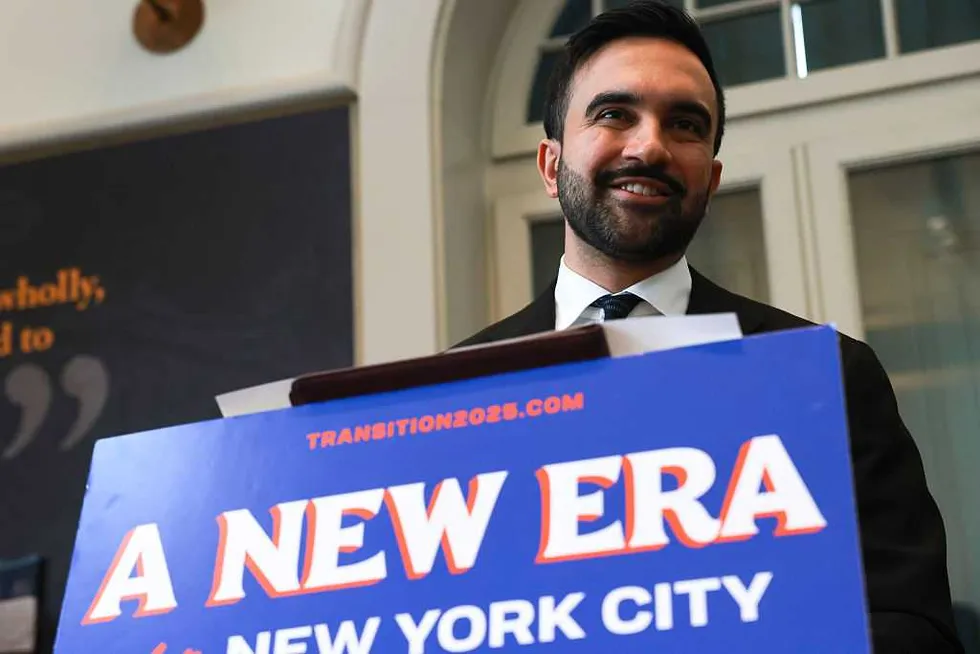 Zohran Mamdani. Photo by Spencer Platt/Getty Images
“Working people did not cause this crisis, and they cannot be made the victims of its solution,” Mamdani stated.
“The time has come to tax the richest New Yorkers and most profitable corporations,” he declared.
Mamdani stated that he could “build a stronger city for everyone” if New York’s top 1% earners paid an additional 2% in income taxes, while claiming that the increase was not significant enough to drive wealthy individuals to leave the state.
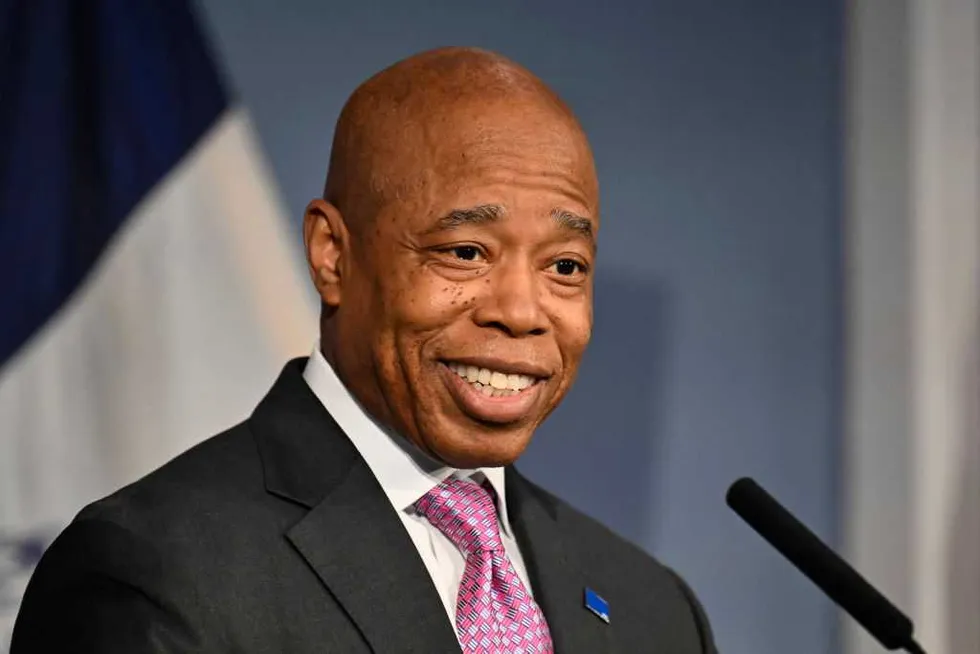 Eric Adams. Photo by ANGELA WEISS/AFP via Getty Images
Adams fired back at Mamdani in several posts on X, denying that he left a deficit in the city’s budget.
“Facts have a way of getting in the way when slogans replace math and blame replaces leadership,” Adams wrote. “I didn’t leave a ‘budget hole.’ I left over $8 BILLION in reserves. Only someone who can’t read a balance sheet would call that a crisis.”
“And here’s the part socialists hate saying out loud: ‘Free’ is a lie. Every so-called free program comes with a price tag, and someone always pays for it,” he added.
Adams argued that Mamdani’s real motive behind his press conference was to find a way to pay for the “laundry list of ‘free’ giveaways” he promised New Yorkers “to buy votes.”
“Now that the math doesn’t work, instead of owning the fact that he misled New Yorkers, he’s blaming me,” Adams said. “This is the same Mamdani who spent years attacking me for not spending enough during the migrant crisis. The only reason those reserves exist is because I ignored him and his socialist comrades who demanded we blow billions more with no guardrails.”
Adams mocked Mamdani in a third post on X, writing, “When you promise ‘free’ everything on Sunday, boldly declare that millionaires and billionaires shouldn’t exist on Monday, and by Tuesday you’re scrambling to fund your giveaways with the very people you wanted gone just yesterday.”
Like Blaze News? Bypass the censors, sign up for our newsletters, and get stories like this direct to your inbox. Sign up here!
The Spectator P.M. Ep. 183: Ms. Rachel and Zohran Mamdani Are Teaming Up
New York City’s newly elected mayor, Zohran Mamdani, partnered with YouTube star “Ms. Rachel” (Rachel Accurso) to sing “The Wheels…

The Spectacle Ep. 311: Venezuela: Enemies Foreign and Domestic, Part I
2026 is off to an explosive start, with President Trump’s arrest of Venezuelan dictator Nicolás Maduro. (READ MORE: The Toppling…
The ‘Warmth of Collectivism’ Comes to New York
In his inaugural address, New York City’s socialist Mayor Zohran Mamdani described his taking the levers of municipal power as…
The socialist spell: Why modern minds keep falling for an old lie

What draws people to socialism?
Even after nearly two centuries of ruin brought to those societies that have adopted this governing system, the appeal still remains. Most Western countries have a thriving socialist party occupying portions of the government, including the United States with the Democratic Socialists of America.
The promises of socialists made in today’s media landscape are closely analogous to the serpent’s promises in the Garden of Eden.
Worse still, the DSA experienced a huge win in New York City with the election of outspoken socialist Zohran Mamdani and came close to beating the Republican candidate with another socialist in a special election in Tennessee in December.
Then, of course, there are the legions of leftist online content creators indoctrinating millions of users with socialist messaging.
Is it historical ignorance with the Cold War increasingly far behind us? Is it the leftist teachers simply passing over the horrific genocides of communist leaders like Mao Zedong, Joseph Stalin, or Pol Pot and ignoring the ongoing calamities of Cuba, Venezuela, North Korea, and other socialist backwaters? Is it simply the promise of free stuff? Is it the envy of billionaire elites who seem to wield omnipotent power?
The socialist paradox
No doubt, ignorance, greed, envy, and boredom all play a significant role in the elevation of socialists.
This is why most opponents of socialism generally push back by attempting to teach people about the endless failures of socialism, the basic laws of economics, and the immorality and destructiveness of confiscating property and denying citizens their constitutional freedoms.
Clearly, this approach has not been successful with this latest crop of socialists who now make up a large portion of the Millennial and Gen Z cohorts.
It could just be that human nature is such that it is always vulnerable to toxic ideas like socialism, and digital technology has made this problem even more challenging. After all, the promises of socialists made in today’s media landscape are closely analogous to the serpent’s promises in the Garden of Eden: Do this one thing — i.e., eat this fruit, vote and campaign for this socialist — and you will have everything you want.
Or, more likely, it could be that conservatives are misunderstanding the issue altogether.
Rather than view socialism as an ideology, a movement, or a moral failing inherent in human nature, it would be better to see socialism as a reaction to all these things.
At its core, socialism is what happens when a person consciously rejects political reasoning, morality, and complex abstractions, all in favor of a strictly materialist and existentialist approach to life.
Orwell and the socialist mind
An illustration of this phenomenon comes from the great 20th century writer George Orwell, who unintentionally captures the socialist mind in his personal account of the Spanish Civil War, “Homage to Catalonia.”
Despite being known as a fierce critic of totalitarian surveillance states like the Soviet Union, Orwell himself was an ardent socialist throughout his life. In fact, he was so committed to socialism that he went to Catalonia to fight a war on behalf of the Trotskyist Workers’ Party of Marxist Unification.
His stated goal was not necessarily to write a full account of the Spanish Civil War (though he did), but first and foremost to kill fascists.
RELATED: A socialist New York isn’t just a local problem. It’s a national emergency.
 natasaadzic/iStock/Getty Images Plus
What is most surprising about “Homage to Catalonia” is just how little Orwell actually writes about socialism itself. He spends many pages describing the size of rats, the scarcity of tobacco, and the convoluted squabbling between various anarchist, communist, and socialist factions, yet almost nothing about why he is actually fighting in a foreign civil war.
In one of the middle chapters, almost in passing, he devotes a precious few paragraphs on the matter, citing his sympathy with the laborers in their hope of realizing true equality: “The thing that attracts ordinary men to Socialism and makes them willing to risk their skins for it, the ‘mystique’ of Socialism, is the idea of equality; to the vast majority of people Socialism means a classless society, or it means nothing at all.”
Sadly, Orwell quickly follows this reflection with the immediate reality of his situation, “I was hardly conscious of the changes that were occurring in my own mind. Like everyone about me I was chiefly conscious of boredom, heat, cold, dirt, lice, privation, and occasional danger.”
Naturally, these concerns are what make up the bulk of his book.
At no point in Orwell’s narrative does his joy rise above the creature comforts of cigarettes, wine, food, sleep, and personal cleanliness, nor does his sorrow go much beyond beyond the deprivation thereof. Any hope he might have that transcends this narrow worldview — i.e., virtue, ethics, greater truth, life after death (Orwell survives a shot through the neck), or even winning the war — is completely absent.
Orwell is just there, living his life and fighting an enemy. Even though he is aware of the atrocities of the socialist militias — like destroying churches and killing innocent priests and nuns — he hardly thinks about it. Even though he throws a bomb into enemy lines and inflicts a slow and painful death on a fascist soldier, he is more annoyed at the man’s screaming than he is perturbed at the fact that he just killed a man in cold blood for a dubious cause.
Obviously, Orwell was not too dim-witted to think of these matters, nor is it because he was some kind of true believer blinded by misleading propaganda, nor was he a sociopath.
Instead, he has committed to a mode of behavior and thought that negates all moral rationality. His socialism simply does not touch on anything beyond the next meal, the next bus to work, the next cup of coffee, the next nice-sounding idea.
Acting as a socialist only means doing what the other socialists seem to be doing, whether that means joining a protest, fighting in a civil war, or voting for a DSA candidate.
Although some of this mode of behavior betrays a deep streak of nihilism, the socialists themselves never reflect on anything long enough to realize it. For all the observations Orwell makes, with his characteristic wryness, none of it ever leads to a deeper conclusion about his situation.
Much of his general attitude could be summed up with the empty platitude, “It is what it is.” Readers can also find this kind of hopeless shrug in the endings of Orwell’s novels “Animal Farm” and “1984,” where the antagonists triumph and all the efforts of the protagonists prove to be futile as well as pointless.
RELATED: The complete failure of ‘1984’
 Mininyx Doodle/iStock/Getty Images Plus
Based on the account given in “Homage to Catalonia,” the biggest precondition that leads to this mindlessness is modernity’s systemic atomization and subsequent loneliness.
Throughout his narrative, Orwell has no real friends about which to speak — yet he does somehow drag his wife to Barcelona while he fights with the Workers’ Party of Marxist Unification. True, he notes with fondness how everyone addresses each other as “comrade,” as well as substituting the formal “usted” (Spanish for “you”) for the informal “tu.”
Yet, this belies the indifference he ultimately has for these men suffering and dying senselessly. This community of soldiers in the trenches — the one example that Orwell can point to as true socialism in practice — is almost entirely superficial. Years later, he still cannot see this and even feels glad for the experience of stinking and starving in trenches with his socialist “comrades” for so many months.
Humanize before you catechize
In light of all this, it should be clear that mere apologetics for free-market capitalism, liberal democratic republicanism, and Christian communitarianism will fall on deaf ears, for the socialists both then and now.
A catchy slogan, a photogenic demagogue, an attractive vibe will win over otherwise intelligent people and lead them down a dark path that allows no light to come in.
In order to bring them back from this path, conservatives and other anti-socialists need to appreciate the content of their worldview (or lack thereof) along with the modern context of today’s postmodern consumerist culture that have made friendship, depth, and moments of quiet reflection next to impossible.
Once they recognize this, they will finally understand that more education and fewer affordability crises will not fix the problem of socialism’s growing popularity. Instead, they will have to meaningfully connect with these people, pull them away from the sources of malaise, and patiently fill up what has been hollowed out.
People must be humanized before they are catechized.
Even though this is a much bigger project, it is a more effective and fulfilling one. One can speculate what would have happened if Orwell found religion and joined a church instead of finding socialism and joining the Workers’ Party of Marxist Unification. Perhaps his eventual novels criticizing Russian communism would have lacked the same insights.
Or, perhaps his cynicism and recklessness would have turned to hope and wisdom, and he could have offered a better way forward to those who fall under the spell of socialism instead of dreaming up horrific depictions of socialism’s excesses.
Socialism didn’t win New York. Marketing did.
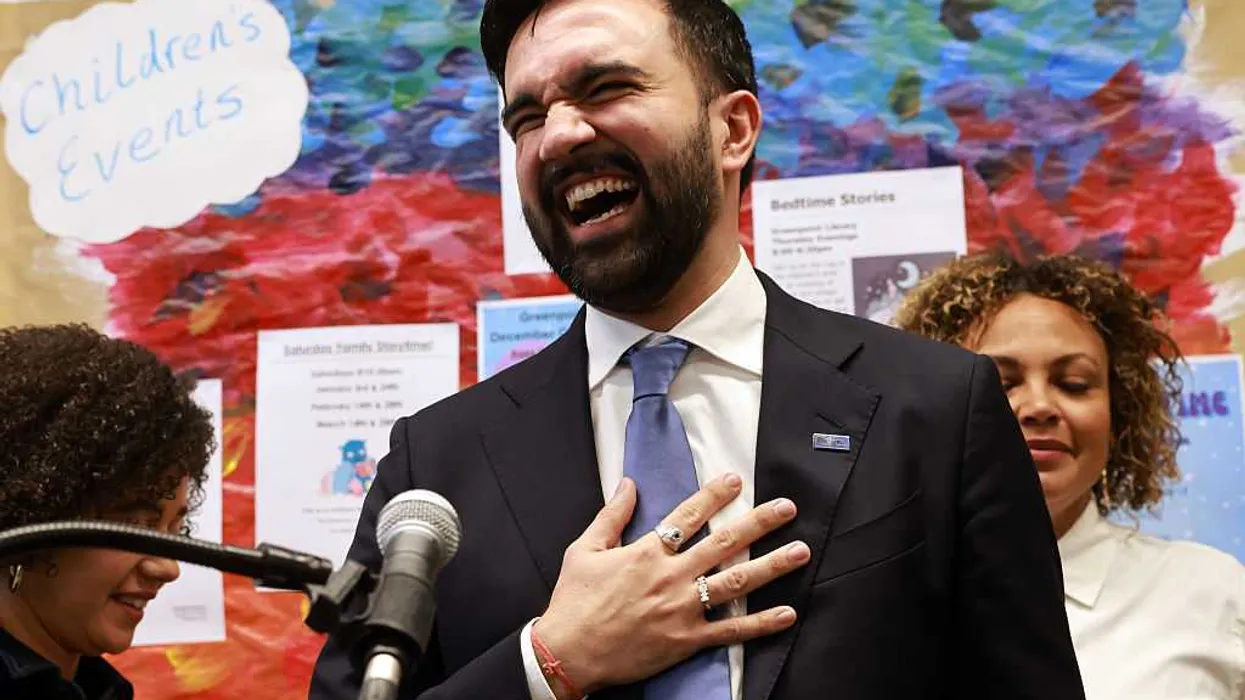
I oppose Zohran Mamdani’s Democratic Socialist agenda. But if Republicans are serious about winning elections next year and in 2028, they need to take a hard, unsentimental look at how he just won one of the most consequential mayoral races in the country.
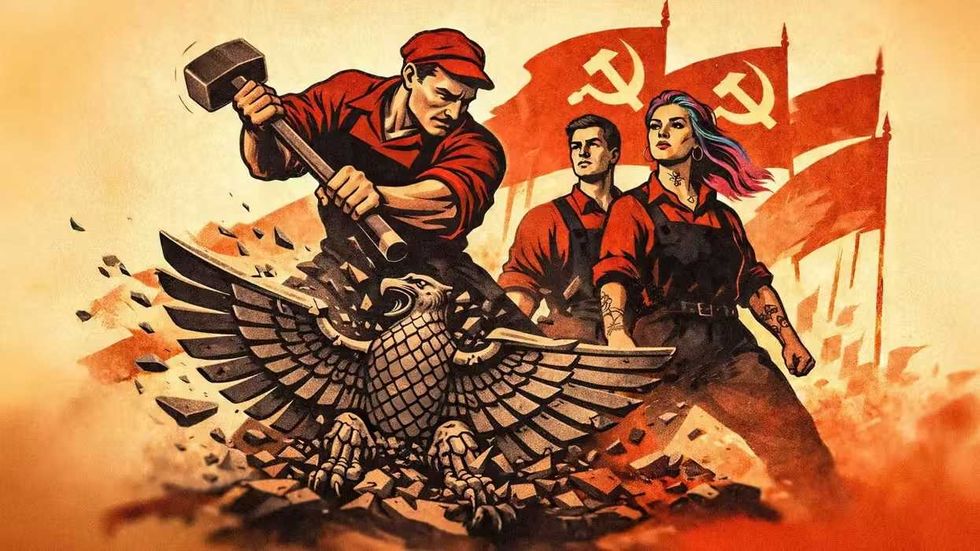
This was not an ideological earthquake. New York did not suddenly “discover” socialism. What happened was a marketing and mobilization breakthrough. Mamdani’s campaign understood attention, simplicity, participation, and distribution better than anyone else in the race.
Republicans often confuse seriousness with stiffness. Mamdani showed that message discipline does not require lifelessness.
Joe Perello, the city of New York’s first chief marketing officer, noted in PRWeek after Mamdani’s victory that the campaign did more than communicate a message. It built an engine that converted online engagement into real-world turnout.
“For marketers and strategists alike, the implications are clear,” Perello wrote. “Growth hacking, iterative testing, and data-driven amplification can convert digital sentiment into real-world behavior. In Mamdani’s case, that meant converting hearts, clicks, and hashtags into ballots.”
Here is the part many on the right do not want to hear: Mamdani did not spend his time lecturing working-class voters about the virtues of socialism or defending failed economic theory. He focused on immediate, kitchen-table concerns and paired them with simple, slogan-ready answers.
Is halal food expensive? Make it cheaper. Struggling to get to work? Free buses. Grocery bills too high? Government-run grocery stores.
He took Bernie Sanders’ 2016-era talking points and filtered them through a polished, Obama-style optimism that voting-age New Yorkers were willing to engage with.
Most voters do not have the time — or patience — to think through how these promises would actually work. They just want to hear that someone intends to make their lives easier.
As Citizens Alliance CEO Cliff Maloney observed during Mamdani’s surge in the polls, the public’s lack of understanding about how government operates — and how socialism consistently fails — created the political environment Mamdani exploited. He did not create that environment. He mastered it.
Republicans’ digital blind spot
For years, Republican campaigns have treated digital media as messaging rather than infrastructure. Social platforms are used as megaphones for press releases, fundraising tools, or dumping grounds for cable-news clips. The underlying assumption is that persuasion happens elsewhere — on TV, at rallies, through mailers — and that digital simply amplifies those efforts.
Mamdani reversed that logic. Social media was not an accessory to his campaign. It was the campaign.
His approach drew praise even from outlets like the Guardian, where journalist Adam Gabbatt noted that Mamdani “has won social media with clips that are always fun — and resolutely on-message.”
His team treated TikTok and Instagram like serious growth channels. Short videos were not vanity content; they were experiments. Different neighborhoods, different faces, different tones, different pacing. What held attention? What sparked comments? What traveled across boroughs? Each post generated data, and each data point informed the next iteration.
This was politics run as a full-funnel acquisition strategy. Awareness led to engagement. Engagement led to identification. Identification led to turnout. Republicans can mock the aesthetics, but the mechanics work.
Energy is a signal
One of the most underrated elements of Mamdani’s campaign was how it looked. He was constantly in motion — walking Manhattan, running a marathon, bouncing between boroughs. Rarely behind a lectern. Rarely static. Always visible.
That energy communicated youth, optimism, and confidence in the same way John F. Kennedy outperformed Richard Nixon on television in 1960. A similar contrast appeared in 2024, when Donald Trump’s unscripted, high-visibility media strategy stood in sharp contrast to Joe Biden’s and Kamala Harris’ tightly controlled appearances.
The predictable response on the right is dismissal. ‘That’s just TikTok nonsense.’ ‘Our voters aren’t like that.’ Those excuses are comforting — and dangerously wrong.
In an age of low trust and low information, energy reads as competence. Movement suggests effort. Visibility substitutes for familiarity. Mamdani’s omnipresence created the impression — fair or not — that he was accessible and engaged with everyday life.
Republicans often confuse seriousness with stiffness. Mamdani showed that message discipline does not require lifelessness.
RELATED: When Bernie Sanders and I agree on AI, America had better pay attention
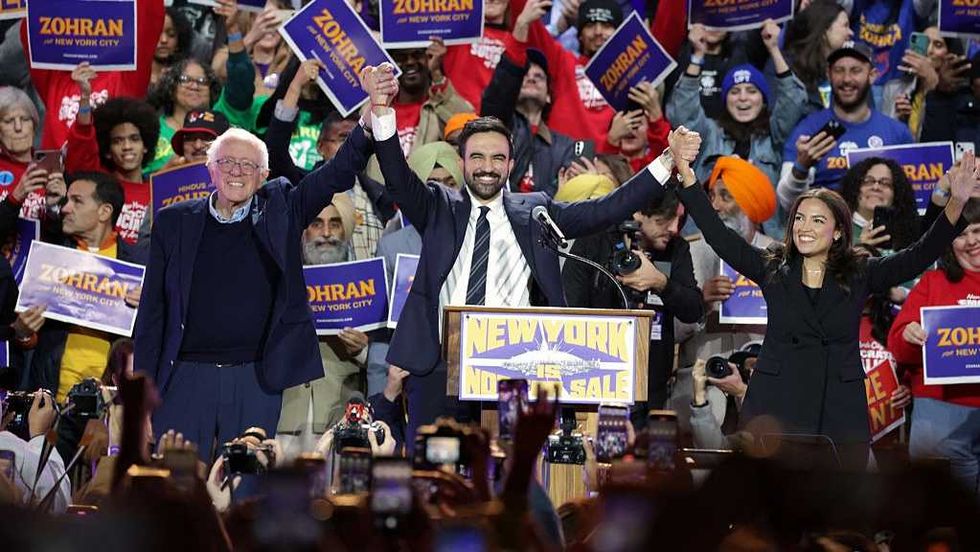 Photo by ANGELA WEISS/AFP via Getty Images
From supporters to fans
The most uncomfortable lesson for traditional campaigns is that Mamdani did not just mobilize voters. He activated fandom.
Much of the campaign content that flooded social media did not come from official accounts. It came from supporters remixing clips, creating fan art, cutting moments to music, and sharing them within their own networks. The campaign made Mamdani easy to clip, easy to celebrate, and then got out of the way.
Wired magazine described it as a rare case of participatory political culture usually reserved for celebrities.
This matters because peer-to-peer persuasion scales faster and carries more credibility than anything a campaign can manufacture. Fan-made content travels further, feels more authentic, and costs nothing. Republicans, by contrast, tend to over-police their messaging, choking off organic enthusiasm in the name of control.
Younger voters understand fandom instinctively. They grew up online. Mamdani did not lecture them about politics; he gave them something to belong to.
The wrong reaction
The predictable response on the right is dismissal. “That only works for Democrats.” “That’s just TikTok nonsense.” “Our voters aren’t like that.”
Those excuses are comforting — and dangerously wrong.
Trump understood this dynamic in 2024 when his campaign was largely shut out of legacy media. Figures like Charlie Kirk reached millions of Gen Z voters by blending serious political content with the humor and energy of youth activism.
Algorithms do not have ideologies. Participation is not a left-wing monopoly. Visibility, simplicity, and community are not progressive inventions. In a low-information, high-attention environment, the side that understands distribution wins.
The real danger is not Mamdani’s policies alone. It is a Republican Party that keeps confusing being correct with being effective.
RELATED: How anti-fascism became the West’s civil religion
 Blaze Media Illustration
What Republicans should learn — now
First, treat digital as organizing, not advertising. Stop thinking in posts and start thinking in systems. How does attention become action?
Second, simplicity wins. Republicans often pride themselves on being right — and then lose because they are incomprehensible. Clarity scales. Long explanations do not.
Third, loosen control. Let supporters remix, clip, and share. Reach matters more than perfect phrasing.
Finally, build communities, not just campaigns. Email lists decay. Ad budgets run out. Communities endure.
The bottom line
I do not agree with Zohran Mamdani’s politics, and I do not want his policies implemented anywhere. But ignoring how he won would be malpractice.
He demonstrated how power is built today — not through party machinery or television dominance, but through attention, participation, and relentless simplicity. Republicans can learn from that reality, or they can keep losing to it.
Disagree with his ideology. But study his marketing. Ignore the lesson at your own risk.
Shock poll: America’s youth want socialism on autopilot — literally
Growing up during the fall of the Berlin Wall and the collapse of the Soviet Union, I remember when socialism was a universal punch line. It stood for failure, repression, and economic ruin.
Not any more. Today, socialism is the ideological spearpoint of the left. Many young Americans now insist that socialism is the cure for the affordability crisis squeezing them. They believe it with a fervor that would have stunned earlier generations.
The evidence is overwhelming, and the verdict is final: Socialism fails everywhere it is tried. Now imagine that system fused with an all-seeing AI.
New polling from Rasmussen Reports and the Heartland Institute’s Emerging Issues Center shows that a majority of likely voters ages 18 to 39 want a Democratic Socialist to win the White House in 2028.
Nearly 60% of young Americans say they support more government housing, a nationwide rent freeze, and government-run grocery stores in every town.
These numbers aren’t anomalies. They reflect a deeper reality: Many young Americans know little about socialism’s actual history, consequences, or track record — and they have been conditioned to believe it can fix the challenges in front of them.
One reason for that ignorance is uncomfortable but obvious. It’s not only the schools — it’s the parents. According to the polls, parents were the most influential voices shaping their children’s support for Democratic Socialism. More than half of respondents said their parents held a favorable view of it.
That alone explains a great deal. And unsurprisingly, more than half also said teachers and professors viewed Democratic Socialism favorably. After decades of ideological drift, even parents who grew up after the USSR’s collapse now believe socialism “might work.”
Based on my own experience teaching in public schools, that rings true. Most of my colleagues openly sympathized with the socialist cause and were hostile to free-market capitalism.
This didn’t happen by accident. It reflects a long march beginning in the Progressive Era. My own postgraduate experience at a prestigious teaching college felt less like preparation for the classroom and more like a Cultural Revolution struggle session — conformity required, dissent punished.
As the public education system drifted leftward, it taught generation after generation that socialism is benevolent and capitalism is predatory. The result is predictable. Many young people now see the free market as the enemy, not the mechanism that lifted billions out of poverty. Cronyism and the explosion of government power only blur the picture further.
Layer onto this the collapse of basic literacy and numeracy. When students can’t read well, struggle with math, and can’t write a coherent paragraph, they are more vulnerable to ideological manipulation — and more likely to lean on machines to think for them.
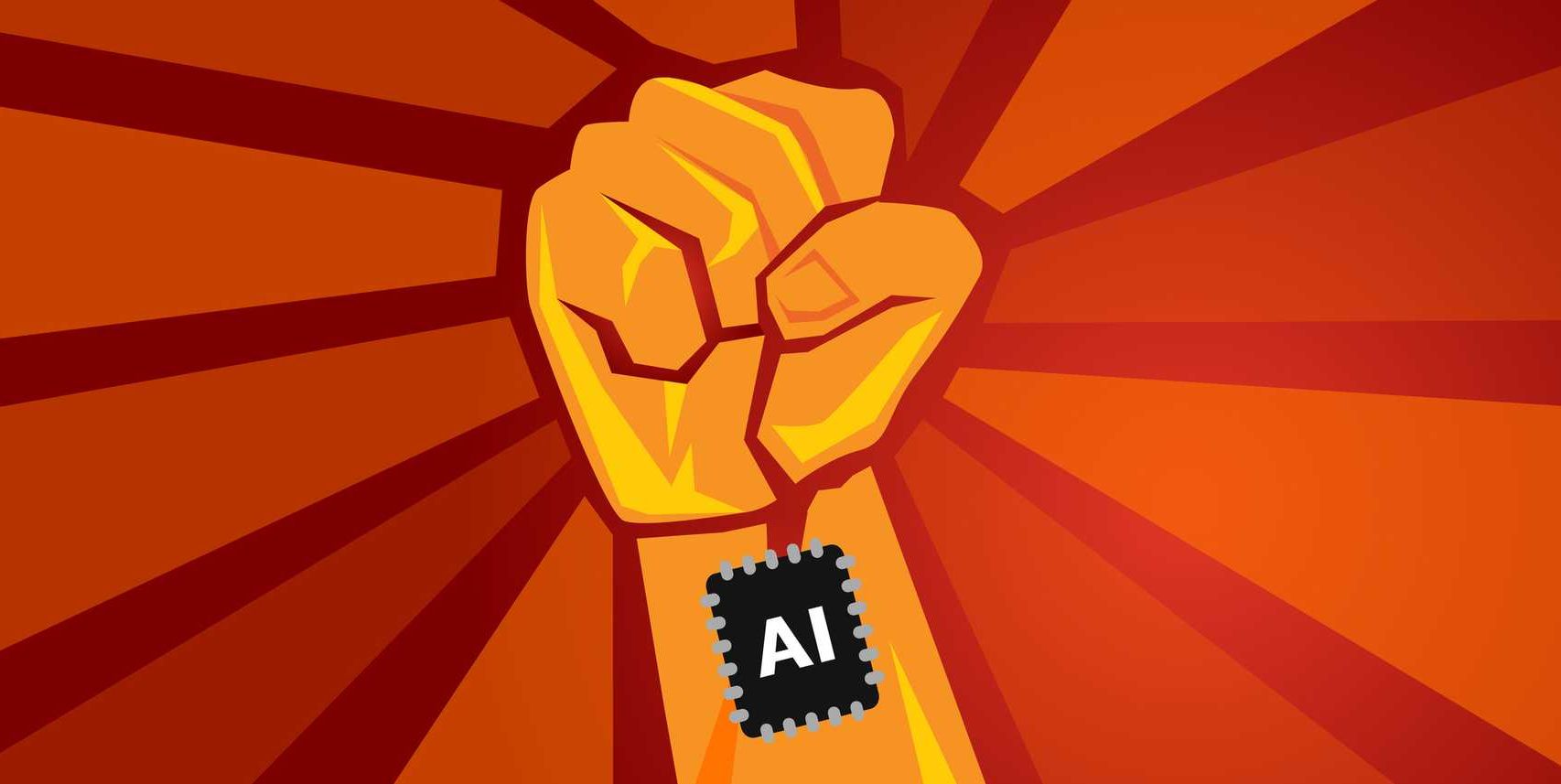
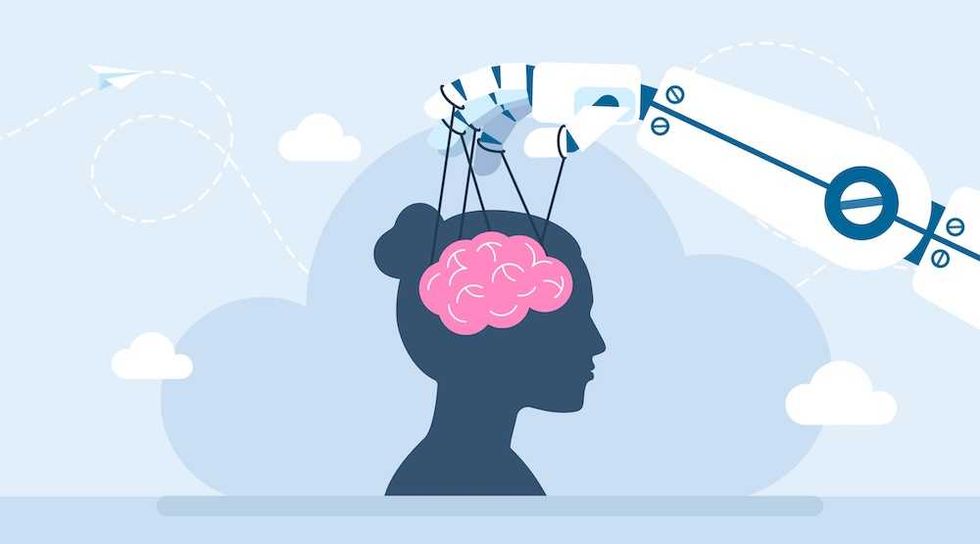
So it shouldn’t shock anyone that almost half of young Americans surveyed want an advanced AI system to create society’s laws, rules, and regulations. Nearly 40% want that AI system to determine human rights and control the world’s most powerful militaries.
RELATED: Almost half of Gen Z wants AI to run the government. You should be terrified.
 Yurii Karvatskyi via iStock/Getty Images
How did this happen? Watch how many parents are glued to screens, outsourcing daily life to devices. Is it any wonder their children grow up thinking technology is omnipotent?
Parents should start with something simple: a family movie night featuring the “Terminator” franchise. Let the kids see where blind faith in machines tends to lead.
Better yet, teach them the truth about socialism. Teach them what it does to human beings. Share the books, documentaries, and testimonies exposing socialism’s century of famine, repression, forced labor, and mass murder — horrors still unfolding in Cuba and North Korea.
The evidence is overwhelming, and the verdict is final: socialism fails everywhere it is tried. Now imagine that system fused with an all-seeing AI — a surveillance state that Stalin could only dream of. The thought of an AI-run socialist regime is not dystopian fiction. It is what many young Americans say they want.
They should be careful what they wish for.
Why the kids are not all right — and Boomers still pretend nothing’s wrong
Here’s a message Baby Boomers need to hear: The America you were born into no longer exists.
A rising tide of young Americans are embracing socialism at a pace this country has never seen. Boomers often assume that it’s about handouts. It isn’t. Beneath the surface is a decades-long campaign so destructive to middle-class mobility that it threatens to push the nation toward civil conflict. The more you study it, the more coordinated it looks.
A people dependent upon ‘gimme gimme’ socialism is an easily managed population. A demoralized middle class keeps the ruling class secure.
In a way, it was.
Short-term profit-maximizing globalists on Wall Street teamed up with the K Street lobbying blob to drown Americans in cheap Chinese goods while saddling them with student debt, consumer debt, and medical debt.
Young people are being priced out of the American dream.
My urgent message to Boomers — especially those who want to keep influence: The kids are not all right.
The America your kids and grandkids know is not the America you knew. Most Boomers were born in the 1950s, when the country was booming — united by postwar optimism, American industrial strength, shared national institutions, Walter Cronkite on one television in every home, full-fat milkshakes, and Elvis shaking up the culture.
Today, we live in a golden age of technological revolution. We are making remarkable advances in space travel, tech, and medicine — increasingly led by the private sector and unapologetic capitalists. But on the basics — housing, health, education — we’re failing the next generation.
In 1955, the median homebuyer was in his late 20s. In 2025, it’s 56. A minimum-wage worker in the 1950s needed roughly seven years of pay to buy a modest home without a mortgage. Today, it’s around 27.
In 1955, a student could pay college tuition by working a few hours a day at minimum wage. Today, that same student would need to work about six hours a day. If a kid wants Yale or any Ivy League school, he would have to work 26.4 hours a day — an impossible figure that illustrates how detached elite education has become from reality.
Here’s a frightening divide: 93% of Boomers say political violence is never justified; 44% of Gen Z say it “sometimes” is.
Ninety-nine percent of kids are not out for blood, but 100% of them face a massive relative disadvantage. The upward mobility Boomers took for granted has been hollowed out by globalist and left-wing policies sold as progress but experienced as decline.
We spent trillions of American dollars on foreign wars, foreign infrastructure, and foreign elections. We borrowed recklessly. Now the dollar is frail. We allowed millions of illegal migrants to enter the country, fueling crime and pushing Americans out of jobs. Young households are buried in debt — not mortgage debt that builds equity, but consumer debt used to numb the anxiety left by a collapse in community and faith.
Here’s the truth: The populist right and the socialist left agree on the diagnosis. Listen to the first half of Bernie Sanders’ interview with Joe Rogan in June. For an hour, Bernie describes America’s economic troubles. Most people, right or left, would nod along.
Then comes the pivot: Socialism is the cure.
This is the left’s great deceit. Progressives’ proposed “solutions” hurt the very people they claim to help.
RELATED: We built abundance and lost the thing that matters
 Photo by Spencer Platt/Getty Images
Take restrictive zoning and rent regulations — blue-state staples designed to “create” affordable housing. In reality, they choke supply and drive rents higher. Or look at no-cash bail. The neighborhoods hit hardest by serially released offenders are the same minority communities progressives claim to champion. The examples pile up.
So why do left-wing billionaires back these ideas? Simple: Socialism, communism, and their logical end point — fascism — are excellent for entrenched oligarchs. A people dependent upon “gimme gimme” socialism is an easily managed population. A demoralized middle class keeps the ruling class secure.
There is another path.
We must reverse the policies that got us here. Strengthen education outcomes, lower health care costs, rebuild domestic supply chains, expand American energy generation, and restore competence to the workforce.
Boomers, if you don’t lead this shift, your influence will vanish before your next Social Security check arrives. Moderate Democrats already know the socialist tide is rising. They’re afraid to say it out loud.
The Gen Z and Millennial voting bloc will dominate the 2028 election. They are demanding change. Moderates — in both parties — are being replaced by extremists.
You have a choice: Allow yourselves to be absorbed into the socialist machine, or correct the mistakes of the last two decades, return power to citizens, and rebuild access to the American dream.
If conservatives will not defend capitalism, who will?

In the aftermath of Zohran Mamdani’s electoral victory earlier this month, it became clear that socialism is a greater threat on the left than ever before. It is also clear that the GOP could no longer coast along by proclaiming, “Vote for us because he’s a socialist,” assuming that people would forever have a knee-jerk reaction to that word.
One issue that defined New York’s mayoral race — and increasingly politics throughout the country — is affordability. For millions of Americans, affording rent, groceries, health care, and a home seem further out of reach than ever before. The issue has been winked at by politicians across the spectrum for years around election time with precious little results to show for it.
Explaining to voters why they are wrong — or even worse, outright dismissing their concerns — has never worked politically, and that is not going to change now.
We have largely reached a point where this can no longer be avoided: We are now seeing regular releases of ever-worsening economic figures. The median age for all U.S. home buyers is 59 — a staggering statistic by itself, made even worse by the fact that it is up from just 28 back in 1991.
And it is not just that people are getting priced out of home ownership — rents have gone up astronomically over the past decade, leading us to a situation in which the American consumer is clearly struggling to get by. From credit card debt at record highs with seriously delinquent accounts hitting 12%, the highest since 2012, to auto repos matching 2009 levels, it is pretty clear that the consumer is maxed out.
Looking around at how conservative pundits spent the last few weeks talking though, you would not know it at all. You would be forgiven if you thought they had just come off a huge electoral victory. Conservatism simply cannot reduce itself to being the worst caricature of cold elitism that turns a blind eye to the very real economic struggles many in the country are facing.
Ben Shapiro kicked things off after suggesting to young people that they simply should not live in places like New York City, criticizing the idea that someone would deserve to live where they grew up and where job opportunities are heavily concentrated.
That same week, Donald Trump opened a rift within his own base — a rare sight for sure — in an interview with Laura Ingraham over the issue of H-1B visas. When she pushed him on his stance, saying that we have “plenty of talented people here,” he interrupted with, “No you don’t, no you don’t.” Instead of focusing on how to make American workers more competitive through better education or training, the message heard by many was that Americans were not up for the job.
Worst of all may have been Dinesh D’Souza, who felt the need to weigh in on Vivek Ramaswamy’s meritocratic education reform by essentially race-baiting, saying: “How ironic it will be if a brown American like Vivek actually helps to fix education and raise the prospects of white kids, while all the professional whiteys on X continue their idle boasting.” Whatever the merits of education reform, mocking struggling Americans — especially through whatever “professional whiteys” is supposed to mean — is not doing anyone any favors.
With approaches like these from the right, who needs the left anymore? It took Ramaswamy’s opponent in the Ohio gubernatorial race, Amy Acton, all of 24 hours to put together an ad saying that Ramaswamy thinks “Ohioans are lazy and mediocre. He’s wrong.” It practically wrote itself.
Arguments like these from conservatives do more damage to the defense of capitalism than attacks from socialists ever could and are totally disconnected from what free markets actually are. Capitalism has delivered more prosperity than any system in human history, and it is not even close — but it did not get there by running on the platform of saying, “You’re too poor to live where you grew up, our country isn’t talented, move aside.”
New York City is famous throughout the world because it is the city where generation after generation of people who wanted to work hard could go and make something of themselves. Nobody I have seen on the right is asking for a luxury life handed to them on a silver spoon while they sit on the couch. They are frustrated by the fact that the world seems to be increasingly out of reach for them.
The only person in the GOP who seems to be able to see this, I’m horrified to say, appears to be Rep. Marjorie Taylor Greene (Ga.), who spent the last few weeks getting attacked for acknowledging that many “young adults are barely making it” and accusing Trump’s allies of gaslighting Americans about the cost of living. On Saturday, she posted on X: “My heart is with Americans who struggle to afford life in America today.”
To her credit, she has been consistent in prioritizing cost-of-living issues — something that has become far too rare in the GOP since Donald Trump took office. She has taken the lead in warning that health insurance premiums would double for millions of Americans — including her own adult children — when enhanced Affordable Care Act subsidies expire, while Republican leadership has largely sidestepped the problem.
RELATED: Mamdani sells socialism — and Republicans peddle the Temu version
 Photo by Michael M. Santiago/Getty Images
We on the right have long embraced a tougher-love approach that certainly includes prioritizing a strong work ethic, and nobody needs to give that up. But that is not the issue here at all — Ben Shapiro’s comments are not directed at people who do not want to work; they are directed at and felt by those who do work and still cannot afford many basic things that previous generations took for granted.
Explaining to voters why they are wrong — or even worse, outright dismissing their concerns — has never worked politically, and that is not going to change now. Support for capitalism has now fallen to 54% overall, with Democrats preferring socialism 66% to 42%.
Peter Thiel’s now-viral email from 2020 captures exactly what is underlying this shift:
From the perspective of a broken generational compact … when one has too much student debt or if housing is too unaffordable, then one will have negative capital for a long time … if one has no stake in the capitalist system, then one may well turn against it.
He was right then, and he is right now. The only thing left to be seen is whether the right will wake up to that reality before it is too late.
If this month’s performance is any indication, I am not holding my breath.
Editor’s note: This article was originally published by RealClearPolitics and made available via RealClearWire.
TDS Now Resembles Orwell’s ‘Two Minutes Hate’
Some complain that “Orwellian” has become the most overused phrase in current political discourse, but I beg to disagree. Although…