

Category: Censorship
Government-Funded Censor Told State Dept. Its Testing Wouldn’t Focus On U.S. Audiences — It Then Targeted The Blaze
 The evidence uncovered during litigation should shake Americans awake to the threat to their liberties.
Manhattan Borough President Brad Hoylman-Sigal Stands Up for Fascism
Amazing. Over there in the Big Apple, Manhattan Borough President Brad Hoylman-Sigal is now demanding that New York City Mayor…
Google’s new motto: Don’t be Christian
Google once had an informal motto: “Don’t be evil.” How about be ideologically driven? Opaque? Arbitrary?
Google sells itself as online Switzerland — a neutral search engine that doesn’t tilt one way or the other. That neutrality vanishes fast when you search for something its algorithm doesn’t like. Suddenly the thing you want becomes strangely hard to find unless you already know exactly where it lives. If you don’t, good luck.
You can’t fix what you’re not allowed to understand.
And good luck advertising it, too — if Google disapproves.
Most people still think of Google as a search engine. That’s outdated. Google is the 900-pound gorilla of online advertising through Google Ads. It has vacuumed up so much of the market that anyone who wants to advertise online usually has to go through Google’s pipeline, under Google’s terms, with Google acting as judge and jury.
This isn’t the print era, when advertisers bought space from newspapers and magazines directly, publication by publication. Today, a huge share of the ad economy runs through a single gatekeeper.
Some might call that a monopoly. Monopolies become even more dangerous when they turn ideological.
Google — and it is far from alone — leans hard left. It dislikes conservative and Christian content, and it has learned how to suppress it without leaving fingerprints. It buries the content in search rankings so that almost no one sees it unless they already know where to look. It throttles monetization. It blocks ads with vague warnings and “policy” language designed to end the conversation.
Google and TikTok now appear to be doing the same thing to faith-based content.
Have you heard of TruPlay? Probably not. That’s the point.
TruPlay is an entertainment app that offers faith-based games and videos for kids. It’s explicitly family-friendly — no sexual themes, no violence, no garbage disguised as “content.” Parents want that. Millions of them. There’s a market for wholesome screen time, and there’s money to be made providing it.
But according to the American Center for Law and Justice, Google has refused to do business with TruPlay for ideological reasons. The ACLJ says Google rejected TruPlay’s efforts to launch advertising campaigns, citing “religious belief in personalized advertising.”
Read that again. Google flagged religious belief as the problem.
The ACLJ says TruPlay tried to comply, filing appeals and revising its ad content repeatedly, only to receive the same rejection notices no matter what changes it made. The ads weren’t inflammatory. They were straightforward: “Turn Game Time into God Time,” “Christian Games for Kids,” “Safe Bible Games for Kids.”
Google’s policy supposedly prohibits “selecting an audience based on sensitive information, such as health information or religious beliefs.” But TruPlay wasn’t targeting a religious audience or harvesting private data. It was advertising Christian kids’ content to the general public.
Google’s response wasn’t “you’re targeting.” It was “your content is too sensitive to advertise.”
That’s the move. “Sensitive” once meant porn, violence, or content not suitable for children. Now it means “Christian games for kids.”
TikTok, the ACLJ says, applied the same logic with even less transparency. The platform allegedly suspended TruPlay’s advertising account over unspecified “repeated violations,” without explaining what those violations were. The ACLJ says one rejected ad contained the word “church.” Another issue allegedly involved an App Store preview image showing Jesus on the cross — not in the ad itself, but in the app’s images. The ACLJ claims TikTok barred advertising anyway.
RELATED: Google’s new plan: To learn everything about you from your online shopping
 Photo by Idrees MOHAMMED/AFP via Getty Images
You can’t fix what you’re not allowed to understand. That’s the point of opacity. You don’t get a rule you can follow. You get a verdict.
What makes this even more revealing is the economic angle. This isn’t Google or TikTok avoiding ads that risk scaring off customers. TruPlay offers the kind of content parents actively want. Platforms should want that money. Instead, they appear willing to lose revenue just to suppress anything overtly Christian and family-friendly.
The ACLJ has sent a letter to Rep. Jim Jordan (R-Ohio), chairman of the House Judiciary Committee, urging an investigation into what it calls “systemic discrimination” against Christian content creators and advertisers — part of a broader pattern of viewpoint-based censorship.
Google and TikTok will respond with the standard defense: We’re private companies. We can do what we want.
Fine. But stop pretending you’re Switzerland. If you present yourself as a neutral platform open to all, while quietly functioning as a political gatekeeper, you don’t get to hide behind the language of neutrality when people notice the double standard.
You can’t have it both ways. Either you’re Switzerland — or you’re not.
Google and TikTok are not. It’s time to treat them accordingly.
Only Government Force Can Stop Democrats From Plunging America Into Darkness
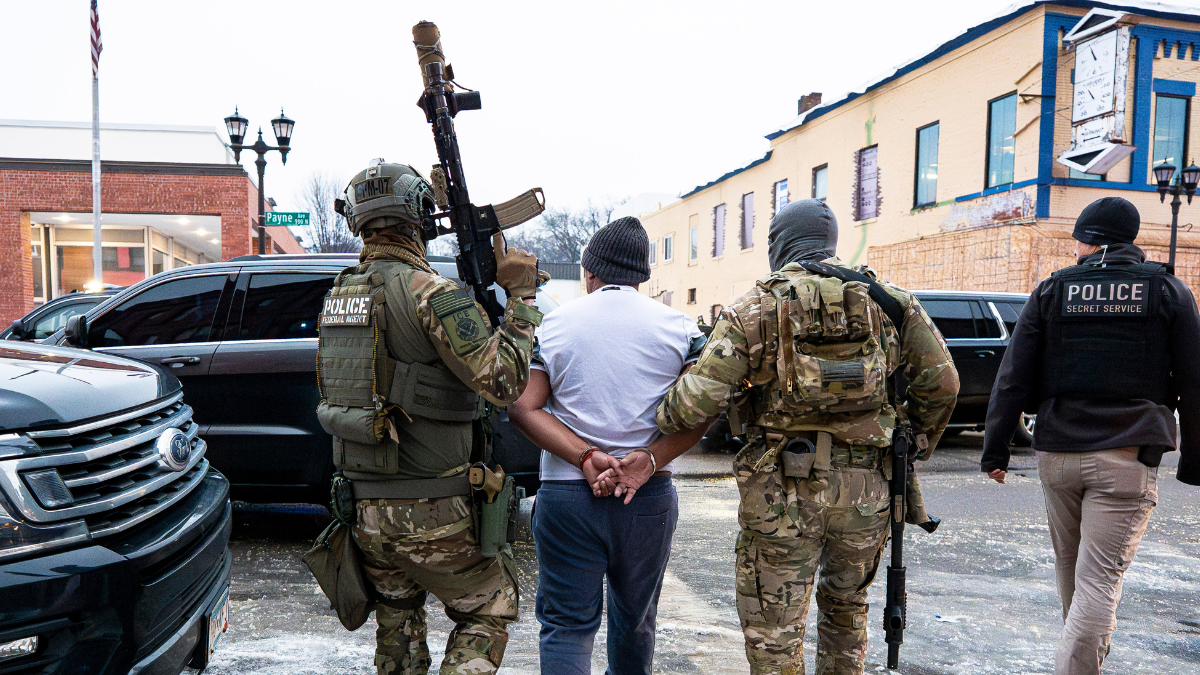
 Democrats created the situation America finds itself in, and only a forceful crackdown on leftist anarchy will restore cultural stability.
Universities treated free speech as expendable in 2025
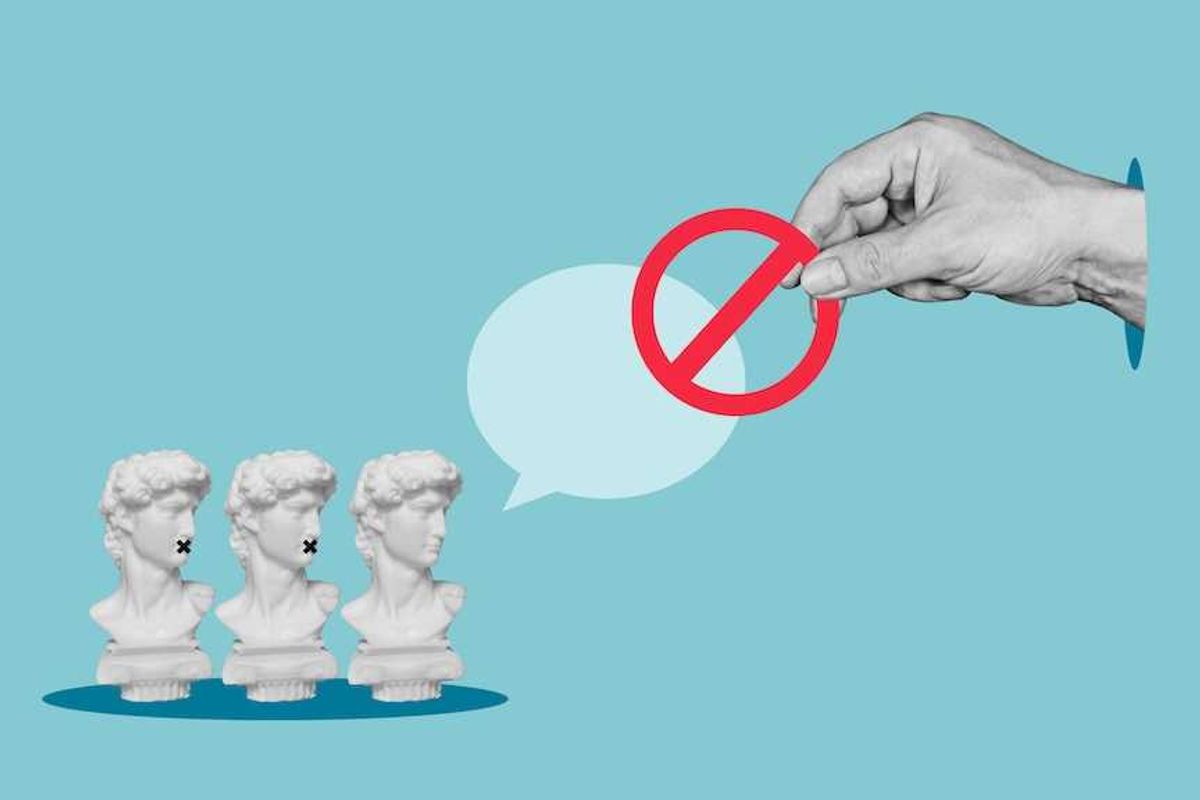
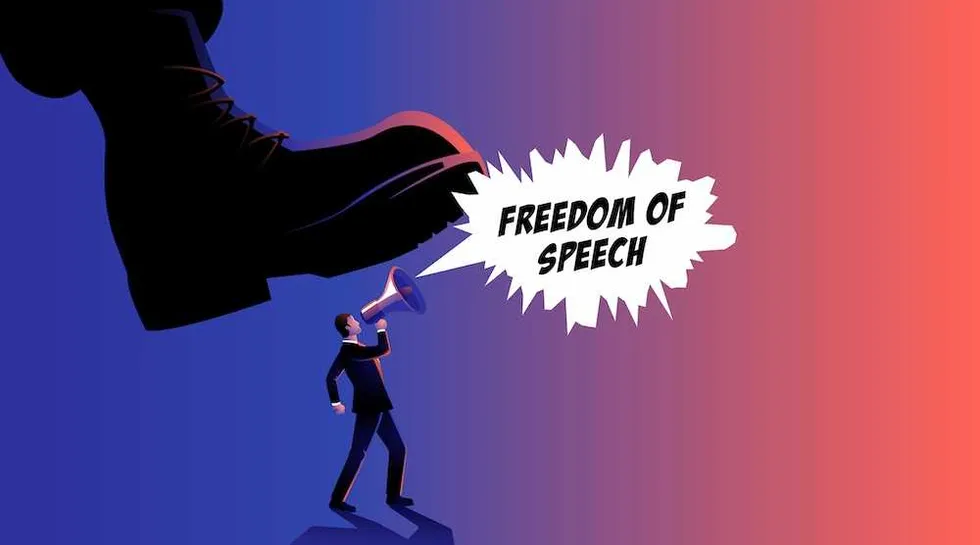
The fight over free expression in American higher education reached a troubling milestone in 2025. According to data from the Foundation for Individual Rights and Expression, efforts to censor speech on college campuses hit record highs across multiple fronts — and most succeeded.
Let’s start with the raw numbers. In 2025, FIRE’s Scholars Under Fire, Students Under Fire, and Campus Deplatforming databases collectively tracked:
- 525 attempts to sanction scholars for their speech, more than one a day, with 460 of them resulting in punishment.
- 273 attempts to punish students for expression, more than five a week, with 176 of these attempts succeeding.
- 160 attempts to deplatform speakers, about three each week, with 99 of them succeeding.
That’s 958 censorship attempts in total, nearly three per day on campuses across the country. For comparison, FIRE’s next-highest total was 477 two years ago.
The 525 scholar sanction attempts are the highest ever recorded in FIRE’s database, which spans 2000 to the present. Even when a large-scale incident at the U.S. Naval Academy is treated as just a single entry, the 2025 total still breaks records.
The common denominator across these censorship campaigns is not ideology — it’s intolerance.
Twenty-nine scholars were fired, including 18 who were terminated since September for social media comments about Charlie Kirk’s assassination.
Student sanction attempts also hit a new high, and deplatforming efforts — our records date back to 1998 — rank third all-time, behind 2023 and 2024.
The problem is actually worse because FIRE’s data undercounts the true scale of campus censorship. Why? The data relies on publicly available information, and an unknown number of incidents, especially those that may involve quiet administrative pressure, never make the public record.
Then there’s the chilling effect.
Scholars are self-censoring. Students are staying silent. Speakers are being disinvited or shouted down. And administrators, eager to appease the loudest voices, are launching investigations and handing out suspensions and dismissals with questionable regard for academic freedom, due process, or free speech.
RELATED: Liberals’ twisted views on Charlie Kirk assassination, censorship captured by a damning poll
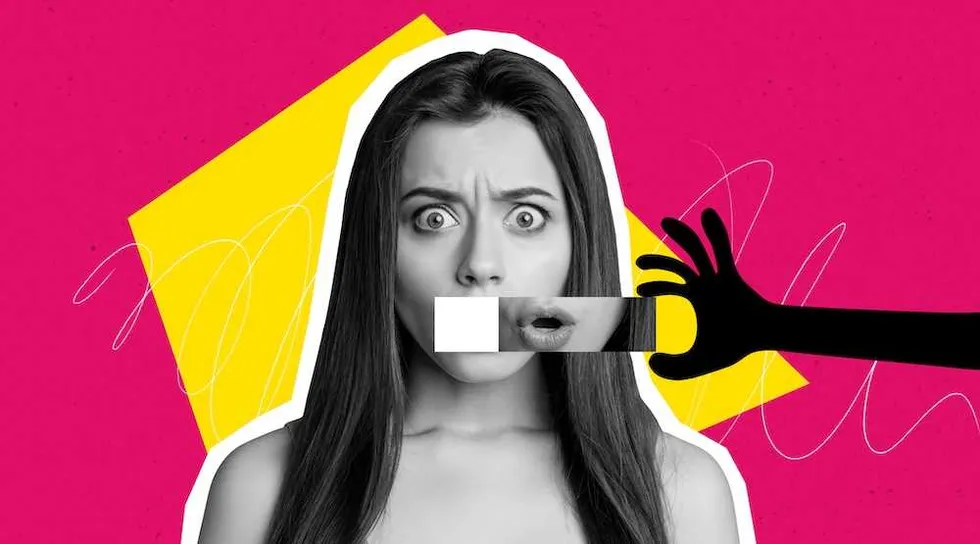 Deagreez via iStock/Getty Images
Some critics argue that the total number of incidents is small compared to the roughly 4,000 colleges in the country. But this argument collapses under scrutiny.
While there are technically thousands of institutions labeled as “colleges” or “universities,” roughly 600 of them educate about 80% of undergraduates enrolled at not-for-profit four-year schools. Many of the rest of these “colleges” and “universities” are highly specialized or vocational programs. This includes a number of beauty academies, truck-driving schools, and similar institutions — in other words, campuses that aren’t at the heart of the free-speech debate.
These censorship campaigns aren’t coming from only one side of the political spectrum. FIRE’s data shows, for instance, that liberal students are punished for pro-Palestinian activism, conservative faculty are targeted for controversial opinions on gender or race, and speaking events featuring all points of view are targeted for cancellation.
The two most targeted student groups on campus? Students for Justice in Palestine and Turning Point USA. If that doesn’t make this point clear, nothing will.
The common denominator across these censorship campaigns is not ideology — it’s intolerance.
RELATED: Teenager sues high school after tribute to Charlie Kirk was called vandalism
 rudall30 via iStock/Getty Images
So where do we go from here?
We need courage: from faculty, from students, and especially from administrators. It’s easy to defend speech when it’s popular. It’s harder when the ideas are offensive or inconvenient. But that’s when it matters most.
Even more urgently, higher education needs a cultural reset. Universities must recommit to the idea that exposure to ideas and speech that one dislikes or finds offensive is not “violence.” That principle is essential for democracy, not just for universities.
This year’s record number of campus censorship attempts should be a wake-up call for campus administrators. For decades, many allowed a culture of censorship to fester, dismissing concerns as overblown, isolated, or a politically motivated myth. Now, with governors, state legislatures, members of Congress, and even the White House moving aggressively to police campus expression, some administrators are finally pushing back. But this pushback from administrators doesn’t seem principled. Instead, it seems more like an attempt to shield their institutions from outside political interference.
That’s not leadership. It’s damage control. And it’s what got higher education into this mess in the first place.
If university leaders want to reclaim their role as stewards of free inquiry, they cannot act just when governmental pressure threatens their autonomy. They also need to be steadfast when internal intolerance threatens their mission. A true commitment to academic freedom means defending expression even when it is unpopular or offensive. That is the price of intellectual integrity in a free society.
Editor’s note: This article was originally published by RealClearPolitics and made available via RealClearWire.
When the State Polices Speech
The government may not silence conscience or conversation. The American experiment depends on this simple, yet increasingly threatened principle. And…
Qatar Is Everything It Accuses Israel of Being
For years, Qatar has positioned itself as a neutral mediator and champion of human rights in the Middle East. Its…
Kids have already found a way around Australia’s new social media ban: Making faces
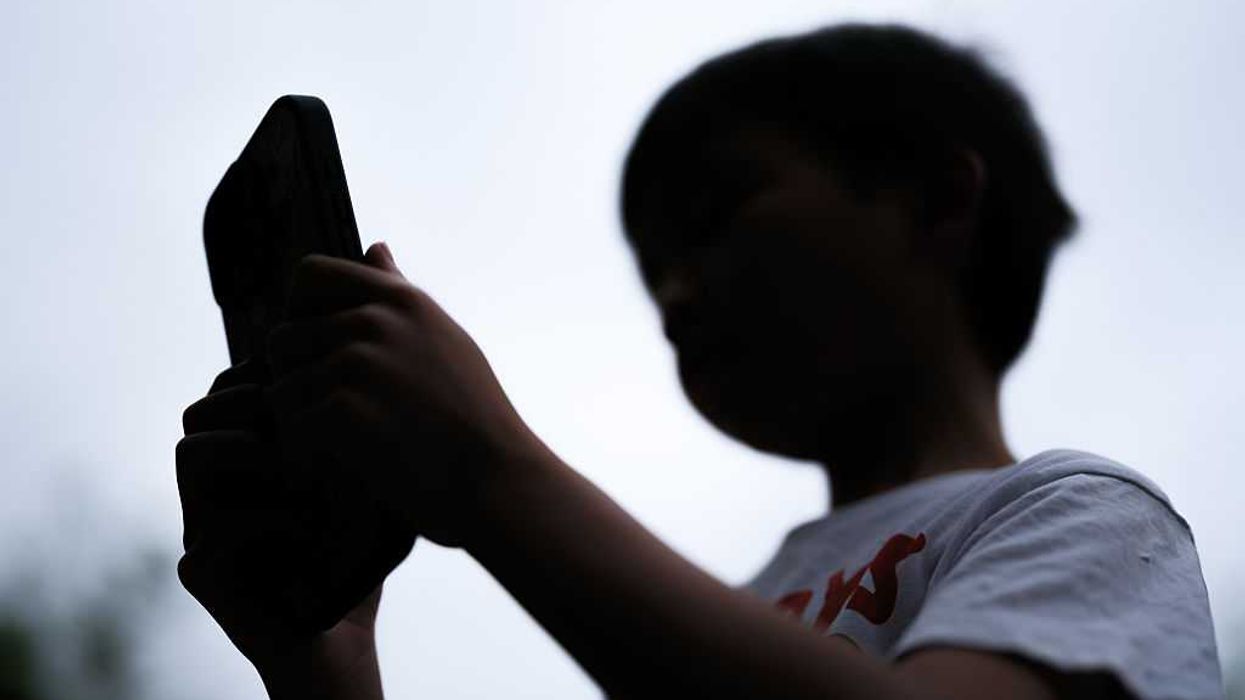
The liberal-dominated Australian parliament passed an amendment to its online safety legislation last year, imposing age restrictions for certain social media platforms.
As of Dec. 10, minors in the former penal colony are prohibited from using various platforms, including Facebook, Reddit, Snapchat, TikTok, X, and YouTube — platforms that face potential fines exceeding $32 million should they fail to prevent kids from creating new accounts or from maintaining old accounts.
Australian kids were quick, however, to find a workaround: distorting their faces to appear older.
‘They know how important it is to give kids more time to just be kids.’
Numerous minors revealed to the Telegraph that within minutes of the ban going into effect, they were able to get past their country’s new age-verification technology by frowning at the camera.
Noah Jones, a 15-year-old boy from Sydney, indicated that he used his brother’s ID card to rejoin Instagram after the app flagged him as looking too young.
Jones, whose mother supported his rebellion and characterized the law as “poor legislation,” indicated that when Snapchat similarly prompted him to verify his age, “I just looked at [the camera], frowned a little bit, and it said I was over 16.”
RELATED: App allegedly endangers ICE agents — now its creator is suing the Trump administration
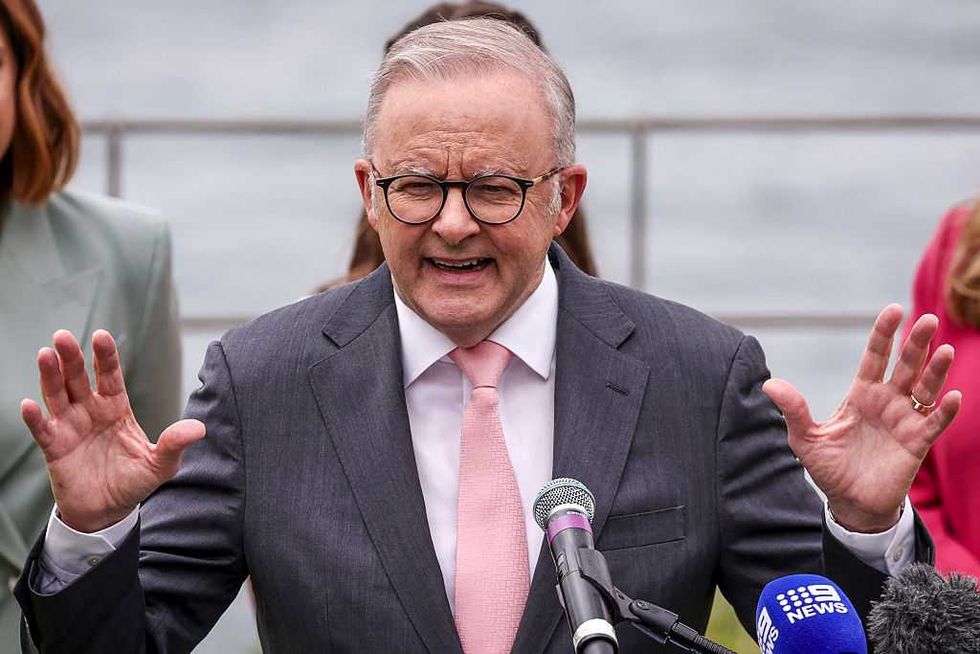 Australian Prime Minister Anthony Albanese. Photo by DAVID GRAY / AFP via Getty Images.
Jones suggested to the Telegraph that some teens may alternatively seek out social media platforms the Australian government can’t regulate or touch.
“Where do you think everyone’s going to?” said Jones. “Straight to worse social media platforms — they’re less regulated, and they’re more dangerous.”
Zarla Macdonald, a 14-year-old in Queensland, reportedly contemplated joining one such less-regulated app, Coverstar. However, she has so far managed to stay on TikTok and Snapchat because the age-verification software mistakenly concluded she was 20.
“You have to show your face, turn it to the side, open your mouth, like just show movement in your face,” said Macdonald. “But it doesn’t really work.”
Besides fake IDs and frowning, some teens are apparently using stock images, makeup, masks, and fake mustaches to fool the age-verification tech. Others are alternatively using VPNs and their parents’ accounts to get on social media.
The social media ban went into effect months after a government-commissioned study determined on the basis of a nationally representative survey of 2,629 kids ages 10 to 15 that:
- 71% had encountered content online associated with harm;
- 52% had been cyberbullied;
- 25% had experienced online “hate”;
- 24% had experienced online sexual harassment;
- 23% had experienced non-consensual tracking, monitoring, or harassment;
- 14% had experienced online grooming-type behavior; and
- 8% experienced image-based abuse.
Australian Prime Minister Anthony Albanese said in a statement on Wednesday, “Parents, teachers, and students are backing in our social media ban for under-16s. Because they know how important it is to give kids more time to just be kids — without algorithms, endless feeds and online harm. This is about giving children a safer childhood and parents more peace of mind.”
The picture accompanying his statement featured a girl who in that moment expressed opposition to the ban.
The student in Albanese’s poorly chosen photo is hardly the only opponent to the law.
Reddit filed a lawsuit on Friday in Australia’s High Court seeking to overturn the ban. The U.S.-based company argued that the ban should be invalidated because it interfered with free political speech implied by Australia’s constitution, reported Reuters.
Australian Health Minister Mark Butler suggested Reddit was not suing to protect young Aussies’ right to political speech but rather to protect profits.
“It is action we saw time and time again by Big Tobacco against tobacco control, and we are seeing it now by some social media or Big Tech giant,” said Butler.
Like Blaze News? Bypass the censors, sign up for our newsletters, and get stories like this direct to your inbox. Sign up here!
Foreign Leaders Caught Orchestrating Campaign To Censor American Right-Wing Media Companies
strategist Morgan McSweeney began shaping Labour Together into an anti-Corbyn vehicle
How Texas slammed the gate on Big Tech’s censorship stampede
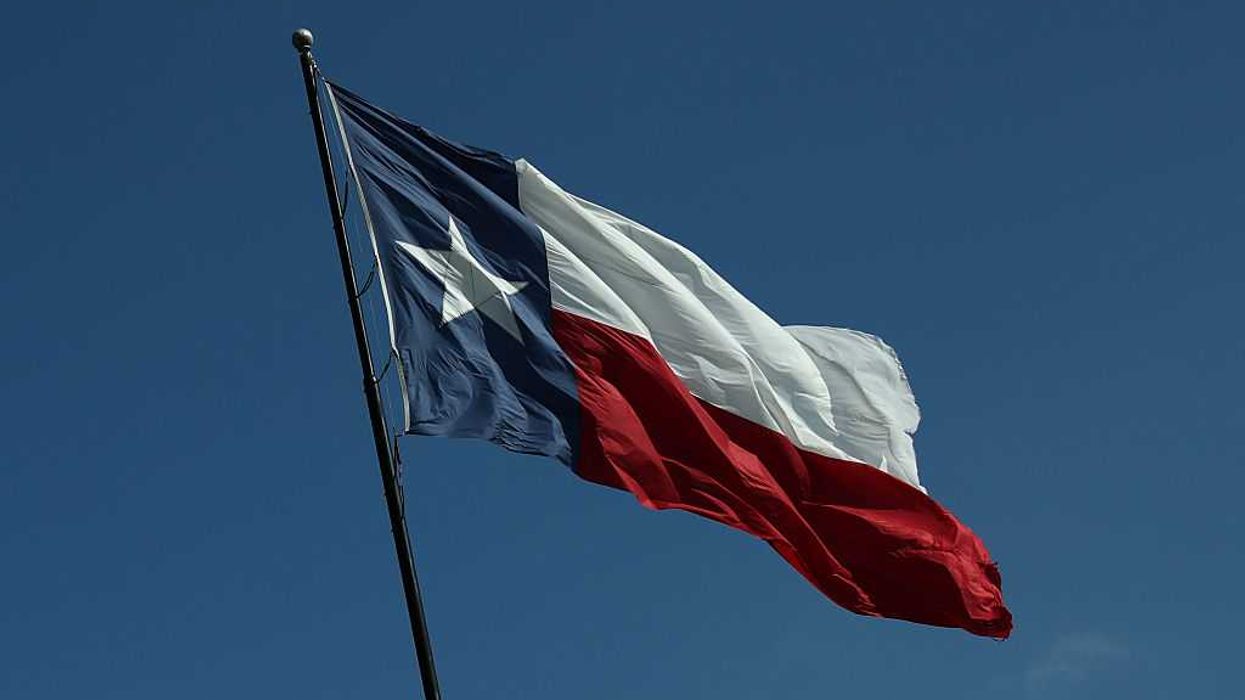
Texas just sent a blunt message to Silicon Valley: You don’t get to censor Texans and then run home to California.
In a world where Big Tech routinely decides who may speak and who must be silenced, Defense Distributed v. YouTube, Google, and Alphabet has become a defining moment in the national fight over digital free expression. The shock isn’t the censorship at issue; it’s the fact that Big Tech — for once — lost.
In a time when Americans are desperate for leaders willing to stand up to media and tech conglomerates, Texas showed what real resolve looks like.
Defense Distributed, a Texas company, committed the unpardonable offense of promoting the constitutional right to keep and bear arms.
Our videos and ads — some of them simply announcing court victories — were throttled, suppressed, or removed by YouTube and Google. None of this surprised us. These platforms built vast empires on controlling information and burying viewpoints that fall outside their ideology.
Texas prepared for this fight
The surprise is that Texas saw this coming and armed itself for the conflict. HB 20 — now Chapter 143A of the Texas Civil Practice and Remedies Code — directly prohibits viewpoint-based censorship by major platforms. The law doesn’t hint, suggest, or politely advise. It states outright: Social media companies may not censor Texans for their viewpoints, and lawsuits brought under this chapter stay in Texas courts no matter what boilerplate corporate contracts say.
So when Defense Distributed filed suit, YouTube and Google reached for their favorite escape route: forum-selection clauses that force nearly every challenger into California courts, where Big Tech enjoys home-field advantage. It’s a delay tactic, a cost-inflation tactic, a shield against accountability — and it almost always works.
But Texas slammed that door shut before they reached it.
No escape
HB 20 doesn’t merely frown on these clauses; it voids them. The statute declares that any attempt to waive its protections violates Texas public policy — public policy the law describes as “of the highest importance.” The legislature anticipated Big Tech’s usual playbook and locked the gates years in advance.
The federal court recognized this. Judge Alan Albright ruled that transferring the case to California would directly undermine Texas’ strong public policy. Under federal law, courts cannot enforce a forum-selection clause that contradicts a state’s deeply rooted interests — especially when the legislature spells those interests out with the clarity found in HB 20.
Silicon Valley does not hear the word “no” very often. Big Tech’s money, influence, and political allies usually clear the path. But in a federal courtroom in the Lone Star State, Texas’ commitment to protecting its citizens from ideological censorship outweighed Silicon Valley’s customary dominance. The court refused to let YouTube and Google drag the case back to California.
The fight stayed in Texas — exactly where the legislature intended.
A national shift and a model for states
The timing matters. Americans now understand that Big Tech can shape elections, suppress dissent, and curate truth itself. HB 20 was mocked by the press, attacked by activists, and targeted by corporate lobbyists from the moment it passed. Yet today, it stands as one of the most potent legal tools in the country’s fight against digital censorship.
HB 20 is no longer just a statute; it is proof that a state with conviction can push back and win.
RELATED: Big Tech CEOs should leave policy to the politicians
 Photo by Win McNamee/Getty Images
This victory is more than a procedural ruling. It affirms that Big Tech’s era of unchallenged authority is not inevitable. Defense Distributed didn’t merely keep our lawsuit in Texas; we preserved the principle that powerful corporations cannot hide their censorship behind “terms of service” fine print.
Texas drew a line in the sand, and — for once — Silicon Valley stopped.
In a time when Americans are desperate for leaders willing to stand up to media and tech conglomerates, Texas showed what real resolve looks like. This ruling promises that citizens still have a fighting chance, that speech still matters, and that even the world’s largest corporations remain subject to the laws of a state determined to defend its people.





