

Category: Elon musk
First detransitioner to reach trial awarded $2M in groundbreaking malpractice case against doctors
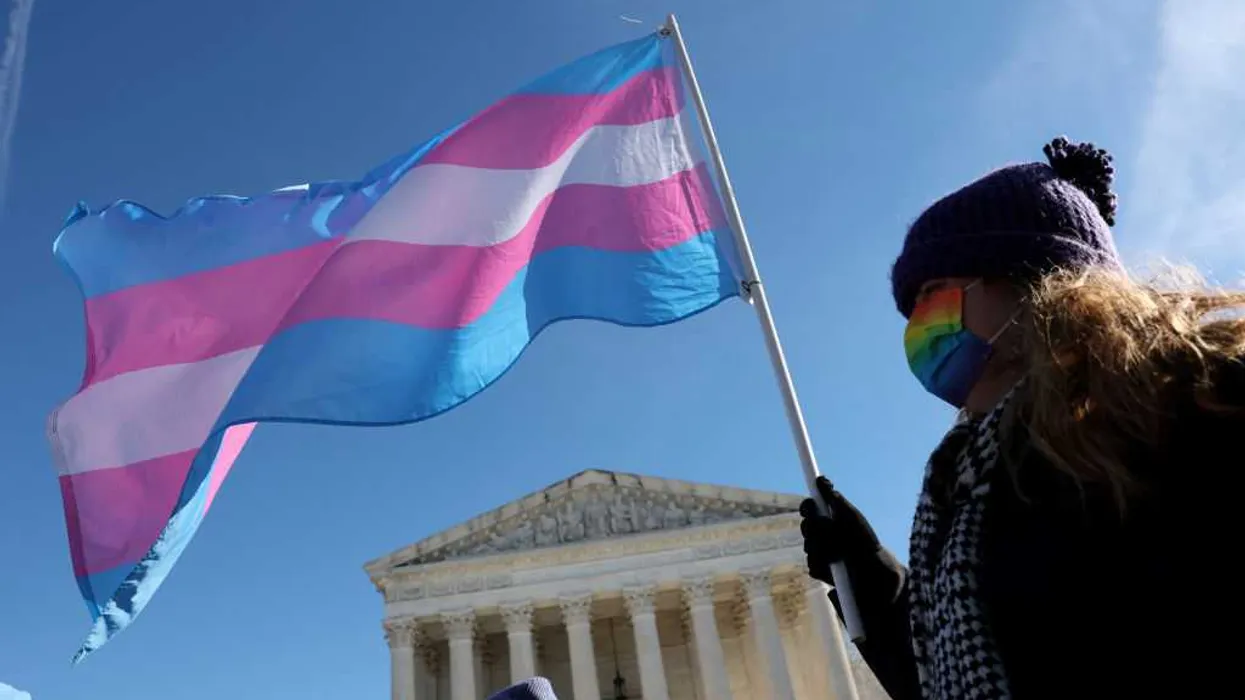
A woman who underwent breast removal surgery at 16 years old was awarded $2 million in the first medical malpractice lawsuit brought by a detransitioner to go to trial.
‘There will be thousands of court cases of children who were mutilated by evil doctors.’
Fox Varian, 22, sued her New York-based psychologist and plastic surgeon, and their respective employers, after regretting the 2019 surgery.
Varian’s attorney contended that the health care professionals misdiagnosed and improperly treated her for gender dysphoria.
The defense claimed that Varian did not express regret about the surgery until years later, filing the lawsuit in 2023. They also argued that it was Varian’s decision to use “he/him” pronouns, change her name, wear a chest binder, and undergo breast removal surgery.
Varian’s lawyer claimed that her psychologist “drove the train” and had been “putting ideas” in her head.
Varian’s mother testified that she opposed the surgery. However, she consented to it because she feared her daughter might commit suicide otherwise. She claimed that Varian’s psychologist intensified her concerns.
RELATED: Trump admin detransitions name on portrait of former Biden official
 Photo by Artur Widak/NurPhoto via Getty Images
During her testimony, Varian described her reaction to the surgery.
“I immediately had a thought that this was wrong, and it couldn’t be true,” she stated, adding that she has since suffered nerve pain that feels like “searing hot … ripping sensations across my chest.”
“Shame. I felt shame,” Varian said. “It’s hard to face that you are disfigured for life.”
The six-member jury determined that the medical professionals involved overlooked essential steps in assessing whether Varian should proceed with the permanent procedure and failed to communicate adequately with one another.
The jury concluded that these failures were a “departure from the standard of care,” awarding Varian $1.6 million for past and future pain and suffering, and $400,000 for future medical expenses, the Epoch Times reported.
Varian’s attorney, Adam Deutsch, had requested $8 million in damages.
The case was not about whether the surgery was appropriate for a minor. Instead, it concerned whether the health care professionals followed the proper steps to prioritize Varian’s treatment, including delivering an accurate diagnosis.
RELATED: Detransitioner’s heartbreaking story exposes the dark side of ‘gender-affirming care’
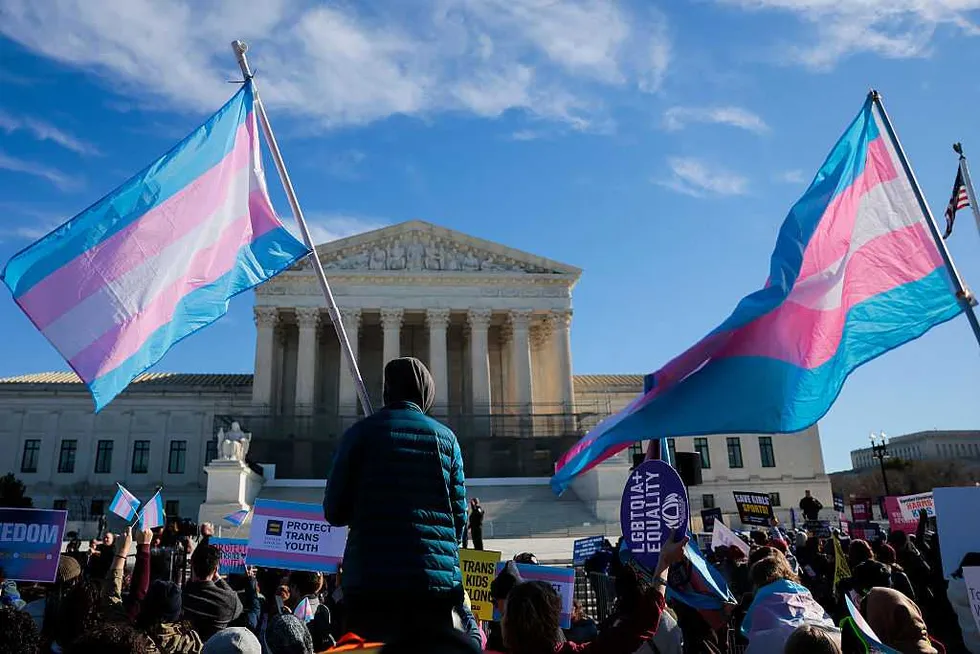 Photo by Heather Diehl/Getty Images
“I have identified 28 detransitioner lawsuits filed to date. Varian v. Einhorn was the first to go to trial and the first to win a judgment, making history,” wrote Benjamin Ryan, an independent journalist who attended the three-week trial.
Elon Musk reacted to Varian’s legal victory.
“There will be thousands of court cases of children who were mutilated by evil doctors, modern day Mengeles,” Musk wrote, referring to Josef Mengele, an infamous Nazi doctor who became known as the “Angel of Death” for his gruesome medical experiments.
“The schools, psychologists/psychiatrists and state officials who facilitated this will pay dearly too,” Musk added.
Like Blaze News? Bypass the censors, sign up for our newsletters, and get stories like this direct to your inbox. Sign up here!
Musk drops $10 million to help MAGA candidate replace ‘trash Trump’ Mitch McConnell
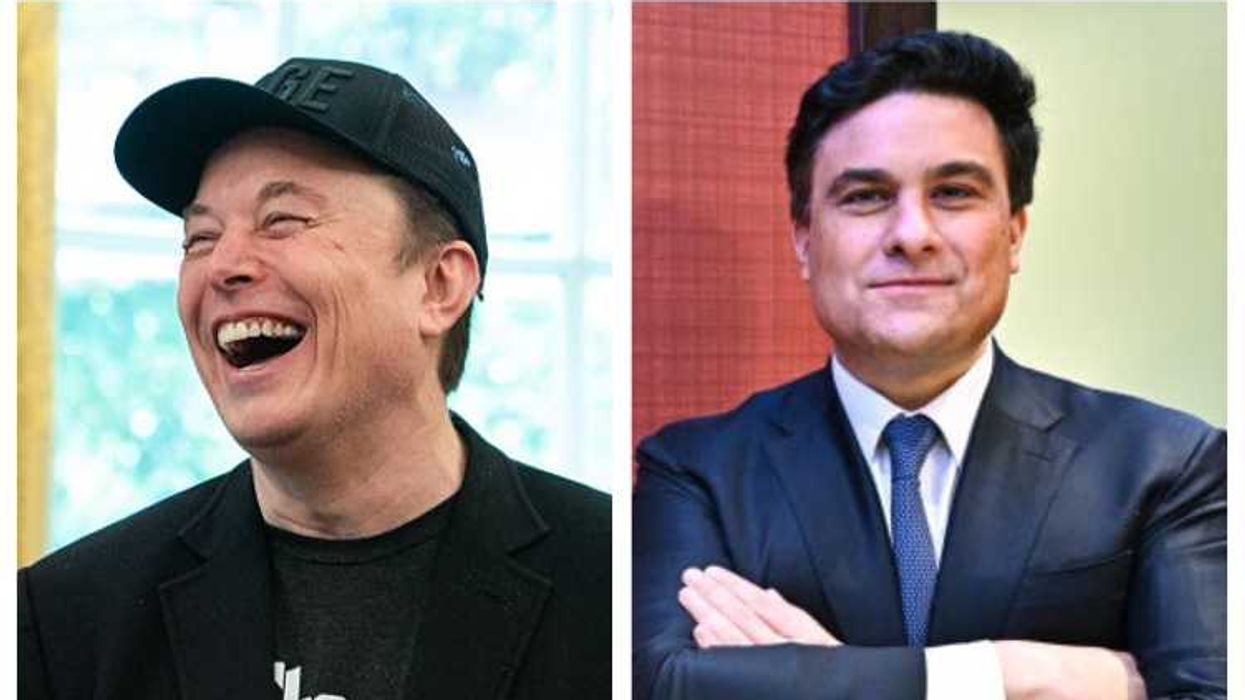
The richest man in the world has made a hefty donation to a pro-Trump Republican looking to take over the Kentucky U.S. Senate seat occupied by Mitch McConnell for 40 years, Axios has reported..
Last week, billionaire businessman Elon Musk donated $10 million to the Fight for Kentucky super PAC, which supports the candidacy of Nate Morris, founder of waste and recycling giant Rubicon.
Axios implied that the Musk-Morris connection may have come about because of Vice President JD Vance.
Morris has billed himself as a MAGA warrior and the antithesis of McConnell. In a scathing campaign video titled “Garbage Day,” Morris suggests that McConnell is a “trash Trump” “career politician” who has been “dumping” on Americans and Kentuckians in particular for decades.
“We’ve let the garbage pile up in Washington, D.C., for far too long. I’m running for Senate to help President Trump clean up the mess,” Morris states in the ad.
McConnell announced last February that he would not seek an eighth term.
RELATED: Mitch McConnell announces Senate retirement
Axios implied that the Musk-Morris connection may have come about because of Vice President JD Vance, whom the outlet described as “close to” Musk and a “personal friend” to Morris.
Axios also indicated that Musk’s massive donation is a sign that he intends to use his wealth in support of Republicans in the 2026 midterms.
Morris did not respond to Blaze News’ request for comment but did retweet a post about the Axios report. Requests for comment sent to Musk’s various businesses received no response.
The Axios report did not include a statement from Morris or Musk.
Thus far, President Donald Trump has not endorsed any candidate in the race. In his campaign video, Morris characterizes other Republicans running for the seat — Congressman Andy Barr and former Kentucky Attorney General Daniel Cameron — as McConnell’s “puppets.”
Several Democrats have tossed their hats into the ring, including Amy McGrath, who was trounced by McConnell in 2020. However, whoever prevails in the Republican primary is expected to win the general election in November.
Like Blaze News? Bypass the censors, sign up for our newsletters, and get stories like this direct to your inbox. Sign up here!
Blame Everyone for Grok’s Perverted Porn Problem
Humanity has an unfortunate tendency toward perversion. Given a tool capable of mediocre goods and banal evils, we (as a…
Elon Musk’s xAI inks new deal with War Department
Hot on the heels of a highly publicized dinner with Donald and Melania Trump, Elon Musk will continue his work with the federal government through a new agreement that will affect the daily workflows of Department of War employees.
Last July, Musk’s xAI entered a $200 million contract with the Pentagon to adopt advanced AI capabilities for sectors like national defense. Now, both the DOW and xAI are shedding light on some of the details surrounding their partnership in other areas.
‘xAI will make available a family of government-optimized foundation models.’
In late December, the DOW announced its internal AI platform would be expanded to include xAI for “frontier-grade” capabilities.
“This initiative will soon embed xAI’s frontier AI systems, based on the Grok family of models, directly into GenAI.mil. Targeted for initial deployment in early 2026,” a press release stated.
This will enable the “secure handling” of “Controlled Unclassified Information” in the daily workflows of government employees, who will also gain access to “global insights” on X, which will allegedly provide a “decisive information advantage.”
However, there is no indication what those insights include.
RELATED: DOGE didn’t die — it moved to the states
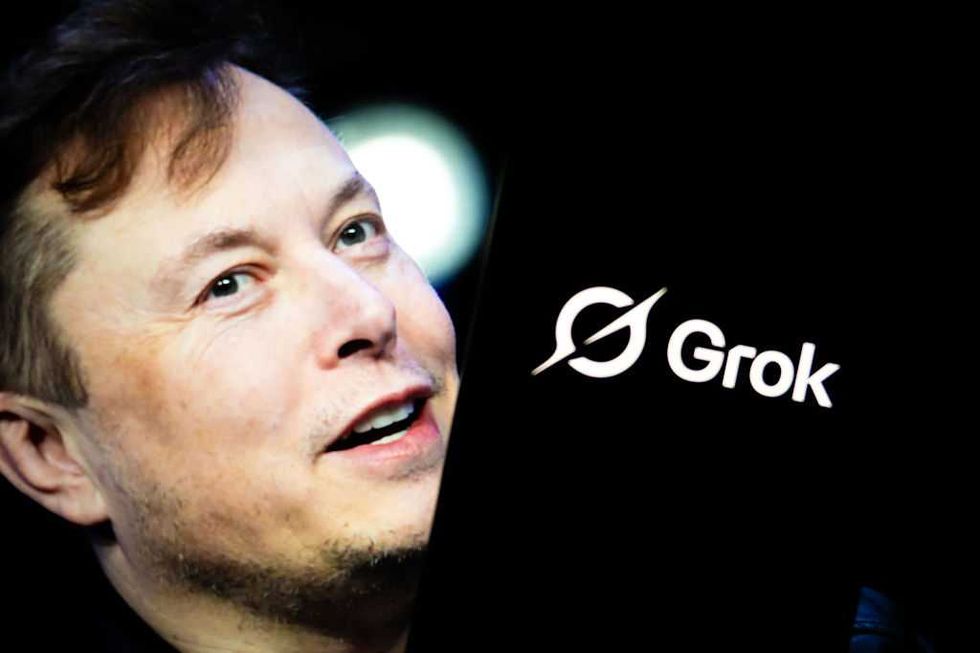 Photo by Didem Mente/Anadolu via Getty Images
The xAI company announced in its own statement that it would be providing access to its AI models, “agentic tools, research platform, and API,” unlocking real-time insights.
The systems can be embedded into the daily work of the DOW’s some 3 million military and civilian employees, “from the Pentagon to the tactical edge.”
“xAI will make available a family of government-optimized foundation models to support classified operational workloads,” the press release added.
The DOW has also entered into contracts with other advanced technology companies like EdgeRunner AI and Palmer Luckey’s Anduril.
RELATED: Gavin Newsom ridicules Elon Musk over his trans-identifying son — and Musk responds
 Photo by Kevin Dietsch/Getty Images
The expanded partnership between the DOW and Musk came just days after xAI announced a new artificial voice generation application.
The Grok Voice Agent API operates essentially as a search engine optimizer that acts as a voice for a chatbot. The company released a series of sample voices, which “speak dozens of languages, call tools, and search realtime data.”
The product is currently being rolled out in Teslas to relay vehicle status, search directions, and control navigation.
Like Blaze News? Bypass the censors, sign up for our newsletters, and get stories like this direct to your inbox. Sign up here!
Mamdani claps back at Musk over criticism of FDNY chief pick
New York Mayor-elect Zohran Mamdani (D) on Saturday rejected Elon Musk’s argument that his appointment to head up the Fire Department of New York (FDNY) is inexperienced. “Experience does matter, which is why I appointed the person who spent more than 30 years at EMS. You know, the workforce that addresses at least 70% of…
DOGE didn’t die — it moved to the states
The media and conservative pundits may have buried the Department of Government Efficiency, but they have yet to carve a date of death on its tombstone. While DOGE in Washington may have appeared to insiders as a vanity project, voters saw it as a mandate — one that Republicans at the federal level have largely set aside in favor of politics as usual.
But activists have not forgotten. In red states across the country, they are still demanding accountability. And in Idaho, that pressure is finally producing results.
If Idaho can succeed and follow Florida’s lead, there is no serious reason other red states cannot do the same — unless they are prepared to admit they never intended to keep their promises.
For what appears to be the first time, state legislators serving on Idaho’s DOGE Task Force concluded their 2025 work with a meeting that departed from months of cautious, procedural discussion. Members asked harder questions, voiced long-simmering frustrations, and issued a recommendation that could reshape the state’s fiscal future: urging the full legislature to consider repealing Medicaid expansion, a costly policy that has drained taxpayers of millions.
Red states can’t stall forever
Idaho may not be Florida, where Republican Gov. Ron DeSantis’ DOGE-style reforms have produced consistent wins for fiscal sanity and limited government. But it is doing more than other red states, such as North Dakota, where a DOGE committee stacked with Democrats predictably ignored the voters’ mandate.
The Idaho meeting exposed growing dissatisfaction with the task force’s approach. Over the summer and fall, the committee — charged with identifying inefficiencies — repeatedly deferred to state agencies for suggestions on cuts. Unsurprisingly those agencies offered little beyond cosmetic changes.
Idaho state Rep. Heather Scott (R-LD2, Blanchard) gave voice to that frustration. “What is the goal of this committee?” she asked, pressing colleagues to offer recommendations that actually matter. “Twenty thousand here, 50,000 there, or removing old code is not meaningful efficiency,” Scott said. Repealing Medicaid expansion, she argued, would be one of the “best decisions” the state could make.
Nibbling at the edges
Scott’s experience on the Idaho task force stands in stark contrast to the early federal DOGE efforts, which moved aggressively to slash U.S. Agency for International Development’s workforce, freeze fraudulent payments, and cancel billions in corrupt contracts. By comparison, Idaho’s task force had mostly nibbled at the edges. This recommendation marked its first serious step toward substantive reform.
Another revealing moment came from co-chairman state Sen. Todd Lakey (R-Nampa), who read a letter from a small-business owner offering health insurance to employees. Workers routinely request schedules capped at 20 to 28 hours per week to preserve Medicaid expansion benefits — even though full-time work would require only a modest contribution toward employer-provided coverage.
The result is a perverse incentive structure: businesses struggle to find full-time workers while taxpayers subsidize underemployment. The government fuels workforce shortages through welfare, then spends more taxpayer dollars trying to fix the shortages it created. This welfare-workforce vortex is the opposite of efficiency, and it is spreading nationwide.
The meeting’s most explosive moment came from state Rep. Josh Tanner (R-Eagle), who described Idaho’s Medicaid reimbursement structure as resembling “money laundering.”
Citing analysis from the Paragon Health Institute, Tanner explained how provider assessment fees allow states to inflate Medicaid spending to draw down larger federal matching funds, cycling the money back through enhanced payments. Paragon has described these arrangements as “legalized money laundering” — schemes that shift costs to federal taxpayers while enriching connected providers or funding unrelated priorities.
Nationally supplemental payments now exceed $110 billion annually, siphoning hundreds of billions from taxpayers over a decade.
RELATED: Turn off the money; they’ll leave: Elon Musk nails the border truth
 Photo by Kevin Dietsch/Getty Images
DOGE’s second life
My sources tell me that hospital lobbyists went into panic mode after the meeting, urgently contacting Capitol officials to contain the fallout from Tanner’s remarks.
For the first time, the task force aired real frustrations, documented real harms, and named real abuses. That alone offers reason for cautious optimism.
Idaho now has committed conservatives in positions of influence. With the task force’s recommendation to revisit Medicaid expansion heading to the legislature, the state has an opportunity to govern as it campaigns — preserving liberty, restoring accountability, and expanding opportunity.
If Idaho can succeed and follow Florida’s lead, there is no serious reason other red states cannot do the same — unless they are prepared to admit they never intended to keep their promises in the first place.
When Fighting Antisemitism Becomes a Spectacle
Confronted by competition in harmony with the festive season, I see a watchdog pressured to be a crowd-puller in a…
ART? Beeple puts Elon Musk and Mark Zuckerberg heads on robot dogs that ‘poop’ $100K NFTs
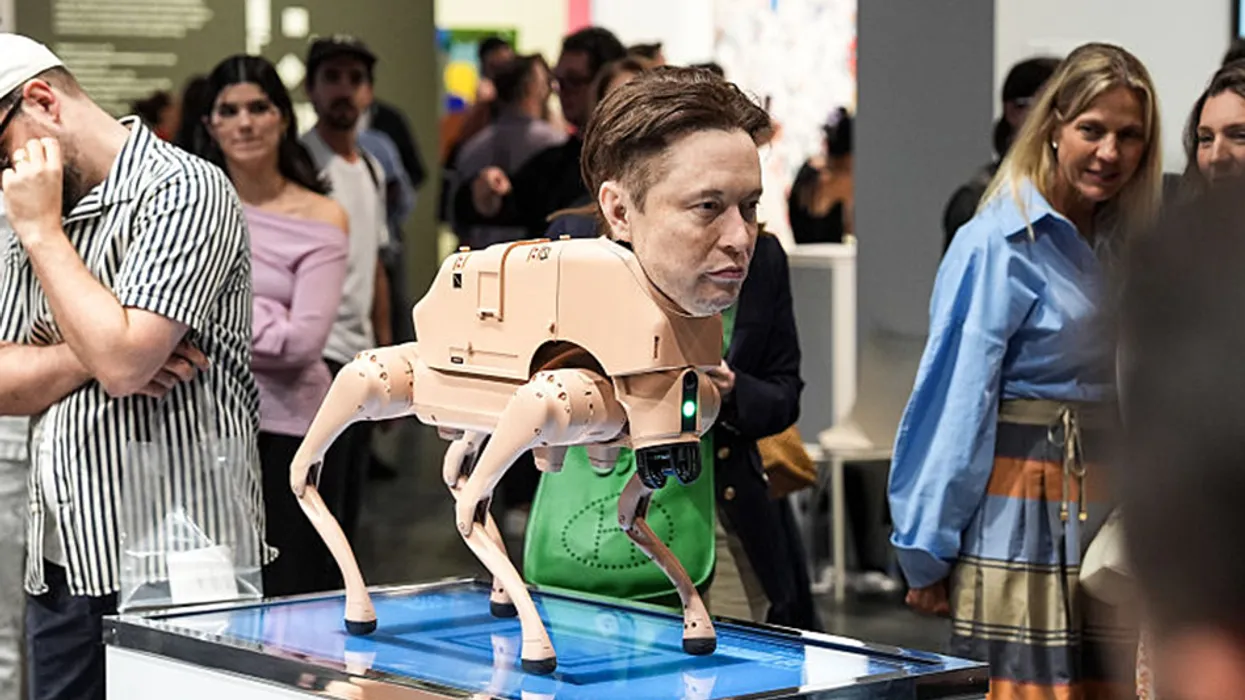
A political artist says he is making a commentary on how social media platforms control what people see.
Mike Winkelmann, who goes by the moniker Beeple, created an exhibit called “Regular Animals” that featured some of the world’s most influential men as robotic dogs.
‘Zuckerberg and Elon, in particular, control a huge amount of how we see the world.’
Visitors to Art Basel Miami Beach saw realistic masks of Elon Musk, Jeff Bezos, Mark Zuckerberg, Pablo Picasso, and Andy Warhol on robotic dogs that defecate photos. Winkelmann also added two look-alikes of himself into the mix.
“The dogs are continuously taking pictures and ranking those pictures to find the most interesting ones,” Winkelmann explained on his X page. “When it comes time to poop they are reimagined using AI according to each dog’s personality / worldview.”
According to Page Six, onlookers — who called the exhibit “freaky” and “creepy” — saw the Zuckerberg dog produce photos that look like the Metaverse, while Musk’s were black and white.
Bezos’ robot reportedly did not make prints, but was included because Bezos is a person “who shapes how we see the world,” Winkelmann explained. “So he needed to be in the piece.”
RELATED: Elon Musk and Jeff Bezos are racing to enclose Earth in an orbital computer factory
The dogs — which are reminiscent of the film “Mars Attacks!” — are an attempt by Winkelmann to communicate that he parodied individuals who are controlling what the world sees.
“It used to be that we saw the world interpreted through the eyes of artists, but now Mark Zuckerberg and Elon, in particular, control a huge amount of how we see the world,” he told Page Six. “We see the world through their eyes because they control these very powerful algorithms that decide what we see. And so we wanted to kind of play with that idea.”
Beeple added, “You’re increasingly seeing the world through the eyes of AI and robotics,” noting that he thinks this will increasingly occur.
The 44-year-old artist does not seem to be against the capitalistic nature of those he criticizes, however, as his robodog-produced photos are allegedly being sold to private collectors for up to $100,000 each. The photo owners will allow them to travel with the exhibit, though.
This is not Winkelmann’s first foray into politics. His video shorts, for example, have focused on issues relating to power and communication.
On his website, the artist features pieces like “Transparent Machines,” which is meant to portray “conflicting concepts of transparency and privacy.”
Other clips include a music video for “Manifest Destiny” by Run the Jewels, a radical political rap group, as well as commentary on the housing market collapse of 2009.
Apart from the music video, the shorts compile vague imagery that serve as safe commentary representing widely popular viewpoints. This was reflected in an interview with Icon, in which Winkelmann said he is “not extreme” in his political views.
“To me, it’s very frustrating that we have such binary parties these days, because I’m very much in the middle.”
The artist also revealed he “voted for f**king [George W.] Bush twice, which seems dumb in retrospect,” he noted.
“I’m not sure [I’m] liberal, but it’s just crazy town on that other side,” he said of his politics.
Like Blaze News? Bypass the censors, sign up for our newsletters, and get stories like this direct to your inbox. Sign up here!





