Category: J.d. vance
Lepanto’s Legacy: The Fight for Western Survival
On October 7th 1571, two great fleets collided off the coast of western Greece in one of history’s greatest naval…
Trump Admin Accidentally Doxxes ICE Agent Involved In Shooting
‘They should delete their story immediately’
White House Creates New Assistant Attorney General Position To Go After Fraud
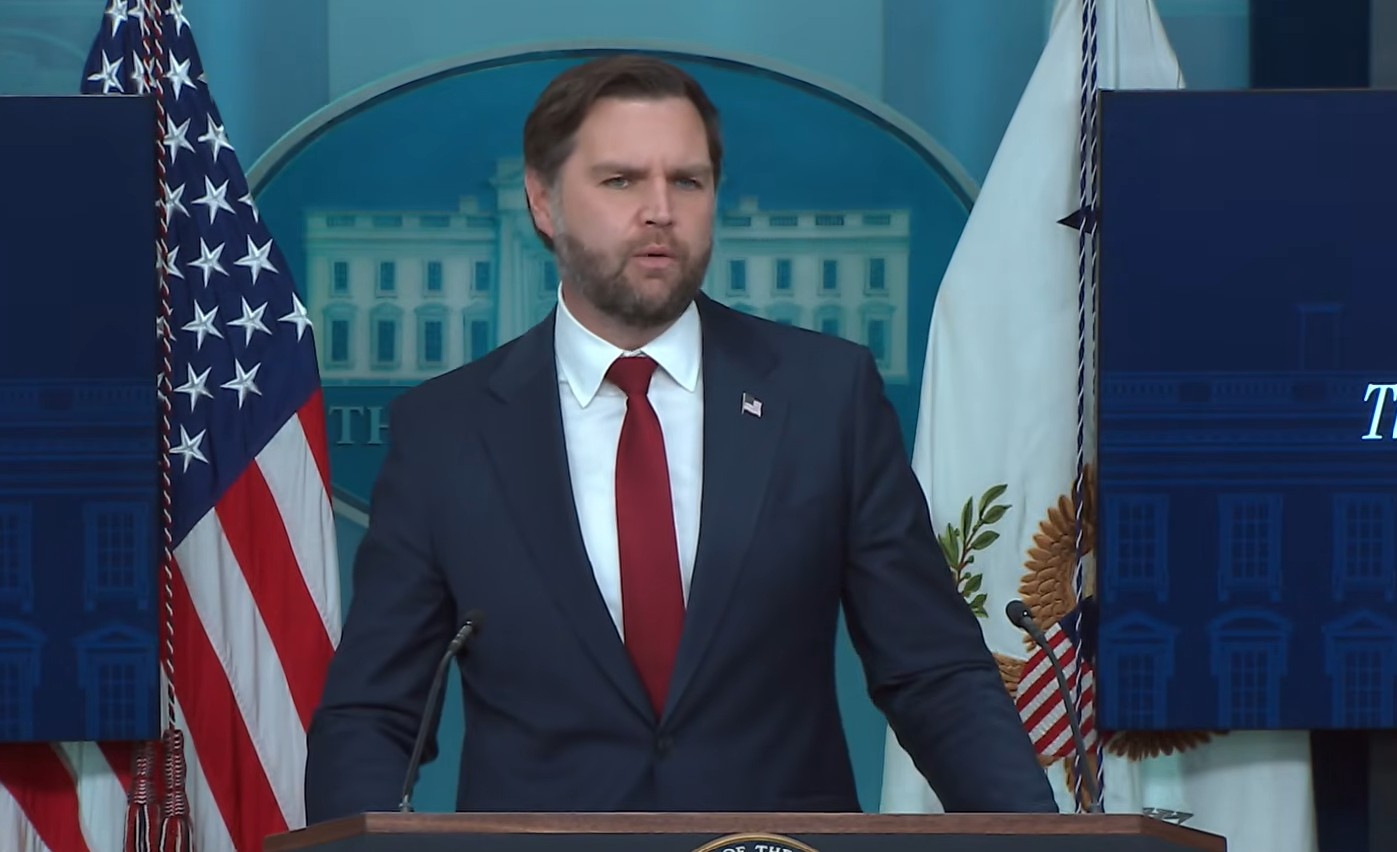
 Vance said the White House decided the best way to streamline anti-fraud efforts was to create a new division at the Department of Justice.
Which way after Trump? ‘Strong Gods’ may offer the solution
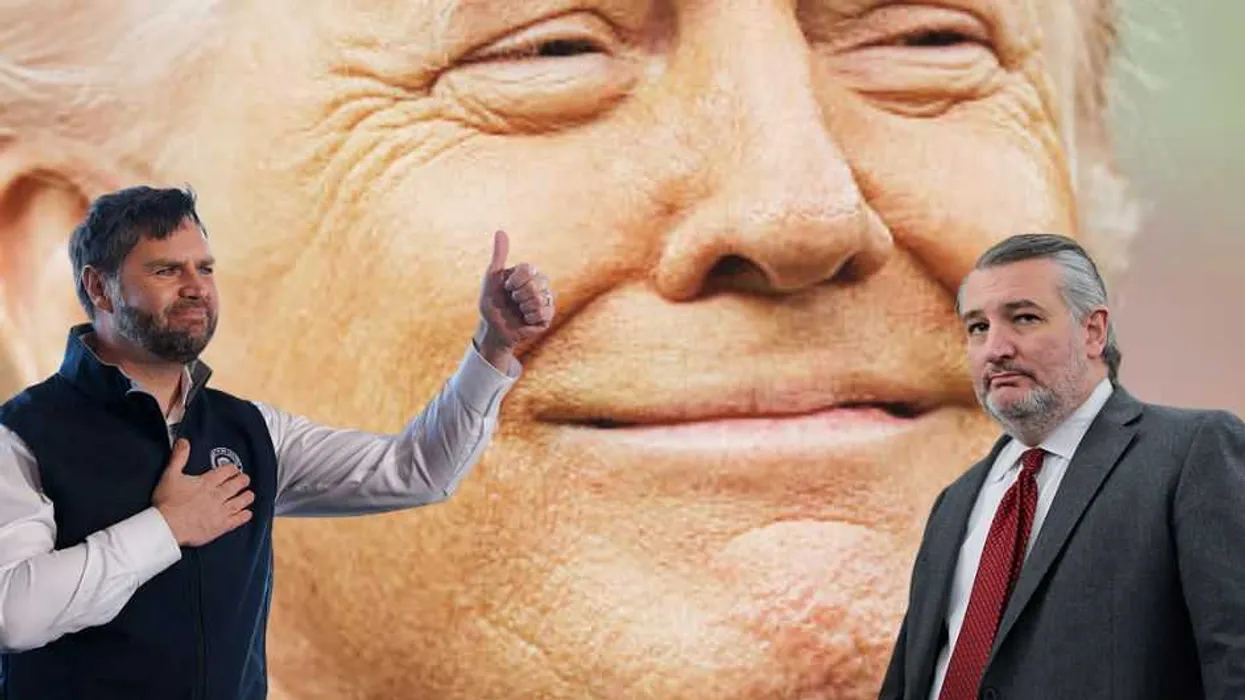
Where do we go after Donald Trump?
The question has divided the right. When it comes to charting the correct course, a book published during the president’s first administration is timelier than ever: R.R. Reno’s “The Return of the Strong Gods.”
‘The perverse gods of blood, soil, and identity cannot be overcome with the open-society therapies of weakening,’ writes Reno.
MAGA 2.0?
One faction of the right appears keen to continue delivering on the promise of Trump’s “Golden Age” by leaning further into a muscular and nationalistic conservatism.
Liberal interlopers and other ideological refugees with forward operating bases situated right-of-center have been working ardently to politically neutralize this camp ahead of the 2028 election, smearing, for instance, some of those in Vice President JD Vance’s orbit as “woke right.”
Such liberal saboteurs are right to be fearful of this camp, as its dominance — affirmed by a Vance win — would signal the MAGA movement wasn’t a sprint but a marathon.
Libertarian libs
The second camp, whose potential champion in the 2028 primary field appears to be Sen. Ted Cruz (R-Texas), is keen both to act as though the populist upheaval of the 2010s hadn’t irreversibly changed the game and to slink back onto the rhetorically conservative, libertarian-minded side of the liberal coin.
This is the politics that has purchased cultural and economic deregulation, a ruinous series of foreign entanglements, a demographic crisis, and a low-trust society marked by an anemic sense of “we.”
The old guard in both parties — those who’ve long railed against and/or sought to undermine the MAGA agenda — would doubtless regard the success and empowerment of this camp as a godsend.
Early polling data provide strong indications, however, that there is little appetite among likely Republican primary voters for a return to a George W. Bush-era style of Republican leadership. The reason is perhaps best explained in a book first published six years ago.
Weak loves vs. strong gods
In “Return of the Strong Gods: Nationalism, Populism, and the Future of the West,” R.R. Reno, a political philosopher and editor of First Things magazine, discusses both what was behind and what is ahead of the recent nationalist and populist uprisings in the West.
The book, which Reno has touted as an “essay in the politics of imagination,” is an engrossing elaboration on an article he penned years earlier detailing the full-spectrum campaign spearheaded by classical and progressive liberals after the Second World War to “disenchant and desacralize public life” and to produce an “open society” wherein the “strong gods” — the “objects of men’s love and devotion, the sources of the passions and loyalties that unite societies” — could inevitably be neutralized and/or replaced by “weak loves” such as relativism, diversity, and tolerance.
Reno suggests that the reasoning behind this project of societal opening and weakening was that earlier in the 20th century, strong gods had supposedly rendered the masses easily manipulable by demagogues and set the stage for those totalitarian regimes that warred against humanity.
The general theory of society underpinning the postwar consensus became, according to Reno, “characterized by a fundamental judgment: whatever is strong — strong loves and strong truths — leads to oppression, while liberty and prosperity require the reign of weak loves and weak truths.”
RELATED: Conservatives face a choice in ’26: realignment or extinction
 MediaProduction via iStock/Getty Images
Making monsters
This, Reno insists, was a catastrophic overreaction.
In their campaign to water down dark loves, the war-traumatized liberal elites of yesteryear also watered down the powerful loves and intense loyalties that hold Western civilization together and supply a sense of belonging, purpose, and solidarity — such as family, nation, religion, and transcendent truth.
Reno notes that this campaign not only produced a dysfunctional society but incubated some of the very dark loves it was meant to destroy.
“The perverse gods of blood, soil, and identity cannot be overcome with the open-society therapies of weakening,” writes Reno. “On the contrary, they are encouraged by multiculturalism and the reductive techniques of critique. In its present decadent form, the postwar consensus makes white nationalism an entirely cogent position.”
“We cannot forestall the return of the debasing gods by reapplying the open-society imperatives. False loves can be remedied only be true ones,” adds Reno.
‘A language of love’
While the postwar liberal regime enjoyed great success in producing monsters and in disenchanting, disorienting, deracinating, and rendering homeless those guns-or-religion deplorables for whom America’s detached elites still brazenly express contempt, its success karmically set the stage for a popular yearning for anchorage, belonging, and a sense of “we,” which in turn prompted a rejection of the postwar consensus.
That rejection has manifested in various ways but most clearly in the rejection of the open society and its possessing forces of weakening that occurred on Nov. 8, 2016.
During his first term and again over the past several months, Trump has pursued reconsolidation and protection as opposed to deregulation and openness and delivered significant results along the way.
Those who’d seek to steer the right back toward the open society and sell voters on a rebrand of the postwar consensus stand a better chance of sweeping waves back into the sea.
While well-positioned to lead, those in the first camp may nevertheless want to heed Reno’s caution about the open society: “This project cannot be opposed solely on political grounds, as if nationalism alone can overcome the ‘destiny of weakening.’ We need strengthening motifs across the board.”
“Our task, therefore, is to restore public life in the West by developing a language of love and a vision of the ‘we’ that befits our dignity and appeals to our reason as well as our hearts,” wrote Reno.
“We must attend to the strong gods who come from above and animate the best of our traditions. Only that kind of leadership will forestall the return of the dark gods who rise up from below.”
JD Vance Closes AmericaFest With Final Repudiation Of Ben Shapiro’s Call For Cancelations
‘But winning demands teamwork.’
JD Vance to Canada: Stop blaming Trump for your decline
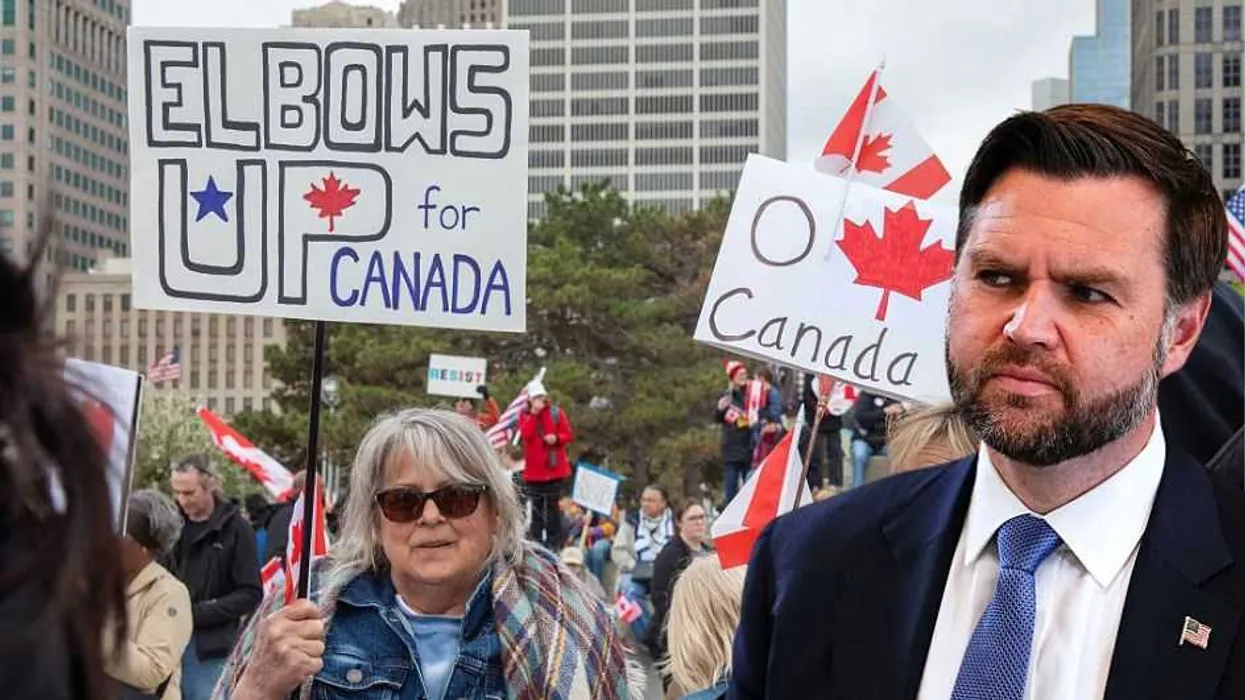
Vice President JD Vance did something remarkable last week: He described Canada more honestly than most of its own political leaders.
In a short series of posts on X, Vance captured the two anxieties that now define Canadian life — mass immigration and a refusal to take responsibility for national decline.
The deeper problem is leadership that seems consistently more focused on the fortunes of global capital than the welfare of Canadians.
“While I’m sure the causes are complicated,” he wrote, “no nation has leaned more into ‘diversity is our strength, we don’t need a melting pot we have a salad bowl’ immigration insanity than Canada. It has the highest foreign-born share of the population in the entire G7 and its living standards have stagnated.”
Vance continued, “And with all due respect to my Canadian friends, whose politics focus obsessively on the United States: your stagnating living standards have nothing to do with Donald Trump or whatever bogeyman the CBC tells you to blame. The fault lies with your leadership, elected by you.”
Truth hurts
Those comments struck a nerve because they describe a reality that Canadians live with every day. Immigration levels have soared to historic highs. Canada’s population is closing in on 40 million, with roughly 23% foreign-born in the 2021 census — and likely much higher today, given the recent revelation that 42% of babies born in 2025 will have foreign-born mothers. For years, political and media elites insisted that this was a sign of national strength. Ordinary people can now see the strain everywhere: stagnant wages, collapsing services, unaffordable housing, and infrastructure buckling under the load.
Vance’s second point was equally accurate. Canadian politicians — especially Liberal ones — have long relied on Trump as a universal scapegoat. No matter the problem, the reflexive response has been to point south and blame “American extremism” for Canada’s failures. It was a convenient distraction from the consequences of their own policies.
Man with no plan
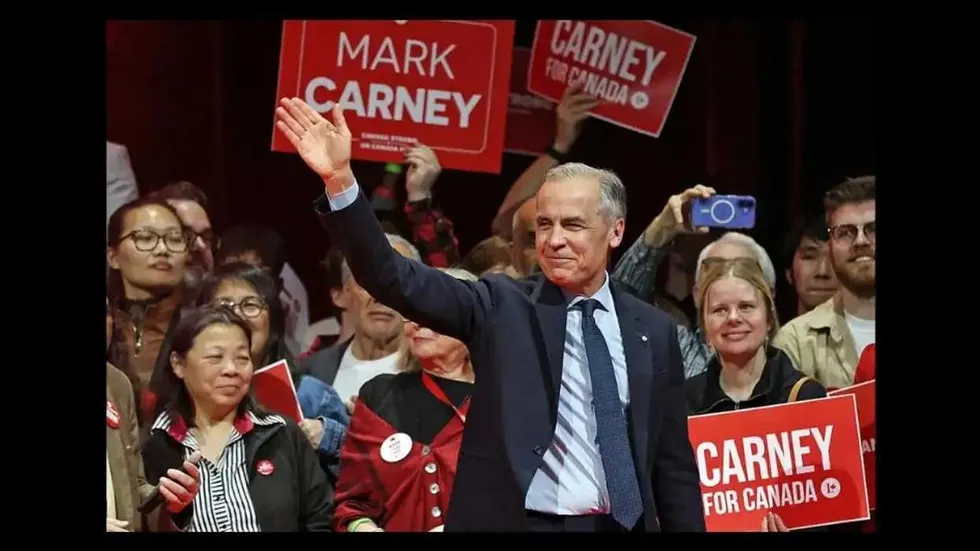
Prime Minister Mark Carney was a master of this blame-shifting. Before entering politics, he spent years burnishing his reputation as a global technocrat. Yet when he ran for prime minister, he adopted an almost paranoid tone toward the United States, claiming in one speech: “President Trump is trying to break us so that America can own us. … We need a plan to deal with this new reality.” His “plan,” as it turned out, was simply to win power — and once in office, Carney abandoned the rhetoric even as he continued neglecting basic economic and security interests.
Nowhere has that neglect been clearer than in defense procurement. Ottawa is reportedly considering scrapping the F-35 fighter jet program in favor of Sweden’s Gripen — an aircraft incompatible with the F-35s flown by every branch of the U.S. military and central to NORAD’s interoperability. As U.S. Ambassador Pete Hoekstra has warned repeatedly, such a move would be sheer folly, undermining both North American defense and Canada’s most vital alliance.
The deeper problem is leadership that seems consistently more focused on the fortunes of global capital than the welfare of Canadians. Brookfield Asset Management — the firm Carney chaired before deciding to seek the leadership of the Liberal Party of Canada and replacing Justin Trudeau as prime minister — recently surfaced in headlines for its involvement in an $80 billion agreement with the Trump administration to produce nuclear reactors. That deal may be good business, but it has only reinforced public suspicion that Carney’s loyalties were formed long before he stepped into elected office.
RELATED: Is this the end of Canada?
 Dave Chan/Getty Images
Soft authoritarianism
Meanwhile, Canada’s once-vaunted bureaucracy is looking increasingly ideological, unaccountable, and hostile to the people it purports to serve. The Canadian Food Inspection Agency’s ongoing occupation of a family farm — and its insistence on slaughtering hundreds of healthy ostriches despite nearly a year without symptoms of avian flu — has alarmed Canadians across the political spectrum. It is the kind of aggressive, unrestrained government action that would have been unthinkable a generation ago.
All of this is unfolding as the Liberal government pursues sweeping censorship and surveillance legislation, from online speech controls to broad new powers for federal regulators. The United Kingdom has already slid into a soft authoritarianism that polices “offensive” speech through arrests and intimidation. Canada appears determined to follow the same path.
This is what Vance was speaking to: a country drifting into economic stagnation, cultural fragmentation, bureaucratic overreach, and political corruption. A country that no longer seems capable of telling itself the truth about what is happening. A country that responds to national crises not with reform, but with scapegoats — whether Donald Trump, American conservatives, or anyone who challenges the official narrative.
Canada is not yet lost. But it is undeniably breaking, and the political class shows little interest in repairing it.
As Vance noted, the ultimate responsibility lies with Canadians themselves. They elected the leadership that brought the country to this point. Whether Canada recovers will depend on whether they are willing to demand something better.
Vance Urges Republicans To ‘Have Our Debates’ But ‘Focus on the Enemy’
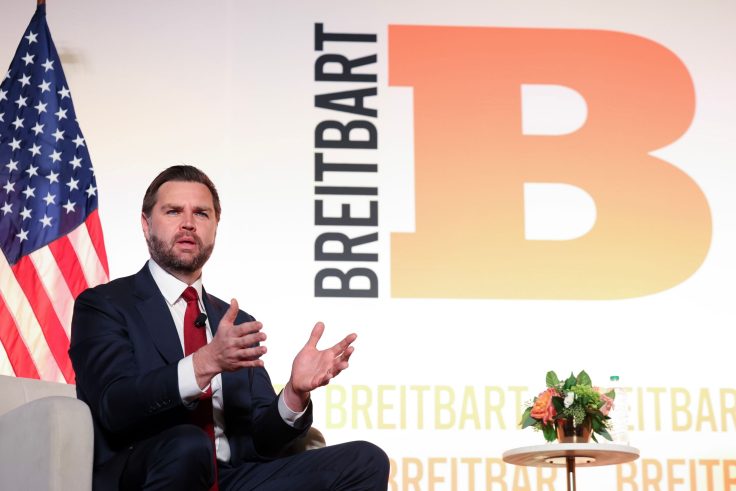
Vice President J.D. Vance addressed the ongoing fights within the Republican Party in an interview on Thursday, giving his lengthiest answer to date on the debates raging on the right about whether to welcome racists and anti-Semites traditionally marginalized by the GOP into the coalition. While Vance encouraged debate, he also urged the GOP to focus on unity against opponents on the left.
The post Vance Urges Republicans To ‘Have Our Debates’ But ‘Focus on the Enemy’ appeared first on .