

Category: Middle east
Iran Escalates Tensions With US, Sending Gunboats To Harass US Tanker and Drone To Confront US Aircraft Carrier
Iran escalated tensions with the United States on Tuesday, harassing a U.S.-flagged oil tanker in the Strait of Hormuz hours after sending a drone toward a U.S. aircraft carrier—an aggressive move that ended with an American fighter jet shooting the drone down.
The post Iran Escalates Tensions With US, Sending Gunboats To Harass US Tanker and Drone To Confront US Aircraft Carrier appeared first on .
‘Moderate’ Abigail Spanberger Appoints Two Qatari Lobbyists To Serve on George Mason University Board
Gov. Abigail Spanberger (D., Va.) has appointed two Qatari lobbyists to serve on George Mason University’s board of visitors, a Washington Free Beacon review has found.
The post ‘Moderate’ Abigail Spanberger Appoints Two Qatari Lobbyists To Serve on George Mason University Board appeared first on .
Iranian Regime Escalates Crackdown on Protesters, Slaughtering Hundreds as Trump Weighs Military Action
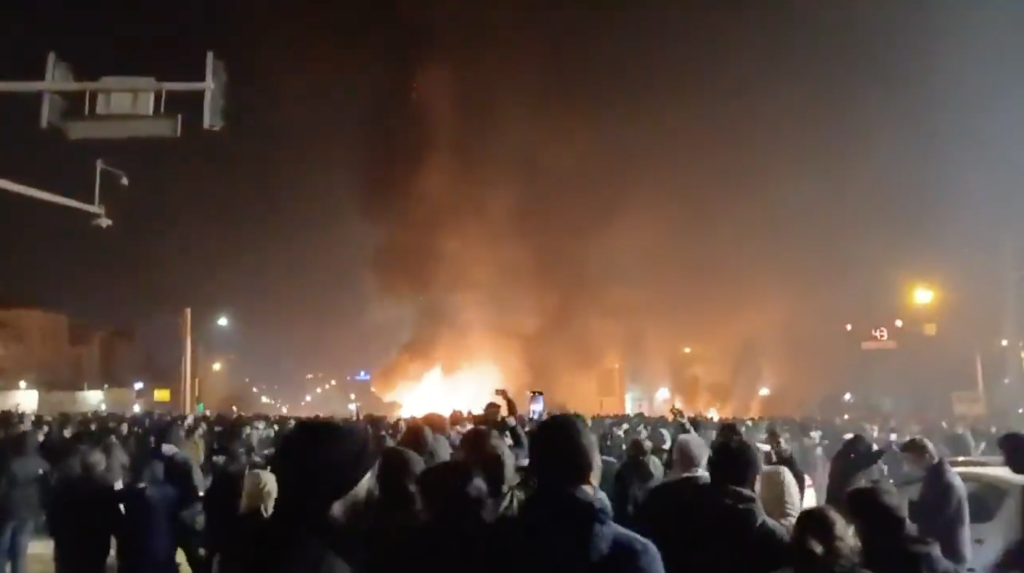
The Iranian regime slaughtered upwards of 500 protesters over the weekend, marking one of the bloodiest crackdowns in the Islamic Republic’s history, as President Donald Trump weighs a range of military options that reportedly include precision strikes on regime assets and cyber warfare.
The post Iranian Regime Escalates Crackdown on Protesters, Slaughtering Hundreds as Trump Weighs Military Action appeared first on .
Khamenei Blames Trump for Iran Protests as Regime Kills Dozens of Demonstrators
Iran’s supreme leader, Ali Khamenei, blamed President Donald Trump on Friday for encouraging nationwide unrest, as the regime continues to kill anti-government protesters despite Trump’s repeated warnings that attacks on civilians will result in U.S. intervention.
The post Khamenei Blames Trump for Iran Protests as Regime Kills Dozens of Demonstrators appeared first on .
Iran Kills Dozens of Anti-Regime Protesters, Defying Trump’s Warnings
The Iranian regime has killed at least 38 people, including 8 children, since a wave of popular protests erupted across the country, defying President Donald Trump’s repeated warnings that the United States will use military force if the Islamic Republic murders civilians.
The post Iran Kills Dozens of Anti-Regime Protesters, Defying Trump’s Warnings appeared first on .
The pernicious myth that America doesn’t win wars
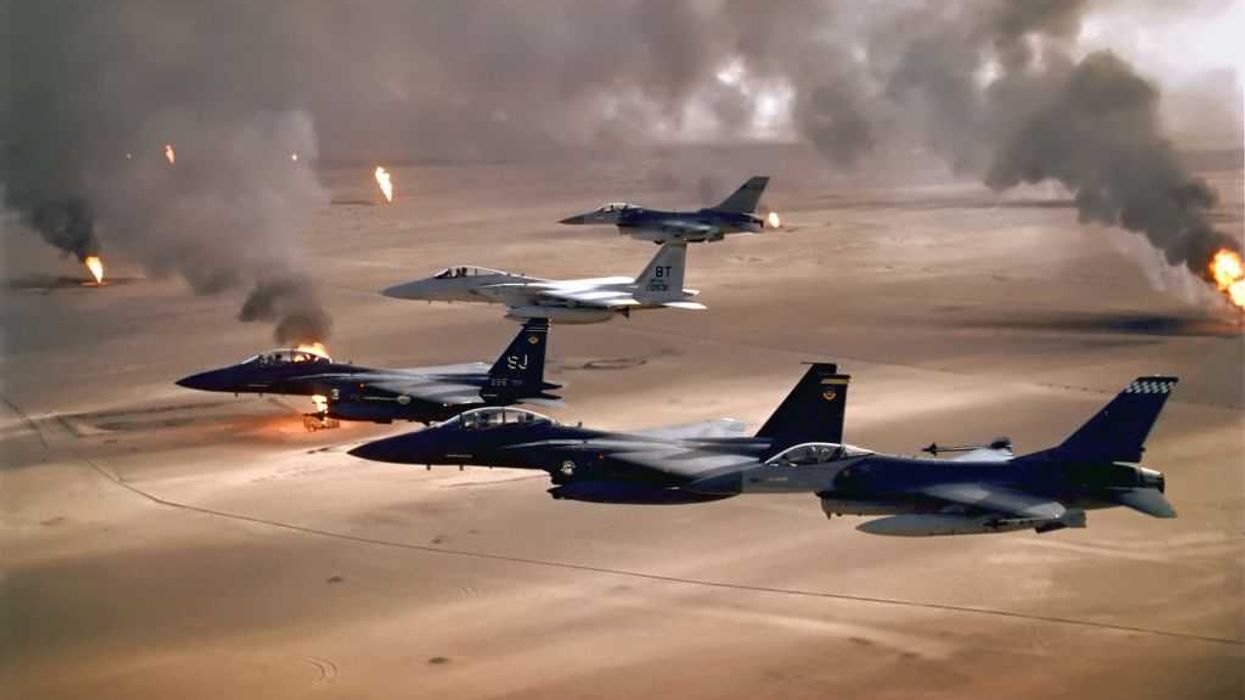
False narratives have a way of being taken as fact in popular understanding. After years of repetition, these statements calcify into articles of faith, not only going unchallenged, but having any counterarguments met with incredulity, as though the person making the alternative case must be uninformed or unaware of the established consensus. Many people simply accept these narratives and form worldviews based on them, denying the reality that, if the underlying assumption is wrong, then so are the decisions that flow from it.
One narrative that has taken hold among many since the humiliating end to the war in Afghanistan is that the U.S. military doesn’t win wars, or that it hasn’t since the end of World War II. This critique of the armed forces, foreign policy, or use of force has become an ironclad truth among many who use it as a starting point to advocate their own preferred change.
The United States military has had plenty of successes since World War II and, in fact, has suffered only a small handful of definitive losses in that time.
Advocates of War Secretary Pete Hegseth’s vision for the military have echoed it: “The military had grown weak and woke, so we need to change the culture, ignore or at least diminish adherence to legal restraints, and remake the composition of the military.” Restrainers, isolationists, and America Firsters have joined the chorus: “America has given up blood and treasure on stupid wars in which we were failures.”
There is only one problem with this understanding, and more importantly, its use as a baseline from which to derive policy prescriptions — it isn’t true at all.
Ignorance of war
It reflects a misunderstanding of how America has used force and what we have and haven’t achieved. And unlike many misunderstandings about American defense, this one isn’t solely by those with little familiarity with what the military does; the view has taken hold among many who should know better. There are several reasons for belief in the fallacy.
First, there is ignorance of what a war is, or at least not having a common definition of it.
For the pedants, one could point out that the United States has not been at war, by strict definition, since 1945. However, this isn’t relevant to the topic at hand because if the United States has not fought a war since 1945, then by this definition, we also haven’t lost one. In fact, the United States has declared war many times: the War of 1812, the Mexican-American War, the Spanish-American War, and the World Wars, yet we have engaged in armed conflict significantly more often than that.
So for the purposes of this debate, we can reflect upon the United States using force to achieve foreign policy objectives. With this more expansive definition, then Grenada is just as much of a war as World War II (although the latter certainly is a source of more pride than the former).
Second, there is ignorance of the number of conflicts in which the United States has been involved. Americans tend to have short memories and often pay less attention to events beyond the water’s edge. Many are largely ignorant of ongoing, smaller operations being conducted in their name. (Remember the shocked response to the Niger incident when many people, including congressional leaders, announced their ignorance of U.S. presence there?)
This phenomenon is exacerbated by the passage of time. How many Americans are aware of our involvement in the Dominican Civil War in 1965? Or the various conflicts that made up the Banana Wars?
RELATED: Turns out that Hegseth’s ‘kill them all’ line was another media invention
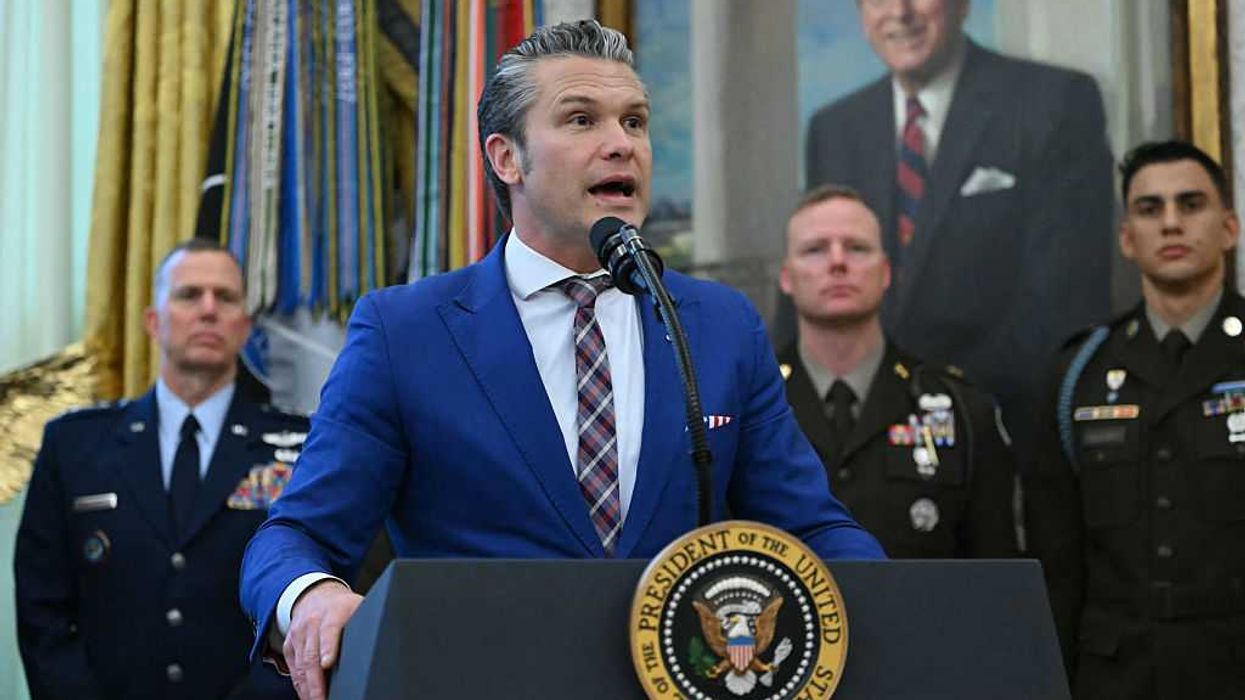 Photo by ANDREW CABALLERO-REYNOLDS / AFP via Getty Images
Third, there is ignorance or misunderstanding of the outcome of those wars. Our perspective has been skewed, likely due to the recent history of the embarrassing and self-inflicted defeat in Afghanistan, the messy and confusing nature of the war in Iraq, and the historic examples of very clearly defined wars with obviously complete victories.
There was no ambiguity in the World Wars. The United States went to war with an adversary nation state (or coalition of them), fought their uniformed militaries, and ended these with a formal surrender ceremony abroad and victory parades at home. But this is not the norm, neither for American military intervention nor for conflict in general.
Most of American military history does not look like these examples — conflicts that are large in scale, discrete in time, and definitive in outcome. Some of our previous interventions have been short in duration and were clear victories but smaller in scale (e.g., Grenada and Panama). Some have been clear victories but incremental, fought sporadically with fits and starts and over the course of years, if not decades (e.g., the several smaller conflicts that are often lumped together under the umbrella of the Indian Wars).
Win, lose, draw
But then there is another category — one in which the conflict results in a seemingly less satisfying but mostly successful result, sometimes after a series of stupid and costly errors and sometimes after years of grinding conflict that ends gradually rather than with a dramatic ceremony.
The Korean War, often described as a “draw” because the border between North and South Korea remains today where it was before the beginning of the war, had moments of highs and lows, periods where it seemed nothing could prevent a U.S.-led total victory — only to see the multinational force squander its advantage (e.g., reaching the Yalu River) and moments where all seemed lost, only to escape from the jaws of defeat through audacity and courage (e.g., Chosin Reservoir, Pusan, Inchon).
When President Truman committed U.S. forces as part of the U.N. mission to respond to communist aggression, the stated intent was to assist the Republic of Korea in repelling the invasion and to maintain its independence. South Korea still exists to this day. The combined communist forces of the PRK and CCP were prevented from achieving their aims by American military power.
We have a much more recent (and undoubtedly more controversial) example of a misunderstood success. Many of those who ballyhoo about America not winning wars point not only to the failure in Afghanistan but also to the recent war in Iraq. The Iraq War was many things — initially fought with great tactical and operational brilliance, then sinking into lethargic and incompetent counterinsurgency, then adapting to local power structures, and of course, initiated under pretenses we now know to be incorrect. But it was not, despite the ironclad popular perception, a military failure.
The military set out, with the invasion of 2003, to defeat the combined forces of the Iraqi Army and Republican Guard and remove the Ba’athist government from power. We achieved that goal. Once in control of Baghdad, the U.S. faced a new threat — one of a growing and complex insurgency that we had failed to anticipate. American forces under Ricardo Sanchez, and continuing under George Casey, seemed perplexed and frustrated by a conflict they had not come prepared to fight, nor that they adapted to. For years, despite the insistence of many military and political leaders, the war was not going our way as American casualties increased month after month.
But by 2008, the Sahwa — the movement of Sunni tribal militias aligning with the U.S.-led coalition and the government in Baghdad — and the American efforts to adapt to a more effective counterinsurgency strategy were turning the tide, to the point that by 2010, the violence in Iraq had largely subsided.
The government the United States helped bring about in Baghdad to replace Saddam Hussein endures to this day but not without difficulties. In his 2005 “National Strategy for Victory in Iraq,” George W. Bush defined victory in the long term as an Iraq that is “peaceful, united, stable, and secure, well-integrated into the international community, and a full partner in the global war on terrorism.” By continuing to maintain a relationship with Iraq, we are helping shape this long-term result, just as we did as we helped postwar Germany and Korea maintain security and political stability.
Due to the oppressive steps of a flawed prime minister, American desire to recede from presence and oversight in Iraq, and a compounding effect of spillover from the Syrian Civil War, there was the need for further American assistance in defeating the threat from ISIS, but defeat them we did — another success for the American military.
The Iraqi government also has close relationships with our Iranian regional rivals, as many of the local Arab countries do based on proximity. But just as the need for the 2nd and 3rd Punic Wars does not change the fact the 1st Punic War was a Roman victory, the war against ISIS does not change the fact that the United States accomplished the goal of deposing and replacing Saddam Hussein. Likewise the fact that the Soviet Union gained influence over Eastern Europe does not change the fact that World War II ended in a definitive defeat of the Nazis.
What does victory look like?
None of that changes a separate question, however — whether the war was worth it. But that was a political decision and one that does not negate the truth that the U.S. military first defeated the Iraqi military in a decisive win and then quelled a grinding insurgency in a less decisive way.
Just because a victory isn’t total doesn’t mean that the military fighting it lost. The War of 1812 was a victory, despite the fact the U.S. failed to achieve its maximalist goals of incorporating Canada but did achieve the goal for which the war was fought — rejecting British attempts to deny American sovereignty. World War II was a victory, despite the fact it set conditions for the Cold War and communist oppression. Korea was a victory, despite the fact we did not unify the Koreas under the democratic South. And Iraq was a victory — a poorly decided, stupidly managed, and possibly counterproductive long-term victory.
RELATED: Trump forced allies to pay up — and it worked
 Photo by Pier Marco Tacca/Getty Images
When viewed in this way, the United States military has had plenty of successes since World War II and, in fact, has suffered only a small handful of definitive losses in that time — Vietnam, Iran (Operation Eagle Claw), Somalia (1993), and Afghanistan — with the temporal proximity of the latter and the fact that two of these were also America’s longest conflicts, helping to warp the public’s understanding of our military effectiveness.
None of this is to say that America should not take a harsh look at our recent military efforts and seek continuous improvement. Grenada, as I have mentioned, was a victory but an incredibly embarrassing one that was likely only successful because we fought a backwater Caribbean country with a population of less than 100,000. The hard lessons learned by examining the disasters, mistakes, and close calls from Operation Urgent Fury helped reform the military into the globally dominant force that defeated the world’s fourth largest army in 100 hours less than a decade later.
Americans should not look at our military through rose-colored glasses, chest thumping as we chant “USA” and insisting that no other force can land a glove on us. But neither should we allow the false narrative of failure to take hold. We should be clear-eyed about what our military has accomplished, can accomplish, and the costs, risks, and potential gains in using force. Armed conflict will remain a necessary tool for the United States. We need to adapt our military to meet and defeat the challenges of the future, and we need to balance and incorporate military power into our global strategies appropriately — but that will not happen if we do it based on an incorrect understanding of the past.
Editor’s note: This article was originally published by RealClearDefense and made available via RealClearWire.
Qatar Is Everything It Accuses Israel of Being
For years, Qatar has positioned itself as a neutral mediator and champion of human rights in the Middle East. Its…
‘Everything Is On the Table’: Trump Admin Weighs Terror Sanctions for UNRWA
The Trump administration says that “everything is on the table”—including terrorism-related sanctions—as it moves closer to taking fresh punitive measures against the Hamas-linked United Nations Relief and Works Agency (UNRWA), according to three senior officials, who told the Washington Free Beacon that the aid group’s “time playing a role in Gaza is over.”
The post ‘Everything Is On the Table’: Trump Admin Weighs Terror Sanctions for UNRWA appeared first on .
Trump makes America dangerous again — to our enemies
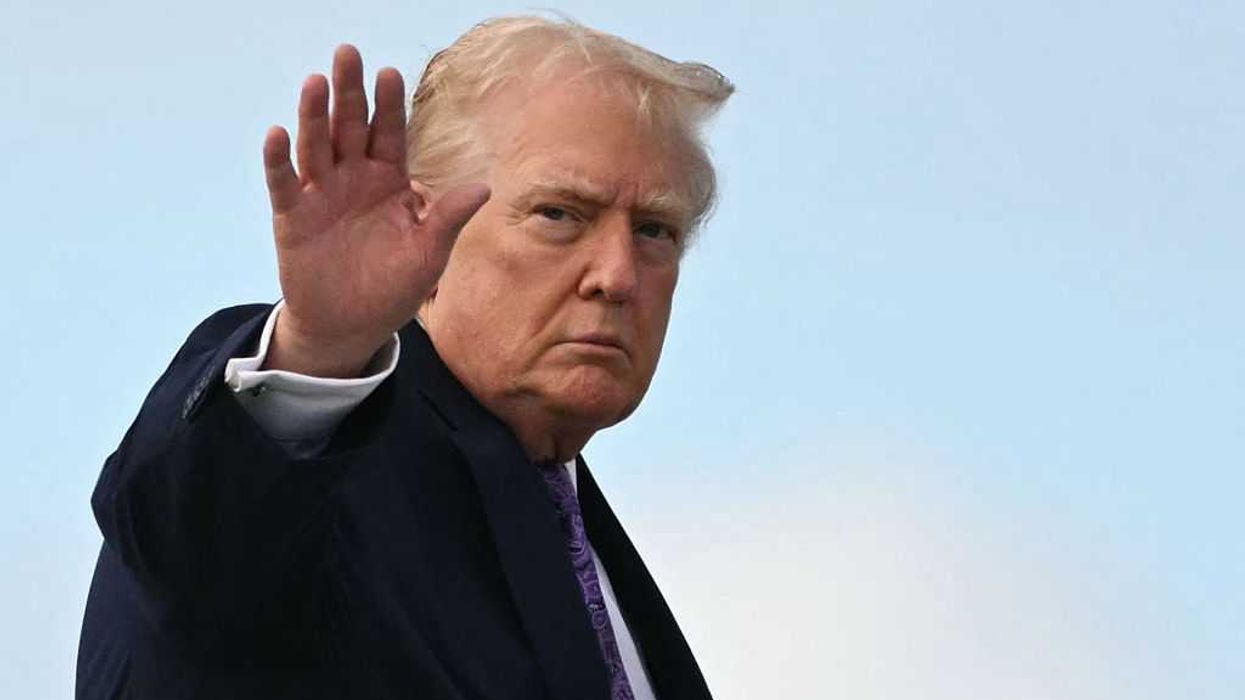
For the first time in years, the world once again views the United States as a force for strength, order, and peace. Clear, consistent American leadership backed by resolve is restoring the U.S. role as the world’s stabilizing power. That clarity is already reshaping some of the most entrenched conflicts, from the Middle East to Eastern Europe.
The breakthrough in Gaza illustrates the shift. What looked like a permanent cycle of bloodshed has given way to a ceasefire, the safe return of hostages, and the growing global isolation of Hamas — a terrorist group that has long thrived on regional instability. The success rests on American influence, quiet coordination with regional partners, and the renewed credibility that comes from a White House that means what it says.
After years of drift and decline, the world once again knows where America stands.
The same seriousness is now visible in Europe. Ukrainian President Volodymyr Zelenskyy’s recent visit to Washington may lead to a negotiated end to a devastating conflict that has killed hundreds of thousands and destabilized global energy and food markets. Zelenskyy described his meetings as a “big chance” to finish the war.
President Trump’s peace plan to end the Russia-NATO war in Ukraine will stop the bleeding, enable reconstruction, and reduce the strain on U.S. ammunition stocks at a moment when the Pentagon must prepare for a potential conflict with China.
US diplomacy regains stature
Strength backed by diplomacy — not drift or apology — is what puts the United States in high esteem with much of the world again. Nations respect a country willing to confront aggression and equally willing to help broker reconciliation.
That same clarity guides the administration’s approach to economics and trade. When America projects strength abroad, it must also defend economic interests at home.
Rebuilding America’s economic strength
After years of watching U.S. innovation shipped overseas, the administration has signaled that America will build, produce, and lead from within. That principle drove President Trump’s deal with Australia to break China’s grip on rare earth minerals — metals essential to everything from fighter jets and missiles to smartphones and electric vehicles.
For years, Beijing used its near-monopoly on mining and refining these materials as leverage, threatening to cut off supplies whenever the U.S. challenged its aggression. The deal with Australia strengthens both nations’ capacity to mine and process these strategic resources, allowing the U.S. to build advanced technology and military systems without bowing to Chinese pressure. It’s another example of President Trump converting economic strength into national security strength.
America’s return to Central Asia
Last week, President Trump hosted a meeting of the C5+1 — the United States and the five Central Asian republics: Kazakhstan, the Kyrgyz Republic, Tajikistan, Turkmenistan, and Uzbekistan. Founded in 2015, the group has rarely received presidential-level attention. That changed with Trump’s direct engagement.
Trump emphasized access to Central Asia’s vast reserves of rare and strategic minerals. Turkmenistan emerged as a potential transit hub for processing and exporting these resources to America. Airlines from Kazakhstan, Tajikistan, and Uzbekistan signed agreements to purchase 37 Boeing aircraft. The president also announced the Trump Route for International Peace and Prosperity, a new trade corridor designed to boost connectivity and economic integration across the region.
Leaders reaffirmed commitments to counterterrorism cooperation, energy security, and balancing regional influence from Russia and China.
RELATED: America’s addiction to Chinese money runs deeper than we care to admit
 Photo Illustration by Sheldon Cooper/SOPA Images/LightRocket via Getty Images
Strength in technology policy
The administration’s posture on technology sends a message as unmistakable as a carrier group in the Pacific: America will defend its industries from predatory foreign dominance.
The recent approval of the Hewlett Packard Enterprise-Juniper Networks merger reflects that stance. The decision, made in consultation with national security officials, counters the global reach of China’s state-controlled telecom giant Huawei and strengthens U.S. data networks in an era defined by artificial intelligence and 5G. The move also signals that America will no longer sabotage its own companies to satisfy globalists or Beltway bureaucrats.
Predictably, Democratic attorneys general led by Colorado’s Phil Weiser — joined by congressional voices such as Sens. Cory Booker (D-N.J.) and Elizabeth Warren (D-Mass.) — denounced the decision. But their reflexive criticism doesn’t alter the administration’s commitment to peace-through-strength policies that protect American interests.
A world steadied by American resolve
When the U.S. leads with confidence, the world responds with respect. Whether confronting turmoil in the Middle East, pressing for stability in Europe, or rebuilding supply chains and industries essential to national security, American strength has produced a safer, more stable international environment.
After years of drift and decline, the world once again knows where America stands.
Peace through strength brought the world back to the table. Strength through accountability will keep it there. That is the kind of respect no adversary can test — and no ally will forget.
Mark Levin: Qatar funds terror, shelter killers — now America’s ‘best friend’?
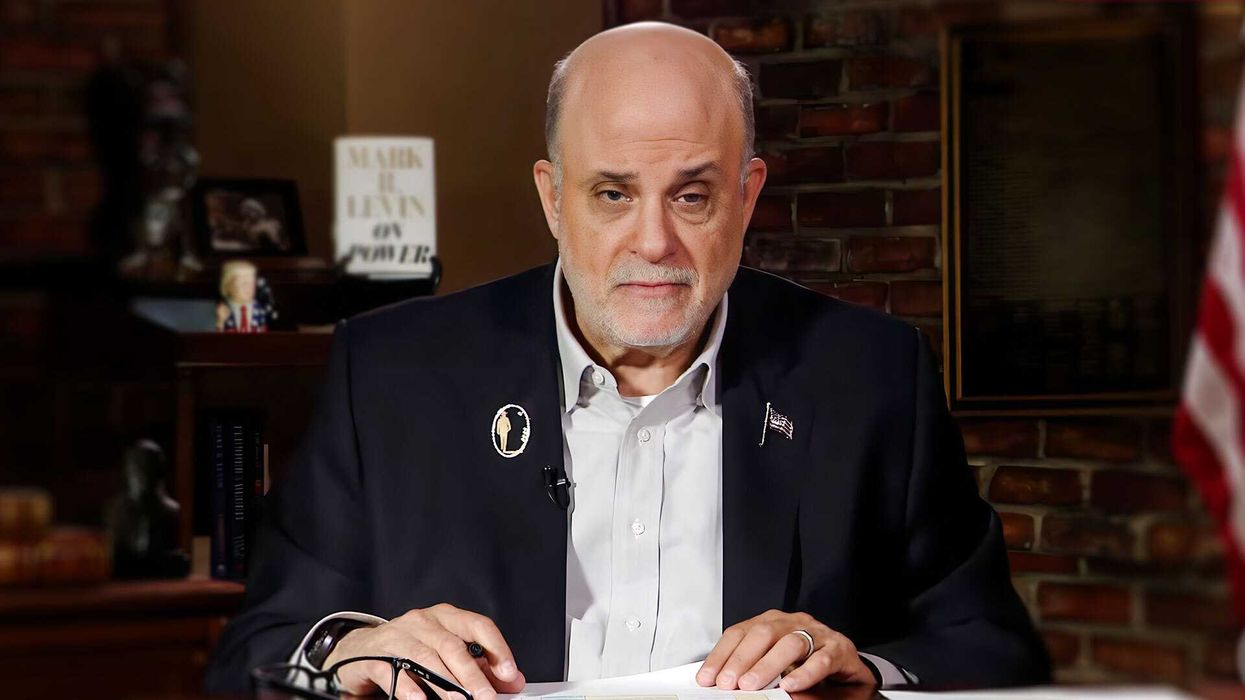
While Mark Levin is one of President Trump’s most vocal supporters, he is concerned about America’s fraternizing with Qatar — a country pitched as “one of the great leaders of the Middle East and the world.”
“I say no, Qatar is a very dangerous country,” says Levin.
He reminds us that in 2002, Wall Street Journal reporter Daniel Pearl was brutally beheaded by Khalid Sheikh Mohammed, al-Qaeda’s chief of operations and the architect of 9/11. It was Qatar who sheltered KSM from the FBI — specifically the father of the country’s current ruler, Sheikh Tamim bin Hamad Al Thani.
Further, these same Qatari family members, Levin says, “are the sugar daddies for Hamas” — funding the terrorist organization for years, hosting its leaders, and acting as its political lifeline.
That hasn’t changed. Even though Qatar has been a key broker alongside the U.S. and Egypt in the tiered ceasefire deal between Hamas and Israel, it’s still on Team Hamas, Levin says.
Just last month, Sheikh Tamim delivered an address at the opening session of the 54th annual Shura Council.
He was clear about where Qatar’s loyalty lies: “Israel has violated all laws and norms governing relations between nations through its aggressive actions against the mediator and its attempt to assassinate members of a negotiating delegation. We consider this aggression to be state terrorism. And the global response was so powerful that it shocked those responsible. What’s happened in the Gaza Strip in the past two years amounts to genocide — a term that encapsulates all atrocities. It is regrettable that they remain incapable of enforcing its respect when it comes to the tragedy of our brotherly Palestinian people.”
This is a load of lies, says Levin. “The Israelis weren’t trying to take out the negotiators. They were trying to take out the Hamas leaders that [Sheikh Tamim] was protecting.”
“[Qatar] is [America’s] new best friend,” he laments.
“They’ve gotten into the West,” into “all parties, every aspect of our culture, our educational system. … They are behind the Muslim Brotherhood, Islamic Jihad, Hamas. They supported the Taliban, and they support the destruction of our universities and colleges.”
For Levin, Qatar’s billions and diplomatic handshakes can’t erase its track record. America’s “new best friend” remains a Trojan horse for terrorism and anti-Western ideology.
Want more from Mark Levin?
To enjoy more of “the Great One” — Mark Levin as you’ve never seen him before — subscribe to BlazeTV — the largest multi-platform network of voices who love America, defend the Constitution, and live the American dream.





