

Category: Muslim
‘Place your left hand on the Quran’: Foreign-born lieutenant governor does not swear in on Bible
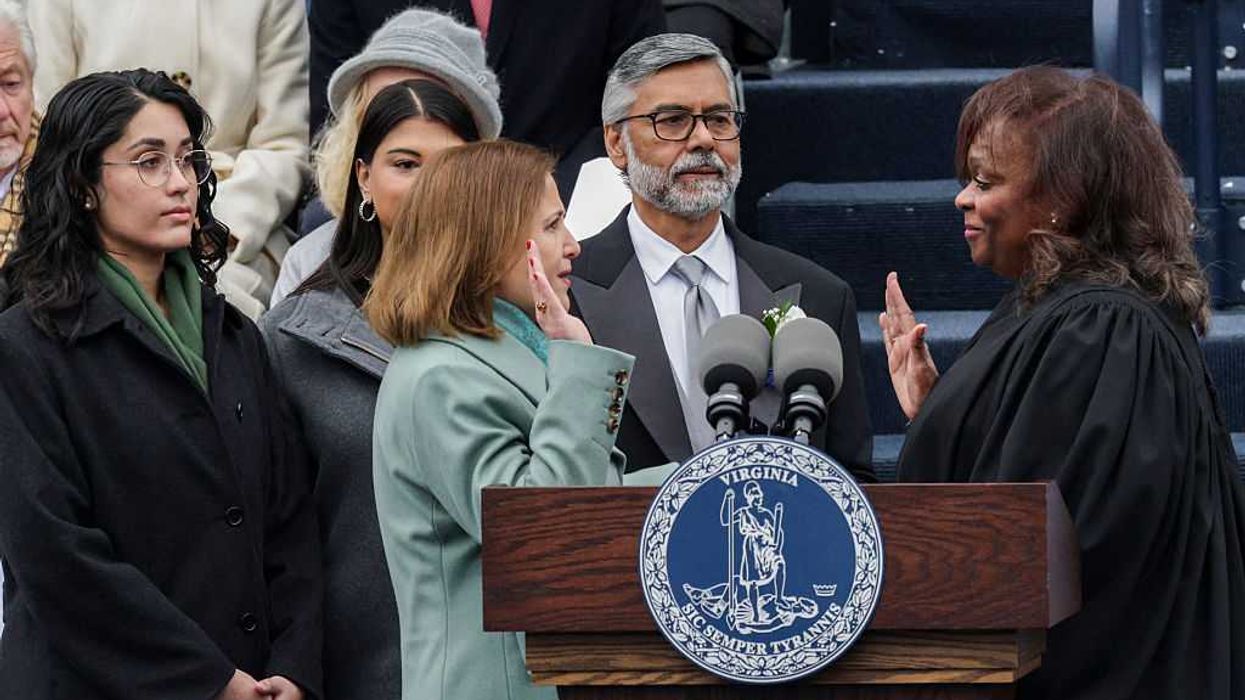
In one of the clearest examples of elections having consequences in recent times, Virginia’s new lieutenant governor’s swearing-in ceremony made history for its unorthodox changes.
On Saturday, Ghazala Firdous Hashmi took her oath of office to fill the lieutenant governor seat. However there was one major twist to the proceedings: Instead of placing her left hand on the Bible, Hashmi swore her oath on the Quran.
Hashmi sees her election and inauguration as a sign of Virginia’s ‘continued progress toward a more representative and inclusive democracy.’
“Place your left hand on the Quran,” the woman directing the inauguration instructed Hashmi.
“I, Ghazala Firdous Hashmi, do solemnly swear that I will support the Constitution of the United States,” she said during the ceremony.
RELATED: Progressive wins VA race despite admitted indifference to ‘sexually explicit material’ in schools
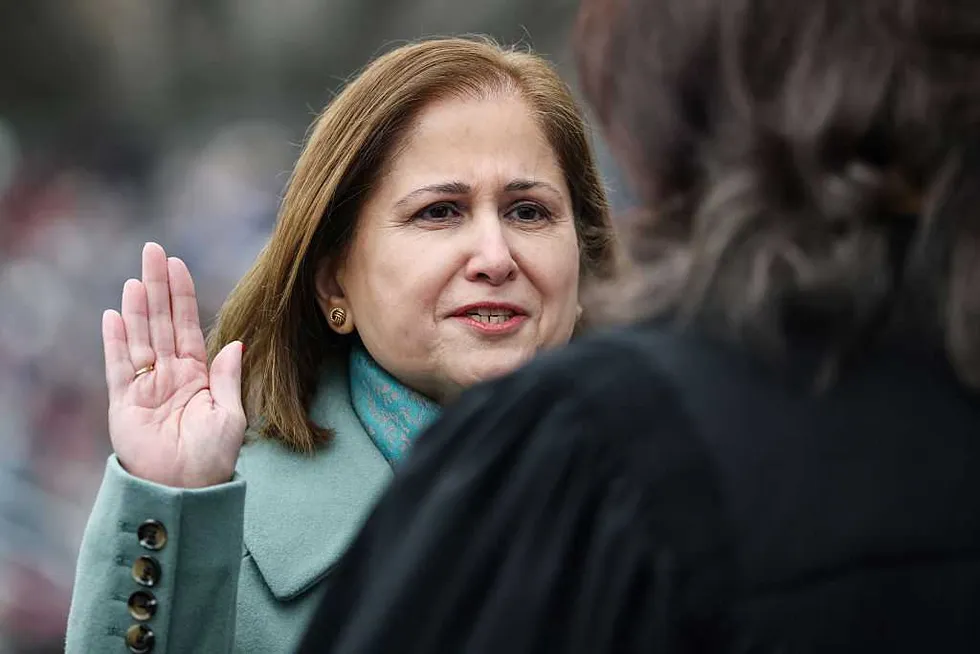 Photo by Win McNamee/Getty Images
According to her official website, Hashmi was born in Hyderabad, India, and was brought to the United States as a child.
She is the first Muslim woman to hold statewide office in the nation and the first South Asian-American to be elected to statewide office in Virginia.
Hashmi sees her election and inauguration as a sign of Virginia’s “continued progress toward a more representative and inclusive democracy.”
Like Blaze News? Bypass the censors, sign up for our newsletters, and get stories like this direct to your inbox. Sign up here!
Hollow Sanctuaries: When Churches Become Mosques
On certain Sunday mornings in America, you can still hear a church bell toll across an otherwise silent neighborhood. The…
10 Years After San Bernardino Terrorist Attack
Tuesday, December 2 marked 10 years since Syed Farook and Tashfeen Malik shot dead Robert Adams, Isaac Amianos, Bennetta Betbadal,…

Persecution

“Persecution,” editorial cartoon by Yogi Love for The American Spectator on Dec. 1, 2025.
Abrahamic myth: How Islam rebranded the God of the Bible
One of the great canards of the post-9/11 world — promoted by theists and nontheists, conservatives and leftists, Democrats and Republicans alike — is that there are three Abrahamic faiths: Judaism, Christianity, and Islam.
But is that really true? If the three faiths worship the same God and preach His word, then there should be clear and compelling evidence of interconnection and aligned essential doctrines.
God’s sacred lineage
Abraham was God’s first patriarch, his descendants were God’s chosen people, and the Lord God guided them — at great cost and peril — to the promised land.
Why is there the need to graft on to this historically and logically robust faith history the tale of Muhammad, which is supported only by legend and perhaps shards of archeological data?
The Jews, meanwhile, were the people through whom God sent His son, Jesus Christ, the messiah. Jesus was a holy, just, virtuous, believing Jew, and what He taught springs directly from the Old Testament. His ministry was ultimately a futile effort to convince His ethnic brothers to follow Him as their redeemer.
Jesus was betrayed by His own people and crucified by the Romans. His death, in substitutive atonement for the sins of humanity, was followed by His resurrection, and the risen Christ tasked His apostles to spread His word beyond the Jews to the gentiles, thus laying the foundation for Christianity, a descriptive moniker that came into common use around the end of the first century A.D.
Biblical genealogy and history are intricate and logical. Like all genealogy and history of the ancient world, they have gaps (which do not diminish their spiritual authority), and a great deal of both spring from oral tradition, which was eventually codified.
The fact that biblical genealogy and history are written in such painstaking detail in both the Old and New Testaments give them each spiritual and chronological heft, as does the fact that scholars have recovered thousands of manuscript copies and fragments totaling hundreds of thousands of pages.
Legend, not lineage
This brings us to the issue of whether Islam is really an Abrahamic faith.
Abraham was father of Ishmael, by his slave Hagar, who was banished from Abraham’s household by Abraham’s wife, Sarah, even though she facilitated their union. God promised Hagar that Ishmael would be a great man and the father of many nations. Ishmael’s life and sons are detailed in Genesis 25 and then again in 1 Chronicles 1. Then he and his sons are never spoken of again.
The book of Genesis, written by Moses, likely dates to around 1200 B.C., even though its final form was not completed until centuries later. This means that the story of Abram, who becomes Abraham, is even older than that because it would have been told to Moses as oral history. So Abraham may have lived as long ago as 2000 B.C.
Yet Muhammad, the prophet of Islam who is supposedly descended from Ishmael, was not born until 570 A.D., which creates a time gap of more than 2,500 years. And for this span of more than two millennia, there are no documents that directly connect Muhammad to Abraham or Ishmael. There is only Islamic oral tradition or legend (known as Hadith), nearly all of which were produced a century or more after Muhammad’s death in 632 A.D.
Conversely, there is no doubt about the connection of the Old and New Testaments. They tell a continuous, coherent, logical, prophetically rich, and frequently archaeologically confirmed story of the journey of the Israelites to the promised land and the life and death of Jesus.
Why, then, is there the need to graft on to this historically and logically robust faith history the tale of Muhammad, which is supported only by legend and perhaps shards of archeological data?
Biblical appropriation
Even though there is no written genealogy from Ishmael to Muhammad, there is significant biblical appropriation in the Quran. In fact, plagiarism might be a better word.
For example, Allah created the heavens and the earth in six days (Surah 7:54; for the Quranic novitiates, the Quran is organized by the length of each Surah [chapter], from the longest, called the Opener to the shortest 114th, Mankind). Abraham’s name first appears in Surah 2. In total, Abraham’s name appears 69 times in the Quran; Jesus appears 25 times, Mary 34 times, and Moses 136 times. In 3:67, the Quran states that “Abraham was not a Jew, nor was he a Christian, but he was a Muslim hanif (montheist), and he was not one of the idolators.”
RELATED: Why progressives want to destroy Christianity — but spare Islam
 ozgurdonmaz/iStock/Getty Images Plus
While Muhammad was quite open to biblical appropriation of names, he was not so keen on Christian doctrine: Muslims deny the Trinity (“do not say Three”; 4:171) and the crucifixion (“they did not kill him nor crucify him”; 4:157). The denial of the crucifixion leads to an implicit denial of the resurrection; if Jesus was not crucified, then He could not have been resurrected, but He was called to heaven by Allah himself (4:158).
The Quran calls Jesus “messiah” and righteous, but simultaneously denies that He is the son of God (“The Messiah, the son of Mary, was no more than a messenger, messengers passed away before him”; 5:75). In fact, in these things, the Muslims have much more in common with Jews than either group has with Christians.
Ironically, this trio of denials of core Christian beliefs puts Muslims in league with Martin Luther King Jr., who denied the virgin birth, which Muslims accept, but they reject Allah’s paternity of Jesus (see 3:45-47, 9:30, 6:100, and 112:3 for examples).
Muhammad writes that man does not have free will (2:6 and 2:7, among many others); Allah decides and animates all things (3:47 and 40:68). Allah will decide what both believers and nonbelievers do (16:93) and what will happen to them (24:40). Even nonbelievers who wish to believe will not be allowed to do so unless permitted by Allah (10:100).
Muslims are commanded to defeat nonbelievers in jihad (8:39 and 9:5); those who fight and die go to paradise, as do those who fight and live (4:74). Nonbelievers are to be treated as second-class citizens and pay tribute unless they convert, or they may be killed (9:29). Jews and Christians are regarded, respectively, as those who have earned Allah’s anger and those who have gone astray (1:6).
In the Bible, acts of sexual immorality are identified as an abomination to the Lord, right from the beginning of the Old Testament. Deuteronomy 22:5 says, “The woman shall not wear that which pertaineth to a man, neither shall a man put on a woman’s garment: for all that do so are an abomination unto the Lord thy God”; and Leviticus 18:6-20 describes the Lord’s abhorrence for the sin of incest. Paul’s epistles showcase his scorn for sexual anarchy.
By contrast, Muslim men may marry Jewish or Christian women after the women convert, but sex with a believing slave girl is preferable in the meantime (2:221). Muslim men are also told that they may marry multiple women (i.e., polygamy), and they have no obligation to treat them equally (4:3). The “houris,” or wide-eyed, voluptuous women of paradise, await all believers (Surahs 44, 55, 56, and 78; the much-ballyhooed 72 virgins are not Quranic, they are from a Hadith of Muhammad).
The overall impression of the God of the Bible is that He is a holy and just God, whose moral boundaries and demands set exceedingly high standards of conduct, and Jews of the Old Testament repeatedly fail to hit their marks. Their failures allowed God to show Himself as merciful and loving because He relents in His anger and forgives His people, effectively giving them the chance to start again.
Different gods
It is true that the Quran also refers to Allah in this manner repeatedly. But that is just part and parcel of the appropriation.
The Old Testament’s story of God’s love for, and strife with, His chosen people over their conduct repeats many times because God’s communication through His prophets ultimately proves ineffective at bringing about the lasting behavioral and devotional change that He demands. The God of the Bible never gives up, however, because He loves His children and seeks their betterment only for their own good, a framing of morality that they simply cannot endure because it requires patience, reverence, and discipline.
In the New Testament, God decides to confront His people face-to-face, live among them as a man, and teach them by looking them in the eye. So He sends His son, Jesus Christ, who is eternal and has borne witness to the entire chronology of creation, to live a perfect and sinless life, teach the lessons of the Old Testament, and entreat His people — the first-century Jews — to follow Him in pursuit of salvation and eternal life.
Despite all the travails, challenges, and even violence of the Bible, it is an uplifting story of love, trust, hope, and faith that ends in glory.
The same cannot be said of the Quran, in which an omnipotent god views his people as automatons commanded to do his will. Some verses abrogate others, and there really is no story told but just an endless series of dos and don’ts that end either in hell or paradise with wide-eyed houris.
Ask the people of Minnesota and Michigan and France and the United Kingdom how that’s working out.
Given the lack of a documentary interconnection, the doctrinal discrepancies between the two faiths as expressed in their central holy books raise this critical question: How is it spiritually conceivable that the two books represent the work of the same God?
Would the God who never gives up on His people and venerates marriage and family be the same God who commands men to marry unbelieving women only after they convert and have relations with slave girls while they wait? Would the God who empowers humans with free will and petitions them to follow Him to heaven by living lives of righteousness and virtue be the same God who commands the deaths of nonbelievers, specifically Christians and Jews (4:89), simply because of their unbelief? Would the God who sacrifices His own son on a Roman cross be the same God who appropriates the names, events, and stories of the Bible and relabels them to make them His own in a new book?
The Quran, like a bad Hollywood production, simply takes the biblical plots and characters and changes the name of God from “I AM” to Allah. Adam, Aaron, David, Elijah, Isaac, Job, Jonah, Joseph, Lot, Noah, Solomon, Zechariah, the Psalms, Gabriel, Michael, Noah’s ark, and even the Ark of the Covenant (2:248) all make cameo appearances.
Most importantly, would the God who wants peace and fights wars only against those who seek to eradicate His chosen people (such as the Amorites, Philistines, Canaanites, Hittites, Jebusites, and Perizzites) so that His people can live freely under His law be the same God who commands jihad and the imposition of sharia law, both of which seek to coerce conversion or kill those who will not convert?
Ask the people of Minnesota and Michigan and France and the United Kingdom how that’s working out.
Fruit reveals truth
To say that the God of the Bible is spiritually and doctrinally the same as Allah of the Quran beggars logic, ignores history, and requires that you willfully disregard the written word in each book.
The canard that Islam is an Abrahamic faith is a way of facilitating a connection between evil and goodness for political purposes in order to provide the evil with the fig leaf of acceptance by affiliation rather than by word and deed.
The God of the Bible, and those who follow His word, produced the freest, safest, cleanest, most generous, and most prosperous nations in human history. Islam, on the other hand, has produced — as the late Samuel P. Huntington wrote in his tour de force “Clash of Civilizations” — a cadre of nations that are never simultaneously at peace with all their neighbors and within their own borders.
That was true when he wrote it in 1996, and it is still true today.
Maybe the holy war now being waged between Islam and what remains of a weak-kneed and addle-brained Christendom is why Jesus says in both Matthew and Revelation that He comes with a sword to separate those who deny from those who follow Him.
When you consider whether it is at all likely that Islam is Abrahamic, remember what the redeemer says in Matthew 7:16-20: “Ye shall know them by their fruits. Do men gather grapes of thorns, or figs of thistles? Even so every good tree bringeth forth good fruit; but a corrupt tree bringeth forth evil fruit. A good tree cannot bring forth evil fruit, neither can a corrupt tree bring forth good fruit. Every tree that bringeth not forth good fruit is hewn down, and cast into the fire. Wherefore by their fruits ye shall know them.”
That is all you need to know to stop saying — and believing — that Islam is an Abrahamic faith.
The triumph — for now — of New York’s Muslim socialist mayor
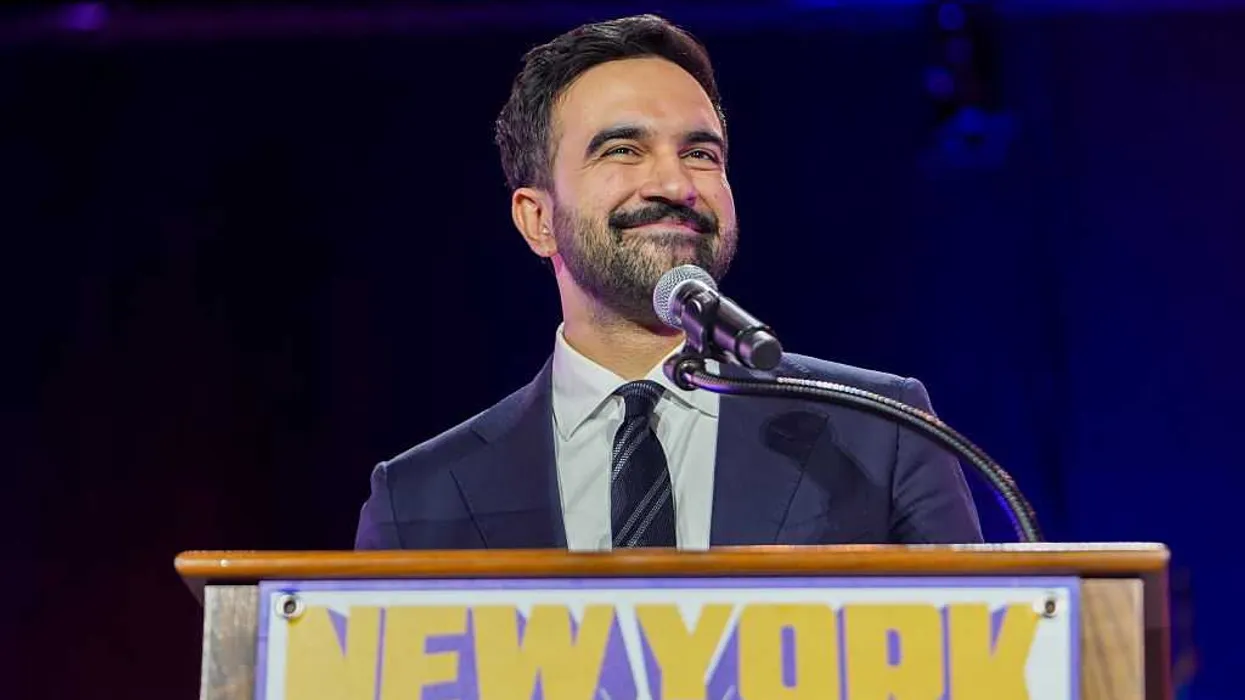
If the polls are right, New York City is about to elect Zohran Mamdani as its next mayor. An avowed socialist, he’s riding a wave of “free stuff” politics to victory. Mamdani also describes himself as a proud Muslim who says his faith will no longer “hide in the shadows” of American life.
It’s hard to know what he means. Mosques exist in every major city. Muslims worship freely under the same First Amendment protections as everyone else. What Mamdani seems to want isn’t tolerance but cultural submission — not coexistence, but acceptance. To dissent from his worldview, he insists, is “Islamophobia.”
The choice remains what it has always been: guilt or grace, grievance or truth.
That accusation follows the left’s familiar playbook: disagreement equals bigotry. Americans, however, don’t need to fear Islam to reject its false claims about reality.
The politics of pity
Recently, Mamdani told a story — sometimes about an aunt, sometimes about a cousin — who supposedly stopped riding the subway after 9/11 out of fear. The details change, but the purpose doesn’t: to draw sympathy and votes through emotional appeal.
We’re meant to respond, “How cruel Americans are!” The fact that this narrative works says something profound about the collapse of moral imagination among American voters.
“Never forget,” New York once vowed. Now the city seems to say, “We forgot — remind us again, and where’s our free handout?”
After a terrorist attack that killed more than 3,000 people — planned and carried out by Islamic extremists targeting symbols of American capitalism — one might expect some soul-searching. Shame could have led to repentance, reflection, or even conversion. Instead, Mamdani invites Americans to feel guilty for making a Muslim feel uncomfortable after 9/11. The villain becomes America itself.
This is textbook DARVO — deny, attack, and reverse victim and offender. It’s the same intersectional ideology that now dominates universities and city halls. Mamdani’s campaign is its political expression: Islam as the newest “oppressed” identity, ready to claim power in the name of liberation from “whiteness.”
Selective shame
Christians, by contrast, are told to feel shame constantly. From kindergarten to college, they are lectured about crusades, inquisitions, and colonialism — most of them centuries past, all of them endlessly exaggerated. Professors call it “deconstruction.” The goal is to make young Christians feel guilty enough to abandon their faith.
So shame is permitted and even celebrated — but only when it weakens Christianity. The moment it might challenge Islam, it becomes taboo.
Why? Because the modern left keeps a hierarchy of sacred victims. In that moral pecking order, Islam isn’t a religion but a protected identity, immune from criticism. That’s why progressives can champion Islam while rejecting Christianity, even though no Islamic society on earth practices the liberal values the left claims to cherish.
The contradiction is glaring, but ideology blinds them. The left despises both Christianity and capitalism, so a Muslim socialist like Mamdani suits prgressive purposes perfectly.
Rival gods, rival visions
Religion isn’t like ice cream. You can enjoy multiple flavors of dessert, but not multiple visions of truth or multiple gods. Religions offer rival accounts of reality: who God is, what man is, and what the good life requires.
Christianity teaches that Jesus Christ is the eternal Son of God whose atoning sacrifice restores sinners to communion with their Creator. Islam denies that. It teaches that Jesus was only a prophet and that salvation comes through works — keeping the Five Pillars — without assurance of grace.
In the Gospel of John, “In the beginning was the Word, and the Word was with God, and the Word was God.” Islam’s Quran insists that Jesus was merely a messenger. Yet Islam also claims that the Quran itself is eternal and uncreated — the word of God manifested in a book, not a person. Christians believe the Word became flesh. Muslims revere a text instead.
Even the Quran, in 5:68, tells Muslims to uphold the Torah and the gospel. But those very texts affirm Christ’s divinity and the atonement — the truths Islam rejects. This “Islamic dilemma” reveals the irreconcilable divide between the two faiths.
A society built on Islam will not resemble one shaped by Christianity. The two produce fundamentally different understandings of law, grace, family, and freedom — and therefore of government itself. Mamdani has already made clear that his Islamic convictions will shape how he governs.
RELATED: Evil never announces itself — it seduces the hearts of the blind
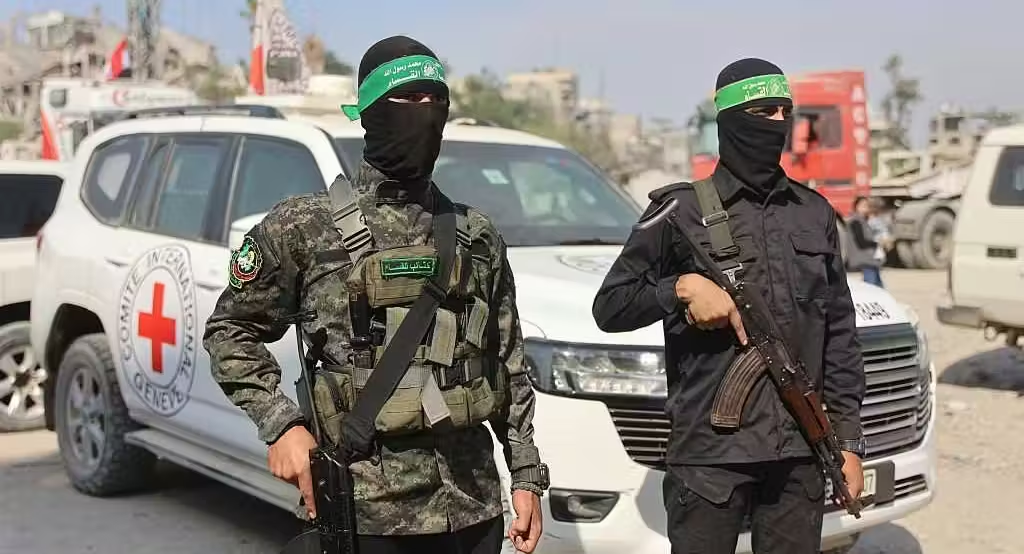 Photo by Omar Qattaa / Contributor via Getty Images
The only cure for confusion
In “Healing the Open Wounds of Islam,” Vishal Mangalwadi reminds readers that it was Christianity — not secular philosophy — that transformed Europe from barbarism to liberty. Only the Bible’s message of redemption through Christ can do the same today.
This is a moment for American Christians to recover moral clarity and preach the gospel boldly to Muslim neighbors. Only biblical truth, not multicultural sentimentality, can sustain freedom.
So let’s return to Mamdani’s changing subway story — the aunt, or cousin, or whoever she was supposed to be. Shame can serve a noble purpose when it leads to repentance. After 9/11, the right response to evil wasn’t self-pity but the words of Christ:
“Come to me, all who labor and are heavy laden, and I will give you rest.
Take my yoke upon you, and learn from me, for I am gentle and lowly in heart,
and you will find rest for your souls.
For my yoke is easy, and my burden is light.” (Matthew 11:28-30)
The choice remains what it has always been: guilt or grace, grievance or truth.
Never forget which one leads to freedom.
Mamdani: The Real Victim Of 9/11 Was My Muslim Aunt

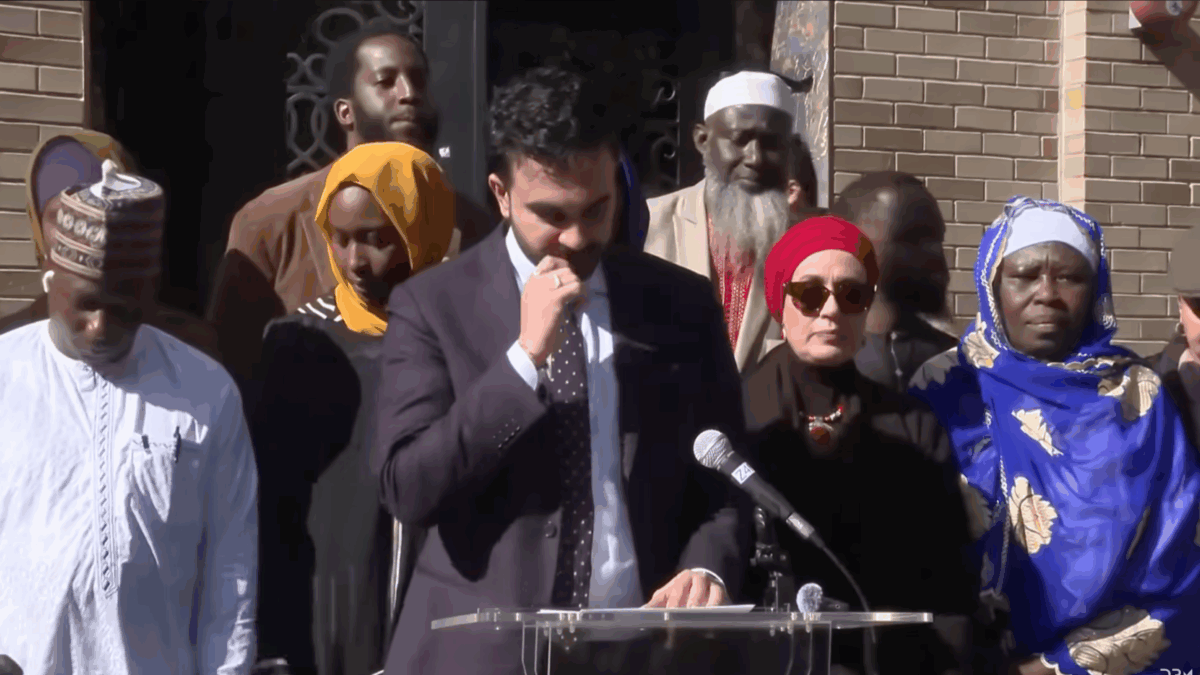 Ugandan-born socialist candidate for New York City mayor Zohran Mamdani suggested Friday that the real victim of the September 11, 2001 Islamic terrorist attacks was his Muslim aunt. Speaking to voters outside the Islamic Cultural Center of the Bronx, Mamdani said “The dream of every Muslim is simply to be treated as any other New […]





