Category: New york times
New York Times Hiring a Reporter To Cover US Jews
The New York Times, whose executive editor a decade ago publicly acknowledged, “We don’t get the role of religion in people’s lives,” and which has been afflicted with a series of errors on basic matters of Jewish literacy everywhere from the crossword puzzle to the food section, is now hoping to hire a reporter who knows something about Judaism.
The post New York Times Hiring a Reporter To Cover US Jews appeared first on .
New York Times Hiring a Reporter To Cover US Jews
The New York Times, whose executive editor a decade ago publicly acknowledged, “We don’t get the role of religion in people’s lives,” and which has been afflicted with a series of errors on basic matters of Jewish literacy everywhere from the crossword puzzle to the food section, is now hoping to hire a reporter who knows something about Judaism.
The post New York Times Hiring a Reporter To Cover US Jews appeared first on .
‘Without citing evidence’: NYT steps on a rake trying to attack Trump administration over fraud crackdown
The Department of Health and Human Services cut off five Democrat-run states’ access to over $10 billion in federal child care and family assistance funds on Tuesday, citing “serious concerns about widespread fraud and misuse of taxpayer dollars in state-administered programs.”
The New York Times joined Democrats in criticizing the Trump administration’s anti-fraud campaign — but bungled its execution.
The Times’ Minho Kim opened his Tuesday piece with the following sentence:
The Trump administration plans to freeze $10 billion in funding for child care subsidies, social services and cash support for low-income families in five states controlled by Democrats, claiming widespread fraud throughout those states, without citing evidence, after a major welfare fraud scheme in one of them.
The sentence was later rearranged without an editor’s note but without any significant alterations.
‘The first response of Democrats to instances like the Minnesota fraud findings should not be to criticize the other side.’
It was not lost on critics that immediately after asserting that the administration claimed widespread fraud “without citing evidence,” Kim himself proceeded to allude to the damning evidence of widespread fraud in one of the states facing the funding pause — fraud that Minnesota Gov. Tim Walz acknowledged on Monday when giving up on his ambition of re-election.
Drew Holden, the managing editor at American Compass, suggested that the New York Times perhaps “got so used to saying that the Trump admin did something ‘without citing evidence’ that they didn’t realize they mention the ‘evidence’ in the same sentence.”
 Photo by Patrick Smith/Getty Images
Later in the Times article, Kim acknowledged that the funding freeze builds on the HHS’ pause of $185 million in annual childcare funds in the wake of credible allegations of massive fraud in taxpayer-subsidized day care facilities in the Gopher State.
Minnesota has been home to historic fraud committed by members of the Somali community in relation to coronavirus relief funding and allegedly in relation to taxpayer-subsidized day care facilities. The COVID scams in Minnesota have resulted in dozens of criminal convictions and scores of indictments in recent years. Government officials are working to ensure similar graft is not impacting other jurisdictions.
Following the publication of Kim’s piece, American Enterprise Institute fellow Ruy Teixeira stressed that “the first response of Democrats to instances like the Minnesota fraud findings should not be to criticize the other side for attacking them and wave the bloody shirt of racism against President Trump but rather to stress the seriousness of the problem and how it will not be tolerated.”
Like Blaze News? Bypass the censors, sign up for our newsletters, and get stories like this direct to your inbox. Sign up here!
FAILING NYT! Leavitt Unloads on Times Reporter for ‘Unequivocally False’ Trump Story [WATCH]
![FAILING NYT! Leavitt Unloads on Times Reporter for ‘Unequivocally False’ Trump Story [WATCH]](https://hannity.com/wp-content/uploads/2025/12/GettyImages-2248840672-300x200.jpg "US-POLITICS-LEAVITT")
Say — aren’t these the guys who thought Biden was sharp?
New York Times is getting absolutely hammered online for sympathetic article about criminal illegal alien
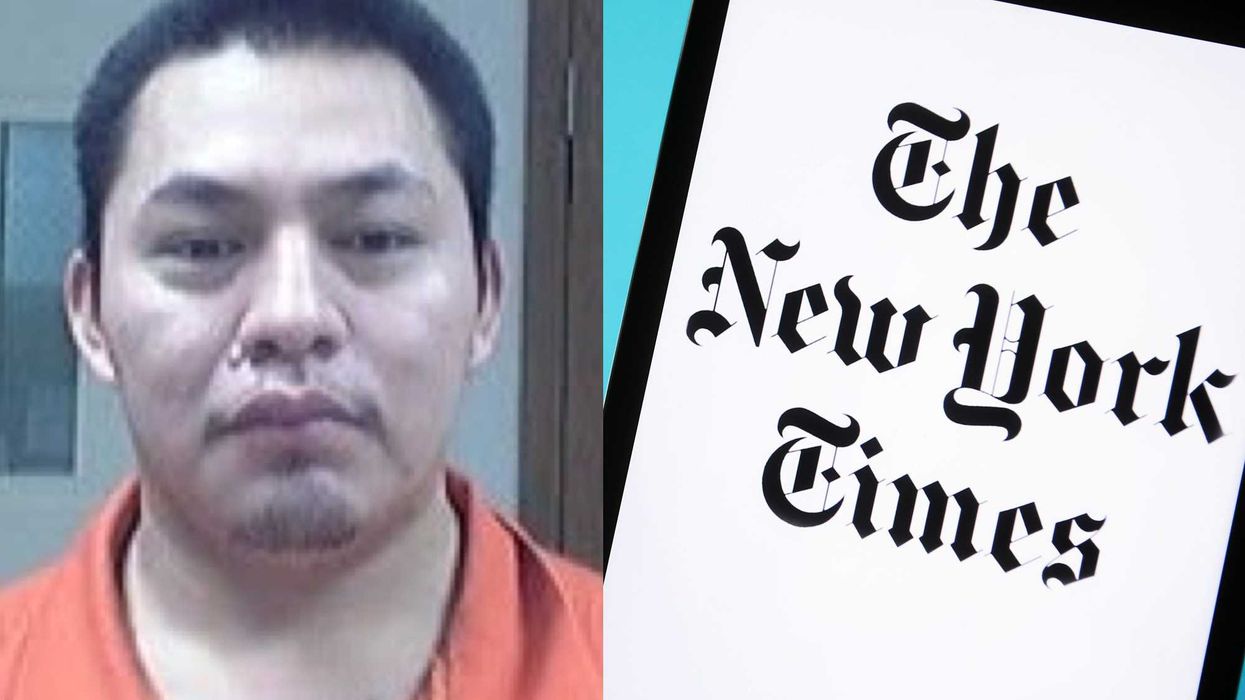
As the debate over immigration continues, the New York Times tried to put a sympathetic light on an illegal alien who committed identity theft and instead radicalized many on the right.
The article contrasts the lives of Romeo Perez-Bravo from Guatemala and Dan Kluver, the man whose identification records were stolen to secure employment for Perez-Bravo in the Midwest.
‘The disgusting New York Times writes this story … as if they are BOTH victims.’
Kluver was forced to pay thousands of dollars to resolve the tax debts that had been racked up by Perez-Bravo under his credentials.
The Times portrays the identify theft as an unfortunate feature of the employment system and frames it as a “survival tactic” of illegal immigrants.
His case was one version of a problem that’s been spreading across the country for years. The government estimates that as many as one million undocumented workers are using fraudulent or stolen Social Security numbers — a survival tactic used to pass background checks and get jobs. The numbers are skimmed from data breaches, sold in black markets online for as little as $150, or handed out in border towns by human smugglers. Many numbers connect back to US citizen children, dead people, or Puerto Ricans whose numbers circulate easily across the mainland.
The article was immediately assailed by many online, and the Department of Homeland Security responded by setting the record straight about the extent of the criminal convictions against Perez-Bravo.
“The violent criminal illegal alien who stole Daniel Kulver’s identity is Guatemalan National Romeo Perez Bravo,” replied DHS Assistant Sec. Tricia McLaughlin.
She added that he had a rap sheet including convictions for terroristic threats and assault and four convictions for driving under the influence.
“He reentered the U.S. a third time after being removed, which is a felony,” she added. “Behind every stolen Social Security number is a real American: mothers, fathers, students, and workers facing devastating financial, personal and legal fallout.”
He was also involved in a traffic accident that resulted in the death of a 68-year-old grandfather, according to the Times.
The Times, meanwhile, is getting decimated.
“An illegal alien was using the stolen identity of an American citizen — and the disgusting New York Times writes this story … as if they are BOTH victims,” replied political consultant Steve Cortes.
“This is just a completely infuriating story,” responded Ohio state Rep. Josh Williams (R). “When you see Democrats fight back against mass deportations to the extent they have, think about men like Daniel Kluver, who have had their shot at the American Dream turned upside down because of the left’s desire to protect illegals over Americans.”
RELATED: NYT hit with backlash over op-ed calling for radical gov’t change so the left can compete
“One selfish man destroyed another man’s life, killed a grandpa, and sent a young girl to the hospital. It’s incredible to see how hard you strain to varnish over this ugly story,” read another response.
“The worst part of this article is how the @nytimes tries to paint a sympathetic story about the illegal alien. He was involved in a fatal crash and handed over the identity of the American whose name he’d stolen. The actual victim of the ID theft ended up getting sued for it,” replied the account for the Project for Immigration Reform.
Like Blaze News? Bypass the censors, sign up for our newsletters, and get stories like this direct to your inbox. Sign up here!
Warmongers Dredge Up Neville Chamberlain (Again) To Bash Trump’s Ukraine Peace Negotiations

 How many times do I have to teach you this lesson about appeasement, warmongers?
Woman Who Gave Birth at 62 Via IVF Accused of Committing Fraud to Get More Children
Women usually cannot naturally conceive past age 45. But MaryBeth Lewis wasn’t happy when her children grew up. At age…
Why real Christianity terrifies the elites — and they’re right to worry
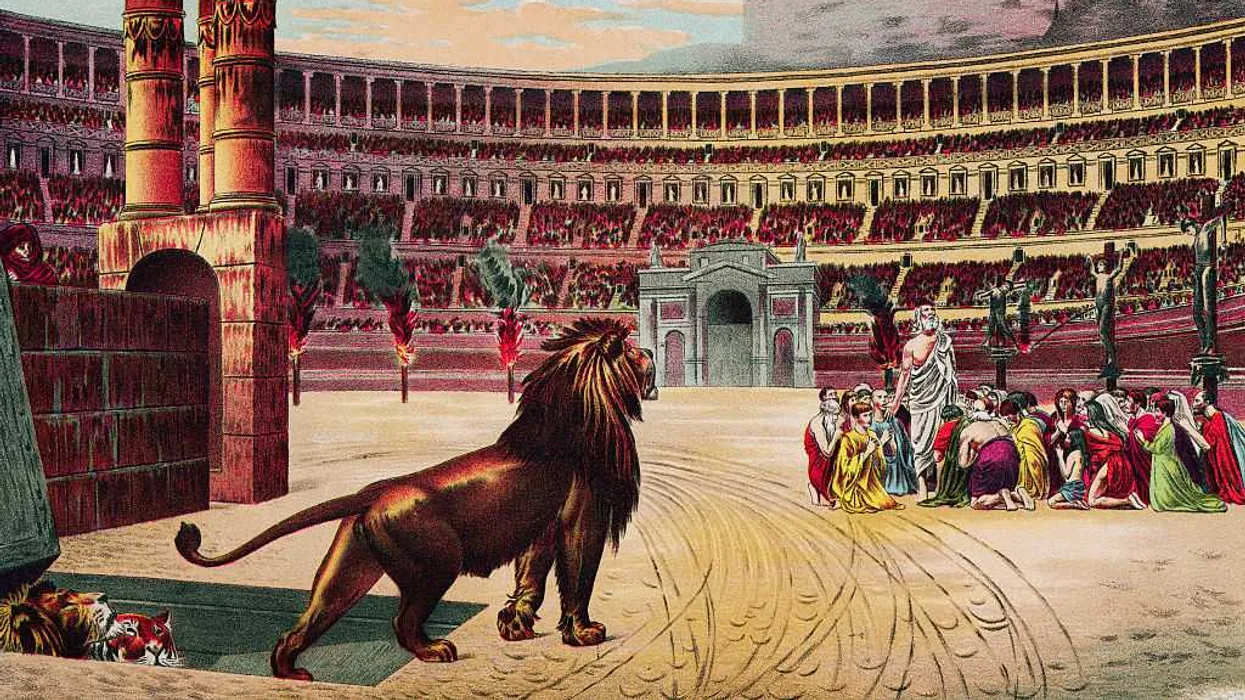
Much like gas-station sushi, David Brooks is hard to stomach at the best of times.
But his latest New York Times essay is the kind that makes you reach for the sick bag. He opens with the usual routine: an exasperated sigh, a long, self-important pause, and the unmistakable air of a man convinced he has cracked the cosmos — again.
A hidden faith saves no one, a timid faith shapes nothing, and a faith that folds under pressure is closer to cheap furniture than conviction.
He quotes a Czech priest, hints at deep wells of wisdom, and then meanders toward the real purpose of the piece: explaining, with mild exasperation, why Christians are once again disappointing him. This is nothing new. It’s a ritual at this point — a complaint that returns like spam you swore you unsubscribed from.
To be fair, Brooks isn’t stupid. He knows how to spin a story, how to climb onto the moral high ground without looking like he’s climbing, and how to crown himself the lone voice of reason in an age he insists is losing its mind.
But there is no missing the tone that hangs over almost every line he writes about believing Americans: a thin mist of condescension, settling somewhere between pastoral concern and a parent-teacher conference. He talks about everyday Christians the way a pretentious barista talks about someone ordering regular coffee — uncultured, embarrassing, and in need of enlightenment. And the tone, more than any point he makes, gives him away instantly.
Brooks claims to fear “rigid” or “pharisaical” Christianity. Yet the only certainties that radiate from his essay are his own. He divides the world into two armies — Christian nationalists on one side and “exhausted” secular humanists on the other — and then steps forward as the lone oracle who claims to see a path out of the fog.
Christians who vote for borders, who cherish the nation that shaped their churches, or who think culture is worth defending are waved off with his familiar, weary flick of the wrist. They’re told they practice a “debauched” version of the faith.
No evidence needed. Brooks’ opinion is treated as its own proof.
His description of these believers always follows the same script. They are angry, dangerous, and obsessed with power. They clutch their creed like a makeshift weapon, ready to wallop anyone who wanders too close.
In his telling, they never act from devotion, duty, or gratitude. They never look around their communities and see an America they love slipping away. They never mourn the millions taken before they drew a breath, the cracking of our shared foundation, or the slow burial of the sacred.
Instead, Brooks tells us they operate from “threat more than hope,” as if the country’s cultural decay were some far-fetched tale told for effect, rather than something families watch unfold every day in their schools, in their cities, and on their screens.
Brooks then pivots to his preferred theological register: the poetry of longing. He praises yearning, doubts, desires, and pilgrimages — all worthwhile themes.
But he uses them the way an interior decorator uses throw pillows: scattered for mood, never for structure. His spiritual reflections float past in soft, airy phrases that never touch the ground. This isn’t the faith of the Gospels, anchored in sacrifice and truth. It’s faith as fragrance — atomized cosmetic, evaporating faster than one of his metaphors. It asks nothing, risks nothing, and confronts nothing, which may be why Brooks finds it so comforting.
RELATED: Exposing the great lie about ‘MAGA Christianity’ — and the truth elites hate
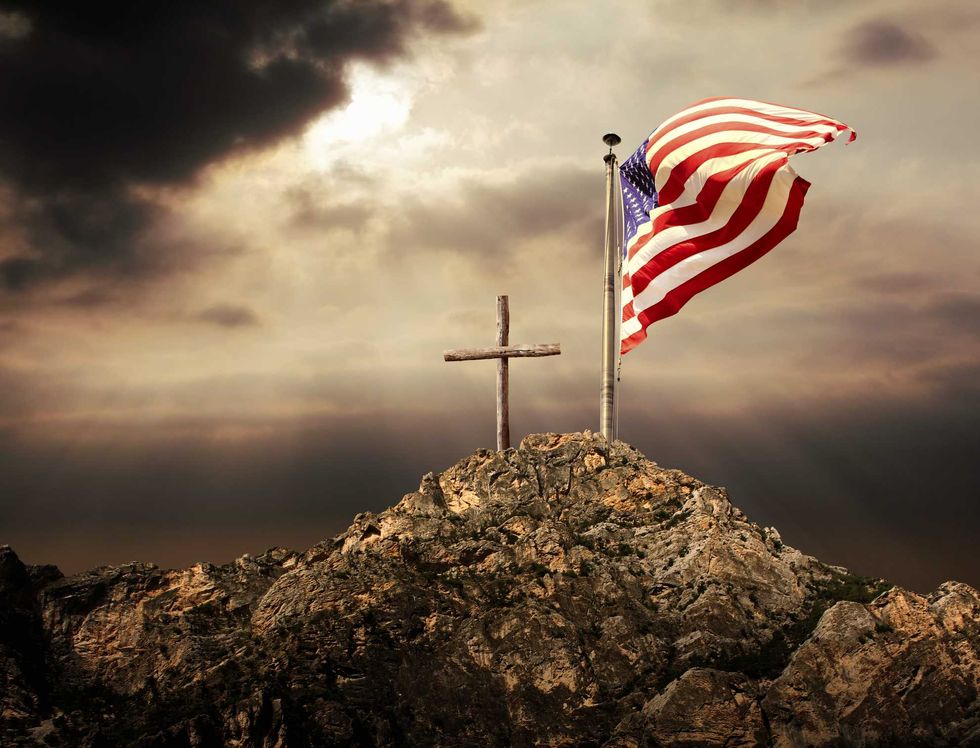 jokerpro/iStock/Getty Images Plus
Throughout his essay, Brooks holds up a small circle of “wise people” as models of the faith America needs — Tomas Halík, Rowan Williams, and a handful of theologians who speak in clichés and move through the world like contemplative shadows. Their calm inspires him. Their pluralism delights him. Brooks treats their quietism as the apex of Christian maturity, as if the holiest life is lived at arm’s length, murmuring about mystery while the roof caves in.
What he never admits is what these figures actually represent: a brand of Christianity that thrives in seminar rooms, academic conferences, and anemic interfaith panels — spaces far removed from the daily battles most Christians face. Halík writes beautifully about longing. Rowan Williams writes elegantly about humility. But neither man spent his life in the trenches defending children from ideological capture in schools, or standing up to governments intent on shredding the family, or speaking plainly about sin in a culture that now calls sin a civil right.
Brooks misreads their vocation as the universal Christian posture when it is, at best, one posture among many.
The heart of the essay is its barely disguised contempt for ordinary Christians who believe their faith should shape the societies they inhabit. This is the point he never states outright but gestures toward with every paragraph.
Faith, to Brooks, is primarily personal, private, and utterly toothless. The moment it concerns the fate of a nation or the moral trajectory of a culture, he calls it nationalism. If a Christian speaks of stricter immigration policies, he hears xenophobia. If a parent protects his child from the cultural free-for-all, he calls it regression.
Brooks leans heavily on the aforementioned Czech priest and philosopher, Tomáš Halík, as if Halík were handing him a permission slip for a diluted Christianity. Halík writes movingly about interior struggle and authentic witness, ideas rooted in his years serving an underground church under communist rule.
But Brooks treats Halík’s reflections on the inner life as a blanket command for Christians to withdraw from the outer one. Halík speaks of sincerity; Brooks hears surrender. Halík points to the vast, ungraspable side of faith; Brooks converts it into a polite memo urging believers to stay in their lane.
And so Brooks gets the entire lesson backward. Halík survived a regime that tried to erase Christianity from public life. He never argued for Christians to silence themselves or retreat from cultural battles. Yet Brooks uses him as cover to criticize anyone who won’t float along with the cultural current.
What Brooks never admits is that what he calls “Christian nationalism” is not the fringe menace he imagines. For many believers, it is simply the instinct to guard the faith that built their communities. It isn’t a hunger for domination, but a love for the inheritance passed down to them. It isn’t outright hostility toward outsiders but gratitude for the civilization that formed them.
Brooks conveniently sidesteps all of this and builds a caricature he can berate, warning of a “creeping fascism” that lives entirely in his own mind.
The self-anointed sage wants Christians to trade their armor for aroma, to swap vigilance for vague platitudes, and to follow his favorite tastemakers into a future where faith survives only behind closed doors.
But Christians know better. A hidden faith saves no one, a timid faith shapes nothing, and a faith that folds under pressure is closer to cheap furniture than conviction. Brooks will disagree, naturally. He always does.
As so many times before, the smug sexagenarian takes a swing at American Christians. And once again, he misses the target by a mile.
Democrats’ Latest Epstein Play Falls Apart
WASHINGTON — The 2011 exchange between the late Jeffrey Epstein and longtime gal pal Ghislaine Maxwell, now serving a 20-year…
Josh Hawley Is Making The Wrong Argument For More Food Stamp Welfare
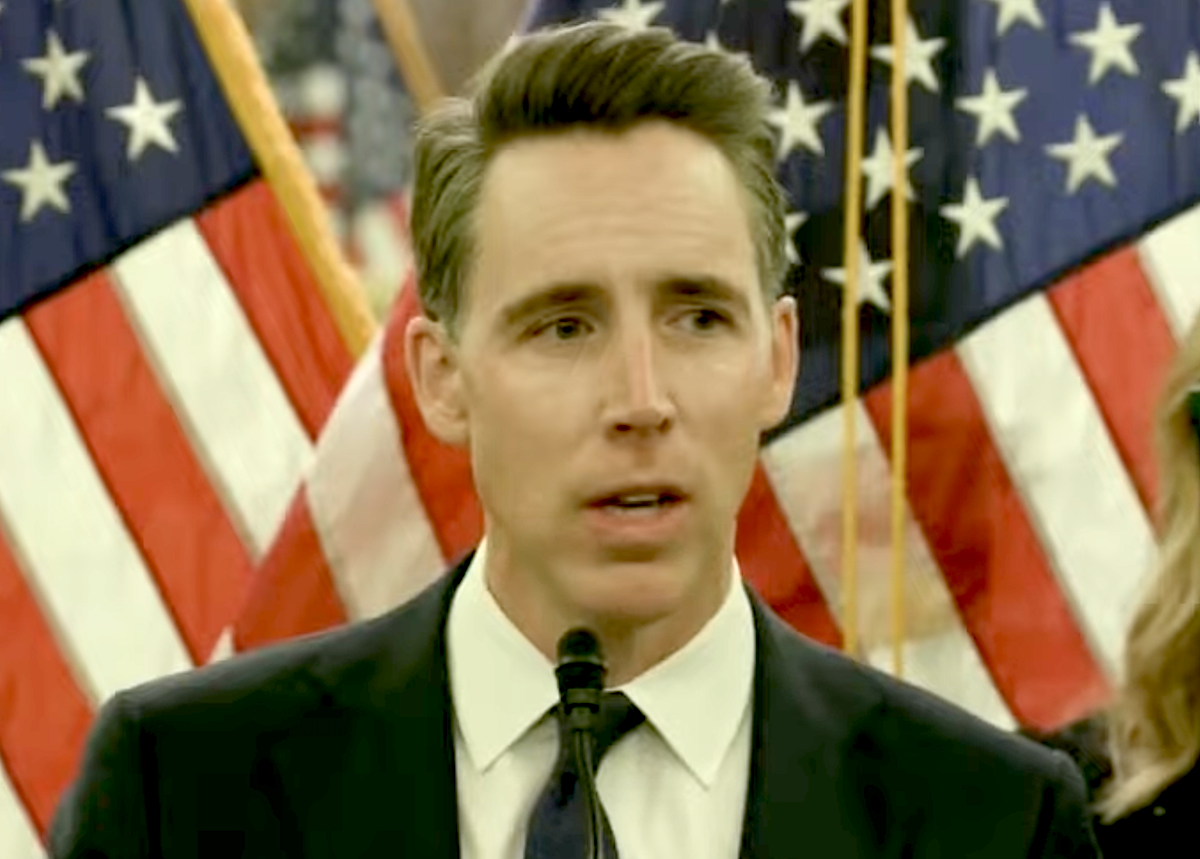
 Hawley needs to explain why it’s imperative that we turn the welfare hose back on without including measures to prevent taxpayer-funded ‘assistance’ going to anyone but the most desperate.