Category: Conservative Review
Conservative Review Daily Caller News Foundation Donald Trump Newsletter: NONE Oil and gas Venezuela
Trump Says US Is Going To Run Venezuela After Nabbing Maduro
‘We want peace, liberty and justice’
18-year-old ISIS sympathizer who allegedly planned New Year’s Eve terror attack in North Carolina is arrested

A North Carolina man who allegedly planned to use knives and hammers for a New Year’s Eve attack at a grocery store and a fast food restaurant in support of ISIS was arrested and charged with attempting to provide material support to a foreign terrorist organization, federal officials said Friday.
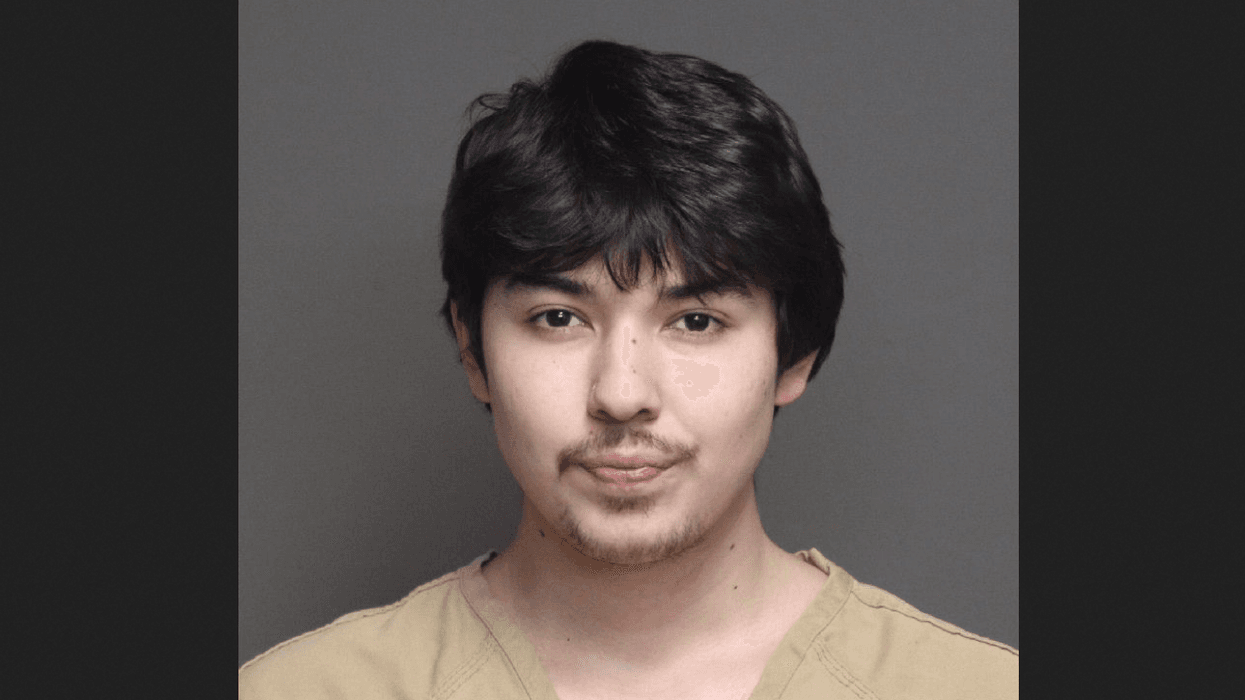
The Justice Department and the U.S. Attorney’s Office for the Western District of North Carolina said a criminal complaint was filed Wednesday and unsealed Friday after Christian Sturdivant appeared in federal court in Charlotte. Sturdivant turned 18 just two weeks ago, according to jail records.
‘May Allah curse the cross worshipers.’
“This successful collaboration between federal and local law enforcement saved American lives from a horrific terrorist attack on New Year’s Eve,” Attorney General Pamela Bondi said. “The Department of Justice remains vigilant in our pursuit of evil ISIS sympathizers — anyone plotting to commit such depraved attacks will face the full force of the law.”
FBI Director Kash Patel added that “the accused allegedly wanted to be a soldier for ISIS and made plans to commit a violent attack on New Year’s Eve in support of that terrorist group, but the FBI and our partners put a stop to that.”
The FBI in Charlotte on Dec. 18 received information that an individual later identified as Sturdivant was making multiple social media posts in support of ISIS, a designated foreign terrorist organization, according to allegations in the arrest affidavit.
Sturdivant in early December posted an image depicting two miniature figurines of Jesus with on-screen text that read, “May Allah curse the cross worshipers,” officials said. The post allegedly is consistent with ISIS rhetoric calling for the extermination of all non-believers, including Christians, Jews, and Muslims who do not agree with ISIS’ extreme ideology.
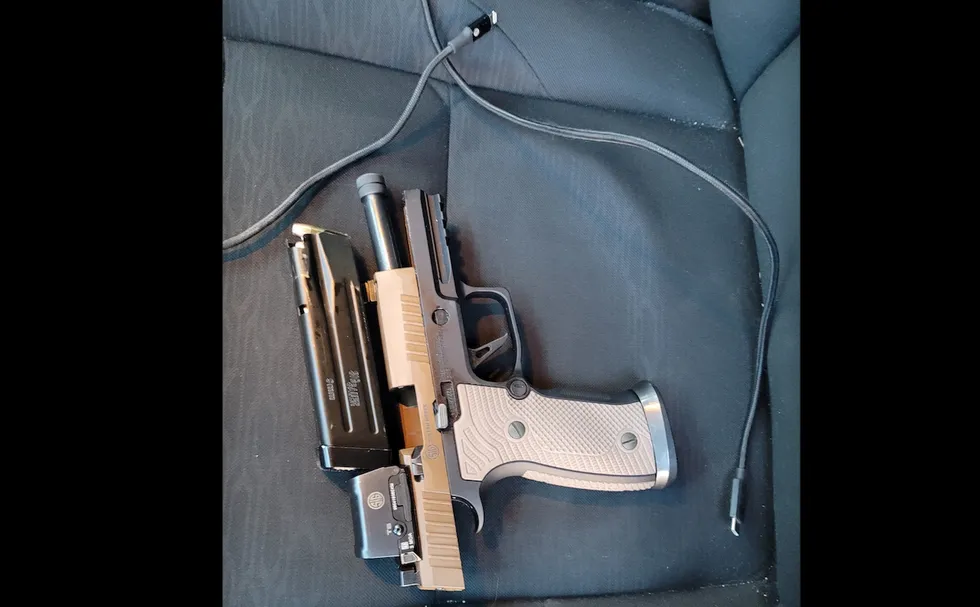
Image source: Department of Justice
The criminal complaint alleges that Sturdivant on or about Dec. 12 began communicating with an online covert employee, or “OC,” whom Sturdivant believed was an ISIS member, officials said.
Sturdivant told the OC, “I will do jihad soon” and proclaimed he was “a soldier of the state,” meaning ISIS, officials said, adding that on Dec. 14, Sturdivant allegedly sent an online message to the OC with an image of two hammers and a knife. This is significant because an article in the 2016 issue of ISIS’ propaganda magazine promoted the use of knives to conduct terror attacks in Western countries, officials said, adding that the article inspired actual attacks in other countries. Later, Sturdivant told the OC that he planned to attack a specific grocery store in North Carolina, officials said. Sturdivant also told the OC about his plans to purchase a firearm to use along with the knives during the attack, according to the arrest affidavit.
What’s more, officials said Sturdivant on Dec. 19 allegedly sent the OC a voice recording of Sturdivant pledging “Bayat,” which is a loyalty oath to ISIS.
On Dec. 29, 2025, law enforcement conducted a search warrant at Sturdivant’s residence, where they discovered handwritten documents, one of which was titled “New Years Attack 2026,” officials said.
RELATED: FBI stops radical pro-Palestinian New Year’s Eve terror plot: Report
Image source: Department of Justice
The document listed items such as a vest, mask, tactical gloves, and two knives allegedly to be used in the attack, officials said, adding that it also described a goal of stabbing as many civilians as possible, with the total number of victims to be as high as 20 to 21.
The note also included a section labeled as “martyrdom op,” which described a plan to attack police responding to the site of the attack so Sturdivant would die a martyr, officials said.
RELATED: Trans-identifying radicals among those arrested in alleged planned New Year’s Eve terror plot
The complaint alleges that Sturdivant lived with a relative who secured knives and hammers so Sturdivant could not use them for harm, officials said. Yet, law enforcement seized from Sturdivant’s bedroom a blue hammer, a wooden handled hammer, and two butcher knives which appeared hidden underneath the defendant’s bed, officials said. These items appear to be the ones depicted in the online message Sturdivant previously sent to the OC, officials said.
Law enforcement also seized from Sturdivant’s bedroom a list of targets, as well as tactical gloves and a vest, acquired as part of the defendant’s planned attack, officials said.
Sturdivant remains in federal custody, officials said, adding that he faces a statutory maximum penalty of 20 years in federal prison if convicted. He was behind bars Friday night at the Gaston County Jail with no bond.
Like Blaze News? Bypass the censors, sign up for our newsletters, and get stories like this direct to your inbox. Sign up here!
Maduro captured following ‘large scale strike’ in Venezuela, Trump says

Nicolás Maduro was “captured and flown out” of Venezuela after the United States carried out another strike, President Donald Trump announced.
After months of anticipation and several strikes against alleged drug cartel boats, Trump greenlit the most aggressive military action of his second term in office.
‘Maduro was arrested by American officials and will stand trial in the United States.’
“The United States of America has successfully carried out a large scale strike against Venezuela and its leader, President Nicolas Maduro, who has been, along with his wife, captured and flown out of the Country,” Trump announced Saturday.
“This operation was done in conjunction with U.S. Law Enforcement. Details to follow.”
Trump is expected to speak at a Mar-A-Lago press conference at 11 a.m. on Saturday.
RELATED: Trump says US struck drug-linked site in Venezuela: ‘We hit them very hard’
Photo by Anna Moneymaker/Getty Images
Secretary of State Marco Rubio spoke with several Republican senators about the capture, noting that Maduro was arrested by American officials and will stand trial in the United States.
“[Rubio] informed me that Nicolás Maduro has been arrested by U.S. personnel to stand trial on criminal charges in the United States, and that the kinetic action we saw tonight was deployed to protect and defend those executing the arrest warrant,” Republican Sen. Mike Lee of Utah said in a post on X. “This action likely falls within the president’s inherent authority under Article II of the Constitution to protect U.S. personnel from an actual or imminent attack.”
“The interim government in Venezuela must now decide whether to continue the drug trafficking and colluding with adversaries like Iran and Cuba or whether to act like a normal nation and return to the civilized world,” Republican Sen. Tom Cotton of Arkansas said in a post on X. “I urge them to choose wisely.”
Like Blaze News? Bypass the censors, sign up for our newsletters, and get stories like this direct to your inbox. Sign up here!
Andy kim Conservative Review Donald Trump Newsletter: Politics and Elections Ruben Gallego Venezuela
Congressional Democrats Rage At Trump’s Venezuela Operation
Democratic lawmakers railed against President Donald Trump’s overnight military operation in Venezuela on Saturday that resulted in the successful capture and indictment of socialist dictator Nicolás Maduro and his wife. Congressional Democrats argued Trump lacked legal authority and that it was counter to American interests to use military force against Maduro’s regime. Republican lawmakers largely […]
Universities treated free speech as expendable in 2025

The fight over free expression in American higher education reached a troubling milestone in 2025. According to data from the Foundation for Individual Rights and Expression, efforts to censor speech on college campuses hit record highs across multiple fronts — and most succeeded.
Let’s start with the raw numbers. In 2025, FIRE’s Scholars Under Fire, Students Under Fire, and Campus Deplatforming databases collectively tracked:
- 525 attempts to sanction scholars for their speech, more than one a day, with 460 of them resulting in punishment.
- 273 attempts to punish students for expression, more than five a week, with 176 of these attempts succeeding.
- 160 attempts to deplatform speakers, about three each week, with 99 of them succeeding.
That’s 958 censorship attempts in total, nearly three per day on campuses across the country. For comparison, FIRE’s next-highest total was 477 two years ago.
The 525 scholar sanction attempts are the highest ever recorded in FIRE’s database, which spans 2000 to the present. Even when a large-scale incident at the U.S. Naval Academy is treated as just a single entry, the 2025 total still breaks records.
The common denominator across these censorship campaigns is not ideology — it’s intolerance.
Twenty-nine scholars were fired, including 18 who were terminated since September for social media comments about Charlie Kirk’s assassination.
Student sanction attempts also hit a new high, and deplatforming efforts — our records date back to 1998 — rank third all-time, behind 2023 and 2024.
The problem is actually worse because FIRE’s data undercounts the true scale of campus censorship. Why? The data relies on publicly available information, and an unknown number of incidents, especially those that may involve quiet administrative pressure, never make the public record.
Then there’s the chilling effect.
Scholars are self-censoring. Students are staying silent. Speakers are being disinvited or shouted down. And administrators, eager to appease the loudest voices, are launching investigations and handing out suspensions and dismissals with questionable regard for academic freedom, due process, or free speech.
RELATED: Liberals’ twisted views on Charlie Kirk assassination, censorship captured by a damning poll
Deagreez via iStock/Getty Images
Some critics argue that the total number of incidents is small compared to the roughly 4,000 colleges in the country. But this argument collapses under scrutiny.
While there are technically thousands of institutions labeled as “colleges” or “universities,” roughly 600 of them educate about 80% of undergraduates enrolled at not-for-profit four-year schools. Many of the rest of these “colleges” and “universities” are highly specialized or vocational programs. This includes a number of beauty academies, truck-driving schools, and similar institutions — in other words, campuses that aren’t at the heart of the free-speech debate.
These censorship campaigns aren’t coming from only one side of the political spectrum. FIRE’s data shows, for instance, that liberal students are punished for pro-Palestinian activism, conservative faculty are targeted for controversial opinions on gender or race, and speaking events featuring all points of view are targeted for cancellation.
The two most targeted student groups on campus? Students for Justice in Palestine and Turning Point USA. If that doesn’t make this point clear, nothing will.
The common denominator across these censorship campaigns is not ideology — it’s intolerance.
RELATED: Teenager sues high school after tribute to Charlie Kirk was called vandalism
rudall30 via iStock/Getty Images
So where do we go from here?
We need courage: from faculty, from students, and especially from administrators. It’s easy to defend speech when it’s popular. It’s harder when the ideas are offensive or inconvenient. But that’s when it matters most.
Even more urgently, higher education needs a cultural reset. Universities must recommit to the idea that exposure to ideas and speech that one dislikes or finds offensive is not “violence.” That principle is essential for democracy, not just for universities.
This year’s record number of campus censorship attempts should be a wake-up call for campus administrators. For decades, many allowed a culture of censorship to fester, dismissing concerns as overblown, isolated, or a politically motivated myth. Now, with governors, state legislatures, members of Congress, and even the White House moving aggressively to police campus expression, some administrators are finally pushing back. But this pushback from administrators doesn’t seem principled. Instead, it seems more like an attempt to shield their institutions from outside political interference.
That’s not leadership. It’s damage control. And it’s what got higher education into this mess in the first place.
If university leaders want to reclaim their role as stewards of free inquiry, they cannot act just when governmental pressure threatens their autonomy. They also need to be steadfast when internal intolerance threatens their mission. A true commitment to academic freedom means defending expression even when it is unpopular or offensive. That is the price of intellectual integrity in a free society.
Editor’s note: This article was originally published by RealClearPolitics and made available via RealClearWire.
Pipe-bomb suspect Brian Cole has Level 1 autism spectrum disorder, OCD — new facts that recast case against him


Brian J. Cole Jr. denied placing pipe bombs on Capitol Hill in January 2021 for more than two hours under FBI questioning after his arrest in Virginia on Dec. 4. Cole said he did not recognize the person in a gray hoodie shown on video walking with a backpack on Jan. 5.
After two hours of questioning, Cole, 30, told FBI agents that “everything is just blank” and the interview was “a little too much to process,” according to a U.S. Department of Justice memorandum filed in the criminal case.
‘This could result in the collection of misleading information and false confessions during criminal justice interviews.’
Agents then leaned on him, stating he could face more criminal charges if he lied to them. Then they left him alone in the interrogation room for 20 minutes.
When they returned, agents asked Cole again if he is the suspect shown on surveillance video. “This time, the defendant paused for approximately fifteen seconds, placed his head face-down on the table and answered, ‘Yes,’” the DOJ stated.
The FBI’s tactics in interrogating a man the defense asserts has autism spectrum disorder and obsessive-compulsive disorder will likely become a major bone of contention for defense attorneys. Cole, whose grandmother has said he operates at the level of a 16-year-old, had no lawyer present during four hours of questioning. According to the FBI, Cole signed a waiver of his Miranda rights.
‘Overwhelming evidence’?
In the first real courtroom clash in the pipe-bombs case on Dec. 30, defense attorneys fought back against a DOJ memo claiming there is “overwhelming evidence” that Cole planted “viable” pipe bombs near the Democratic National Committee building and the Capitol Hill Club during a 22-minute span on the night of Jan. 5, 2021.
Defense attorney J. Alex Little argued for Cole’s release from jail pending trial in a 16-page memo. During a hearing before U.S. Magistrate Judge Matthew J. Sharbaugh, Little said Cole is not a danger to anyone. Pretrial detention is an extraordinary measure reserved for the few defendants who are a provable risk to society no matter what restrictions are imposed by the federal court.
Judge Sharbaugh said he received a two-count indictment on Dec. 29 from a District of Columbia Superior Court grand jury charging Cole with the same two counts that are in the federal criminal complaint.
The DOJ posted the indictment on the court docket, dated Jan. 2. It was signed by Jocelyn Ballantine, deputy chief of the National Security Section at the DOJ. Ballantine was previously a top official in the Capitol Siege Section under then-Attorney General Merrick Garland. Her appointment to the pipe-bomb case was greeted with outrage by former Jan. 6 defendants, who questioned why President Donald Trump had not removed her from the DOJ.
The suspect was across the street from a Capitol Police squad car while walking to the Jan. 5 bomb drop, video shows. Image from Capitol Police CCTV
Judge Sharbaugh did not immediately accept the indictment because there is a legal question whether D.C.’s federal district court can accept a grand jury indictment from the local Superior Court. In D.C., the Superior Court is akin to state, county, and local courts in the 50 states.
A ruling by U.S. District Chief Judge James Boasberg that Superior Court indictments can be accepted in federal district court is on appeal at the U.S. Court of Appeals for the District of Columbia Circuit.
Judge Sharbaugh asked both sides in the Cole case to submit briefs on the matter by close of business Dec. 31. He promised a ruling “in short order”on whether to accept the indictment and whether to release Cole into the custody of his grandmother.
Cole’s attorneys submitted a 20-page memo as directed by Judge Sharbaugh, but the DOJ filing didn’t appear on the official docket until Jan. 2.
Sharbaugh initially sidestepped the indictment issue and the 14-day requirement for a preliminary hearing and on Friday issued a ruling that Cole must remain jailed until trial. The judge said the DOJ convinced him “by clear and convincing evidence that there are no conditions of release that can reasonably assure the safety of the community.”
Judge Sharbaugh said he can make an “independent probable cause determination” even without an indictment or holding a preliminary hearing. He labeled the defense arguments “wrong,” stating that “longstanding caselaw in this district is consistent with that understanding.”
A short time later, Judge Sharbaugh issued an order stating he would accept the Superior Court indictment of Cole because the DOJ “represents that it will promptly seek a superseding indictment from a federal grand jury panel as soon as those panels reconvene.”
The DOJ’s briefing on the legality of the judge accepting the Superior Court indictment didn’t appear on the case docket until Friday, after the judge issued his decision. A portion of the document was redacted that described “extenuating circumstances” faced by the DOJ because federal grand juries were not available from Dec. 22 through year’s end.
Blaze News reached out to Little and the DOJ for comment but did not receive a reply by publication time.
Little sought to have a preliminary hearing Tuesday, because Cole was well beyond the 14 days prosecutors had under the law to secure an indictment or submit to an adversarial preliminary hearing. Cole made an initial court appearance on Dec. 5.
Police walked right past the DNC pipe bomb to first look under a bush where the bomb suspect sat 17 hours earlier. Photos by U.S. Capitol Police
Little said prosecutors told him they never sought an indictment from a federal grand jury. They rushed to seek an indictment from the Superior Court grand jury on Dec. 29 only after the defense made it clear it would demand a probable-cause hearing. A preliminary hearing allows the defense to cross-examine witnesses, unlike a grand jury, which hears only from prosecutors.
“The government wants to avoid a preliminary hearing, where its evidence will be tested in public,” Little wrote on Dec. 31. “Rather than subject its proof to cross-examination, the government sprinted to a different court — supervised by different judges and subject to different rules of evidence, privilege, and juror competency — to secure a last-minute indictment.
“Only after defense counsel insisted on holding the preliminary hearing did the government pursue its current path — seeking a federal indictment from a D.C. Superior Court grand jury,” Little said. “… The government either must present evidence at a preliminary hearing sufficient to establish probable cause, or the Court must release Mr. Cole from custody without conditions.”
Prosecutors contend that Cole gave a full confession to agents on Dec. 4.
“The defendant explained that he made the black powder in the devices using charcoal, Lilly Miller sulfur dust and potassium nitrate that he purchased from Lowe’s,” wrote Assistant U.S. Attorney Charles Jones. “The defendant mixed these ingredients in a Pyrex bowel [sic] and used a spoon or measuring cup to pour the black powder into the devices.
“According to the defendant, he learned to make the black powder from a video game that listed the ingredients and he also viewed various science-related videos on YouTube to assist him in creating the devices.”
The document did not identify the video game or provide specifics on the YouTube videos that allegedly guided Cole on making the bombs.
Little has moved twice to have his client released from the Rappahannock Regional Jail — either under court supervision or without conditions.
Prosecutors insist that Cole is a danger to the public, based primarily on the seriousness of the charges against him. Little told Judge Sharbaugh that Cole has maintained employment in the family bail bonds business since Jan. 6 and has no criminal record or evidence of political activism or online postings advocating violence.
Reset cell phone 943 times
The revelation of Cole’s autism and OCD puts the evidence — from the confession to the claim that he factory-reset his phone 943 times and beyond — and charges in a new light and raises the possibility that the defense will seek to suppress evidence as the case moves toward trial.
According to the Diagnostic and Statistical Manual of Mental Disorders published by the American Psychiatric Association, those with Level 1 autism need support or will exhibit “noticeable impairments.” In contrast, the APA characterizes Level 2 autism as “requiring substantial support” and Level 3 as “requiring very substantial support.”
“Inflexibility of behavior causes significant interference with functioning in one or more contexts,” according to the Autism Speaks website. “Difficulty switching between activities. Problems of organization and planning hamper independence.”
Experts say interrogation of persons with autism requires special handling due to the deficits presented by the disorder, which can easily lead to false confessions.
“Such impairments could manifest themselves in proneness to a host of vulnerabilities that place the individual at a severe disadvantage during the interviewing process,” said Jerrod Brown, Ph.D., an assistant professor at Concordia University in St. Paul, Minn., writing in Police Chief magazine.
‘Gullibility should be carefully considered for its potential role in false confessions.’
“Further, individuals may respond promptly, without careful consideration, in a manner intended to please an interviewer,” wrote Brown, who specializes in forensic behavioral health. “This could result in the collection of misleading information and false confessions during criminal justice interviews.”
Detectives and agents need to be aware that autistic individuals can be gullible and at risk of being manipulated, Brown wrote.
Brian J. Cole Jr. at the scene of a minor traffic accident near his home in Virginia in April 2024.Prince William County images
“In some instances, gullibility should be carefully considered for its potential role in false confessions,” he said. “… This disorder may increase the risk of compliance in demanding and stressful situations. For example, individuals with autism could be vulnerable to doing things (e.g., confessing to a crime that they did not commit) to please others, particularly those in a position of power.”
Questions have been raised as to why the FBI didn’t pursue Cole as a person of interest in 2021, when the bureau developed a list of 186 phones based on tower dumps and a geofence warrant. Since FBI Director Kash Patel and Deputy Director Dan Bongino said Cole’s arrest involved no new evidence, Cole must have been on that list. It is not known if agents made contact with Cole or his family in 2021.
An FBI internal document obtained by the Committee on House Administration Subcommittee on Oversight said the FBI classified 51 of the 186 devices as “not needing further action” because the phones “belong[ed] to law enforcement officers or persons on the exclusion list.”
Thirty-six of the 186 phone numbers were assigned to FBI special agents for interviews, and 98 of the numbers “required additional investigative steps,” according to a January 2025 U.S. House report. It is not clear whether anything came of those investigative steps, the report said.
Like Blaze News? Bypass the censors, sign up for our newsletters, and get stories like this direct to your inbox. Sign up here!
Judicial Watch Sues HHS for Records of Taxpayer Funding of Human Fetal Tissue Research at Univ. of Pittsburgh
(Washington, DC) – Judicial Watch announced today it filed a Freedom of Information Act (FOIA) lawsuit against the U.S. Department of Health and Human Services (HHS) for records from the National Institutes of Health (NIH) related to a federally funded human fetal tissue research program at the University of Pittsburgh (Judicial Watch Inc. v. U.S. […]
The post Judicial Watch Sues HHS for Records of Taxpayer Funding of Human Fetal Tissue Research at Univ. of Pittsburgh appeared first on Judicial Watch.
This Past Year Was Pretty Great. Here’s a Wish List for 2026.
Listening to the usual legacy media suspects, one might think 2025 was an apocalyptic wasteland of sorts — an authoritarian…
Byron Donalds Narrows Down Key Reason Why Mamdani Will Fail As Mayor
‘not going to come together’
Democrat Senator Says Trump Can End Ukraine War But Only If He Sends More Money
president is continuously working to bring the war to an end
search
categories
Archives
navigation
Recent posts
- Gian Magdangal joins Lea Salonga onstage at ‘Disney Legend Live in Concert’ in Hong Kong Disneyland January 12, 2026
- DMW budget jumps 34%, AKSYON Fund at P2 billion; OFW Hospital upgraded January 12, 2026
- PSC says Rizal Memorial almost ready ahead of PH Women”s Open January 12, 2026
- DA approves SRA plan for sugar export to US January 12, 2026
- GCash shifts to in-app OTPs January 12, 2026
- Megaworld earmarks P8B for third township in Negros Occidental January 12, 2026
- PNP sacks Negros Oriental police chiefs over shooting rampage January 12, 2026