Category: Conservative Review
Iranian Regime Escalates Crackdown on Protesters, Slaughtering Hundreds as Trump Weighs Military Action

The Iranian regime slaughtered upwards of 500 protesters over the weekend, marking one of the bloodiest crackdowns in the Islamic Republic’s history, as President Donald Trump weighs a range of military options that reportedly include precision strikes on regime assets and cyber warfare.
The post Iranian Regime Escalates Crackdown on Protesters, Slaughtering Hundreds as Trump Weighs Military Action appeared first on .
‘Only Doing It For PR Purposes’: Ilhan Omar Says ‘No Justification’ For Trump Admin’s Somali Fraud Crackdown
‘There is no reason for them to use this level of rhetoric’
Former New Jersey Governor Who Took Over For Scandal-Plagued Predecessor Dies
‘He spoke the truth when others wouldn’t’
The Obamacare subsidy fight exposes who Washington really serves
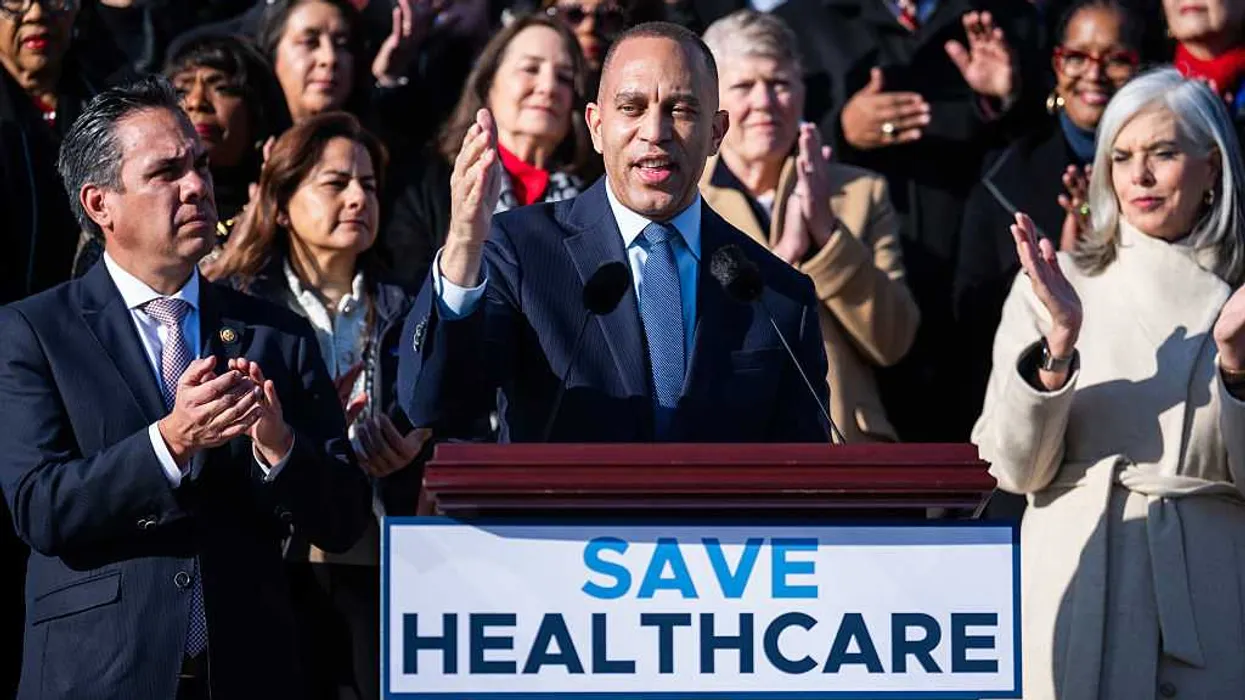
The failure of both Democrat and Republican plans to extend or partially replace enhanced Obamacare subsidies offers a clear lesson: Escaping an entitlement trap almost never happens.
Yes, the House of Representatives on Thursday voted to extend the COVID-era Affordable Care Act subsidies that expired at the end of 2025. Seventeen Republicans even joined a unanimous Democratic Caucus in voting for the extension. But Senate Majority Leader John Thune (R-S.D.) said Republicans have “no appetite” for an extension — at least not without reforms.
Republicans remain an impediment to the necessary reforms and are working hand in hand with Democrats to bring on economic collapse. Time is not on our side.
The reality is, once government creates a welfare entitlement, logic and sustainability exit the conversation. Politicians do not debate whether to grow the program. They argue only over how much to increase spending and how to disguise the costs. That pattern now governs the fight over enhanced Obamacare subsidies.
Why the premise never gets challenged
When the Senate rejected a nearly identical bill in December, the Wall Street Journal reported that Congress faces “no clear path for aiding millions of Americans facing soaring Affordable Care Act insurance costs next year.”
The Journal’s framing accepts the entitlement premise without question. It treats “aiding millions” as morally self-evident while ignoring the coercion necessary to fund that aid. Government assistance does not materialize from thin air. It transfers responsibility, money, and risk from one group of Americans to another.
Once imposed, that transfer only grows.
Both rejected plans would have sent more taxpayer money to insurers than the ACA already guarantees. With no deal in sight, the Journal observed last month that hope for extending the subsidies is fading. That assessment may be accurate politically, but an extension does not deserve hope. It deserves scrutiny.
How entitlement politics works
Democrats want Republicans to extend an expansion they never voted for of a program they never supported. Republicans respond by proposing modest adjustments to reduce political damage without challenging the underlying structure.
Rep. Max L. Miller (R-Ohio), who voted for the bill, summarized the dilemma perfectly. “I just want to make this abundantly clear: This is a Democratic piece of legislation. It is absolutely horrific. Now, it is the best alternative to what we have at the moment.”
That is how entitlement traps operate.
For decades, big-government advocates have followed a reliable strategy. They create a benefit for a defined group, allow costs to spiral, then dare the opposition to take something away from a newly entrenched constituency. When the moment arrives, those who claim to favor limited government retreat or propose cosmetic reforms that leave the core system untouched.
That dynamic explains why the country remains locked into the socialist ratchet, the uniparty routine, and a political class that acts as tax collector for an ever-expanding welfare state.
RELATED: Democrat senator makes stunning admission about Obamacare failures
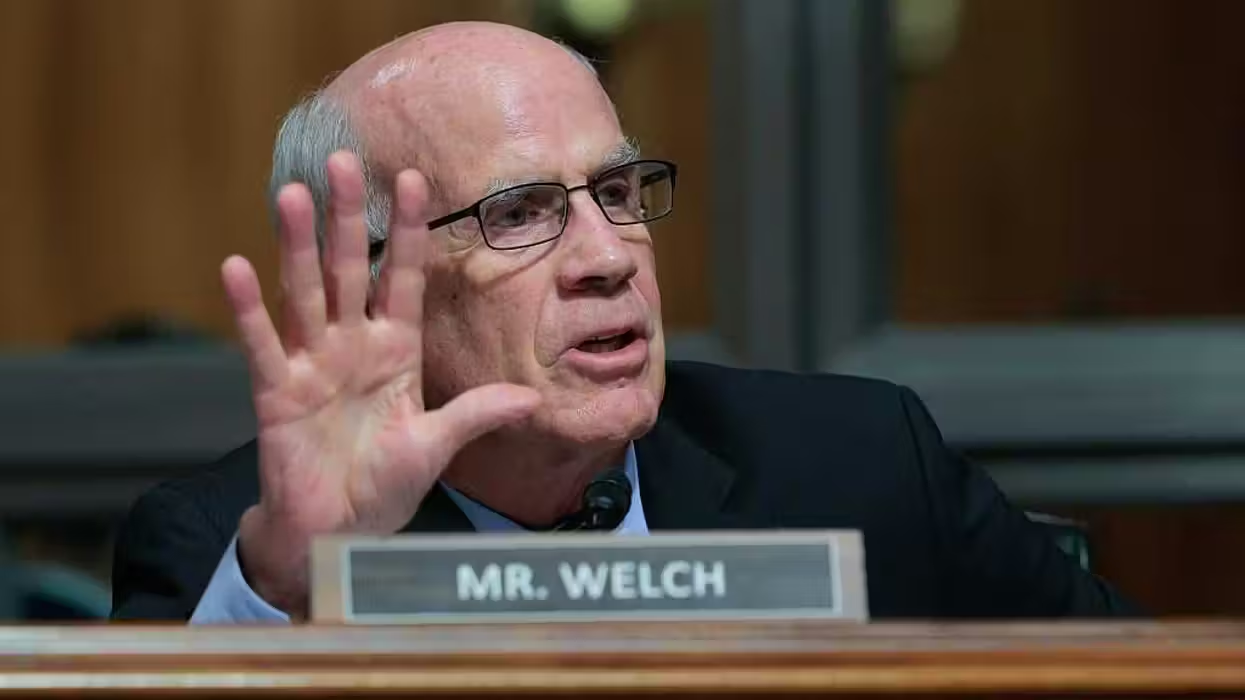 Photo by Chip Somodevilla/Getty Images
Trapped voters, trapped taxpayers
Entitlements squeeze the nation from both sides. They trap recipients by discouraging work and mobility, and they trap taxpayers by locking future governments into permanent obligations.
The Affordable Care Act stands as one of the most powerful modern examples of this system. The law forced millions into government-regulated insurance markets while guaranteeing insurers a growing pool of subsidized customers. The result was predictable: higher costs, deeper dependency, and a massive political constituency invested in permanent expansion.
Not a single Republican voted for the ACA. They understood what the law would do. Democrats passed it anyway, and it worked exactly as designed.
Who Obamacare was really built to serve
As Connor O’Keeffe has argued at Mises Wire, federal health care policy has long served industry interests. Government interventions channel money toward providers, pharmaceutical companies, and insurers under the guise of helping patients.
Obamacare accelerated that process by mandating coverage and expanding what insurers must provide, driving demand and cost growth in tandem. Once people rely on government assistance to afford insurance, any reduction becomes politically unthinkable.
Republicans now scramble to avoid electoral consequences. House Speaker Mike Johnson says the GOP will advance health care proposals without extending subsidies, yet many lawmakers privately admit that only an extension prevents immediate pain ahead of the 2026 midterms.
That admission exposes the trap. Spending limits become cruel. Taxpayer costs disappear from the conversation. Only the next premium increase matters.
Why conservatives keep losing
History explains where this leads. Entitlement debates almost always end with higher spending. Political power depends on payments to voters. Reducing benefits means losing elections.
Progressives act decisively when in power. Conservatives obsess over procedure and restraint, even as the administrative state grows unchecked.
Last week alone offered two examples. The House overturned President Trump’s March 2025 executive order blocking collective bargaining for over a million federal employees, with 20 Republicans joining Democrats. Even Franklin Roosevelt opposed public-sector unions. Modern conservatives could not summon the resolve to block them.
On the same day, Indiana Republicans declined to redraw their congressional map despite the risk of losing the House and triggering impeachment proceedings against Trump. They clung to unwritten norms while their opponents prepared to exploit the outcome.
RELATED: If conservatives will not defend capitalism, who will?
 Leontura via iStock/Getty Images
This pattern defines conservative failure. Republicans manage decline. They preserve a decaying system rather than reverse it.
Donald Trump broke from that habit. A former Democrat, he understands power. Win elections, then act. Trump restored a political energy absent on the right for decades.
His approach to entitlements focuses on restraining growth outside Social Security while expanding private-sector freedom to increase economic output. The goal is not austerity. It is to shrink government’s share of the economy by growing everything else faster.
Reform or collapse
That strategy may succeed or fail. It remains the only alternative to collapse. Without reform, federal spending and debt will overwhelm the system within a decade, possibly sooner. Borrowing costs will explode. Inflation will surge. Control will vanish.
The United States approached that danger under unified Democrat control and Joe Biden’s autopen in 2021 and 2022. Voters halted the slide by electing Republican majorities and returning Trump to the White House.
Trump failed to drain the swamp in his first term, largely because congressional Republicans refused to legislate when they had the chance. In his second term, he has advanced reforms through executive action. Congress has responded with delay and timidity.
The country will escape the entitlement trap one way or another. Reform can arrive through disciplined growth and economic expansion, or through collapse driven by massive overspending.
With their conservative approach to governance, Republicans remain an impediment to the necessary reforms and are working hand in hand with Democrats to bring on that collapse. Time is not on our side.
‘They Don’t Work With Us’: Tom Homan Defends Feds, And Not ‘Sanctuary’ Minnesota, Probing ICE Shooting
‘Now all of a sudden, they got an opinion’
Caregiving decisions begin in the bathroom
The holidays have a way of forcing conversations many families would rather postpone.
Every year, as adult children come home and aging parents gather around the table, familiar signs emerge. Someone struggles with stairs. Someone tires more easily. Someone forgets what was once routine. And with those observations come discussions caregivers know well.
The promise.
“I’ll never put Mom or Dad in a nursing home.”
It is often spoken years earlier, in healthier days, and always with sincerity. At the time, it feels like a declaration of love and loyalty. Assisted living seems distant, unnecessary, and meant for other families, not ours.
The problem is not the promise. The problem is that life keeps changing.
Circumstances change. Strength ebbs. What once worked may no longer work safely or wisely.
Over time, what began as devotion can quietly become more than one person can manage alone. Needs grow. Safety becomes a concern. Medical issues multiply. Caregivers often find themselves trying to do, by themselves, what normally requires trained professionals, proper equipment, and constant oversight.
At that point, the issue is no longer love or loyalty. It’s capacity.
That reality came into focus during a recent conversation with a friend. He had offered a small cottage on his property to help a friend relocate aging parents closer to family. The mother now uses a walker. The father has been her caregiver for years, but serious heart problems have begun to limit what he can safely do.
Still the conversation kept circling back to the same refrain: Neither would ever go into assisted living or a nursing home.
Their adult son is caught in the middle, trying desperately to make everyone happy. That is a fool’s task. In my work with fellow caregivers, I call this the caregiver FOG — fear, obligation, and guilt — because it blurs perspective, narrows options, and makes even familiar paths hard to see. No one wins.
It is like driving into actual fog. Visibility drops. Muscles tense. Judgment narrows. We try to peer miles ahead when we can barely see the hood of the car.
Every highway safety officer gives the same advice: Slow down, turn on the low beams, and stop trying to see five miles down the road.
Caregiving requires the same discipline.
My friend asked what I thought.
I suggested we lower the emotional temperature and start with one concrete issue.
Not the promise. Not the arguments. Not the guilt.
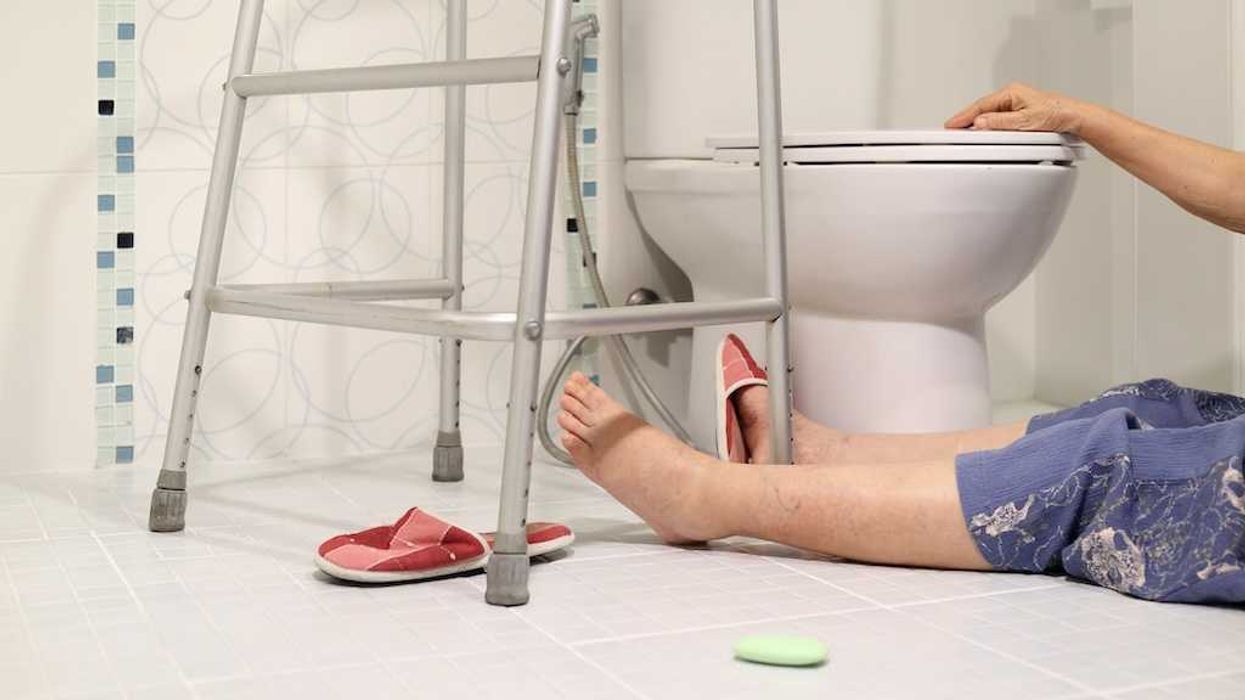
Start with the toilet.
Laugh if you like. It sounds abrupt. But it has a way of clarifying reality quickly.
RELATED: When the soul flatlines, call a ‘Code Grace’
 PeopleImages via iStock/Getty Images
The bathroom is often ground zero for caregiving challenges. If the toilet is not safe and accessible, the demands on the caregiver escalate immediately. Transfers become harder. Fatigue compounds. Falls become more likely.
Once the toilet is addressed, you move outward.
The shower. The bedroom. Doorways, lighting, entrances.
Sometimes modest changes are enough — grab bars, a raised toilet seat, a walk-in shower. None of these are exotic ideas. But determining needs honestly requires facing the limits of strength, balance, and endurance as they exist today, not as we wish they were.
While politicians and toilets often deal with similar subject matter, toilets remain refreshingly honest. They simply reveal what actually works.
When families do this, reality follows. Cost. Time. Budgets weighed against needs. Timelines measured against declining strength. What once felt like a moral standoff becomes a practical evaluation.
Fear, obligation, and guilt begin to loosen their grip. In their place come planning, stewardship, and direction.
This matters because emotional decisions often rush families into choices that create larger — and sometimes far more expensive — problems later. We see this dynamic everywhere, including politics. While politicians and toilets often deal with similar subject matter, toilets remain refreshingly honest. They do not respond to intentions, promises, or speeches. They simply reveal what actually works.
Families do not choose assisted living or nursing homes in the abstract. Toilets always have a seat at the decision table.
RELATED: Christian, what do you believe when faith stops being theoretical?
 fotojog via iStock/Getty Images
Surveys consistently show that most older Americans want to remain in their own homes as they age. That desire is sincere and understandable. But staying home without meaningful accommodations transfers an enormous burden onto the caregiver. The home may remain familiar, but the cost — physical, emotional, and relational — often rises exponentially.
Most promises are made sincerely. They are also made without a full understanding of how disease progresses, how bodies change, or how deeply caregiving reshapes everyone involved. Honoring a promise does not mean freezing it in time. It means continually asking how we can care well, given today’s realities.
Assisted living is not a surrender of care. In many cases, it is an extension of it. It allows families to return to being sons, daughters, and spouses, rather than exhausted amateur medical staff running on guilt and fumes.
We are not obligated to preserve every arrangement exactly as it once was. We are called to steward what has been entrusted to us — finances, time, energy, relationships, and the caregiver as well.
Circumstances change. Strength ebbs. What once worked may no longer work safely or wisely.
Important decisions are best made with clear heads, honest assessments, and wise counsel — not under the duress and resentment that so often accompany them. The days after the holidays are not a verdict. They are an invitation to slow down, think clearly, seek experienced guidance, and choose what is best not just for one individual but for the whole family.
The path forward is rarely determined by emotion, decades-old promises, or guilt.
More often, it is clarified by something far more unassuming — and far more truthful.
The appliance in the nearest bathroom.
Ted’s Excellent Adventures

It cannot be said that Theodore Roosevelt has suffered from historical neglect. Harvard’s collection of Rooseveltiana boasts 14,000 works by or about the man. A casual perusal of Amazon’s Top 100 Audiobooks on Presidents and Heads of State turns up no fewer than 10 dealing with TR, more than any of the executive fraternity with whom he shares Mount Rushmore. A celebratory Roosevelt biography by Fox News anchor Bret Baier is currently ensconced on the New York Times bestseller list.
The post Ted’s Excellent Adventures appeared first on .