

Category: Conservative Review
McRib fake-out? Sticky lawsuit claims no ‘actual pork rib meat’ in fan-favorite McDonald’s menu item
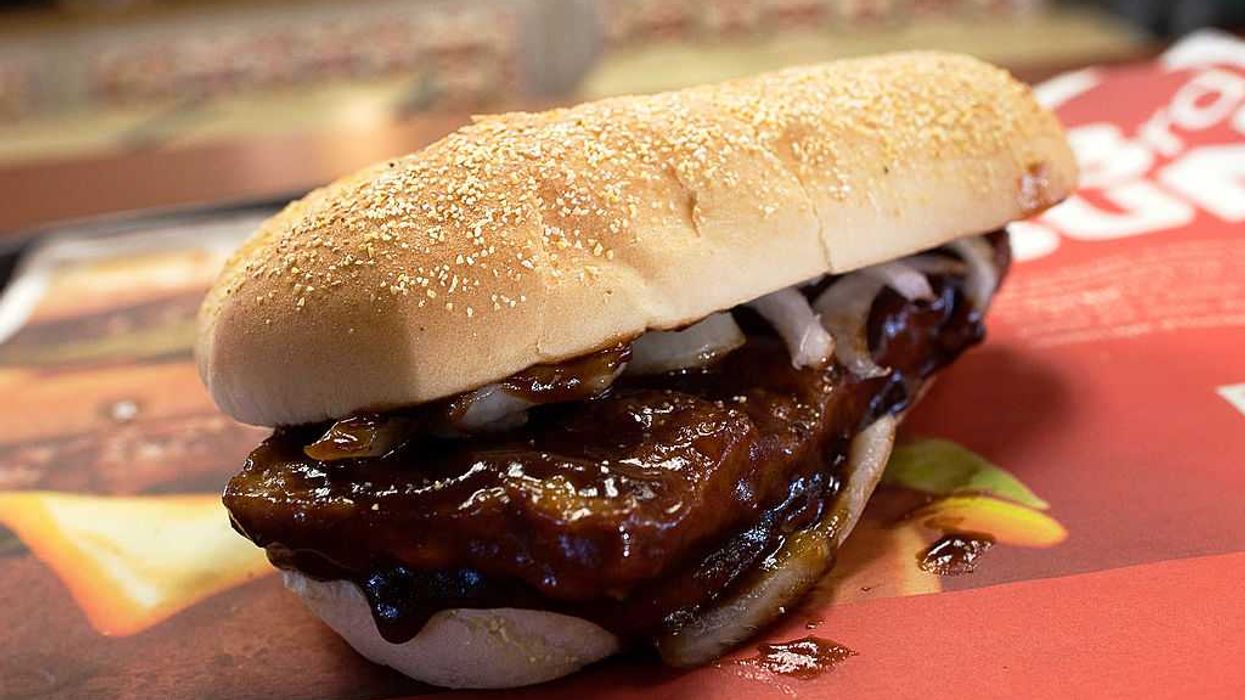
A class-action lawsuit filed last month is challenging McDonald’s over a cult-favorite menu item, the McRib.
The lawsuit, filed on December 23 in U.S. District Court in Chicago, alleges that McDonald’s engaged in false advertising when promoting the limited-time menu item.
‘We’ve always been transparent about our ingredients so guests can make the right choice for them.’
The four plaintiffs in the complaint are Peter Le of Baldwin Park, California; Charles Lynch of Poughkeepsie, New York; Darien Baker of Chicago, Illinois; and Darrick Wilson of Washington, D.C.
RELATED: McDonald’s team admits workload on hated AI Christmas ad ‘far exceeded’ live-action shoots
 Photo by David Paul Morris/Getty Images
The complaint claims that the McRib “does not contain any meaningful quantity of actual pork rib meat — indeed, none at all.” The plaintiffs claim that the fast-food chain uses lower-quality cuts of meat instead of rib meat, including, “inter alia, pork shoulder, heart, tripe or scalded stomach.”
In December 2024, when the McRib was available, the complaint shows that the McRib was one of the most expensive individual items on the menu, even exceeding the price of a Big Mac on average.
As a result, had they “known that the McRib did not contain any actual pork rib meat, [the plaintiffs] would not have purchased the McRib or would only have purchased it for a lower price.”
In a statement obtained by CBS News, McDonald’s USA said, “This lawsuit distorts the facts, and many of the claims are inaccurate. Food quality and safety are at the heart of everything we do — that’s why we’re committed to using real, quality ingredients across our entire menu. Our fan-favorite McRib sandwich is made with 100% pork sourced from farmers and suppliers across the U.S. We’ve always been transparent about our ingredients so guests can make the right choice for them.”
CBS also reported that McDonald’s denied the specific claim that the McRib contains pork hearts, tripe, or scalded stomach and that the company said the McRib has a base of 100% seasoned boneless pork.
The complaint emphasizes that the marketing for the McRib was “materially misleading” for consumers, potentially affecting their purchasing decisions.
The McRib was first introduced in Kansas City in 1981.
Like Blaze News? Bypass the censors, sign up for our newsletters, and get stories like this direct to your inbox. Sign up here!
GOP Lawmaker Suddenly Passes Away, Narrowing House Majority Even Further
Republican California Rep. Doug LaMalfa died at 65 on Tuesday, according to multiple reports. LaMalfa represented the Golden State’s 1st Congressional District since 2013 and chaired the Congressional Western Caucus. His district was one of the seats gerrymandered in 2025 by California’s Prop 50. The lawmaker’s death now leaves the House Republicans with 218 seats […]
After Making Money On ‘America 250,’ The NFL Will Go Back To Hating The USA

 Any patriotism on display by the NFL over the next few months will be, at best, a bait and switch.
‘Julia,’ son of wealthy Democrat donor, identified as suspect in Vance home attack

The 26-year-old man who allegedly attacked the Cincinnati home of Vice President JD Vance early Monday morning appears to be yet another radical transvestite.
Just hours after the vice president concluded his visit to the city and departed for the national capital, a suspect armed with a hammer was spotted by U.S. Secret Service agents running along the front fence, then breaching the perimeter of Vance’s Ohio house.
‘As far as I can tell, a crazy person tried to break in.’
The U.S. Attorney’s Office in Cincinnati indicated in a release that the suspect, William DeFoor, was ordered to stop and drop the hammer after he allegedly attempted to break the window of a USSS vehicle blocking the driveway entrance. DeFoor allegedly refused to comply and proceeded to smash the front windows of Vance’s house — windows apparently equipped with “enhanced security assets.”
After reportedly inflicting over $28,000 in damage, the suspect attempted to flee the scene on foot but was swiftly captured by USSS agents and Cincinnati police officers.
William DeFoor was initially charged with criminal trespass, criminal damaging or endangering, obstructing official business, and felony vandalism. He has since been slapped with several federal charges: damaging government property, engaging in physical violence against any person or property in a restricted building or grounds, and assaulting, resisting, or impeding federal officers.
Vance noted in a statement on Monday: “As far as I can tell, a crazy person tried to break in by hammering the windows.”
The vice president appears to have been right on the money.
RELATED: ‘Something historic’: CNN analyst GOBSMACKED by how Vance polls against Nikki Haley, others
 Photo by Oliver Contreras-Pool/Getty Images
On social media, DeFoor — whom law enforcement identified as a male — appears to go by the name Julia.
A Facebook profile that appears to belong to the suspect claims that DeFoor, identified as Julia, is a student at Cincinnati State Technical and Community College who previously studied at the University of Cincinnati’s College-Conservatory of Music and attended the Summit Country Day School, a private high school where he made the list of candidates for the U.S. Presidential Scholars Program in 2018.
DeFoor’s account appears to have liked the Cincinnati-based leftist group Coalition for Community Safety as well as the trans advocacy group Heartland Trans Wellness.
FBI sources told Fox News that the suspect demanded to be called “Julia” at the time of his arrest.
Court documents indicate that DeFoor pleaded guilty in April 2025 to two counts of vandalism after he inflicted over $2,000 in damage upon an Ohio interior design company, reported WXIX-TV. DeFoor was sentenced to two years of treatment at a mental health facility and ordered to pay $5,550 in restitution.
In 2023, DeFoor was reportedly charged with trespassing at UC Health psychiatric emergency services but ultimately was found mentally incompetent to stand trial.
DeFoor’s father, identified by the New York Post as William DeFoor, appears to be an affluent pediatric urologist who works as a professor at the University of Cincinnati’s College of Medicine. Among his top research interests is pediatric genitourinary reconstruction. His bio on the Cincinnati Children’s Hospital website states that he is an elder in his church, is married to a general pediatrician, and has three teenage children.
Blaze News has reached out to the professor for comment.
Dr. DeFoor is a longtime Democrat donor who sank thousands of dollars into Kamala Harris’ first and second failed presidential campaigns and thousands of dollars into former President Joe Biden’s presidential campaigns.
Like Blaze News? Bypass the censors, sign up for our newsletters, and get stories like this direct to your inbox. Sign up here!
Mamdani Is Making Democrats’ Communist Fantasies Come True
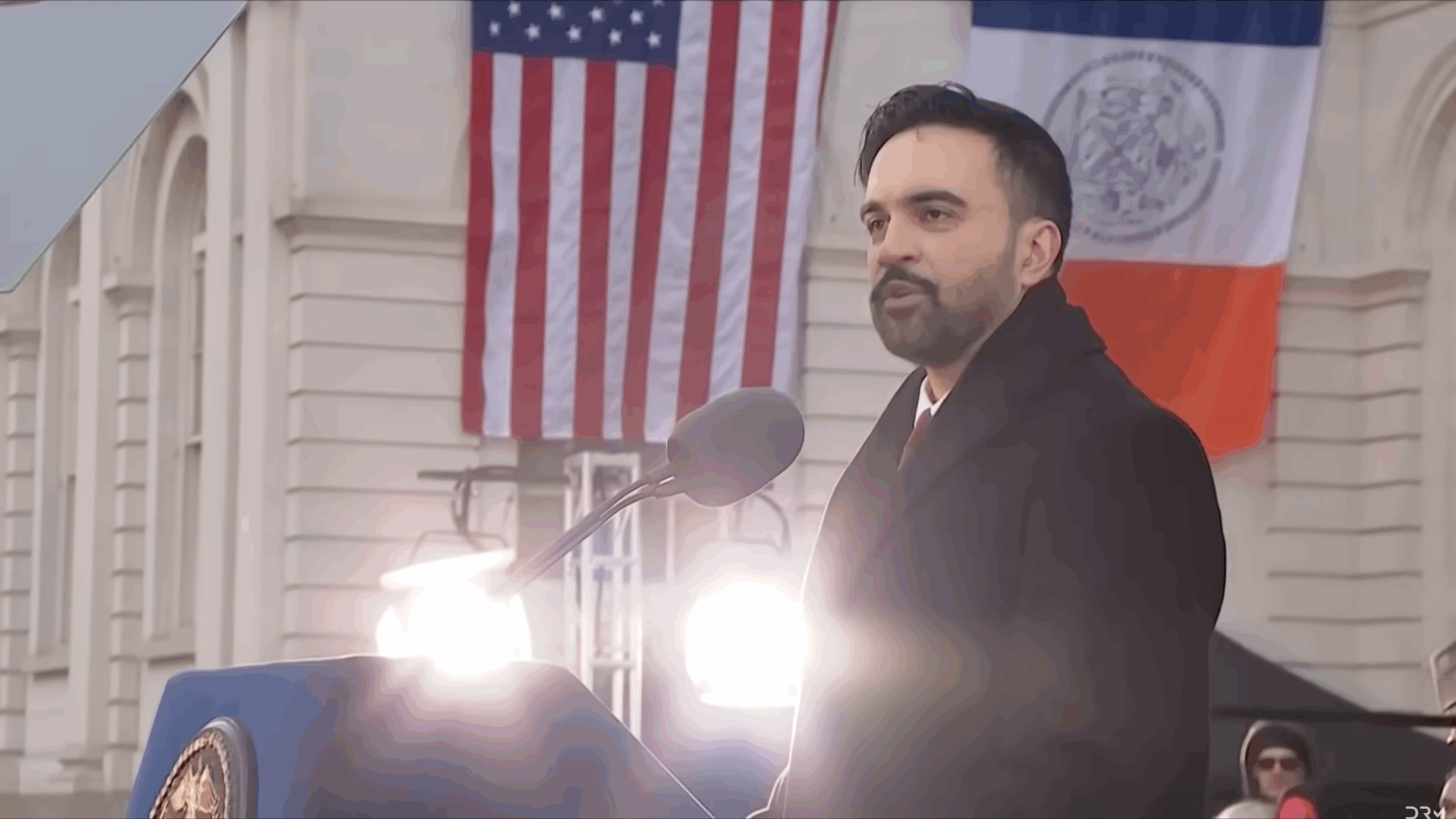
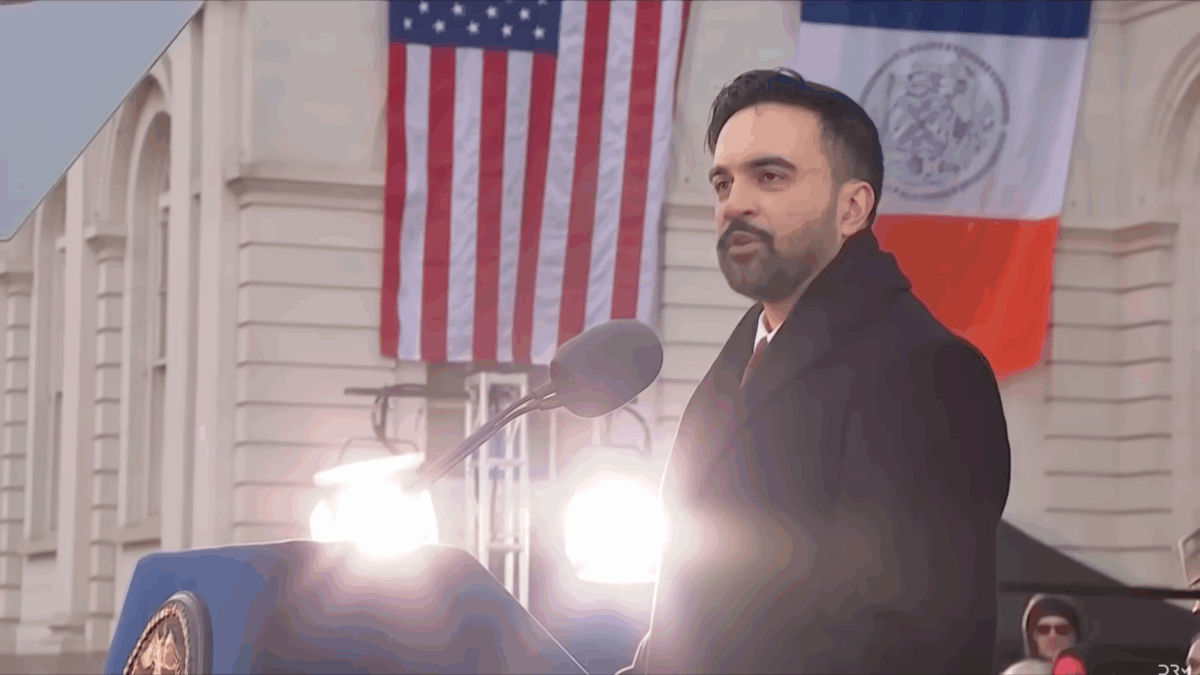 Mamdani is openly embracing Marxism and staffing his administration with people hostile to the fundamental principles of the republic.
Video shows wild car chase after police rescue 11-year-old from alleged kidnapper who tortured him at campsite

A harrowing video showed a wild police chase after a routine traffic stop that led to the rescue of an alleged kidnapping victim and the arrest of his kidnapper in Florida.
The Flagler County Sheriff’s Office said deputies pulled over a white Ford F-150 on U.S. Highway 1 on Wednesday after a 911 caller reported suspicious activity. They found a 60-year-old man identified as Darnell Hairston with two male juveniles.
‘A caller that knew his background as a sex offender with two children in his pickup truck called us. And if it wasn’t for that, we might be investigating a completely different crime.’
When deputies separated an 11-year-old boy, he told them he had been kidnapped by Hairston and feared for his life.
“He told us that he thought they were going to kill him,” Flagler County Sheriff Rick Staly said.
Police video showed deputies taking down the man before the other juvenile passenger, a 15-year-old boy, got into the truck and fled from the scene. He comes within inches of driving over one officer’s feet. When police followed the vehicle, he rammed one cruiser before crashing the truck.
The 11-year-old had been missing for three days and was treated at a hospital, according to police.
He allegedly told police that he had been lured to a wooded campsite at Flagler Estates, where he was choked unconscious. When he regained consciousness, he was gagged with duct tape and tied with an extension cord and shoelaces. He also said he was threatened with a knife and firearm.
The boy was forced to hide under a blanket on the floorboard of the truck while being transported, according to investigators.
Search warrants performed on the man’s vehicle, his residence, and the campsite led to the recovery of duct tape, weapons, and video surveillance equipment. Police said these were consistent with statements given by the victim.
Investigators said the two juveniles were in a Snapchat group where the 11-year-old was warning others about Hairston being a sexual predator.
Video of the traffic stop was posted to the sheriff’s office Facebook account.
Hairston was eventually charged with kidnapping of a child under 13, aggravated child abuse, battery by strangulation, and robbery with a deadly weapon. He had been initially arrested for attempting to disarm a law enforcement officer and resisting arrest.
The 15-year-old boy was placed into the custody of the Florida Department of Juvenile Justice. He faces multiple charges and is being investigated as a possible co-conspirator.
Hairston is being held without bond at the Sheriff Perry Hall Inmate Detention Facility and may face additional charges.
“A caller that knew his background as a sex offender with two children in his pickup truck called us,” Staly said. “And if it wasn’t for that, we might be investigating a completely different crime.”
Like Blaze News? Bypass the censors, sign up for our newsletters, and get stories like this direct to your inbox. Sign up here!
Iran’s Supreme Leader Prepared To Flee to Moscow if Regime Loses Control
Iran’s supreme leader Ali Khamenei has prepared an escape plan to flee Tehran and seek refuge in Moscow if unrest inside the country spirals beyond the regime’s control, according to an intelligence report shared with the Times of London.
The post Iran’s Supreme Leader Prepared To Flee to Moscow if Regime Loses Control appeared first on .
The Toppling of Villains Has Begun in Earnest. It Must Continue.
A little while ago, I had a column in this space that challenged the groupthink wisdom that assumes 2026 is…
In 2026, All Bets Are Off
Predictions are often wrong. Nobody has a crystal ball they can look into to predict what will happen this year,…





