Category: Religion
How Jesus’ Final Words Affirm The Humanity Of The Unborn
 This Good Friday, may we all hear the psalm Jesus quoted on the cross with new ears.
Critically ill ‘The Blind Side’ star shows signs of recovery; family credits power of prayer

A beloved Christian actor is showing possible signs of recovery while in hospital on life support.
Quinton Aaron starred in “The Blind Side,” a movie with Sandra Bullock about Michael Oher, a homeless and traumatized boy who is taken in by a Christian family and becomes a first-round NFL draft pick.
‘I grew up in the church. I was raised in the church.’
In real life, Aaron’s wife, Margarita, said she rushed the 41-year-old to the hospital after he lost feeling in his legs. The issues were initially thought to be from a bad sleep, but pain persisted in Aaron’s neck and back until he became numb.
His wife is a registered nurse, and she helped him lie down before calling 911. The big man — reportedly around 6’6″ — was in and out of consciousness on the way to hospital.
Doctors allegedly determined after several tests that he had a blood infection and recommended he be put on life support, according to TMZ.
A ‘fighter’
After initial reports looked grim, the outlet explained that Aaron was partially breathing on his own until Monday, when he “opened his eyes today and gave a thumbs-up,” his wife said.
Describing her husband as “a fighter,” Margarita had previously said, “He’s showing a lot of improvement. We all have faith in God that he will walk out of here fully recovered.”
Aaron had been dealing with health issues last March, according to E News. He was hospitalized after experiencing a bloody cough coupled with a fever and was told he was likely dealing with Type A flu and pneumonia.
In 2019, he was also admitted to a hospital for an upper respiratory infection and bronchitis.
Man of faith
The man of faith was interviewed by Blaze News in 2013 when he said, “I grew up in the church. I was raised in the church.”
“I do believe in showing more so than having to say. I feel like if I live the Christian life, then the people should be able to see it in my everyday actions.”
RELATED: Matthew McConaughey: Choose God and family, not ‘participation trophies’
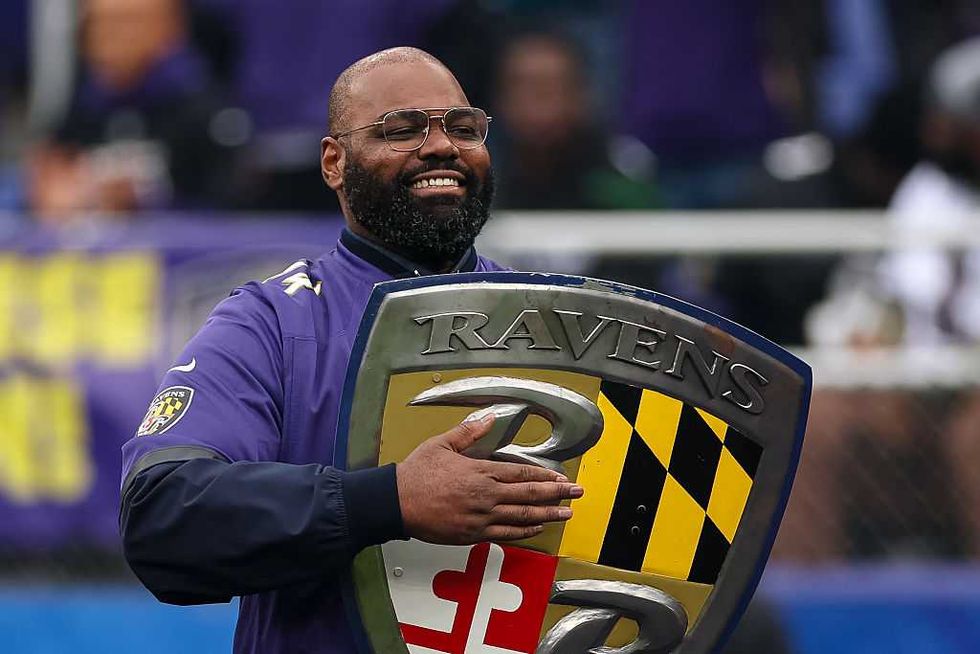 Photo by Scott Taetsch/Getty Images
Outspoken Christian
Aaron has been outspoken about being a Christian in Hollywood. In a 2017 interview, he noted that many people in the film industry are “not very charitable” unless it benefits them.
“I’ve noticed that, especially with friends in Hollywood, if you want to keep a friend, don’t ask them for anything. I tell people all the time, I say, ‘The moment you ask for a favor, you’re probably never going to hear from them again,'” he explained.
“They may grant that favor, but don’t plan on asking for another one,” the actor added.
Oher, whom Aaron portrayed in the 2009 film, had eight seasons in the NFL, five of which were with the Baltimore Ravens.
Like Blaze News? Bypass the censors, sign up for our newsletters, and get stories like this direct to your inbox. Sign up here!
Who’s Afraid of the Ten Commandments?
On Tuesday, the full, 17-judge U.S. Court of Appeals for the Fifth Circuit heard consolidated oral arguments in a crucial…
New York Times Hiring a Reporter To Cover US Jews
The New York Times, whose executive editor a decade ago publicly acknowledged, “We don’t get the role of religion in people’s lives,” and which has been afflicted with a series of errors on basic matters of Jewish literacy everywhere from the crossword puzzle to the food section, is now hoping to hire a reporter who knows something about Judaism.
The post New York Times Hiring a Reporter To Cover US Jews appeared first on .
New York Times Hiring a Reporter To Cover US Jews
The New York Times, whose executive editor a decade ago publicly acknowledged, “We don’t get the role of religion in people’s lives,” and which has been afflicted with a series of errors on basic matters of Jewish literacy everywhere from the crossword puzzle to the food section, is now hoping to hire a reporter who knows something about Judaism.
The post New York Times Hiring a Reporter To Cover US Jews appeared first on .
Biden’s faith attacks backfire: Support for religious liberties soars to record high under Trump, new report shows
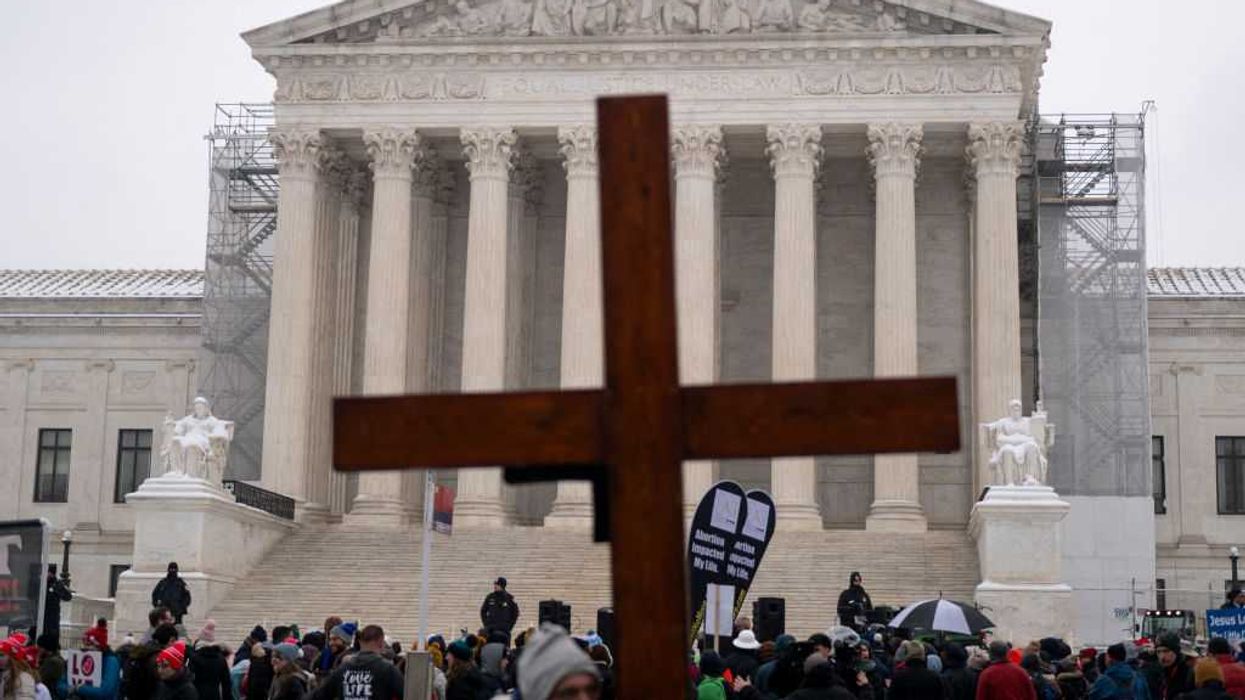
Against a backdrop of mounting attacks on churches, the Biden administration worked ardently to curb religious liberties wherever they came into conflict with the left’s radical agenda.
For example:
- the Biden Equal Employment Opportunity Commission implemented a rule requiring employers — including Christian organizations — to accommodate workers’ efforts to abort their unborn children;
- the EEOC attempted to force Christians to pay for employees’ sex-rejection mutilations;
- the Biden Department of Health and Human Services attempted to bar Christian providers who hold biblical and scientifically grounded views about sex and marriage from the foster-care system; and
- under Biden, a Catholic, the FBI characterized conservative Catholics as potential domestic terrorists and proposed to infiltrate Catholic churches as “threat mitigation.”
It’s clear from the Becket Fund for Religious Liberty’s latest Religious Freedom Index that unlike the administration voted out of power in 2024, the American people overwhelmingly — and increasingly — support religious liberties.
‘Our nation still believes that our first freedom belongs at the heart of our culture; not as a source of conflict, but as a foundation for overcoming it.’
Over the past six years, Becket has tracked public opinion on religious freedom. The legal group’s index for 2025 published on Friday registered the highest cumulative score for public support of religious freedom to-date — 71 on a scale from 0 to 100 where 0 indicates complete opposition to religious liberty and 100 indicates robust support.
This amounts to a dramatic shift, especially when compared to 2020, when the composite score was 66.
Whereas in 2020, 52% of respondents agreed that religious freedom is inherently public and that Americans should be able to share their faith in public spaces, that number jumped to 57% in the latest RFI.
There was an even bigger shift when it came to support for parents’ ability to opt out of public school curricula they believe to be inappropriate — a jump from 63% in 2021 to 73% in 2025.
RELATED: 6 ways I’m using 2026 to deepen my relationship with God
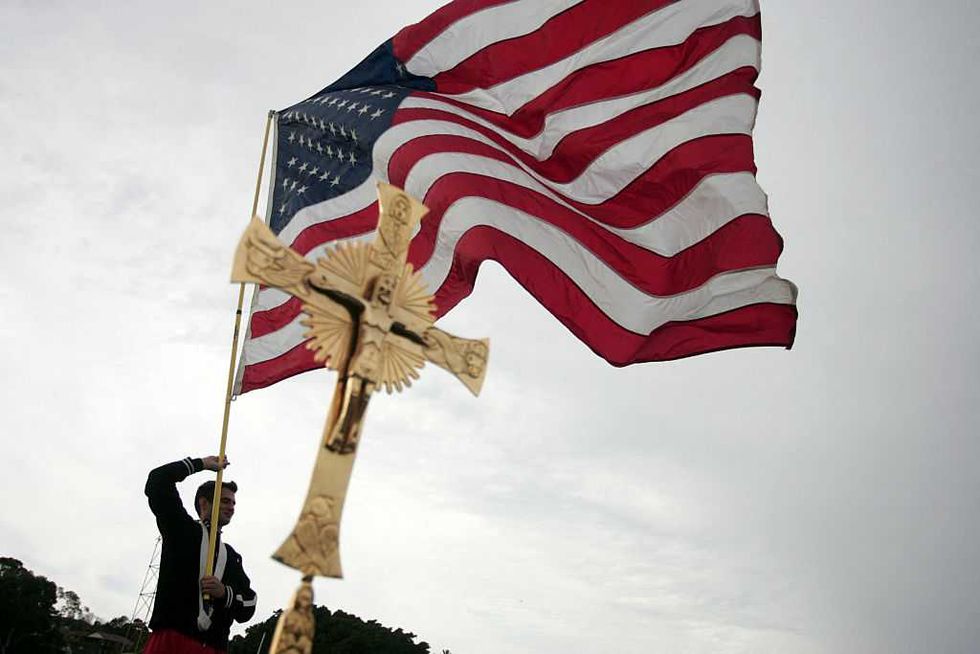 Photo by ANOEK DE GROOT/AFP via Getty Images
When asked specifically about the Supreme Court’s June 2025 ruling in Mahmoud v. Taylor, 62% of respondents signaled support for the high court’s decision to side with the Maryland parents who wanted to protect their children from LGBT propaganda in Montgomery County Public Schools.
On the question of whether public funding for education should be available to all families, including those who choose religious schools, 77% of respondents said they were mostly or completely in favor.
The report noted that “although this year’s Index found that Americans have cooled on the benefits of religion to society and are skeptical of institutions, they unify around the simple principles of religious freedom for all, even in difficult cases that invite scrutiny or controversy.”
A clear majority, 58%, of Americans said they support the right of a Christian baker to decline to make cakes that conflict with her sincere religious views.
Sixty-one percent of respondents said that the First Amendment’s guarantee of the free exercise of religion should protect Catholic priests from having to break the seal of confession as would have been required by Washington state Democrats’ now-enjoined Senate Bill 5375.
There was markedly less support for the Christian counselor in the case Chiles v. Salazar who challenged Colorado’s prohibition on so-called “conversion therapy” for non-straight youth. Only 47% expressed support for her ability to provide talk therapy to children to help them overcome their gender dysphoria.
“Year after year, the Index has made clear that religious liberty remains one of our most cherished values,” Mark Rienzi, president and CEO of Becket, said in a statement obtained by Blaze News.
“Even amid deep divisions, our nation still believes that our first freedom belongs at the heart of our culture; not as a source of conflict, but as a foundation for overcoming it,” continued Rienzi. “The work before us is to see that freedom protected for our children and theirs in the years to come.”
Like Blaze News? Bypass the censors, sign up for our newsletters, and get stories like this direct to your inbox. Sign up here!
‘Argument accepted’: Dying ‘Dilbert’ creator and Trump ally Scott Adams says he’s becoming a Christian
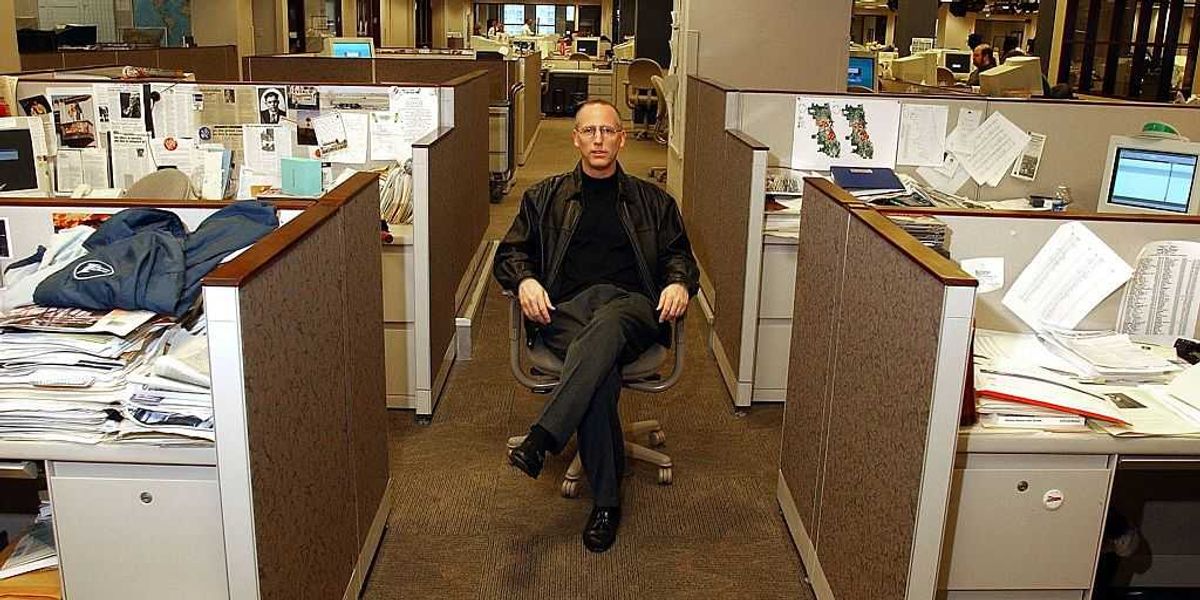
Scott Adams, the creator of the “Dilbert” comic strip and a frequent defender of President Donald Trump, revealed in May 2025 that he had been diagnosed with prostate cancer, it had metastasized to his bones, and he was not long for this world.
“The disease is already intolerable,” said Adams. “So if you’re wondering, ‘Hey Scott, do you have any good days?’ Nope. Nope. Every day is a nightmare, and evening is very worse.”
‘What happens next is between me and Jesus.’
While Adams had run out of good days, good news was on the horizon.
The 68-year-old cartoonist revealed on the Sunday episode of his show, “Real Coffee with Scott Adams,” that he is converting to Christianity.
In November, Adams requested Trump’s help in securing the prostate cancer drug Pluvicto for which his health care provider had apparently approved his application but “dropped the ball in scheduling the brief IV to administer it.”
Trump and members of his administration indicated they were “on it” and apparently intervened on the cartoonist’s behalf. However, Adams’ potentially life-changing treatment was postponed last month on account of his radiation treatment.
Last week, Adams noted on his show that “the odds of me recovering are essentially zero.”
In addition to suffering paralysis below the waist, Adams indicated that he is struggling to breathe on account of ongoing heart failure.
Days after telling his audience that January will probably be “a month of transition one way or the other,” Adams made clear on Sunday that the imminent changes in his life were not all of a medical nature.
RELATED: Christian, what do you believe when faith stops being theoretical?
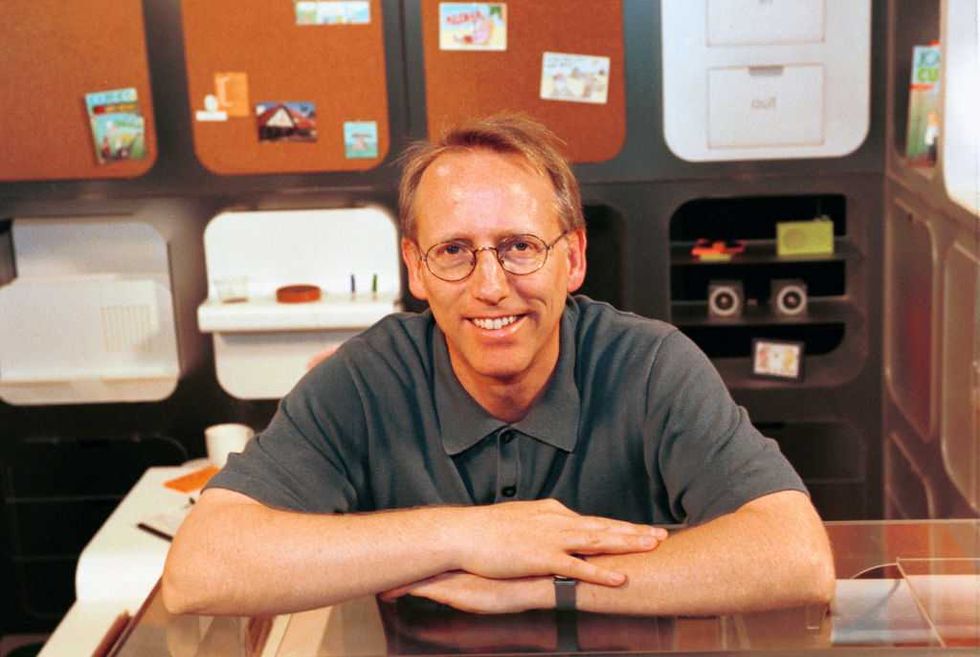 Photo by Bob Riha, Jr./Getty Images
“Many of my Christian friends and Christian followers say to me, ‘Scott, you still have time. You should convert to Christianity.’ And I usually just let that sit because that’s not an argument I want to have,” said Adams. “I’ve not been a believer. But I also have respect for any Christian who goes out of their way to try to convert me because how would I believe you and believe your own religion if you’re not trying to convert me?”
‘You’re never too late.’
Evidently the efforts of Adams’ friends were not in vain.
“You’re going to hear for the first time today that it is my plan to convert,” said Adams. “So I still have time. But my understanding is you’re never too late. And on top of that, any skepticism I have about reality would certainly be instantly answered if I wake up in heaven.”
Adams — who has long wrestled with questions about God and has been critical both of religion and atheism in his writing — notified his Christian friends that he does not require any more apologetics and has embraced what appears to be Catholic philosopher Blaise Pascal’s argument for believing in God.
“I am now convinced that the risk-reward is completely smart. If it turns out that there’s nothing there, I’ve lost nothing but I’ve respected your wishes, and I like doing that,” said Adams. “If it turns out there is something there and the Christian model is the closest to it, I win.”
“Argument made, argument accepted,” added Adams.
In the wake of his announcement, Adams wrote on X that while he appreciates the outpouring of support and questions, “What happens next is between me and Jesus.”
Like Blaze News? Bypass the censors, sign up for our newsletters, and get stories like this direct to your inbox. Sign up here!
Pope Leo calls out gambling addiction and ‘demographic crisis’ in Vatican meeting
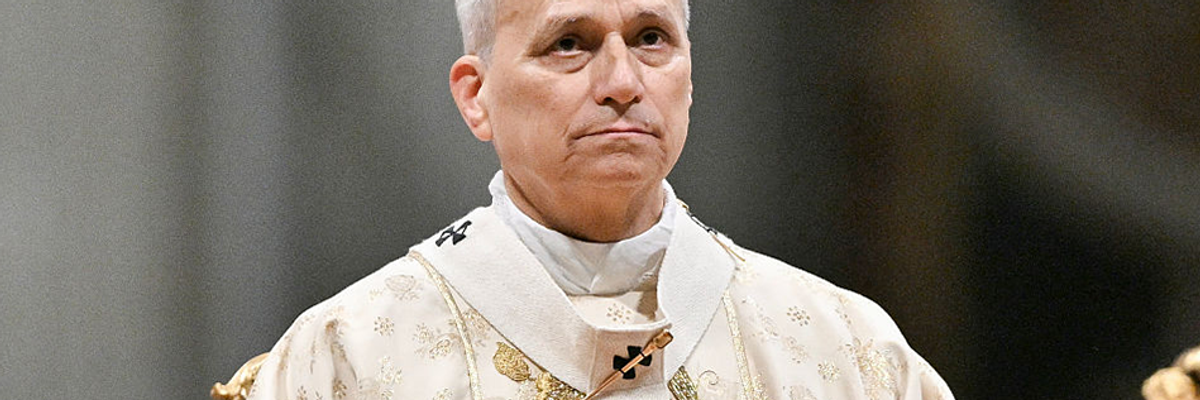
Pope Leo XIV says people need more face-to-face interaction in their lives.
Speaking with Italian mayors from the association of local Italian authorities, the Assocazione Nazionale dei Comuni Italiani, the pope touched on some of the biggest issues faces the world today.
‘Democracy atrophies, becomes just a name, a formality.’
During the Vatican meeting, Pope Leo noted that a “demographic crisis” and “struggles” among families and young people remain top issues. According to Vatican News, the Catholic leader also stated that social isolation and “social conflicts” are pervasive issues in Italy.
At the same time, the pope — Robert Francis Prevost — said he wanted to focus on one of the biggest topics in today’s world: gambling. The Chicago native explained that he wanted to “draw attention in particular to the scourge of gambling,” which has “ruined many families.”
Citing a “major increase” in gambling in Italy in recent years, Prevost cited a recent report that described gambling as a “serious problem” in terms of education, mental health, and societal trust for Italians.
RELATED: New York Archbishop Timothy Dolan resigns; pope appoints his replacement
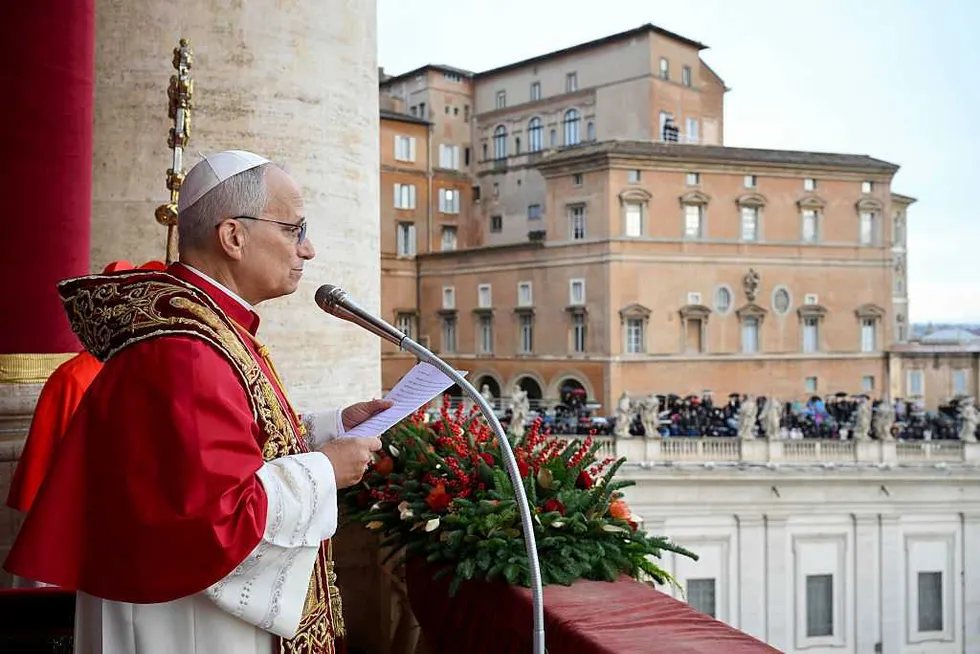 Photo by Simone Risoluti – Vatican Media via Vatican Pool/Getty Images
The pope stressed that gambling addiction is a form of “loneliness” and called on the local mayors to promote “authentically human relationships between citizens” as a way to tackle the issue.
Pope Leo reportedly drew from 20th-century Italian priest and activist Don Primo Mazzolari in order to illustrate the need for social interactions between Italians.
“[Italy] does not only need sewers, houses, roads, aqueducts, and pavements,” but also “a way of feeling, of living, a way of looking at one another, and a way of coming together as brothers and sisters.”
 Photo by Jacopo Raule/Getty Images for Philipp Plein
To solve many of these modern issues, authorities must listen to the weak and the poor, the pope said. If not, he said, “democracy atrophies, becomes just a name, a formality.”
Like Blaze News? Bypass the censors, sign up for our newsletters, and get stories like this direct to your inbox. Sign up here!
Christian children’s movie ‘David’ beats out ‘Spongebob’ and Sydney Sweeney in box-office shock
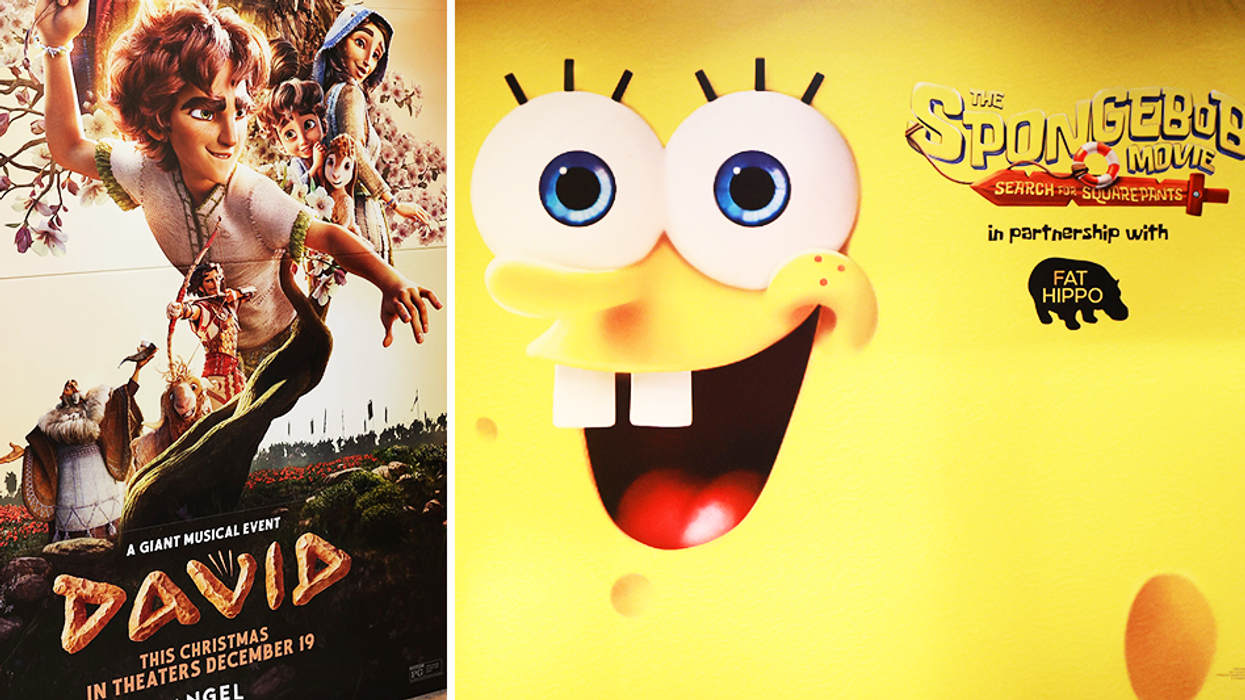
A faith-based children’s movie is making waves just before Christmas.
“David,” an animated Christian musical about the story of David versus Goliath performed valiantly up against some monstrous titles over the weekend.
‘David’ is now the second-biggest blockbuster for Angel Studios, the studio that brought ‘Sound of Freedom’ to theaters.
In a field dominated by animated pictures, “David” managed to outperform both “The SpongeBob Movie: Search for SquarePants” and “Zootopia 2.”
Spice rack
While “Zootopia 2” took in just $14 million, that figure comes with a huge asterisk, as it has already been in theaters for a month with more than $1 billion taken in worldwide. However, “David” can relish the fact that it outperformed the beloved SpongeBob character as well as Sydney Sweeney’s new movie “The Housemaid” on their opening weekends.
SpongeBob made $16 million, according BoxOffice Pro, while “The Housemaid” garnered a respectable $18.95 million. At the same time, “David” shocked the media with just over $22 million in its opening, according to Box Office Mojo.
RELATED: ‘Kevin Costner Presents: The First Christmas’ brings scriptural authenticity to Nativity story
While SpongeBob has an established (but aging) fan base, controversy around the film came just ahead of the release when one of its voice actors, rapper Ice Spice — real name Isis Naija Gaston — attended the premiere in a revealing outfit.
The mostly transparent lingerie the rapper wore on the red carpet may have been a factor in parents’ choice of which film was most suitable for their children.
Blue Christmas
“David” is now the second-biggest blockbuster for Angel Studios, the studio that brought “Sound of Freedom” to theaters. The movie about child trafficking went viral online in terms of publicity and took in more than $250 million worldwide. No other film on the studio’s roster has made more than $21 million before “David.”
None of these movies could touch the No.1 film of the weekend, though: James Cameron’s “Avatar: Fire and Ash,” the third in the franchise. It took home a whopping $88 million, more than second through fourth place in the box office combined.
Two more “Avatar” films are set for release, in 2029 and 2031.
RELATED: ‘Matrix’ co-creator: ‘Trans rage’ drives my work
 Photo by Jason Mendez/Getty Images for Paramount Pictures
Wrung out
Also to be considered is the SpongeBob franchise’s flailing numbers.
The first movie in 2004 had a promising opening weekend of $32 million, later drawing $142 million worldwide against a budget of $30 million, per the Numbers.
In 2015, the next film in the franchise took a $74 million budget and, despite making just $55 million in its opening weekend, ended up making over $300 million.
In 2020, though, “The SpongeBob Movie: Sponge on the Run,” with a $60 million budget, drew just $865,824, likely due to COVID-19 restrictions, and made just over $4.8 million at the end of the day.
Now, with an alleged $64 million budget, according to Variety, Paramount may have cause for worry, with double the budget producing half what original film did in 2004. Then again, the studio may have streaming numbers in mind, instead.
Make Mass Great Again
This Thursday is sure to see packed pews where they may otherwise sit empty. Catholics who regularly attend Mass might find themselves seated next to a CEO—not a “Chief Executive Officer,” but a “Christmas and Easter Only” Catholic. Protestant and Catholic churches alike advertise their times of worship for Christmas, expecting crowds too large to accommodate in one service. But this is not how it should be, according to Robert Cardinal Sarah. Instead, these churches should be full every weekend with reverential, traditional worshippers.
The post Make Mass Great Again appeared first on .