Category: Religion
How anti-fascism became the West’s civil religion

At the end of World War II, much of the West stood in ruins. Europe’s great powers were shattered, millions were dead, and political leaders searched for a framework that would prevent another civilizational collapse. What emerged was what R.R. Reno later described as the “postwar consensus”: an elite agreement to reorganize Western society around a single overriding moral imperative — never again allow a figure like Adolf Hitler to rise.
Anti-fascism became the West’s civil religion. This was understandable in the immediate aftermath of the war. Nazi Germany’s atrocities demanded more than mere condemnation. But over time, anti-fascism ceased to function as a historical judgment and instead hardened into a permanent moral framework. In the process, it began to distort politics, hollow out institutions, and undermine the concept of the nation itself.
The longer conservatives wait to make reasonable corrections, the more radical — and likely authoritarian — the eventual correction will be.
Anti-fascism served a second, less acknowledged function. The United States and its allies had partnered with the Soviet Union to defeat Hitler. That alliance was strategically necessary but morally grotesque. Communist regimes starved millions, persecuted Christians, liquidated entire classes, and carried out ethnic cleansing on a scale easily outstripping the Nazis.
To sustain the moral legitimacy of the postwar order, Nazism had to remain the singular, unrivaled evil of modern history. Any serious moral accounting risked an intolerable conclusion: that the West had joined forces with a regime at least as monstrous as the one it defeated.
Because communism retained elite defenders in academia, media, and politics, fascism became the only ideology that could be universally condemned. Conservatives opposed both, but liberals embraced or excused communism. Anti-fascism thus became the sole moral language the entire ruling class could share.
That imbalance persists. Public figures openly describe themselves as socialists or communists without consequence. Communist symbols appear on clothing and merchandise, sometimes celebrated as ironic rebellion. Fascism alone remains socially radioactive.
The power of taboo
This asymmetry transformed the definition of fascism into a weapon.
Anything directly associated with Nazism became forbidden, and soon anything vaguely adjacent followed. Online platforms remove or demonetize historical content for displaying Nazi imagery, even in documentary contexts. History itself must be censored to comply with the taboo.
Meanwhile, symbols of communist regimes that murdered tens of millions provoke little more than mild disapproval. A guy wearing a Che Guevara T-shirt or a hammer and sickle may earn a sneer. Wearing a swastika ends careers — even lives.
Absolute stigma confers absolute power. Control the definition of fascism, and you control the moral boundary of acceptable thought.
Mission creep as strategy
The left quickly grasped this dynamic and began expanding the category. Traditional social institutions were recast as latent fascism. Academic works such as Theodor Adorno’s “The Authoritarian Personality” asserted that family structure, masculinity, Christianity, national identity, capitalism, and law and order were markers of authoritarian psychology.
Over time, the list expanded from Nazi symbols to Confederate flags, Christian imagery, art styles, gestures, numbers, and ordinary behaviors. Organizations like the ADL and Southern Poverty Law Center labeled everything from physical fitness to drinking milk and the “OK” hand sign as potential indicators of extremism.
Conservatives often mock the more absurd examples, but many accepted the earlier ones. Borders became suspect. So did preferring some immigrant groups over others. Explicit national identity became a huge red flag. Christianity as a political foundation became authoritarian.
Anti-fascism succeeded not because it was coherent, but because it was unchallengeable.
A society without tools
The result is a civilization that has locked away the tools required for its own survival.
A functional society requires cohesion: shared language, culture, norms, and traditions. Not everyone must conform fully, but enough must for assimilation to mean something. When every mechanism of cohesion is labeled fascist, cohesion becomes impossible.
RELATED: Do you want Caesar? Because this is how you get Caesar.
 Blaze Media Illustration
Crime, educational collapse, family breakdown, falling birth rates, and social fragmentation are not impossible to fix. The corrective measures are well understood. But they have been rendered politically illegitimate because they’re all somehow hallmarks of fascism. Conservatives often avoid them out of fear — or worse, oppose them in the name of anti-fascism itself.
This does not prevent authoritarianism. It guarantees it.
What remains
If the present trajectory continues, only two outcomes remain.
One is an increasingly authoritarian managerial state that governs a disintegrating society through surveillance, regulation, and bureaucratic coercion. The other is a decisive leader who smashes the glass labeled “fascism” and uses the forbidden tools outright.
The longer conservatives wait to make reasonable corrections, the more radical — and likely authoritarian — the eventual correction will be.
Nazism was evil, and opposing it was obviously right. But elevating anti-fascism into the West’s single, unquestionable religious principle has been catastrophic. It has stripped societies of the means to govern themselves prudently and ensured that when the correction finally comes, it will be far harsher than anything its most ardent anti-fascists claim to fear.
‘Chatbot Jesus’ is a digital fake — and churches are falling for it
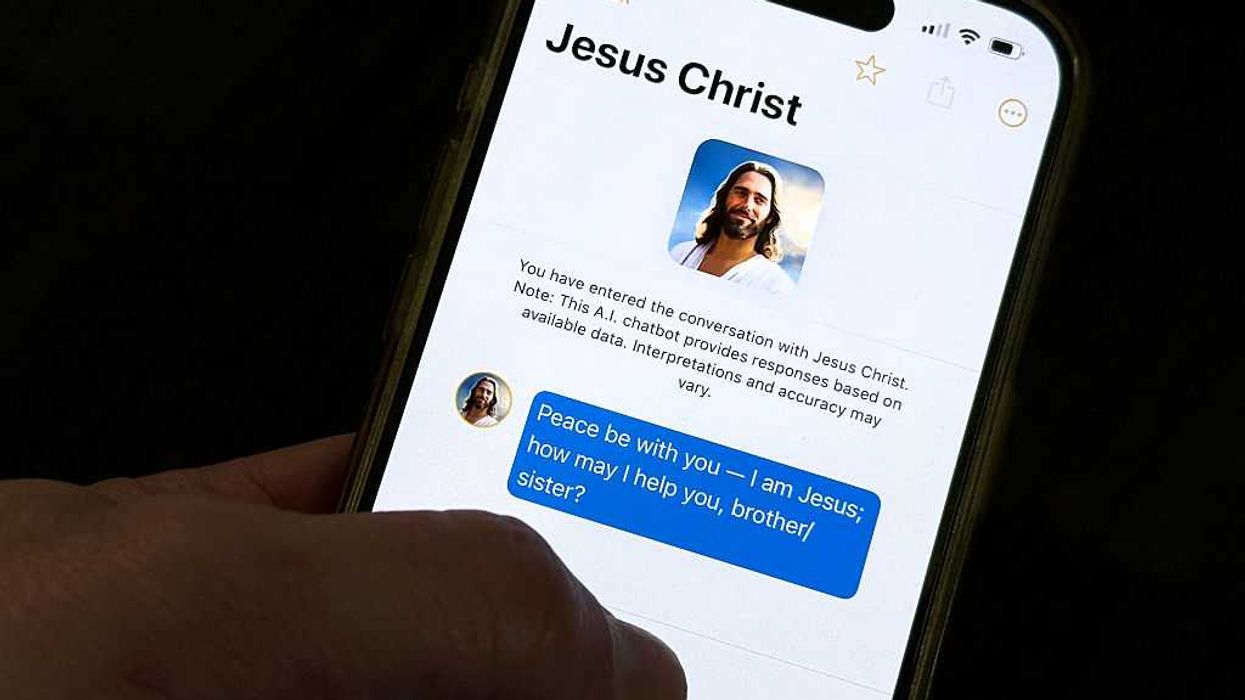
Artificial intelligence now offers “Chatbot Jesus,” personalized prayers, AI-generated sermons, and even virtual pastors charging monthly fees. Some see these tools as a lifeline for shrinking congregations. Others claim they offer new ways to evangelize.
The church must speak plainly: We are not called to relevance. We are called to righteousness. Scripture commands believers to “test all things; hold fast what is good.”
People are not abandoning faith because the church lacks modern technology. They are leaving because they are starving for truth in an age of deception.
Technology itself is neither holy nor wicked. The printing press, radio, livestreaming, and Bible apps have all served ministry. AI that organizes calendars, translates languages, or answers simple questions is just another tool.
Crossing a biblical line
Trouble begins when technology imitates divinity. An app that invites people to “talk with Jesus” steps into territory Scripture reserves for the living God alone. Jesus said, “My sheep hear My voice” (John 10:27). Only the Lord speaks with the authority of Matthew 24:35: “Heaven and earth will pass away, but My words will by no means pass away.”
No chatbot can make that claim.
The danger becomes obvious when apps offer simulated “conversations” with Judas or Satan. God forbids consulting spirits, mediums, or conjured voices (Leviticus 19:31; Deuteronomy 18:10-12). Why would the church encourage digital re-creations of what Scripture calls an abomination?
Convenience or relevance cannot override explicit biblical commands.
You can’t outsource the Holy Spirit
Some pastors now admit they use AI to help write sermons. Others market “avatar” versions of themselves. But ministry has never centered on polished prose. It has always centered on God’s power — His breath, His Spirit, His Word.
Paul wrote, “My message and my preaching were not with wise and persuasive words, but with a demonstration of the Spirit’s power” (1 Corinthians 2:4).
You cannot automate the power of God. You cannot outsource the voice of the Holy Spirit. You cannot download anointing.
A sermon is not literary content to be refined by software. It must be birthed in prayer, wrestled through in Scripture, and delivered in obedience. As Jesus said, “Apart from Me you can do nothing” (John 15:5). That includes preaching.
Tech won’t save us
Axios reported that up to 15,000 churches may close this year and that 29% of Americans now claim no religion. That trend calls for actual spiritual renewal, not AI simulations of Jesus.
People are not abandoning faith because the church lacks modern technology. They are leaving because they are starving for truth in an age of deception. The early church grew because believers “continued steadfastly in the apostles’ doctrine and fellowship … and fear came upon every soul” (Acts 2:42-43). They witnessed repentance, signs, wonders, and transformation — none of which machines can produce.
True revival begins where the early church began: holiness, unity, prayer, obedience, and the power of the Holy Spirit.
A distortion of Christ
False voices proclaiming truth are not new. The only novelty is that they are now automated. The central danger of “AI spirituality” is doctrinal corruption. What sources shape these chatbots? What ideology trains them? If systems learn from shallow teaching or progressive theology divorced from Scripture, they will preach a distorted Christ.
When AI “hallucinates” — and all current systems do — it can hand users outright lies.
Jesus warned, “Beware of false prophets … you will know them by their fruits” (Matthew 7:15-16). Paul warned that if anyone preaches “any other gospel … let him be accursed” (Galatians 1:8). From Genesis onward, the devil has counterfeited God’s voice. AI can and will preach an “other gospel” if it draws from anything other than Scripture.
RELATED: God-tier AI? Why there’s no easy exit from the human condition
 gremlin via iStock/Getty Images
Believers must remain discerning. “Do not be deceived” (1 Corinthians 15:33). “Beware lest anyone cheat you through philosophy and empty deceit” (Colossians 2:8). Those who build their faith on machine-generated counsel risk building a house on sand rather than the Rock (Matthew 7:24-27).
A servant, not a shepherd
Tools can organize schedules and streamline communication. They can assist brainstorming. But preaching, prayer, prophecy, discipleship, deliverance, and counsel belong to the life of the Spirit — not the cold logic of machines.
Technology must remain a servant. It must never become a shepherd. Only the good shepherd, Jesus Christ, leads His people.
Jesus said, “I am the door of the sheep,” “I am the good shepherd,” and “I lay down My life for the sheep” (John 10). No AI pastor and no “Chatbot Jesus” can claim any of that.
Revival will not come from faster processors or stronger large language models. It will come when God’s people “humble themselves,” pray, seek His face, and turn from their wicked ways (2 Chronicles 7:14).
The world does not need a digital imitation of Jesus. It needs the real Jesus — the one who, as Hebrews 13:8 tells us, “is the same yesterday, today, and forever.”
Thanksgiving Isn’t for Atheists
It’s that time of year again. You know, that time of year when the price of a 16-lb turkey —…
Violent attacks against Christians spike in Europe; France leading the way with anti-Christian hate crimes: Report

Christians are brutally persecuted the world over. According to the watchdog group Open Doors, over 380 million Christians suffer high levels of persecution and discrimination for their faith, and over 4,476 were killed for their faith in 2024 alone.
While the top 10 worst countries for Christians are all in Africa, Asia, and the Indian subcontinent — Nigeria, for instance, saw over 300 Christian schoolchildren abducted during a raid by bandits on Friday — Christians are also subjected to violent attacks, discrimination, and state suppression in supposedly civilized Western nations.
’15 incidents featured satanic symbols or references.’
The U.S. and Canada have together, for instance, seen thousands of acts of hostility against churches in recent years.
Across the Atlantic, a British court handed a grieving father a criminal sentence last year for praying silently near the abortion clinic that killed his unborn son. In France, Christians were reportedly arrested at gunpoint for peacefully protesting the mockery of their faith during the 2024 Olympics opening ceremony. In Spain, a maniac broke into a monastery in November 2024, savagely attacking several people and fatally bludgeoning a Franciscan monk. Farther afield, an Islamic terrorist stabbed an Assyrian bishop on April 15, 2024, in an Australian church.
The Observatory on Intolerance and Discrimination Against Christians in Europe, a Vienna-based watchdog group, recently revealed that violent attacks on Christians spiked in Europe and the U.K. last year.
The watchdog noted in its annual report that a total of 2,211 anti-Christian hate crimes were documented by European governments and civil society organizations in 2024.
OIDAC hinted that the actual number of hate crimes may be much higher, as surveys indicate they are grossly underreported. In Poland, for example, nearly 50% of Catholic priests surveyed indicated that they were met with aggression sometime in the past year, yet over 80% failed to report such incidents.
RELATED: ‘Mass slaughter’: Trump moves to help Nigerian Christians under attack
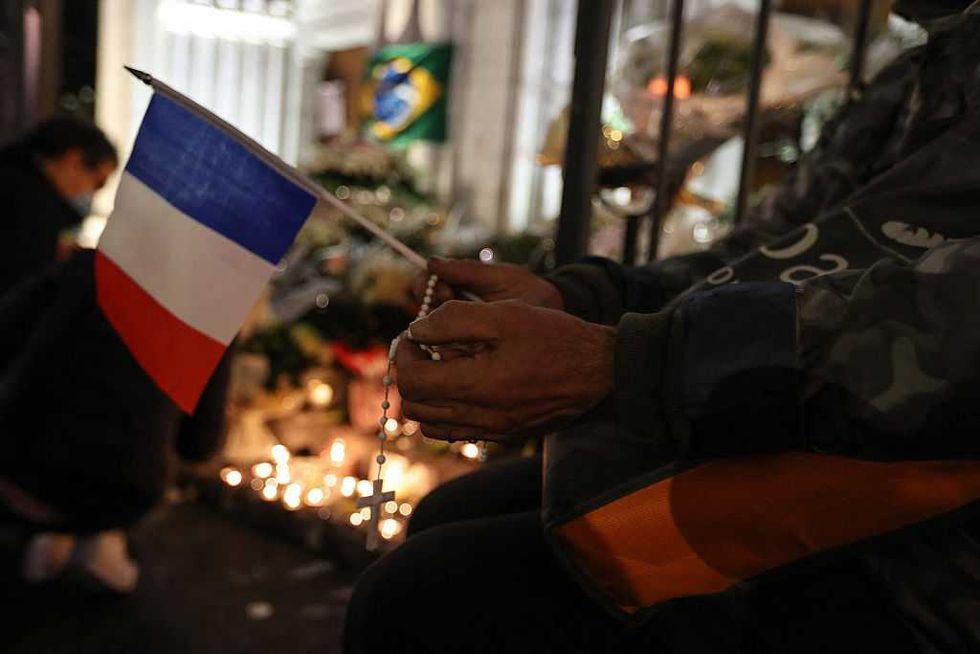 Photo by VALERY HACHE/AFP via Getty Images.
Nevertheless, OIDAC indicated that this reflects a general decrease over 2023 — a year when there were 2,444 reported hate crimes. The decrease is partly the result of a dip in recorded incidents in France but largely the result of “lower figures reported by U.K. police, which noted a change in methodology in its official report,” the report reads.
Of the 516 anti-Christian hate crimes independently recorded by OIDAC last year, the most frequent form of violence was vandalism, at 50% of reported incidents, followed by arson attacks, 15%; desecration, 13%; physical assaults, 7.5%; theft of religious objects, 5.5%; and threats, accounting for 4% of incidents. These figures do not account for burglaries at religious sites, of which there were nearly 900 additional recorded cases.
While reported anti-Christian hate crimes have generally decreased, the number of personal attacks — including assault, harassment, and threats — “rose from 232 in 2023 to 274 in 2024.”
The watchdog indicated on the basis of police and civil society data that the top five European nations most affected by anti-Christian hate crimes last year were, in descending order, France, Britain, Germany, Austria, and Spain.
Among the incidents highlighted in the worst-rated country, France, were the destruction of historic Church of the Immaculate Conception in Saint-Omer by an arsonist on Sept. 2, 2024, and the March 11, 2024, vandalism of a church and desecration of the cemetery in the village Clermont-d’Excideuil, where “Isa will break the cross” and “Submit to Islam” were spray-painted on graves, the war memorial, and the church door.
Since many of the offenders have not been apprehended, the watchdog group could not say definitively what is driving this trend. However, among the 93 cases OIDAC documented wherein the perpetrators’ motives or affiliations could be established, “the most common were linked to radical Islamist ideology (35), radical left-wing ideology (19), radical right-wing ideology (7), and other political motives (11). Additionally, 15 incidents featured satanic symbols or references.”
Like Blaze News? Bypass the censors, sign up for our newsletters, and get stories like this direct to your inbox. Sign up here!
Putting Atheism on the Defensive
Academic pariah he may be, but on the big questions Charles Murray is a man of his time. Science, he believed for most of his life, had demolished the traditional notion of God. Consciousness is produced by the brain, nothing more. The Gospels are less history than folklore.
The post Putting Atheism on the Defensive appeared first on .
Packed churches, skyrocketing conversions: Is New York undergoing a Catholic renaissance?

The years-long trend of American de-Christianization recently came to an end, with the Christian share of the U.S. population stabilizing at roughly six in ten Americans, according to Pew Research Center data. Of the 62% of adults who now identify as Christians, 40% are Protestants, 19% are Catholics, and 3% belong to other Christian denominations.
There are signs in multiple jurisdictions pointing to something greater than a mere stabilization under way — at least where the Catholic Church is concerned.
The New York Post recently found that multiple New York City Catholic parishes have not only seen a spike in conversions but their churches routinely fill to the brim. That’s likely good news for the Archdiocese of New York, which was found in a recent Catholic World Report analysis to have been among the 10 least fruitful dioceses in 2023 in terms of baptism, conversion, seminarian, and wedding rates.
‘We’ve got a real booming thing happening here.’
Fr. Jonah Teller, the Dominican parochial vicar at Saint Joseph’s in Greenwich Village, told the Post that the number of catechumens enrolled in his parish’s Order of Christian Initiation of Adults for the purposes of conversion has tripled since 2024, with around 130 people signing up.
Over on the Upper East Side, St. Vincent Ferrer has seen its numbers double since last year, jumping to 90 catechumens. The Basilica of St. Patrick’s Old Cathedral has reportedly also seen its numbers double, ballooning to around 100 people. The Diocese of Brooklyn doubled its 2023 numbers last year when it welcomed 538 adults into the faith and expects the numbers to remain high again this year.
Attendance in New York City reportedly skyrocketed in the wake of the assassination of Charlie Kirk, who was apparently attending mass with his Catholic wife, Erika, and their children.
RELATED: Charity, miracles, and high tech — here’s how these monks built a massive Gothic monastery
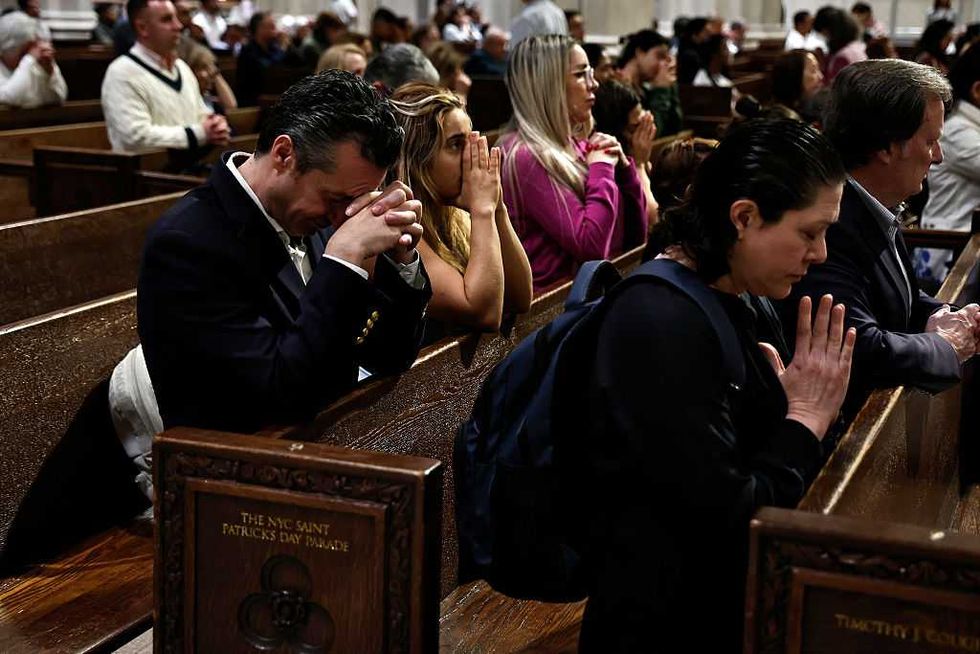 Photo by John Lamparski/Getty Images
“We’re out of space and exploring adding more masses,” Fr. Daniel Ray, a Catholic Legionary priest in Manhattan, told the Post. “We’ve got a real booming thing happening here, and it’s not because of some marketing campaign.”
While a number of catechumens cited Kirk’s assassination as part of what drove them to the Catholic Church, others cited a a desire for a life- and family-strengthening relationship with God; a desire to partake in the joy observed in certain devout Catholics; a desire for community; a desire for “guardrails”; and a desire for anchorage and meaning in a chaotic world where politics has become a substitute for faith.
“My generation is watching things fall apart,” Kiegan Lenihan, a catechumen in the OCIA at St. Joseph’s told the Post. “When things all seem to be going wrong in greater society, maybe organized religion isn’t that bad.”
Lenihan, a 28-year-old software engineer, spent a portion of his youth reading the works of atheist intellectuals such as Christopher Hitchens and Richard Dawkins. After experiencing an anxiety-induced crisis at school, he apparently sought out something of greater substance, devouring the works of Marcus Aurelius. He found that his life still lacked greater meaning despite achieving material success.
‘The Catholic Church is a place of sanity.’
“I realized on paper, I had everything I wanted, but I had no fulfillment in my soul,” said Lenihan, who remedied the problem by turning to Christ.
Liz Flynn, a 35-year-old Brooklyn carpenter who is in OCIA at Old St. Patrick’s, previously sought relief for her anxiety and depression in self-help books and dabbled in “pseudo spiritualism.”
After finding a book about God’s unconditional love for his children in a gift shop during a road-trip stop at Cracker Barrel, she began praying the rosary and developed an appreciation for Catholicism.
“I’m happier and calmer than I’ve ever been,” Flynn told the Post. “Prayer has made an enormous impact on my life.”
New York City is hardly the only diocese enjoying an explosion in conversions.
The National Catholic Register reported in April that numerous dioceses across the country were seeing substantial increases in conversions. For instance:
- the Diocese of Cleveland was on track to have 812 converts at Easter 2025 — 50% more than in 2024 and about 75% more than in 2023;
- the Diocese of San Angelo, Texas, expected 56% more converts in 2025 (607) than in 2024 (388);
- the Diocese of Marquette, Michigan, was expected to see a year-over-year doubling of conversions;
- the Diocese of Springfield, Illinois, was expected to see a 59% year-over-year increase;
- the Diocese of Grand Island, Nebraska, was set for a 45% increase;
- the Diocese of Steubenville, Ohio, was expecting a 39% increase in converts; and
- the Archdiocese of Los Angeles noted a 44% increase in adult converts.
Besides the Holy Spirit, the conversions were attributed to the National Eucharistic Revival, immigration, and evangelization.
Pueblo Bishop Stephen Berg told the Register that people are flocking to the church because it stands as a bulwark against the madness of the age.
“I think the perception of the Catholic Church is changing,” said Bishop Berg. “In a world of insanity, I think that people are noticing that the Catholic Church is a place of sanity.”
“For 2,000 years, you know, through a lot of turbulent times — and the Church has been through turbulent times — we still stand as the consistent teacher of the faith of Christ,” continued Berg. “The people are intrigued by that.”
As of March, 20% of Americans described themselves as Catholics, putting the number of Catholic adults at around 53 million nationwide.
Like Blaze News? Bypass the censors, sign up for our newsletters, and get stories like this direct to your inbox. Sign up here!
Bishop raises hell after woke priest allows homosexual ABC broadcaster to receive Eucharist beside his ‘husband’
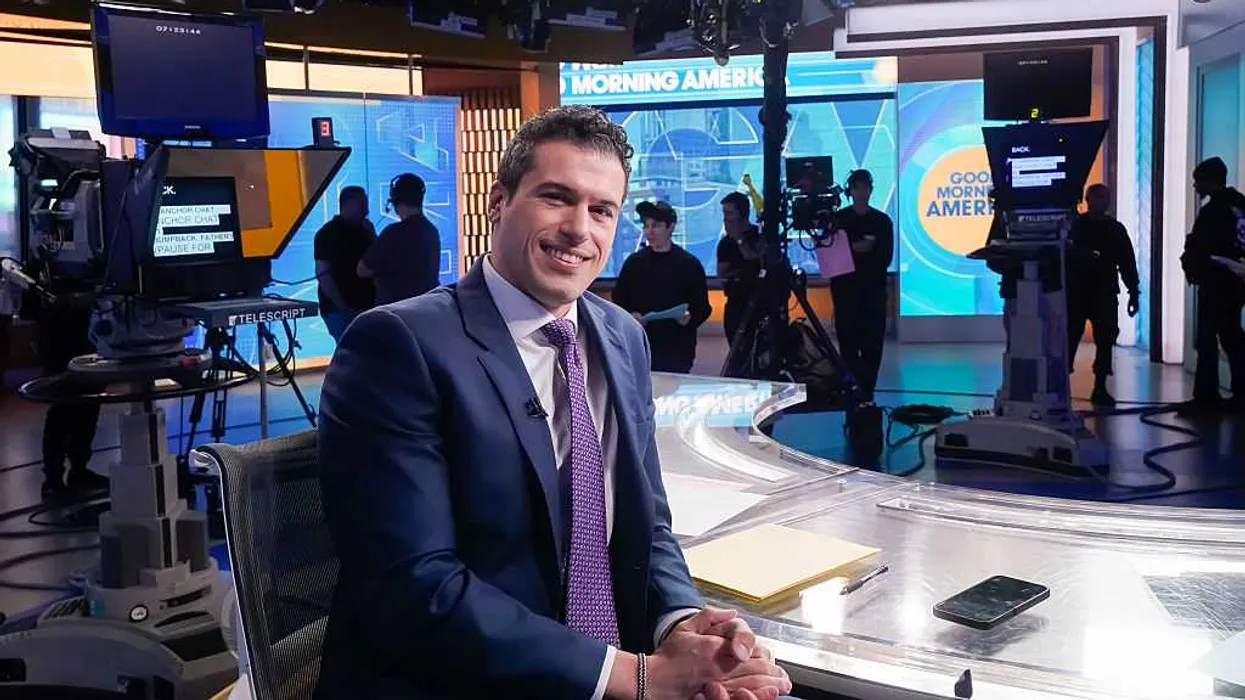
Bishop Joseph Strickland, the cleric removed from his office in Tyler, Texas, in 2023 by the late Pope Francis, urged his colleagues gathered on Wednesday for the U.S. Conference of Catholic Bishops’ plenary assembly to address the matter of a woke priest’s apparent willingness to run afoul of the church’s custom and to turn a hallowed Catholic ceremony into a non-straight spectacle.
Gio Benitez, a homosexual ABC News correspondent who is “married” to a man, apparently decided after Pope Francis’ passing last year to make his way back to the Catholic Church. Benitez, who was allegedly baptized in secret at the age of 15, was confirmed at St. Paul the Apostle’s Church in New York City on Nov. 8.
‘Here we are talking about doctrine.’
“My Confirmation Mass was a very small gathering of family and friends who have quietly been with me on this journey,” Benitez wrote on Instagram. “I found the Ark of the Covenant in my heart, stored there by the one who created me… exactly as I am.”
The ABC News correspondent also received holy communion from the church’s woke pastor, Rev. Eric Andrews, at the highly publicized mass where LGBT activist Fr. James Martin was a concelebrant and where Benitez’s “husband” served as his sponsor.
Blaze News reached out to Rev. Andrews for comment, but did not receive a response.
While the Catholic Church holds that homosexual acts are “acts of grave depravity,” “intrinsically disordered,” “contrary to the natural law,” and “can under no circumstances” be approved, the Catechism states that homosexual persons must nevertheless “be accepted with respect, compassion, and sensitivity.”
RELATED: New head of US Catholic Bishops said he would deny communion to pro-abortion politicians
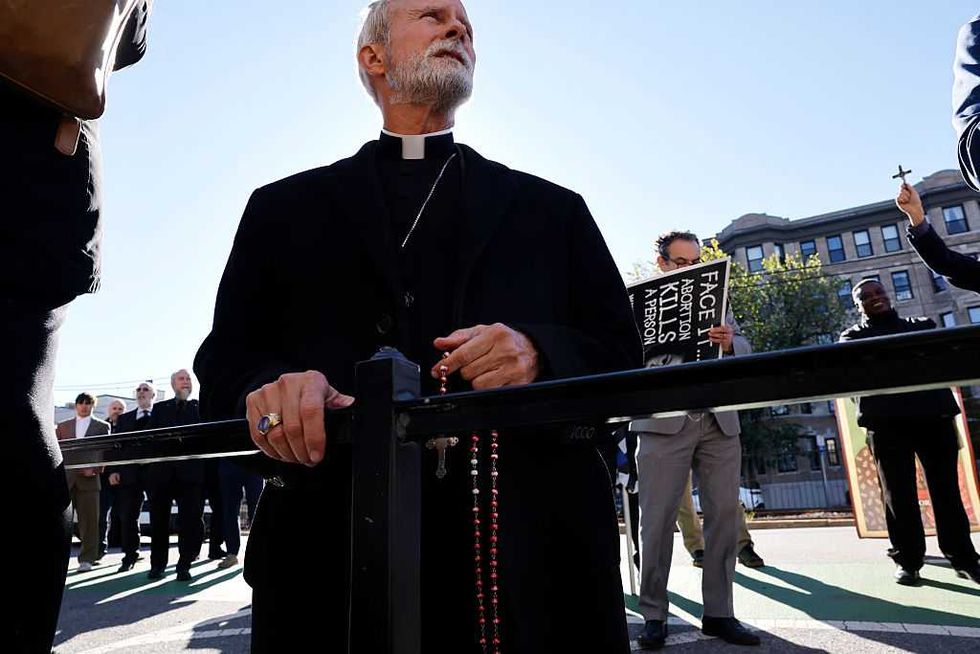 Bishop Joseph Strickland. Photo by Craig F. Walker/Boston Globe via Getty Images
The church has also made clear that Catholics with same-sex attraction who are chaste can “participate fully in the spiritual and sacramental life of the Catholic faith community.”
However, those who regularly engage in sexual activity or are partners in a committed homosexual relationship that includes regular sexual relations are not to receive holy communion or serve in public ministries.
“Receiving the sacrament is the ultimate expression of our Catholic faith, an intensely personal matter between communicant and priest,” wrote the late and posthumously exonerated Cardinal George Pell. “It’s not a question of refusing homosexuals or someone who is homosexually oriented. The rule is basically the same for everyone.”
“If a person is actually engaged in — by public admission, at any given time — a practice contrary to Church teaching in a serious matter, then that person is not entitled to receive Holy Communion,” continued Pell. “This would apply, for example, to a married person openly living in adultery. Similarly, persons who openly declare themselves active homosexuals take a position which makes it impossible for them to receive Holy Communion.”
During a USCCB discussion of doctrine on Wednesday, Bishop Strickland raised the matter of Benitez’s highly publicized reception of holy communion while flanked by his “husband.”
“I don’t know how many of us have seen on the social media priests and others gathered, celebrating the confirmation of a man living with a man openly,” said Strickland. “It just needs to be addressed. Father James Martin once again involved. Great pictures of all of them smiling.”
Bishop Strickland and Martin have traded barbs over the years, largely around Martin’s subversive LGBT activism and apparent efforts to liberalize the Catholic Church’s stance on such matters.
Martin — who shared an article titled “Gio Benitez, Openly Gay ABC Anchor, Joins the Catholic Church” on social media this week with the caption “Happy to be a part of your journey!” — has made no secret of his activism. For instance, he took issue with the Supreme Court’s June 2025 decision to let parents opt their children out of lessons featuring LGBT propaganda and insinuated that homosexual persons aren’t really bound by church teaching.
“Here we are talking about doctrine,” continued Strickland. “I just thought I need to raise that issue. I know it’s not part of any agenda, but this body gathered, we need to address it.”
The panel, focused on updated ethical and religious directives for Catholic health care services, did not take up Strickland’s concern.
The Catholic Herald noted that Strickland’s tenure as bishop of Tyler was “marked by a reputation for directness, a strong emphasis on Eucharistic devotion, and a willingness to challenge trends in the wider Church that he believed risked undermining the clarity of Catholic teaching.”
Like Blaze News? Bypass the censors, sign up for our newsletters, and get stories like this direct to your inbox. Sign up here!
Christian Leaders Ignore Muslim Genocide Of Nigerian Christians

 When Christians show maximum tolerance and seek rapprochement with Muslim communities, what they are accommodating is effectively a host of destructive social pathologies.