

Category: Daily Caller
Armed, masked crooks trying to steal car encounter gun-toting homeowner, cops say — and the homeowner isn’t playing around

Police said a Pennsylvania homeowner shot at a pair of would-be car thieves early Tuesday morning, wounding one of them, WPVI-TV reported.
The incident in the 200 block of 2nd Street in Catasauqua took place at 1 a.m., the station said. Catasauqua is a borough in Lehigh County that’s about 15 minutes north of Allentown and just under an hour and a half north of Philadelphia.
‘Good old-fashioned FAFO.’
Investigators told WPVI the homeowner fired the shots at the two males as they were trying to steal a vehicle. The males reportedly were wearing black masks, the station said, adding that police said one suspect had a knife, and the other was carrying a bar.
Both suspects — including the wounded male — ran away, the station said.
Police are searching local hospitals for patients with gunshot wounds, WPVI said.
The homeowner was not injured, the station said.
No charges have been filed, WPVI reported, adding that the incident remains under investigation.
Commenters under WPVI’s Facebook post about the incident gave shoutouts to the homeowner who pulled the trigger:
- “Hey, maybe the thieves will change their minds before they attempt to steal again!??” one commenter observed. “Kudos to the homeowner!!”
- “Good job homeowner, do not charge this man for protecting his property,” another user insisted.
- “I love a story with a happy ending,” another commenter quipped.
- “Good,” another user wrote before adding “get a cap in both their asses.”
- “Not everyone is an easy target, are they[?]” another commenter stated. “Good old-fashioned FAFO.”
Others encouraged the homeowner to get more time at the gun range:
- “Learn from it and just go to the range a few times,” one user suggested. “Practice, practice, practice.”
- “Sounds like the homeowner needs more target practice,” another commenter wrote. “The perp won’t have a chance to repeat the stupidity.”
- “A shame he only wounded one,” another user said. “A couple of head shots would [have] been better.”
- “Excellent!” another commenter exclaimed. “Now, get to the range to make sure next time it’s not just a wound.”
Like Blaze News? Bypass the censors, sign up for our newsletters, and get stories like this direct to your inbox. Sign up here!
CRUDE AWAKENING: Canada’s pipeline paralysis fumbles American oil market
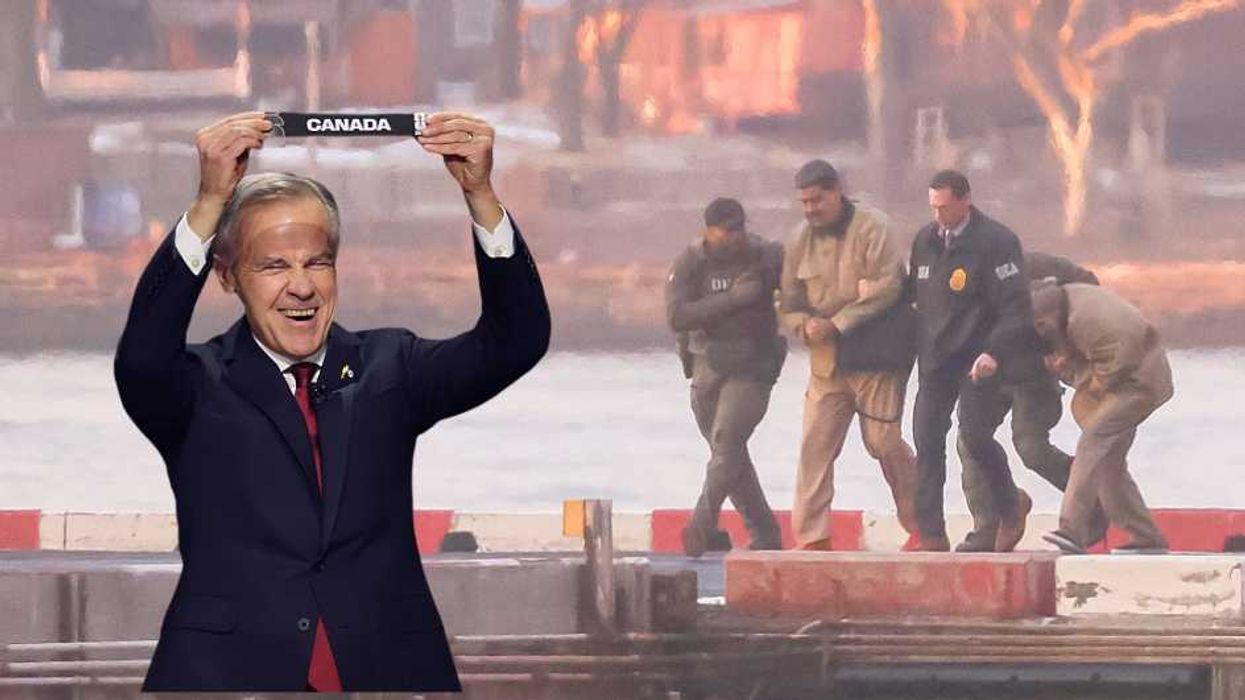
Canada has exactly the kind of oil the United States needs. But when it comes to investing in the infrastructure to move it, America’s ally to the north is beginning to look as risky — and as politically hostile — as Venezuela.
That, Dan McTeague of Canadians for Affordable Energy tells Align, reflects a perverse governing philosophy towards the country’s energy abundance: “keep it in the ground.”
Carney can talk about buying China’s ‘windmills and solar panels,’ or he can ask whether China wants to buy oil — ‘because we got a pipeline.’
Canada’s self-inflicted pipeline paralysis is eroding its position in the U.S. market just as alternatives like Venezuelan oil come back online.
Oil, oil everywhere
Nowhere is that risk clearer than in Alberta, home to the vast majority of Canada’s oil production, where years of stalled pipeline projects have left the country’s most valuable energy asset effectively landlocked.
Canadian oil is the same kind Venezuela produces: heavy crude, high in sulfur, and ideal for making diesel fuel. Most U.S. refineries are designed specifically to process this type of petroleum, which is essential not just for transportation, but for agriculture, mining, manufacturing, and national defense.
Alberta has long sought to build a pipeline to the West Coast, primarily to secure reliable, long-term access to the U.S. market — while also giving Canada leverage to reach other buyers if American demand weakens or politics intervenes.
That project remains stalled, despite Liberal Prime Minister Mark Carney — who has spent much of his career championing green energy and opposing pipelines — recently signing a memorandum of understanding with Alberta that is supposed to clear the way for construction. Alberta Premier Danielle Smith is now demanding that pipeline construction begin by fall 2026.
Carbon crunch
In practice, the MOU changes little. It grants no approvals, streamlines no federal reviews, resolves no indigenous or legal challenges, and commits no public capital. By tying any future pipeline to rising carbon tax and decarbonization requirements, it arguably worsens the investment case — leaving no private sponsor willing to move first.
While the United States remains Canada’s natural customer, a West Coast outlet still matters. It gives producers pricing power, optionality, and insurance against sudden policy shifts in Washington — precisely the kind now emerging as Venezuela re-enters the picture.
The question is who would build such a pipeline — and whether it could be completed before the United States turns to cheaper Venezuelan oil to fill the gap.
Venezuela of the north?
President Donald Trump has floated asking oil companies for $100 billion to build infrastructure in Venezuela capable of moving oil north. Exxon’s CEO rejected the idea, calling Venezuela “uninvestable” because of its history of asset seizures and nationalization. Trump, however, could choose to push the project forward with public funds.
McTeague — himself a former Liberal member of Parliament — says Canada has made itself similarly unattractive to investors. He argues that policy choices — not geology — are the problem.
Canada, he says, is “blessed with abundance of resources,” but has embraced a governing narrative that tells producers to “keep it in the ground.” He adds that few countries would treat their most important economic output that way.
That mindset, McTeague argues, has frightened off private capital and left Ottawa with little choice but to build a pipeline itself. It also raises the stakes of Carney’s upcoming trip to China — not as a pivot away from the U.S., but as leverage.
Tilting at windmills
When Carney arrives in Beijing, McTeague says, he faces a choice. He can talk about decarbonization and buying China’s “windmills and solar panels,” or he can ask whether China wants to buy oil — “because we got a pipeline.”
The point, McTeague stresses, is not that China should replace the United States as Canada’s primary customer, but that Canada needs credible alternatives if it wants to be taken seriously by either.
McTeague also criticizes the MOU’s requirement that the industrial carbon tax rise sharply in coming years, arguing that it “defies economics and the realities of the marketplace.” In his view, decarbonization mandates are irrelevant to investors deciding whether a pipeline is worth building.
Time, he warns, is running out. Federal debt continues to grow, and Canada’s fiscal credibility is beginning to erode. Without pipelines, he says, the country risks running out of economic runway.
RELATED: The truth behind Trump’s Venezuela plan: It’s not about Maduro at all
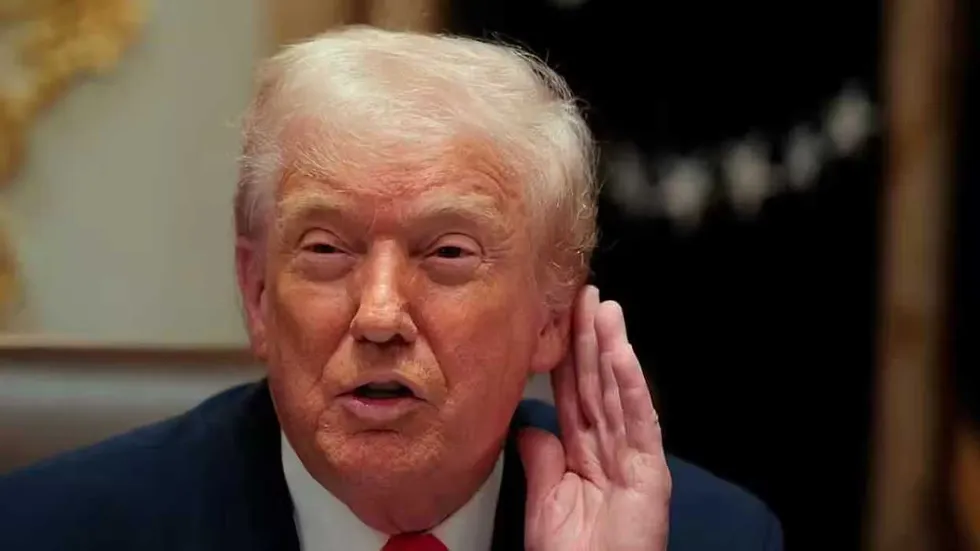 Chip Somodevilla/Getty Images
Over a barrel
McTeague also disputes the claim that the United States is energy-independent. While America produces roughly 12 to 13 million barrels of oil per day, it consumes about 21 million — leaving it dependent on imports.
Canada’s value, he argues, lies not just in volume, but in the type of oil it produces. U.S. shale oil is well suited for gasoline, but not for diesel, which he calls the global workhorse of modern economies — critical to transportation, agriculture, industry, and defense.
That is precisely the fuel Venezuela is now offering, potentially at a lower cost than Canadian oil burdened by carbon taxes and regulatory constraints.
Canada now finds itself between a rock and a hard place: Venezuelan oil threatening to undercut U.S. demand for Alberta crude, plus the political and logistical reality of building a major pipeline through British Columbia — on a timetable that is rapidly running out.
In energy terms, Canada is doing the unthinkable: choosing to be bypassed.
BRINGING DOWN THE HOUSE: Mortgage Rates Fall to 3-Year Low After Trump Orders $200B Bond Buy

Mortgage rates fell below 6% for the first time in years after President Donald Trump ordered his “representatives” to begin buying $200 billion in mortgage bonds — his latest push to bring down costs for Americans squeezed by the high cost of living.

China Sucks. Even Their Propaganda Makes America Look Awesome.
The American raid to capture Venezuelan dictator Nicolás Maduro was deeply embarrassing for Red China. The third-world communist thugs had provided much of the military equipment designed to protect Maduro’s regime from foreign intervention. It proved utterly useless against U.S. forces, who snatched Maduro just hours after his meeting with a delegation of Chinese officials.
The post China Sucks. Even Their Propaganda Makes America Look Awesome. appeared first on .
‘One Thing They Have To Harp On’: Matt Towery Shares What Can Push Republicans The Hardest To Turn Out For Midterms
‘get those hardcore Trump voters’





