

Category: Pentagon
Congress strips merit from the military and shackles the president in one bill
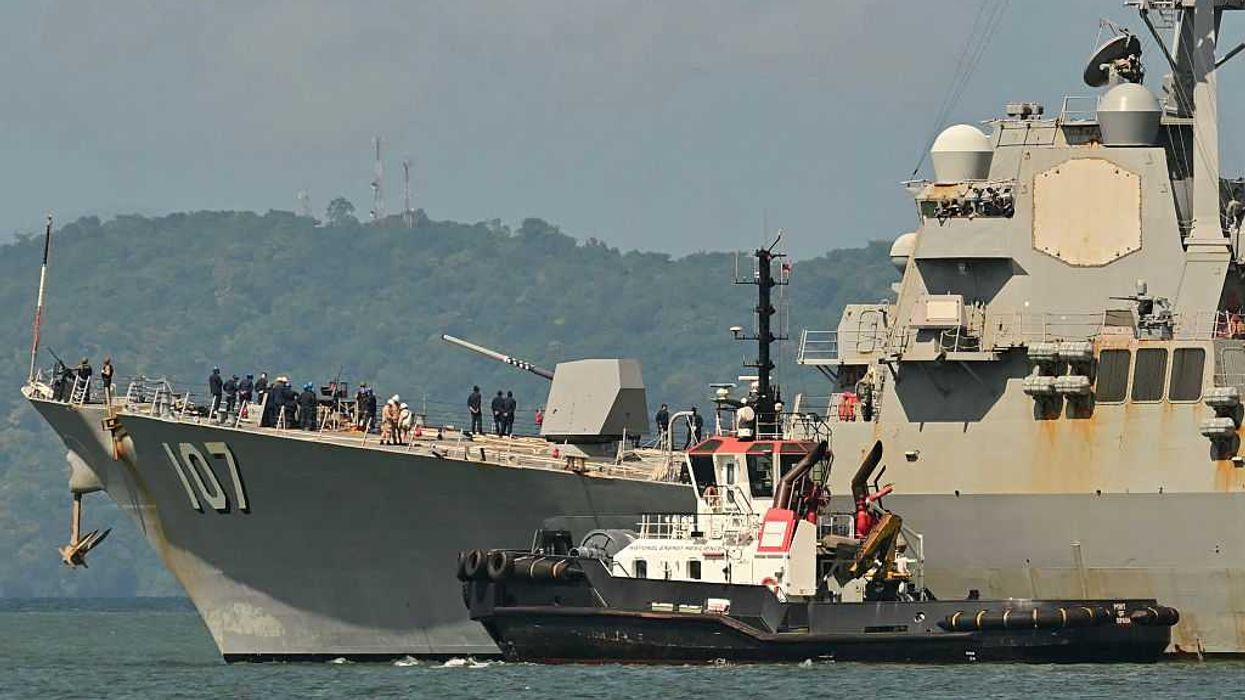
The Trump administration recently released an extremely promising National Security Strategy — but the same cannot be said about the proposed National Defense Authorization Act for the 2026 fiscal year.
The House and Senate’s compromise NDAA appears to be in tension with the goals of the administration’s strategy. While the National Security Strategy prioritizes a hemispheric defense of the American homeland, the NDAA locks decision-makers into maintaining unnecessary overseas troop levels. Despite President Trump’s stated strategic aims, Congress seems intent on safeguarding the national security priorities and infrastructure of previous eras.
The NDAA represents the ‘deep state,’ a combination of entrenched interests, committees, lobbies, and bureaucracies that value continuity over strategy and reform.
Restricting the drawdown of troops stationed overseas, increasingly murky foreign entrenchment through legally binding efforts to sell arms, and dubious clauses requiring congressional approval at every turn, all serve to bind the commander in chief’s hands. All of this reeks of a shadowy order desperately trying to maintain the status quo at the expense of the will of the people who elected Donald Trump in 2024.
This cannot stand.
Section 1249 of the NDAA states that U.S. forces in Europe cannot fall below 76,000 for more than 45 days without presidential certifications to Congress. This is supposed to ensure that troop reductions present no threat to NATO partners or U.S. national security. (Absurdly, the bill requires the U.S. to consult with every NATO ally and even “relevant non-NATO partners.”) But stripping the president of essential discretion through ludicrous legislative roadblocks categorically subverts his authority under the Constitution.
Section 1255 states that troop levels cannot dip below 28,500 in the Korean Peninsula, nor can wartime operational control be transferred without an identical trial by fire of congressional approvals and national-security certifications.
Shifting our military focus to our own backyard was a stated goal of the National Security Strategy. If this vision is to be implemented, Congress cannot serve as a bureaucratic middleman that hinders deployment flexibility through pedantic checklists.
Americans need to understand that the NDAA would obstruct the execution of President Trump’s agenda. As written, it functions as a deliberate statutory barrier to presidential decision-making. This denotes a redistribution of war powers from the elected executive to a sprawling and unaccountable institutional structure.
The NDAA represents what Americans call the “deep state,” a combination of entrenched interests, committees, lobbies, and bureaucracies that value continuity over strategy and reform.
This continuity becomes clear when you look at what the House and Senate didn’t include in the compromise NDAA. The Senate’s original bill contained a provision barring the use of DEI in service-academy admissions — a measure that would have required merit-only standards and prevented racial profiling. Congress stripped that section out. The final bill includes a few weak gestures toward limiting DEI, but none of them meet President Trump’s goal of a military that rejects race and sex as factors altogether.
RELATED: Mexico has cartel armies. Blue America has cartel politics.
 Photo by Chip Somodevilla/Getty Images
As written, the NDAA gives a future Democratic president the opportunity to reintroduce woke indoctrination in the military with the stroke of a pen. And laws favoring DEI at our nation’s most vital institutions could resurface on a whim, using typical “diversity is our strength” platitudes.
Despite its name, the NDAA functions less like a defense bill and more like the legal backbone of America’s global posture. Whatever promises the National Security Strategy makes, they cannot be realized so long as the current NDAA pulls in the opposite direction. Strategy should shape institutions — not the other way around.
In Washington jargon, the NDAA is treated as “must-pass” legislation. That label has no legal or constitutional basis. And even if it must pass, no one claims it must be signed.
The National Security Strategy reflects the will of voters; the NDAA reflects bureaucratic inertia. That is why the Trump administration cannot, in good conscience, approve this bill. Our escape from stagnation, mediocrity, and endless foreign entanglements depends on rejecting it — and time is running out.
Editor’s note: A version of this article was published originally at the American Mind.
Turns out that Hegseth’s ‘kill them all’ line was another media invention
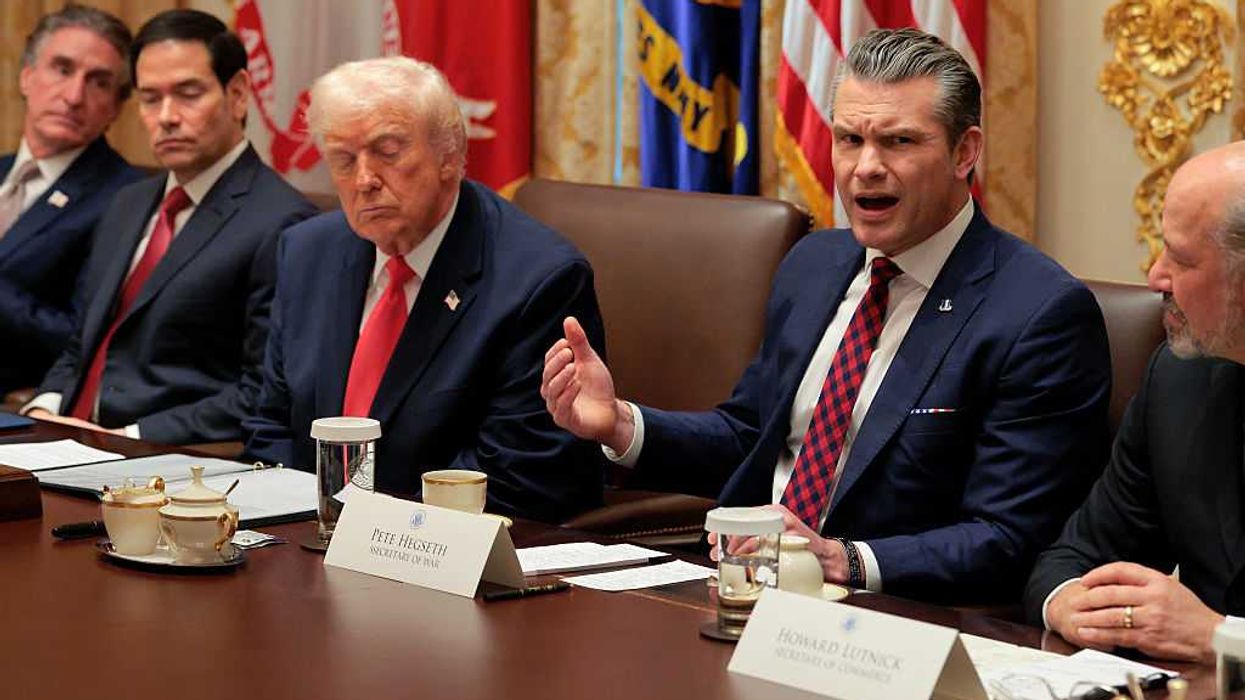
Under his authority as commander in chief, the president can blow up pretty much anybody on Earth whom he deems a national security threat. He does not need permission from Congress, the media, or a panel of self-appointed commentators. The missile strikes on drug-running vessels operated by a designated terrorist group are lawful, routine, and predictable. What made the episode explosive was that it enraged exactly the faction that always reacts this way: the political left.
Impeachment is the only real consequence available to the administration’s critics, and after two failed efforts, that prospect does not keep President Trump awake at night. Republican control of the House makes even a symbolic attempt unlikely.
It is time to put a moratorium on the online laws-of-armed-conflict ‘experts’ who materialize whenever a strike hits a target they sympathize with.
So the disloyal opposition defaults to its remaining weapon: information warfare. Media outlets, activist networks, and hostile bureaucrats have been carpet-bombing the information space with false claims designed to sow dissension among the ranks and mislead the public.
The country needs a president who can act decisively in defense of national security, without media gatekeepers, rogue judges, or partisan lawmakers running armchair military campaigns from the sidelines. The “Seditious Six” tried to undermine the president’s authority and cast doubt on lawful orders. The Washington Post attempted to turn that fiction into fact by quoting anonymous sources with unverifiable claims.
The central allegation is that Secretary of War Pete Hegseth issued an order to “kill everybody” on the vessel. The Post framed it this way: “Defense Secretary Pete Hegseth gave a spoken directive, according to two people with direct knowledge of the operation. ‘The order was to kill everybody.’”
The headline amplified the accusation: “Hegseth order on first Caribbean boat strike, officials say: Kill them all.”
A “spoken directive” means no record. The quote is a paraphrase. Nothing indicates that the source actually heard the Hegseth say those words. This is an anonymous, secondhand characterization of an alleged statement — precisely the sort of raw material the Post loves to inflate into scandal.
Even if the words had been spoken, the context would determine legality. If a commander asks, “How big a bomb do we drop on the enemy location?” and the answer is, “Use one big enough to kill everybody,” that exchange would not be criminal. It is a description of the force required to neutralize a hostile asset.
If these anonymous sources truly believed the secretary issued an illegal order, they were obligated to report it through the chain of command. Their silence speaks louder than any paraphrase. The most plausible explanation is that someone misunderstood — or deliberately distorted — an aggressive statement by Hegseth and nothing more.
The United States targets terrorists. The implication behind the Post’s story is that survivors remained after the first strike and that either the secretary or JSOC ordered a second engagement to kill them. No evidence supports that claim. No one outside the direct participants knows what the surveillance picture showed or what tactical conditions existed immediately after the first blast.
RELATED: White House names names in new ‘media bias tracker’ in wake of ‘seditious’ Democrat video
 Photo by Chip Somodevilla/Getty Images
President Trump stated publicly that Hegseth told him no order was given to kill survivors. The fact that U.S. forces recovered two survivors from the submersible drug vessel undercuts the Post’s narrative even more. Pete Hegseth is far more credible than Alex Horton and the newsroom that elevated this rumor.
It is time to put a moratorium on the online laws-of-armed-conflict “experts” who materialize whenever a strike hits a target they sympathize with. They insist that the presence of wounded combatants instantly transforms a hostile platform into a protected site and that destroying the vessel itself becomes a war crime. Even the New York Times — no friend of the administration — punctured that claim:
According to five U.S. officials … Mr. Hegseth’s directive did not specifically address what should happen if a first missile failed to accomplish all of those things … and his order was not a response to surveillance footage showing that at least two people on the boat survived the first blast.
The mobs demanding Hegseth’s scalp will be disappointed. The voters who supported this administration expected firm action against terrorist cartels and open-ocean drug networks. Another hostile vessel was reduced to an oil slick, and most Americans see that as a success.
Hegseth 2016 comments on not following ‘unlawful orders’ surface: ‘There’s a standard’
Defense Secretary Pete Hegseth, who is facing heat over a strike on an alleged drug boat in the Caribbean, said in 2016 that he believed in “consequences for abject war crimes.” “I do think there have to be consequences for abject war crimes. If you’re doing something that is just completely unlawful and ruthless, then…
Hegseth promises faster weapons buying with sweeping reforms
Welcome to The Hill’s Defense & NatSec newsletter {beacon} Defense &National Security Defense &National Security The Big Story Hegseth promises faster weapons buying with sweeping reforms Defense Secretary Pete Hegseth on Friday unveiled a sweeping overhaul to how the Pentagon buys weapons, a restructuring aimed at having the U.S. military more quickly acquire new…





