

Category: Space
Is real-life ‘Star Wars’ America’s manifest destiny?

On December 18, 2025, the White House released an executive order on “Ensuring American Space Superiority.” The document begins with a premise that is less policy than existential stance: “Superiority in space is a measure of national vision.” This technical roadmap finds room for the terminology of providence, suggesting that a country’s greatness is now to be measured by its cosmic reach.
The order attempts to revive a specific American mythology. Since the 1960s, we have been told that space is the “final frontier,” a phrase that carries a reminder of 19th-century manifest destiny. The document reaffirms belief in America’s providential expansion, positioning the United States as the nation destined to lead in exploration, security, and commerce. It transforms orbits and planets into strategic high ground, repositories of resources that serve national ends.
Business leaders such as Elon Musk and Jeff Bezos are the cultural heroes of this narrative.
We are, it seems, in the midst of a new space race. The memory of Apollo 11, that singular image of the Stars and Stripes planted in the lunar dust, remains the template. The order calls the return of Americans to the moon through the Artemis Program by 2028, a deadline meant to reassert leadership in a domain now crowded with rivals. The primary antagonist in this narrative is China, which has announced its own plans to land taikonauts on the moon by 2030. Former NASA Administrator Bill Nelson has been blunt, citing China’s aggressive claims in the South China Sea as an analogy for what might happen in lunar locales.
While the 1967 Outer Space Treaty forbids claiming sovereignty in space, there is fear that the first mover will gain de facto control. The rhetoric has shifted. We have moved from the cooperative optimism of the Apollo-Soyuz era to a harder-edged strategic competition. The order even revokes certain prior structures, such as the 2021 National Space Council, in favor of a more “America First” approach. This is a shift from the “global commons” to the “ultimate high ground.”
The technical ambitions of the order are sweeping. It delineates four priority areas, beginning with a permanent lunar outpost by 2030. To achieve this, the government is leaning heavily on the “power of American free enterprise.” The order sets a target of attracting $50 billion in private investment into U.S. space ventures by 2028. Business leaders such as Elon Musk and Jeff Bezos are the cultural heroes of this narrative, visionary risk-takers who are expected to provide the commercial replacement for the aging International Space Station by 2030.
RELATED: ‘Who put them there?’ Scientists struggle to explain UFO-like objects
 Photo by Barney Wayne/Keystone/Getty Images
However, beneath the talk of economic growth and high-paying aerospace jobs lies a more somber preoccupation with security. The order directs the Pentagon to demonstrate prototype missile defense technologies, an “Iron Dome for America” in space. The U.S. Space Force is no longer merely a passive observer but now must develop capabilities to directly counter threats. We are entering an era of satellite dogfighting, where maneuverable spacecraft practice close-approach maneuvers near U.S. assets. In 2024, intelligence revealed that Russia was developing a nuclear-powered vehicle capable of carrying a weapon into orbit, a development the order addresses by instructing agencies to draft plans for countering such placements.
Perhaps the most striking technical goal is the National Initiative for American Space Nuclear Power. The order calls for deploying nuclear reactors on the moon and in orbit by 2030. This deployment is a significant challenge, building small nuclear plants for extraterrestrial use, but it is seen as a necessary precursor for faster deep-space travel and energy-intensive lunar mining. The intent is to ensure that the foundational architecture of space activity, 50 or 100 years from now, bears a “Made in USA” stamp.
This drive for superiority explicitly equates technological progress with national destiny. The White House fact sheet links these efforts to a “pioneering legacy” that stretches from Lewis and Clark to the moon. The narrative is designed to rally public support, turning scientific milestones into geopolitical trophies. By connecting cosmic endeavors to broadband internet and weather forecasting, the administration tries to frame space superiority as a bread-and-butter issue rather than a merely abstract concern. Yet it cannot answer the deeper questions about our relationship with space. Marshall McLuhan once noted that with satellite technology, the Earth has become a “global theater” enclosed by a man-made environment. From this god’s-eye view, the planet becomes a dataset to manipulate rather than a home to nurture.
The order bets squarely on expansion, following the logic of Konstantin Tsiolkovsky, who said that, while Earth is the cradle of humanity, one cannot live in a cradle forever. However, as we venture out, the stakes are not merely who gets there first, or who builds the most, but whether our reach for the stars elevates the human spirit or merely extends our appetites into the void. The destiny we are shaping is, for the first time, interplanetary. Whether we go as guardian angels or warring gods remains the crucial question.
‘Who put them there?’ Scientists struggle to explain UFO-like objects captured in 1950s astronomy photos.

The National Geographic Society undertook a massive astronomical survey between 1949 and 1958 at the Palomar Observatory in California, snapping thousands of photographs of the sky from the north celestial pole to 33 degrees south of the celestial equator.
According to a 1959 leaflet issued by the Astronomical Society of the Pacific, the result was a “map of the sky, one that can be used like any road map, to help the astronomer find his way to objects too faint to see directly at the eye-piece of a telescope.”
The Palomar Observatory Sky Survey images captured a multitude of inexplicable star-like objects that astronomers had reportedly seen appear then quickly vanish. The objects, which flashed in the sky several years before the October 1957 launch of Sputnik, supposedly cannot be chalked up to gravitational lensing, gamma ray bursts, fragmenting asteroids, and/or various non-astronomical effects.
“We’ve ruled out some of the prosaic explanations, and it means we have to at least consider the possibility that these might be artificial objects from somewhere,” Stephen Bruehl, a professor at the Vanderbilt University School of Medicine, told Live Science.
In a peer-reviewed study published in October in the journal Scientific Reports, Bruehl and co-author Beatriz Villarroel, a Swedish astronomer, found that there are “associations beyond chance between occurrence of transients and both nuclear testing and [unidentified anomalous phenomenon] sightings.”
The duo analyzed the transient data available for the time period Nov. 19, 1949, to April 28, 1957, and tested for possible associations between the occurrence of 107,875 transients, which were observed on 310 of the 2,718 days in this period, and above-ground nuclear weapons tests, which were conducted by the U.S., the U.K., and the former USSR on 123 days during the study period.
RELATED: Pentagon psyop exposed: Military reportedly cooked up tales of alien technology in weapons cover-up
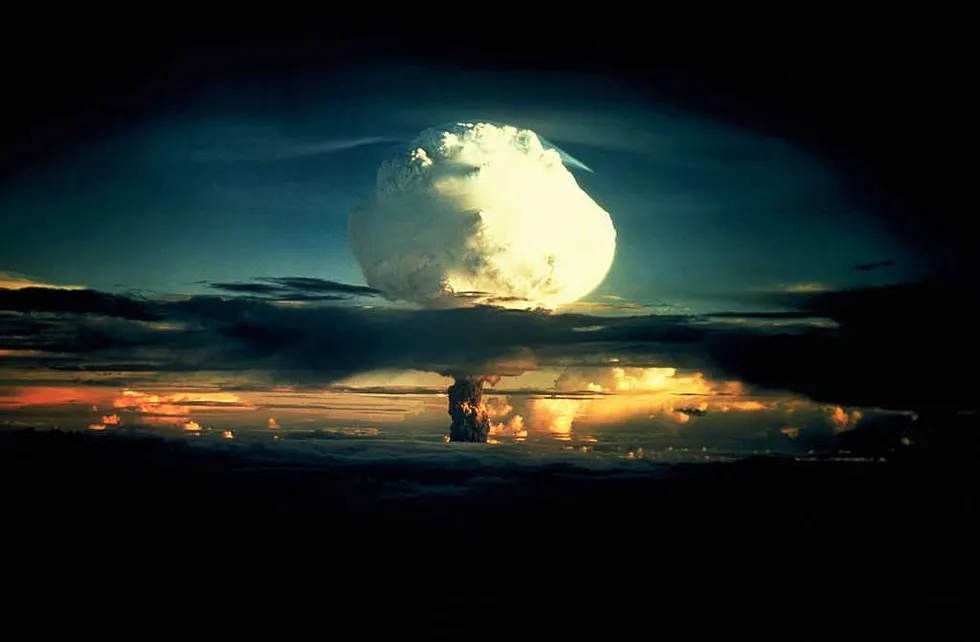 Photo by © CORBIS/Corbis via Getty Images
The researchers found that a “transient was 45% more likely to be observed on dates within a nuclear test window compared to dates outside of a nuclear test window.”
The duo also linked the transients to unidentified flying object/unidentified anomalous phenomenon reports, noting that “for days on which at least one transient was identified, significant associations were noted between total number of transients and total number of independent UAP reports per date.”
‘Why do they seem to show interest in nuclear testing?’
“For every additional UAP reported on a given date, there was an 8.5% increase in number of transients identified,” Bruehl and Villarroel wrote.
When it came down to hypothesizing what the transients might be, the duo came up with two possibilities that could account for associations of transients with both nuclear testing and UAP reports.
“The first involves an unexpected and previously undocumented atmospheric phenomenon triggered by nuclear detonations or related to nuclear fallout that may serve as a stimulus for some UAP reports and appear as transients on astronomical images,” they wrote.
The duo noted, however, that this first hypothesis is problematic, as effects in the atmosphere “would be likely to result in a streak on the image over the 50 min exposure, yet all transients appear as distinct point sources rather than streaks.”
Additionally, the researchers noted that transients were “most often observed one day after a nuclear test; such atmospheric phenomena would have to be sustained and remain localized in one location for approximately 24 h to account for the visual appearance of transients.”
After poking holes in their first hypothesis, the duo propped up their second hypothesis on the “well-known strand of UAP lore suggesting that nuclear weapons may attract UAP.”
“Within this latter hypothesis, our results could be viewed as indicating that transients are artificial, reflective objects either in high-altitude orbits around Earth or at high altitudes within the atmosphere,” they added.
Bruehl said to Live Science, “If it turns out that transients are reflective artificial objects in orbit — prior to Sputnik — who put them there, and why do they seem to show interest in nuclear testing?”
Michael Wiescher, a nuclear astrophysicist at the University of Notre Dame in France, suggested to Scientific American that nuclear tests alone might be the simpler explanation for the transients as they “obviously have an impact on the atmosphere” and can leave “a lot of junk in the outer atmosphere.”
Sean Kirkpatrick, former head of the Department of War’s UAP-investigating All-Domain Anomaly Resolution Office, similarly suggested that the explanation likely has to do with nuclear tests and the sun, noting that the “first thing that comes to mind is solar flare radiation or ionized particle radiation from nuclear testing.”
Kirkpatrick also suggested that high-altitude balloons, which were used for nuclear monitoring, could account for some of the UAP reports.
Like Blaze News? Bypass the censors, sign up for our newsletters, and get stories like this direct to your inbox. Sign up here!
3I/ATLAS: Here’s What To Know And How You Can See Rare Interstellar Comet
The interstellar comet 3I/ATLAS will reach its closest point to our world Dec. 19
Geminid Meteor Shower: Here’s What To Know And How You Can See Highly Anticipated Event
North American stargazers can catch the peak of the Geminid meteor shower during the night of Dec. 13
Troops in orbit? US dominance demands Space Force ‘guardians,’ ex-military brass claim
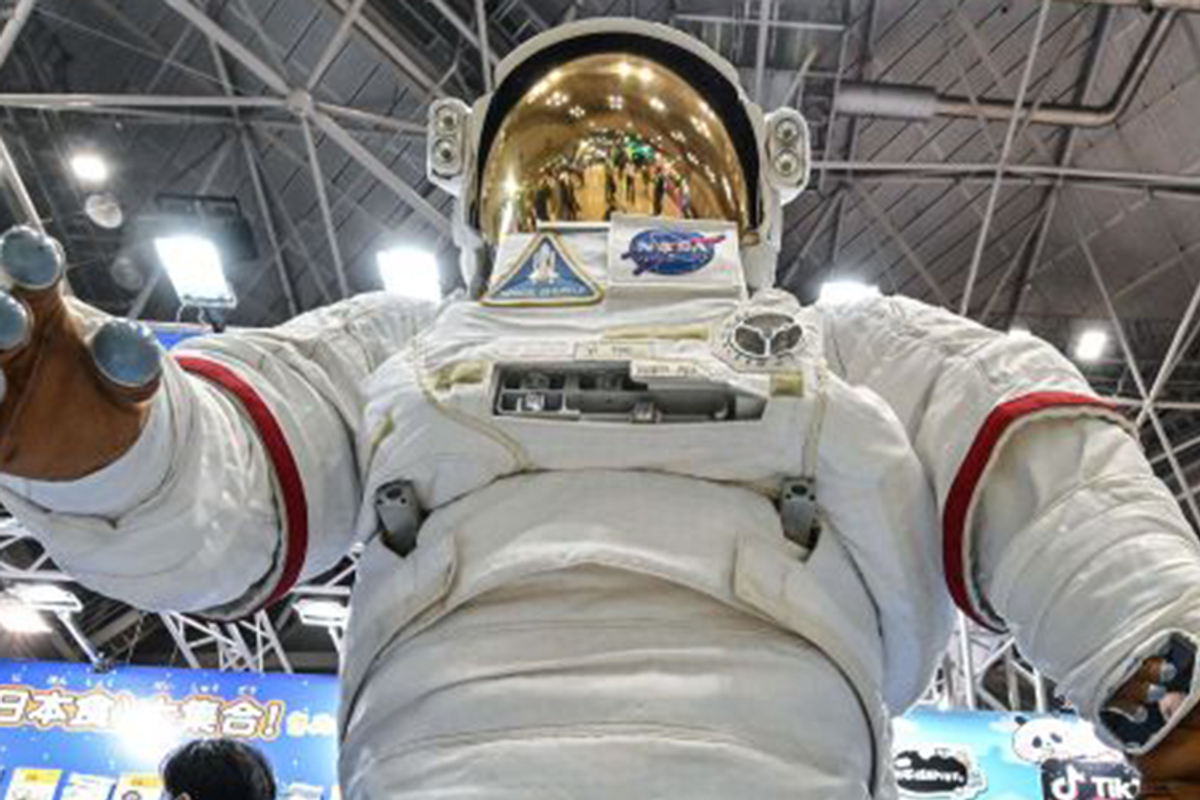
A group of former military officers says human Space Force missions could tilt the scales against America’s enemies.
In a new report, the Mitchell Institute for Aerospace Studies advocated the integration of man in space as the next step required to gain a tactical edge.
‘Astronaut guardians may be necessary to execute and secure missions that cannot be accomplished through remote operations.’
The Mitchell Institute calls itself an “independent, nonpartisan research organization” and consists of a plethora of retired military personnel. This includes a former Air Force brigadier general, general, and lieutenant general. Notably, the staff boasts retired Space Force Colonel Charles Galbreath, who serves as a director and senior resident fellow for space studies.
It was Galbreath who concluded the recent study that determined dynamic space operations with the Space Force will need to encompass orbital and terrestrial links, and establish space infrastructure in the future.
One of the most important areas of focus, Galbreath wrote, should be the need for crewed missions.
Labeling humans as the “most flexible system ever launched into space,” the former Space Force colonel said that “guardians in space” may be essential for future operations.
RELATED: Why Mars is America’s next strategic imperative
“Today, the Space Force does not have guardians operating in the space domain for military missions. However, as humanity’s interests in space go further from the Earth, astronaut guardians may be necessary to execute and secure missions that cannot be accomplished through remote operations,” Galbreath wrote.
The adaptability of human decision-making could present “fundamental challenges” to enemy decision-making procedures, he argued. For example, adding humans into a spacecraft would “raise the threshold” of acceptable hostile actions from foreign governments.
“Harming an uncrewed satellite is one thing; harming a space station with military crew on it is a completely different risk calculus for an adversary to consider,” Galbreath hypothesized.
As reported by Defense One, John Shaw, the former deputy leader of U.S. Space Command, recently appeared on a virtual event for the Mitchell Institute, where he expressed skepticism about putting troops in space in the immediate future.
“It’s probably when we’re projecting power across great distances, and it’s probably so they can be closer to an intense command and control capability where you need humans in the decision-making,” Shaw said.
Describing the placement of guardians in space as “inevitable,” Galbreath said during the same event that it’s going to take about 10 years to get the idea into practice due to the time it takes to develop the pipeline and training that would enable such a program.
“We can’t wake up one day and say, ‘My gosh, we need guardians in space.’ … We needed to make that decision 10 years ago,” Galbreath claimed.
According to the Mitchell report, there also exists a need for the Space Force to use alternate forms of propulsion, conduct in-space assembly, and create a supply chain for parts and infrastructure in order to fix satellites, for example.
Like Blaze News? Bypass the censors, sign up for our newsletters, and get stories like this direct to your inbox. Sign up here!
Manhattan-Sized 3I/ATLAS Accelerates, Shows Potential Signs Of Having Alien ‘Engine’ After Turning Blue
3I/ATLAS recently showed signs of an alien “engine”





