

Category: Opinion
POST OP-ED: How Many Racists Does Mayor Mamdani Mean to Hire?

By The New York Post Editorial Board If Mayor Zohran Mamdani wants to keep Afua Atta-Mensah on as his chief equity officer, he — and she — owe New Yorkers a whole host of honest, humble and convincing answers about the transparently racist social-media history City Hall tried to scrub.
POST OP-ED: Cynical Reason Jacob Frey and Tim Walz Chose Now to Stop Calling for Minneapolis Chaos

By The New York Post Editorial Board Minneapolis Mayor Jacob Frey launched a remarkable 180 late Wednesday:
DEVINE OP-ED: Australia Allowed Jewish Hate to Fester with Cowardly Appeasement and Foolish Immigration Decisions

By Miranda Devine Australia’s Oct.
Russia is out of the human spaceflight business — for now
The situation has ramifications for both the ISS and Russia’s future as a space power.
POST OP-ED: Newsom Brings His Begging Bowl to DC — But Cali Residents Can’t Trust Him With Taxpayer Cash

By The New York Post Editorial Board Gov.
POST OP-ED: Blame Dems for Fueling New York’s ‘Affordability’ Crisis With Their Green-energy Insanity

By The New York Post Editorial Board In the latest warning that New York’s Climate Action Plan is a slow-rolling disaster, the pragmatic liberals at the Progressive Policy Institute have called out the absurd green-energy law as an “undeniable” failure.
POST OP-ED: Venezuela and the World Will Be Far Better Off With the Maduro Regime GONE

By The New York Post Editorial Board Exactly what Team Trump intends to do with (or to) Venezuela is far from clear, but it clearly wants the Maduro regime gone ASAP, and with excellent reason.
POST OP-ED: NYPD Needs to Quash Violent Car-meetup ‘Street Takeovers’ IMMEDIATELY

By The New York Post Editorial Board It’s outrageous that Saturday night’s 40-car “street takeover” in Queens devolved into arson and assaults on residents who dared intervene, but it’s also horrific if a 911 dispatcher told callers that the vehicular melee was a “quality of life” non-emergency, so they needed to call 311 .
POST OP-ED: Zohran Mamdani is Reviving the Worst of the de Blasio Years

By The New York Post Editorial Board Mayor-elect Zohran Mamdani’s latest rumored hire may fit his vision of a dream team, but for the rest of New York, it promises to be a recurring nightmare.
Riot, repeat: How America’s unrest became a bad rerun
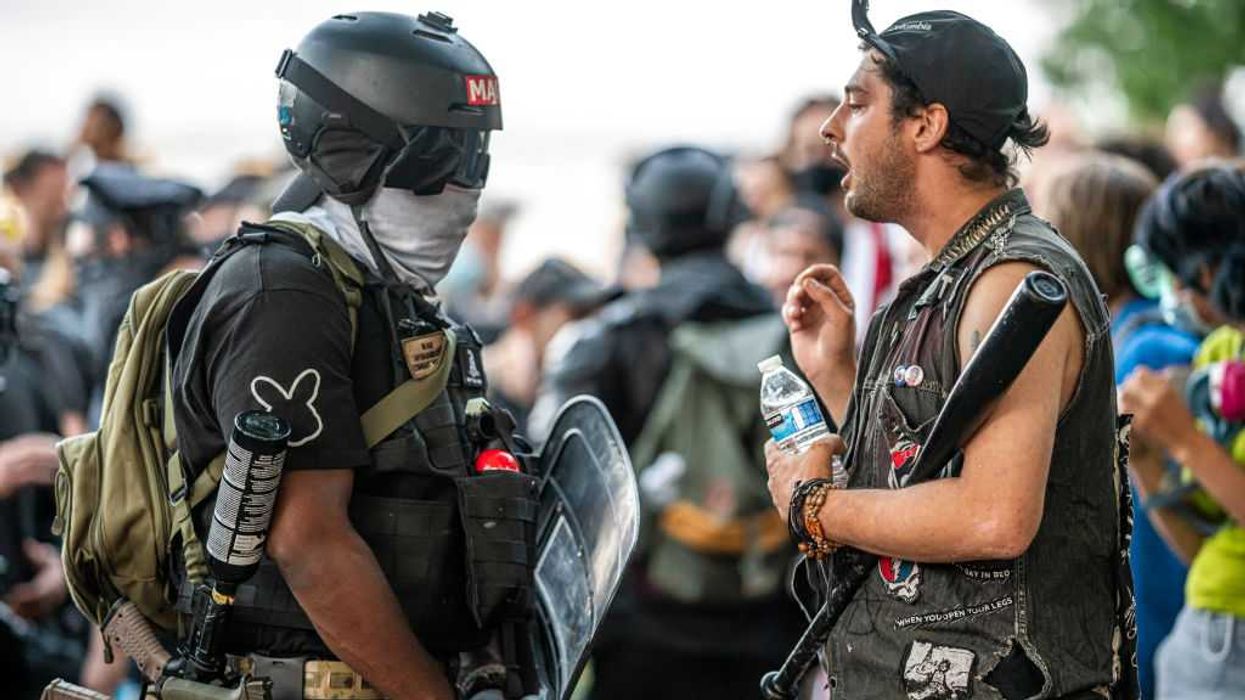
History doesn’t just move forward — it echoes. Karl Marx once said history repeats itself, “first as tragedy, second as farce.” He meant it as a jab at 19th-century France, where Napoleon’s nephew attempted to replicate his uncle’s revolutionary drama not on the battlefield but rather through bureaucratic spectacle. Nevertheless, Marx’s insight fits modern America. Our cycles of unrest and outrage have become predictable theater — each act beginning with moral panic and ending in absurdity.
The summer of 2020 was a national trauma. The killing of George Floyd was a tragedy that radicals turned into revolution. Riots swept through more than 2,000 cities, torching businesses, destroying neighborhoods, and leaving dozens dead. Egged on by the race-baiting activists at Black Lives Matter, mobs looted stores, assaulted police, and terrorized communities.
The line between tragedy and farce is thinner than ever — and this time, we can’t afford to play the fool.
Media outlets downplayed the carnage as “fiery but mostly peaceful.” Political leaders joined the chorus, afraid to confront the mob. Corporate America rushed to signal its virtue by taking the knee, pouring billions into “racial equity” schemes that enriched activists but divided the country.
The real tragedy wasn’t just the damage — it was the betrayal. Spineless mayors and governors surrendered their cities. Police were handcuffed, budgets gutted, and criminals emboldened. The riots hollowed out public trust, replacing civic order with cultural resentment. America’s guardians became scapegoats, and justice itself became negotiable.
From riot to parody
Five years on, the rebellion has devolved into a pathetic sideshow. Antifa’s latest “resistance” — a handful of masked agitators harassing Immigration and Customs Enforcement agents as they carry out long-overdue deportations — feels less like revolution and more like performance art.
Their vandalism is designed for TikTok, not for change: laser pointers at officers, graffiti on walls, choreographed scuffles for social media. It’s a boutique insurgency — staged in deep-blue enclaves, broadcast for dopamine hits, and forgotten the next day.
The chaos of 2020 burned cities. The tantrums of 2025 barely dent a precinct wall. The tragedy has become farce.
Still, both movements spring from the same poisoned root: a left-wing ideology that despises America’s foundations. BLM targeted police as enforcers of “white supremacy.” Antifa brands border agents as fascists for upholding immigration law.
Both rely on the same tactics — decentralized mobs, anonymous online organizing, and emotional manipulation amplified by social media. Both seek power through grievance, not through persuasion. And both reveal how progressive rage, unmoored from reality, becomes self-parody.
In 2020, rioters burned precincts and seized city blocks. They demanded “defund the police” and got it — along with record crime rates and broken neighborhoods. In 2025, their heirs spray-paint slogans and livestream tantrums. Their only victory is visibility.
The digital theater of rage
Social media turned riots into content. In 2020, doctored clips of “police brutality” fueled nationwide hysteria, empowered anti-cop lunatics, and enriched grifters. Today, the same algorithms push Antifa’s posturing, turning vandalism into viral spectacle.
These platforms profit from outrage. They amplify emotion, suppress context, and reward hysteria. The result is a feedback loop of performative politics — activism as cosplay.
After years of indulgence, government crackdowns have finally returned. ICE operates under firm executive backing. Local police departments no longer hesitate to enforce the law. The radicals, once protected, now find themselves exposed and outmatched.
But even as law enforcement regains its footing, the left’s playbook remains unchanged. The grievances are repackaged, the slogans recycled, the media coverage predictable. It’s cultural Marxism with a TikTok filter — ideology as entertainment.
Farce doesn’t mean harmless. Every protest turned stunt still corrodes civic life. Each viral act of defiance feeds distrust in law, borders, and the rule of order itself.
The radicals thrive on illusion: fake oppression, fake urgency, fake rebellion. Meanwhile, real Americans bear the cost — higher crime, divided communities, and institutions too timid to defend themselves.
RELATED: The left’s costume party: Virtue signaling as performance art
 Photo by serazetdinov via Getty Images
The lesson we refuse to learn
The tragedy of 2020 proved that surrendering to the mob invites ruin. The farce of 2025 shows that ridicule alone isn’t enough to defeat it. Both demand resolve — the courage to confront lies, restore order, and defend the institutions that safeguard freedom.
History doesn’t stop repeating itself; it stops being repeated. Whether America ends this cycle depends on whether its citizens choose firmness over fear, enforcement over appeasement, and truth over spectacle.
Enough with the doctored outrage porn. The burning question is whether we’ll tolerate this clown show recycling into catastrophe or crush it with resolve that honors real American values.
The line between tragedy and farce is thinner than ever — and this time, we can’t afford to play the fool.





