

Category: Judicial Watch
Jelly Roll receives second chance, thanks to Tennessee governor’s Christmas season tradition

Tennessee Gov. Bill Lee (R) maintains an annual Christmas season tradition of granting clemency to select individuals, highlighting stories of redemption and second chances.
This year, Lee extended pardons to 33 individuals. The most notable beneficiary was country music star Jelly Roll, who was previously convicted of robbery and drug felonies.
‘His story is remarkable, and it’s a redemptive, powerful story, which is what you look for and what you hope for.’
“I am genuinely inspired by the broadness of the folks that are getting pardons today,” Lee said, the Tennessean reported.
The governor called his pardon power “a very serious responsibility.”
While federal pardons allow convicted individuals to avoid prison time, Tennessee pardons serve as a statement of forgiveness after time has been served. The AP reported that they offer a path to restoring certain civil rights, including voting rights. The governor may specify the terms of the pardon.
Jelly Roll, whose given name is Jason DeFord, stated during a January 2024 congressional hearing that his right to vote had been restricted due to his criminal past.
 Jelly Roll. Photo by Georgiana Dallas/WWE via Getty Images
As part of the clemency process, applications undergo a months-long review, the Associated Press reported. The state parole board reportedly issued a unanimous, non-binding recommendation for Jelly Roll in April.
The music artist visited the governor’s mansion on Thursday to receive the news.
“His story is remarkable, and it’s a redemptive, powerful story, which is what you look for and what you hope for,” Lee stated.
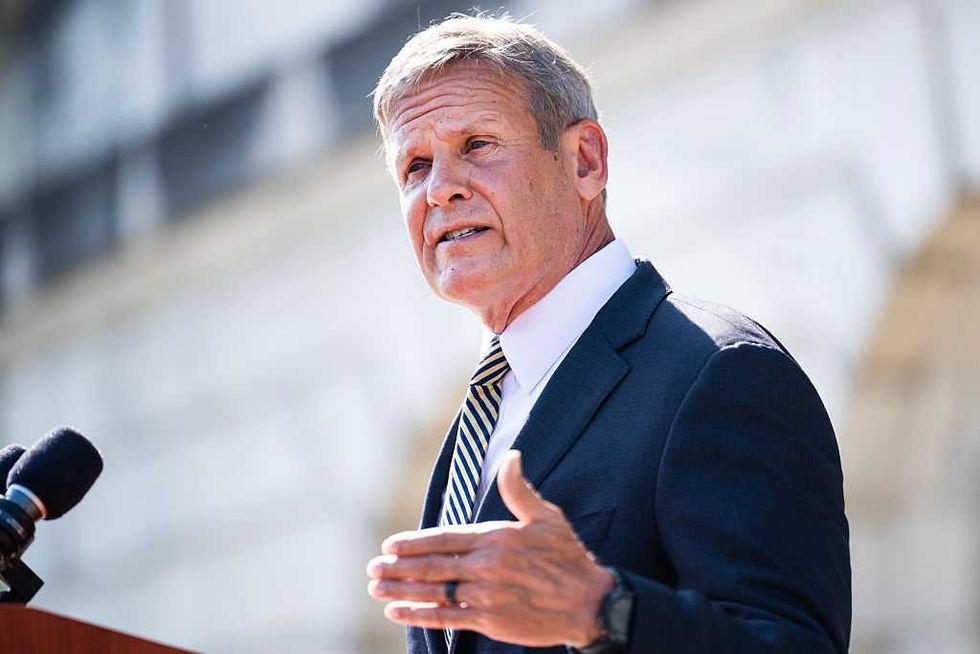 Tennessee Governor Bill Lee. Tom Williams/CQ-Roll Call, Inc via Getty Images
Jelly Roll stated that the clemency would make it easier for him to travel internationally for his concert tours and Christian missionary work.
Earlier this month, while appearing on Joe Rogan’s podcast, Jelly Roll received word that he had been invited to become a member of the Grand Ole Opry.
“I didn’t even dream of it,” Jelly Roll told Rogan. “God will make things bigger than your dreams. Somebody out there right now is dreaming of something, and it’s too small. Dream bigger, baby.”
Like Blaze News? Bypass the censors, sign up for our newsletters, and get stories like this direct to your inbox. Sign up here!
Tom Steyer’s Affordable Energy Promises to California Are Unaffordable
Tom Steyer, the billionaire climate activist running for California governor, promises to cut electric bills by 25 percent by breaking…
Sanctuary Policies Release Thousands of Violent Criminal Aliens
Violent Criminal Aliens Released in Two States Since January Stemming Toxic Waste from Mexico Merry Christmas! Violent Criminal Aliens Released in Two States Since January Sanctuary policies not only unlawfully interfere with federal immigration enforcement, but they are also a clear and present danger to the public safety. Our Corruption Chronicles blog points out […]
The post Sanctuary Policies Release Thousands of Violent Criminal Aliens appeared first on Judicial Watch.
Teen Gangsters Plead Guilty To Serving As Hitmen For Deadly Drug Cartel
anyone caught within the “kill zone”
EXCLUSIVE: Joni Ernst Delivers Demand For USPS To Explain Why They Can’t Account For Space In 21,000 Buildings
‘They self-admittedly have no clue’
‘I’ll get the heat’: Milwaukee judge is now a convicted felon after violent illegal alien dodged ICE from her courtroom

Milwaukee County Judge Hannah Dugan tried her best to avoid consequence for her role in Eduardo Flores-Ruiz — an illegal alien from Mexico who later pled no contest to one count of battery and guilty to re-entering the U.S. — briefly evading U.S. Immigration and Customs Enforcement.
Her best was evidently not good enough.
Dugan, relieved of her duties as a judge in April by the Supreme Court of Wisconsin, was found guilty on Thursday of obstructing federal agents — a felony. The jury did not, however, find Dugan guilty of the lesser misdemeanor charge of concealing a fugitive from justice.
‘Dugan’s actions to obstruct this violent criminal’s arrest take “activist judge” to a whole new meaning.’
“The defendant is certainly not evil nor is she a martyr for some greater cause,” Brad Schimel, the interim U.S. attorney for the Eastern District of Wisconsin, told reporters after Dugan learned her fate. “We must all accept the verdict peacefully.”
Schimel emphasized that “experience and common sense as well as the evidence presented in this case” demonstrate that the safest place to execute an arrest warrant is within a public area of a courthouse that has security screening — and that the 66-year-old judge’s actions endangered multiple people.
“The defendant’s actions provided an opportunity for a wanted subject to flee outside that safe courthouse environment, which led to a dangerous foot chase through automobile traffic and eventually to an agent taking the subject to the ground, which is always hazardous for both the officer and the suspect,” said Schimel. “There was certainly potential for many other dangers as well.”
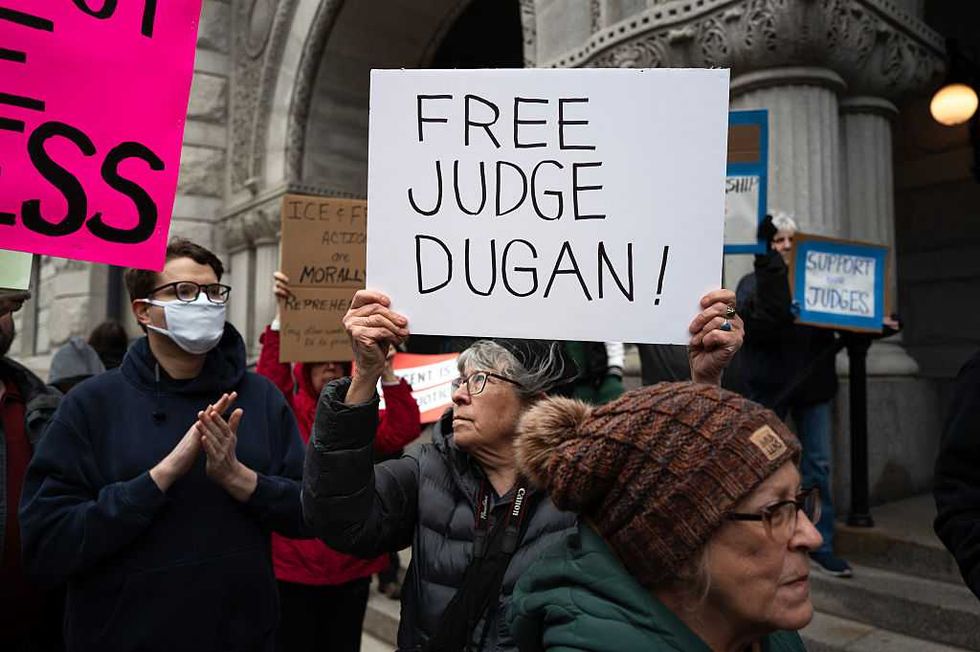 Photo by Scott Olson/Getty Images
ICE agents accompanied by both FBI and Drug Enforcement Administration agents traveled to the Milwaukee County Courthouse on April 18, 2025, to arrest Flores-Ruiz, aware that the previously deported Mexican national was scheduled to attend a pre-trial hearing overseen by Dugan.
Upon learning of ICE’s presence from an attorney, the now-felonious judge “became visibly angry, commented that the situation was ‘absurd,’ left the bench, and entered chambers” while Flores-Ruiz was seated in the gallery of the courtroom, according to the original FBI charging document.
The indictment claimed that Dugan proceeded to commit several affirmative acts to aid the illegal alien in evading arrest, including:
- confronting members of the ICE task force and falsely telling them they needed a judicial warrant to effectuate the arrest;
- directing the federal agents to go to the chief judge’s office after she learned they had the required administrative warrant for Flores-Ruiz’s arrest;
- dealing with Flores-Ruiz’s criminal case off the record while the ICE task force was in the chief judge’s office;
- directing the illegal alien and his counsel to flee the courtroom via a non-public jury door; and
- advising the Mexican’s counsel that he could appear remotely for his next court date.
The judge’s actions were observed by multiple witnesses and captured on film.
With Dugan’s help, the Mexican national ran out of the building. Federal agents were, however, able to catch up with him.
Flores-Ruiz was ultimately deported on Nov. 13.
Tricia McLaughlin, assistant secretary of the Department of Homeland Security, noted at the time, “Eduardo Flores-Ruiz, a previously removed illegal alien, has a laundry list of violent criminal charges, including strangulation and suffocation, battery, and domestic abuse. Judge Hannah Dugan’s actions to obstruct this violent criminal’s arrest take ‘activist judge’ to a whole new meaning.”
In the lead-up to the trial, Dugan’s lawyers tried desperately to get her case dismissed, citing the U.S. Supreme Court’s ruling in Trump v. United States and claiming that the radical judge was immune from criminal prosecution for judicial acts, that her prosecution violates the limits of federal power under the 10th Amendment, and that her indictment should be dismissed under the canon of constitutional avoidance.
Such efforts proved fruitless.
The jury saw and heard plenty of damning evidence during the trial that began on Monday.
They heard, for instance, an audio recording where Dugan told a court reporter that Flores-Ruiz could escape through a side door, reported the Milwaukee Journal Sentinel.
Although Dugan’s court reporter volunteered to walk the illegal alien out, Dugan said she instead would do it: “I’ll get the heat.”
The jury also heard from numerous witnesses, including Milwaukee County Circuit Judge Kristela Cervera, who testified, “Judges should not be helping defendants evade arrest.”
Cervera was the individual who escorted the federal agents to Chief Judge Carl Ashley’s office.
For her felony conviction, Dugan could face up to five years in prison and a maximum fine of $250,000.
The disgraced judge’s attorney, Steve Biskupic, indicated Dugan’s team will file a motion with the Clinton-appointed federal judge overseeing the case, U.S. District Judge Lynn Adelman, asking to set aside the conviction.
“The case is a long way from over,” said Biskupic.
While Dugan has been on administrative leave for several months, the New York Times indicated she has continued to collect her $174,000 salary.
Like Blaze News? Bypass the censors, sign up for our newsletters, and get stories like this direct to your inbox. Sign up here!
Border Patrol nabs 49 illegal aliens with commercial driver’s licenses

Border Patrol agents in Southern California arrested 49 illegal aliens who, despite their unlawful status, were in possession of commercial driver’s licenses, Blaze News has exclusively learned.
El Centro Sector Border Patrol agents arrested some of those individuals while conducting vehicle stops at immigration checkpoints between November 23 and December 12. Others were apprehended during a two-day interagency operation.
‘The individuals arrested should never have been operating these semitrucks, and the states issuing them commercial driver’s licenses are directly responsible for the fatal accidents we have tragically witnessed recently.’
While stopping vehicles at checkpoints along Highway 86 and 111, Indio Station agents nabbed 42 illegal aliens who were operating semitrucks. Of these arrested individuals, 30 were from India, while the others were from El Salvador, China, Eritrea, Haiti, Honduras, Mexico, Russia, Somalia, Turkey, and Ukraine.
Customs and Border Patrol reported that 31 of the CDLs were issued by California. The other licenses were issued by Florida, Illinois, Indiana, Ohio, Maryland, Minnesota, New Jersey, New York, Pennsylvania, and Washington.
Indio Station agents also participated in Operation Highway Sentinel, an enforcement operation held on December 10 and 11, in collaboration with Immigration and Customs Enforcement’s Homeland Security Investigations.
The initiative aimed to enhance the safety of America’s roadways following several recent fatal accidents involving illegal alien truck drivers.
 Photo by CHARLY TRIBALLEAU/AFP via Getty Images
The joint operation specifically targeted commercial trucking operations in California and resulted in the arrests of 45 illegal aliens with CDLs. The seven individuals arrested by Indio Station were from India, Tajikistan, and Uzbekistan.
RELATED: Trump’s DOT claims 53% of New York’s non-domiciled CDLs were issued illegally
 Photo by Kevin Carter/Getty Images
“El Centro Sector personnel are stalwart defenders of our nation’s security, whether that occurs at the border or in the interior of the United States,” said El Centro Sector Acting Chief Patrol Agent Joseph Remenar. “Since the beginning of Fiscal Year 2026, El Centro Sector’s arrests of individuals in the interior have surpassed those at the border, directly illustrating what can be accomplished when a secure border is achieved.”
“The success of this operation highlights the ongoing dangers posed by the unmitigated border crisis we experienced prior to 2025,” Remenar continued. “The individuals arrested should never have been operating these semitrucks, and the states issuing them commercial driver’s licenses are directly responsible for the fatal accidents we have tragically witnessed recently. Together, with our allied partners in Homeland Security Investigations and other agencies, El Centro Sector will continue to ensure that the safety of the American public is at the forefront of our efforts.”
Like Blaze News? Bypass the censors, sign up for our newsletters, and get stories like this direct to your inbox. Sign up here!
Trump can fix a hidden public safety failure
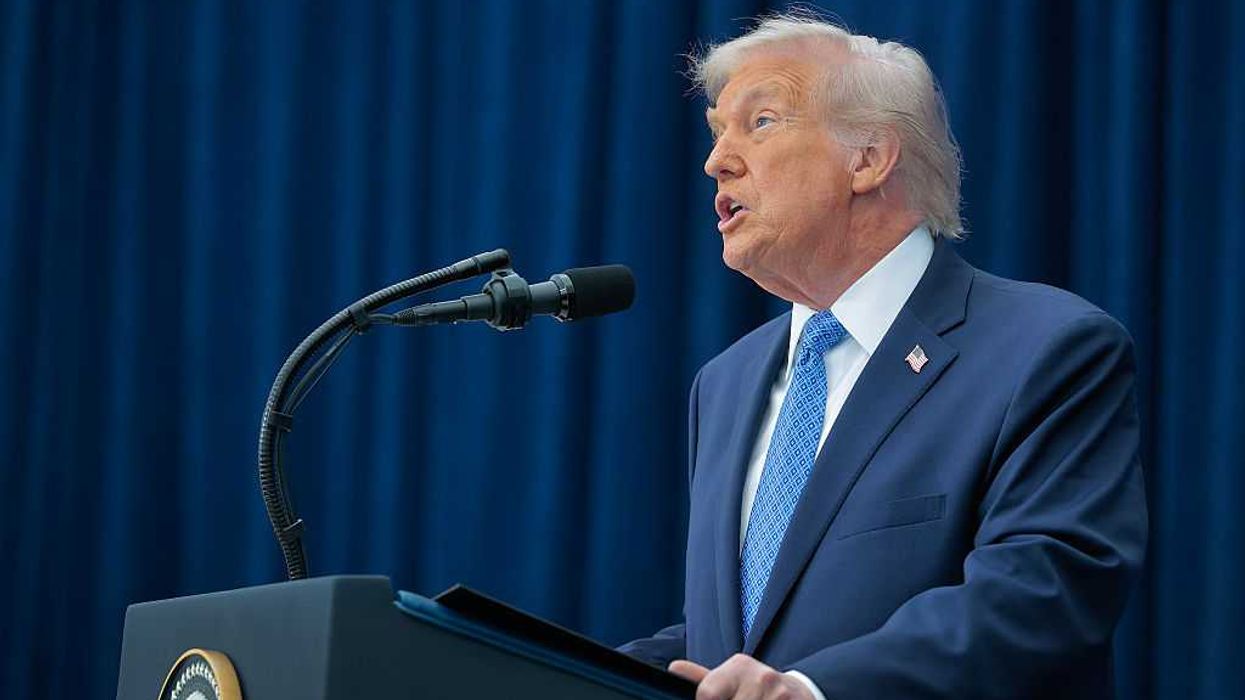
During President Trump’s first term, he signed the First Step Act — the most comprehensive criminal justice reform bill in decades — into law. He now has a chance to take a “second step” by rightsizing federal supervision of people on probation — an often overlooked public safety gap — with the introduction of the Safer Supervision Act.
I worked with the president and many bipartisan leaders to pass the First Step Act. I have also been on supervision and spend time with law enforcement leaders across the country. The Safe Supervision Act will empower our federal probation officers and judges to devote previous supervision resources to the people most likely to commit more crimes.
The Safer Supervision Act is the smart, responsible way to make our communities safer — and it is a great ‘second step’ for President Trump.
Currently the federal system for supervised release — the period of monitoring that follows incarceration — is structured in a way that actively undermines this goal. By overwhelming federal probation officers with low-risk individuals, the current system diverts attention and resources away from the true threats.
Due to the sprawling, largely automatic application of supervised release, our federal system currently monitors more than 110,000 individuals. This policy forces federal probation officers to spread their time dangerously thin.
When officers must dedicate precious time and limited resources to tracking individuals who have already demonstrated a low risk of re-offending, they are left with insufficient bandwidth to provide the oversight and intervention required by high-risk, violent offenders.
The bipartisan Safer Supervision Act is a targeted piece of legislation that corrects this dangerous imbalance. It is a genuine public safety bill that has earned the strong endorsement of the Federal Law Enforcement Officers Association, Major Cities Chiefs Association, and the National District Attorneys Association, among others. This bill’s promise is simple: More efficient use of law enforcement resources will reduce repeat crimes.
The core mechanism of the act is the restoration of individualized assessment. Under the current system, supervision is imposed in virtually every case. The Safer Supervision Act requires courts to conduct an individualized risk assessment before imposing supervision.
By reserving supervised release for cases that genuinely warrant it, this change moves toward a gold standard of effective supervision endorsed by professional associations such as the American Probation and Parole Association.
The strongest supervision model ensures that intensive supervision and rehabilitation efforts are directed to the highest-risk areas. The bill would allow federal law enforcement to operate as true risk managers, directing resources where they can have the most effect on those who pose the greatest public threat.
RELATED: Mexico has cartel armies. Blue America has cartel politics.
 Photo by HERIKA MARTINEZ/AFP via Getty Images
The bill helps break the cycle of recidivism by providing a strong incentive for successful rehabilitation. For low-risk individuals who have served their time and demonstrated good conduct, unnecessarily prolonged supervision terms become a counterproductive barrier. They inhibit successful re-entry by making it difficult to find stable employment and housing, which paradoxically increases the likelihood that the individual will re-offend.
The Safer Supervision Act establishes a process for early termination of supervision for individuals who have served half their term (or two-thirds for violent offenses) and have maintained good behavior. By giving people a clear finish line and rewarding sustained compliance, it dramatically increases the incentive for positive life changes. A successfully terminated supervision term means one less individual returning to crime, thereby enhancing the overall safety of their neighborhood.
Finally the act shows intelligence in addressing substance-use violations, treating them as opportunities for intervention rather than instant triggers for renewed incarceration. The bill creates an extremely narrow carve-out, giving judges discretion for minor offenses.
Under current law, mandatory re-imprisonment is required for these minor violations, often derailing successful rehabilitation and costing taxpayers significantly. The Safer Supervision Act empowers judges to prioritize treatment, counseling, and swift rehabilitation over immediate, expensive, and ineffective re-incarceration.
The support for the Safer Supervision Act is the most bipartisan coalition we have seen since the First Step Act. It is endorsed by police chiefs and prosecutors who understand the operational realities of crime and by fiscal conservatives demanding accountability for federal spending.
By adopting this bill, Congress can deliver a modern, evidence-based supervision system that ensures limited resources go to our highest-risk individuals, minimizes government waste, and delivers lasting public safety improvements.
The Safer Supervision Act is the smart, responsible way to make our communities safer — and it is a great “second step” for President Trump.
Kansas Senate Candidate Names His Political Inspiration: A Black Panther ‘Soldier’ Working To Destroy the American ‘Empire’
Just before he launched his longshot Senate bid, Kansas Democrat Erik Murray boasted on a podcast about his life-changing experience learning from former Black Panther leader Elaine Brown, an avowed socialist who recently reaffirmed her commitment to topple the “Empire of the United States.”
The post Kansas Senate Candidate Names His Political Inspiration: A Black Panther ‘Soldier’ Working To Destroy the American ‘Empire’ appeared first on .
After $630 Mil Plan Fails to Stop Flow of Waste, Sewage from Tijuana U.S. Solution Relies on Mexico
Just a few years after the U.S. government wasted $630 million on a failed plan to stop the constant flow of toxic waste and raw sewage that gushes in from Mexico, the Trump administration is celebrating a new project it guarantees will finally solve the problem though it seems too good to be true. The […]
The post After $630 Mil Plan Fails to Stop Flow of Waste, Sewage from Tijuana U.S. Solution Relies on Mexico appeared first on Judicial Watch.





