Category: America
Our forefathers prayed on Thanksgiving. We scroll.

There was a time when Thanksgiving pointed toward something higher than stampedes for electronics or a long weekend of football. At its root, Thanksgiving was a public reminder that faith, family, and country are inseparable — and that a free people must recognize the source of their blessings.
Long before Congress fixed the holiday to the end of November, colonies and early states observed floating days of thanksgiving, prayer, and fasting. These were civic acts as much as religious ones: moments when communities asked God to protect them from calamity and guide their families and their nation.
Grounded in gratitude
The Continental Congress issued the first national Thanksgiving proclamation in 1777, drafted by Samuel Adams. The delegates called on Americans to acknowledge God’s providence “with Gratitude” and to implore “such farther Blessings as they stand in Need of.”
Twelve years later, President George Washington proclaimed the first federal day of thanksgiving under the Constitution. He asked citizens to gather in public and private worship, to seek forgiveness for “national and other transgressions,” and to pray for the growth of “true religion and virtue.”
Our problems — social, fiscal, and moral — are immense. But they are not greater than the God our ancestors trusted.
Other presidents followed suit. During rising tensions with France in 1798, John Adams declared a national day of “solemn humiliation, fasting, and prayer,” arguing that only a virtuous people could sustain liberty. The next year he called for another day of thanksgiving, urging citizens to set aside work, confess national sins, and recommit themselves to God.
For generations, this was the American understanding: national strength flowed from moral character, and moral character flowed from religious conviction.
The evolution of a holiday
In 1863, President Abraham Lincoln — responding to years of lobbying by Sarah Josepha Hale — established the last Thursday in November as a permanent national Thanksgiving. Hale saw the holiday as a unifying civic ritual that strengthened families and reminded Americans of their shared heritage.
Calvin Coolidge echoed this tradition in 1924, observing that Thanksgiving revealed “the spiritual strength of the nation.” Even as technology transformed daily life, he insisted that the meaning of the day remain unchanged.
But as the country drifted from an agricultural rhythm and from public expressions of faith, the holiday’s original purpose faded. The deeper meaning — gratitude, repentance, unity — gave way to distraction.
When a nation forgets
Today, America marks Thanksgiving with a national character far removed from the one our forebears envisioned. The founders believed public acknowledgment of God’s authority anchored liberty. Modern institutions increasingly treat religious conviction as an obstacle.
Court rulings have redefined marriage, narrowed the space for religious conscience, and removed long-standing religious symbols from public grounds. Citizens have been fined, penalized, or jailed for refusing to violate their beliefs. The very freedoms early Americans prayed to preserve are now treated as negotiable.
At the same time, other pillars of national life — family stability, civic order, border security, self-government — erode under cultural and political pressure. As faith recedes, government fills the void. The founders warned that a people who lose their internal moral compass invite external control.
Former House Speaker Robert Winthrop (Whig-Mass.) put it plainly in 1849: A society will be governed “either by the Word of God or by the strong arm of man.”
A lesson from history
The collapse of religious conviction in much of Europe created a vacuum quickly filled by ideologies hostile to Western values. America resisted this trend longer, but the rising influence of secularism and identity ideology pushes our society toward the same drift: a nation less confident in its heritage, less united by a common purpose.
Ronald Reagan saw the warning signs decades ago. In his 1989 farewell, he lamented that younger generations were no longer taught to love their country or understand why the Pilgrims came here. Patriotism, once absorbed through family, school, and culture, had been replaced by fashionable cynicism.
Thanksgiving offers the antidote Reagan urged: a return to gratitude, history, and shared purpose.
RELATED: Why we need God’s blessing more than ever
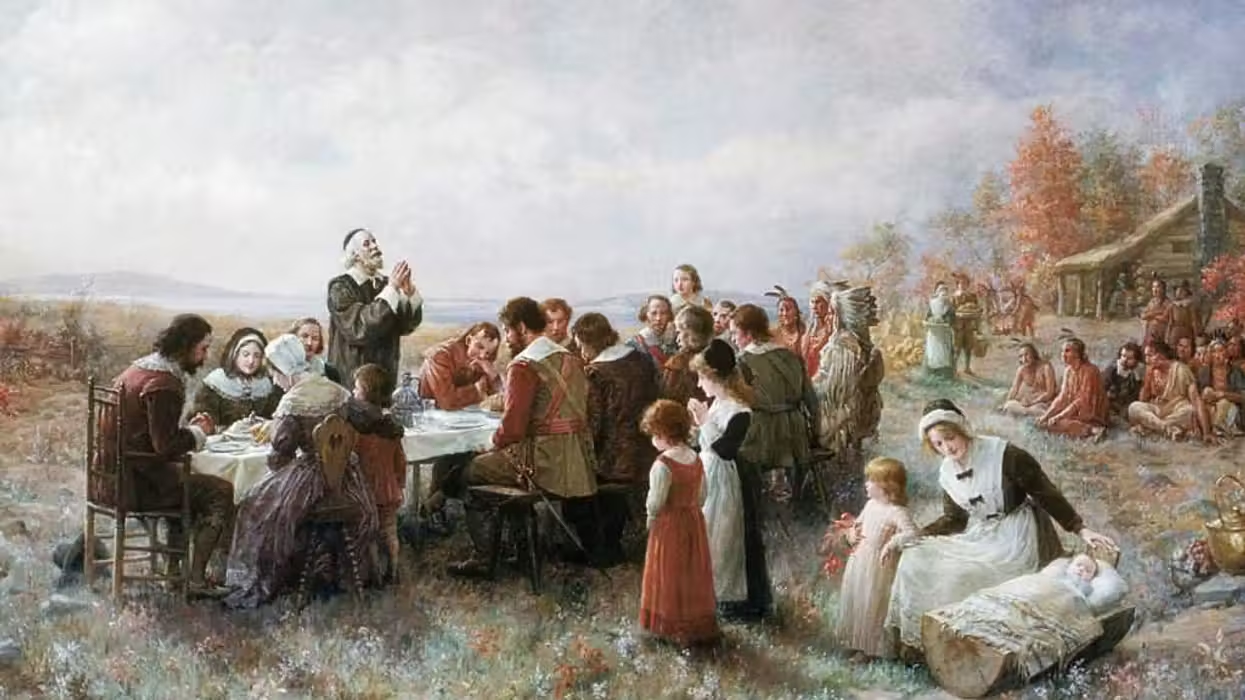 Photo by Barney Burstein/Corbis/VCG via Getty Images
Thanksgiving was meant to be the clearest expression of a nation united by faith, family, and patriotism. It rooted liberty in gratitude and gratitude in God’s providence.
Reagan captured that spirit in 1986, writing that Thanksgiving “underscores our unshakable belief in God as the foundation of our Nation.” That conviction made possible the prosperity and freedom Americans inherited.
Today’s constitutional conservatives must lead in restoring that heritage — not by nostalgia, but by example. Families who teach gratitude, faith, and national purpose build the civic strength the founders believed essential.
A return to gratitude
Thanksgiving calls each of us to humility: to recognize that national renewal begins with personal renewal. Our problems — social, fiscal, and moral — are immense. But they are not greater than the God our ancestors trusted.
That confidence is the heart of Thanksgiving. It is why the Pilgrims prayed, why Congress proclaimed days of fasting and praise, why Lincoln unified the holiday, and why generations of Americans pause each November to give thanks.
Editor’s note: A version of this article first appeared at Conservative Review in 2015.
When America feared God: The bold Thanksgiving prayer they don’t teach any more
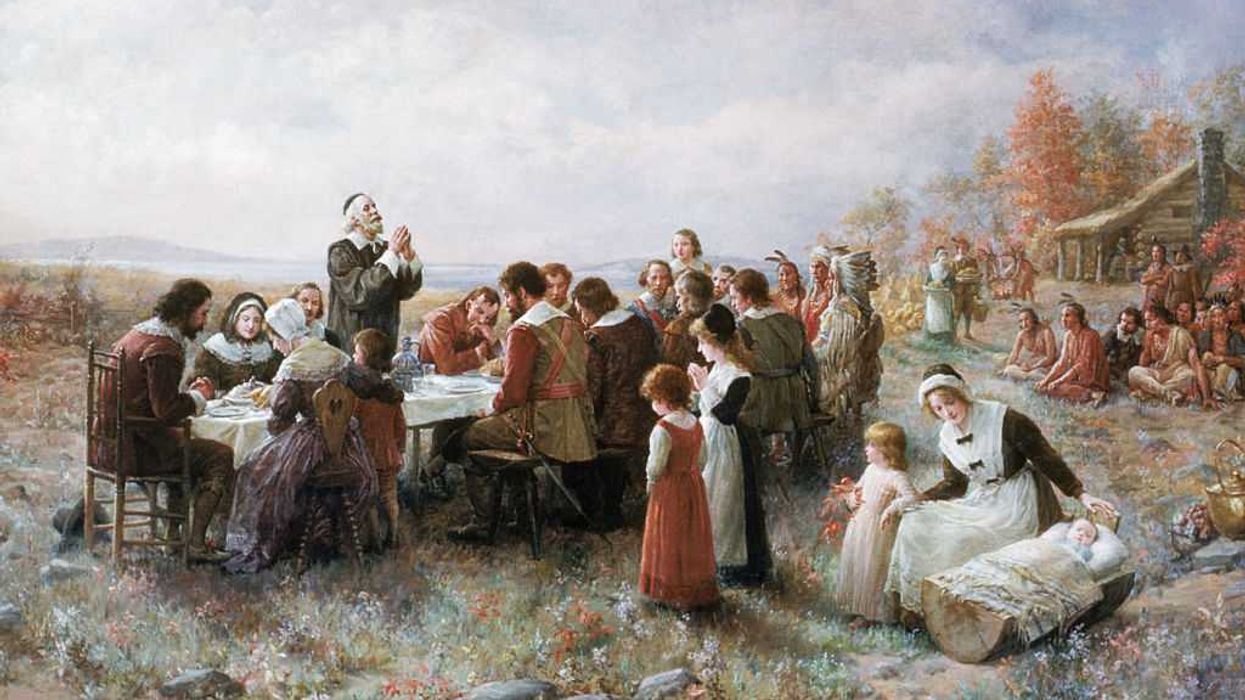
Thanksgiving is an annual reminder of our nation’s Christian roots and our godly heritage. Although Virginia proclaims that the first Thanksgiving was in Jamestown in 1619 — not in Plymouth in 1621 — the Plymouth one became the prototype of our annual celebrations.
George Washington was the first president under the Constitution to declare a national day of thanksgiving, and President Lincoln was the first to declare Thanksgiving an annual holiday.
‘It is the indispensable Duty of all Men to adore the superintending Providence of Almighty God; to acknowledge with Gratitude their Obligation to him for Benefits received, and to implore such further Blessings as they stand in Need of …’
However, Samuel Adams, with the help of two other continental congressmen, was the first to declare a National Day of Thanksgiving for America as an independent nation.
The time was the fall of 1777. Overall, it seemed that things were not going well for the United States. Americans lost the Battle of Brandywine on September 11, which Dr. Peter Lillback notes was our “first 9/11.”
George Washington saw that the Brandywine defeat meant the impending fall of Philadelphia, our nation’s capital at the time, into the hands of the British.
So Congress had to flee westward, first to Lancaster and then to York, Pennsylvania. Washington and his troops had to flee westward also. They ended up in a place called Valley Forge. The worst was yet to come with the brutal winter there.
Meanwhile, on October 7, 1777, there was a victory at Saratoga, New York. Samuel Adams of Boston, a key leader in American independence, saw that we as a nation could rejoice in this act of divine Providence. So — with the help of fellow Continental Congressmen Rev. John Witherspoon of New Jersey and Richard Henry Lee of Virginia — Samuel Adams wrote our country’s first thanksgiving declaration as an independent nation.
This is what they wrote in that First National Thanksgiving Proclamation, November 1, 1777: “It is the indispensable Duty of all Men to adore the superintending Providence of Almighty God; to acknowledge with Gratitude their Obligation to him for Benefits received, and to implore such further Blessings as they stand in Need of.”
As humans, as Christians, we should be grateful. They continue, “And it having pleased him in his abundant Mercy, not only to continue to us the innumerable Bounties of his common Providence; but also to smile upon us in the Prosecution of a just and necessary War, for the Defense and Establishment of our unalienable Rights and Liberties; particularly in that he hath been pleased, in so great a Measure, to prosper the Means used for the Support of our Troops, and to crown our Arms with most signal success.”
I think it’s fair to say that Adams, Witherspoon, and Lee were looking for the good news (the Saratoga victory) in a sea of bad news (American setbacks, the latest of which was the defeat at Brandywine).
They continue: “It is therefore recommended to the legislative or executive Powers of these UNITED STATES to set apart THURSDAY, the eighteenth Day of December next, for SOLEMN THANKSGIVING and PRAISE.”
And what were the Americans to do during that day of Thanksgiving and praise? To confess “their manifold sins … that it may please GOD through the Merits of JESUS CHRIST, mercifully to forgive and blot them out of Remembrance; That it may please him graciously to afford his Blessing on the Governments of these States respectively, and prosper the public Council of the whole.”
RELATED: That we may all unite in rendering unto our Creator our sincere and humble thanks
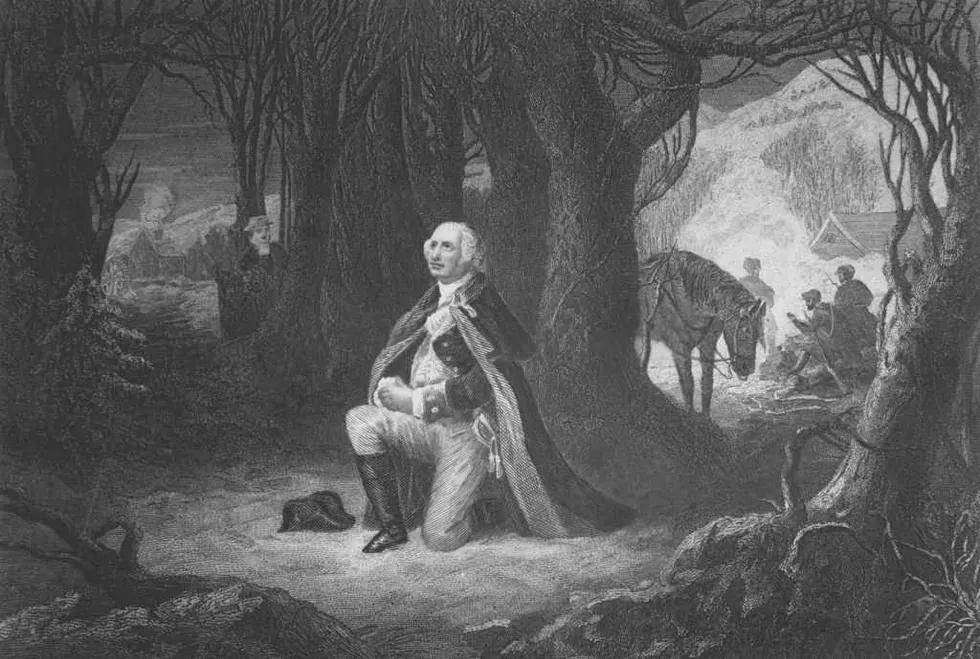 Interim Archives/Getty Images
If someone prayed like this in Congress today, people might try to drive him out of town on a rail — like the leftist members of Congress who blew a gasket when California minister Jack Hibbs prayed in the name of Jesus in Congress in early 2024.
Writing on behalf of Congress, Adams, Witherspoon, and Lee continue: “To inspire our Commanders, both by Land and Sea, and all under them, with that Wisdom and Fortitude which may render them fit Instruments, under the Providence of Almighty GOD, to secure for these United States, the greatest of all human Blessings, INDEPENDENCE and PEACE.”
They also prayed for God “to prosper the Trade and Manufactures of the People,” as well as the farmers, for success of the crops. They also asked for God’s help in the schools, which they note are “so necessary for cultivating the Principles of true Liberty, Virtue and Piety, under his nurturing Hand; and to prosper the Means of Religion, for the promotion and enlargement of that Kingdom, which consisteth ‘in Righteousness, Peace and Joy in the Holy Ghost.’”
This prayer proclamation is no namby-pamby type of prayer such as we might hear from Congress these days. These are bold proclamations of faith, showing the pro-Christian side of the founding fathers that we rarely hear about these days.
This article is adapted from an essay originally published at Jerry Newcombe’s website.
China is arming itself with minerals America refuses to mine

The global energy system is buckling under the weight of its own contradictions. Electricity demand keeps rising, yet policymakers insist that renewables alone can carry the load. Artificial intelligence, electric vehicles, and a wave of reindustrialization are driving consumption far faster than today’s grid can support. Nowhere is that tension more visible than in the United States, where soaring demand collides with aging infrastructure and unrealistic clean-energy mandates.
America stands at a crossroads. One path deepens dependence on foreign supply chains dominated by China. The other rebuilds domestic energy strength, restores industrial capacity, and creates high-wage jobs. The question isn’t whether a green transition will happen — it is who will own the minerals, the infrastructure, and the economic power behind it.
Energy dominance is not a slogan. It is the practical foundation of American greatness.
Electricity demand jumped nearly 4% in 2024, almost double the decade’s average. Data centers, electrified transport, and manufacturing growth are reshaping the energy landscape. The International Energy Agency projects global data-center power use will more than double by 2030, approaching 1,000 terawatt-hours. In the U.S., these facilities alone could soon account for 10% of national consumption.
Without major investment in reliable, affordable energy, this surge will strain the grid and weaken American competitiveness.
We have already seen the danger of relying on foreign suppliers. While Western governments debated climate rhetoric, China quietly secured control over the minerals the modern economy runs on — lithium, nickel, cobalt, graphite, and rare-earths. Beijing now refines more than 70% of the global supply.
These materials aren’t optional. They are the foundation of EV batteries, grid storage, wind turbines, solar panels, and the defense systems that protect U.S. interests. Allowing China to dominate them puts both the economy and national security in a vulnerable position.
President Trump recognized that threat early. His energy-dominance agenda expanded domestic production, cut regulatory barriers, and revived investment in mining and industrial infrastructure. That legacy now forms the basis for a renewed push to bring extraction, processing, and refining back to U.S. soil.
The economic impact is substantial. Every new lithium mine, copper refinery, or processing plant means high-wage jobs, stronger rural communities, and a revived manufacturing base.
Private enterprise is already moving faster than any government program. BGN International — one of the world’s most dynamic energy and commodities firms — has expanded its American operations in liquefied natural gas and liquefied petroleum gas, the fuels that underpin grid reliability. BGN is also moving aggressively into critical minerals, supplying copper, aluminum, and rare-earth elements essential for the grid, clean-energy systems, and the emerging AI economy.
By linking American producers to global demand, BGN strengthens domestic supply chains and ensures that the value stays in the United States.
Meanwhile, Energy Transfer continues to expand its network of pipelines and terminals that move oil, natural gas, and the feedstocks needed for mineral processing and clean-tech manufacturing. Together, companies like Energy Transfer and BGN form the quiet engine of America’s comeback — building the infrastructure that powers the future, from LNG terminals to mineral-supply hubs in the Midwest.
This is what a real energy transition looks like: not offshoring, not dependence, but American innovation paired with American resources and American workers. The shift to cleaner energy can either hollow out the country or rebuild it. The difference lies in where we source, refine, and transport the materials that make it possible.
RELATED: ‘Reminiscent of the Manhattan Project’: Trump administration launches massive next-gen AI program
 Nelson Ching/Bloomberg via Getty Images
Every ton of copper or rare-earth minerals refined at home is another step toward energy security — and another paycheck for an American worker.
America’s shale reserves, its underdeveloped mineral deposits, and its unmatched private-sector capacity give it every advantage in this new industrial age. What the country needs is leadership that understands the link between energy independence, manufacturing strength, and national power.
By investing in the fuels, minerals, and infrastructure that keep the lights on and the factories running, the United States can secure both its prosperity and its freedom.
Energy dominance is not a slogan. It is the practical foundation of American greatness. The world is entering an era in which whoever controls energy and critical-mineral supply chains controls the global economy. By unleashing its entrepreneurs and trusting its workers, America can lead that era on its own terms.
The next American century will not be powered by dependence or bureaucratic mandates but by free enterprise, industrial competence, and the spirit of self-reliance. Critical minerals and energy independence are not merely economic issues. They are matters of national pride, national security, and American leadership.
Founder of ‘America First’ AIPAC Tracker Is Self-Proclaimed Marxist Who Lives in Germany
A founder of Track AIPAC, a group that accuses pro-Israel U.S. politicians of being “foreign agents,” is a self-proclaimed Marxist who lives in Germany.
The post Founder of ‘America First’ AIPAC Tracker Is Self-Proclaimed Marxist Who Lives in Germany appeared first on .
Vance Urges Republicans To ‘Have Our Debates’ But ‘Focus on the Enemy’
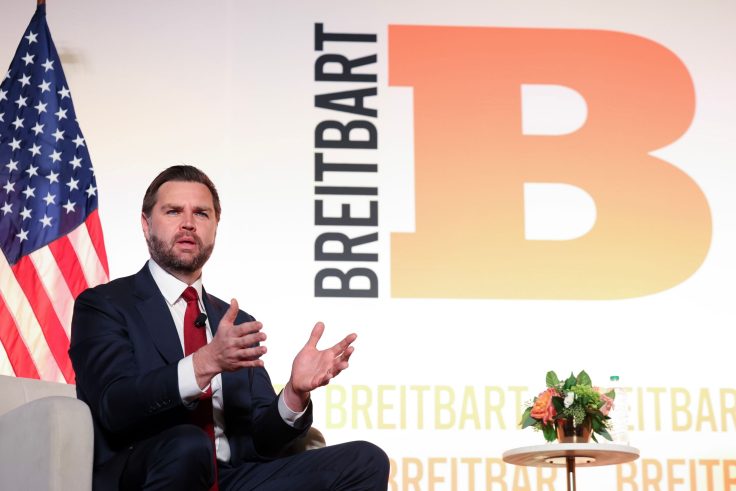
Vice President J.D. Vance addressed the ongoing fights within the Republican Party in an interview on Thursday, giving his lengthiest answer to date on the debates raging on the right about whether to welcome racists and anti-Semites traditionally marginalized by the GOP into the coalition. While Vance encouraged debate, he also urged the GOP to focus on unity against opponents on the left.
The post Vance Urges Republicans To ‘Have Our Debates’ But ‘Focus on the Enemy’ appeared first on .
Glenn Beck’s blueprint for true conservatism in 2026 and beyond

Too many right-wingers today equate conservatism with opposing the left, voting for Republicans, or trying to get back to the “good ol’ days.”
But being a true conservative is none of those things, says Glenn Beck. Conservatism isn’t about reacting to the left, obsessing over policies, or worshipping the past. “It’s really about principles,” he says. “And that’s why we’ve lost our way because we’ve lost our principles.”
So what are the principles that undergird conservatism?
In this episode of “The Glenn Beck Program,” Glenn delivers an unflinching monologue that reminds us not only what being a conservative is really about, but why recovering true conservatism is critical for the nation’s survival.
1. Stewardship
“Being a conservative has to mean stewardship — the stewardship of a nation, of a civilization, of a moral inheritance that is too precious to abandon,” says Glenn.
This begins with understanding that the word “conserve” means to “stand guard” — in this case to “defend what the founders designed: the separation of powers, the rule of law, [and] the belief that our rights come not from kings or from Congress but from the creator Himself.”
Right now, our founders’ brilliant blueprint for our government is treated like “a museum piece” instead of “a living covenant between the dead, the living, and the unborn,” says Glenn.
2. Confronting reality
“This chapter of conservatism must confront reality: economic reality, global reality, and moral reality,” says Glenn.
Just being against things, like high taxes and runaway inflation, isn’t going to cut it, he warns. We have to be for something — things like “economic sovereignty,” the “right to produce and to innovate,” “fiscal prudence,” and national independence.
“Being a conservative today means you have to rebuild an economy that serves liberty, not one that survives by debt,” says Glenn.
3. Recovering America’s soul
In our current “age of dislocation,” family, faith, and objective truth have all taken a massive hit. The results have been catastrophic. Depression and suicide are rampant. People feel like their lives are meaningless. Millions fill the emptiness with technology and other mind-numbing activities.
“If you want to be a conservative, then you have to become the moral compass that reminds a lost people that liberty cannot survive without virtue, that freedom untethered from moral order is nothing but chaos, and that no app, no algorithm, no ideology is ever going to fill the void where meaning used to live,” says Glenn.
In order to do this, we have to “rebuild competence,” “champion innovation,” “reclaim education, not as propaganda, but as the formation of the mind and the soul,” “harness technology in defense of human dignity,” and above all “restore local strength” through families, schools, churches, and charities.
Drawing these threads together, Glenn paints a vivid portrait of the conservative’s role in the years ahead: “A conservative in 2025-26 is somebody who protects the enduring principles of American liberty and self-government while actively stewarding the institutions, the culture, the economy of this nation for those who are alive and yet to be born.”
“We have to be a group of people that are not anchored in the past or in rage, but in reason and morality, realism, and hope for the future. We’re the stewards. We’re the ones that have to relight the torch,” he pleads.
To hear more, watch the video above.
Want more from Glenn Beck?
To enjoy more of Glenn’s masterful storytelling, thought-provoking analysis, and uncanny ability to make sense of the chaos, subscribe to BlazeTV — the largest multi-platform network of voices who love America, defend the Constitution, and live the American dream.
From New York to the nation: Mark Levin warns that socialism’s endgame is America itself
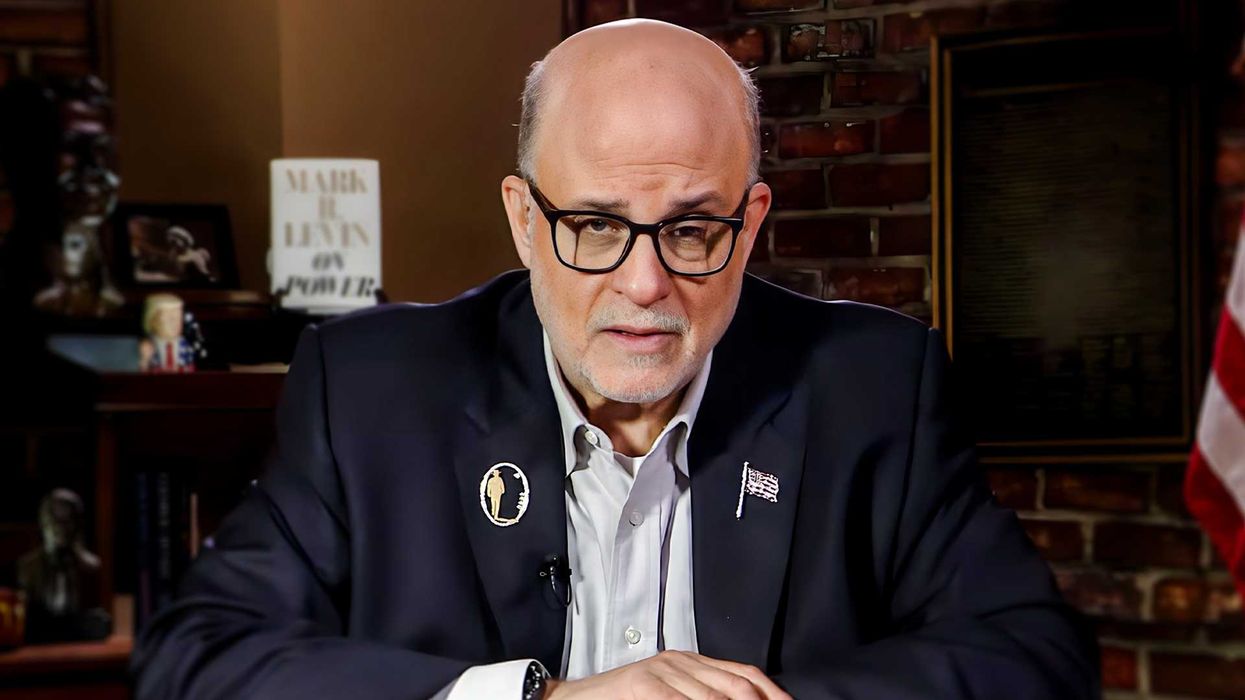
True grassroots communist revolutions are a myth, says Mark Levin. These political uprisings are always orchestrated by privileged, educated elites who romanticize poverty and oppression while living comfortably.
It’s a theme that echoes throughout history. Revolutions rarely start in slums or sweatshops; they start in lecture halls, cafés, and salons where theory outweighs experience.
Take China’s Mao, Russia’s Lenin, Cuba’s Castro, or Germany’s Marx as examples. All were brought up in well-to-do families, educated, and set up for success. They preached justice for the working man, pretending the whole time that their ivory towers were actually trenches.
New York City’s new Democrat mayor, Zohran Mamdani — a self-described socialist — is no different.
“His family is worth millions. … The mother, funded in part significantly by Qatar; the father secretes himself into Columbia University, where he makes a good salary as a radical professor promoting anti-Westernism, anti-Americanism, anti-Semitism, and terrorism,” says Levin, calling Mamdani “a trust-fund baby” who married a woman even “richer than he is.”
Mamdani’s socialist supporters — primarily Sen. Bernie Sanders (I-Vt.) and Rep. Alexandra Ocasio-Cortez (D-N.Y.) — have similar stories. Neither grew up in impoverished homes or worked much in the private sector before rising to political prominence. And yet they push socialist reform to the masses as if they knew the taste of poverty.
Levin then highlights his own blue-collar beginnings and decades of conservative activism as proof that he understands real work and therefore real America.
“I was a litigator. I was a lawyer for a nonprofit organization. We wouldn’t have school choice in this country but for Landmark Legal Foundation and the battles that we fought in the Wisconsin Supreme Court. … We are the ones who went after the NEA. … We’re the ones that went after the Environmental Protection Agency that was trying to push out a zillion regulations right before Donald Trump took office,” Levin recounts.
“’76 — the Reagan campaign. ’80 — the Reagan campaign. The Tea Party movement … that’s where I met Donald Trump. He was very interested in the Tea Party movement,” he adds.
“[The Convention of States movement] was started by Mark Meckler and me with my book ‘The Liberty Amendments.’ … It’s now 5, 6 million members.”
“I’m [sharing] this to explain that when I come to you and I talk about these things on this platform, on Fox, on my radio show, where I write about them, it’s not esoteric. It’s not theory. It’s from experience,” says Levin. “So when I see Marxist Islamists doing what they’re doing, I take them on. I expose them.”
“We do not want these poisonous people destroying what our ancestors have worked for — our founders.”
But that’s exactly what’s about to unfold in New York City under Mayor Mamdani, with his socialist agenda poised to wring the city’s capitalist core from the nation’s economic capital.
Levin warns: “It matters what happens in New York because [Marxist Islamists] are organizing in the states and in the cities across the country.”
The plan doesn’t end with New York City. It won’t stop until America herself — and everything that makes her exceptional — is erased.
To hear more of Levin’s commentary, watch the clip above.
Want more from Mark Levin?
To enjoy more of “the Great One” — Mark Levin as you’ve never seen him before — subscribe to BlazeTV — the largest multi-platform network of voices who love America, defend the Constitution, and live the American dream.
Cotton Presses DOJ to Investigate Code Pink’s Terror, CCP Ties
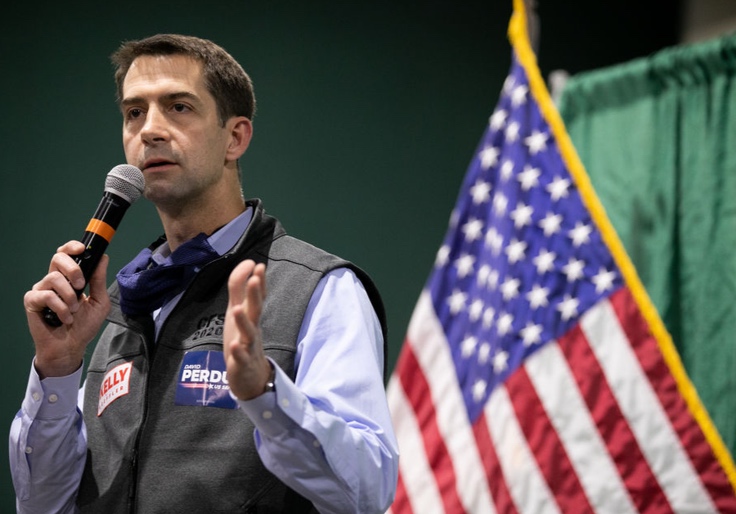
Sen. Tom Cotton (R., Ark.) on Friday petitioned the Justice Department to open a federal investigation into left-wing activist group Code Pink for providing “material support to foreign terrorist organizations” and serving as an unregistered agent of the Chinese government, according to a letter shared with the Washington Free Beacon.
The post Cotton Presses DOJ to Investigate Code Pink’s Terror, CCP Ties appeared first on .
What it really means to be a conservative in America today

Our movement is at a crossroads, and the question before us is simple: What does it mean to be a conservative in America today?
For years, we have been told what we are against — against the left, against wokeism, against decline. But opposition alone does not define a movement, and it certainly does not define a moral vision.
We are not here to cling to the past or wallow in grievance. We are not the movement of rage. We are the movement of reason and hope.
The media, as usual, are eager to supply their own answer. The New York Times recently suggested that Nick Fuentes represents the “future” of conservatism. That’s nonsense — a distortion of both truth and tradition. Fuentes and those like him do not represent American conservatism. They represent its counterfeit.
Real conservatism is not rage. It is reverence. It does not treat the past as a museum, but as a teacher. America’s founders asked us to preserve their principles and improve upon their practice. That means understanding what we are conserving — a living covenant, not a relic.
Conservatism as stewardship
In 2025, conservatism means stewardship — of a nation, a culture, and a moral inheritance too precious to abandon. To conserve is not to freeze history. It is to stand guard over what is essential. We are custodians of an experiment in liberty that rests on the belief that rights come not from kings or Congress, but from the Creator.
That belief built this country. It will be what saves it. The Constitution is a covenant between generations. Conservatism is the duty to keep that covenant alive — to preserve what works, correct what fails, and pass on both wisdom and freedom to those who come next.
Economics, culture, and morality are inseparable. Debt is not only fiscal; it is moral. Spending what belongs to the unborn is theft. Dependence is not compassion; it is weakness parading as virtue. A society that trades responsibility for comfort teaches citizens how to live as slaves.
Freedom without virtue is not freedom; it is chaos. A culture that mocks faith cannot defend liberty, and a nation that rejects truth cannot sustain justice. Conservatism must again become the moral compass of a disoriented people, reminding America that liberty survives only when anchored to virtue.
Rebuilding what is broken
We cannot define ourselves by what we oppose. We must build families, communities, and institutions that endure. Government is broken because education is broken, and education is broken because we abandoned the formation of the mind and the soul. The work ahead is competence, not cynicism.
Conservatives should embrace innovation and technology while rejecting the chaos of Silicon Valley. Progress must not come at the expense of principle. Technology must strengthen people, not replace them. Artificial intelligence should remain a servant, never a master. The true strength of a nation is not measured by data or bureaucracy, but by the quiet webs of family, faith, and service that hold communities together. When Washington falters — and it will — those neighborhoods must stand.
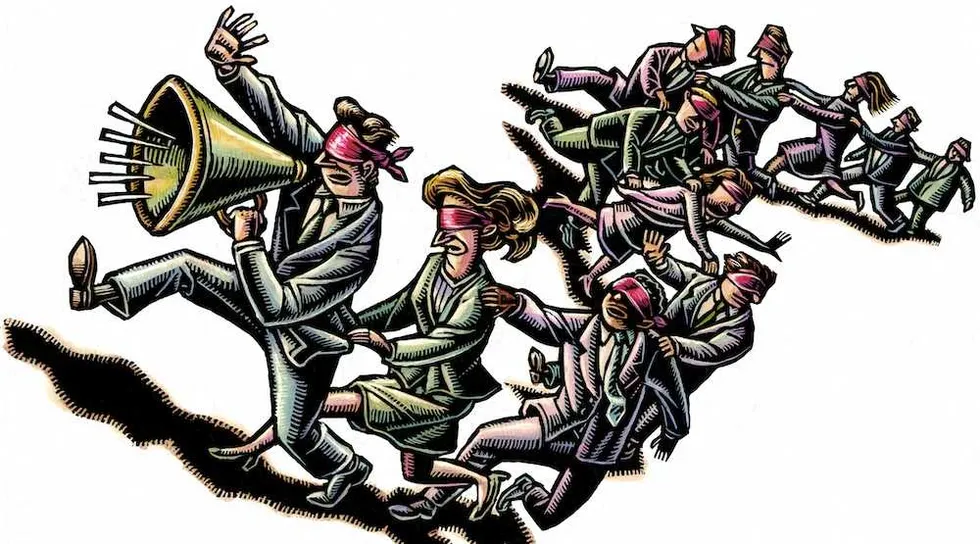
RELATED: Evil never announces itself — it seduces the hearts of the blind
 Lisa Haney via iStock/Getty Images
This is the real work of conservatism: to conserve what is good and true and to reform what has decayed. It is not about slogans; it is about stewardship — the patient labor of building a civilization that remembers what it stands for.
A creed for the rising generation
We are not here to cling to the past or wallow in grievance. We are not the movement of rage. We are the movement of reason and hope.
For the rising generation, conservatism cannot be nostalgia. It must be more than a memory of 9/11 or admiration for a Reagan era they never lived through. Many young Americans did not experience those moments — and they should not have to in order to grasp the lessons they taught and the truths they embodied. The next chapter is not about preserving relics but renewing purpose. It must speak to conviction, not cynicism; to moral clarity, not despair.
Young people are searching for meaning in a culture that mocks truth and empties life of purpose. Conservatism should be the moral compass that reminds them freedom is responsibility and that faith, family, and moral courage remain the surest rebellions against hopelessness.
To be a conservative in 2025 is to defend the enduring principles of American liberty while stewarding the culture, the economy, and the spirit of a free people. It is to stand for truth when truth is unfashionable and to guard moral order when the world celebrates chaos.
We are not merely holding the torch. We are relighting it.
‘Citation Diversity Statement’: A Renowned Chemist Sounds Off On Her Boycott of a Premier Scientific Journal

Nature Reviews Psychology, an imprint of the prestigious Nature publishing group, announced in October that it was “explicitly encouraging” authors to include a “citation diversity statement” in their articles. The statement would affirm that they had made an effort to cite from “a diverse group of researchers” and acknowledge “citation imbalances” based on race and gender.
The post ‘Citation Diversity Statement’: A Renowned Chemist Sounds Off On Her Boycott of a Premier Scientific Journal appeared first on .