Category: Big Pharma
Why weight-loss drug prices finally fell — and who deserves credit

For decades, Americans heard the same justification for high drug prices. Pharmaceutical executives insisted those prices were unavoidable. Research costs required them. Innovation depended on them. The United States, as the world’s most open market, had to pay more than everyone else.
Then Eli Lilly cut the monthly price of one of its flagship weight-loss drugs, Zepbound.
If lower prices matter, then incentives matter more than bureaucracy. Competition and consumer access drive real change.
Nothing about the drug changed. No new scientific breakthrough appeared. The only thing that changed was competition. Once real pressure entered the market, Lilly found room in its pricing model that executives had long claimed did not exist.
The market responded quickly. Novo Nordisk, Lilly’s primary rival, lowered its prices soon after. This did not reflect a sudden gain in efficiency. It reflected fear of losing ground to a competitor.
That is how functioning markets work. When one major player moves, others adjust. The correction happens faster than any federal agency could hope to manage.
The irony is hard to miss. For years, the industry claimed margins were fixed and untouchable. Executives warned that any shift would damage shareholders and undermine global health. Yet the moment one company blinked, others followed. Consumers saw relief not because regulators intervened, but because competition exposed the old narrative as hollow.
Another force reinforced that shift. On Nov. 6, the White House announced a pricing agreement with major drug manufacturers scheduled to take effect in 2026. The agreement aims to narrow the gap between U.S. prices and those in other advanced economies and establishes a purchasing framework that makes reductions easier to implement.
That move marked a break from Washington’s habit of passively accepting industry talking points. The administration did not override the market. It amplified momentum competition had already created. Companies that once refused to consider cuts began to bend once the political cost of rigidity became clear. The announcement accelerated the trend, but competition started it.
A larger reality deserves attention. Major pharmaceutical companies have posted enormous profits for years. They have spent billions on stock buybacks and shareholder payouts while executive compensation soared. Market valuations across the sector reached historic highs. Lilly even became the first pharmaceutical company to surpass a trillion-dollar valuation.
Profit itself is not the problem. But competition forcing these firms to behave more like the quasi-utilities they resemble marks a welcome change from a system long treated as untouchable.
RELATED: The party that made life more expensive wants credit for noticing
 byemo via iStock/Getty Images
That system rests on a global arrangement in which Americans shoulder a disproportionate share of drug development costs. Wealthy nations negotiate prices or impose caps. The United States does not. The gap between what Americans pay and what others pay funds buybacks, dividends, and executive packages. Shareholders collect the upside.
The disparity speaks for itself. Drugs that cost hundreds of dollars overseas cost thousands here. The industry defended that gap by warning that research would collapse if prices fell. The current price cuts prove otherwise. Pipelines remain intact. Investment continues. Profitability holds. The model did not break when prices moved downward. It adjusted.
These developments expose a simple truth. Prices never reflected necessity. Incentives shaped them, reinforced by limited competition and political deference. Competition cracked open an inflexible model. The White House helped widen the opening.
Policymakers should learn from that sequence. If lower prices matter, then incentives matter more than bureaucracy. Competition and consumer access drive real change. The bloated regulatory machinery Washington favors often delays it. The market moved before Congress could even respond.
For Americans struggling to afford essential medication, that lesson matters most. Competition remains the strongest and most reliable force for bringing prices down.
It worked here. It can work again — if policymakers allow markets to function and pharmaceutical companies choose access over insulation.
Why weight-loss drug prices finally fell — and who deserves credit
For decades, Americans heard the same justification for high drug prices. Pharmaceutical executives insisted those prices were unavoidable. Research costs required them. Innovation depended on them. The United States, as the world’s most open market, had to pay more than everyone else.
Then Eli Lilly cut the monthly price of one of its flagship weight-loss drugs, Zepbound.
If lower prices matter, then incentives matter more than bureaucracy. Competition and consumer access drive real change.
Nothing about the drug changed. No new scientific breakthrough appeared. The only thing that changed was competition. Once real pressure entered the market, Lilly found room in its pricing model that executives had long claimed did not exist.
The market responded quickly. Novo Nordisk, Lilly’s primary rival, lowered its prices soon after. This did not reflect a sudden gain in efficiency. It reflected fear of losing ground to a competitor.
That is how functioning markets work. When one major player moves, others adjust. The correction happens faster than any federal agency could hope to manage.
The irony is hard to miss. For years, the industry claimed margins were fixed and untouchable. Executives warned that any shift would damage shareholders and undermine global health. Yet the moment one company blinked, others followed. Consumers saw relief not because regulators intervened, but because competition exposed the old narrative as hollow.
Another force reinforced that shift. On Nov. 6, the White House announced a pricing agreement with major drug manufacturers scheduled to take effect in 2026. The agreement aims to narrow the gap between U.S. prices and those in other advanced economies and establishes a purchasing framework that makes reductions easier to implement.
That move marked a break from Washington’s habit of passively accepting industry talking points. The administration did not override the market. It amplified momentum competition had already created. Companies that once refused to consider cuts began to bend once the political cost of rigidity became clear. The announcement accelerated the trend, but competition started it.
A larger reality deserves attention. Major pharmaceutical companies have posted enormous profits for years. They have spent billions on stock buybacks and shareholder payouts while executive compensation soared. Market valuations across the sector reached historic highs. Lilly even became the first pharmaceutical company to surpass a trillion-dollar valuation.
Profit itself is not the problem. But competition forcing these firms to behave more like the quasi-utilities they resemble marks a welcome change from a system long treated as untouchable.
RELATED: The party that made life more expensive wants credit for noticing
byemo via iStock/Getty Images
That system rests on a global arrangement in which Americans shoulder a disproportionate share of drug development costs. Wealthy nations negotiate prices or impose caps. The United States does not. The gap between what Americans pay and what others pay funds buybacks, dividends, and executive packages. Shareholders collect the upside.
The disparity speaks for itself. Drugs that cost hundreds of dollars overseas cost thousands here. The industry defended that gap by warning that research would collapse if prices fell. The current price cuts prove otherwise. Pipelines remain intact. Investment continues. Profitability holds. The model did not break when prices moved downward. It adjusted.
These developments expose a simple truth. Prices never reflected necessity. Incentives shaped them, reinforced by limited competition and political deference. Competition cracked open an inflexible model. The White House helped widen the opening.
Policymakers should learn from that sequence. If lower prices matter, then incentives matter more than bureaucracy. Competition and consumer access drive real change. The bloated regulatory machinery Washington favors often delays it. The market moved before Congress could even respond.
For Americans struggling to afford essential medication, that lesson matters most. Competition remains the strongest and most reliable force for bringing prices down.
It worked here. It can work again — if policymakers allow markets to function and pharmaceutical companies choose access over insulation.
Why weight-loss drug prices finally fell — and who deserves credit
For decades, Americans heard the same justification for high drug prices. Pharmaceutical executives insisted those prices were unavoidable. Research costs required them. Innovation depended on them. The United States, as the world’s most open market, had to pay more than everyone else.
Then Eli Lilly cut the monthly price of one of its flagship weight-loss drugs, Zepbound.
If lower prices matter, then incentives matter more than bureaucracy. Competition and consumer access drive real change.
Nothing about the drug changed. No new scientific breakthrough appeared. The only thing that changed was competition. Once real pressure entered the market, Lilly found room in its pricing model that executives had long claimed did not exist.
The market responded quickly. Novo Nordisk, Lilly’s primary rival, lowered its prices soon after. This did not reflect a sudden gain in efficiency. It reflected fear of losing ground to a competitor.
That is how functioning markets work. When one major player moves, others adjust. The correction happens faster than any federal agency could hope to manage.
The irony is hard to miss. For years, the industry claimed margins were fixed and untouchable. Executives warned that any shift would damage shareholders and undermine global health. Yet the moment one company blinked, others followed. Consumers saw relief not because regulators intervened, but because competition exposed the old narrative as hollow.
Another force reinforced that shift. On Nov. 6, the White House announced a pricing agreement with major drug manufacturers scheduled to take effect in 2026. The agreement aims to narrow the gap between U.S. prices and those in other advanced economies and establishes a purchasing framework that makes reductions easier to implement.
That move marked a break from Washington’s habit of passively accepting industry talking points. The administration did not override the market. It amplified momentum competition had already created. Companies that once refused to consider cuts began to bend once the political cost of rigidity became clear. The announcement accelerated the trend, but competition started it.
A larger reality deserves attention. Major pharmaceutical companies have posted enormous profits for years. They have spent billions on stock buybacks and shareholder payouts while executive compensation soared. Market valuations across the sector reached historic highs. Lilly even became the first pharmaceutical company to surpass a trillion-dollar valuation.
Profit itself is not the problem. But competition forcing these firms to behave more like the quasi-utilities they resemble marks a welcome change from a system long treated as untouchable.
RELATED: The party that made life more expensive wants credit for noticing
byemo via iStock/Getty Images
That system rests on a global arrangement in which Americans shoulder a disproportionate share of drug development costs. Wealthy nations negotiate prices or impose caps. The United States does not. The gap between what Americans pay and what others pay funds buybacks, dividends, and executive packages. Shareholders collect the upside.
The disparity speaks for itself. Drugs that cost hundreds of dollars overseas cost thousands here. The industry defended that gap by warning that research would collapse if prices fell. The current price cuts prove otherwise. Pipelines remain intact. Investment continues. Profitability holds. The model did not break when prices moved downward. It adjusted.
These developments expose a simple truth. Prices never reflected necessity. Incentives shaped them, reinforced by limited competition and political deference. Competition cracked open an inflexible model. The White House helped widen the opening.
Policymakers should learn from that sequence. If lower prices matter, then incentives matter more than bureaucracy. Competition and consumer access drive real change. The bloated regulatory machinery Washington favors often delays it. The market moved before Congress could even respond.
For Americans struggling to afford essential medication, that lesson matters most. Competition remains the strongest and most reliable force for bringing prices down.
It worked here. It can work again — if policymakers allow markets to function and pharmaceutical companies choose access over insulation.
Killing drug ads won’t lower prices — it will kill innovation

The United States is one of the few countries that allows prescription drugmakers to speak directly to patients. That simple fact now fuels political calls to “ban the ads.” But restricting direct-to-consumer advertising would do more than change what runs during football games. It would shrink the flow of information to patients and push our system toward the bureaucratic throttling that has turned other countries into innovation laggards.
Advertising is part of a dynamic market process. Entrepreneurs inform consumers about new products, and when profits are high, firms have every incentive to improve quality and expand access.
The pattern is clear: The more Washington intervenes, the fewer cures Americans get.
New, cheaper treatments need to be brought to consumers’ attention. Otherwise, people stay stuck with older, more expensive options, and competition falters. Banning pharmaceutical advertising would hobble innovative firms whose products are not yet known and leave those seeking medical care less informed.
Critics warn that “a growing proliferation of ads” drives demand for costly treatments, even when less expensive alternatives exist. Yet a recent study in the Journal of Public Economics finds that exposure to pharmaceutical ads increases drug utilization across the board — including cheaper generics and non-advertised medications. In short, advertising pushes people who need care to make better, more informed decisions.
A market-based system rewards risk-taking and innovation. Despite the many flaws in American health care, the United States leads the world in medical breakthroughs — from cancer immunotherapies to vaccines developed in record time. That success wasn’t created by government decree. It came from competition: firms communicating openly about their products, fighting for patients, and reinvesting earnings into the next generation of lifesaving discoveries.
Sure, some regulations are adopted with good intentions. But drug ads are already heavily regulated, and a full ban would create serious unintended consequences — including the unseen cost of innovative drugs that will never reach patients because firms won’t invest in developing treatments they are barred from promoting.
American health care is now regulated to the point of satisfying no one. Patients face rising costs. Physicians navigate a Kafkaesque maze of top-down rules. Taxpayers foot the bill for decisions made by distant bureaucracies. Measures associated with socialized medicine continue creeping into the marketplace.
Price controls in the Inflation Reduction Act are already cutting into pharmaceutical research and development. One study estimates roughly 188 fewer small-molecule treatments in the 20 years after its enactment. The pattern is clear: The more Washington intervenes, the fewer cures Americans get.
RELATED: Trump faces drugmakers that treat sick Americans like ATMs
 Photo by Andrew Harnik/Getty Images
The answer to the problems in American health care isn’t more government. It’s less. Expected profitability drives investment in biomedical research. Imposing new advertising bans or European-style price controls would mean lower-quality care, higher mortality, and the erosion of America’s leadership in medical innovation.
The United Kingdom offers a warning. Once a global leader, it drove investment offshore through overregulation and rigid price controls. Today, only 37% of new medicines are made fully available for their licensed uses in Britain. Americans spend more, but they also live longer: U.S. cancer patients outlive their European counterparts for a reason.
Discovering new drugs is hard. Every breakthrough begins with the freedom to imagine, to compete, and to communicate. Strip companies of the ability to inform patients, and you strip away the incentive to develop the next cure. Competitive markets — not centralized control — will fuel tomorrow’s medical miracles.
How to win the opioid fight

Despite thousands of lawsuits against OxyContin maker Purdue Pharma now being settled, the opioid crisis continues to devastate families and communities. This is why there are massive national efforts to expand addiction treatment, develop non-opioid pain alternatives, promote natural remedies, and confront the Mexican drug cartels flooding America with fentanyl. In recent years, opioid-related deaths have finally begun to decline, suggesting that those initiatives are starting to make a real impact. But that progress may already be slowing.
The introduction of work requirements for Medicaid eligibility under the One Big Beautiful Bill Act is producing unintended consequences for people in addiction recovery. Early studies show that declines in Medicaid enrollment correlate with drops in the number of patients receiving treatment for opioid use disorder. Because Medicaid is the primary source for buprenorphine and addiction services, these enrollment changes threaten fragile but meaningful recovery gains.
Conservatives champion individual responsibility — but responsibility also requires ensuring that systems meant to help people reclaim their lives aren’t working against them.
Work requirements aren’t the problem — they’re sound policy to preserve the financial stability and original intention of the program. The real issue is Medicaid’s regulatory structure, which is too rigid and dysfunctional to absorb yet another layer of complexity.
This crisis didn’t begin with work requirements. Medicaid’s own structure, combined with state policies, had been restricting access to effective OUD treatment for years. Patients face prior-authorization delays, prescriber rules that block lifesaving medications, and certificate-of-need laws that stop treatment centers from opening or expanding. Policymakers often claim these rules protect patients or control costs. In practice, they have choked off reliable care and pushed people in recovery farther from the help they need.
In states where prescriber limits and facility restrictions already make treatment scarce, adjusting Medicaid eligibility has a serious impact on the availability of buprenorphine providers. The problem lies in creating a policy that requires personal responsibility within an already bureaucratic structure that actively slows treatment access. When enrollment pressures combine with supply constraints caused by CON laws and prescription rules, the result is fewer people getting the care that keeps them alive.
This is especially true in Appalachia, which is ground zero of the opioid crisis. Pennsylvania explicitly prohibits off-site methadone “medication units,” while legislation has been floated in West Virginia that aims to ban methadone clinics. Local governments across the region routinely block zoning permits for treatment facilities, often caving to community pushback rather than addressing a staggering public health emergency. Many states still impose CON laws, restricting the ability of hospitals and clinics to add new treatment beds or open new treatment programs.
RELATED: Trump faces drugmakers that treat sick Americans like ATMs
 Credit: Photo by Pete Marovich/Getty Images
On the provider side, well-intentioned prescribing rules have created even more barriers. Despite a dire shortage of addiction specialists, many states limit the prescription of OUD medications to certain providers, leaving primary care doctors — who could dramatically expand treatment access — underutilized or prevented from issuing prescriptions. Lawmakers have inadvertently created a bottleneck: too few qualified providers and too many hoops to jump through for those who want to treat addiction.
As the Trump administration continues to build a populist coalition that includes voters from Western Pennsylvania, Ohio, and other communities deeply scarred by opioid addiction, it must confront this reality head-on. Doing so does not require abandoning conservative principles, nor does it mean reversing work requirements. Those reforms remain both necessary and widely popular. But a serious conservative health care agenda must recognize that Medicaid’s regulatory architecture is undermining progress against opioid addiction — and America cannot afford to lose ground now.
Conservatives champion individual responsibility — but responsibility also requires ensuring that systems designed to help people reclaim their lives aren’t working against them. Addressing Medicaid’s regulatory failures is not just good policy; it is essential to sustaining progress in one of the most consequential public health fights of our time.
Editor’s note: A version of this article was published originally at the American Mind.
Mr. and Mrs. Bureaucrats, Show Us Some Mercy
My goddess, my dream girl since I saw her gliding towards me in a light blue satin dress at a…
Trump faces drugmakers that treat sick Americans like ATMs
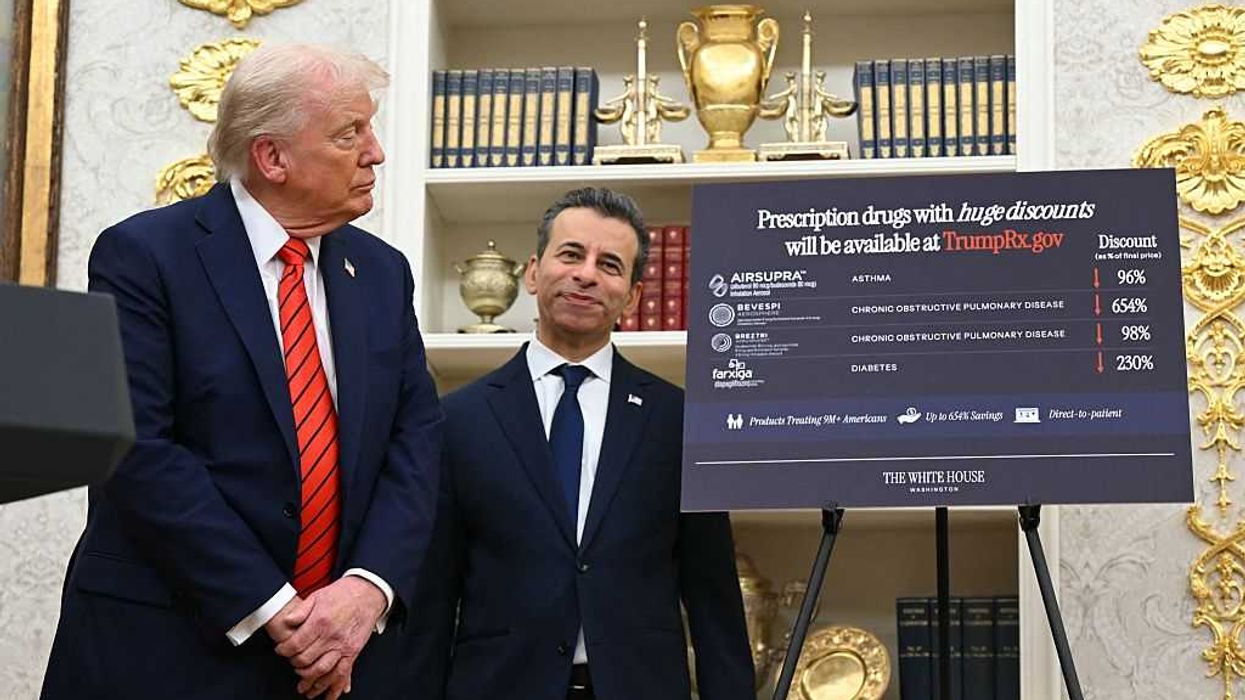
President Donald Trump struck a second deal last month with the world’s largest drugmakers, promising lower costs for American patients. The industry claims cooperation, offering help for consumers and expanded domestic production. Yet those same companies have raised prices on nearly 700 prescription drugs since January.
Big Pharma hopes the most unconventional president will fall back on the most conventional policy: granting the largest firms regulatory advantages, taxpayer-funded promotion, and freedom to keep ratcheting prices upward.
Trump should expose the game Big Pharma has played for years and force the industry to compete in a real marketplace.
Trump’s instincts are right. Americans pay inflated prices, and he has confronted the industry’s excesses. But Big Pharma spent decades building cartel-level dominance. Few industries mastered regulatory capture more effectively. The pharma industry wins higher prices while concealing the system that keeps costs rising.
The industry’s tactics follow a predictable pattern. With its right hand, Big Pharma announces a partnership with the White House. With its left, it secures guaranteed government contracts, political protection, and federally promoted products. Independent analysts warn that rebate schemes encourage price hikes. The dynamic mirrors a retailer inflating list prices before Black Friday to create the illusion of deep discounts.
The federal government helps tip the scales. Regulatory frameworks favor the largest drugmakers and block smaller competitors, keeping profits high and patients in the dark.
Patients pay the price
What the industry calls reform resembles a shell game that protects profits and punishes patients. The Food and Drug Administration created an “accelerated approval” pathway to speed lifesaving treatments. In practice, the system advantages the largest corporations. A 2020 study found that increases in FDA regulations boosted sales for major firms while cutting sales for smaller companies by 2.2%. Smaller manufacturers cannot absorb substantial compliance costs, which means cheaper or more effective drugs never reach the market or arrive years late.
Patients pay the price. Follow-up studies for expedited approvals lag for years, and many drugs never show clear benefits. Harvard researchers found that nearly half of cancer drugs granted accelerated approval fail to improve survival or quality of life. The FDA withdrew one in four such drugs and confirmed substantial benefit for only 12% of the rest. The drugs generated revenue, but they offered little hope to patients who paid dearly for treatments that did not deliver.
RELATED: The hidden hospital scam driving up drug prices, coming to a state near you
 Deagreez via iStock/Getty Images
Meanwhile, prices keep climbing. Since Trump left office after his first term, cancer drug prices rose faster than Biden-era inflation. Median list prices for new medicines more than doubled between 2021 and 2024, surpassing $300,000 a year. In 2023 alone, drug companies raised prices by 35%. The Rand Corporation found that Americans spent more than $600 billion on prescriptions in 2022 — almost triple what patients in other developed nations pay.
Competition, not cronyism
Families facing cancer now shoulder thousands more out of pocket while Big Pharma posts record profits. Trump deserves credit for recognizing how unfair practices and Democrat policies pushed drug costs beyond the reach of average households.
A better path is within reach. Real reform depends on competition rather than political connections. Trump can break the illusion by opening the market, lowering barriers to entry, and cutting regulatory burdens that keep smaller firms out. He should expose the game Big Pharma has played for years and force the industry to compete in a real marketplace.
Rural Hospitals Rely on ‘340b’ Drug Discounts
As the Trump administration prepares to force its Most Favored Nation price controls on drug makers, a major U.S. lobbying…