

Category: Children
New York State Serves Up Insanity on Egg Freezing
The New York State Senate evidently thinks it is not enough that women in their state can legally kill their…
The Spectator P.M. Ep. 188: Transgender Girl Scouts Sell Over 71,000 Cookie Boxes
Erin Reed, who self-identifies as a transgender journalist, helped transgender Girl Scouts sell over 71,000 boxes of cookies that fund…
To Accept the Things I Cannot Change

Menstrual cycles are not an illness, and medicating them as if they are—suppressing the body’s natural hormonal rhythms—clashes with what was once left-wing skepticism of corporate influence in medicine, while conveniently profiting Big Pharma. This should not be a controversial or political claim. And yet, as the New York Times recently noted, it has become one—and a conservative one at that.
The post To Accept the Things I Cannot Change appeared first on .
The Spectator P.M. Ep. 186: NYTimes Flips Out Over Support for the Traditional Family
The Left is in anguish over a new policy paper from the Heritage Foundation that encourages pro-family values to save…
The Spectator P.M. Ep. 183: Ms. Rachel and Zohran Mamdani Are Teaming Up
New York City’s newly elected mayor, Zohran Mamdani, partnered with YouTube star “Ms. Rachel” (Rachel Accurso) to sing “The Wheels…
Maduro in Chains — and Probably the Blood of Children on His Hands
In the wake of the capture of Venezuelan dictator Nicolas Maduro, the United States is now forced to reckon with…
Parents, think twice: The dark side of Christmas tech gifts for children

While the children may be nestled all snug in their beds, with visions of iPhones dancing in their heads, I hope, dear parents, that you will think twice about the gift of technology this Christmas.
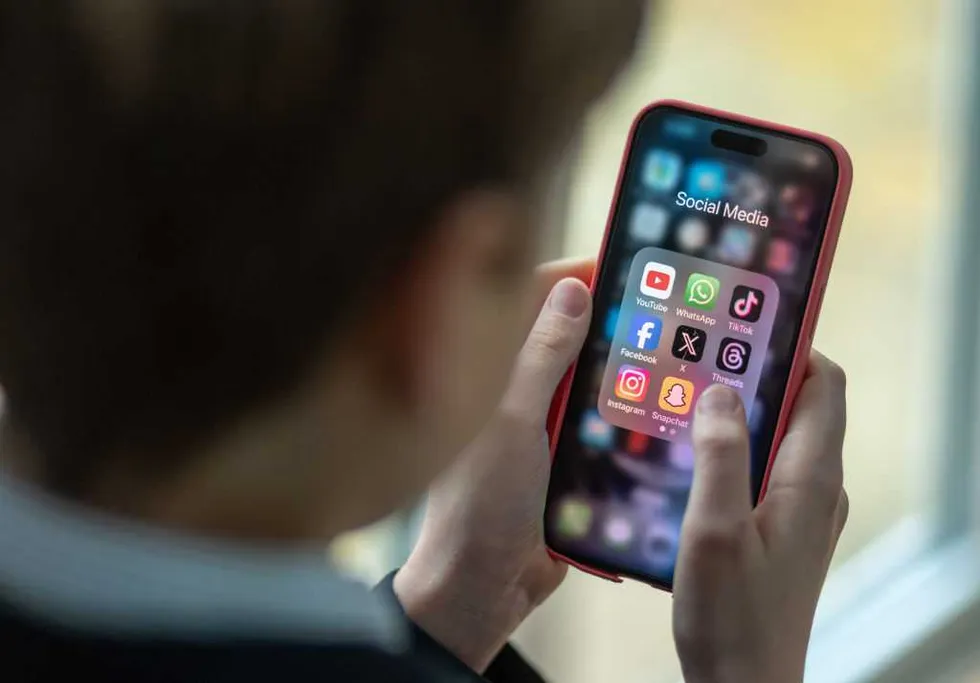
No doubt a shiny new smartphone, Nintendo Switch, Meta Virtual Reality headset, or cool AI toy will be at the top of many children’s and teens’ Christmas lists this year. However, these “gifts” can arrive with hidden costs: anxiety, sleep loss, social pressures, addictive algorithms, exposure to pornography, a connection to predators, and development of a gaming addiction.
Many parents buy the myth that their child is immune from online risks or think that relying solely on parental controls will be enough.
To that end, Enough Is Enough just released its Naughty and Nice List of Holiday Gifts for Children and Teens that provides a much-needed guide of gifts to buy and to avoid. Perhaps it’s no surprise, but AI toys, smartphones, and Roblox gift cards are on the “naughty” list.
Even in my own family, I know that resisting the pressure to give tech products is strong. My grandsons want Roblox gift cards, so they can continue to play the online games they have enjoyed for years.
But the so-called “reward” of tech does not always outweigh the risks. The reality is that the online exploitation of minor children is a global pandemic, and it’s growing exponentially worse, year after year.
At the very foundation, an internet-connected device is literally handing a child both the good, bad, and dangerous digital world — no guardrails, no safety net, no filters. A gaming platform will inevitably lead to increased screen time, possibly even leading to an online gaming disorder — now a DSM-5 mental disorder. Virtual reality is designed to feel real and may even become preferable to a teen.
Digging deeper, the risks are even greater than parents might realize. Many parents buy the myth that their child is immune from online risks or think that relying solely on parental controls will be enough.
But consider these sobering facts:
- Younger and younger children are being targeted “on an industrial scale” by internet groomers, with a three-fold increase in imagery showing 7- to 10-year-olds.
- Global financial sextortion is one of the fastest growing crimes targeting children, in particular minor-aged boys.
- The Surgeon General’s Advisory on Social Media and Youth Mental Health indicated social media could pose a “profound risk of harm” to the mental health and well-being of children, stating it’s a “defining public health challenge of our times.”
Predators use social media and even online gaming sites to groom children. A California man was recently sentenced for luring minors through Snapchat before sexually assaulting them. The FBI reported that a 22-year-old man used Discord to groom minors and sexually extort them.
The aforementioned Roblox — a gaming platform extremely popular with children — enables predators to contact children and is facing over 35 lawsuits as a result. The platform was described by Hindenburg Research as an “X-rated pedophile’s hellscape.”
Parents should rethink buying Roblox gift cards this holiday season.
Moreover a congressional hearing where two Meta whistleblowers testified confirmed every parent’s worst nightmare: If their children have used Meta’s virtual reality devices, their children have likely been sexually exploited.
RELATED: How smartphones expose your kids to predators — and why Congress must step in
 Matt Cardy/Getty Images
Parents need to be aware of the growing trend of AI toys, falsely marketed as safe and educational for kids as young as 2. Most AI toys are powered by the same AI technology that has already harmed children, and the embedded chatbots are programmed to listen and speak with the child like a trusted friend and mimic human emotions. Examples include: Loona Robot Dog and Smart Teddy.
Recently, an AI teddy bear marketed to children told a tester “where to find knives, pills, and matches when asked … spoke graphically about sex positions, sexual kinks, and ‘teacher-student role-play.’”
As our society becomes increasingly tech-focused, parents are becoming more aware of the negative impact tech can have on their children. But can they win the battle with their kids over the latest tech and more tech time?
Schools nationwide are rapidly embracing smartphone-free schools because they are distracting to students. Many schools are reporting success, and even students themselves have seen the benefits of not having their phones on them during school hours.
Some parents are wisely rethinking handing their phones to their children as a way to calm or distract them. One couple used a smartphone to pacify their 6-month-old daughter, saying they’d hand it to her frequently. Despite that the phone worked to calm the little girl down, the parents eventually realized it wasn’t what they intended, saying their daughter was “zoned in” on the phone.
They may think you’re the Grinch, but the rewards of a tech-free holiday are great.
You may be asking: If not an internet-connected tech gift, what do you suggest?
I realize that deciding on something else to give will take a little creativity.
Many children — especially older ones — enjoy experiences. Teens may relish time spent with their families taking a cooking class, going bowling, going to sporting events, or trying out an axe-throwing venue. Children of any age could appreciate an outing to a retro arcade, new board games, books, or art kits.
Even an outing to their favorite restaurant — where quality time can be spent with mom or dad — is a great option. In lieu of a material present, some families have successfully planned a place to visit or vacation together.
Instead of using the holidays to reinforce potentially unhealthy tech habits or introduce new tech gifts, consider delaying tech by not giving in to the notion that children need tech to be happy and productive. Grandparents my age remember fondly a merry childhood well before the computer and internet technologies were invented.
They may think you’re the Grinch, but the rewards of a tech-free holiday are great. And maybe, just maybe, your children will have sugarplums instead of iPhones dancing in their heads.
America, Please Put Some Pants On
Somerset Maugham once said that the well-dressed man is the one whose clothes you never notice. U.S. Transportation Secretary Sean…
A Requiem for Orphanages
I came out on Nov. 29, 1994, in the most visible of news outlets, the op-ed page of the Wall…





