

Category: Christian Persecution

Persecution

“Persecution,” editorial cartoon by Yogi Love for The American Spectator on Dec. 1, 2025.
America’s best and worst states for religious freedom — and what it means for our future
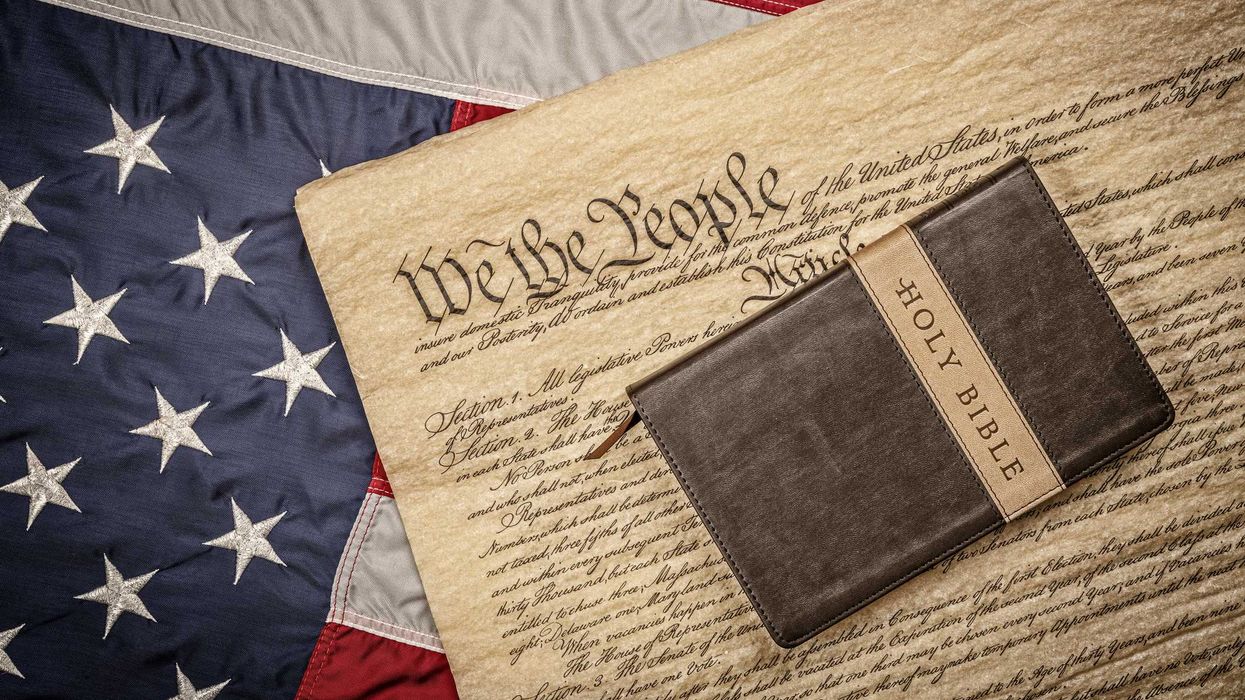
Now is a good time for religion in America.
President Trump has established the White House Religious Liberty Commission, led by a diverse group of religious leaders and scholars, including Mary Margaret Bush, Napa Legal’s own former executive director. The commission is identifying some of the nation’s most pressing religious liberty issues and developing plans for action.
Lawmakers should take advantage of the moment to enact durable protections that will outlast any administration.
The U.S. Supreme Court, too, has protected religious liberty in several crucial cases. In Carson v. Makin (2022), the court held that it is unconstitutional to exclude religious schools from generally available government funding programs. In Kennedy v. Bremerton, it found that coach Joseph Kennedy’s postgame prayers did not violate the First Amendment. This year brought additional victories in Mahmoud v. Taylor, where the court upheld parents’ rights to opt their children out of LGBT content in elementary school classes, and Catholic Charities v. Wisconsin, where a unanimous court prevented state officials from favoring some religions over others.
These encouraging developments might tempt Americans to believe that the battle for nationwide religious freedom has already been won.
Yet even with such powerful forces defending religious liberty at the federal level, state laws affecting religious organizations remain critical for ensuring that everyday Americans do not suffer persecution for their firmly held religious beliefs.
Consider what just happened in Washington state.
In 2025, Catholic priests there faced an impossible choice between obeying their faith and complying with state law. A new Washington state statute required clergy to report instances of abuse or neglect they heard during confession, despite the Church’s centuries-old sacramental seal. The law singled out priests while giving others, like lawyers, a pass, and it carried the threat of jail time and fines.
Thankfully, a federal court blocked the law before it could take effect, ruling in Etienne v. Ferguson that the state could not force clergy to violate the sacred seal of confession.
But that case never should have been necessary. Washington’s law reflected the same pattern Napa Legal’s research has uncovered repeatedly: When state laws are weak or hostile to faith-based organizations, those organizations are left vulnerable even when the federal government and Supreme Court appear friendly to religion.
This month, the Napa Legal Institute released the third edition of the Faith and Freedom Index, an analysis of state laws across the country that either help or hinder religious organizations. Whether national politics seem to favor or oppose religious liberty, state laws remain central to its long-term health.
The states with the top overall scores were:
- Alabama
- Kansas
- Indiana
- Texas
- Mississippi
The five lowest scores went to:
- Michigan
- Washington
- Massachusetts
- West Virginia
- Maryland
What distinguishes the states at the top of the list from those at the bottom? Several types of laws come into play. For example, the index’s highest performing states have built frameworks that proactively safeguard religious organizations. Their laws provide broad protections for religious exercise and create environments where ministries can thrive.
By contrast, it’s no coincidence that Washington state ranks near the bottom. The same state that passed one of the most intrusive laws in recent memory also reflects on the Index a legal system that makes it far too easy for governments to intrude on matters of faith.
That is why it is important to strike while the iron is hot. When the federal government is friendly to religious liberty, that is precisely the time to act. Political conditions can change quickly, but good laws endure. Lawmakers should take advantage of the moment to enact durable protections that will outlast any administration.
RELATED: Why Trump’s religious liberty agenda terrifies the left
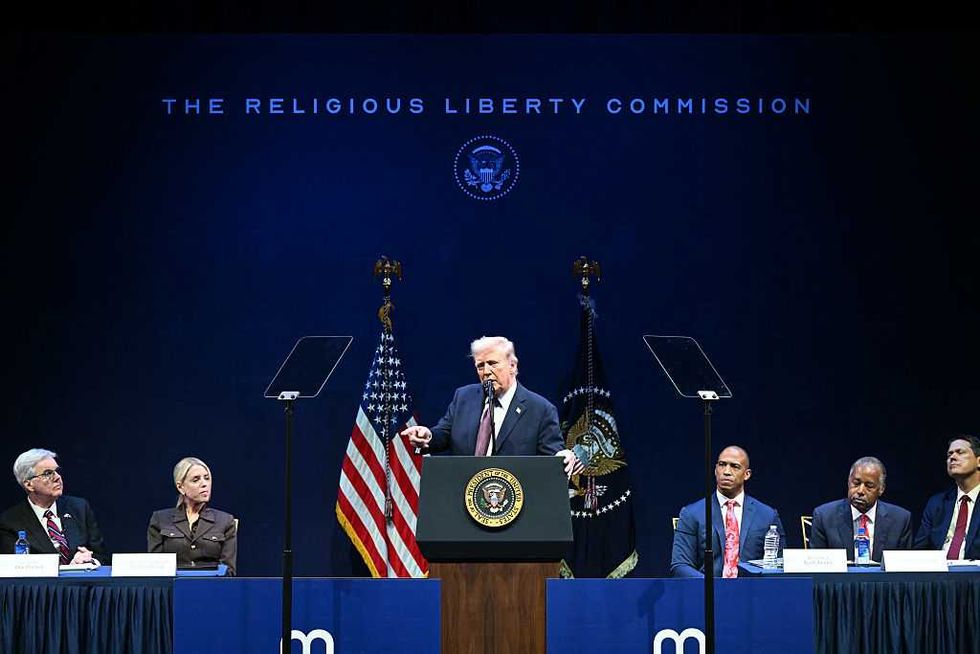 SAUL LOEB/AFP via Getty Images
There are many reasons why state laws remain decisive. First, state statutes can still contradict clear federal precedent. After the Supreme Court struck down Wisconsin’s discriminatory law in Catholic Charities v. Wisconsin, a similar law remained in effect in New York. Religious organizations there had to continue the litigation even after the Supreme Court had essentially decided the issue.
It is also not enough for states to rely solely on constitutional protections or a Religious Freedom Restoration Act.
These safeguards are vital but not sufficient. When a religious organization’s hiring or service conflicts with state “nondiscrimination” laws, it should not have to spend years in court to prove its right to operate according to its beliefs. States can and should pass clear exemptions that prevent such conflicts from ever arising.
Finally, state tax and regulatory codes can have a major impact on whether faith-based organizations thrive. Many religious nonprofits are treated like for-profit corporations, subject to tax regimes and administrative filings, fees, and audits that make it hard for them to operate. States should look closely at such laws and remove unnecessary burdens that divert precious time and resources away from ministry and service.
No matter who sits in the White House or on the Supreme Court, state laws remain a foundation of religious liberty. The Faith and Freedom Index remains an important tool to protect and foster the work of religious organizations and religious liberty in general.
Voters should consider how laws in their states burden religion when they cast their votes. Policymakers should pay close attention to laws that may seem tedious but can make or break the needed work of religious organizations. And our government leaders should work to enact laws that foster religious liberty, so that religion can serve its proper role in contributing to the common good.
Defending Nigeria’s Christians from Islamist Genocide
If you haven’t read our colleague Ellie Gardey Holmes’s recent article describing the western media’s predictably lame and misleading response…
‘Mass slaughter’: Trump moves to help Nigerian Christians under attack
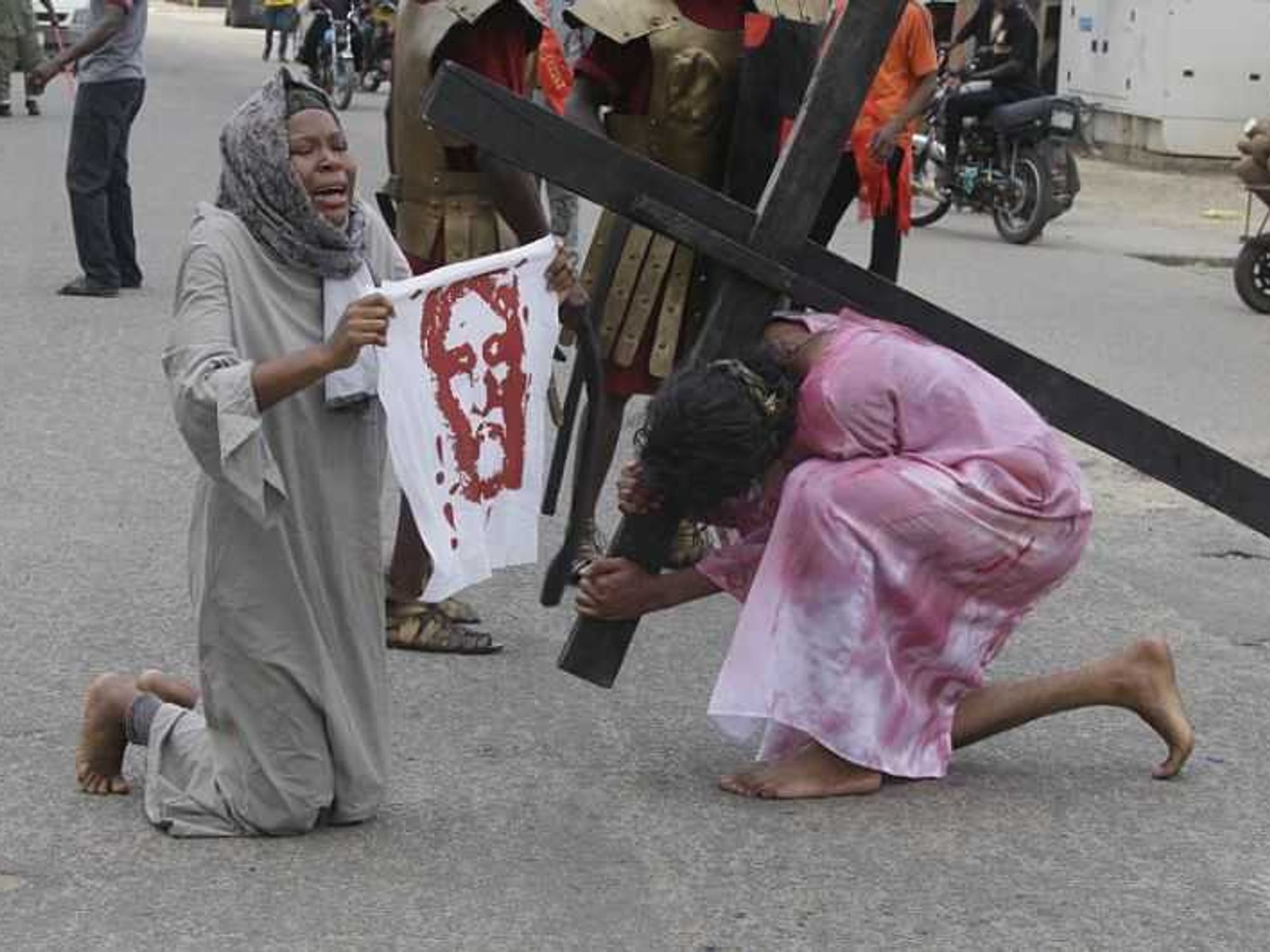
“Christianity is facing an existential threat in Nigeria. Thousands of Christians are being killed. Radical Islamists are responsible for this mass slaughter. I am hereby making Nigeria a ‘COUNTRY OF PARTICULAR CONCERN.'”
President Trump’s recent post to Trump Media-owned Truth Social focused attention on a crisis not known for being a priority of American foreign policy. But as much as the news out of Mexico and Ukraine may overshadow what’s happening in Nigeria, the situation there is no less severe. And it is indeed an “existential threat” that should especially concern Christians.
Just this past weekend, nine Christians — including a pastor — were killed by Fulani assailants in a terrorist attack.
Despite their well-observed decline in North America and Europe, the number of Christians worldwide is increasing, largely thanks to Asia and Africa. And in Africa, nowhere does the faith have a stronger presence than in Nigeria.
Christian stronghold
Africa’s most populous nation (238 million) is also its most Christian, with some 100 million believers — enough to rank Nigeria as the sixth-largest Christian population in the world. Concentrated in the country’s south, this population includes 21 million Catholics, 22 million Anglicans, 14 million Baptists, 6 million evangelicals, and 4.5 million Pentecostals, in the form of the Apostolic Church Nigeria.
Despite these numbers, Nigeria remains predominantly Muslim (53.5%), especially in the north, where Islamic terrorism is on the rise. According to a 2022 State Department report, groups like Boko Haram and ISIS-West Africa — along with religiously unaffiliated criminal gangs — have killed thousands of Muslims and Christians, with both sides accusing the government of failing to intervene.
There continued to be frequent violent incidents, particularly in the northern part of the country, affecting both Muslims and Christians, resulting in numerous deaths. Kidnappings and armed robbery by criminal gangs increased in the South as well as the North West, the South South, and the South East. The international Christian organization Open Doors stated that terrorist groups, militant herdsmen, and criminal gangs were responsible for large numbers of fatalities, and Christians were particularly vulnerable.
In response to such persecution, the State Department listed Nigeria as a “Country of Particular Concern” under the first Trump administration, in 2020; the Biden administration removed that designation in late 2021. This was despite protests from the independent U.S. Commission on International Religious Freedom, which noted widespread “violence by militant Islamists and other non-state armed actors, as well as discrimination, arbitrary detentions, and capital blasphemy sentences by state authorities.”
Since then, USCIRF has continued to call for Nigeria’s Country of Particular Concern designation to be restored, warning as recently as July that “religious communities are facing ongoing, systematic, and egregious violations of their ability to practice their faith freely.”
High-profile attacks
This year alone, Nigeria has seen multiple high-profile attacks against Christians, including massacres in April and June that killed 40 and more than 100, respectively. In August, 50 Muslims were killed in an attack on a mosque. Just this past weekend, nine Christians — including a pastor — were killed by Fulani assailants in a terrorist attack.
On Saturday Trump followed up his initial statement with another post threatening to halt humanitarian aid and assistance to Nigeria until the killings stop. He also hinted at the possibility of military intervention, stating that he was prepared to enter the country “guns-a-blazing” in order to “wipe out the Islamic Terrorists who are committing these horrible atrocities.”
While aboard Air Force One on Sunday, Trump made no effort to walk back his comments, telling reporters that deploying troops to Nigeria was still very much on the table. “I envisage a lot of things. They’re killing record numbers of Christians in Nigeria … and killing them in very large numbers. We’re not going to allow that to happen.”
Nigeria responds
Nigerian spokesman Daniel Bwala subsequently responded to Reuters with a statement following Trump’s comments, stating that U.S. assistance would be welcomed so long as the U.S. respected Nigeria’s “territorial integrity.” “I am sure by the time these two leaders meet and sit, there would be better outcomes in our joint resolve to fight terrorism.” He similarly affirmed to the BBC that any anti-Jihadi efforts ought to be made jointly.
President Bola Ahmed Tinubu also challenged Trump’s statements and defended Nigeria’s record on religious freedom in a post on X.
“Religious freedom and tolerance have been a core tenet of our collective identity and shall always remain so. Nigeria opposes religious persecution and does not encourage it.”
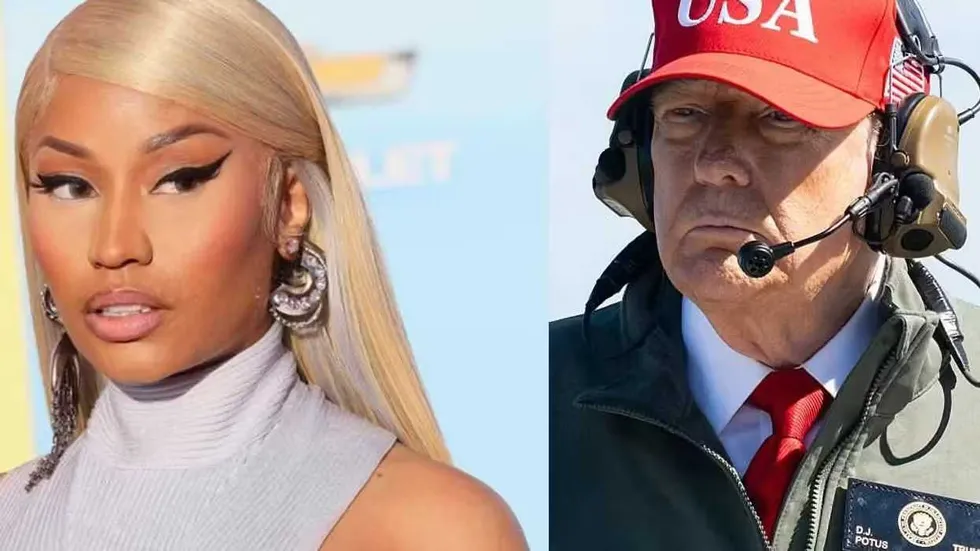 Photo (left): Rodin Eckenroth/WireImage; Photo (right): SAUL LOEB/AFP via Getty Image
Genocide or not?
While acknowledging the realities of Nigeria’s ongoing security crisis, the mainstream media has disputed characterizations of the violence as a genocide against Christians.
Time magazine dismissed such claims as an idea “circulating in right-wing circles” and amplified by politicians like Senator Ted Cruz (R-Texas) and Rep. Riley Moore (R-W.V.). It also cited statistics from independent watchdog Armed Conflict Location and Event Data suggesting that of the 20,409 estimated civilian deaths in the past five years, just 417 deaths were Muslim and 317 deaths were Christian.
CNN called the genocide narrative an “oversimplication” that blames religion for the violence while ignoring factors such as ethnicity and resource scarcity.
The Guardian cast Trump’s remarks as an attempt to pander to “his right-wing, evangelical base,” reflecting “renewed domestic political pressure to appear tough on the marginalization or persecution of Christians abroad.”
Methodological weakness
While ACLED rejects the claim of a Christian genocide in Nigeria, arguing that most violence stems from ethnic rivalries and competition over land and resources rather than religion, it has previously acknowledged the difficulty of ruling out religious persecution. In a note on its general methodology, the group has acknowledged that “disentangling the ethnic, communal, political, and religious dimensions of specific events … [proves] to be problematic — at times even impossible — and extremely time-consuming. As a result, religious repression and disorder … may be underrepresented in the dataset.”
Proponents of the genocide narrative say this could lead to systematic undercounting of Christian victims. In a letter to Secretary of State Marco Rubio last month, Rep. Moore countered with significantly larger figures: “More than 7,000 Christians have been killed in Nigeria in 2025 alone — an average of 35 per day — with hundreds more kidnapped, tortured, or displaced by extremist groups.”
‘This needs to stop’
Evangelical author, public speaker, and Christian apologist Dr. Alex McFarland agrees with Moore, noting that resistance to covering Christian persecution is the norm. Reached just prior to Trump’s statements over the weekend, he told Align that he believes that claims of a Christian genocide are accurate.
In an age when so many champion human rights and social justice, Nigeria is something that should be talked about. What’s going on there is tragic on an unimaginable scale. This needs to stop, and I pray the United States of America will do what it can to stop the killing of Christians and advocate for their human rights.
American Christians who want to to help should be relentless in speaking up to elected officials, advises McFarland, making it clear that they “ask and expect them to take a stand on this issue, just as we expect our elected officials to take a positive stand for Israel and against anti-Semitism.”
Supporting organizations like Samaritan’s Purse, Open Doors, and Voice of the Martyrs is also an option.
McFarland emphasizes that anti-Christian persecution extends well beyond Nigeria, pointing to similar ongoing persecutions in China, India, and Saudi Arabia. “We need to understand that Christians outside of the United States have a hard go of it.”
Finally, he cautions his fellow Christians not to overlook one of the most powerful ways they can effect change. “What Christians can do is pray,” he tells Align. “That might sound glib and easy to say, but prayer works and is quite significant.”
Media Denies Christian Genocide in Response to Trump’s Threat of Military Action in Nigeria
On the night of June 13, 2025, armed Fulani herdsmen descended on a Catholic farming community in Nigeria. By the…





