

Category: Drugs
Dancing in the Street, Listening for God
When I first saw the Grateful Dead play, I was just shy of 17, on December break, my junior year…
Why weight-loss drug prices finally fell — and who deserves credit

For decades, Americans heard the same justification for high drug prices. Pharmaceutical executives insisted those prices were unavoidable. Research costs required them. Innovation depended on them. The United States, as the world’s most open market, had to pay more than everyone else.
Then Eli Lilly cut the monthly price of one of its flagship weight-loss drugs, Zepbound.
If lower prices matter, then incentives matter more than bureaucracy. Competition and consumer access drive real change.
Nothing about the drug changed. No new scientific breakthrough appeared. The only thing that changed was competition. Once real pressure entered the market, Lilly found room in its pricing model that executives had long claimed did not exist.
The market responded quickly. Novo Nordisk, Lilly’s primary rival, lowered its prices soon after. This did not reflect a sudden gain in efficiency. It reflected fear of losing ground to a competitor.
That is how functioning markets work. When one major player moves, others adjust. The correction happens faster than any federal agency could hope to manage.
The irony is hard to miss. For years, the industry claimed margins were fixed and untouchable. Executives warned that any shift would damage shareholders and undermine global health. Yet the moment one company blinked, others followed. Consumers saw relief not because regulators intervened, but because competition exposed the old narrative as hollow.
Another force reinforced that shift. On Nov. 6, the White House announced a pricing agreement with major drug manufacturers scheduled to take effect in 2026. The agreement aims to narrow the gap between U.S. prices and those in other advanced economies and establishes a purchasing framework that makes reductions easier to implement.
That move marked a break from Washington’s habit of passively accepting industry talking points. The administration did not override the market. It amplified momentum competition had already created. Companies that once refused to consider cuts began to bend once the political cost of rigidity became clear. The announcement accelerated the trend, but competition started it.
A larger reality deserves attention. Major pharmaceutical companies have posted enormous profits for years. They have spent billions on stock buybacks and shareholder payouts while executive compensation soared. Market valuations across the sector reached historic highs. Lilly even became the first pharmaceutical company to surpass a trillion-dollar valuation.
Profit itself is not the problem. But competition forcing these firms to behave more like the quasi-utilities they resemble marks a welcome change from a system long treated as untouchable.
RELATED: The party that made life more expensive wants credit for noticing
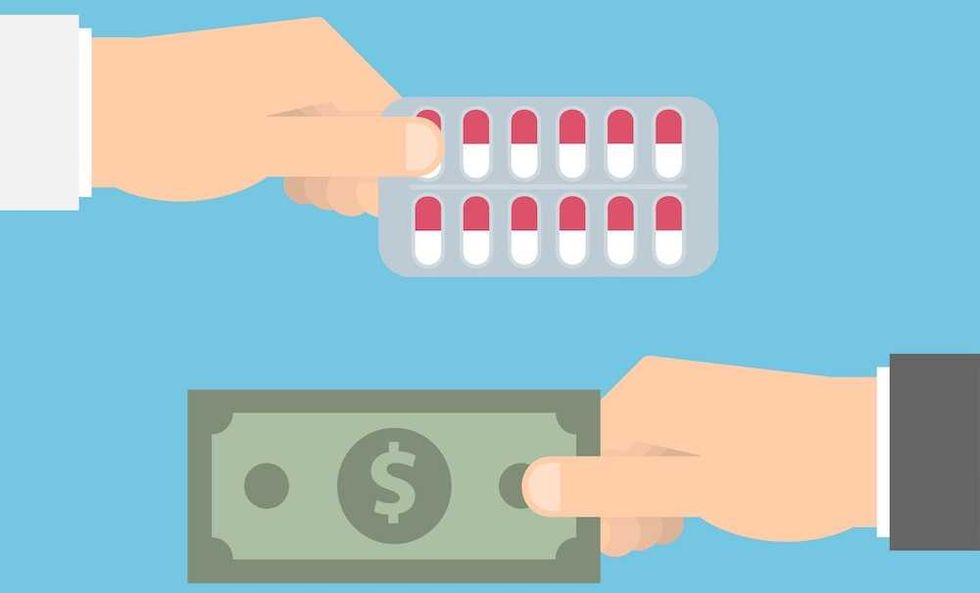 byemo via iStock/Getty Images
That system rests on a global arrangement in which Americans shoulder a disproportionate share of drug development costs. Wealthy nations negotiate prices or impose caps. The United States does not. The gap between what Americans pay and what others pay funds buybacks, dividends, and executive packages. Shareholders collect the upside.
The disparity speaks for itself. Drugs that cost hundreds of dollars overseas cost thousands here. The industry defended that gap by warning that research would collapse if prices fell. The current price cuts prove otherwise. Pipelines remain intact. Investment continues. Profitability holds. The model did not break when prices moved downward. It adjusted.
These developments expose a simple truth. Prices never reflected necessity. Incentives shaped them, reinforced by limited competition and political deference. Competition cracked open an inflexible model. The White House helped widen the opening.
Policymakers should learn from that sequence. If lower prices matter, then incentives matter more than bureaucracy. Competition and consumer access drive real change. The bloated regulatory machinery Washington favors often delays it. The market moved before Congress could even respond.
For Americans struggling to afford essential medication, that lesson matters most. Competition remains the strongest and most reliable force for bringing prices down.
It worked here. It can work again — if policymakers allow markets to function and pharmaceutical companies choose access over insulation.
Why weight-loss drug prices finally fell — and who deserves credit
For decades, Americans heard the same justification for high drug prices. Pharmaceutical executives insisted those prices were unavoidable. Research costs required them. Innovation depended on them. The United States, as the world’s most open market, had to pay more than everyone else.
Then Eli Lilly cut the monthly price of one of its flagship weight-loss drugs, Zepbound.
If lower prices matter, then incentives matter more than bureaucracy. Competition and consumer access drive real change.
Nothing about the drug changed. No new scientific breakthrough appeared. The only thing that changed was competition. Once real pressure entered the market, Lilly found room in its pricing model that executives had long claimed did not exist.
The market responded quickly. Novo Nordisk, Lilly’s primary rival, lowered its prices soon after. This did not reflect a sudden gain in efficiency. It reflected fear of losing ground to a competitor.
That is how functioning markets work. When one major player moves, others adjust. The correction happens faster than any federal agency could hope to manage.
The irony is hard to miss. For years, the industry claimed margins were fixed and untouchable. Executives warned that any shift would damage shareholders and undermine global health. Yet the moment one company blinked, others followed. Consumers saw relief not because regulators intervened, but because competition exposed the old narrative as hollow.
Another force reinforced that shift. On Nov. 6, the White House announced a pricing agreement with major drug manufacturers scheduled to take effect in 2026. The agreement aims to narrow the gap between U.S. prices and those in other advanced economies and establishes a purchasing framework that makes reductions easier to implement.
That move marked a break from Washington’s habit of passively accepting industry talking points. The administration did not override the market. It amplified momentum competition had already created. Companies that once refused to consider cuts began to bend once the political cost of rigidity became clear. The announcement accelerated the trend, but competition started it.
A larger reality deserves attention. Major pharmaceutical companies have posted enormous profits for years. They have spent billions on stock buybacks and shareholder payouts while executive compensation soared. Market valuations across the sector reached historic highs. Lilly even became the first pharmaceutical company to surpass a trillion-dollar valuation.
Profit itself is not the problem. But competition forcing these firms to behave more like the quasi-utilities they resemble marks a welcome change from a system long treated as untouchable.
RELATED: The party that made life more expensive wants credit for noticing
byemo via iStock/Getty Images
That system rests on a global arrangement in which Americans shoulder a disproportionate share of drug development costs. Wealthy nations negotiate prices or impose caps. The United States does not. The gap between what Americans pay and what others pay funds buybacks, dividends, and executive packages. Shareholders collect the upside.
The disparity speaks for itself. Drugs that cost hundreds of dollars overseas cost thousands here. The industry defended that gap by warning that research would collapse if prices fell. The current price cuts prove otherwise. Pipelines remain intact. Investment continues. Profitability holds. The model did not break when prices moved downward. It adjusted.
These developments expose a simple truth. Prices never reflected necessity. Incentives shaped them, reinforced by limited competition and political deference. Competition cracked open an inflexible model. The White House helped widen the opening.
Policymakers should learn from that sequence. If lower prices matter, then incentives matter more than bureaucracy. Competition and consumer access drive real change. The bloated regulatory machinery Washington favors often delays it. The market moved before Congress could even respond.
For Americans struggling to afford essential medication, that lesson matters most. Competition remains the strongest and most reliable force for bringing prices down.
It worked here. It can work again — if policymakers allow markets to function and pharmaceutical companies choose access over insulation.
Why weight-loss drug prices finally fell — and who deserves credit
For decades, Americans heard the same justification for high drug prices. Pharmaceutical executives insisted those prices were unavoidable. Research costs required them. Innovation depended on them. The United States, as the world’s most open market, had to pay more than everyone else.
Then Eli Lilly cut the monthly price of one of its flagship weight-loss drugs, Zepbound.
If lower prices matter, then incentives matter more than bureaucracy. Competition and consumer access drive real change.
Nothing about the drug changed. No new scientific breakthrough appeared. The only thing that changed was competition. Once real pressure entered the market, Lilly found room in its pricing model that executives had long claimed did not exist.
The market responded quickly. Novo Nordisk, Lilly’s primary rival, lowered its prices soon after. This did not reflect a sudden gain in efficiency. It reflected fear of losing ground to a competitor.
That is how functioning markets work. When one major player moves, others adjust. The correction happens faster than any federal agency could hope to manage.
The irony is hard to miss. For years, the industry claimed margins were fixed and untouchable. Executives warned that any shift would damage shareholders and undermine global health. Yet the moment one company blinked, others followed. Consumers saw relief not because regulators intervened, but because competition exposed the old narrative as hollow.
Another force reinforced that shift. On Nov. 6, the White House announced a pricing agreement with major drug manufacturers scheduled to take effect in 2026. The agreement aims to narrow the gap between U.S. prices and those in other advanced economies and establishes a purchasing framework that makes reductions easier to implement.
That move marked a break from Washington’s habit of passively accepting industry talking points. The administration did not override the market. It amplified momentum competition had already created. Companies that once refused to consider cuts began to bend once the political cost of rigidity became clear. The announcement accelerated the trend, but competition started it.
A larger reality deserves attention. Major pharmaceutical companies have posted enormous profits for years. They have spent billions on stock buybacks and shareholder payouts while executive compensation soared. Market valuations across the sector reached historic highs. Lilly even became the first pharmaceutical company to surpass a trillion-dollar valuation.
Profit itself is not the problem. But competition forcing these firms to behave more like the quasi-utilities they resemble marks a welcome change from a system long treated as untouchable.
RELATED: The party that made life more expensive wants credit for noticing
byemo via iStock/Getty Images
That system rests on a global arrangement in which Americans shoulder a disproportionate share of drug development costs. Wealthy nations negotiate prices or impose caps. The United States does not. The gap between what Americans pay and what others pay funds buybacks, dividends, and executive packages. Shareholders collect the upside.
The disparity speaks for itself. Drugs that cost hundreds of dollars overseas cost thousands here. The industry defended that gap by warning that research would collapse if prices fell. The current price cuts prove otherwise. Pipelines remain intact. Investment continues. Profitability holds. The model did not break when prices moved downward. It adjusted.
These developments expose a simple truth. Prices never reflected necessity. Incentives shaped them, reinforced by limited competition and political deference. Competition cracked open an inflexible model. The White House helped widen the opening.
Policymakers should learn from that sequence. If lower prices matter, then incentives matter more than bureaucracy. Competition and consumer access drive real change. The bloated regulatory machinery Washington favors often delays it. The market moved before Congress could even respond.
For Americans struggling to afford essential medication, that lesson matters most. Competition remains the strongest and most reliable force for bringing prices down.
It worked here. It can work again — if policymakers allow markets to function and pharmaceutical companies choose access over insulation.
Hezbollah, Short on Support From Iran, Turns to Drug Trafficking in Venezuela To Fill Its Coffers
Hezbollah terrorists are flocking to Venezuela as the terror group—and Iran’s most important proxy—increasingly turns to drug trafficking as a way to raise revenue in the aftermath of Israel’s successful campaigns against the Islamic Republic and its “Axis of Resistance,” sources familiar with Hezbollah’s operations told the Washington Free Beacon.
The post Hezbollah, Short on Support From Iran, Turns to Drug Trafficking in Venezuela To Fill Its Coffers appeared first on .
Reiner and Son
I first met Rob Reiner the first week I moved to Los Angeles in the summer of 1976. He was…
Dealing With Maduro Is No Distraction. It’s a Necessity.
With the latest American-led negotiation about Ukraine well underway, Beijing browbeating Japan’s new prime minister over her concerns about Taiwan’s security, and India rolling out the red carpet for Vladimir Putin, the Beltway is consumed with… Venezuela. The Trump administration’s drone strikes on alleged drug smuggling boats have roiled Washington, and criminal accusations and constitutional challenges abound.
The post Dealing With Maduro Is No Distraction. It’s a Necessity. appeared first on .
YouTuber Sean Pettiford Pushes Back Against Tara Reid’s Allegations That He Drugged Her
‘How am I supposed to roofie you when I am outside having a cigarette with you’
Mr. and Mrs. Bureaucrats, Show Us Some Mercy
My goddess, my dream girl since I saw her gliding towards me in a light blue satin dress at a…
Scarface of Springfield: Massachusetts Governor’s Senior Staffer Arrested for Drug Trafficking
Authorities have arrested a senior staffer to Massachusetts Democratic governor Maura Healey on drug trafficking charges following a sting operation at a government building.
The post Scarface of Springfield: Massachusetts Governor’s Senior Staffer Arrested for Drug Trafficking appeared first on .





