

Category: GOP
Civil war chatter rises when Democrats fear losing power for good

Barack Obama used the same U.S. Immigration and Customs Enforcement tactics as Donald Trump. During his eight years in the White House, his administration deported more illegal aliens than Trump has.
Yet the Obama years did not feature mass protests over deportations. No governors or mayors compared ICE to the Gestapo, a comparison so obscene it should end careers. No district attorneys vowed to “hunt down” ICE agents for doing their jobs. No late-night comedians insisted that ICE agents ranked “worse than Nazis.”
Democrats once drove the country into a civil war to protect slavery. Today they court conflict to protect power.
That backlash became routine only after Trump. Two factors explain why.
First, the left hates Trump to the core. Not as a political rival, but as a personal and moral affront. This visceral, uncontrolled hatred has swallowed identities and replaced judgment. It fuels social media tantrums, office politics, family feuds, and the constant need to punish dissent. Among allies, people congratulate each other for hating the right man. For everyone else, they virtue-signal.
This hatred will not fade with time. It will persist after Trump leaves office, and it may even outlive him. Ronald Reagan hate still lingers decades after his death. Trump hate runs hotter, deeper, and more irrational. It will not burn out on schedule.
Second, the immigration fight has turned strategic.
During the Obama years, the left had not yet internalized two tactics that now help it hold power.
Once Democrats win office, many push policy as far left as state and federal constitutions allow: higher taxes, soft-on-crime governance, heavier regulation, and soaring costs that punish families. That agenda drives productive citizens out of blue cities and blue states and into red states. Conservatives hold few truly red cities now; the activist class has captured many local institutions.
Red states gain taxpayers and workers. Blue states lose them.
Democrat leaders have chosen to replace the citizens who leave, but not with similarly productive citizens. They replace them with illegal aliens.
That strategy helps explain Joe Biden’s first-day border reversals and the torrent of executive actions that followed. The signal was plain: Enforcement would relax, entry would rise, and the federal government would look away. Millions came, many without legal status. Many settled in blue jurisdictions that offer sanctuary policies and advertise benefits.
Politicians sell those benefits as “free”: child care, health care, schooling, housing programs. Taxpayers pay the bills. Debt fills the rest.
California offers the clearest example. The state has lost large numbers of residents to Texas and Florida. Gov. Gavin Newsom (D) does not treat the exodus as a crisis. He treats it as ideological sorting. If taxpayers leave, he can replace the head count with people who will not challenge his machine at the ballot box.
Illegal aliens are not allowed to vote. They still count. Biden made sure of that.
The census counts residents, and those numbers drive seats in the United States House of Representatives and votes in the Electoral College. Add population, gain power. Lose population, lose power. Democrats understand the arithmetic, which is why they fight enforcement as fiercely as they fight elections.
RELATED: ‘This isn’t organic’: Joe Rogan says Minnesota’s anti-ICE protests are ‘coordinated’ to induce chaos
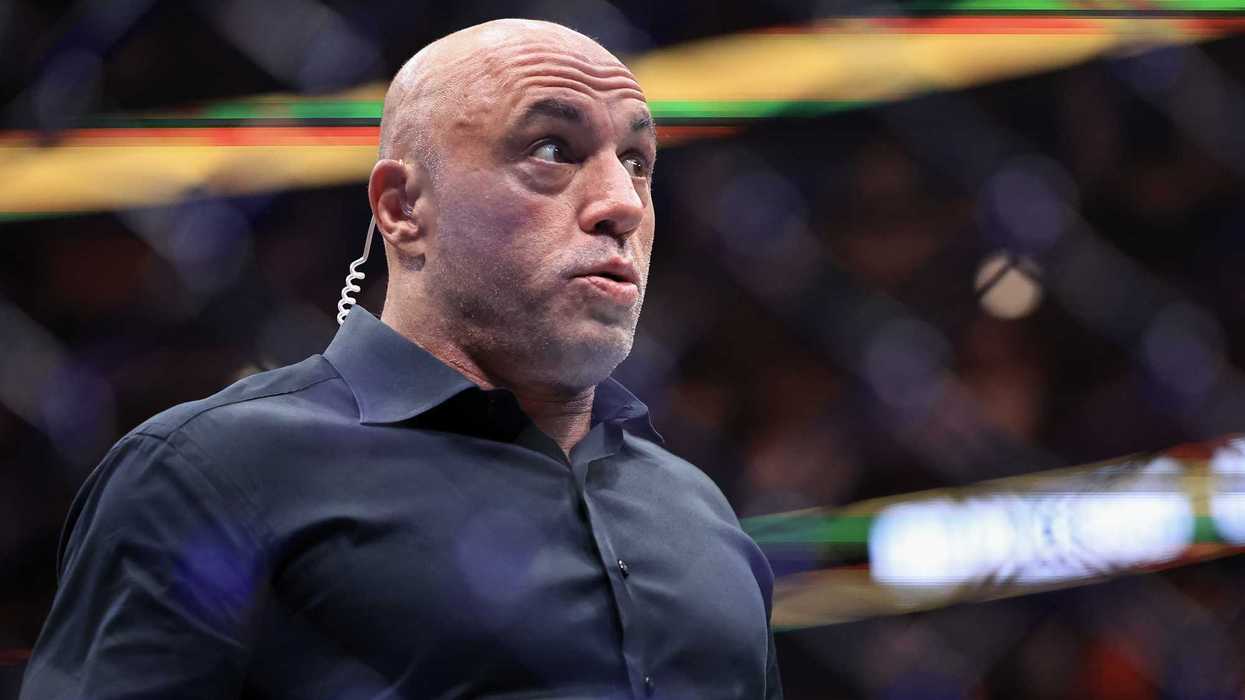 Photo by Geoff Stellfox/Getty Images
Then comes the long game. Children born here can vote. Democrats assume those children will vote Democrat for life. They are building a future electorate while padding current representation.
Trump’s deportation strategy threatens that structure. Democrats have already watched citizens flee Illinois, New York, California, and other strongholds. If deportations also shrink the illegal-alien population those states have absorbed, Democrats lose House seats, Electoral College strength, and national leverage.
So they raise the temperature. They smear ICE as “secret police” and dare Trump to enforce the law anyway. They bait confrontation because chaos can create a veto: If streets burn long enough, Washington may flinch.
If Trump refuses to flinch, they reach for the next weapon: the camera. A clash becomes a “crackdown.” An arrest becomes “political persecution.” A dead protester becomes a martyr, and the headlines write themselves. The moral damage does not scare them; it serves them.
Democrats once drove the country into a civil war to protect slavery. Today they court conflict to protect power. They do not need tanks to do it. They need prosecutors, mayors, and media partners willing to treat law enforcement as evil and disorder as virtue.
Business as Usual on Pennsylvania Ave
To anyone who doesn’t live under a rock, things seem chaotic right now. Just in the last month, Venezuelan dictator…
As legislative season begins, lawmakers should be careful about PBM ‘reform’

As state lawmakers begin to return to office this week, a number of issues will be clamoring for their attention. One of the most important — but perhaps overlooked due to its technical and less attention-grabbing nature — is pharmacy benefit manager reform.
Reform-minded leaders should work with PBMs, leveraging their market power to achieve lower costs for consumers.
Last year, Arkansas became the first state in the nation to ban PBMs, and other states heavily regulated the industry. These efforts are expected to continue in 2026, even as courts raise constitutional questions about the Arkansas law and regulations in Iowa.
I’m a health care broker, so I know PBMs pretty well. They’re easy targets because of the complex process by which they work, as well as the pharmaceutical industry’s years-long campaign to put blame for drug pricing on the industry.
At its core, PBMs’ basic function is straightforward. Because they represent hundreds of thousands or even millions of patients who cannot negotiate with drugmakers on their own, PBMs are able to use their size as leverage to push for lower prices. When the big players reject a high price, a manufacturer has to decide whether it wants to lose access to those patients.
That negotiating leverage also keeps drugmakers from unilaterally dictating the cost of medications, from commonly used drugs like insulin to newer medications like Zepbound and Wegovy. For example, companies gave consumers a New Year’s present of increasing prices for 350 products — but the final costs to patients won’t be known until PBMs have their say.
U.S. health care pricing can be confusing, with even seasoned observers getting lost amid the jargon of rebates, formularies, and spread pricing. Critics often accuse PBMs of adding unnecessary layers of administrative cost or of exaggerating savings. Some of these concerns are legitimate, and the industry’s lack of transparency makes it easy for critics to portray PBMs as the villains keeping patients from being able to afford the medications they need.
But this criticism is better leveled at the drugmakers. They often insist they cannot lower prices because of research costs or regulatory burdens. Yet when Eli Lilly, the first trillion-dollar drug company, found itself boxed out of the CVS network, it suddenly found a way to make its products available more cheaply.
On December 1, drugmaker Eli Lilly cut the consumer cost of its popular weight-loss injection Zepbound, bringing its prices in line with competitor Novo Nordisk’s popular and recently reduced drug Wegovy.
Lilly’s move should be instructive for state and federal lawmakers because it came after Novo Nordisk agreed to lower prices of Wegovy under pressure from pharmacy giant CVS. CVS — through its PBM division, CVS Caremark — had initially tried to negotiate with Lilly, but the drugmaker refused to budge on its pricing, leading CVS Caremark to stop offering Zepbound to clients. But once Novo Nordisk agreed to reduce the price of Wegovy, Eli Lilly suddenly changed its tune.
RELATED: Taxpayers are funding California’s Medicaid shell game
 Photo by Justin Sullivan/Getty Images
Lawmakers looking to reduce prescription drug prices should take note.
Like all industries, PBMs have their flaws, but this case showed CVS forcing a needed price correction. And it should be front of mind for lawmakers who, yes, should insist on greater PBM transparency, but also must be aware of both the constitutional limitations on so-called “reforms” and how overregulating PBMs will impact constituents’ drug prices.
As lawmakers look for solutions to Americans’ record-high health care costs, they should realize that any cost-reduction effort must include prescriptions — and that means working with PBMs. Reform-minded leaders should work with PBMs, leveraging their market power to achieve lower costs for consumers while insisting on price transparency and other reforms that reinforce how PBMs are using fundamental market principles to keep drug companies from causing even more harm to Americans’ finances.
Congress needs to go big or go home
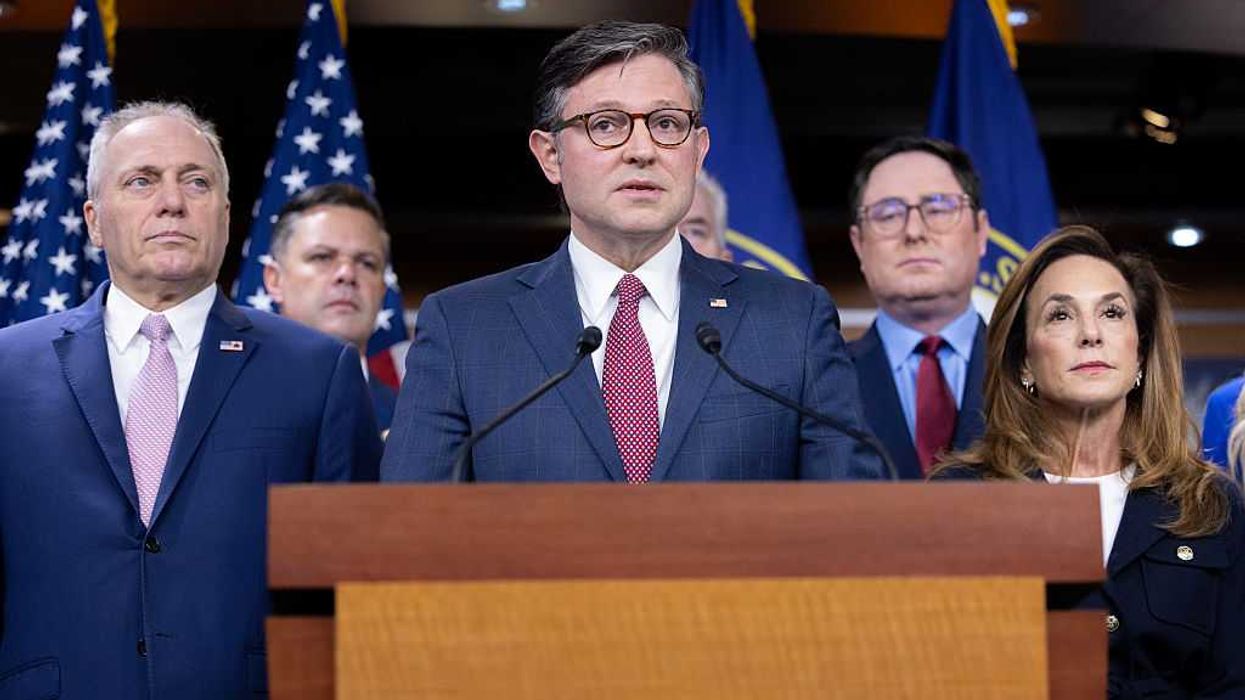
Last week marked one year since President Trump returned to the White House with a mandate to reshape America’s future after four long years of the Biden administration’s failures.
Overnight, illegal crossings at the southern border were brought to a halt. DEI initiatives that picked winners and losers based on group identity were eliminated from the federal government. Lethality returned as the rightful marker of success in our nation’s military.
Despite holding a majority, Republicans in Congress have produced a historically low volume of legislation, leaving much of the Trump agenda uncodified and the deep state intact.
Under President Trump, Americans finally have leaders willing to put them first. But despite a record number of executive orders and a landmark reconciliation package that delivered the largest tax cut in American history, $140 billion for border security, and the elimination of the $200 tax stamp on National Firearms Act items, the job isn’t done yet.
Obamacare’s broken framework continues to get more expensive each year — both for taxpayers and enrollees. Young Americans remain priced out of the American dream, unable to afford a home. And despite holding a majority, Republicans in Congress have produced a historically low volume of legislation, leaving much of the Trump agenda uncodified and the deep state intact.
These challenges are precisely why Republicans were elected: to fix the mess Washington created. We cannot coast into November on “tax cuts,” nor can we pretend that the nation’s most urgent challenges will be solved through uncodified executive orders or rogue discharge petitions.
We need decisive action to address the crises facing the nation. We need to make the American dream affordable again. Congress needs the structure, discipline, and publicity of a new reconciliation bill that forces lawmakers to prioritize results and deliver tangible outcomes for the American people.
It’s time to go big or go home. Despite prediction markets giving Republicans a 76% chance of losing the majority in the House, many lawmakers don’t seem to care. Just last week, 81 Republicans joined Democrats to fund the National Endowment for Democracy — a rogue CIA cutout that fuels global censorship and domestic propaganda. Many of those same Republicans had praised the Department of Government Efficiency just months prior for freezing the NED’s funding.
Likewise, 46 Republicans joined Democrats to vote against defunding the office of federal district court judge James Boasberg, who repeatedly uses nationwide injunctions to override duly executed federal law and substitute his own radical policy preferences for those of the president.
A few short years ago, Democrats attempted to lock Trump in prison and throw away the keys.
Republicans, by contrast, can hardly muster the courage to dispense with a rogue judge.
Meanwhile, much of the work of the American people remains to be done. While the House has passed Texas Republican Rep. Chip Roy’s Safeguard American Voter Eligibility Act twice, the Senate refuses to put it up for a vote on the floor.
On health care, members of the House Freedom Caucus have offered Americans an alternative to Obamacare’s failing architecture with market-based solutions that lower costs. Yet House moderates in our ranks, by contrast, have doubled down on stupid, joining Democrats to pass an extension of Biden’s $448 billion temporary COVID subsidies, which thankfully stalled in the Senate.
RELATED: This is what happens when a state elects a ‘moderate’ Democrat
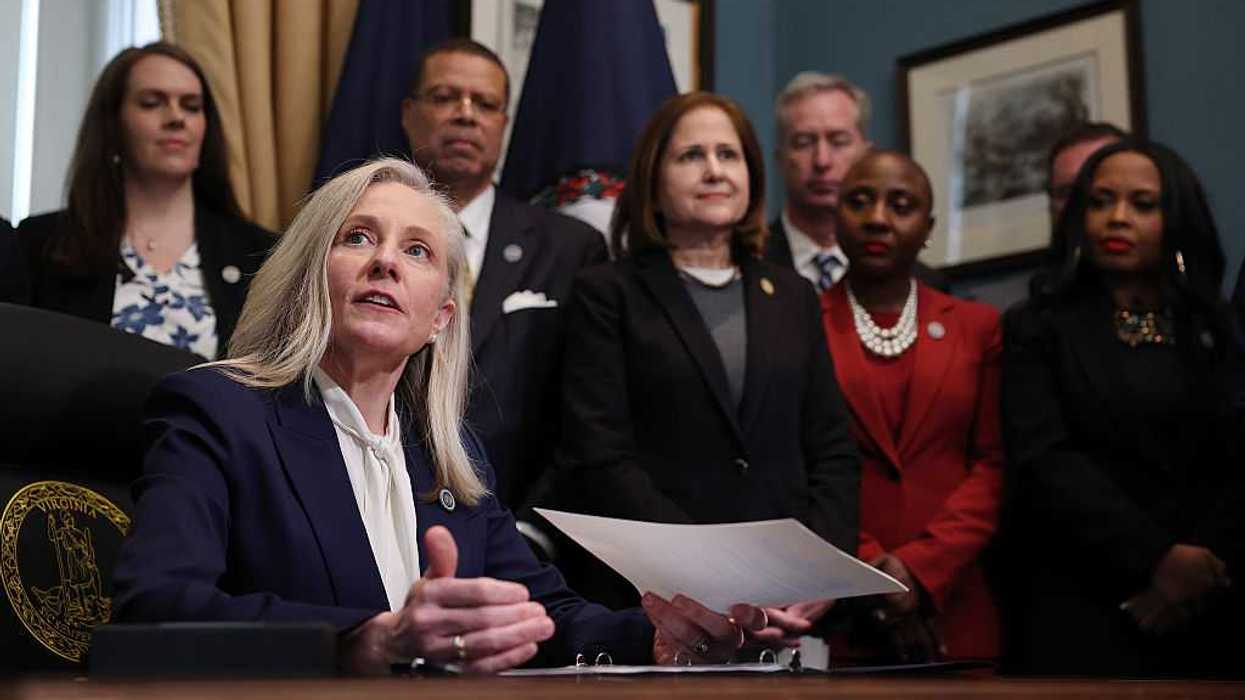 Photo by Win McNamee/Getty Images
Despite a good-faith effort from the administration on home ownership, Americans need more than solutions that subsidize demand. High interest rates, illegal immigration, and absurd capital gains taxes are crushing the market.
If Republicans don’t act now, we may not get the opportunity again. Democrats are on record clearly stating their intention to derail the administration with subpoenas and impeachments should they assume the majority in the House. We are a nation nearly $39 trillion in debt. Americans are sick of rhetoric and half measures.
The One Big Beautiful Bill Act was passed in July 2025. If, 12 months later, we can only offer the American people last year’s accomplishments, do we expect them to believe we are legislating on their behalf?
The Republican Study Committee recently released a strong blueprint for a new reconciliation bill. The legislation would put more homes on the market by eliminating capital gains taxes on sales to first-time buyers. It includes health care reforms that empower Americans to direct their health care dollars toward insurance plans that best meet their individual needs, rather than those of their employers. The proposal also cuts over $1.6 trillion in government spending, returning a semblance of fiscal responsibility to Congress.
Republicans were elected to enact Trump’s America First agenda, not to manage decline and finance the status quo. If members of Congress fail to seize this moment, they will have no one to blame but themselves when voters decide it’s time to send them home.
Appropriations talk, executive orders walk: The great MAGA budget betrayal
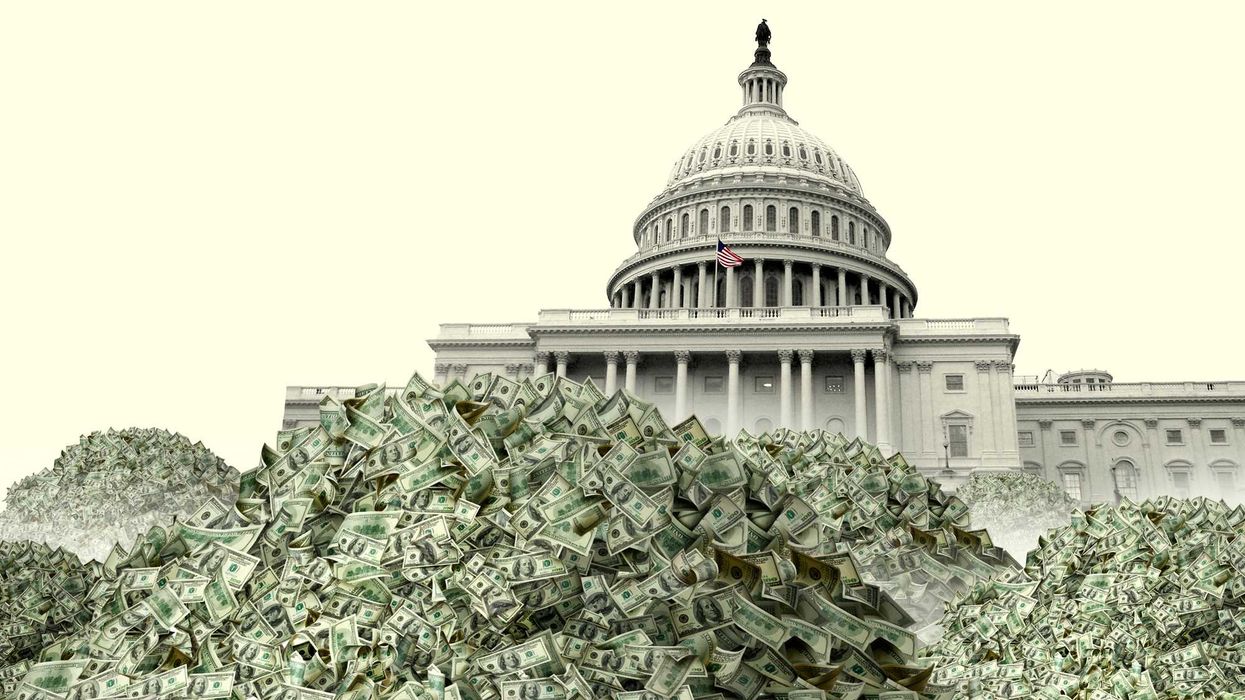
Money talks. Everything else is just BS. That is true in all areas of life, but it’s especially true in politics.
Trump is now repeating the modus operandi of his first term, in which he proclaims bold cuts, reforms, and changes to federal policies, programs, and agency spending levels in the form of executive orders. He summarily ignores his own policies by lobbying Republicans in Congress to pass annual appropriations bills that fund pretty much every spending level and most policies of his predecessor — so much so that most of these bills garner support from all but the most radical Democrats in Congress.
This bill is the crown jewel budget bill of the GOP trifecta at the peak of Trump’s power, and yet Democrats have no concerns voting for it.
Unfortunately, it is the government funding that matters when attempting to secure permanent change to federal agencies, not ephemeral executive orders or press releases.
On Friday, House Republicans passed a minibus bill with all but the 64 most progressive of the 213 Democrats voting yes. The fact that the 24 most conservative Republicans opposed it despite pressure from the administration should tell you that it does not reflect Trump’s campaign promises.
This minibus included Defense, Homeland Security, Labor, Health and Human Services, Education, Transportation, and Housing and Urban Development. Trump has proposed hundreds of policies throughout those departments that are extremely offensive to Democrats, yet they had no problem supporting the budget bill. Why?
They feel they dodged a bullet in this funding bill, especially while being out of power. The statement from Sen. Patty Murray (D-Wash.), the ranking member of the Senate Appropriations Committee, says it all:
These bills invest in working people across the country and utterly reject President Trump’s plan to defund our kids’ education, evict millions of families, and slash lifesaving medical research nearly in half. The message to President Trump is: America will continue to fund cancer research, we are going to keep investing in affordable housing and tackling homelessness, Congress will not abolish the Department of Education, and the people’s representatives will have the final say on how taxpayer dollars get spent.
…
While there’s a whole lot more I wish these bills would have addressed, these compromise bills protect critical investments in the American people, reject truly heartless cuts that would have undone decades of progress — and they are a significantly better outcome than another yearlong CR. I look forward to ensuring they get signed into law.
This bill is the crown jewel budget bill of the GOP trifecta at the peak of Trump’s power, and yet Democrats not only have no concerns voting for it but enthusiastically support it. What gives?
The DOGE appears to be a fossil from a hundred years ago. The $1.25 trillion “minibus” bill reversed all the DOGE cuts to agencies like the NIH and CDC. Overall, spending will increase slightly over Biden’s final year — a year that was notorious for biblical levels of spending.
Here are some of the top concerns with the FY 2026 budget bill.
- It fully funds the Department of Education. Even as Trump “abolished” the entire department, this bill funds the department at Biden’s level of $78.7 billion. Worse, Democrats secured a provision prohibiting the administration from transferring Education Department funds to other agencies, which had been a point of contention in negotiations. Once again, appropriations talk, executive orders walk.
- According to a Democrat summary of the bill, the total funding for the Labor-HHS-Education portion of the bill is $224 billion, a slight increase in current levels. This is simply astounding given that Republicans never believed in even having these departments at the federal level. If we can’t cut from these agencies, then where will we cut?
- Section 8 galore! Well, what’s worse than locking in Biden’s education and health spending? Increasing Biden’s HUD spending by nearly $8 billion! If there was ever a department conservatives wanted to abolish, it was always HUD. This is something that should be determined at the local level. Once again, Trump promised to cut the department in half, yet increased spending for every program he planned to trim or eliminate.
The bill provides $38.4 billion in tenant-based Section 8 vouchers and a $2.4 billion increase from fiscal 2025. It also provides $18.5 billion for project-based rental assistance, a $1.7 billion increase from last year.
The bill also provides $1.25 billion for HUD’s HOME Investment Partnerships Program, after the Trump administration budget request and the original Republican House Transportation-HUD appropriations bill promised to eliminate the program. These programs provide grants to state and local governments and local NGOs to essentially seed red states with liberal voters and ruin the character of rural communities.
RELATED: Trump’s primary endorsements are sabotaging his own agenda
 Photo by Michael M. Santiago/Getty Images
The bill also provides nearly $7 billion for the Community Development Block Grant Program and the Economic Development Initiatives for housing-related activities and $86 million for fair housing programs. Trump promised for years to eliminate the program altogether.
The only point of contention in the bill is the DHS portion, which Democrats are now threatening to oppose. But let’s be clear: Before the fatal shooting in Minneapolis, they were even willing to pass Trump’s DHS bill and did not perceive it as much of a threat.
At the time the bill was released, Senator Murray boasted that Democrats “defeated Republicans’ hard-fought push to give ICE an even bigger annual budget, successfully cut ICE’s detention budget and capacity, cut CBP’s budget by over $1 billion, and secured important, although still insufficient, new constraints on DHS.” She also lauded the rejection of “all Republican poison pill riders,” such as defunding sanctuary cities.
Democrats are, of course, forced to play to their base. However, on the specifics, this bill contains some horrendous provisions.
- Cheap foreign labor: It allows the secretary to double H-2B visas, going from 66,000 to 130,000 H-2B visas.
- Prohibits ICE from deporting illegal aliens who sponsor unaccompanied minors based on any information provided by HHS. So HHS is supposed to vet the sponsors, but if it determines they are here illegally and tells ICE that, ICE is prohibited from deporting them.
Why would we double foreign worker visas and make it harder to remove those literally engaged in trafficking children over the border by hiring cartel smugglers?
Well, despite all the rhetoric, press releases, tweets, and executive orders, good ol’ Joe Biden had it right when he proclaimed, “Don’t tell me what you value. Show me your budget, and I’ll tell you what you value.” Evidently, we are now valuing almost everything all that he funded in his budget when he made that comment.
‘Flagrant violation’: GOP lawmaker grills Jack Smith for ‘spying’ on former House speaker
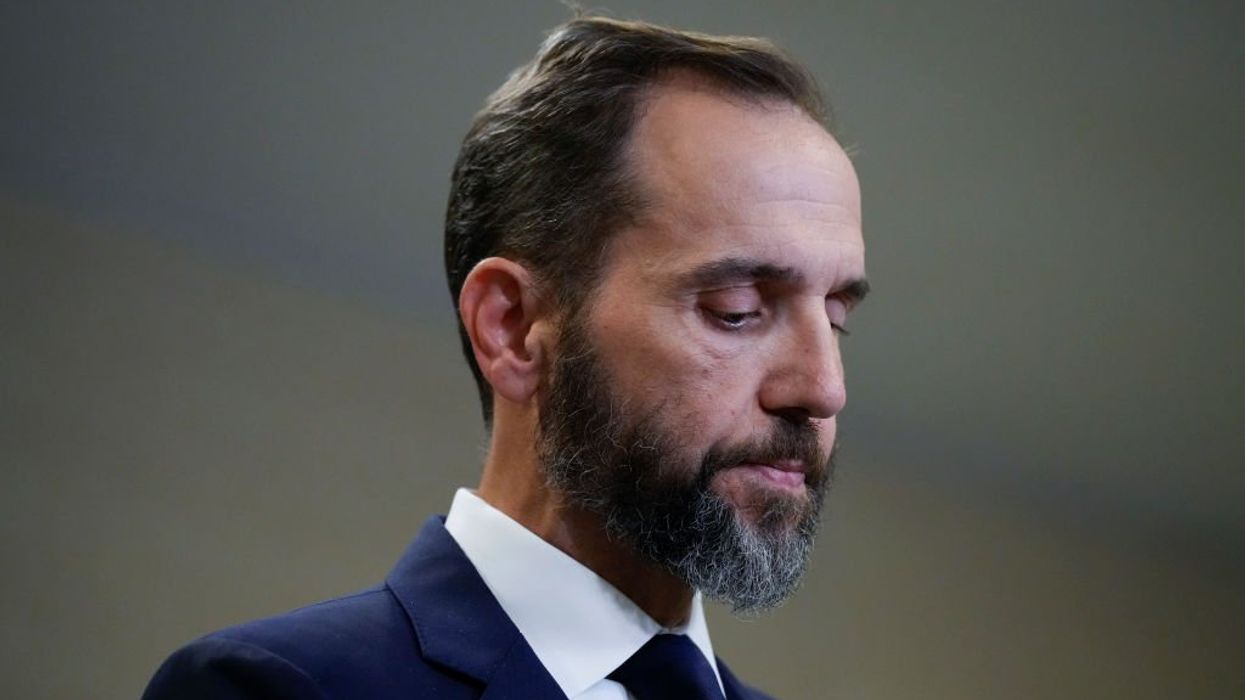
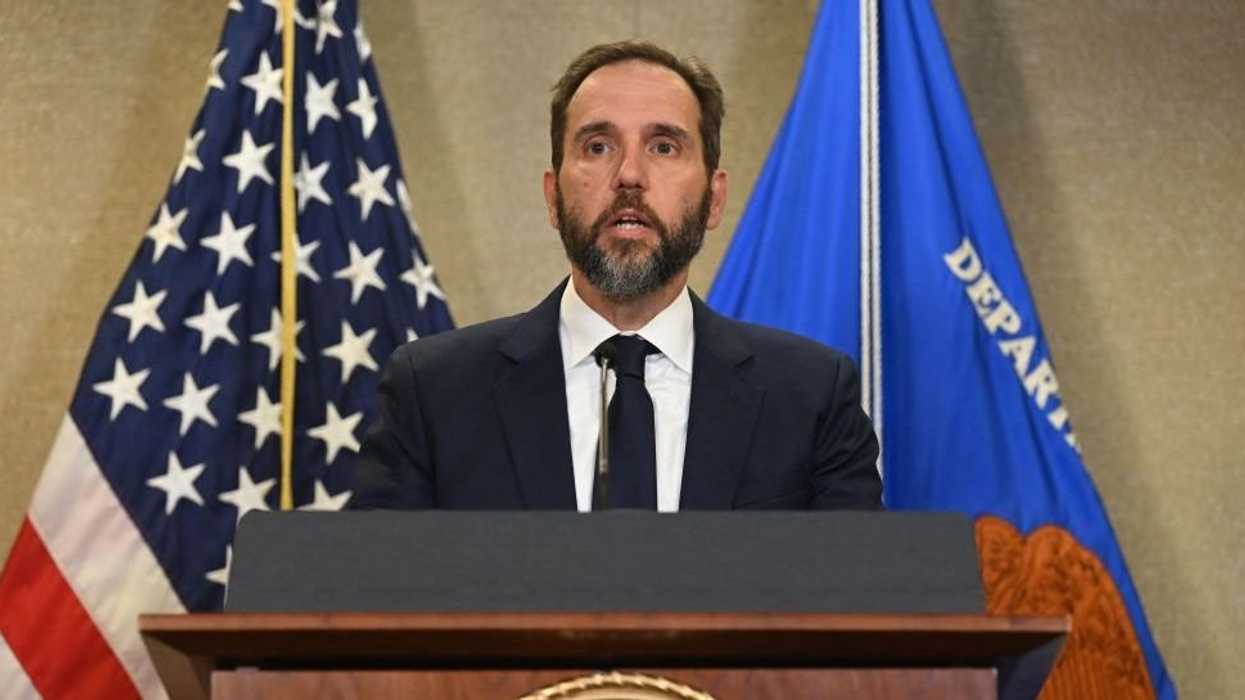
Rep. Brandon Gill (R-Texas) confronted ex-special counsel Jack Smith during a House committee hearing, accusing him and the Justice Department of secretly surveilling members of Congress and stomping on constitutional protections while investigating President Donald Trump.
Gill pressed Smith on his office using secret subpoenas and nondisclosure orders to obtain phone “toll records” from lawmakers, including then-Speaker of the House Kevin McCarthy (R-Calif.), without notifying them or the public.
‘Nobody’s going to sue. … So who cares? We’re going to do it anyway.’
“In January of 2023, did you subpoena then-Speaker of the House Kevin McCarthy’s toll records?” Gill asked.
“Yes, sir, we did,” Smith replied.
RELATED: GOP senator to sue Jack Smith after his lawyers try gaslighting on Biden FBI surveillance
 SAUL LOEB/AFP via Getty Images
Gill pushed back, claiming Smith abused executive power to secretly collect phone data on Republican leadership.
“Collecting months’ worth of phone data on the Republican speaker of the House — the leader of the opposition — right after he got sworn in as speaker, all around the time of a major vote — that sounds like a flagrant violation of the Speech or Debate Clause to me,” Gill said.
The confrontation ramped up as Gill questioned Smith about the nondisclosure orders used to prevent McCarthy from learning that his records had been subpoenaed.
“At the time you secured those nondisclosure orders, was Speaker McCarthy a flight risk?” Gill asked.
“He was not,” Smith answered.
“Then why did your nondisclosure order refer to him as a flight risk?” Gill pressed. Gill then cited language in the court filing stating that disclosure could result in “flight from prosecution.”
“You think the speaker of the House is … going to hop on a plane and leave the country?” Gill asked.
“No,” Smith said, arguing that the language was not meant to apply personally to McCarthy but to general investigative risks.
Gill rejected that explanation.
RELATED: House Republican seeks criminal investigation into Jack Smith’s alleged surveillance scheme
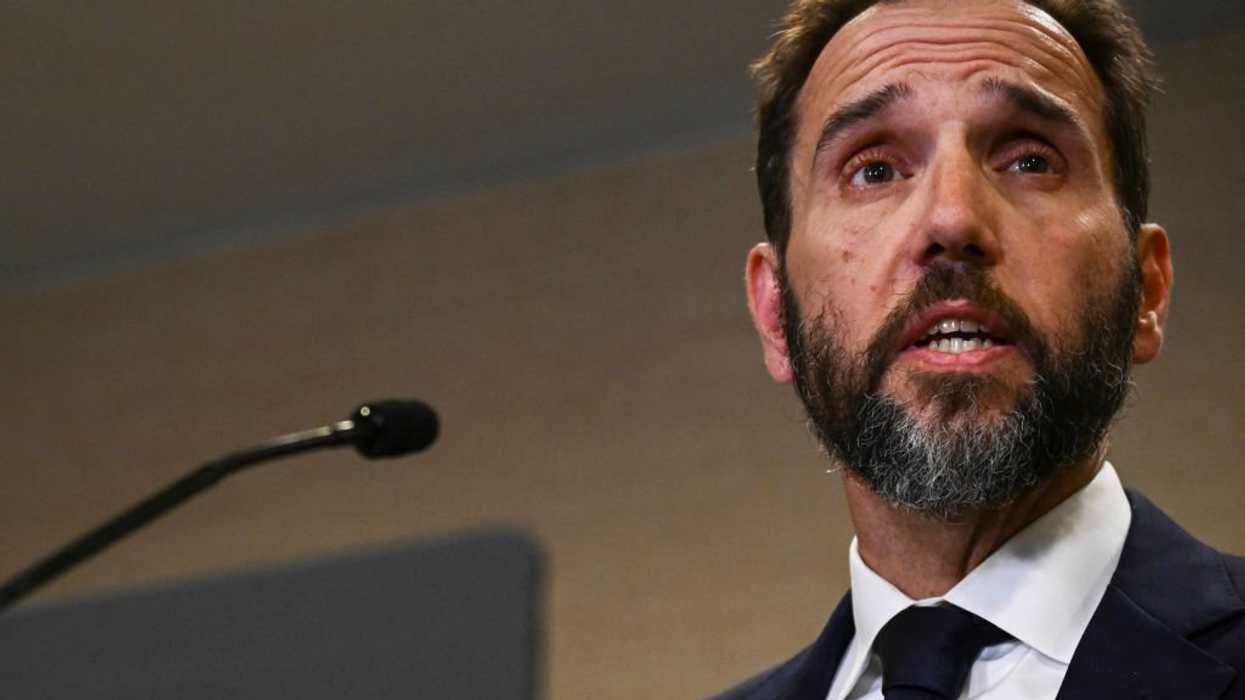 Photo by Ricky Carioti/Washington Post/Getty Images
“This is clearly in reference to Speaker McCarthy,” Gill said. “You were using clearly false information to secure a nondisclosure order to hide from Speaker McCarthy and from the American people the fact that you were spying on his toll records.”
Gill also revealed that Smith’s office issued additional secret subpoenas in May 2023 for the toll records of nine U.S. senators and another House member, along with more nondisclosure orders.
“So again, nobody would know what you were doing,” Gill said. “The senators wouldn’t. The representatives wouldn’t. The American people wouldn’t.”
Gill then read from an internal DOJ email warning of “litigation risk” tied to compelling disclosure of lawmakers’ phone records due to Speech or Debate Clause concerns.
“As you are aware, there are some litigation risks regarding whether compelled disclosure of toll records of a member’s legislative calls violates the Speech or Debate Clause,” Gill read.
Gill emphasized another line from the same analysis, saying that because of “the low likelihood that any of the members listed below would be charged, the litigation risk should be minimal here.”
“In other words,” Gill said, “You’re using a novel legal theory. … You’re not charging any of these members. Nobody’s going to know about it because you issued NDOs. Nobody’s going to sue. … So who cares? We’re going to do it anyway.”
“You walked all over the Constitution throughout this entire process,” Gill added.
“It’s absolutely disgraceful.”
Like Blaze News? Bypass the censors, sign up for our newsletters, and get stories like this direct to your inbox. Sign up here!
The Obamacare subsidy fight exposes who Washington really serves
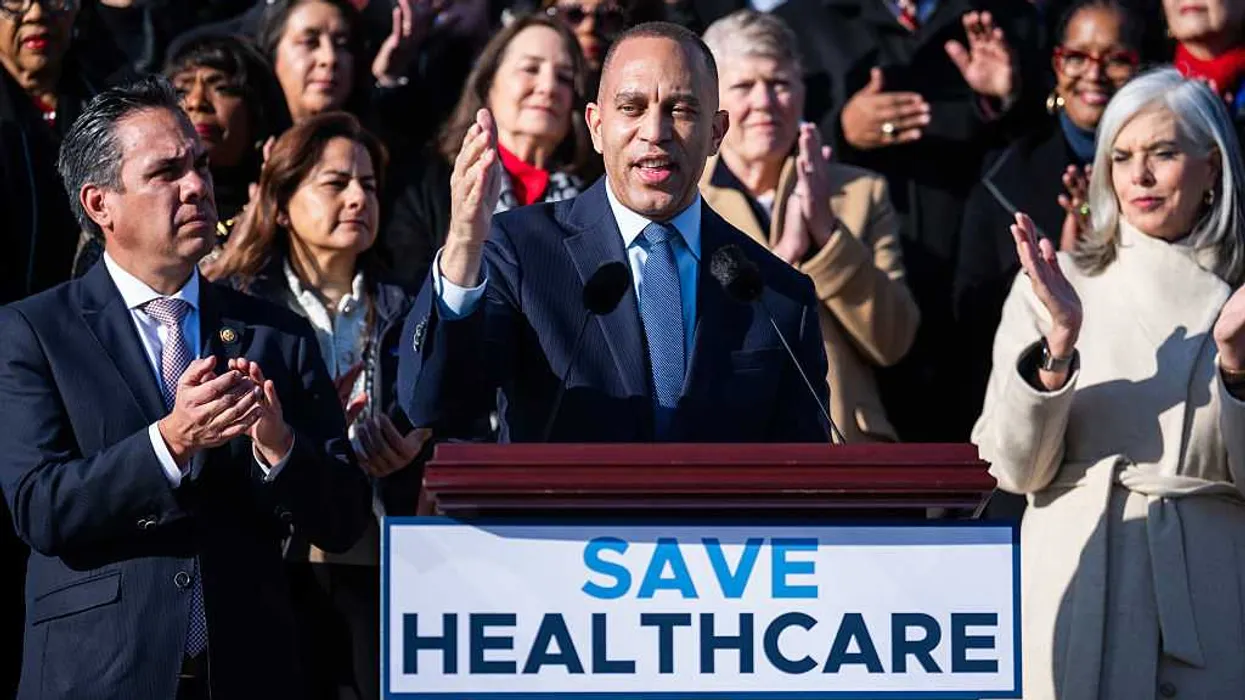
The failure of both Democrat and Republican plans to extend or partially replace enhanced Obamacare subsidies offers a clear lesson: Escaping an entitlement trap almost never happens.
Yes, the House of Representatives on Thursday voted to extend the COVID-era Affordable Care Act subsidies that expired at the end of 2025. Seventeen Republicans even joined a unanimous Democratic Caucus in voting for the extension. But Senate Majority Leader John Thune (R-S.D.) said Republicans have “no appetite” for an extension — at least not without reforms.
Republicans remain an impediment to the necessary reforms and are working hand in hand with Democrats to bring on economic collapse. Time is not on our side.
The reality is, once government creates a welfare entitlement, logic and sustainability exit the conversation. Politicians do not debate whether to grow the program. They argue only over how much to increase spending and how to disguise the costs. That pattern now governs the fight over enhanced Obamacare subsidies.
Why the premise never gets challenged
When the Senate rejected a nearly identical bill in December, the Wall Street Journal reported that Congress faces “no clear path for aiding millions of Americans facing soaring Affordable Care Act insurance costs next year.”
The Journal’s framing accepts the entitlement premise without question. It treats “aiding millions” as morally self-evident while ignoring the coercion necessary to fund that aid. Government assistance does not materialize from thin air. It transfers responsibility, money, and risk from one group of Americans to another.
Once imposed, that transfer only grows.
Both rejected plans would have sent more taxpayer money to insurers than the ACA already guarantees. With no deal in sight, the Journal observed last month that hope for extending the subsidies is fading. That assessment may be accurate politically, but an extension does not deserve hope. It deserves scrutiny.
How entitlement politics works
Democrats want Republicans to extend an expansion they never voted for of a program they never supported. Republicans respond by proposing modest adjustments to reduce political damage without challenging the underlying structure.
Rep. Max L. Miller (R-Ohio), who voted for the bill, summarized the dilemma perfectly. “I just want to make this abundantly clear: This is a Democratic piece of legislation. It is absolutely horrific. Now, it is the best alternative to what we have at the moment.”
That is how entitlement traps operate.
For decades, big-government advocates have followed a reliable strategy. They create a benefit for a defined group, allow costs to spiral, then dare the opposition to take something away from a newly entrenched constituency. When the moment arrives, those who claim to favor limited government retreat or propose cosmetic reforms that leave the core system untouched.
That dynamic explains why the country remains locked into the socialist ratchet, the uniparty routine, and a political class that acts as tax collector for an ever-expanding welfare state.
RELATED: Democrat senator makes stunning admission about Obamacare failures
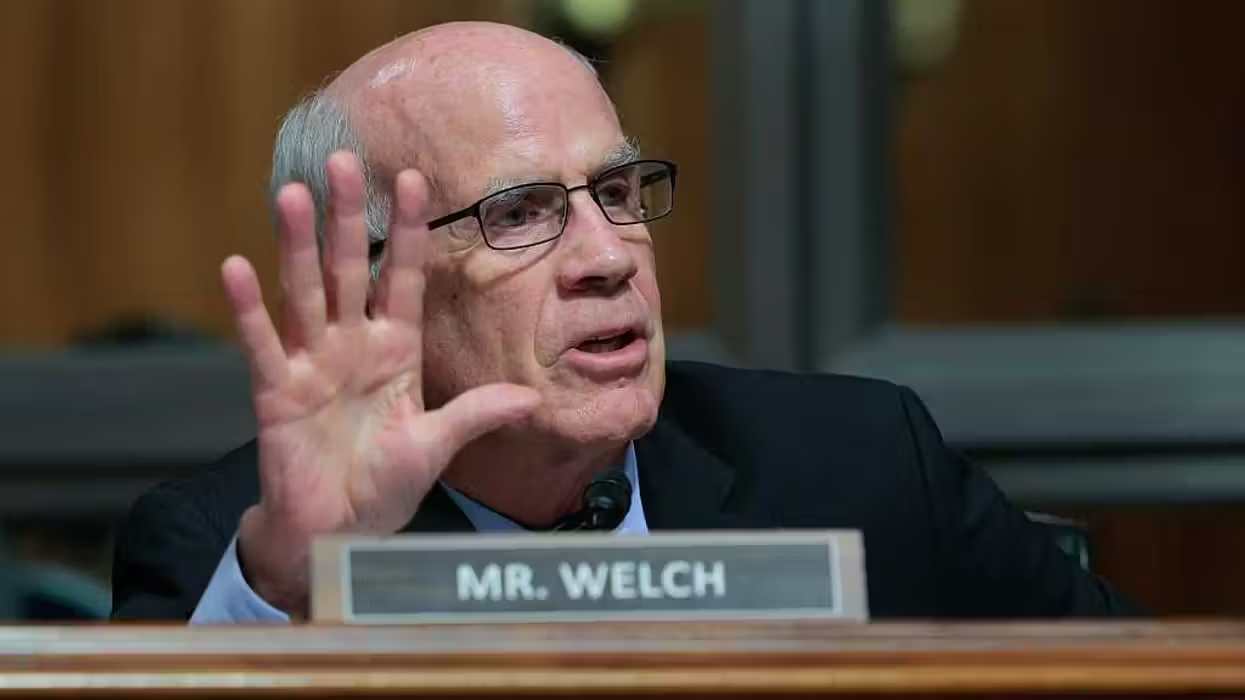 Photo by Chip Somodevilla/Getty Images
Trapped voters, trapped taxpayers
Entitlements squeeze the nation from both sides. They trap recipients by discouraging work and mobility, and they trap taxpayers by locking future governments into permanent obligations.
The Affordable Care Act stands as one of the most powerful modern examples of this system. The law forced millions into government-regulated insurance markets while guaranteeing insurers a growing pool of subsidized customers. The result was predictable: higher costs, deeper dependency, and a massive political constituency invested in permanent expansion.
Not a single Republican voted for the ACA. They understood what the law would do. Democrats passed it anyway, and it worked exactly as designed.
Who Obamacare was really built to serve
As Connor O’Keeffe has argued at Mises Wire, federal health care policy has long served industry interests. Government interventions channel money toward providers, pharmaceutical companies, and insurers under the guise of helping patients.
Obamacare accelerated that process by mandating coverage and expanding what insurers must provide, driving demand and cost growth in tandem. Once people rely on government assistance to afford insurance, any reduction becomes politically unthinkable.
Republicans now scramble to avoid electoral consequences. House Speaker Mike Johnson says the GOP will advance health care proposals without extending subsidies, yet many lawmakers privately admit that only an extension prevents immediate pain ahead of the 2026 midterms.
That admission exposes the trap. Spending limits become cruel. Taxpayer costs disappear from the conversation. Only the next premium increase matters.
Why conservatives keep losing
History explains where this leads. Entitlement debates almost always end with higher spending. Political power depends on payments to voters. Reducing benefits means losing elections.
Progressives act decisively when in power. Conservatives obsess over procedure and restraint, even as the administrative state grows unchecked.
Last week alone offered two examples. The House overturned President Trump’s March 2025 executive order blocking collective bargaining for over a million federal employees, with 20 Republicans joining Democrats. Even Franklin Roosevelt opposed public-sector unions. Modern conservatives could not summon the resolve to block them.
On the same day, Indiana Republicans declined to redraw their congressional map despite the risk of losing the House and triggering impeachment proceedings against Trump. They clung to unwritten norms while their opponents prepared to exploit the outcome.
RELATED: If conservatives will not defend capitalism, who will?
 Leontura via iStock/Getty Images
This pattern defines conservative failure. Republicans manage decline. They preserve a decaying system rather than reverse it.
Donald Trump broke from that habit. A former Democrat, he understands power. Win elections, then act. Trump restored a political energy absent on the right for decades.
His approach to entitlements focuses on restraining growth outside Social Security while expanding private-sector freedom to increase economic output. The goal is not austerity. It is to shrink government’s share of the economy by growing everything else faster.
Reform or collapse
That strategy may succeed or fail. It remains the only alternative to collapse. Without reform, federal spending and debt will overwhelm the system within a decade, possibly sooner. Borrowing costs will explode. Inflation will surge. Control will vanish.
The United States approached that danger under unified Democrat control and Joe Biden’s autopen in 2021 and 2022. Voters halted the slide by electing Republican majorities and returning Trump to the White House.
Trump failed to drain the swamp in his first term, largely because congressional Republicans refused to legislate when they had the chance. In his second term, he has advanced reforms through executive action. Congress has responded with delay and timidity.
The country will escape the entitlement trap one way or another. Reform can arrive through disciplined growth and economic expansion, or through collapse driven by massive overspending.
With their conservative approach to governance, Republicans remain an impediment to the necessary reforms and are working hand in hand with Democrats to bring on that collapse. Time is not on our side.
A red-state lawfare shakedown heads to the Supreme Court
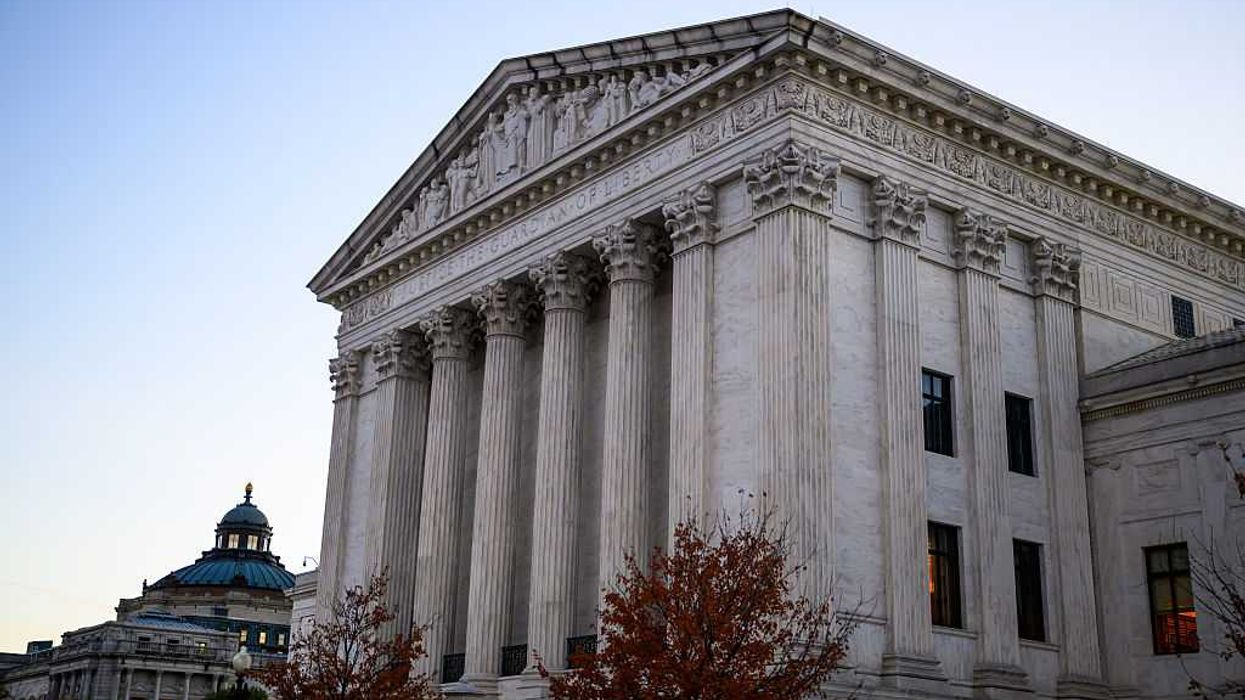
The Republican Party claims to stand against lawfare — especially the obscene, rent-seeking variety that disguises itself as environmental justice. Yet that principle is about to be tested in a highly public and deeply embarrassing way.
The Supreme Court will hear oral arguments on January 12 in Chevron v. Plaquemines Parish. Louisiana officials will face off against the Trump Justice Department and American energy producers in a landmark case over an attempted shakedown of oil companies for alleged responsibility for coastal erosion dating back to World War II.
Lawfare does not become acceptable because Republicans use it. And environmental shakedowns do not become conservative simply because they originate in a red state.
The basic claim is simple enough. Louisiana and several local governments have filed dozens of lawsuits alleging that oil and gas production over the last 80 years caused the erosion of the state’s coastline. But the structure and substance of these cases reveal something far more troubling.
Although the lawsuits were filed in the name of the state and its municipalities, control has effectively been handed over to politically connected plaintiffs’ lawyers — major donors who stand to reap enormous contingency fees. Through a so-called common interest agreement, the Louisiana attorney general’s office surrendered its obligation to independently assess the merits of the claims. In practice, the state abdicated its role to the trial-lawyer donor class.
That alone should raise alarms. The rest only makes it worse.
The lawsuits seek to impose liability for conduct that was lawful at the time and occurred as far back as eight decades ago. Ex post facto liability is fundamentally un-American, which is why almost no one attempts to defend it on the merits.
Even more awkward for Louisiana’s theory, virtually everyone outside the plaintiffs’ bar agrees on the primary cause of coastal erosion: decades of federal intervention by the U.S. Army Corps of Engineers, which radically altered water flow in the Mississippi Delta. Louisiana once sued the federal government on exactly this basis. Now the same damage is somehow blamed on oil companies instead.
Because these claims reach back to the 1940s, they sweep in oil production carried out at the direction of the U.S. government to support the war effort — specifically the refining of aviation fuel for the military. It is a strange irony that after years of Democrat-led lawfare under the Biden administration, a red state has now delivered environmental litigation over World War II to the Supreme Court.
The hypocrisy is hard to miss.
The venue fight exposes the real game. Plaintiffs’ lawyers insist these cases remain in Louisiana state courts. The reason is obvious. Those courts are heavily influenced by the trial bar and have a record of staggering verdicts. Chevron was recently hit with a $745 million judgment in one such case.
Energy producers want the cases moved to federal court — not because victory is guaranteed but because federal courts are more likely to function as neutral arbiters. There is also a compelling jurisdictional reason: Much of the challenged activity involved federally directed wartime production. If any court belongs here, it is a federal one.
RELATED: America First energy policy is paying off at the pump
 Kyle Grillot/Bloomberg via Getty Images
This kind of forum shopping should look familiar. It mirrors the Democrats’ strategy during the Biden years — carefully selecting friendly state courts to pursue political outcomes they could not secure through legislation. Louisiana Gov. Jeff Landry (R) and Attorney General Liz Murrill (R) appear to have absorbed all the wrong lessons from all the wrong actors.
This is the same playbook used by New York Attorney General Letitia James (D) when she charged President Trump in state court for conduct governed by federal law. It is the same model California Gov. Gavin Newsom (D) embraced when he partnered with trial lawyers to sue energy companies for billions over alleged climate harms.
Step back from the legal details and a larger problem comes into focus.
President Trump’s agenda prioritizes American energy dominance. His actions abroad reinforce that priority. Yet Republicans in Louisiana are not merely opposing that objective — they are using the very lawfare tactics they claim to despise to undermine it.
For voters trying to apply a consistent ideological framework, the whiplash is real. When red states start behaving like California, it is fair to ask whether America First has drifted from a governing philosophy into a monetization strategy.
Lawfare does not become acceptable because Republicans use it. And environmental shakedowns do not become conservative simply because they originate in a red state. If the right intends to oppose lawfare, it needs to oppose it everywhere — especially when its own allies are the ones doing the shaking down.
‘Something historic’: CNN analyst GOBSMACKED by how Vance polls against Nikki Haley, others

The 2028 presidential election is 34 months away, and in that time, there are sure to be plenty of surprises. There are, however, already clear signs of who may ultimately make a bid for the White House — and how they might fare in the primaries.
CNN’s chief data analyst, Harry Enten, expressed surprise on Monday by how Vice President JD Vance performed in a recent poll of likely New Hampshire Republican primary voters against former U.S. Ambassador to the U.N. Nimarata “Nikki” Haley, Director of National Intelligence Tulsi Gabbard, and other prospects.
‘The rest of the field are like going around in go-karts.’
Enten alluded to prediction market odds indicating that Vance is “running well ahead of the field” and that “nobody else is even close.”
Polymarket puts Vance’s chance of becoming the Republican presidential nominee in 2028 at 54%. The site has the chances of the runner-up, Secretary of State Marco Rubio, securing the nomination at 9%. This high confidence in Vance’s chances is similarly expressed on the PredictIt site as well as on the federally regulated prediction market Kalshi, which suggests Vance and Rubio have a 48% and 10% chance of securing the nomination, respectively.
“JD Vance is like Mario Andretti, and Marco Rubio and the rest of the field are like going around in go-karts at this point,” said Enten. “That’s really what we are looking at. JD Vance is the clear, heavy favorite at this time.”
Enten noted that Vance’s staggering early lead reflected in the prediction markets “is not coming out of nowhere” and directed CNN talking head Sara Sidner’s attention to a poll conducted in October by the University of New Hampshire.
RELATED: ‘All in’: TPUSA’s Andrew Kolvet sets sights on 2028 presidential candidate after AmFest
 Photo by Caylo Seals/Getty Images
The poll found that among those who plan to vote in the 2028 Republican presidential primary in New Hampshire, 51% said they would vote for Vance; 9% said they would vote for Haley; 8% said they would vote for Gabbard; 5% said they would vote for Arkansas Gov. Sarah Huckabee Sanders; 4% would vote for Sen. Rand Paul (R-Ky.); and 3% each would vote for Florida Gov. Ron DeSantis or Ohio gubernatorial candidate Vivek Ramaswamy.
Calgary-born Texas Sen. Ted Cruz, who appears poised to run as the kind of Republican President Donald Trump crushed in the 2016 and 2024 GOP primaries, proved unable to capture 1% in the poll.
“Take a look here! JD Vance at 51%!” said Enten. “The next closest is Nikki Haley, who’s at 9 — who’s at 9! I mean, what is that? That’s 42 points ahead of the pack.”
“There’s a reason why he’s such a heavy favorite in the prediction market so far, because if you win the GOP primary in New Hampshire, chances are, you’re going to be the Republican nominee for president,” added Enten.
When asked by Sidner whether it was rare to see an early lead of this magnitude, Enten said, “I looked back. Hitting 50% plus in the early New Hampshire polls for a non-sitting president — JD Vance is the only one.”
“JD Vance is pulling off something historic at this time,” continued Enten.
While Vance’s early lead is unprecedented, the last five sitting vice presidents who ran for president all became their parties’ nominees.
A straw poll was also taken earlier this month at Turning Point USA’s annual AmericaFest, where widowed CEO Erika Kirk endorsed the vice president.
Blake Neff, the producer of “The Charlie Kirk Show,” noted that Vance won the AmFest straw poll “by more than Donald Trump won the 2024 one we did two years ago.” Whereas 82.6% of respondents previously said they wanted to see Trump as the 2024 GOP nominee, 84.2% of respondents said they wanted to see Vance as their nominee in 2028.
The UNH poll that found a majority of likely GOP voters support Vance likewise found that there is a much closer race developing across the aisle.
Among those who plan to vote in the 2028 Democratic presidential primary in New Hampshire, 19% of respondents say they would vote for former Transportation Secretary Pete Buttigieg; 15% would vote for California Gov. Gavin Newsom; 14% would vote for New York Rep. Alexandria Ocasio-Cortez; 11% would vote for failed presidential candidate Kamala Harris; 8% would vote for Sen. Bernie Sanders (I-Vt.); and 6% would vote for Illinois Gov. JB Pritzker.
Like Blaze News? Bypass the censors, sign up for our newsletters, and get stories like this direct to your inbox. Sign up here!
CNN’s Harry Enten Says JD Vance Lapping 2028 GOP Field Before Race Has Even Started
‘number is not coming out of nowhere’





