

Category: GOP
Republicans are letting Democrats lie about affordability

Midterm elections go one of two ways. They are either a validation of the sitting president or a repudiation. Historically, they have almost always been a repudiation.
The 2026 midterms are shaping up to be no different — a firm rebuke to Donald Trump. That’s obviously bad for him. Congress will spend two straight years investigating and likely impeaching him.
If President Trump’s supporters don’t show up, Republican defeat is guaranteed.
But the bigger danger is to America. Democrat control of Congress will jeopardize Republicans’ efforts to restore an economy of opportunity for all. Worse, Democrats will lay the groundwork for recapturing the White House in 2028, at which point they will implement the most anti-opportunity agenda in American history. We’re talking welfare for all, funded by crippling tax hikes and a federal takeover of a once-free economy.
Can Donald Trump turn the midterms around? Only if he, his fellow Republicans, and their allies on the right make immediate changes. If they do, they could stem the losses in November — and maybe even defy the odds to expand their majorities in the House and Senate.
First and foremost: They need to realize that midterms hinge on turnout.
The reason midterms are usually a presidential repudiation is that voters from the other party are more motivated. They feel greater anger and intensity, and they show up. The president’s supporters, meanwhile, usually think they did their job when they elected their man. Why bother showing up again?
If President Trump’s supporters don’t show up, Republican defeat is guaranteed. The most urgent need, therefore, is to invest in a massive get-out-the-vote operation. The GOP needs one the likes of which it has never seen.
But such an effort also needs a message — something that resonates with voters and spurs them to action. That’s the second area where change is required. Because right now, Republicans don’t have any meaningful message at all.
The left certainly does. Democrat politicians, their allies in the media, and their associated army of activists and nonprofits have rallied around a single word: affordability. They’re tricking voters into thinking that all the inflation and financial pain that Joe Biden caused is really the fault of Donald Trump. The call to action writes itself: If voters want to make ends meet, their only hope is to vote the GOP out.
This message works, but only because Republicans are letting it work. They are largely silent in the face of Democrat attacks. Worse, in the president’s case, he is calling affordability a “hoax.” For voters who supported him because of Joe Biden’s inflation, nothing could be worse. It’s tantamount to saying their problems don’t matter.
Republicans must reclaim the economic high ground. They need to relentlessly hammer the point that Joe Biden’s enormous failures will take time to fix. They need to point to the relief they’ve given, especially the tax cuts the president signed in July. Most importantly, they need to lay out a unified agenda that speaks to Americans’ deep concerns, convincing voters that the GOP will, in fact, make life more affordable.
RELATED: The ‘blue-slip block’ is GOP cowardice masquerading as tradition
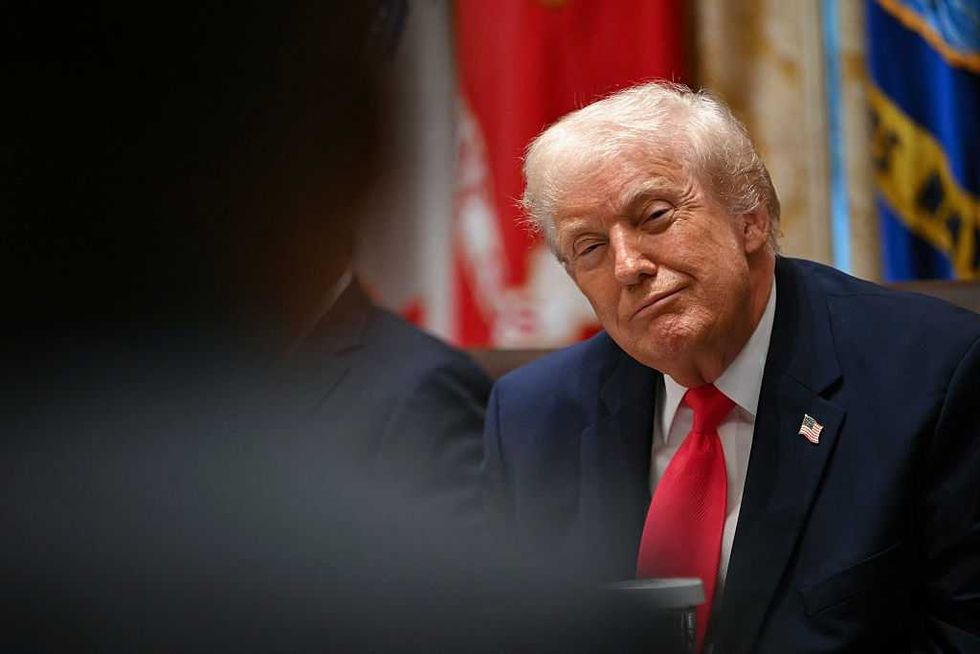 Photo by ANDREW CABALLERO-REYNOLDS/AFP via Getty Images
Crafting that agenda is as much the work of policy wonks as it is public relations. Republicans and their allies should be relentlessly message-testing and focus-grouping to discover not only what policies Americans want, but how to sell the policies that Americans need — in health care, housing, and beyond. This can be done without compromising conservative principles. In fact, it is essential if those principles are to have a path to becoming policies.
There’s one more message the GOP needs. It’s not enough to make a positive case for Republicans’ own priorities. They need to remind Americans of the danger posed by Democrats relentlessly.
This isn’t hard. The return of crippling inflation. The collapse of our borders once again. Higher taxes on the middle class. Republicans have a simple case to make: If voters want all of America to look more like crime-ridden, welfare-defrauding, utterly unaffordable big blue cities, they should vote for Democrats.
Republicans needed these messages yesterday. They needed a turnout operation that was already delivering these messages to the base and undecided voters alike. If they and their allies don’t get their act together before the start of the year, the midterm elections will indeed be a repudiation of Donald Trump. Worse, they’ll put America’s future at risk. The clock is ticking.
Editor’s note: This article was originally published by RealClearPolitics and made available via RealClearWire.
Reagan Reese, Steve Bannon Break Down Fallout From Indiana Redistricting Collapse
‘This ends with heads on pikes’
Red State Reignites Redistricting Battle After Trump Turns Up Heat
‘Deserve to have fair representation’
The imperial judiciary strikes back
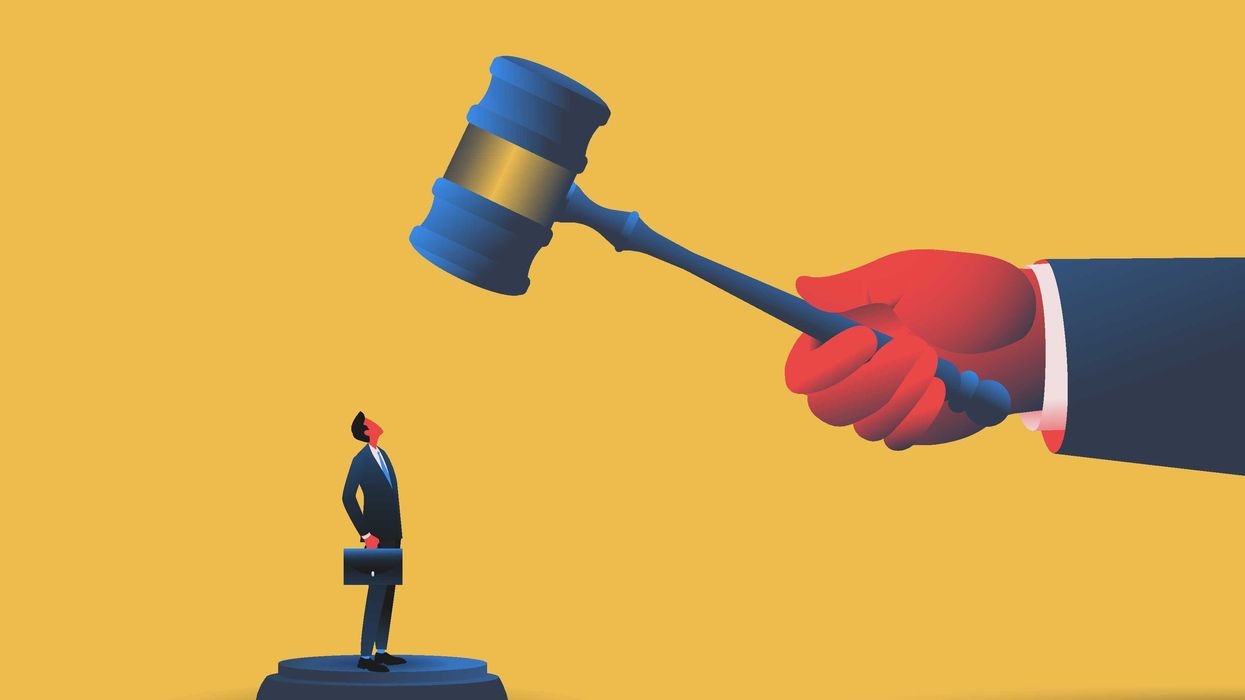
So far, more than 100 federal court judges have ruled against the Trump administration in hundreds of lawsuits filed by states, unions, nonprofit organizations, and individuals.
While some of these rulings are fairly grounded in the Constitution, federal law, and precedent, many are expressions of primal rage from judges offended by the administration and moving at breakneck speed to stop it.
Trump sometimes exceeds his authority. Activist judges substitute ‘frequently’ for ‘sometimes.’ The Constitution and the Supreme Court disagree.
According to a Politico analysis, 87 of 114 federal judges who ruled against the administration were appointed by Democratic presidents, and 27 by Republicans. Most of the lawsuits were filed in just a few districts, with repeat activist judges leading the opposition.
Lawsuits against the administration may be filed in the District of Columbia and, often, also in other districts. Initially cases are randomly assigned. Plaintiffs focus on districts with predominantly activist, progressive judges. Because related cases are usually assigned to the same judge, later plaintiffs file in districts in which related cases were assigned to friendly activists.
Conservative judges generally believe they should interpret the law and avoid ruling on political questions, while liberals tend to see themselves as protectors of their values. After 60 years of domination by activist liberals, the Supreme Court and conservative appeals court judges are finally demanding that district court judges respect the Constitution. The Supreme Court is also re-evaluating precedents established by far-left justices who substituted their values for the words and intentions embodied in the Constitution.
To date, the Supreme Court has reversed or stayed about 30 lower court injunctions blocking the administration, and appeals courts have reversed or stayed another dozen. Even Justice Ketanji Brown Jackson imposed an administrative stay on a district court decision requiring the immediate resumption of SNAP payments.
Federal judges who oppose Trump’s agenda are openly opposing the Supreme Court. In April, D.C. Chief Federal Judge James Boasberg sought to hold administration officials in criminal contempt for violating an order the court had vacated. In May, Fifth Circuit Court of Appeals Judge James Ho criticized the court’s demand that district courts act promptly on administration requests. In a September ruling, Boston Federal Judge Allison Burroughs challenged the court for expecting lower courts to treat its emergency orders as binding legal precedent.
Ten of 12 federal judges interviewed by NBC News in September, and 47 of 65 federal judges responding to a New York Times survey in October, thought the court was mishandling its emergency docket. They described orders as “incredibly demoralizing and troubling” and “a slap in the face to the district courts.”
Deservedly so. Though the Supreme Court and appeals courts judges have rebuked district court judges for ignoring higher courts and abusing their authority, they continue to do so with rulings focused on identity politics and a progressive lens on the woes of immigrants, minorities, women, and workers. They likely expect to be reversed on appeal, but they secure wins by causing delay and creating fodder for progressive activists to rally their supporters.
There is little that can be done about these judges. Removal requires a majority vote in the House and a two-thirds vote in the Senate. With Democrats supporting these judges, those votes are unrealistic.
RELATED: Who checks the judges? No one — and that’s the problem.
 Photo by Kevin Carter/Getty Images
Just a few of the dozens of examples of politicized judicial decisions:
In May, Myong Joun, a Biden appointee in Boston, enjoined layoffs at the Department of Education in a decision featuring an encomium to its anti-discrimination mission. The Supreme Court stayed his injunction.
Despite this precedent, Susan Illston, a Clinton appointee in San Francisco, issued a nationwide injunction barring the administration from firing union employees during or because of the government shutdown. Ignoring settled law, she bemoaned the “trauma” of workers who had been under “stress” ever since Trump’s election. Illston gambled correctly that the shutdown would end before her order could be reversed.
Indira Talwani, a federal district court judge in Boston, went further. Declaiming her fear that defunding Planned Parenthood would deprive women of access to abortions, she elided Article I of the Constitution, which requires all federal spending to be approved by Congress, nullifying a duly enacted statute that suspended funding of large abortion providers for a year. By the time she is reversed, the suspension will have expired.
In June, after San Francisco Federal Judge Charles Breyer enjoined Trump from federalizing the California National Guard, a three-judge panel of the Ninth Circuit unanimously stayed his order, explaining that on military matters, the president’s judgment stands unless it is dishonest. Nonetheless, Oregon Federal Judge Karin Immergut subsequently blocked deployments in Portland, substituting her assessment of the situation for the president’s.
An Obama-appointed judge recently interviewed by NBC explained, “Trump derangement syndrome is a real issue. As a result, judges are mad at what Trump is doing or the manner he is going about things; they are sometimes forgetting to stay in their lane.”
Trump sometimes exceeds his authority. Activist judges, who self-reverentially believe progressive technocrats and judges are democracy’s guardians, substitute “frequently” for “sometimes.” The Constitution and the Supreme Court disagree.
Big Tech’s AI boom hits voters hard — and Democrats pounce

Wouldn’t it be a bitter irony if Republicans lost the midterms — maybe even in conservative red states — because Democrats outmaneuvered them on the dangers of the AI data-center boom? The left now warns voters about land seizures, rising electric bills, water shortages, and Big Tech’s unchecked power. Meanwhile, Republicans stay quiet as Trump himself champions the very agenda voters increasingly fear.
During the Biden years, Republicans attacked Big Tech censorship, digital surveillance, Agenda 2030 land-grabs, and the artificial online culture reshaping young Americans. Every one of those concerns now intersects with the data-center explosion — energy demands, land use, power monopolies, and the rise of generative AI — but the political right barely whispers about it.
Republicans can channel AI toward focused, beneficial uses and away from a dystopian model that erodes civic life. Voters already want that shift.
Democrats don’t make that mistake. They see a potent electoral weapon.
Georgia hadn’t elected a Democrat statewide since 2006. Yet Democrat Peter Hubbard defeated a Republican incumbent on the Public Service Commission by 26 points by hammering “sweetheart deals” GOP officials granted hyperscale data centers. Voters in the state face repeated rate hikes linked to the massive energy demands of Big Tech facilities.
“The number-one issue was affordability,” Hubbard told Wired. “But a very close second was data centers and the concern around them just sucking up the water, the electricity, the land — and not really paying any taxes.”
He wasn’t exaggerating. In 2022, Georgia’s Republican legislature passed a sales-tax exemption for data centers. In 2024, a bipartisan bill attempted to halt those tax breaks, but Gov. Brian Kemp (R) vetoed it. Voters noticed — and punished the GOP for it.
Georgia now surpasses northern Virginia in hyperscale growth. Atlanta’s data-center inventory rose 222% in two years, with more than 2,150 megawatts of new construction under way. It’s no mystery why Democrats flipped two PSC seats in blowouts.
Republicans lost because they defended crony capitalism that inflated energy bills, devoured land, and fed an AI industry conservatives once warned about. If Kamala Harris had pushed the data-center agenda as aggressively as Trump now does, Republicans would be in open revolt. But Trump’s support silences the conservative grassroots and leaves Democrats free to define the issue.
Virginia tells the same story. Democrat John McAuliff flipped a GOP seat by attacking Big Tech’s land-grab and the rising utility costs tied to data-center expansion. He blasted his opponent for profiting while family farms vanished under the footprint of hyperscale development. He became the first Democrat in 30 years to carry the district.
At the statewide level, Democrat Abigail Spanberger won the governor’s office by arguing that AI data centers must pay their “fair share” of soaring energy costs. She framed the issue as a fight to protect families from Big Tech’s strain on the grid.
New Jersey voters heard similar warnings as they faced a 22% electric rate increase. Democrat Mikie Sherrill defeated Republican Jack Ciattarelli by double digits after blaming part of the spike on hyperscale energy demand. She pledged to declare a state of emergency to halt increases and require data centers to fund grid upgrades.
This pattern repeats in reliably red states.
Indiana saw dozens of new hyperscale proposals, yet not a single Republican official pushed back. Ordinary citizens blocked one of Google’s planned rezonings near Indianapolis. Liberal groups — like Citizens Action Coalition — filled the leadership vacuum and demanded a moratorium on new data centers, calling it a fight against “big tech oligarchs that are calling all the shots at every single level of government.”
RELATED: Stop feeding Big Tech and start feeding Americans again
 Kyle Grillot/Bloomberg via Getty Images
Republican leaders, meanwhile, worked to ban states from regulating AI at all. This summer they attempted to insert a sweeping prohibition into the budget reconciliation bill that would bar states from regulating data-center siting or AI content for 10 years. House Majority Leader Steve Scalise (R-La.) now seeks to attach the same language to the FY 2026 defense authorization act. President Trump backs the provision.
Instead of ceding the issue to the left, Republicans should correct course. They can channel AI toward focused, beneficial uses and away from a dystopian model that erodes civic life. Voters already want that shift. A new University of Maryland poll found residents believe — by a 2-1 margin — that AI will harm society more than it helps. More than 80% expressed deep concern about declining face-to-face interaction, the erosion of education and critical thinking, and job displacement fueled by AI.
Capital expenditures cannot sustain the current pace of expansion, and public patience with Big Tech’s demands is running out. The political party that recognizes these realities first will earn the credit. Right now, the party that once defended property rights, community values, and human-centered technology is getting lapped by the party that partnered with Big Tech oligarchs to censor Americans during COVID.
Republicans still have time to lead. But they won’t win a fight they refuse to join.
The 2026 map tilts left if Republicans ignore what voters just told them

The Associated Press told us a partial truth after the November 4 elections: Republicans delude themselves when they brush off their losses. AP then added its usual spin, claiming GOP leaders deny that “affordability” drove their defeat. According to AP, soaring costs and economic uncertainty explain why Republican candidates collapsed across several high-profile races.
Republicans did not simply underperform. They were routed. GOP candidates lost in the marquee races in New Jersey and Virginia, and Democrats came within striking distance of a supermajority in the Virginia legislature. Democrats even clawed back ground in places like Luzerne County, Pennsylvania — a longtime working-class stronghold that had tilted red for decades.
The left treats politics as a total struggle. Republicans cannot keep treating it as a polite debate.
The GOP took a real shellacking.
AP captured only part of the story. Republican leaders keep denying the obvious, insisting the mid-cycle results followed the usual pattern for a party out of power. That excuse collapses when measured against the magnitude of the losses.
In New Jersey, a scandal-scarred, aggressively pro-LGBTQ Democrat crushed a strong Republican challenger by more than 14 points — in a state battered by high taxes, rising crime, and deep voter frustration. Jack Ciattarelli was supposedly running neck-and-neck with Mikie Sherrill. The final tally proved otherwise.
Virginia delivered an even starker picture. A hyper-progressive Democrat won the governor’s race against a conservative black Republican woman. The new attorney general prevailed despite revelations that he sent violent, disturbing text messages expressing rage toward a Democratic opponent and his children. Voters shrugged and voted for him anyway.
This election was not routine. It was a decisive, unmistakable rejection of the party in power. The results cannot be explained away by economic anxiety. Voters responded to ideology and identity — not affordability indexes.
Democratic voters turned out as a unified bloc against what they have been conditioned to believe is a dangerous, authoritarian movement. Media outlets, universities, Hollywood, and most major cultural institutions spent years drilling that narrative into the public. The left absorbed it fully and voted accordingly.
It’s hard to square AP’s affordability argument with the fact that voters rewarded Biden’s economically disastrous administration in the 2022 midterms — and continued to do so in these off-year races. By every major metric, economic conditions have improved dramatically since Trump returned to the White House. Inflation fell. Energy prices dropped. Markets hit record highs. Food and housing costs remain problems, but they remain high largely because the Federal Reserve refuses to cut rates — something Trump intends to fix when he replaces the current chair.
Meanwhile, Biden’s border catastrophe flooded the country with roughly 10 million illegal migrants, burdened taxpayers, and fueled a surge of crime. Yet he paid little political price. Voters did not punish him or his party.
To understand why, look at a recent Atlanta Journal-Constitution poll. Georgia Republicans list inflation and the economy as their top concerns. Georgia Democrats list something else entirely: a “tougher response” to Trump and MAGA Republicans. They rank economic issues and even abortion behind their desire to defeat an ideological enemy. For them, politics is a moral crusade.
RELATED: Mamdani sells socialism — and Republicans peddle the Temu version
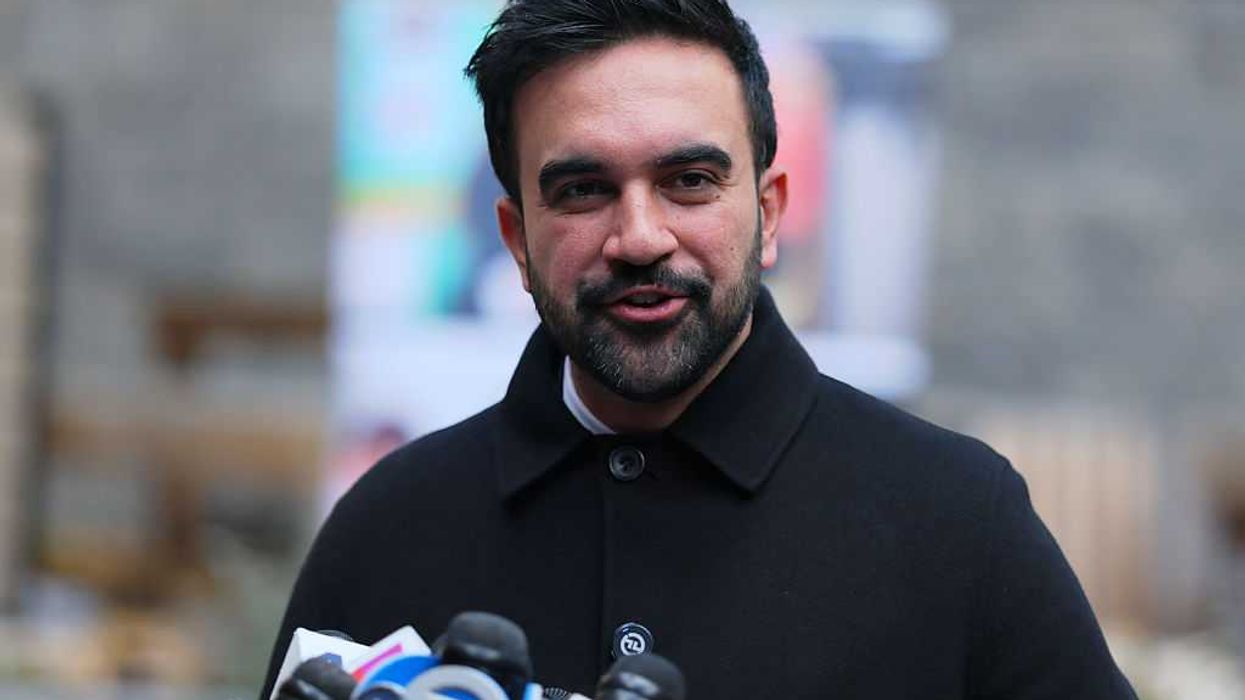 Photo by Michael M. Santiago/Getty Images
This reveals the central mismatch. Republicans speak the language of policy: inflation, taxes, energy, spending. Democrats speak the language of existential struggle. They believe they are at war with a malevolent force, and that belief animates them far more than grocery bills or mortgage rates. Trump derangement syndrome is very much alive and well with these voters.
Republicans just want to return to normal politics — debates over issues, clean contests, and sportsmanlike disagreements. Their media allies keep telling them nothing has changed since Trump beat a ditzy, verbally inept opponent in 2024.
Wrong. Everything has changed.
Republicans face a massive, highly motivated voting bloc determined to strip them of power. Democrats aim to defeat and humiliate their opposition, not negotiate with it. Their rhetoric against ICE, their nonstop attacks on Trump, and their saturation campaigns across media and education paid off. They fought harder. They fought longer. And they won nearly everywhere that mattered.
The GOP cannot afford to treat this moment as another cyclical setback. The left treats politics as a total struggle. Republicans cannot keep treating it as a polite debate. Until the GOP grasps the scale of the conflict, election nights will keep looking like this one.
Mamdani sells socialism — and Republicans peddle the Temu version

New York City has elected a self-professed socialist as mayor. Critics worry about Zohran Mamdani’s inexperience, his approach to law and order, and his views on Israel and Islamic radicalism. But the most urgent issue inside the walls of City Hall is his economic agenda.
Mamdani promises “free” bus transit, a freeze on rent increases, a $30 minimum wage, government-run grocery stores, free child care, and higher taxes in a city already crushed by some of the nation’s highest tax burdens. His brand of socialism isn’t subtle. It’s explicit — and guaranteed to fail.
A movement confident in free enterprise can beat socialism — first in the arena of ideas, then at the ballot box. But only if we choose clarity over imitation.
Many on the right treat Mamdani’s victory as cosmic justice for a deep-blue city that keeps moving left. Others welcome his rise, convinced that showcasing a hard-left mayor will repel voters nationwide. That might be true. It might also be fantasy.
New Yorkers didn’t elect Mamdani so conservatives could score a talking point. His win advances ideas — and conservatives must decide whether they still believe ours are better.
When the right copies the left
Mocking government-run grocery stores is easy. Yet national Republicans just embraced government ownership in Intel — a massive corporation that dwarfs any Manhattan supermarket. Some even support a federal sovereign wealth fund to buy equity across private industry, handing Washington the power to pick winners.
Mamdani demonizes Wall Street and high earners who keep the city solvent. Republicans respond by demonizing “big pharma” and pushing policies that treat major U.S. innovators as villains.
Mamdani wants to redistribute income with New York’s already-extreme tax code. Some on the right now call for $2,000 government checks to lower-income households — financed with borrowed money and paid back by business owners already hit with $350 billion in new tariff taxes this year.
Mamdani would freeze rents because, in his telling, landlords “make a killing.” His economics ignore taxes, insurance, utilities, and maintenance costs that devour margins across New York’s rental market. Yet GOP proposals on health care routinely blame insurers for “making a killing while the little guy suffers.” The overlap with left-wing rhetoric isn’t coincidence. It’s drift.
High grocery prices fuel Mamdani’s push for government-run grocery stores. He blames “capitalistic greed.” Republicans answered high beef prices by accusing meat companies of “price fixing.” Again, the same logic — just delivered with a different logo.
Resurrecting failed policies
Mamdani’s worldview mirrors the same interventionist thinking that powered the Affordable Care Act. Subsidies, mandates, and price controls promised relief. They delivered higher premiums, higher costs, and lower-quality care.
Conservatives should highlight that failure. Instead, too many mimic the left’s solutions — regulation dressed up as populism, government expansion sold as “tough on corporations,” and class warfare renamed as “standing up for workers.”
If Mamdani’s win teaches anything, it’s that conservatives must draw a bright line: free enterprise or the road to socialism. Blurring that line weakens the argument and cedes the moral ground socialism feeds on.
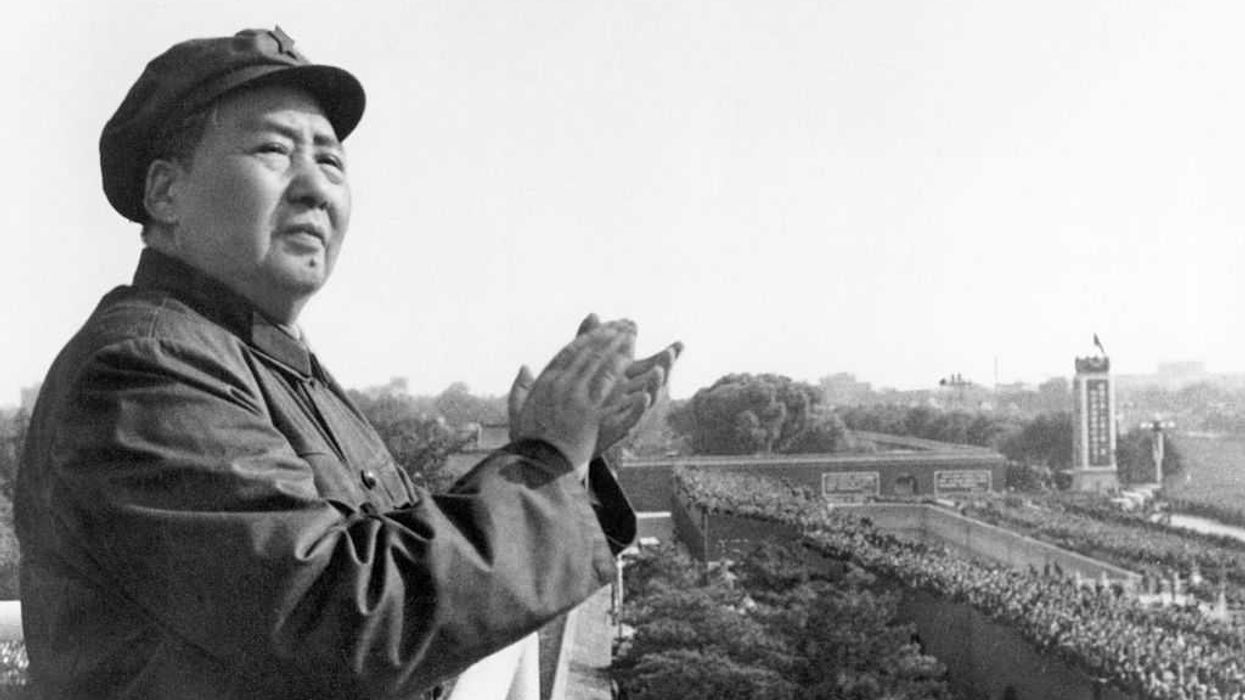
RELATED: Mao tried this first — New Yorkers will not like the ending
 Bettmann/Getty Images
The real fight
The conservative movement faces serious internal debates — debates worth having. But Mamdani’s election exposes one fight we cannot dodge: the fight for limited government and competitive markets.
We cannot counter socialism with lighter versions of the same policies. We cannot attack Mamdani’s economic program while pushing our own price controls, government takeovers, and redistribution schemes. A movement that refuses to defend free enterprise won’t defeat socialism. It won’t even understand the threat.
Mamdani comes into office with plenty of flaws. New Yorkers will feel the consequences soon enough. But conservatives face a choice: defend our own principles or mimic the left and call it “the new right.”
A movement confident in free enterprise can beat socialism — first in the arena of ideas, then at the ballot box. But only if we choose clarity over imitation.
Utah Republicans just let Democrats steal a seat they could never win
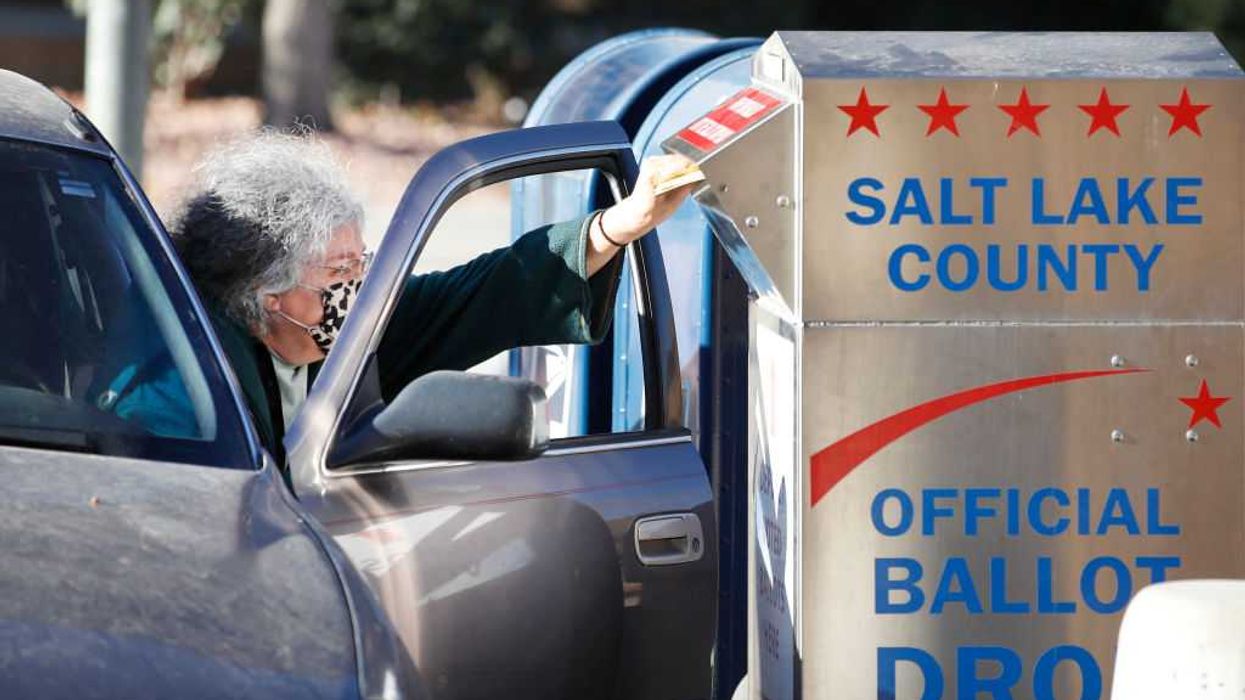
A Utah judge just turned a safe Republican congressional seat into a near-guaranteed Democrat seat — and she did it in a state controlled top to bottom by Republicans. How does that happen? A generation of weak Republicans in the elected branches handed liberals control of the judicial branch and gave them the ballot initiative system they needed to take over the state piece by piece.
Democrats can’t win statewide office in half the country, so they’ve turned ballot initiatives into their weapon of choice. Pollsters craft soothing messaging, activists gather signatures, and voters — thinking they’re supporting neutrality — unknowingly approve measures that shift power to Democrats.
Supermajority states serve as a control group. The problem isn’t power; the problem is the GOP’s refusal to wield it.
The “nonpartisan redistricting commission” scam remains their most effective tool. These commissions always promise fairness, and they always produce more Democratic seats.
Utah proved the point in 2018, when 66% of voters approved Proposition 4, even though most Utahns don’t want Democrats running the state. The same tactic produced Medicaid expansion and marijuana legalization. None of these measures would have survived the legislature — but they passed once voters encountered them in isolation.
James Madison warned against pure democracy for this exact reason. A republic draws authority from the “great body of the society,” not from a small faction or self-appointed elite. Ballot-initiative commissions flip that logic on its head. They let unelected actors redraw power for themselves.
Here comes the judge
After the 2020 census, Utah’s legislature drew a fourth Republican congressional seat, as the state constitution requires. Democrats and their allies at the League of Women Voters sued to nullify the map and force a Salt Lake-centered Democrat seat.
In August, Third District Judge Dianna Gibson obliged. She declared the legislature’s map unconstitutional because, in her view, it ignored Prop. 4 — even though the constitution explicitly vests redistricting power in the legislature. She ordered a new process for 2026 and told both sides to submit maps.
The GOP-controlled legislature complied, proposing a compromise map and passing SB 1011 to impose “partisan fairness” tests on future redistricting so the commission couldn’t hand Democrats a permanent advantage.
Gibson ignored all of it. On Nov. 10, she tossed the legislative map, sidelined SB 1011, and adopted the map drawn by the very activist groups suing the state — the same groups that engineered Prop. 4.
Plainly unconstitutional
Nothing in Utah’s constitution supports what Gibson did. Article IX, Section 1 states that the legislature “shall divide the state” into congressional districts. A commission cannot do it. A judge cannot do it. Activists certainly cannot do it.
Yet Lt. Gov. Deidre Henderson signed off on Gibson’s map, even though state law required her to certify only lawful maps. That decision reflects a deeper problem: Too many Utah Republicans treat constitutional violations as minor inconveniences and concede ground to Democrats who never reciprocate.
Democrats defend Gibson’s ruling by citing Arizona State Legislature v. Arizona Independent Redistricting Commission (2015), when Justice Ruth Bader Ginsburg reinterpreted the word “legislature” to include ballot initiatives. Even if you grant that tortured reading of the U.S. Constitution, Utah’s constitution is far more explicit. Only the legislature draws maps.
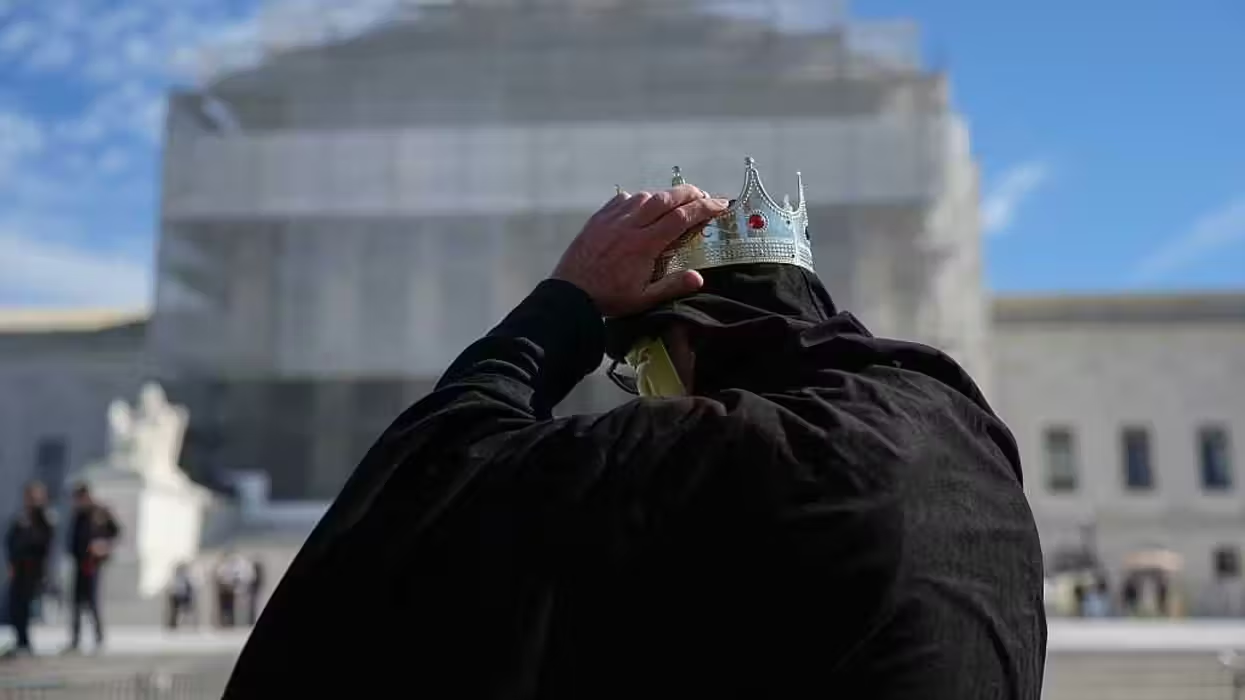
RELATED: Democrats crown judges while crying about kings
 Eric Lee/Bloomberg via Getty Images
Make impeachment great again
At the federal level, impeachment has become an empty threat. Senate math makes convictions nearly impossible. But red states with Republican supermajorities don’t face that obstacle.
Utah’s legislature holds a 61-14 majority in the House and a 22-6 majority in the Senate. Rep. Trevor Lee (R-Utah) on my show last week called for the impeachment of both Judge Gibson and Lt. Gov. Henderson for violating the state constitution. Republicans have the votes to do it — and the constitutional duty to rein in judicial usurpation.
Other states have shown it can be done. In 2018, West Virginia impeached all five members of its Supreme Court for corruption and removed them. Red states such as Oklahoma, Montana, Missouri, and South Carolina face the same problem Utah now faces: liberal judges empowered by timid Republicans.
A perilous path
Utah proves a point conservatives hate to admit. Republicans in Washington often claim they can’t implement the party’s agenda because they lack power. But in Utah, Republicans hold all the power — and still refuse to use it. They allow commissions to override them, courts to embarrass them, and Democrats to seize ground they could never win through elections.
Supermajority states serve as a control group. The problem isn’t power; the problem is the GOP’s refusal to wield it.
Unless Republicans act with conviction, Utah will follow Colorado’s path. Democrats chipped away at Colorado one institution at a time while Republicans shrugged. Now Colorado is a Democratic Party fortress.
Utah is heading down the same trail — unless Republicans use the constitutional tools they still possess.
The GOP Loss Is Not a Big Deal
The headlines were predictable. In the wake of the 2025 election here’s a sampling: The New York Times: “Republicans Point…





