

Category: Halloween
5 hilarious political moments that make me thankful for Trump

President Donald Trump has spent the last decade producing some of America’s most iconic political moments. Some were divisive, some were historic, and many of them were hilarious.
Here are the top five Trump moments that make me thankful for his presidency.
5. Turn them OFF!
Trump had many memorable moments during his first presidential campaign, earning a reputation for being a totally candid and unapologetic candidate. Almost a decade ago at a rally in Atlanta, Georgia, Trump put his personality and political talent on full display, turning a technical hiccup into a chant with countless rallygoers.
The stage lights abruptly went off in the middle of his campaign speech, prompting Trump to quip that the venue “didn’t pay the electric bill,” sending applause and laughter through the audience. To Trump’s dismay, the lights quickly blared back on, and he began to shout, “No! Get those lights off!”
“Turn them off! They’re too bright! Turn them OFF!”
Trump later encouraged audience members to join him in chanting, “Turn off the lights!”
“That’s the way we have to negotiate for our country,” he added.
4. From the standpoint of water
During Hurricane Florence in September 2018, Trump posted a video in which he thanked first responders and all those involved in mitigating the pain inflicted by the natural disaster. Although this would have been a routine exercise in any other administration, the orator in chief delivered one of his most iconic Trump lines that never fails to make people chuckle.
While Trump has several memorable one-liners, this one was uniquely pre-approved and posted to a personal social media account.
“I just want to thank all of the incredible men and women who have done such a great job in helping with Florence,” Trump said. “This is a tough hurricane.”
“One of the wettest we’ve ever seen from the standpoint of water. Rarely have we had an experience like it, and it certainly is not good,” he added.
3. Trick or treat
Some of the most iconic Trump moments were entirely unscripted, and 2018 Halloween was no exception.
The White House was hosting the annual trick-or-treat festivities where the president and first lady Melania Trump hand out candy to kids dressed up in their Halloween costumes. One such trick-or-treater showed up in a Minion costume from the well-known “Despicable Me” films, which quickly proved to limit the child’s candy-collecting abilities.
The child’s costume seemingly obstructed his hands, but Trump didn’t want to deprive the Minion of his Halloween harvest. Instead, Trump opted to simply place the candy bar on top of the Minion’s head as onlookers erupted in laughter.
2. The N-word
Trump’s unprompted one-liners are usually the most controversial, but also the most entertaining. His speech to military brass at Quantico earlier this year was no exception, after Trump veered off script and produced one of the most viral moments so far in his second term.
“It was really a stupid person that … mentioned the word ‘nuclear,'” Trump said during the address.
“I moved a submarine or two … over to the coast of Russia, just to be careful, because we can’t let people throw around that word,” he continued.
“I call it the N-word,” Trump added. “There are two N-words, and you can’t use either of them.”
Campaigning as the peace president and working around the clock to end conflicts around the globe, his play on words was both in line with the administration’s agenda and with Trump’s comedic instincts.
1. ‘Because you’d be in jail’
One of Trump’s most iconic political feuds was with none other than failed Democratic presidential candidate Hillary Clinton. The two sparred on a number of issues and exchanged many notable insults at each other, but few are as memorable as the October 9, 2016, presidential debate.
This mic drop speaks for itself.
“Last time, at the first debate, we had millions of people fact-checking, so I expect we’ll have millions more fact-checking because, you know, it’s just awfully good that someone with the temperament of Donald Trump is not in charge of the law in our country,” Clinton said.
Trump picked up the mic and simply said, “Because you’d be in jail.”
Like Blaze News? Bypass the censors, sign up for our newsletters, and get stories like this direct to your inbox. Sign up here!

The Spectacle Ep. 294: Hollywood’s Low Box Office Turnout Was Not So Spooky
Hollywood had nothing but cobwebs in the theaters this Halloween, as the box office reportedly received its lowest earnings for…
Red, white, and boo: Almost two-thirds of Americans now believe in ghosts
“I ain’t afraid of no ghost.”
Easy enough to say 40 years ago, when audiences delighted to the spectral pest control antics of Bill Murray, Harold Ramis, and Dan Aykroyd. You can’t fear what isn’t real, after all.
The show pioneered a tactic known as ‘provocation.’ This is when an investigator attempts to goad a spirit into manifesting by insulting it.
Things have changed. Since then, the proportion of Americans who believe in ghosts has surged 400%. Surveys indicate that nearly two-thirds of the population now hold supernatural beliefs, and 20% have reported seeing a ghost.
Entrepreneurial spirits
With roughly 50 million Americans purportedly having encountered a haunting, the business of ghost hunting has evolved into a profitable enterprise. It would appear that the invisible hand of the market really does exist.
As proof that even the ethereal cannot escape the iron law of supply and demand, paranormal tourism is booming. Millions of Americans now spend over $300 million on haunted attractions each year. You can satiate your gruesome desires by visiting Iowa’s Villisca Axe Murder House, where eight people, including six children, were murdered in 1912. For $430, anyone brave enough to take a whack at it can try to spend the night.
Ghost-hunting shows are scaring up unprecedented interest as well. YouTube, for example, has hundreds of paranormal-themed channels. One of the biggest is “Sam and Colby.” With an average of 10 million views per video, the kids are among the most popular ghost hunters online. The two film themselves while visiting haunted locales across the United States. Freed from the limitations of conventional television, the videos are lengthy and typically unedited, offering a more immersive experience for their audience of 15 million subscribers.
There are compilation channels for those who don’t want to endure the deferred gratification of 90 minutes of shaky handheld videos and constant cries of, “What was that?”
Then there are channels like “Mind Junkie” and “Nuke’s Top 5,” which brazenly monetize our endless appetite for not-so-carefully-vetted supernatural slop. One wonders if these shrewd content creators are also behind the “debunking videos” they attract. Nice business model, if so.
Tales from the clip
“Paranormal Caught on Camera,” now in its ninth season on Discovery+ and the Travel Channel, can best be described as a reality show. From poltergeist activity to mysterious shadows roaming the woods, a panel of experts weighs in on supposed paranormal footage from around the world. Imagine “Ghostbusters” meets “America’s Funniest Home Videos” — with the approximate scientific rigor of both.
Psychologists say a prior belief in ghosts makes a person more inclined to perceive unexplained sounds and events as paranormal. The show’s presenters are clearly familiar with the research. They frequently use the term “energy” (which appears to function as a noun, verb, and adjective) and attribute every sound or camera jiggle to the spirit realm.
Ghost roast
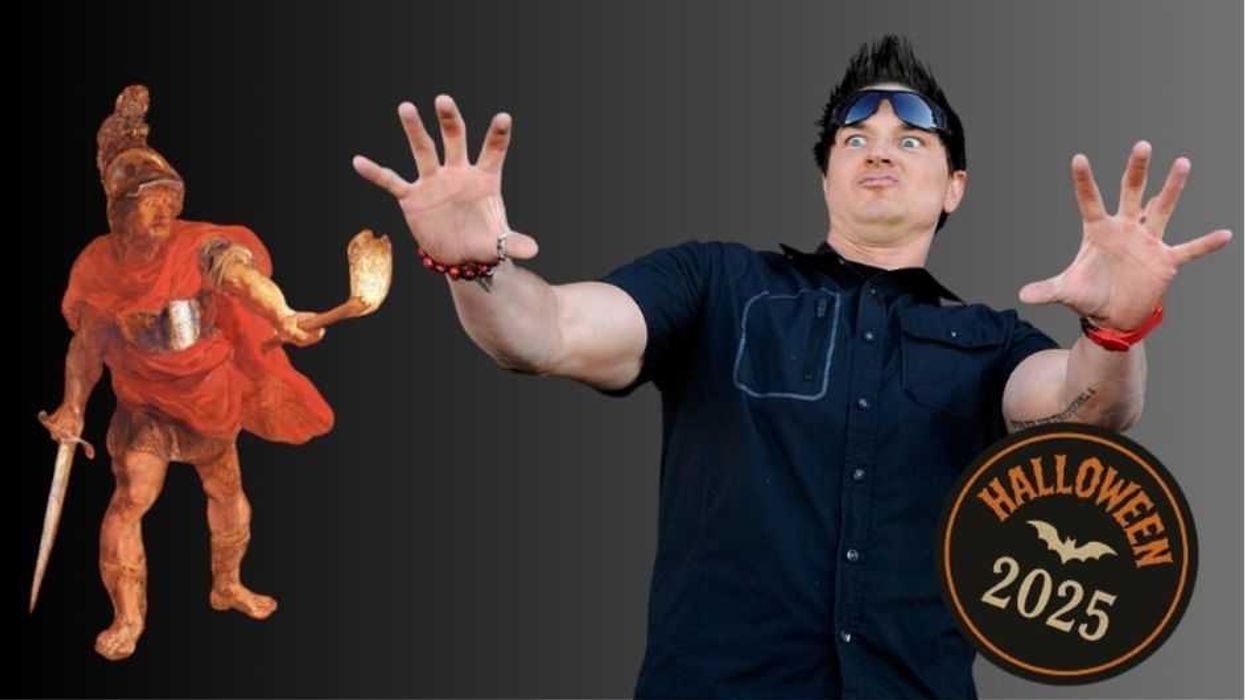
“Ghost Adventures” is one of the longest-running and best-known of these types of shows. While the experts on “Paranormal Caught on Camera” are content to remain armchair investigators, aging goth heartthrob Zak Bagans and his crew actually go out into the field. Since 2008, they have traveled around the United States looking for paranormal phenomena. The format is simple: They arrive at an alleged haunted location, turn off the lights, hit record, and explore the building. What we get is a well-curated, finely edited spectacle.
The show pioneered a tactic known as “provocation.” This is when an investigator attempts to goad a spirit into manifesting by insulting it. While this demonstrates a fortitude worthy of Ray Parker Jr. himself, it has never once worked over 300 episodes. The only scary thing that appears to be happening is a group of middle-aged men screaming in the dark about nothing in particular.
The truckload of pseudoscientific equipment these guys bring to the task separates them from your average amateur. A truckload of pseudoscientific instruments is used to add an element of objectivity. Particularly prized is the EMF meter, used to detect the electromagnetic fields ghosts apparently emit. This essential prop emits clicks and pings reminiscent of the motion trackers used to detect xenomorphs in the movie “Aliens.” Unsurprisingly, there is no James Cameron-level tension here. Ninety-nine times out of 100, they’ve probably just found the fuse box.
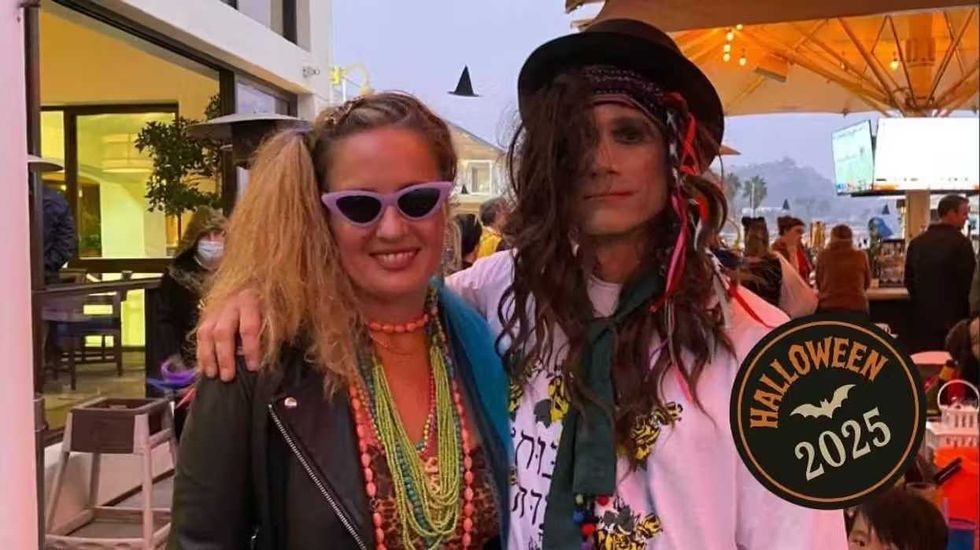
RELATED: Halloween costumes for old people: 6 surefire rules for dressing up
 Matt Himes
Phantom itch
Slick, polished, and carefully choreographed. It’s all very Hollywood. It comes as no surprise that the massive increase in belief in ghosts over the last 50 years coincides with the golden era of horror. Art imitates life. Many of these shows use the same strategies as your typical Hollywood special effects department.
So why are we watching these shows? “Ghost Adventures,” now in its 28th season, has perfected the art of selling us fear. These shows give us what we want. We love to be afraid. A horror movie grants us the chance to live vicariously through the characters on the screen. A way to experience and navigate terror from the comfort of our couch.
Then there’s another, more poignant, explanation. We believe in ghosts for the same reason that we believe in God. In the end, both ghost hunters and Christians are motivated by the same persistent yearning that has dogged us since the dawn of humanity: There’s got to be something more than this.
Satan or saints? The spiritual tug-of-war over Halloween
Halloween was never something I thought that deeply about until recently. If I’m being honest, for years I rolled my eyes at the rigid Christian parents — holier-than-thou stick-in-the-muds — who refused to let their kids participate in any Halloween traditions, especially costume-wearing and trick-or-treating.
I grew up in a Christian home with parents who had strong convictions about darkness but still allowed me and my siblings to enjoy Halloween festivities. Our parameters were simple: no horror movies, no haunted houses, no costumes that represent evil, and no trick-or-treating at homes with macabre decorations.
‘So many people think Halloween is about candy and it’s about dress-up, but they don’t question the meaning behind it.’
Some of my favorite childhood memories are from Halloween.
When she could find the time, my mom, a skilled seamstress, would handmake our costumes. One year, she hand-stitched me a sequin and tulle fairy dress. Another year, she made my little brother Larry the Cucumber from “VeggieTales.” He looked like Shrek’s awkward cousin, and I was forced to let him tag along for trick-or-treating — a total vibe kill when you’re 11 years old and going as a fierce leopard queen of the savanna. Twenty years later, my family still howls in laughter at the image of the two of us, a majestic jungle cat trailed by a strange pickle.
After returning home with pillowcases bursting with candy, my brother and I would stay up late sorting through our plunder and making valuable trades. He liked the fruity stuff; I was a chocoloholic, so it worked out. We made these exchanges while we watched “It’s the Great Pumpkin, Charlie Brown” and “Casper.”
When I grew older, I would help my mom get my little sister ready for trick-or-treating. I’d curl her hair, paint her nails, and delicately apply sparkly eyeshadow until she was the best princess in the neighborhood.
By all measures, Halloween at my childhood home was sweet and fun.
In my early adult years before my husband and I had a child, we kept the same guidelines. Our front porch was decorated exclusively with pumpkins and orange string lights. If we went to a costume party, we dressed as something benign, like Peter Pan and Wendy (he’s still salty with me about the green tights). We handed out candy and hyped up every princess and Power Ranger who came to our door. If our friends invited us to see a horror movie or go to a haunted house, we politely declined.
For years, this is how we did Halloween, and I always arrogantly assumed that we were doing it right — threading the needle perfectly so that no darkness got into our bubble.
But everything changes when you have a child. The second your doctor places that perfect baby in your arms, the lens through which you see the world morphs. Suddenly, there is danger lurking around every corner. Your mind is incessantly flooded with bone-chilling what-ifs. Your spirit gets more sensitive and begins picking up on things — lyrics, innuendos, hidden agendas — it never noticed before.
The weight of responsibility gets 1,000 times heavier as you realize: I am not only responsible for protecting this human being physically, I’m also charged with nurturing and guarding their soul.
And so when Halloween rolls around, you start asking questions you never asked before.
Questions like: What if my toddler sees a scary costume or yard display and has nightmares? What if allowing him to trick-or-treat exposes him to terrors he otherwise would’ve remained ignorant of? What if I start traditions I regret later?
These questions gave way to deeper spiritual inquiries: Is there an uptick in demonic activity on Halloween (even in well-lit suburban neighborhoods)? Am I sending my son out onto demon-infested streets by allowing him to trick-or-treat? By participating in Halloween in any capacity, am I attempting to whitewash a day that glorifies darkness? Is it possible for Christians to partake in Halloween and still glorify God? At what point have we crossed the threshold from innocence to fraternizing with evil? Is there such a threshold when it comes to Halloween?
These queries then birthed a whole different set: By only partaking in the innocuous parts of Halloween (granted those exist), might we be a positive example for others who don’t know Jesus? Could setting parameters around Halloween teach my child how to be light in the darkness — in the world but not of it? Might the plastic monsters in people’s yards eventually be a tool to introduce our son to the real monsters? Are candy and costumes wholesome practices 364 days of the year but grave moral evils just on October 31? If that’s the standard I hold to, am I not being a bit legalistic?
RELATED: Why Christians should stop running scared from Halloween
 kajakiki/Getty Images Plus
Full transparency: I’m not sure where I fall on this issue. I am struggling because I think my parents did an exceptional job protecting us from darkness while still allowing us to have fun and make awesome memories.
If possible, I would like to re-create the same experiences for my children.
However, we were kids in the 1990s. We didn’t have access to global information in the palm of our hands. My mom wasn’t privy to the dark pagan origins of trick-or-treating and costume-wearing.
But today, we can find the answers to literally anything in mere seconds thanks to high-speed internet, smart devices, and artificial intelligence — another big moral question mark. Many discerning Christians have begun looking into the origins of things they thoughtlessly engaged in for years, including Halloween. They’re deeply disturbed by what they’re finding.
Social media has also given everyone who wants it a platform. Practicing witches are all over Instagram and TikTok. They’ve busted the myth that witches wear pointy hats and concoct bubbling potions in the dark forest. Turns out, they’re sitting next to you at the coffee shop, browsing grocery store aisles in your hometown, and creating spreadsheets in the cubicle next to yours.
Halloween is a frequent subject on “WitchTok,” a virtual community that has amassed billions of views. Oct. 31 is a day when modern witches revive the ancient pagan rituals that influenced Halloween. And they’re doing it boldly — consulting with demons, worshipping at satanic altars, and casting curses and spells. One can only guess what they’re doing off camera.
This is all going on while children stuff themselves with Snickers and Skittles.
On the flip side, social media has also given voice to ex-occult members who are exposing the dark art’s sinister secrets. These Christian converts pull no punches about Halloween: It’s a hard no.
Many of them describe personal experiences with rituals, hauntings, and “demonic weddings” on Oct. 31. They almost unanimously implore believers to abstain from the holiday to avoid opening spiritual doors to evil.
I recently saw this Instagram post from Christian music artist Forrest Frank:
In the video, ex-occultist and former satanic church leader Riaan Swiegelaar warns that Halloween is “the highest day on the satanic calendar” and “the night of the year where there is the most human sacrifice on the whole planet.”
“So many people think Halloween is about candy and it’s about dress-up, but they don’t question the meaning behind it,” he said.
Swiegelaar went on to suggest that anyone who participates in Halloween by opening their doors and engaging in the traditions will be “affected” by the darkness.
An ex-satanic priest turned evangelist named John Ramirez, who spent over two decades engaging in unspeakable horrors on Halloween, warns that participation in any capacity is like having a one-night stand with Satan. He even goes so far as to claim that pumpkins, not even Jack-o’-lanterns, outside our doors are an invitation for demons to enter.
Do I take their word for it? Even though my childhood memories don’t align?
Do I lean harder into the Christian or pagan roots of Halloween? Can I participate in some traditions given they were shaped by All Hallows’ Eve, the vigil before All Hallows’ Day, a Christian feast established by the early church to honor saints and martyrs?
Or do I turn my porch light off and barricade my family indoors because Halloween was also influenced by the pagan fire festival of Samhain, a night steeped in death and the demonic? Ancient Celtic peoples made offerings and sometimes even sacrifices to the dead, practiced divination and necromancy, and danced around great bonfires to keep evil spirits at bay. Samhain is where costume-wearing and trick-or-treating got their start.
However, both traditions are a bit of a mixed bag. Ancient pagan practices blended with medieval Christian traditions to eventually become the candy-driven, costume-obsessed hallmarks of modern Halloween. Samhain was the night Celts believed the veil between the living and the dead was thin. Spirits that crossed the barrier needed appeasement, so people offered gifts, usually food, to quell their wrath — a precursor to passing out candy.
One could argue that Christians, by turning demonic practices into veneration and community-oriented festivities, brought light where there was darkness.
However, British and Irish Christians then put their own spin on these practices with “souling,” where the poor went door-to-door on All Hallows’ Eve, offering prayers for the dead in return for food, which further shaped the trick-or-treating we know today.
The tradition of costume-wearing has a similar trajectory.
During Samhain, Celts would disguise themselves using animal skins or masks to confuse or ward off malevolent spirits. By the medieval period, after Christianity had spread across Ireland and Scotland, these practices were reshaped into what became known as “guising.” Children dressed up and went door-to-door, performing songs, poems, or tricks for food or coins. This was widely accepted by Christians as part of All Hallows’ Day festivities.
So while Samhain birthed the concepts of trick-or-treating and dressing in costumes, Christians had the final say. The early church redirected pagan impulses of worshipping and fearing the dead to honoring them as part of the “communion of saints.” Or did they merely sanitize sin? I guess it depends on how you look at it.
Many Christians who condemn Halloween today point back to the pagan origins of these traditions as evidence of why believers should abstain. They’ve definitely got a point. Samhain was — is — dedicated to the demonic.
However, one could argue that Christians, by turning demonic practices into veneration and community-oriented festivities, brought light where there was darkness. Again, it depends on how you look at it.
I do find it interesting that the majority of Christians who are bent on seeing the entirety of Halloween as irredeemably evil don’t bat an eye when December rolls around and Christmas trees go up. Christmas trees have the exact same history as Halloween’s favorite traditions: It began as a pagan practice of worshipping nature spirits, and then Christians adapted it into a “holy” holiday tradition.
I asked a close friend of mine who falls in this category (no Halloween but Christmas trees are fine) her thoughts on this. She told me Halloween in general is a celebration of darkness, whereas Christmas is not.
It’s a fair point, but I still wonder if mainstream Christmas is not a celebration of a different kind of darkness — greed and materialism.
“It’s just the whole Halloween vibe. It doesn’t sit well with my spirit,” she told me.
There, I think, is where everyone should find their answer: in the Spirit, which convicts us all differently. I’m reminded of the apostle Paul’s words to the early Gentile Christians in Romans 14, who were arguing over disputable matters of conscience, like consuming food offered to idols and observing certain holidays. He told them, “Each one should be fully convinced in his own mind.” Perhaps the same wisdom applies here.
This year, my husband and I have decided to abstain from Halloween and use this time when our son is still too young to remember anything to pray about what our future Octobers should look like.
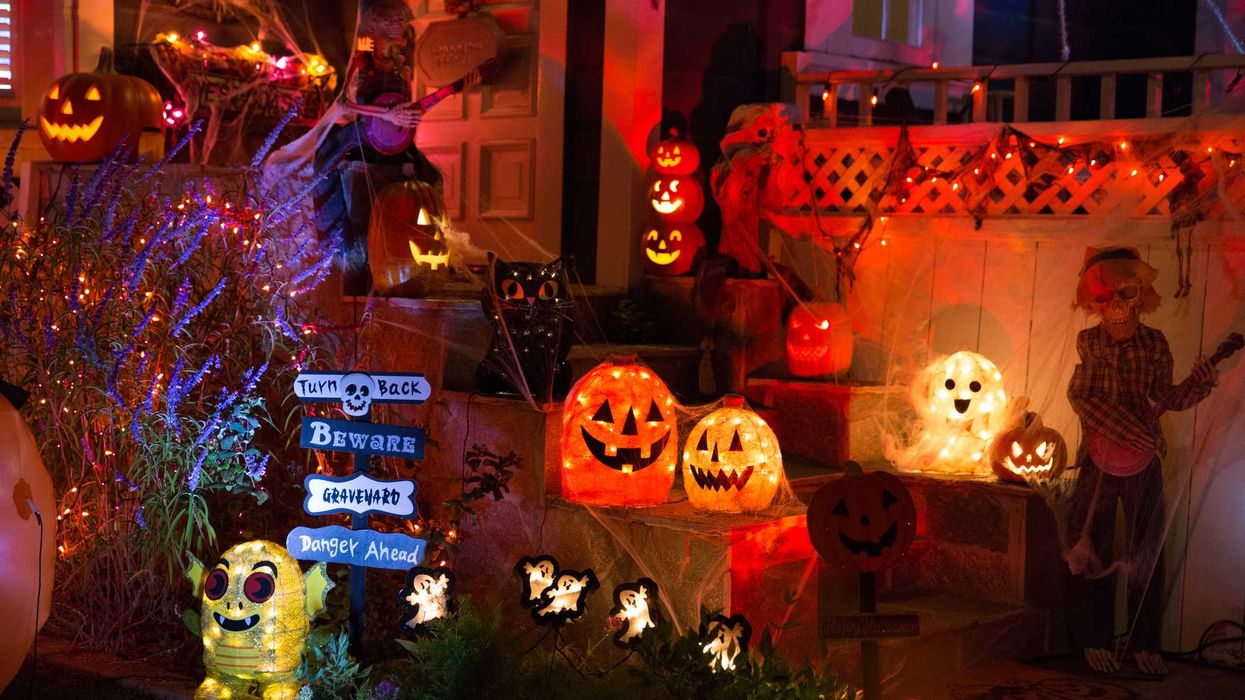
My spirit is certainly disturbed when I see our next-door neighbor turning his yard into what I can only describe as a temple of darkness — monsters and fiends of all varieties awash in a sickly red glow. I then look over at the cluster of pumpkins on my own front porch and wonder: Are he and I guilty of the same crime?
Until I have my answer, I’ll keep pondering, praying, and letting the Spirit — not the season or even my cherished memories — tell me what belongs in our home.
Seven Chillers Without Drillers for Halloween
Halloween is a uniquely fun holiday because it turns Man’s most unwanted emotion, fear, into a source of entertainment, with…





