

Category: Marriage
‘Looksmaxxing’ and the war on male self-improvement
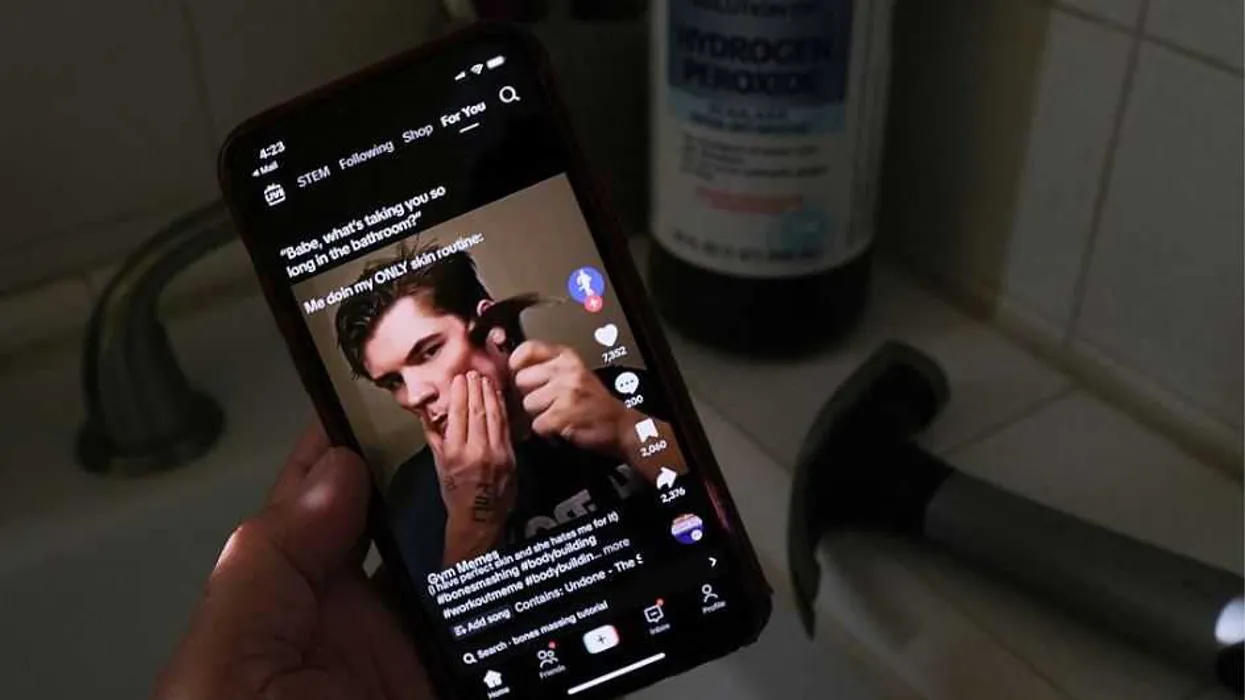
If you’ve been anywhere near social media lately, you have probably heard of the latest oddly named lifestyle: looksmaxxing.
It’s laughed at, pathologized, and treated as a digital disease. It is filed under narcissism, extremism, or maladaptation — anything that avoids taking it seriously.
What really offends critics isn’t the vanity but the accountability. Looksmaxxing puts the burden back on the individual in a culture addicted to external blame.
But what is it?
Checklist for Chads
At its most basic, looksmaxxing refers to a loose online movement encouraging men to improve their physical appearance through deliberate, practical self-improvement rather than passive acceptance. In practice, this usually means mundane, unglamorous changes: losing excess weight, lifting weights consistently, grooming properly, dressing with intention, fixing posture, and presenting oneself as a capable human being. It is not a philosophy so much as a checklist.
There are, inevitably, outliers — internet backwaters where bone-breaking routines are discussed without irony, extreme facial surgeries are contemplated, and pseudoscientific measurements of skull angles are treated as destiny.
These exist, and they’re easy to mock. But they don’t represent the broader phenomenon. They emerge at the margins, where men believe, rightly or wrongly, that they have exhausted ordinary options. The typical looksmaxxing example is far less exotic. A sedentary man quits junk food, joins a gym, gets a proper haircut, replaces stained hoodies with fitted clothes, and steps out of his mom’s basement.
Scarcity mindset
Looksmaxxing is a response to scarcity: romantic scarcity, social scarcity, economic scarcity. Young men are told relentlessly that confidence matters, that personality wins, that being “yourself” is enough.
Then reality arrives, usually with a swift kick to the nether regions. Faces, frames, height, grooming, fitness, posture — these things open doors long before a sentence is spoken. They decide who gets seen, who gets listened to, who gets to move on to the next round. The lie isn’t that personality matters, but that it matters first.
Critics default to dismissal because it requires no engagement. It costs nothing to tell a struggling man that he should simply “be kind” or “work on his inner self.” It costs nothing to shame him for caring about how he looks, while a culture sells beauty as destiny and desire as status.
The same people who insist looks don’t matter meticulously curate their appearance through filters, lighting, angles, brands, and cosmetic interventions. They publicly reject the rules while privately enforcing them. Everyone else pays for the pretense, most notably the average American man.
And the term average couldn’t be more apt. Overweight. Sedentary. Winded by a flight of stairs, pausing halfway like he’s summiting Everest. He is the product of abundance without discipline, comfort without consequence, a culture of convenience, couches, and calories. And he is told, endlessly, that his problems are emotional rather than physical.
Law of attraction
Looksmaxxing begins where denial ends. It says the body matters; the face matters; presentation matters. It refuses to treat biology as a slur. It doesn’t ask permission to acknowledge that attraction is selective, visual, and often cruel.
In a dating environment dominated by apps, where most singles are judged in a fraction of a second, this isn’t ideology but reality. That honesty unsettles people who have built careers telling men soothing stories about how the world ought to work rather than how it does.
As noted above, looksmaxxing can become obsessive. That pattern is familiar in any movement shaped by exclusion. But remove the extremes, and what remains is entirely reasonable. Lift weights. Lose the gut. Fix posture. Groom properly. Dress like you respect yourself. Sleep. Eat like an adult. Stop looking like you lost a bet with your mirror. None of this is radical. None of it is hateful. It is common sense.
Man up
What really offends critics isn’t the vanity but the accountability. Looksmaxxing puts the burden back on the individual in a culture addicted to external blame. It tells men that improvement is possible, but optional excuses are not. That message is intolerable to systems that profit from passivity. It is far easier to medicalize male dissatisfaction than to admit that a doughy, slumped, self-neglecting body will be judged accordingly.
There is also a class element no one wants to touch. Good looks are increasingly a luxury good: time to train; money for decent food; knowledge of grooming, style, and fitness. These are not evenly distributed. Telling men that looks don’t matter is a convenient way to ignore how much effort the winners quietly invest. Looksmaxxing is, in part, a grassroots attempt to close that gap — crude at times, desperate at others. But earnest.
There is also an undeniable element of misandry at play. When women improve their appearance, it is framed as empowerment, self-care, or self-expression. When men do the same — deliberately, analytically, and without apology — it is framed as an illness requiring immediate intervention. Looksmaxxing, a movement dominated by men, is treated as evidence of a psychological defect. The behavior is identical; the judgment is not. The double standard is structural.
RELATED: You can’t be 50 in Hollywood
 Alexandre Guerra/Getty Images
What about both?
And most straight women, if they are honest, aren’t confused about what they find attractive. Who doesn’t want a good-looking man? Who doesn’t respond positively to a strong frame, a defined jawline, a body that signals health and self-command?
This doesn’t negate the need for depth. No one wants a handsome face paired with the emotional range of a vacuum cleaner. But the inverse is no more appealing. Emotional intelligence struggles to shine when it is housed in a body that signals neglect. The idea that a man must choose between substance and appearance is false. It is entirely possible — indeed reasonable — to demand both.
Looksmaxxing doesn’t promise eternal happiness, but it does promise leverage — a chance to be seen before being dismissed. A chance to compete rather than be invisible. For the overweight man incapable of doing a single pull-up, it offers something rare: a clear target and a measurable path.
Looksmaxxing exists because the social contract broke first. When institutions stopped offering stable work, when dating turned into a market, when community receded and screens advanced, men adapted.
Mock looksmaxxing if you want. Call it vain. Call it sad. But don’t call it irrational. It isn’t the sickness but the symptom. And until we are willing to tell the truth about attraction, status, and the price of neglect, young men will keep gravitating toward the only strategy that abandons pretense.
The Spectator P.M. Ep. 186: NYTimes Flips Out Over Support for the Traditional Family
The Left is in anguish over a new policy paper from the Heritage Foundation that encourages pro-family values to save…
America’s Cultural Chasm: Family v. Individualism
The future of humanity rests not upon government, but with the family. A principle that is as bold as it…
‘Something has gone terribly wrong’: Marriage is in ‘disastrous’ decline — perhaps because of women

The marriage rate has been in decline for decades, dropping from 10.6 per 1,000 people in 1980 to 6.1 in 2023. Last year, American adults were less likely to be married than at nearly any other time since the Census Bureau began logging marital status in 1940, with married couples heading only 47.1% of U.S. households.
The apparent aversion to marriage is bad news for American children, who perform better in school and are far less likely to end up in prison or depressed when raised by married parents, as well as for American adults who tend to see better health outcomes, be happier, and live longer when espoused.
‘Devaluing marriage and motherhood has consequences.’
Recent Pew Research Center analysis of survey data from the University of Michigan suggests that this decline may continue — especially if young women’s growing resistance to marriage goes unremedied.
Whereas 20 years prior, 80% of 12th graders said that they were most likely to choose marriage in the long run, only 67% of 12th graders polled in 2023 indicated that they want to get married someday. Another 24% said they don’t know if they’ll get married, up from 16% in 1993.
This drop appears to have been largely driven by shifting views among girls.
In 1993, 83% of girls and 76% of boys said that they wanted to get married. In 2023, only 61% of girls said they wanted to get married — a drop of 22% — while 74% of boys indicated they wanted to ultimately tie the knot.
RELATED: Family or fallout — experts assess the threats now facing the nuclear family
 Photo by STRINGER/AFP via Getty Images
Pew indicated that there was also a precipitous drop in the percentage of 12th graders who indicated they wanted to have kids if they marry.
Whereas in 1993, 82% said they wanted to have kids, in 2023, only 73% indicated they wanted to welcome new life into this world. Even more dramatically, the percentage of those who said they would “very likely” want to have kids if married dropped from 64% in 1993 to 48% in 2023.
“It’s almost like decades of devaluing marriage and motherhood has consequences,” wrote the Alabama Policy Institute.
Katy Faust, founder of the children’s advocacy group Them Before Us, stated, “More than almost anything else trending, this terrifies me. Because of the nature of our bodies women have historically pursued marriage more. What kind of disastrous, antihuman messaging are young women being flooded with to return these kinds of results?”
RELATED: Domestic extremist or: How I learned to stop worrying and love the mom
 Photo by Lambert/Getty Images
Dr. Brad Wilcox, professor of sociology at the University of Virginia and director of the National Marriage Project, said the anti-nuptial trend among young women and adolescent girls was “disastrous.”
Wilcox underscored that this trend reflects a particularly raw deal for women, highlighting a recent YouGov survey of U.S. women, ages 25 to 55, fielded by the Institute for Family Studies and the Wheatley Institute, which found that married women with children are:
- more likely (19%) to report being “very happy” than both unmarried women with children (13%) and unmarried women without children (10%);
- more likely (47%) to report that life has felt enjoyable most or all of the time in the past 30 days than both unmarried women with children (40%) and unmarried women without children (34%);
- less likely (11%) to report being lonely most or all of the time in the past 30 days than both unmarried women with children (23%) and unmarried women without children (20%);
- more likely (51%) to receive physical affection than both unmarried women with children (29%) and unmarried women without children (17%); and
- more likely (28%) to report their lives have a clear sense of purpose than both unmarried women with children (25%) and unmarried women without children (16%).
Turning Point USA spokesman Andrew Kolvet said of the Pew report, “Something has gone terribly wrong.”
Like Blaze News? Bypass the censors, sign up for our newsletters, and get stories like this direct to your inbox. Sign up here!
What Nick Fuentes Gets Wrong About Women
It’s generally true in politics that coalitions win elections. Unfortunately, it’s also true that those coalitions are rarely united by…
Friends, Lovers, and Everything in Between
A situationship is someone you don’t need to open the door for — not even on Christmas Eve — but…





