

Category: Medicaid
$300M frozen: California allegedly forced Americans to fund illegal alien Medicaid — so Dr. Oz drops the hammer
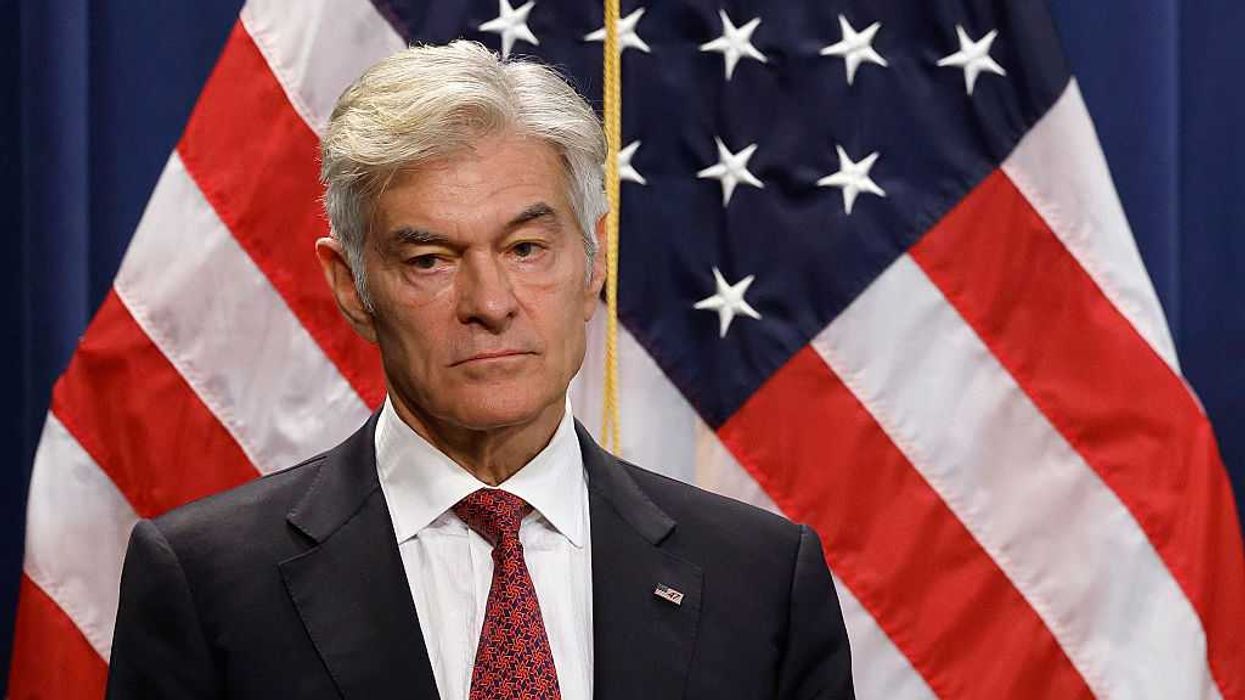
The Trump administration officials are pushing California to return over $1 billion in federal taxpayer funds that may have been used to cover the health care costs of illegal aliens.
The Centers for Medicare and Medicaid Services announced in May that it was increasing oversight on states that illegally used Medicaid funding to provide illegal immigrants with health care services, noting that Medicaid funding is generally available to illegal aliens only for emergency medical services.
‘We are teaming up to combat healthcare fraud so the money can be used for American citizens who need it!’
As part of the announcement, the CMS declared that states could be forced to reimburse the federal government for funds spent on noncitizens.
CMS Administrator Dr. Mehmet Oz revealed in October that the agency found more than $1 billion of federal taxpayer funds were spent on Medicaid for illegal aliens.
“And my team is getting it back,” he remarked.
Oz called CMS’ findings “shocking.”
“In a preliminary review of six states, we found those states improperly using federal tax dollars for their allegedly state-funded program and providing coverage to individuals, including some with criminal records of murder and assault,” he stated.
Those findings included $1.3 billion in California, $2.1 million in Washington, D.C., $30 million in Illinois, $2.4 million in Washington, $1.5 million in Colorado, and $5.4 million in Oregon.
RELATED: Dr. Oz exposes the nonprofit lie at the heart of US health care
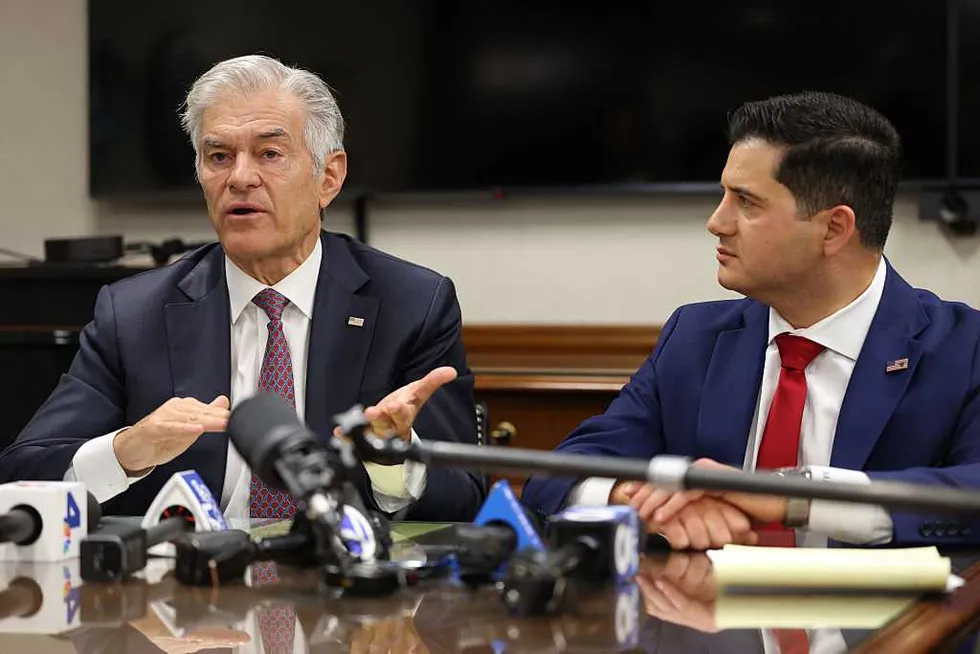 Mehmet Oz, Bill Essayli. Photo by Patrick T. Fallon / AFP via Getty Images
Oz explained that the states had been notified and that “many” had begun issuing refunds to CMS. However the administrator provided an update on Wednesday, stating that additional uncovered data revealed the total had reached $1.8 billion across eight states.
He announced that the CMS is withholding nearly $300 million from California, which Oz labeled “the worst offender,” until the state’s leadership proves “they’re spending the money properly.”
Bill Essayli, first assistant U.S. attorney for the Central District of California, stated, “California must return more than $1 billion to the federal government after an audit by @DrOzCMS and his team uncovered federal dollars being spent on healthcare for illegal immigrants. We are teaming up to combat healthcare fraud so the money can be used for American citizens who need it!”
California officials have rejected claims that the federal funds were misused.
The California Department of Health Care Services previously told the New York Times, “Claims that California improperly used federal Medicaid dollars to provide health care to undocumented immigrants are flatly false and misrepresent both federal law and standard administrative practice.”
Gov. Gavin Newsom’s office did not respond to a request for comment.
RELATED: Illegal-alien patients drain Texas hospitals, racking up billion-dollar bill — in less than a year
 Gavin Newsom. Photo by Justin Sullivan/Getty Images
Washington, D.C., has agreed to pay back over $650,000 to CMS by mid-November.
An Illinois Medicaid spokesperson previously told PolitiFact, “Once again, the Trump administration is spreading misinformation about standard uses of Medicaid dollars.”
“This is not a reality show, and there is no conspiracy to circumvent federal law and provide ineligible individuals with Medicaid coverage. Dr. Oz should stop pushing conspiracy theories and focus on improving health care for the American people,” the spokesperson added.
A Washington State Health Care Authority also pushed back on CMS’ claims, calling the estimates shared by Oz “inaccurate.”
“We were very surprised to see Dr. Oz’s post, especially considering we continue to work with CMS in good faith to answer their questions and clear up any confusion,” the spokesperson said.
Colorado’s Department of Health Care Policy & Financing also insisted the state did not break the law.
“Our payments for coverage of undocumented individuals are in accordance with state and federal laws,” a spokesperson told PolitiFact. “The $1.5 million number referenced by federal leaders today is based on an incorrect preliminary finding, and has been refuted with supporting data by our Department experts.”
Oregon Health Authority previously told KOIN that CMS’ claim was “false and mischaracterizes not just this essential part of our nation’s emergency care infrastructure, but also an ongoing, routine audit process.”
Like Blaze News? Bypass the censors, sign up for our newsletters, and get stories like this direct to your inbox. Sign up here!
Washington’s Fraud Factory
For decades, I led state health and human services agencies and dealt directly with federal bureaucracies that write the rules…
Court Hearing for DC Police Bodycam J6 Footage
Accountability is Not ‘Political Retribution’ – It is Justice Court Hearing Held for DC Police Bodycam Footage from January 6, 2021 Medicaid Makes $289 Million in “Unallowable Payments” to Dead People NIH to Reconsider Frozen DEI, Gender Identity Grants Worth Millions Accountability is Not ‘Political Retribution’ – It is Justice In my column for […]
The post Court Hearing for DC Police Bodycam J6 Footage appeared first on Judicial Watch.
Tim Walz’s Daughter Thinks Journalist Had ‘Ethical’ Duty To Not Blow Lid Off Somali Scammers
‘You can’t just go and do this’
Medicaid Makes $289 Million in “Unallowable Payments” to Insure “Deceased Enrollees”
A decade after Judicial Watch reported that Medicaid, the government’ s fraud-infested health insurance program for the needy, spent $26 million to provide dead people in one state alone with benefits, a federal audit reveals the problem continues full-throttle with hundreds of millions of dollars in “unallowable payments” on behalf of “deceased enrollees.” It is […]
The post Medicaid Makes $289 Million in “Unallowable Payments” to Insure “Deceased Enrollees” appeared first on Judicial Watch.
How Medicaid Made a Billion-Dollar Crime Inevitable
The Minnesota Medicaid embezzlement scam remains headline news because of its scope and because the culprits were part of a…
Medicaid’s 30-Year Refusal to Stop Funding the Dead
For more than 30 years, Washington has known that Medicaid hemorrhages taxpayer dollars through fraud, waste, and abuse, including payments…
Somali Scammers Allegedly Stole Almost As Much In Minnesota As Entire Somalia GDP
‘Staggering, industrial-scale fraud’
How to win the opioid fight

Despite thousands of lawsuits against OxyContin maker Purdue Pharma now being settled, the opioid crisis continues to devastate families and communities. This is why there are massive national efforts to expand addiction treatment, develop non-opioid pain alternatives, promote natural remedies, and confront the Mexican drug cartels flooding America with fentanyl. In recent years, opioid-related deaths have finally begun to decline, suggesting that those initiatives are starting to make a real impact. But that progress may already be slowing.
The introduction of work requirements for Medicaid eligibility under the One Big Beautiful Bill Act is producing unintended consequences for people in addiction recovery. Early studies show that declines in Medicaid enrollment correlate with drops in the number of patients receiving treatment for opioid use disorder. Because Medicaid is the primary source for buprenorphine and addiction services, these enrollment changes threaten fragile but meaningful recovery gains.
Conservatives champion individual responsibility — but responsibility also requires ensuring that systems meant to help people reclaim their lives aren’t working against them.
Work requirements aren’t the problem — they’re sound policy to preserve the financial stability and original intention of the program. The real issue is Medicaid’s regulatory structure, which is too rigid and dysfunctional to absorb yet another layer of complexity.
This crisis didn’t begin with work requirements. Medicaid’s own structure, combined with state policies, had been restricting access to effective OUD treatment for years. Patients face prior-authorization delays, prescriber rules that block lifesaving medications, and certificate-of-need laws that stop treatment centers from opening or expanding. Policymakers often claim these rules protect patients or control costs. In practice, they have choked off reliable care and pushed people in recovery farther from the help they need.
In states where prescriber limits and facility restrictions already make treatment scarce, adjusting Medicaid eligibility has a serious impact on the availability of buprenorphine providers. The problem lies in creating a policy that requires personal responsibility within an already bureaucratic structure that actively slows treatment access. When enrollment pressures combine with supply constraints caused by CON laws and prescription rules, the result is fewer people getting the care that keeps them alive.
This is especially true in Appalachia, which is ground zero of the opioid crisis. Pennsylvania explicitly prohibits off-site methadone “medication units,” while legislation has been floated in West Virginia that aims to ban methadone clinics. Local governments across the region routinely block zoning permits for treatment facilities, often caving to community pushback rather than addressing a staggering public health emergency. Many states still impose CON laws, restricting the ability of hospitals and clinics to add new treatment beds or open new treatment programs.
RELATED: Trump faces drugmakers that treat sick Americans like ATMs
 Credit: Photo by Pete Marovich/Getty Images
On the provider side, well-intentioned prescribing rules have created even more barriers. Despite a dire shortage of addiction specialists, many states limit the prescription of OUD medications to certain providers, leaving primary care doctors — who could dramatically expand treatment access — underutilized or prevented from issuing prescriptions. Lawmakers have inadvertently created a bottleneck: too few qualified providers and too many hoops to jump through for those who want to treat addiction.
As the Trump administration continues to build a populist coalition that includes voters from Western Pennsylvania, Ohio, and other communities deeply scarred by opioid addiction, it must confront this reality head-on. Doing so does not require abandoning conservative principles, nor does it mean reversing work requirements. Those reforms remain both necessary and widely popular. But a serious conservative health care agenda must recognize that Medicaid’s regulatory architecture is undermining progress against opioid addiction — and America cannot afford to lose ground now.
Conservatives champion individual responsibility — but responsibility also requires ensuring that systems designed to help people reclaim their lives aren’t working against them. Addressing Medicaid’s regulatory failures is not just good policy; it is essential to sustaining progress in one of the most consequential public health fights of our time.
Editor’s note: A version of this article was published originally at the American Mind.





