

Category: Nick Fuentes
This Christmas season, Middle East Christians are under threat

Last December, my country finally threw off the chains of a hated, despotic regime. For many Syrians, it was a moment filled with hope — the belief that decades of repression had given way to a chance for renewal. Yet by March 2025, that hope had begun to fade. Parts of the country slipped into chaos. Videos circulated on social media and WhatsApp showing armed Islamist militias attacking civilian Christians, Druze, and anyone they branded as “infidels.”
Homes were burned. Entire families were killed. The first wave of violence was expanding and closing in on Christian communities of Suwayda in southern Syria, where many of my family members live.
While Israel has faced a campaign of withering international criticism, American Catholics and evangelicals are hearing very little about the plight of Christians from Egypt to Iran.
Then the killing stopped. It wasn’t widely publicized, but Israel — Syria’s southern neighbor — stepped in to prevent a massacre. Decisive military action stopped the slaughter of men, women, and children — our own relatives — in Suwayda.
For Arab Christians who have lived through so much war and persecution, it was a moment of relief but also a reminder of how little the world seems to care. When Christians are murdered in the Middle East, it rarely makes headlines.
As we come into the Christmas season and a new year, Christians are vanishing under Islamist violence and official repression.
In Lebanon, Hezbollah’s control and Iranian power have sent the Christian population into a tailspin. In Iraq, the number of Christians has dwindled to just over 100,000 faithful from over one million barely a decade ago. Even in small pockets of Christian life, supposed “safe havens” like Ain Kawa in Erbil, Iraq, Christians survive only because local authorities offer protection. From Sudan to Syria, ancient Christian communities have collapsed in just a generation.
The cradle of Christianity, with few exceptions, has become a region where believers cannot worship or gather without threats to our lives. Intervention from Israel helped prevent a massacre of Christian communities in Suwayda. But the world needs to pay attention to protect the Christians of the Arab world.
Western interest in the Middle East has mostly focused on Hamas’ brutal attacks on Israel in 2023 and Israel’s counteroffensive in Gaza. While Israel has faced a campaign of withering international criticism, American Catholics and evangelicals are hearing very little about the plight of Christians from Egypt to Iran. Legacy media ignores them. TikTok algorithms suppress them.
It is perverse that right now — with Christian communities across the Middle East facing extinction — prominent voices like Tucker Carlson and Nick Fuentes are ostracizing Christian Zionism as “a heresy.” In fact, Israel is the best friend Christians in the Middle East can hope to have. Alone in the region, Israel hosts a growing Christian population; alone in the region, Israel has intervened time and again to save Christian communities from eradication.
RELATED: The real question isn’t war or peace — it’s which century we choose
 Photo by AHMAD AL-RUBAYE/AFP via Getty Images
Our brethren in Syria and across the Middle East need our help this year more than ever before. Where churches are destroyed and believers persecuted, American Christians must pay attention, pray, and speak out.
More than that — contra Carlson — let us reach beyond our community. We can and must bring together a coalition of conscience in defense of persecuted minorities abroad, including human rights NGOs, brave anti-Islamist Muslims, and friendly governments in the region.
As Christmas approaches, the Christians of the Arab world are desperately calling for our help. This season, let us answer them.
Editor’s note: This article was originally published by RealClearPolitics and made available via RealClearWire.
Schools made boys the villain. The internet gave them a hero.

After Nick Fuentes catapulted into the spotlight following his appearance on “The Tucker Carlson Show,” Americans faced an unwelcome reckoning: Who is this person, what are “Groypers,” and is he really so revered by young boys and men?
The media frenzy produced predictable reactions. Republicans insisted he doesn’t represent them. Democrats blamed Donald Trump and “fascism.” Reporters rushed to diagnose “extremism” in young men. Everyone condemned the boys who followed him. Almost no one asked what made those boys susceptible to Fuentes’ content in the first place.
In today’s school culture, behaving and learning like a boy are treated as failure.
We labeled these boys racist, anti-Semitic, and homophobic without ever considering how we got here. It is easier to scold than to understand. But when it comes to Gen Z and social media-saturated boys, we default to quick, reductive narratives that ignore the larger picture.
Here is the real crux of the issue: If you ignore boys’ needs in school, the red-pill internet is more than happy to fill that void.
One father of an 11-year-old boy went viral after describing what he saw at his son’s elementary school band orientation night. “I despise the Groyper movement,” he wrote, “… [but] as the night went on it became obvious to me why young men rage against the larger social system.”
He described classrooms covered in DEI messaging, trans Pride flags, and “basically ever[y] sort of race and gender social justice messaging you can imagine.” He also noted the political commentary from teachers and the strict behavioral expectations placed on boys throughout the school day.
He shared two points that reflect what millions of boys experience today: “The boys are treated almost as though they are defective girls,” he wrote. His son even came home excited because he had seen a male teacher at school.
That is the reality for boys across the country. Thousands of families report a growing feminization of schools that leaves boys bored and disengaged. As author Richard Reeves put it on “On Point,” many parents feel their sons are square pegs being forced into round holes.
Boys just aren’t engaged. I wonder why?
But it isn’t just boys. The ongoing assault on male teachers — and their resulting exodus from the school system — leaves boys without anyone to look up to.
Scott Yenor captured what is happening in a recent article for the Federalist. “Today’s schools emphasize belonging and nurturing at the expense of objective standards,” he wrote. Turning in work on time is no longer imperative; loose grading is expected; schools are now run by inclusivity and “gentle parenting.”
Yenor ends with a pointed observation: “Men should be given enough credit to know where they are not wanted.”
With schools shifting ideologically and male teachers disappearing, boys lose crucial role models. Research shows male teachers — especially in elementary and middle school — boost test scores, engagement, and behavior. Young boys, particularly those from unstable backgrounds, rely on male teachers for support they cannot get elsewhere.
The effects on boys who are “treated like malfunctioning girls” go far beyond academics. Boys are falling behind both emotionally and developmentally. They read at lower levels, enter kindergarten less prepared, and take on fewer leadership roles.
In today’s school culture, behaving and learning like a boy are treated as failure.
RELATED: America’s new lost generation is looking for home — and finding the wrong ones
 Olga Yastremska via iStock/Getty Images
So the internet, in all its damaged glory, fills the void. As Rolling Stone’s Eli Thompson observed, Fuentes’ content once popped up on Instagram occasionally, but now his voice is everywhere for teenage boys.
“But even when he makes comments they see as fringe, it boosts his popularity because he’s edgy and willing to say whatever comes to his mind,” Thompson noted. “That has become his perfect recipe to get young male fans.”
Thompson identifies a hard truth: It is not the extremist content that hooks them. Boys don’t necessarily identify with what is being said. They identify with being identified.
Does Nick Fuentes promote views we wouldn’t want spreading in a democratic society? Certainly. Is he anti-Semitic, racist, and everything we don’t want boys absorbing? Yes. Boys do need better media literacy so that they aren’t enthralled by money-driven influencers like him.
But none of that changes the basic reality: In times of isolation, boys look for connection.
What can schools do to keep boys from turning to Nick Fuentes? Stop ignoring them. Bring back male teachers. Use instructional methods that recognize the strengths of both boys and girls. Pair boys with strong adult male mentors who teach them to channel their strengths, not suppress them. And when inviting guest speakers, bring in men who model discipline, purpose, and genuine success.
Boys aren’t broken. They’re ignored. Fix that, and the red-pill internet — and Nick Fuentes — lose their grip.
The Traitor Who Warns of Traitors
Nick Fuentes wants you to believe that American Jews are dangerous. Not because of anything they’ve done, but because of…
The right must choose: Fight the real war, or cosplay revolution online

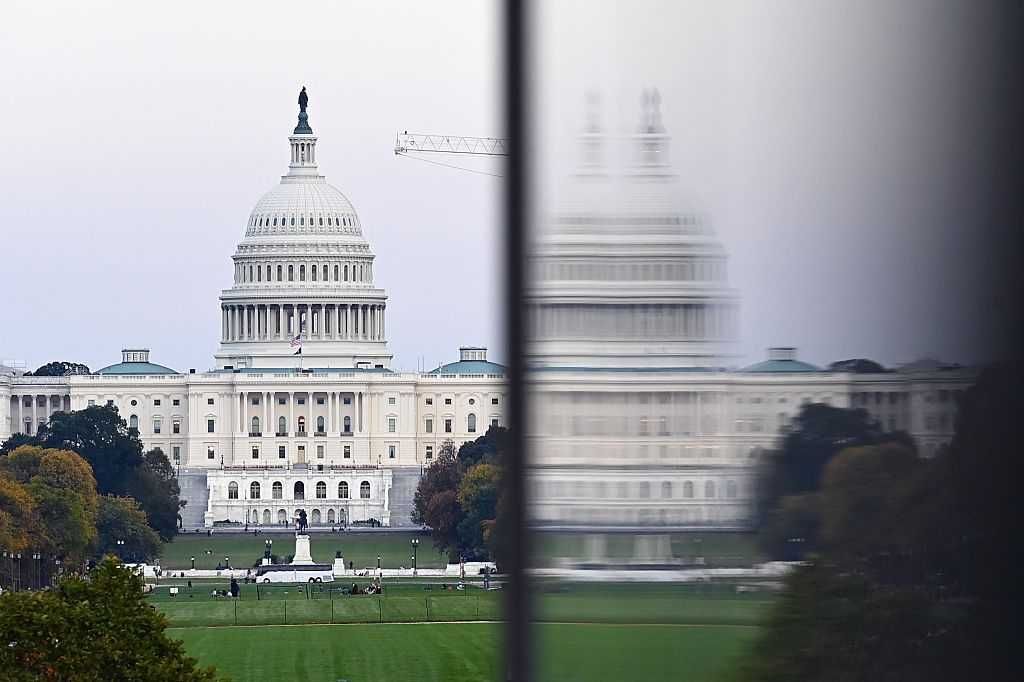
Is principled conservatism dead? And would that even be good?
Robert P. George’s resignation from the board of the Heritage Foundation last week suggests a deeper shift inside the conservative world. George is one of the most respected conservative intellectuals alive — a Princeton professor who built the James Madison Program and shaped a generation of natural-law scholarship. His departure, prompted by how Heritage President Kevin Roberts handled Tucker Carlson’s interview with Nick Fuentes, exposes a widening fracture on the right about what conservatism is and what it should defend.
The first lesson conservatives should recover: Reason and faith are not optional in the public square.
I have watched this tension escalate since what some have called Charlie Kirk’s “martyrdom.” Voices from what garden-variety conservatives call “the far right,” what liberals lump together as “the right,” and what Antifa brands “fascist” are pushing for influence inside the movement. Some insist these agitators are leftist plants sent to fracture the right. Others believe God allows the intentions of every heart to be revealed.
Whatever the explanation, the attacks now directed at George follow a predictable pattern: an “OK, Boomer” dismissal of a man who has spent his life defending the unborn, natural marriage, and the created order.
Full disclosure: When I was a graduate student studying natural law at Arizona State University, George took time to meet with me and guide my work. Later as a tenured professor, I became a fellow in the very program he founded. One of my own undergraduate professors — the great ethicist Jeffrie Murphy — said George’s work compelled him to rethink everything.
So-called far-right critics now claim George will debate and even co-author books with Cornel West, with his ties to Louis Farrakhan, but refuses to work with people “to his right.” The charge — absurd on its face — is that he is some kind of “controlled dissenter,” a token conservative tolerated by the Ivy League so long as he stays within its boundaries. From there, the speculation drifts into unfounded theories about motives and self-preservation.
George does not need me to defend him. His life’s work refutes these claims. He has never backed away from his convictions. He has never trimmed the truth to curry favor with elite institutions. He debates West because he believes reason still matters, because he believes truth can be argued in public, and because he believes even fierce disagreement does not require abandoning basic human dignity. He refuses to compromise an inch while treating his interlocutors as human beings.
That shouldn’t be so difficult to understand.
In fact, that’s the first lesson conservatives should recover: Reason and faith are not optional in the public square. They are the foundation for honest argument, and honest argument is the only way a free people can persuade and be persuaded. If we descend into conspiracy theorizing, rage, or tribal loyalty as our primary modes of engagement, we abandon the very tools that made conservatism coherent.
Here is George’s warning: Don’t become postmodernists. Don’t imitate the left’s racial essentialism or identity politics. Don’t throw out reason because some Enlightenment thinkers misused it. If you want to rethink every narrative you’ve heard, fine — do it with reason, not with the power-dialectic that dominates progressive thought.
But principles alone are not enough. Being principled does not mean being naïve. Conservatives once understood strategy and tactics — long-term goals paired with immediate steps that move us toward them. I believe the United States should acknowledge the kingship of Jesus Christ. Presidents from both parties once referred to America as a Christian nation. If that is true, then we must engage publicly, argue publicly, and fight publicly for that idea of ordered liberty.
That means getting into the trenches. It means refuting Marxism and atheism clearly and without apology. It means being innocent as doves and wise as serpents, fighting to win without surrendering either virtue.
RELATED: Tucker Carlson, Nick Fuentes, and the war for the conservative soul
 Photo by Zach D Roberts/NurPhoto via Getty Images
What we cannot become is principled losers. The enemy welcomes our gentlemanly retreats. The progressive movement wants more than policy wins; it wants to redefine the human person, the family, and the moral order itself. A party that endorses abortion at any point, supports the mutilation of healthy children, and treats scripture as hate speech leaves no moral ambiguity about which side a Christian or natural-law conservative should support.
Read George’s arguments against liberalism. Read his defense of natural law. If you disagree with him, he will debate you — he always has. But you can learn from him that a revival of natural law and natural theology is essential right now. That requires teaching the truths in Romans 1 and learning from Acts how to speak across cultures and ideologies.
We are in a spiritual war. The weapons are spiritual, but the fight is real. The stakes are real. The consequences are real.
It is far better to be fighting through the mud of Mordor than fat, complacent, and conquered in the Shire.
Nick Fuentes: American Leftist
Call it the unintentional self-outing of an American far-Left winger. That would be the realization of Nick Fuentes, the self-professed…
The Spectator P.M. Ep. 167: Are Women to Blame for Mamdani’s Win?
Exit polls from this week’s midterm elections in Virginia, New York City, and New Jersey revealed that young women helped…
What Nick Fuentes Gets Wrong About Women
It’s generally true in politics that coalitions win elections. Unfortunately, it’s also true that those coalitions are rarely united by…
The thoroughly unimpressive Mr. Fuentes

Tucker Carlson’s interview with Nick Fuentes was supposed to be explosive. It wasn’t.
Far from normalizing Fuentes or advancing his strange brand of “right-wing” politics, the two-hour conversation exposed him as a shallow, aggrieved figure without the intellect or maturity to lead anything. Carlson didn’t destroy Fuentes with debate. He did something worse: He made him boring.
Fuentes built his notoriety as a young “influencer” who mixes nationalism with online provocation. He’s outspokenly racist, anti-Semitic, and obsessed with pushing the limits of shock. And he’s managed to attract a following among disaffected young men — the “Groypers.”
Fuentes’ interview marks his peak — and his decline. Once the outrage fades, he’ll return to obscurity.
In recent years, Fuentes has tried to rebrand himself as something somewhat more serious. He talks about immigration breaking working families, foreign wars enriching elites, and a culture that mocks masculinity. Those themes resonate because they tap real frustrations that many Americans share.
But Fuentes offers no coherent moral or political vision. Others — better read, more disciplined, and far less toxic — make similar arguments with insight and integrity. The late Charlie Kirk, for example, famously wanted nothing to do with Fuentes and his followers for precisely that reason.
The grudge-filled path
Carlson’s interview focused less on ideas than on Fuentes’ grievances. He recounted his early days as a libertarian campaigning for Ted Cruz in 2015, his shift to Trumpism, and his viral rise after a debate with a leftist opponent. Soon he was clashing with prominent conservatives, especially the Daily Wire’s Ben Shapiro.
According to Fuentes, Shapiro and his allies sabotaged his career and drove him into exile on the “dark web.” At no point does Fuentes wonder whether Shapiro recognized instability and immaturity in him — or simply concluded that he wasn’t worth the investment.
Like many in his Gen Z cohort, Fuentes mistakes online engagement for substance. Without outrage, he has nothing. He’s poorly educated, reads little, and shrugs off legitimate criticism. The result is a young man trapped in perpetual adolescence, angry that the world won’t take him seriously.
Carlson’s indulgence
Carlson tries to humanize Fuentes, appealing to Christian charity and the value of learning from failure. But Fuentes clings to his score-settling. His list of enemies includes not just Shapiro but Charlie Kirk, Joe Kent, Rep. Marjorie Taylor Greene (R-Ga.) — and even Carlson himself, though he gets a temporary reprieve for offering the platform.
Carlson also attempts to rationalize Fuentes’ anti-Semitism, giving him space to “clarify.” Fuentes insists he doesn’t hate Jews personally — he just opposes Judaism as a “force against Western civilization.” He repeats conspiracy theories about Jewish control of institutions and denies the Holocaust.
Carlson pushes back, but only mildly. Both men protest that they “don’t hate Jews” and have Jewish friends, as if that were exculpatory. It isn’t. The exchange casts neither in a good light.
Empty provocateurs
The rest of the interview dissolves into incoherence. Fuentes casually praises Joseph Stalin, of all people, before the conversation fizzles. Carlson’s attempt to recast Fuentes as a misunderstood outsider backfires. The result is a portrait of a man whose only real claim to relevance is being disliked — and even that feels undeserved.
Carlson’s indulgence of fringe figures is becoming a pattern. Andrew Tate. Darryl Cooper. Now Fuentes. Each enjoys a sizeable online following built on provocation and grievance. And each, when pressed, collapses into self-pity and incoherence. These men are charlatans and grifters who don’t challenge the establishment; they merely rehearse falsehoods and conspiracy theories to raise their profiles among mostly lonely, disaffected young men.
RELATED: Tucker Carlson, Nick Fuentes, and the war for the conservative soul
 Photo by NurPhoto via Getty Images
The decline of two brands
Fuentes’ interview marks his peak — and his decline. Once the outrage fades, he’ll return to obscurity, remembered mostly as a cautionary tale about what happens when empty charisma meets unearned confidence.
Carlson, meanwhile, risks following him down that path. His willingness to platform attention-seekers may boost short-term clicks, but it erodes long-term credibility. Each indulgence costs him a little more trust.
The tragedy isn’t just Fuentes’ wasted potential. It’s the spectacle of one of the right’s most talented communicators lending his megaphone to a man who long ago proved himself unworthy of it.
What it really means to be a conservative in America today
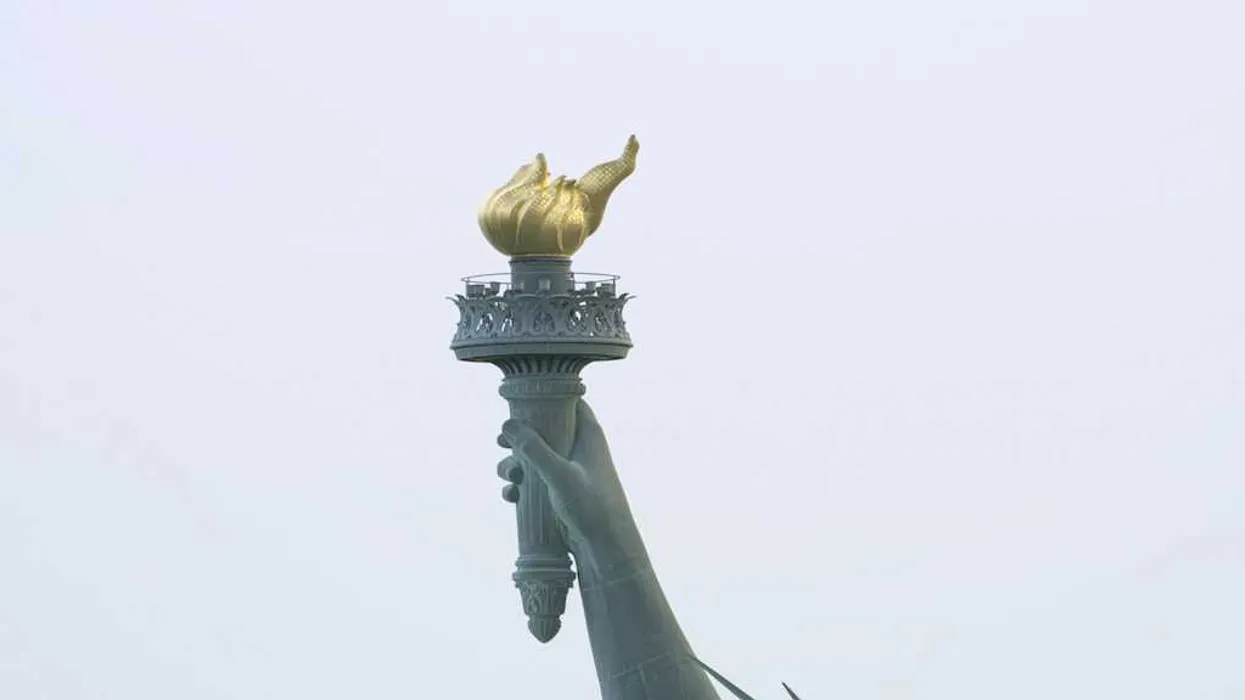
Our movement is at a crossroads, and the question before us is simple: What does it mean to be a conservative in America today?
For years, we have been told what we are against — against the left, against wokeism, against decline. But opposition alone does not define a movement, and it certainly does not define a moral vision.
We are not here to cling to the past or wallow in grievance. We are not the movement of rage. We are the movement of reason and hope.
The media, as usual, are eager to supply their own answer. The New York Times recently suggested that Nick Fuentes represents the “future” of conservatism. That’s nonsense — a distortion of both truth and tradition. Fuentes and those like him do not represent American conservatism. They represent its counterfeit.
Real conservatism is not rage. It is reverence. It does not treat the past as a museum, but as a teacher. America’s founders asked us to preserve their principles and improve upon their practice. That means understanding what we are conserving — a living covenant, not a relic.
Conservatism as stewardship
In 2025, conservatism means stewardship — of a nation, a culture, and a moral inheritance too precious to abandon. To conserve is not to freeze history. It is to stand guard over what is essential. We are custodians of an experiment in liberty that rests on the belief that rights come not from kings or Congress, but from the Creator.
That belief built this country. It will be what saves it. The Constitution is a covenant between generations. Conservatism is the duty to keep that covenant alive — to preserve what works, correct what fails, and pass on both wisdom and freedom to those who come next.
Economics, culture, and morality are inseparable. Debt is not only fiscal; it is moral. Spending what belongs to the unborn is theft. Dependence is not compassion; it is weakness parading as virtue. A society that trades responsibility for comfort teaches citizens how to live as slaves.
Freedom without virtue is not freedom; it is chaos. A culture that mocks faith cannot defend liberty, and a nation that rejects truth cannot sustain justice. Conservatism must again become the moral compass of a disoriented people, reminding America that liberty survives only when anchored to virtue.
Rebuilding what is broken
We cannot define ourselves by what we oppose. We must build families, communities, and institutions that endure. Government is broken because education is broken, and education is broken because we abandoned the formation of the mind and the soul. The work ahead is competence, not cynicism.
Conservatives should embrace innovation and technology while rejecting the chaos of Silicon Valley. Progress must not come at the expense of principle. Technology must strengthen people, not replace them. Artificial intelligence should remain a servant, never a master. The true strength of a nation is not measured by data or bureaucracy, but by the quiet webs of family, faith, and service that hold communities together. When Washington falters — and it will — those neighborhoods must stand.
RELATED: Evil never announces itself — it seduces the hearts of the blind
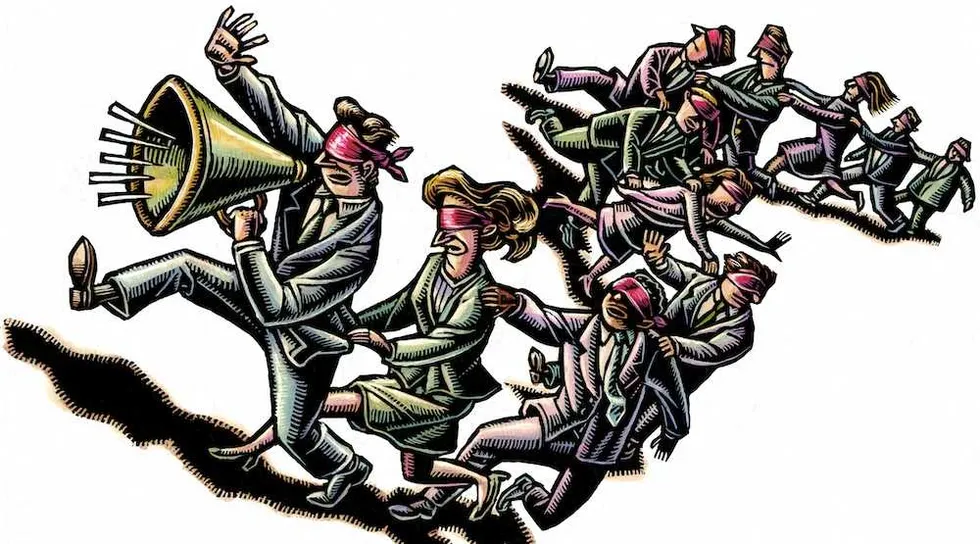 Lisa Haney via iStock/Getty Images
This is the real work of conservatism: to conserve what is good and true and to reform what has decayed. It is not about slogans; it is about stewardship — the patient labor of building a civilization that remembers what it stands for.
A creed for the rising generation
We are not here to cling to the past or wallow in grievance. We are not the movement of rage. We are the movement of reason and hope.
For the rising generation, conservatism cannot be nostalgia. It must be more than a memory of 9/11 or admiration for a Reagan era they never lived through. Many young Americans did not experience those moments — and they should not have to in order to grasp the lessons they taught and the truths they embodied. The next chapter is not about preserving relics but renewing purpose. It must speak to conviction, not cynicism; to moral clarity, not despair.
Young people are searching for meaning in a culture that mocks truth and empties life of purpose. Conservatism should be the moral compass that reminds them freedom is responsibility and that faith, family, and moral courage remain the surest rebellions against hopelessness.
To be a conservative in 2025 is to defend the enduring principles of American liberty while stewarding the culture, the economy, and the spirit of a free people. It is to stand for truth when truth is unfashionable and to guard moral order when the world celebrates chaos.
We are not merely holding the torch. We are relighting it.
The Right’s Nick Fuentes Problem — and Tucker Carlson’s Role in Mainstreaming It
If you think the title of Ben Shapiro’s latest podcast episode lacks subtlety (“Tucker Carlson Sabotages America“), wait until you…





