

Category: Oil
Venezuelan Oil May Not Come Easy
Despite all the congratulations and fanfare, the capturing of Maduro and wife may not have produced the effect many have…
CRUDE AWAKENING: Canada’s pipeline paralysis fumbles American oil market
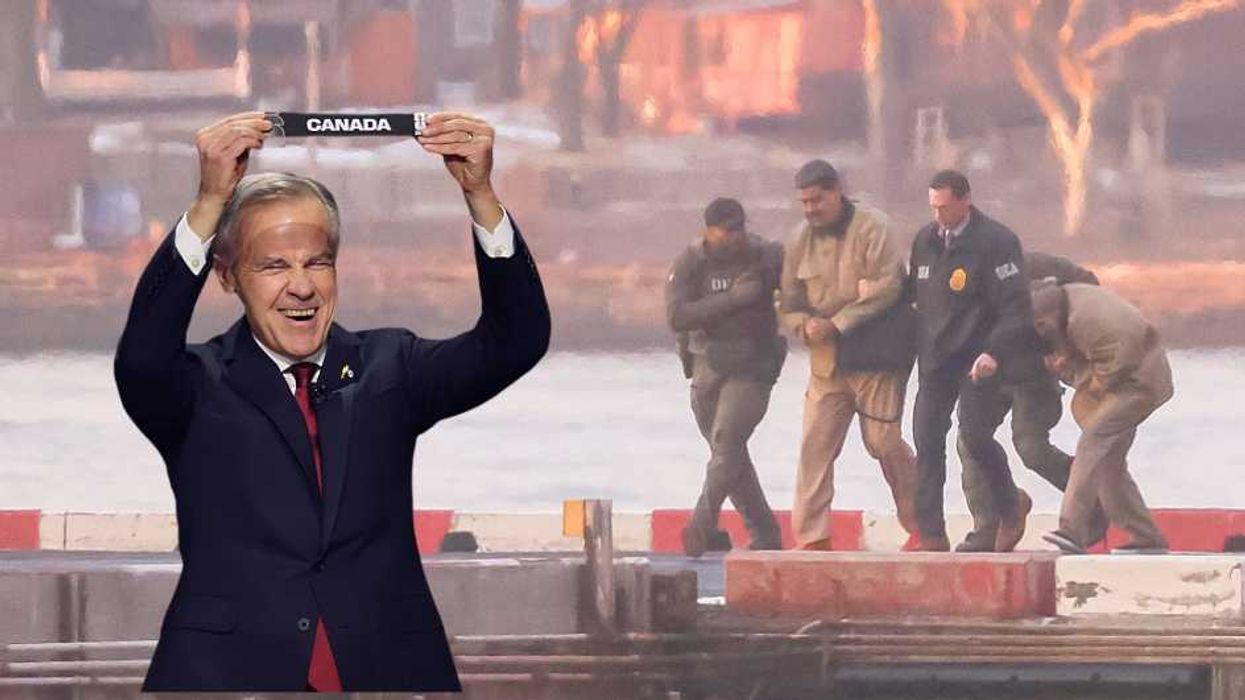
Canada has exactly the kind of oil the United States needs. But when it comes to investing in the infrastructure to move it, America’s ally to the north is beginning to look as risky — and as politically hostile — as Venezuela.
That, Dan McTeague of Canadians for Affordable Energy tells Align, reflects a perverse governing philosophy towards the country’s energy abundance: “keep it in the ground.”
Carney can talk about buying China’s ‘windmills and solar panels,’ or he can ask whether China wants to buy oil — ‘because we got a pipeline.’
Canada’s self-inflicted pipeline paralysis is eroding its position in the U.S. market just as alternatives like Venezuelan oil come back online.
Oil, oil everywhere
Nowhere is that risk clearer than in Alberta, home to the vast majority of Canada’s oil production, where years of stalled pipeline projects have left the country’s most valuable energy asset effectively landlocked.
Canadian oil is the same kind Venezuela produces: heavy crude, high in sulfur, and ideal for making diesel fuel. Most U.S. refineries are designed specifically to process this type of petroleum, which is essential not just for transportation, but for agriculture, mining, manufacturing, and national defense.
Alberta has long sought to build a pipeline to the West Coast, primarily to secure reliable, long-term access to the U.S. market — while also giving Canada leverage to reach other buyers if American demand weakens or politics intervenes.
That project remains stalled, despite Liberal Prime Minister Mark Carney — who has spent much of his career championing green energy and opposing pipelines — recently signing a memorandum of understanding with Alberta that is supposed to clear the way for construction. Alberta Premier Danielle Smith is now demanding that pipeline construction begin by fall 2026.
Carbon crunch
In practice, the MOU changes little. It grants no approvals, streamlines no federal reviews, resolves no indigenous or legal challenges, and commits no public capital. By tying any future pipeline to rising carbon tax and decarbonization requirements, it arguably worsens the investment case — leaving no private sponsor willing to move first.
While the United States remains Canada’s natural customer, a West Coast outlet still matters. It gives producers pricing power, optionality, and insurance against sudden policy shifts in Washington — precisely the kind now emerging as Venezuela re-enters the picture.
The question is who would build such a pipeline — and whether it could be completed before the United States turns to cheaper Venezuelan oil to fill the gap.
Venezuela of the north?
President Donald Trump has floated asking oil companies for $100 billion to build infrastructure in Venezuela capable of moving oil north. Exxon’s CEO rejected the idea, calling Venezuela “uninvestable” because of its history of asset seizures and nationalization. Trump, however, could choose to push the project forward with public funds.
McTeague — himself a former Liberal member of Parliament — says Canada has made itself similarly unattractive to investors. He argues that policy choices — not geology — are the problem.
Canada, he says, is “blessed with abundance of resources,” but has embraced a governing narrative that tells producers to “keep it in the ground.” He adds that few countries would treat their most important economic output that way.
That mindset, McTeague argues, has frightened off private capital and left Ottawa with little choice but to build a pipeline itself. It also raises the stakes of Carney’s upcoming trip to China — not as a pivot away from the U.S., but as leverage.
Tilting at windmills
When Carney arrives in Beijing, McTeague says, he faces a choice. He can talk about decarbonization and buying China’s “windmills and solar panels,” or he can ask whether China wants to buy oil — “because we got a pipeline.”
The point, McTeague stresses, is not that China should replace the United States as Canada’s primary customer, but that Canada needs credible alternatives if it wants to be taken seriously by either.
McTeague also criticizes the MOU’s requirement that the industrial carbon tax rise sharply in coming years, arguing that it “defies economics and the realities of the marketplace.” In his view, decarbonization mandates are irrelevant to investors deciding whether a pipeline is worth building.
Time, he warns, is running out. Federal debt continues to grow, and Canada’s fiscal credibility is beginning to erode. Without pipelines, he says, the country risks running out of economic runway.
RELATED: The truth behind Trump’s Venezuela plan: It’s not about Maduro at all
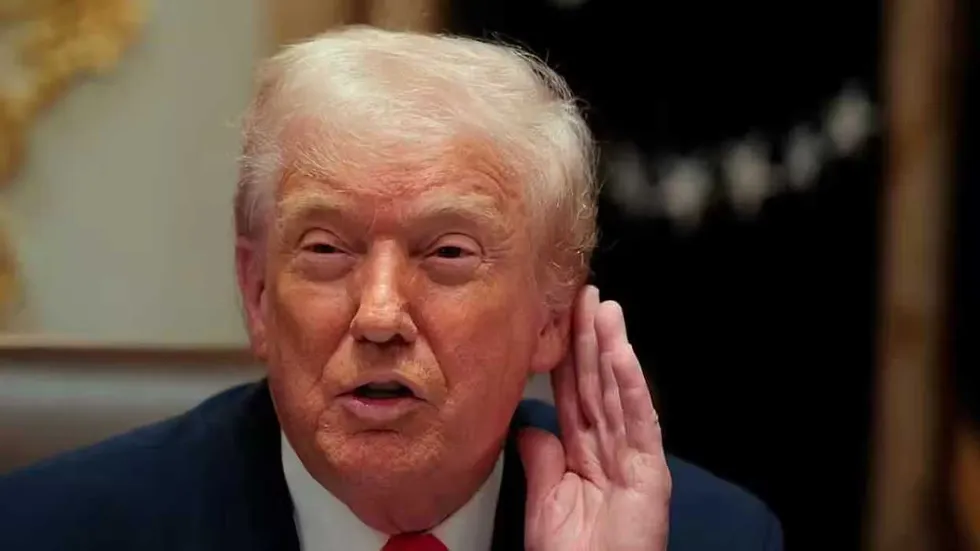 Chip Somodevilla/Getty Images
Over a barrel
McTeague also disputes the claim that the United States is energy-independent. While America produces roughly 12 to 13 million barrels of oil per day, it consumes about 21 million — leaving it dependent on imports.
Canada’s value, he argues, lies not just in volume, but in the type of oil it produces. U.S. shale oil is well suited for gasoline, but not for diesel, which he calls the global workhorse of modern economies — critical to transportation, agriculture, industry, and defense.
That is precisely the fuel Venezuela is now offering, potentially at a lower cost than Canadian oil burdened by carbon taxes and regulatory constraints.
Canada now finds itself between a rock and a hard place: Venezuelan oil threatening to undercut U.S. demand for Alberta crude, plus the political and logistical reality of building a major pipeline through British Columbia — on a timetable that is rapidly running out.
In energy terms, Canada is doing the unthinkable: choosing to be bypassed.
Venezuela was the stage. China was the target.
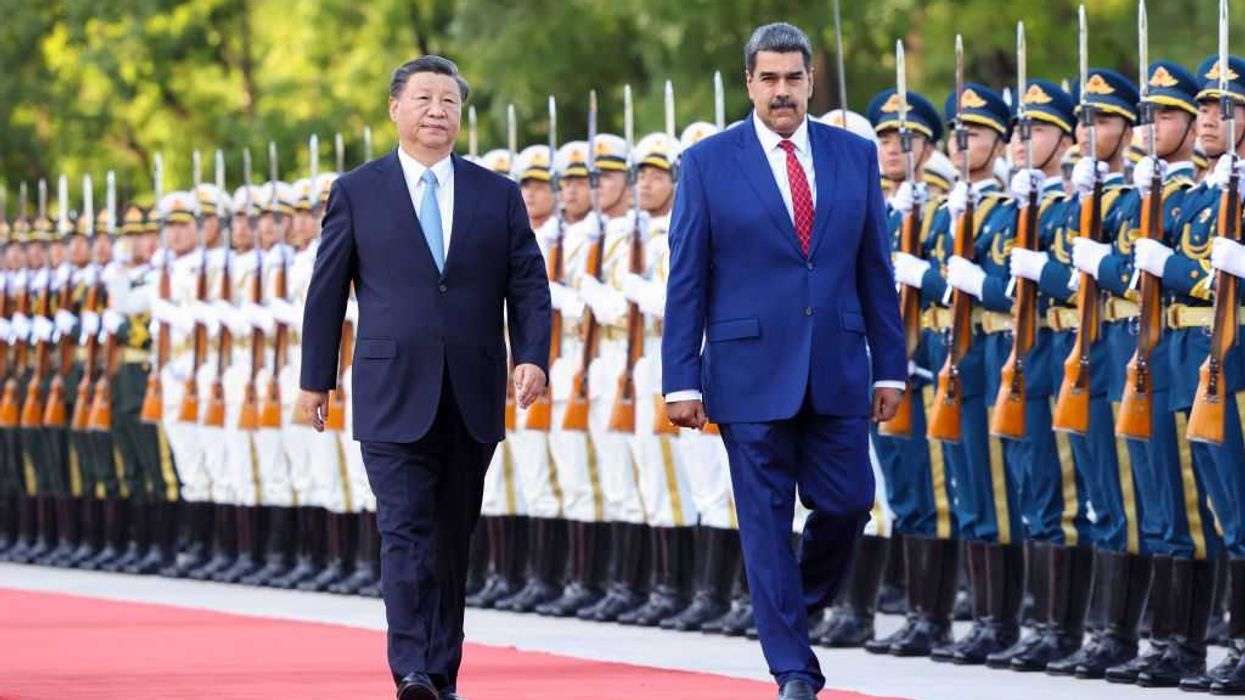
Last weekend’s Caribbean live-fire exercise in and around the suburbs of Caracas delivered a steady stream of tactical messages to the Western Hemisphere. We don’t like narco-terrorists, wannabe communists, bloated dictators, or people who supply oil to our adversaries.
But that wasn’t the real message.
Message to Xi: There’s a new sheriff in town. He isn’t ‘Sleepy Joe.’ And his call sign is FAFO.
The love note was addressed to China, and it read: We are awake now. Our game is FAFO.
America’s 36-year slumber on the Monroe Doctrine — “Stay out of the Western Hemisphere or else” — began after Panama in 1990. The Gulf War and the Global War on Terrorism followed, and Washington became dangerously myopic about threats in America’s own backyard.
Then came the turning point. When Bill Clinton signed off on communist China’s entry into the World Trade Organization in 2000, Beijing rapidly surged into a world-class economic power. Along with that rise came a succession of Chinese leaders who openly advanced the idea of global Chinese hegemony.
Oddly enough, many of those ideas came from an American — my late friend Alvin Toffler.
Toffler’s book “The Third Wave” so impressed Deng Xiaoping and Zhao Ziyang in 1984 that millions of bootleg Chinese translations were distributed — without royalties — throughout the People’s Liberation Army. The same thing happened after Toffler published “War and Anti-War.” Once again, millions of pirated copies circulated, and Beijing began integrating his ideas into military doctrine.
In the late 1990s, PLA Major General Qiao Liang and Colonel Wang Xiangsui wrote “Unrestricted Warfare,” borrowing heavily from Toffler while laying out a strategy to defeat the United States.
In hindsight, it should have been titled “Slow Motion War.”
The book focuses on perceived weaknesses in American character and American war-making. The United States remains a nation of quarterly earnings reports and election cycles. We change political leadership every two or four years. The Chinese think in generational time frames.
From their perspective, Americans only go to war when facing a “clear and present danger.”
The genius of “Unrestricted Warfare” lies in exploiting what happens when a threat is clear but not present — like cancer from long-term smoking — or present but not clear, like the slow poisons Lucrezia Borgia allegedly used on her enemies.
Qiao and Wang proposed a slow, steady pressure campaign against the four pillars of American national power: diplomatic, information, military, and economic — the DIME.
Examples abound. Diplomatic and economic leverage through the Belt and Road Initiative. Tight control of information inside China paired with aggressive information warfare abroad through platforms such as TikTok. A decades-long military buildup aimed at surpassing U.S. power. And a long trail of currency manipulation.
(And then there’s this gem from page 191 of “Unrestricted Warfare”: “Can special funds be set up to exert greater influence on another country’s government and legislature through lobbying?” Eric Swalwell might find that line interesting.)
RELATED: From Monroe to ‘Donroe’: America enforces its back yard again
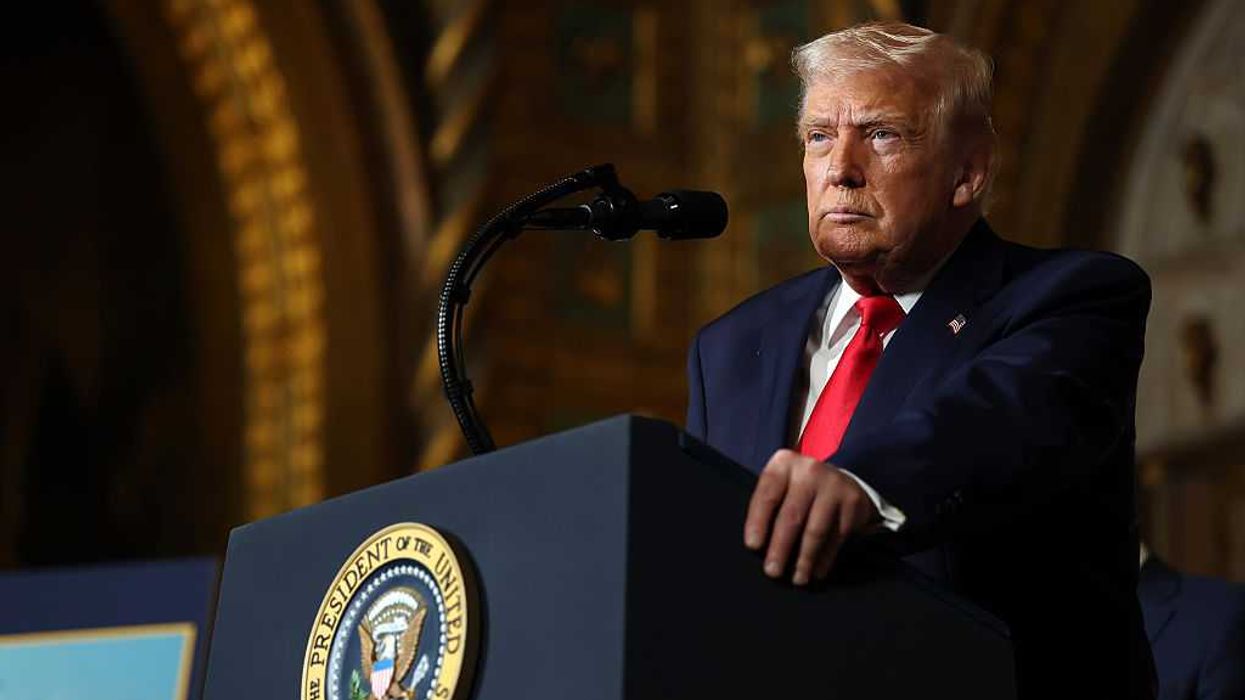 Photo by Tasos Katopodis/Getty Images
While America fixated on the Middle East, China quietly embedded itself throughout Latin America. In Panama, Beijing gained control of port management at both ends of the Panama Canal and began upgrading the system. In Costa Rica — which has no army — China donated 3,500 police cars and built a national stadium in San José, free of charge. It also cut sweetheart deals involving hundreds of Chinese fishing trawlers. Colombia saw similar treatment.
Then came Orange Man Bad.
Donald Trump is the first president to grasp that China isn’t a Red Godzilla stomping cities with napalm breath and a scything tail. China is more like the Blob — and Trump is Steve McQueen.
Venezuela, Maduro, oil, and narco-terrorism were all subsets.
China was the target. Xi Jinping was the bullseye.
Zero hour wasn’t set by the weather. It was set by the departure of Chinese envoy Qiu Xiaoqi, who had just wrapped up discussions on future ties with Venezuela. Unfortunately for Beijing, Delta Force snagged and bagged Nicolás Maduro and his wife and had them sitting in a Brooklyn jail before the envoy even made it home.
Message to Xi: There’s a new sheriff in town. He isn’t “Sleepy Joe.” And his call sign is FAFO.
Any questions?
Trump Says Venezuela Turning Over Huge Stockpile Of Oil To US
‘used to benefit the people of Venezuela and the United States’
Trump Floats Reimbursing Oil Companies If They Put Up Big Bucks In Venezuela
‘A tremendous amount of money’
Maduro Captured, Hemisphere Jolted
The United States of America has successfully carried out a large scale strike against Venezuela and its leader, President Nicolas…
Potemkin Power: Why Russia Is the Real Loser in the New Geopolitics
There is no International rules-based order. It is only a comforting phantasm of peripheral nations. The real law of the…





