

Category: The American Spectator
The Sports I Tried While Trying to Lose Weight
I’ve put on a little weight this Christmas. National Geographic called to offer me a job: starring in a documentary…
The White Supremacists Have Taken Over!
Right now, the United States is crawling with more than 86 million white supremacists! That’s according to Cea Weaver, New…
The Schmittian Moment: On Friends, Enemies, and the Future of the Republic
Fluellen. If the enemy is an ass and a fool and a prating coxcomb, is it meet, think you, that…
Washington’s Fraud Factory
For decades, I led state health and human services agencies and dealt directly with federal bureaucracies that write the rules…
Antitrust panic helped kill an American robotics pioneer
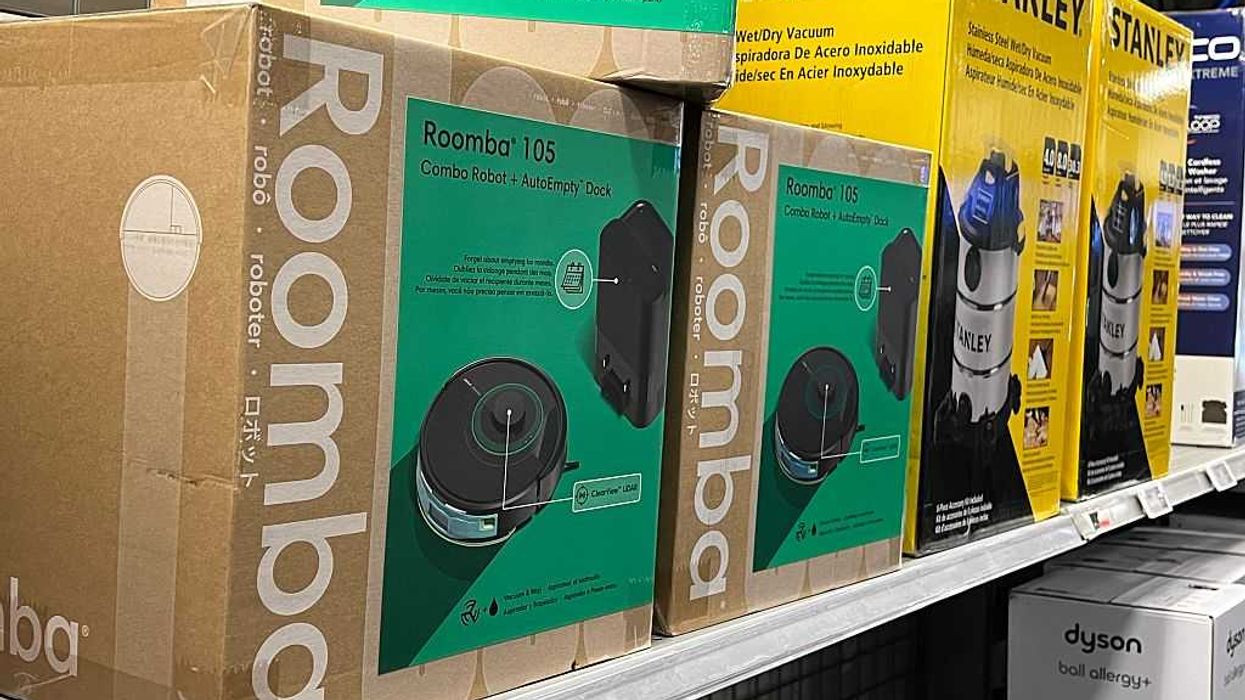
Antitrust regulators claim to protect competition. Their decision to block Amazon’s acquisition of iRobot did the opposite. It helped drive an American robotics pioneer into bankruptcy last December and pushed it into the arms of a Chinese creditor.
Antitrust law is supposed to defend consumers and prevent monopoly abuse. In this case, regulators killed a deal that could have kept iRobot alive, preserved American jobs, and strengthened a U.S. company facing brutal Chinese competition. Instead, the collapse of the acquisition forced iRobot into a court-supervised restructuring in which Shenzhen Picea Robotics — its largest Chinese creditor and key supplier — will take the company’s equity and cancel roughly $264 million in debt.
Ultimately, the acquisition’s collapse pushed iRobot into a deal with its largest Chinese creditor.
iRobot began in 1990, founded by roboticists from the Massachusetts Institute of Technology. The company built military and space exploration products before it introduced the Roomba in 2002, the device that turned home robotics into a household category. For years, iRobot stood as a rare American success story in consumer robotics.
Then the market shifted. Chinese manufacturers poured in with cheaper models, tighter supply chains, and rapid iteration. iRobot’s share price peaked in 2021, then slid hard over the next year. The company sought a lifeline and found one in Amazon, which agreed to acquire iRobot for roughly $1.7 billion.
That deal made strategic sense. iRobot needed capital, scale, and distribution power to compete against Chinese rivals such as Roborock, Ecovacs, Dreame, and Xiaomi. Amazon could have provided all three. Consumers likely would have seen faster innovation, deeper device integration, and lower prices, while iRobot kept more of its footprint and engineering talent intact.
Regulators saw a different story. The European Commission objected on antitrust grounds and signaled it would block the acquisition. The commission argued the deal could restrict competition in robot vacuum cleaners by allowing Amazon to disadvantage rival products on its marketplace. American critics piled on, including Sen. Elizabeth Warren (D-Mass.), who framed the acquisition as an attempt to buy out competition, along with privacy fears about Roomba’s mapping technology.
Facing regulatory opposition, Amazon and iRobot terminated the agreement in January 2024. Amazon’s general counsel, David Zapolsky, warned that the decision would deny consumers faster innovation and more competitive prices, while leaving iRobot weaker against foreign rivals operating under very different regulatory constraints.
The warnings proved accurate. After the deal collapsed, iRobot announced deep cost-cutting, including a 31% workforce reduction. The company shifted more production to Vietnam to compete on cost. Chinese brands continued to eat the market.
By December 2025, iRobot filed for Chapter 11 bankruptcy protection and announced a restructuring deal that hands control to Shenzhen Picea Robotics. According to iRobot’s own announcement, Picea will acquire the equity of the reorganized company through the court process and cancel about $264 million in debt.
RELATED: Why Trump must block Netflix’s Warner Bros. takeover
 Photo by Mandel NGAN/AFP via Getty Images
That outcome should haunt every regulator who claimed to defend competition. Regulators blocked an American acquisition and ended up delivering a storied American company to a Chinese creditor. They did not preserve a competitor. They helped bury it.
The iRobot collapse exposes a central problem with modern antitrust enforcement: Officials often substitute fear-driven hypotheticals for real-world consequences. They imagine a future in which Amazon squeezes competitors and consumers pay more. They ignore the present in which Chinese firms gain market power, American companies lose ground, and U.S. workers pay the price.
Markets discipline failure quickly. Regulators rarely pay for their mistakes. They can block a deal, watch a company fall apart, and declare victory because they prevented a theoretical harm.
This case produced the opposite of the intended result. Regulators killed a merger that could have strengthened an American company against Chinese competition. They weakened competition in the robot vacuum market by removing one of the few U.S.-based pioneers from the field. They also shrank the number of meaningful paths forward for iRobot until only one remained: a takeover by the company’s Chinese lender and supplier.
Policymakers should learn the right lesson. Antitrust action should not operate as a reflex against size or success. Regulators should measure outcomes, not slogans. If officials claim they protect competition, they should not celebrate decisions that end in bankruptcy and foreign control.
Antitrust panic helped kill an American robotics pioneer
Antitrust regulators claim to protect competition. Their decision to block Amazon’s acquisition of iRobot did the opposite. It helped drive an American robotics pioneer into bankruptcy last December and pushed it into the arms of a Chinese creditor.
Antitrust law is supposed to defend consumers and prevent monopoly abuse. In this case, regulators killed a deal that could have kept iRobot alive, preserved American jobs, and strengthened a U.S. company facing brutal Chinese competition. Instead, the collapse of the acquisition forced iRobot into a court-supervised restructuring in which Shenzhen Picea Robotics — its largest Chinese creditor and key supplier — will take the company’s equity and cancel roughly $264 million in debt.
Ultimately, the acquisition’s collapse pushed iRobot into a deal with its largest Chinese creditor.
iRobot began in 1990, founded by roboticists from the Massachusetts Institute of Technology. The company built military and space exploration products before it introduced the Roomba in 2002, the device that turned home robotics into a household category. For years, iRobot stood as a rare American success story in consumer robotics.
Then the market shifted. Chinese manufacturers poured in with cheaper models, tighter supply chains, and rapid iteration. iRobot’s share price peaked in 2021, then slid hard over the next year. The company sought a lifeline and found one in Amazon, which agreed to acquire iRobot for roughly $1.7 billion.
That deal made strategic sense. iRobot needed capital, scale, and distribution power to compete against Chinese rivals such as Roborock, Ecovacs, Dreame, and Xiaomi. Amazon could have provided all three. Consumers likely would have seen faster innovation, deeper device integration, and lower prices, while iRobot kept more of its footprint and engineering talent intact.
Regulators saw a different story. The European Commission objected on antitrust grounds and signaled it would block the acquisition. The commission argued the deal could restrict competition in robot vacuum cleaners by allowing Amazon to disadvantage rival products on its marketplace. American critics piled on, including Sen. Elizabeth Warren (D-Mass.), who framed the acquisition as an attempt to buy out competition, along with privacy fears about Roomba’s mapping technology.
Facing regulatory opposition, Amazon and iRobot terminated the agreement in January 2024. Amazon’s general counsel, David Zapolsky, warned that the decision would deny consumers faster innovation and more competitive prices, while leaving iRobot weaker against foreign rivals operating under very different regulatory constraints.
The warnings proved accurate. After the deal collapsed, iRobot announced deep cost-cutting, including a 31% workforce reduction. The company shifted more production to Vietnam to compete on cost. Chinese brands continued to eat the market.
By December 2025, iRobot filed for Chapter 11 bankruptcy protection and announced a restructuring deal that hands control to Shenzhen Picea Robotics. According to iRobot’s own announcement, Picea will acquire the equity of the reorganized company through the court process and cancel about $264 million in debt.
RELATED: Why Trump must block Netflix’s Warner Bros. takeover
Photo by Mandel NGAN/AFP via Getty Images
That outcome should haunt every regulator who claimed to defend competition. Regulators blocked an American acquisition and ended up delivering a storied American company to a Chinese creditor. They did not preserve a competitor. They helped bury it.
The iRobot collapse exposes a central problem with modern antitrust enforcement: Officials often substitute fear-driven hypotheticals for real-world consequences. They imagine a future in which Amazon squeezes competitors and consumers pay more. They ignore the present in which Chinese firms gain market power, American companies lose ground, and U.S. workers pay the price.
Markets discipline failure quickly. Regulators rarely pay for their mistakes. They can block a deal, watch a company fall apart, and declare victory because they prevented a theoretical harm.
This case produced the opposite of the intended result. Regulators killed a merger that could have strengthened an American company against Chinese competition. They weakened competition in the robot vacuum market by removing one of the few U.S.-based pioneers from the field. They also shrank the number of meaningful paths forward for iRobot until only one remained: a takeover by the company’s Chinese lender and supplier.
Policymakers should learn the right lesson. Antitrust action should not operate as a reflex against size or success. Regulators should measure outcomes, not slogans. If officials claim they protect competition, they should not celebrate decisions that end in bankruptcy and foreign control.
Kamala Harris buys $8.15M seaside mansion after fearmongering about rising sea levels
Former Vice President Kamala Harris spent years fearmongering about so-called climate change. Her recent seaside acquisition suggests she may not have been as serious about the supposed threat as she previously let on.
During her first failed presidential campaign where she proposed the U.S. blow $10 trillion on tackling the professed problem, Harris wrote, “Our oceans are warming. Sea levels are rising. Pollution is threatening our air and water. Droughts are hurting our crops. Fires are burning our forests. Extreme weather is destroying our communities. We are poisoning the planet.”
‘To live in a coastal community is to live on the front lines of the climate crisis.’
Harris previously pushed legislation that would annually award $50 million in grants to various entities for the purposes of “carrying out climate-resilient living shoreline projects” and, in her words, “mitigat[ing] against sea level rise.”
When announcing in 2023 that the Biden-Harris administration was recommending $562 million in funding to make communities and the economy more resilient to the alleged climate change, Harris told a crowd at the University of Miami, “To live in a coastal community is to live on the front lines of the climate crisis.”
The Washington Free Beacon highlighted that the Biden-Harris administration also pushed a study the same year that claimed that “24%-75% of California’s beaches may become completely eroded” due to sea-level rises.
Despite Harris’ participation in the rising-sea hysteria that proved fellow Democrat Al Gore a poor prognosticator, she has reportedly purchased an $8.15 million oceanside mansion in Malibu, California.
RELATED: Al Gore wrong again: Study delivers good news for Arctic ice trends, bad news for climate hucksters
 Photo by Roxanne McCann/Getty Images.
A Zillow listing for the 4,000 square foot, four-bedroom home indicates that the property has a pool, a hot tub, a sauna, a cold plunge, a professional gym, a landscaped water feature, a “private putting and chipping green with a bunker,” a guest house, and “breathtaking ocean, island, and city views.”
The property, which sold on Dec. 2, is located in Point Dume, an affluent neighborhood with private, gated beaches. According to the New York Post, the community is populated by Hollywood and Silicon Valley elites.
Harris, who is reportedly contemplating a third White House bid, did not respond to Blaze News’ request for comment.
Fortunately for Harris and contrary to her past claims about rising sea levels, a study published last year in the Journal of Marine Science and Engineering indicated that the average sea level rise in 2020 was roughly 0.059 inches a year, which works out to about 6 inches per century.
One of the paper’s co-authors told the Post in September, “This is significantly lower than the 3 to 4 mm/year often reported by climate scientists in scientific literature and the media.”
Such a rate might explain why Al Gore’s 2006 prediction of a 20-foot rise in the global sea level “in the near future” has yet to manifest.
Like Blaze News? Bypass the censors, sign up for our newsletters, and get stories like this direct to your inbox. Sign up here!





