Category: The American Spectator

The Spectacle Ep. 315: Is Iran on the Brink of Collapse?
The Iranian regime is crumbling from within, with varying death tolls reported, some into the thousands, hinting at an eventual…
Mamdani Appoints Woman Named ‘Afua Atta-Mensah’ As Chief Equity Officer
‘dedicated her career to serving the New Yorkers’
Greenlander Opposes America Taking Over His Island Because He Hunts ‘Cute’ Whales, Seals
‘they think whales and seals are cute’
Americans aren’t arguing any more — we’re speaking different languages
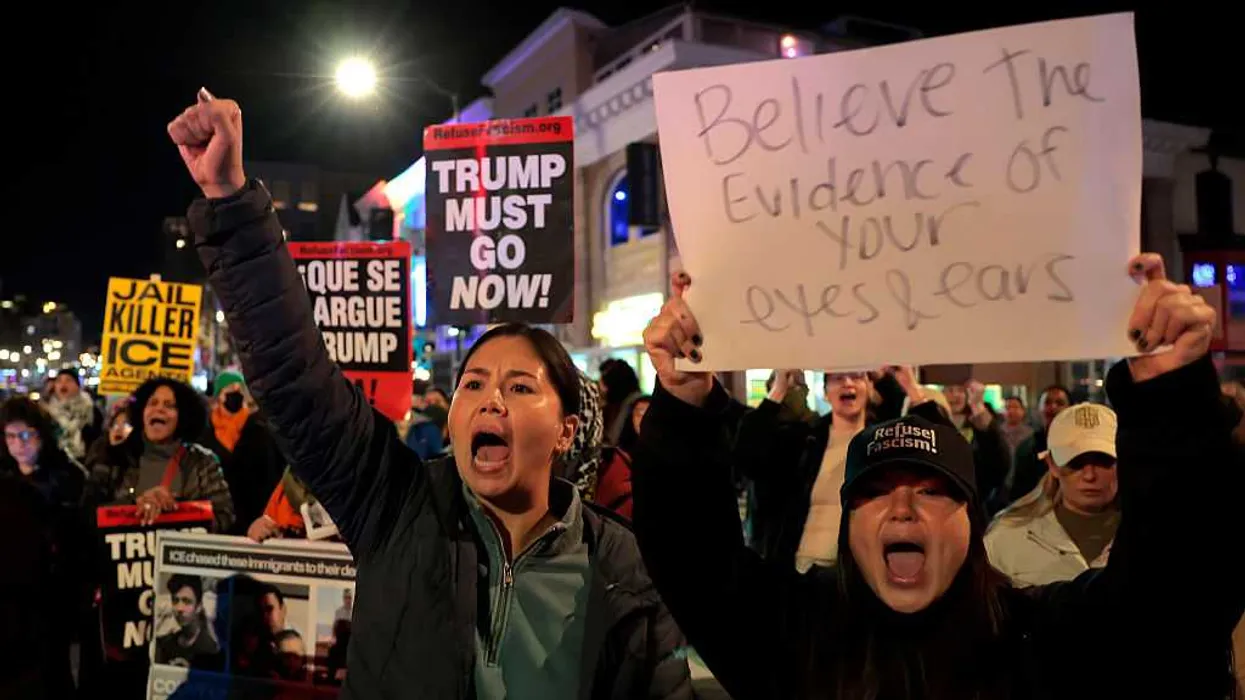
A few days ago, I found myself in a text exchange about two women killed by agents of the state.
One was Renée Nicole Good, a 37-year-old activist mother shot last week by an ICE agent in Minneapolis. The other was Ashli Babbitt, a 36-year-old U.S. Air Force veteran shot by a Capitol Police lieutenant inside the Speaker’s Lobby on January 6, 2021.
Are words being used to think — or to show whose side someone is on?
I asked what I thought was a simple moral question: Does the state ever have the moral right to kill an unarmed person who poses no immediate lethal threat?
I did not try to provoke. I did not claim the cases were the same. I said plainly that the facts, motives, and political contexts differed. My own answer was no. The purpose was not to merge the stories, but to test whether the same moral rule applied in both cases.
I was asking my friend to reason with me.
The response was not an argument. It came as a rush of narrative detail, moral verdicts, and firm insistence that the question itself was illegitimate. “Not comparable.” “Straw man.” The stories did not clarify the rule. They aimed to shut down the conversation.
But what struck me most was not the emotion. It was the disconnect.
I asked about a principle. I received a story. I tested a rule. I got a verdict. We used the same words — justice, murder, authority — but those words did very different work.
The exchange failed not because of tone or ideology. It failed because we spoke different civic languages. More troubling, we no longer agree on what civic language is for.
More than a failure of civility
For years, we have blamed polarization and tribalism. We shout past one another. We retreat into bubbles. All of that is true. But the deeper problem runs deeper than disagreement.
We no longer share a civic vocabulary shaped by common expectations about clarity, restraint, and universality.
We still speak words that are recognizably English. But we use the same words to reach very different ends.
One civic language treats words as tools for reasoning. Call it “principled” or “rule-based.” Questions test limits and consistency. Moral claims aim at rules that apply beyond one case. Disagreement is normal. When someone asks, “What rule applies here?” the question is not an attack. It is the point.
This language shapes law, constitutional argument, philosophy, and journalism at its best. Words like “justified” or “legitimate” refer to standards that others can test and challenge. If a claim fails under scrutiny, it loses force.
The other civic language works differently. Call it “narrative” or “moral-emergency” language. Here, words signal alignment more than reasoning. Stories carry moral weight on their own. Urgency overrides abstraction. Questions feel like invalidation. Consistency tests sound like hostility.
RELATED: The day the media taught me it’s always wrong to be right
 treety via iStock/Getty Images
In this mode, terms drift. “Murder” no longer means unlawful killing. It means moral outrage. “Straw man” stops meaning logical distortion and starts meaning emotional offense. “Not comparable” does not mean analytically distinct. It means do not apply your framework here.
Neither language is dishonest. That is the danger. Each serves a different purpose. The breakdown comes when speakers assume they are having the same kind of conversation.
The principled speaker hears evasion: “You didn’t answer my question.” The moral-emergency speaker hears bad faith: “You don’t care.”
Both walk away convinced the other is unreasonable.
Moral certainty over moral reasoning
Social media did not create this divide, but it rewards one language and punishes the other. Platforms favor speed over reflection, story over rule, accusation over inquiry. Moral certainty spreads faster than moral reasoning. Over time, abstraction starts to feel cruel and questions feel aggressive.
That is why so many political arguments stall at the same point. Facts do not resolve them because facts are not the dispute. The real question is whether rule-testing is even allowed. Once someone frames an issue as a moral emergency, universality itself looks suspect.
A simple test helps. Is this person using words to reason toward a general rule, or to signal moral alignment in a crisis?
Put more simply: Are words being used to think — or to show whose side someone is on?
RELATED: I don’t need your civil war
 Photo by Tom Williams/CQ-Roll Call Inc. via Getty Images
Once you see this, many conversations make sense. You understand why certain questions trigger anger. You see why consistency tests go unanswered. You recognize when dialogue cannot move forward, no matter how careful you sound.
This does not mean outrage is always wrong. It does not mean people should stop caring. It does mean we need better civic literacy about how language works. Sometimes restraint is a virtue. Walking away is not cowardice. Declining to argue is not surrender.
What cannot work is trying to make a principled argument within a moral-emergency frame.
America’s founders understood this. They designed institutions to slow decisions, force deliberation, and channel arguments into forms governed by rules rather than passion.
If we fail to see that we now speak different civic languages, we will lose the ability to talk calmly about the ideas and ideals that should bind us together. The alternative is full adoption of moral-emergency language — where persuasion gives way to force.
Too many Americans have already chosen that path.
When institutions close ranks, history intervenes

I live in Madison County, Montana. Long before cable panels debated corruption and accountability, this place learned a hard lesson about what happens when government goes bad.
In the 1860s, Bannack served as the territorial capital of Montana. Henry Plummer was its elected sheriff. He wore the badge, swore the oath … and built the gallows.
Healthy institutions correct themselves. Unhealthy ones protect themselves. Madison County learned that lesson the hard way. Minnesota is confronting it now.
And according to many who lived here at the time, he also ran the crime.
Plummer and his deputies were accused of leading a gang of road agents who robbed and murdered travelers hauling gold through these mountains. Stagecoaches were ambushed. Men vanished. Fear became routine. Complaints led nowhere. The law appeared to be shielding the very violence it existed to stop.
So the citizens acted.
In 1864, a vigilance committee arrested Plummer and two of his deputies. No formal trial followed. No appeals. The man who built the gallows was hanged on them.
Historians still debate Plummer’s guilt. They do not debate why the vigilantes emerged. People believed government had become part of the threat rather than the safeguard. When authority no longer restrained crime, citizens concluded that authority itself required restraint.
That story unsettles. It should. But it is real, and it matters now.
The distance between frontier Montana and modern Minnesota is not as wide as we might like to think.
Minnesota is now reckoning with one of the largest public-assistance fraud scandals in American history. Billions of taxpayer dollars intended to feed children and support vulnerable families were siphoned through nonprofits that faced minimal oversight and little urgency to address obvious red flags.
Warnings surfaced early. Audits flagged problems. But the payments continued anyway.
It was a prolonged, systemic failure, not a single clever con.
RELATED: Trump has the chance to end the welfare free-for-all Minnesota exposed
 Photo by Mandel NGAN / AFP via Getty Images
As the scope became clearer, more voices spoke up. Questions multiplied. The alarms grew louder. Yet the machinery kept moving. Oversight failed to halt the flow of money in real time. Accountability arrived only after exposure, not before.
For many watching, the most disturbing fact was not that warnings existed but that raising them changed nothing.
Imagine a medical provider entrusted with managing a patient’s pain. The patient is vulnerable, dependent, unable to advocate fully. Now imagine discovering that the provider has been siphoning the medication, not to heal, but to feed a personal addiction.
The first problem is theft.
The deeper problem is betrayal.
The most dangerous problem involves everyone who noticed and did nothing.
That provider violates something fundamental. So does a government that tolerates corruption while presenting itself as a caretaker.
This summer, America turns 250. There will be speeches, reenactments, and familiar lines from the Declaration of Independence. We will hear again about equality, liberty, and the pursuit of happiness. Those words deserve their place.
But Americans have developed a habit of quoting the Declaration selectively.
“All men are created equal” fits neatly on a bumper sticker. The context Thomas Jefferson supplied fits less comfortably. He warned about power, corruption, and the responsibility citizens bear when government betrays its charge.
The founders did not merely announce ideals. They warned about consequences.
They wrote that governments exist to secure rights and that “whenever any Form of Government becomes destructive of these ends, it is the Right of the People to alter or to abolish it.” That sentence is often cited. The one that follows rarely is: “Prudence, indeed, will dictate that Governments long established should not be changed for light and transient causes.”
These were not men eager for upheaval. They understood that stability is precious and easily lost.
But they continued, warning that when “a long train of abuses and usurpations” reveals a consistent design toward despotism, resistance becomes not merely permissible but necessary.
The prophet Jeremiah put the problem bluntly: “The heart is deceitful above all things, and desperately sick; who can understand it?” (Jeremiah 17:9).
RELATED: ‘Shameful revisionist history’: America250 faces scrutiny after posting ‘progressive propaganda’
 Photo by Heather Diehl/Getty Images
That realism about human nature runs through both scripture and the Declaration. The framers carried it forward into the Constitution. They assumed power would be abused. They assumed ambition would seek advantage. They assumed virtue would require reinforcement.
So they divided authority, erected checks and balances, and made corruption harder rather than trusting leaders to be better.
Vigilance was the price of liberty. When a people become absorbed in the pursuit of happiness and neglect the pursuit of accountability, history intervenes.
In this Montana county, the story of Sheriff Plummer serves as a reminder of what happens when authority receives blind trust and accountability arrives too late.
The lesson does not praise vigilantism. Vigilantism signals collapse, not health. When citizens feel forced outside lawful systems, failure has already occurred upstream.
Unchecked corruption creates pressure that does not dissipate on its own. Healthy institutions correct themselves. Unhealthy ones protect themselves.
Madison County learned that lesson the hard way. Minnesota is confronting it now. America itself may be closer than we care to admit.
Every summer, tourists pass through this county on their way to Yellowstone National Park. In Virginia City, students retell the story of Sheriff Plummer, often dressed in Old West attire, offering visitors a taste of frontier drama.
The story feels safely distant. A relic of a rougher age.
But news from Minnesota sounds less like reporting and more like repetition.
A century from now, what story will students tell about Minnesota?
Then, as now, theft was dismissed. Warnings were minimized. Institutions protected themselves rather than correcting themselves. Trust eroded quietly before it collapsed publicly.
Corruption ignored does not remain contained. Betrayal tolerated becomes precedent. Institutions that refuse correction eventually lose consent.
History shows what follows. When authority protects itself instead of the public, legitimacy erodes quietly, then collapses suddenly. By the time citizens reach for drastic remedies, lawful ones have already failed.
Madison County learned that lesson in blood and with rope. Minnesota is learning it through audits and indictments. The difference is only the stage of decay.
History does not repeat itself as theater forever. When its warnings go unheeded, it returns as judgment.
‘THE KILLING HAS STOPPED’: Trump Cautiously Optimistic, Updates Press After Receiving Iran Info [WATCH]
![‘THE KILLING HAS STOPPED’: Trump Cautiously Optimistic, Updates Press After Receiving Iran Info [WATCH]](https://hannity.com/wp-content/uploads/2025/12/GettyImages-2249624788-300x200.jpg "President Trump Meets With His Cabinet At The White House")
Some good news out of the Middle East?
ARCTIC POWER PLAY: Trump Says NATO Becomes ‘More Formidable’ With Greenland in the Hands of the U.S.

President Donald Trump argued Wednesday morning that Greenland is “vital” to his plans to build a “Golden Dome” of defense to protect the United States, as he ramps up his push for the U.
Judicial Watch Statement on Supreme Court Victory Affirming Broad Candidate Standing to Bring Election Court Challenges
(Washington, DC) – Judicial Watch President Tom Fitton responded today to the Supreme Court of the United States 7-2 decision in favor of granting standing in a historic case filed on behalf of Congressman Mike Bost and two presidential electors, who were before the court to vindicate their standing in court to an Illinois law allowing […]
The post Judicial Watch Statement on Supreme Court Victory Affirming Broad Candidate Standing to Bring Election Court Challenges appeared first on Judicial Watch.

The Spectacle Ep. 314: Oregon Finally Throws 800,000 Inactive Voters in the Trash
Judicial Watch is cracking down on election fraud by suing states for having dirty voter rolls. One of the states…