Category: The American Spectator
Infamous CIA officer turned Soviet spy dies in prison

After more than 30 years since pleading guilty to espionage that reportedly compromised several United States assets during the Cold War, an infamous Central Intelligence Agency officer has died in prison.
Aldrich Ames died on Monday, according to the Bureau of Prisons website.
Ames claimed he needed the money simply to pay debts and relieve ‘financial troubles, immediate and continuing.’
Ames was held in the Federal Correctional Institution in Cumberland, Maryland, where he was serving a life sentence without parole.
Ames, a career CIA agent, was arrested in 1994 on espionage charges years after he began cooperating with KGB agents in 1985. The information he provided to the Soviets is thought to have directly contributed to the compromising of several CIA and FBI sources, some of whom were executed after their discovery.
RELATED: Unveiling ‘Big Intel’: How the CIA and FBI became deep state villains
 Photo by Jeffrey Markowitz/Sygma via Getty Images
Over nearly a decade, Moscow paid him $2.5 million in exchange for betraying state secrets to the Soviets during and after the Cold War. Ames claimed he needed the money simply to pay debts and relieve “financial troubles, immediate and continuing.”
“Well, the reasons that I did what I did in April of 1985 were personal, banal, and amounted really to kind of greed and folly. As simple as that,” Ames said in an interview archived by the National Security Archive at George Washington University, according to Fox News.
“I knew quite well, when I gave the names of our agents in the Soviet Union, that I was exposing them to the full machinery of counterespionage and the law, and then prosecution, and capital punishment, certainly, in the case of KGB and GRU officers who would be tried in a military court, and certainly others, that they were almost all at least potentially liable to capital punishment,” he added. “There’s simply no question about this.”
Ames’ wife, Rosario, was sentenced to 63 months in prison on charges of assisting his espionage.
Ames was 84 years old at the time of his death.
Like Blaze News? Bypass the censors, sign up for our newsletters, and get stories like this direct to your inbox. Sign up here!
Rubio reportedly reveals Trump’s plan to acquire Greenland to bolster US defense
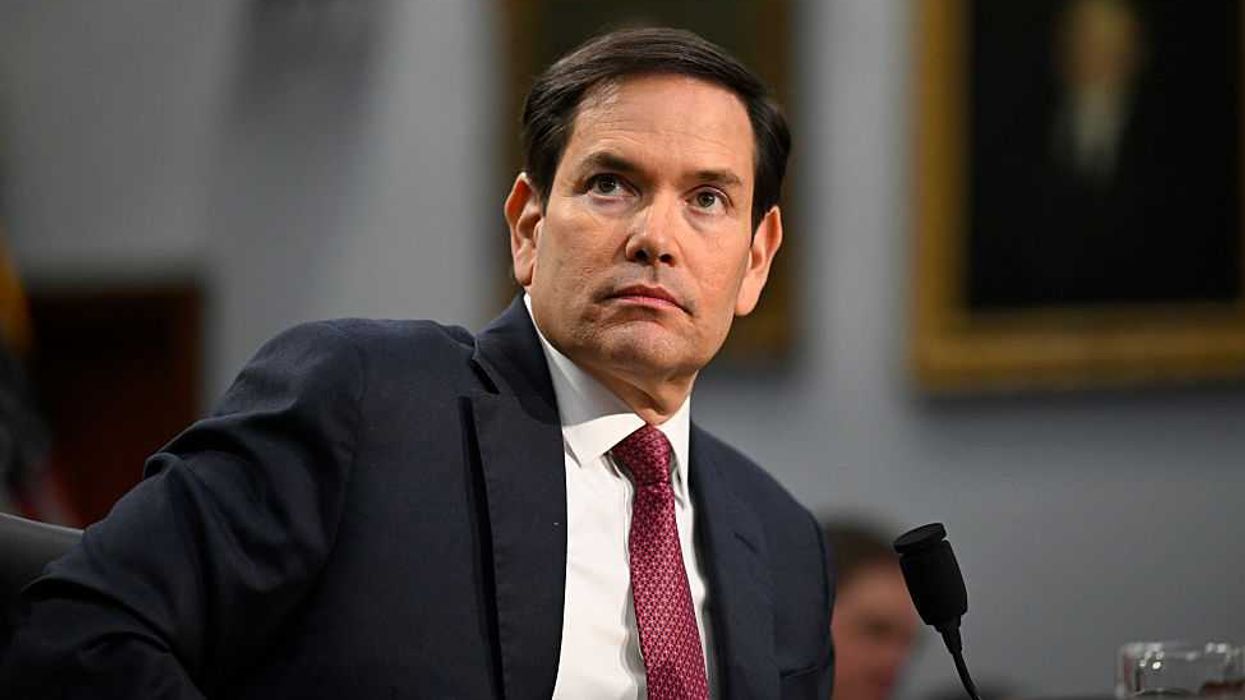
Secretary of State Marco Rubio reportedly told lawmakers that the Trump administration has aspirations to purchase Greenland from Denmark, tempering rumors that officials are considering forcibly seizing the island.
‘The United States is eager to build lasting commercial relationships that benefit Americans and the people of Greenland.’
During a closed briefing on Monday, Rubio and other administration officials briefed lawmakers about the operation to capture Venezuelan dictator Nicolás Maduro and the plans for the country’s future, the Wall Street Journal reported.
Citing individuals said to be familiar with the recent briefing, the WSJ stated that Rubio “played down the idea that the U.S. could seize Greenland by force.” The report claimed that administration officials refused to rule out the possibility of an invasion.
However, the outlet noted that U.S. and European officials have reported no indications that the Trump administration is preparing for a military invasion of the self-governing Danish territory.
President Donald Trump told reporters on Sunday, “We need Greenland from the standpoint of national security, and the European Union needs us to have it — and they know that.”
RELATED: ‘Very sick too’: Trump sets sights on more countries after successful Venezuela operation
 Photo by Leon Neal/Getty Images
“President Trump has made it well known that acquiring Greenland is a national security priority of the United States, and it’s vital to deter our adversaries in the Arctic region,” White House press secretary Karoline Leavitt stated. “The president and his team are discussing a range of options to pursue this important foreign policy goal, and of course, utilizing the U.S. military is always an option at the commander in chief’s disposal.”
Trump expressed interest in purchasing Greenland during his first term. He has insisted that controlling the island is essential for protecting the Arctic from Russia and China.
RELATED: JD Vance visits Greenland to make the case for annexation: ‘We can’t just bury our head in the sand’
 Photo by Leon Neal/Getty Images
“The United States is eager to build lasting commercial relationships that benefit Americans and the people of Greenland,” a State Department spokesperson told Blaze News. “Our common adversaries have been increasingly active in the Arctic. That is a concern that the United States, the Kingdom of Denmark, and NATO Allies share.”
The spokesperson added that Trump is committed to the United States’ relationship with Greenland, underscored by his decision to designate Louisiana Governor Jeff Landry (R) as special envoy.
Like Blaze News? Bypass the censors, sign up for our newsletters, and get stories like this direct to your inbox. Sign up here!
‘Shameful revisionist history’: America250 faces scrutiny after posting ‘progressive propaganda’
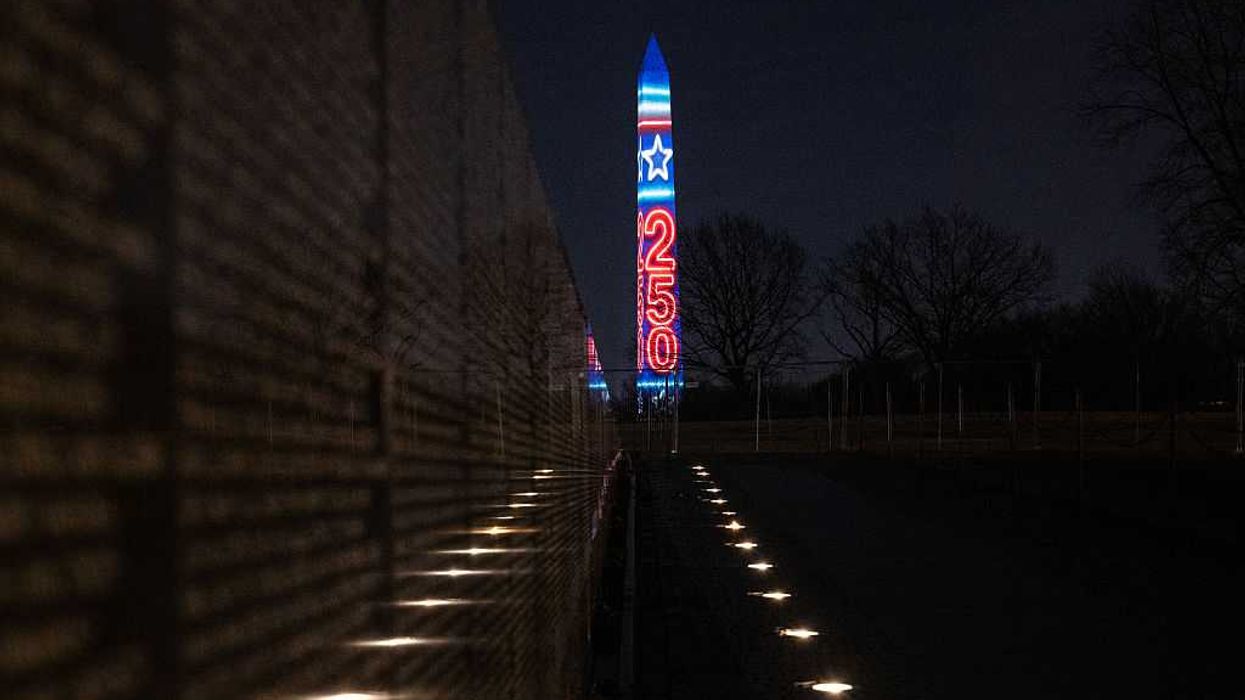
As America celebrates its 250th year, the very organization planning the celebration has now been accused of spreading “progressive propaganda.”
On Tuesday, America250 made a post praising former President Franklin D. Roosevelt and his novel list of “freedoms.”
‘Celebrating the socialist campaign positions of FDR as fundamental to American history was not what I expected when I hit the follow button.’
In a graphic, the post says, “On this day in 1941, President Franklin D. Roosevelt outlined four universal freedoms people the world over ought to enjoy.”
“Spoken during a moment of uncertainty, the Four Freedoms helped define what America stood for — and continues to stand for,” the post reads.
While the list starts with freedoms generally familiar to all Americans, specifically freedom of speech and freedom of worship, FDR also added a couple of novelties: “freedom from want” and “freedom from fear.”
RELATED: Soros-tied No Kings protesters plot to sabotage US Army’s 250th anniversary parade
 Tom Williams/CQ-Roll Call Inc. via Getty Images
The Federalist’s Brianna Lyman called out what she called America250’s “progressive propaganda”: “‘Freedom from Want’ is not a constitutional freedom nor a natural right. It was invented by FDR and his socialist cohort to justify welfare expansion and redefine rights as government grants — flying directly in the face of what America *actually* stands for.”
“Making up a right like ‘Freedom from Want’ — and then pretending like this is a core American value, is shameful revisionist history from America250,” Lyman added.
At the end of the series of graphics, the America250 post says, “President Roosevelt spoke them. Norman Rockwell painted them. We will strive to live them.”
The Tennessee Star’s Tom Pappert commented, “Celebrating the socialist campaign positions of FDR as fundamental to American history was not what I expected when I hit the follow button.”
According to the America250 website, the “nonpartisan” U.S. Semiquincentennial Commission was established by Congress in 2016 to celebrate the 250th anniversary of the signing of the Declaration of Independence.
While it is not clear who runs the social media accounts, notable figures on the commission include several members of Trump’s Cabinet, Democrat and Republican congressmen and senators, and 16 private citizens.
The chair of America250, Rosie Rios, was appointed by President Joe Biden and previously served in both the Obama and Biden administrations in some capacity, according to her biography.
Former Presidents George W. Bush and Barack Obama and their spouses are listed as “honorary national co-chairs” of America250.
America250 did not immediately respond to a request for comment from Blaze News.
Like Blaze News? Bypass the censors, sign up for our newsletters, and get stories like this direct to your inbox. Sign up here!
Ford just lost $20 billion on its EV investment
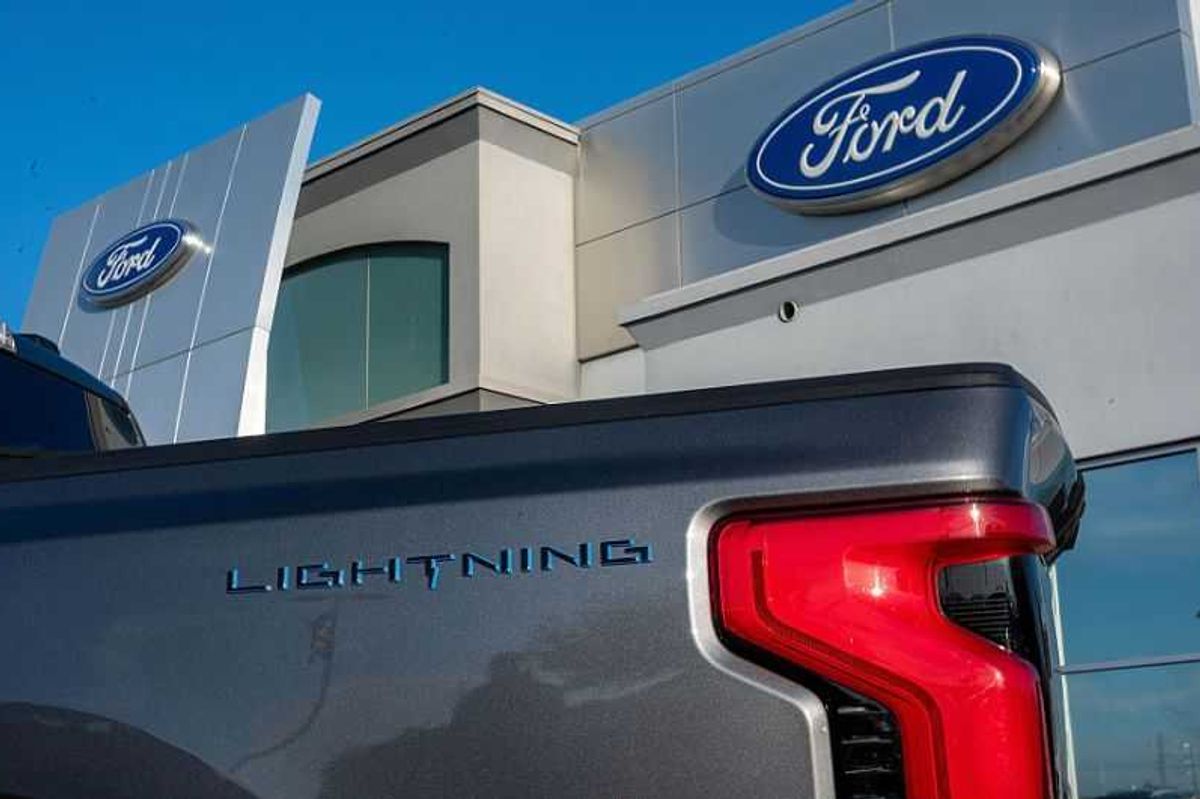
If you want a clear picture of where the American auto market is heading, don’t look at political speeches or glossy concept vehicles. Look at where manufacturers are spending — and writing off — real money.
Case in point: Ford’s $19.5 billion decision to abandon plans for a next-generation all-electric F-150.
Ford’s leadership is now openly saying what many in the industry have been signaling quietly: Customers are not moving in lockstep with regulatory timelines.
The company’s change of direction for its massive BlueOval City complex in Tennessee is one of the clearest signals yet that the industry’s all-electric future, at least as it was sold to consumers and investors, is being fundamentally rethought.
Instead of building a new electric F-150 Lightning there, Ford will pivot the facility toward producing lower-cost gasoline-powered trucks while shifting electric strategy toward hybrids, extended-range electric vehicles, and smaller EVs.
Demand in the driver’s seat
This move matters because Ford did not quietly slow production or delay a model year refresh. It wrote down billions of dollars in electric vehicle assets, restructured long-term plans, and publicly admitted that customer demand — not forecasts or incentives — is now driving decisions.
Ford expects roughly $19.5 billion in special charges tied to this pivot, most of which will hit in the fourth quarter, with an additional $5.5 billion in cash costs spread through 2027. Of that total, $8.5 billion represents EV asset write-downs. That is corporate language for investments that will not deliver the returns originally promised.
Yet Wall Street’s reaction was telling. Ford stock rose about 2% in after-hours trading following the announcement and remains up nearly 40% this year. Investors appear to see this not as failure, but as realism.
Sticker shock
The electric F-150 Lightning was once positioned as proof that electrification could conquer America’s best-selling vehicle segment. In theory, the idea made sense. In practice, the numbers never fully added up. High prices, heavy battery packs, range limitations under real-world towing conditions, and charging concerns narrowed the pool of potential buyers. Demand softened even as incentives increased.
Ford now plans to transition the Lightning into an extended-range electric vehicle, pairing an electric drivetrain with a gasoline-powered generator. This is not a retreat from electrification. It is an acknowledgment that pure battery-electric power trains do not yet meet the needs of a large portion of truck buyers.
Ford CEO Jim Farley framed the shift plainly. High-end EVs priced between $50,000 and $80,000 were not selling in sufficient volume. That reality is difficult to ignore when inventory sits on dealer lots and profit margins evaporate.
Hybrid vigor
At the same time, Ford is going all-in on hybrids, including plug-in hybrids, and reinvesting in its core strengths: trucks, SUVs, and commercial vehicles. This reflects a broader industry trend. Hybrids offer meaningful fuel economy improvements without requiring buyers to overhaul their driving habits or rely on charging infrastructure that remains inconsistent in many parts of the country.
Ford’s revised outlook projects that by 2030, about half of its global volume will come from hybrids, extended-range EVs, and fully electric vehicles combined. That is a significant increase from today, but it is far more balanced than earlier projections that leaned heavily toward full electrification.
Lightning rod
One of the more curious elements of Ford’s announcement is its plan to build a fully connected midsize electric pickup starting in 2027, based on a new low-cost “Universal EV Platform.” The company suggests this truck could start around $30,000, a figure that raises serious questions.
To put that claim into context, Ford’s Maverick Hybrid, which uses a small 1.1 kilowatt-hour battery, already approaches $30,000 in many configurations. A midsize EV pickup would likely require an 80 kilowatt-hour battery or more. Battery costs have declined, but not nearly enough to make that math easy — especially while maintaining margins.
Consumers will ultimately decide whether such a vehicle makes sense. Price, capability, range, and charging convenience will matter far more than marketing language. Automakers are learning, sometimes the hard way, that affordability cannot be willed into existence by press releases.
Batteries included
Ford’s restructuring also includes repurposing battery plants in Kentucky and Michigan for a new stationary energy storage business. This is a strategic move that acknowledges batteries may find more reliable profitability off the road than on it, particularly in data centers and grid stabilization applications where weight, charging time, and cold-weather performance are less critical concerns.
The broader lesson here is not that electric vehicles are disappearing. They are not. It is that the one-size-fits-all electrification narrative has collided with economic and consumer reality. Automakers were pushed, through regulation and incentives, to prioritize battery-electric vehicles at a pace the market could not fully absorb.
When policy environments change, as they recently have, manufacturers regain flexibility. Ford’s leadership is now openly saying what many in the industry have been signaling quietly: Customers are not moving in lockstep with regulatory timelines.
From a business standpoint, Ford is attempting to stabilize profitability. The company raised its adjusted earnings guidance for 2025 to about $7 billion, even as these restructuring charges weigh on net results. It is aiming for a path to profitability in its Model e EV division by 2029, with incremental improvements beginning in 2026.
That is a long runway, and it reflects how difficult it has been to make EVs profitable at scale. Traditional internal combustion and hybrid vehicles continue to subsidize electric losses across the industry. Ford is now being more transparent about that reality.
RELATED: American muscle-car culture is alive and well … in Dubai
 Matt Cardy/Getty Images
Turning radius
This shift also has implications for American manufacturing and jobs. BlueOval City was originally pitched as a cornerstone of the electric future. Its revised mission underscores how quickly industrial strategies can change when assumptions fail. Gasoline and hybrid trucks remain highly profitable, and demand for them remains strong.
Ford insists this is a customer-driven strategy, not a retreat. In many ways, that framing is accurate. Consumers have shown they value choice, reliability, and affordability more than power-train ideology. They want vehicles that fit their lives, not policy targets.
For buyers, this could be good news. A more balanced market tends to produce better products at more reasonable prices. Hybrids, extended-range EVs, and efficient gasoline vehicles all play a role in reducing fuel consumption without forcing trade-offs many drivers are unwilling to accept.
For investors, Ford’s announcement may mark a turning point toward discipline and realism. Writing down nearly $20 billion is painful, but continuing to chase unprofitable volume would be worse.
For the industry, the message is unmistakable. Electrification is evolving, not ending. But it will happen on consumer terms, not political timelines.
Ford’s course correction is not about abandoning the future. It is about surviving the present — and doing so with a clearer understanding of what American drivers are actually willing to buy.
The American car industry would be in a much stronger position today had its CEOs not embarked on the EV joy ride with politicians promising subsidies. Next time maybe the brands will listen to the customer.
From Monroe to ‘Donroe’: America enforces its back yard again
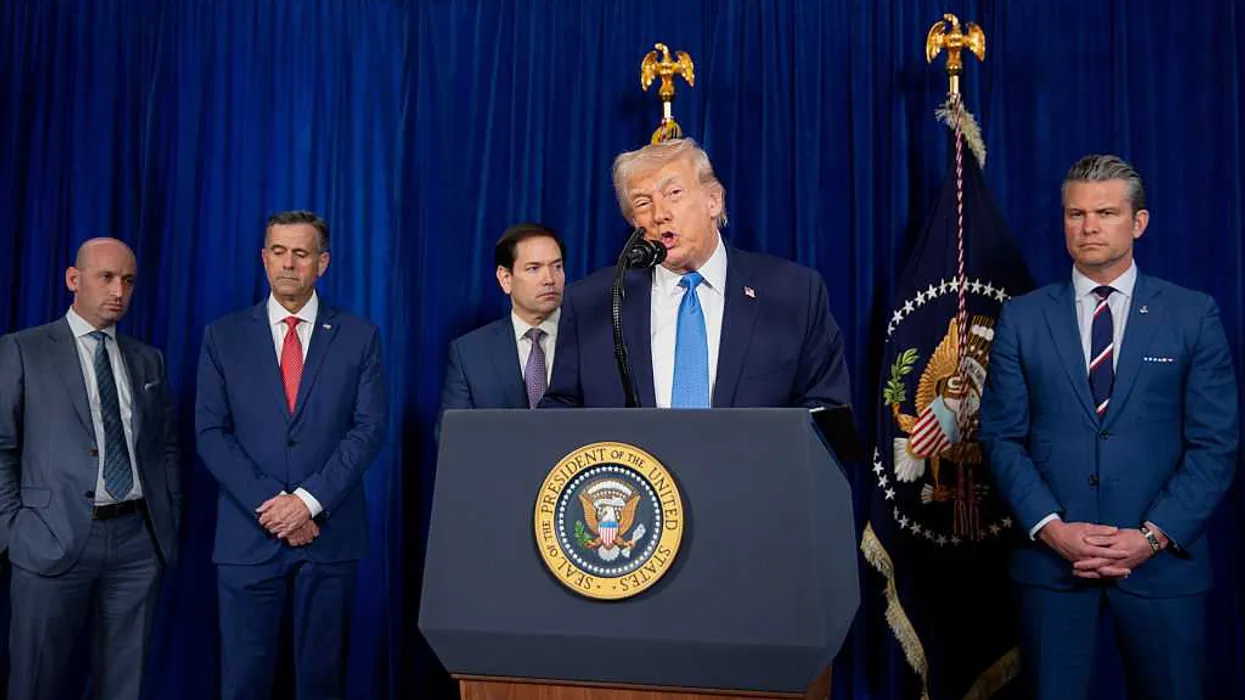
When President Donald Trump stood before reporters Saturday and invoked the Monroe Doctrine, he was not indulging nostalgia. He was announcing enforcement. Then came the line that removed all ambiguity: The Monroe Doctrine, he said, will now be known as the Donroe Doctrine.
The leftist political class recoiled on cue. Mainstream commentators scoffed. Corporate editorial boards feigned alarm. Strip away the theatrics, and the meaning was clear. The United States has decided to resume responsibility for the Western Hemisphere — not in the language of empire, but in the language of order, law, and consequence.
One reality is already clear. The Western Hemisphere no longer serves as an unguarded corridor for corruption, narcotics, and foreign subversion.
The Monroe Doctrine emerged in 1823, when President James Monroe warned European powers that further colonization or political interference in the Americas would not be tolerated. It never meant isolationism. It reflected realism.
Power vacuums invite conquest. Disorder invites domination. The early American republic understood that if Europe continued exporting its political systems into the New World, the hemisphere would remain unstable and unfree. America declared an end to European colonial ambition long before “decolonization” became a fashionable academic slogan.
Over time, enforcement varied in wisdom and restraint. Theodore Roosevelt’s corollary warned that chronic wrongdoing in the Americas could require U.S. intervention. During the Cold War, Washington invoked the doctrine — sometimes clumsily — to block Soviet expansion and nuclear weapons in the hemisphere.
Through each phase, the premise endured: The Western Hemisphere is a distinct political space, and the United States bears a special responsibility to prevent it from becoming a staging ground for criminal regimes and foreign adversaries.
That responsibility eroded in recent decades, replaced by a dangerous fantasy: that cartel-run states can invoke sovereignty to excuse any behavior so long as it occurs within their borders — or moves outward through drug routes and illegal oil networks. Venezuela stands as the clearest casualty of that delusion.
The U.S. Department of Justice indicted Nicolás Maduro on narco-terrorism charges for conspiring with drug cartels to flood the United States with cocaine. This was no symbolic gesture. It marked a recognition that Venezuela under Maduro is not a normal sovereign government, but a criminal enterprise masquerading as one. Enforcement, not rhetoric, gives such indictments meaning. That is what the Donroe Doctrine signals.
Democratic critics objected immediately, even though the indictment originated under the Biden administration. Some argued that because the United States cannot remove every tyrant everywhere, it lacks moral authority to act against any single one. That is moral paralysis disguised as principle. By that logic, no law should ever be enforced because more criminals remain at large. Police would stop making arrests. Courts would close. Justice would dissolve into excuses.
Others insisted Venezuela’s sovereignty places it beyond American reach. Sovereignty does not magically convert criminal conduct into legitimacy. A regime that finances itself through narcotics trafficking, collaborates with cartels, launders money through international systems, facilitates human trafficking, and exports violence across borders has already violated the sovereignty of others — especially the United States. Cocaine and fentanyl ignore borders. So do the trafficking networks Venezuela enables. By its conduct, the Maduro regime declared hostility. Enforcement followed.
Venezuelan officials now appeal to international law. The claim borders on parody. Venezuela ranks among the world’s most corrupt regimes. Its institutions lie hollow. Its courts serve politics. Its elections perform theater. For such a regime to suddenly demand protection from a rules-based order it has systematically violated is not irony; it is audacity. This is not a government. It is a cartel with flags and uniforms.
RELATED: The Venezuela crisis was never just about drugs
 Photo by XNY/Star Max/GC Images
The more revealing question is not why the United States finally enforced its laws against a narco-state but why so many Western politicians rushed to defend it. How many careers, campaigns, and institutions have drawn quiet benefit from regimes like Maduro’s? How many activists and academics repeat talking points that align perfectly with the interests of Caracas, Beijing, Moscow, and Tehran?
America’s adversaries understand Venezuela well. China, Russia, Cuba, and Iran treat it as a strategic asset — oil-rich, geographically close to the United States, and governed by leaders willing to trade sovereignty for survival. Through Venezuela, hostile powers gain leverage and access in the Western Hemisphere. Only America’s political class pretended this did not matter.
Venezuelans themselves understand what is at stake. Many celebrated the renewed enforcement of U.S. law because polite diplomacy never delivered accountability. They lived under a regime that destroyed the economy, emptied shelves, silenced dissent, and drove millions into exile. They do not fear American responsibility. They welcome it. While American professors protest Donald Trump and plead for Maduro, Venezuelans cheer Trump and hope for freedom.
The Donroe Doctrine does not promise instant liberation or universal justice. It promises something more basic and more necessary: Criminal regimes will no longer receive legitimacy simply because they occupy a seat at the United Nations. Traffickers, tyrants, and their patrons now face consequences.
Whether this approach extends beyond Venezuela remains to be seen. But one reality is already clear. The Western Hemisphere no longer serves as an unguarded corridor for corruption, narcotics, and foreign subversion.
The age of moral neutrality is over. The age of the Donroe Doctrine has begun.
‘AMERICANS LIKE SUCCESS’: CNN’s Harry Enten Has Good News for Trump Following Maduro Raid [WATCH]
![‘AMERICANS LIKE SUCCESS’: CNN’s Harry Enten Has Good News for Trump Following Maduro Raid [WATCH]](https://hannity.com/wp-content/uploads/2026/01/Enten-300x170.png "Enten")
This week, CNN’s senior analyst Harry Enten shared good news for President Trump, based on post-Maduro raid polling numbers; approval numbers are “way up.
‘There Is No Rift in the Republican Party’: GOP Voters Back Trump’s Venezuela Operation, Polls Show
Republicans are overwhelmingly united behind the Trump administration’s successful operation to capture former Venezuelan dictator Nicolás Maduro, with only a small faction of holdouts breaking ranks, CNN chief data analyst Harry Enten reported Tuesday.
The post ‘There Is No Rift in the Republican Party’: GOP Voters Back Trump’s Venezuela Operation, Polls Show appeared first on .
Brown University Taps DEI Official To Restore ‘Sense of Physical Security’ on Campus
Brown University is launching a “campus-wide healing and recovery” initiative aimed at “ensuring a sense of physical security” following December’s deadly shooting. Rather than tapping a psychologist or trauma specialist to lead the effort, the Ivy League school appointed Matthew Guterl, the vice president of Brown’s Office of Diversity and Inclusion and professor of “Africana Studies.”
The post Brown University Taps DEI Official To Restore ‘Sense of Physical Security’ on Campus appeared first on .
Medicaid Makes $289 Million in “Unallowable Payments” to Insure “Deceased Enrollees”
A decade after Judicial Watch reported that Medicaid, the government’ s fraud-infested health insurance program for the needy, spent $26 million to provide dead people in one state alone with benefits, a federal audit reveals the problem continues full-throttle with hundreds of millions of dollars in “unallowable payments” on behalf of “deceased enrollees.” It is […]
The post Medicaid Makes $289 Million in “Unallowable Payments” to Insure “Deceased Enrollees” appeared first on Judicial Watch.