Category: The American Spectator
In Search of Freedom
Government is the greatest enemy of freedom. We have known this since childhood. But the government has grown tentacles —…
Donroe Doctrine: Trump Nabs Maduro in Daring, Middle-of-the-Night Operation
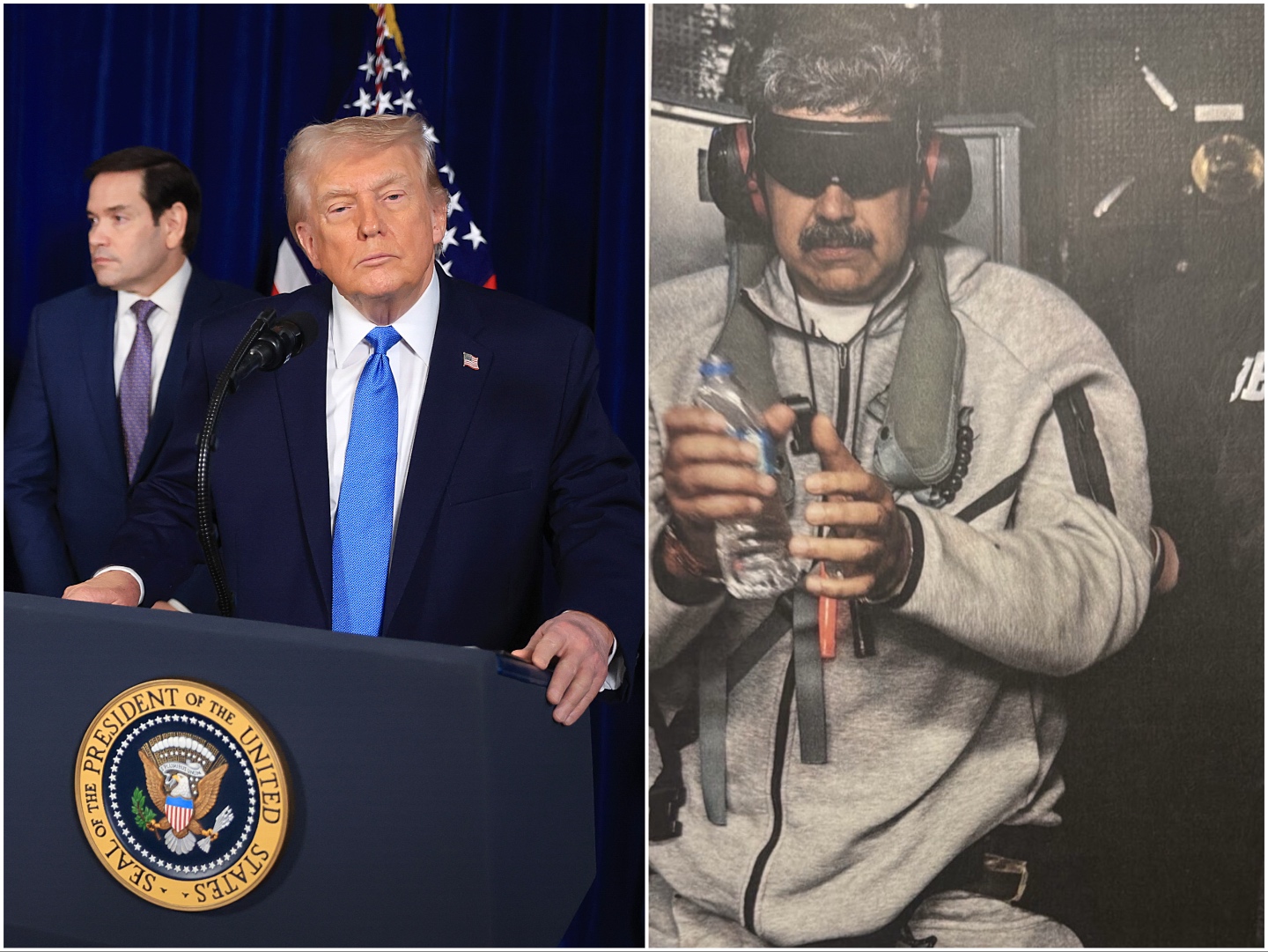
President Donald Trump on Saturday described a meticulously planned, middle-of-the-night special forces operation that ended in the capture of Venezuelan dictator Nicolás Maduro. The operation followed months of surveillance tracking Maduro’s movements.
The post Donroe Doctrine: Trump Nabs Maduro in Daring, Middle-of-the-Night Operation appeared first on .
‘We’re going to run it’: Trump reveals Venezuela’s fate following Maduro’s capture
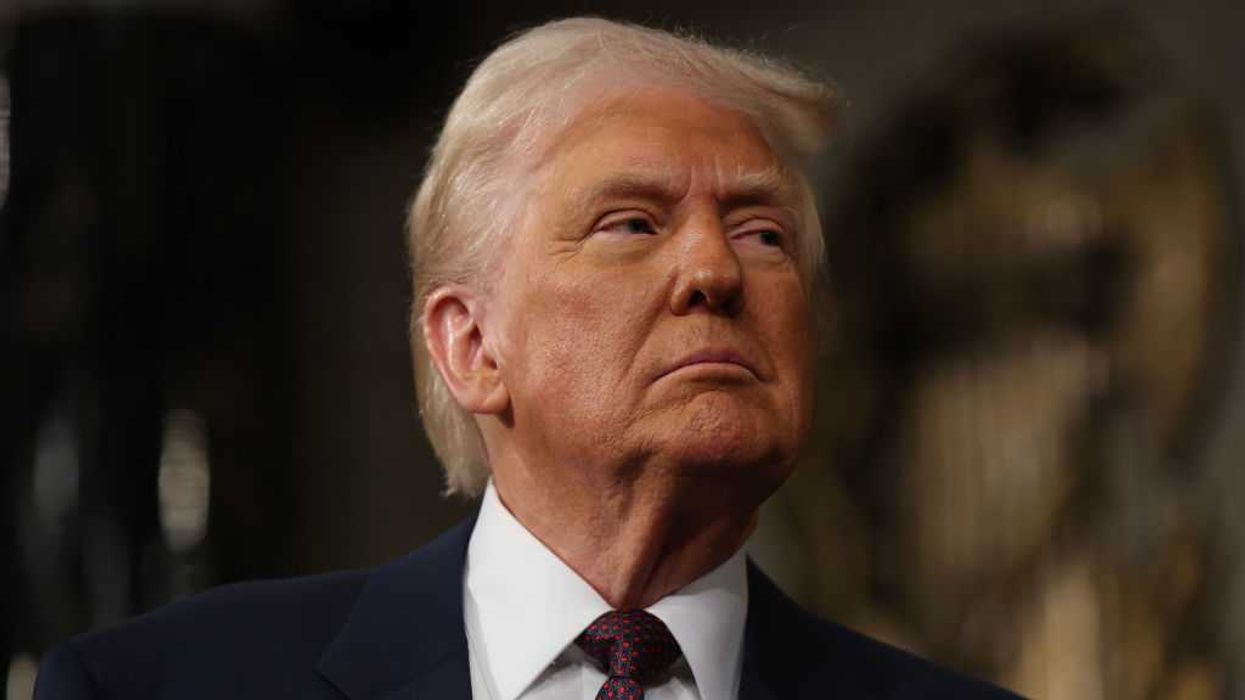
President Donald Trump announced that the United States will be running Venezuela following the capture of President Nicolas Maduro.
American military forces conducted a “large scale strike” in Venezuela where Maduro and his wife were captured and transported on the USS Iwo Jima. Following the operation, Trump announced that the United States is “going to run” Venezuela until a “proper transition can take place” in the government.
‘It was dark, and it was deadly.’
“We can’t take a chance that somebody else takes over Venezuela that doesn’t have the good of the Venezuelan people in mind,” Trump said, flanked by Secretary of War Pete Hegseth, Secretary of State Marco Rubio, and other officials. “We’ve had decades of that. We’re not going to let that happen.”
Trump also said American oil companies are going to “go in” and “fix the badly broken infrastructure.”
RELATED: Maduro captured following ‘large scale strike’ in Venezuela, Trump says
Maduro and his wife were indicted for their “campaign of deadly narco-terrorism against the United States and its citizens.” Both are en route to the Southern District of New York, where they will be tried.
Trump also noted that no American servicemen were killed in the operation and all military equipment was recovered.
RELATED: Trump says US struck drug-linked site in Venezuela: ‘We hit them very hard’
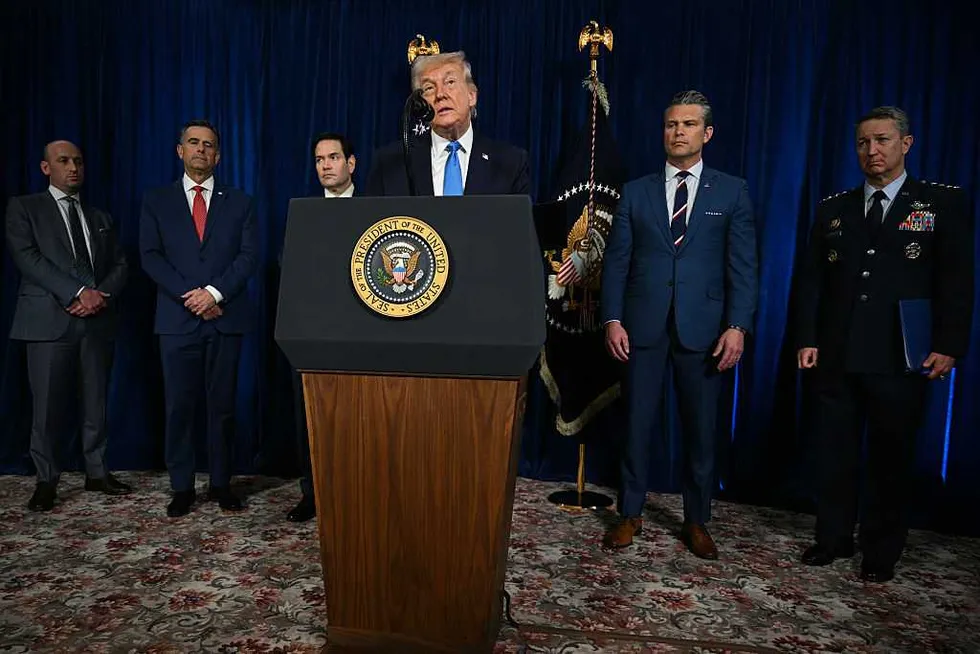 Photo by Jim WATSON / AFP via Getty Images
“All Venezuelan military capacities were rendered powerless as the men and women of our military, working with U.S. law enforcement, successfully captured Maduro in the dead of night,” Trump said.
“It was dark, and it was deadly.”
Like Blaze News? Bypass the censors, sign up for our newsletters, and get stories like this direct to your inbox. Sign up here!
Trump’s agenda faces a midterm kill switch in 2026
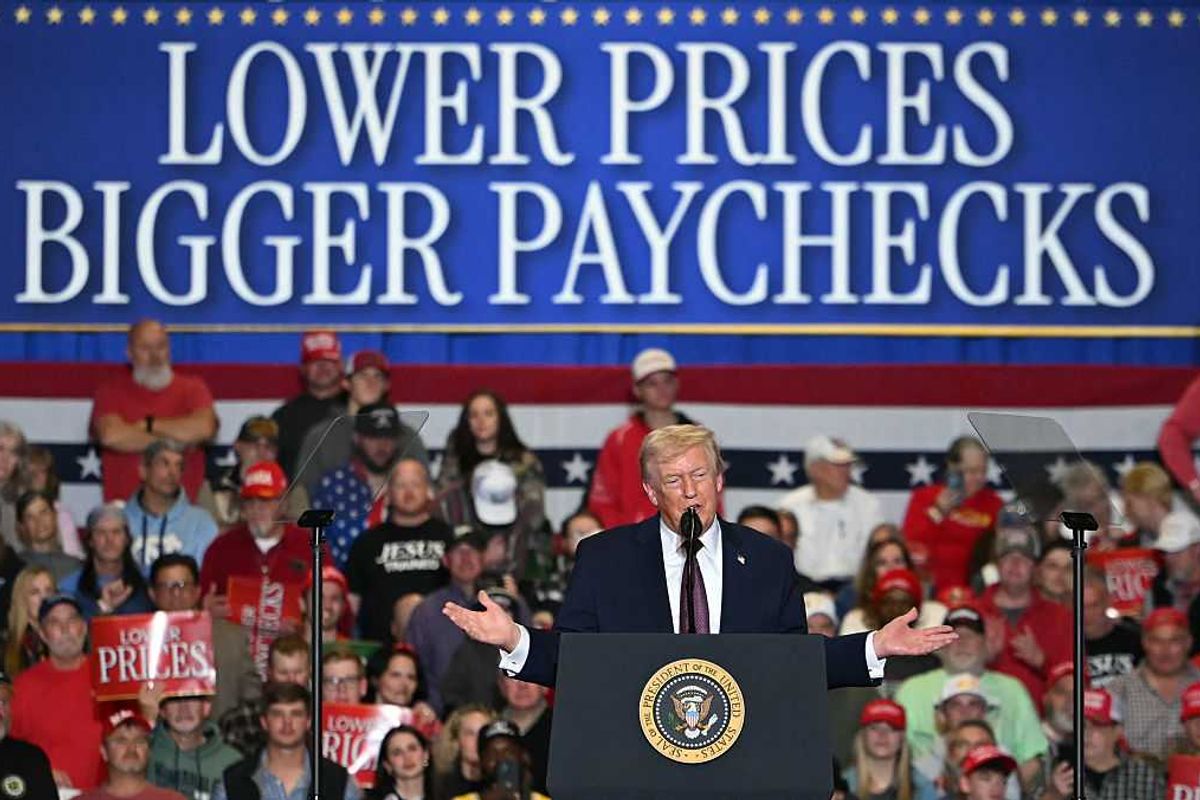
Ten months ahead of November’s midterms, political and economic crosscurrents are colliding. Which of these conflicting trends prevail will greatly shape the next two years. And possibly even longer.
Midterm elections are always important. Besides gauging the country’s political mood, they have proven integral to maintaining America’s political equilibrium.
For good or ill, incumbent presidents and their party own the economy. The question is: Which economy will Republicans own?
They are the “ebb” to the “flow” of America’s political tide. Historically, every four years a large tide of voters go to the polls and elect a president. Then every two years, the large voter flow ebbs back, and the president’s party suffers accordingly.
This midterm is particularly important to Trump because he has proven susceptible to being baited by his opponents. After 2018, Rep. Nancy Pelosi (D-Calif.) returned to the House speakership and unrelentingly harassed Trump over the last two years of his first term. These distractions and obstructions — especially during COVID — were undoubtedly a factor in Trump’s narrow 2020 Electoral College defeat.
Today’s political crosscurrents are pronounced. We know the president’s party historically loses seats. The last two two-term presidents, George W. Bush and Barack Obama, suffered congressional losses averaging 22 House seats and 7.5 Senate seats.
Such losses would hand Democrats control of Congress, giving them a House majority larger than Republicans’ narrow edge and a Senate majority bigger than the GOP’s current six-seat margin. Such outcomes would end Trump’s legislative agenda, and Democrats could set their own. To understand the potential impact, play back the recent funding impasse when Democrats shut the government down for the longest period ever — despite lacking control of either chamber.
While Trump would be able to veto Democratic legislation and Republican numbers would be ample to uphold his vetoes, Democrats would have a formal hand in shaping the political agenda. This could greatly help their 2028 presidential prospects.
RELATED: Republicans are letting Democrats lie about affordability
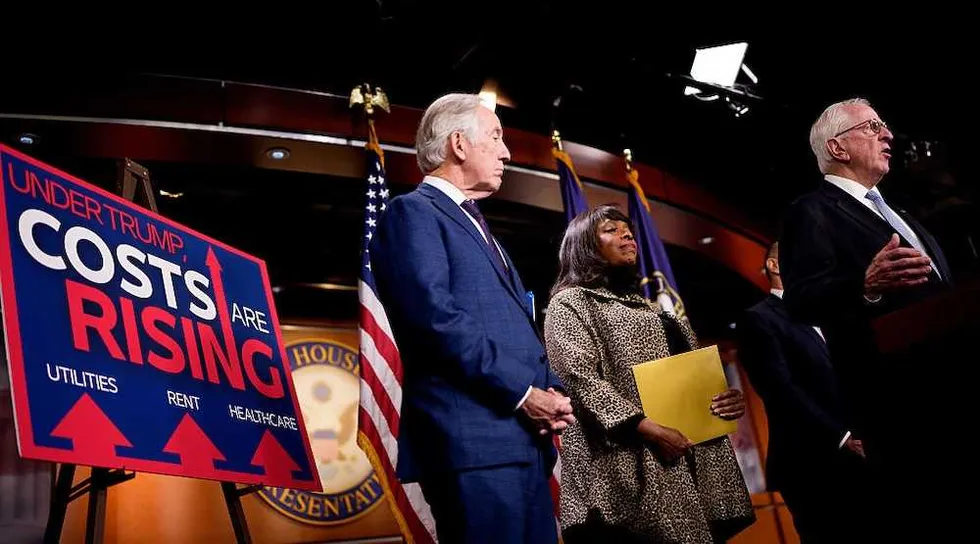 Photo by Andrew Harnik/Getty Images
Current politics are blunting the historical midterm flow, however. Trump is divisive, with just a 43.4% favorable rating; however, his job approval rating of 43.1% is higher than Obama’s (42.4%) at the same point in his second term. Further, Democrats are in abysmal shape with just a 32.5% favorability rating.
The current 2026 political map is also favorable to Republicans. While they have more seats (22 to 13) to protect in the Senate, the toss-up seats are evenly split: Republicans with Maine and North Carolina; Democrats with Georgia and Michigan. Mid-decade House redistricting efforts are also likely to favor Republicans somewhat; if the Supreme Court should allow race to be disregarded in drawing House districts when it rules on the Louisiana case currently before it, then even more redistricting could occur and amount to an even greater Republican advantage.
Today’s economic crosscurrents are equally pronounced. For good or ill, incumbent presidents and their party own the economy. The question is: Which economy will Republicans own?
At the micro level, the growing issue is “affordability.” Nationally, this is an overhang of inflation that surged during Biden’s administration and peaked at 9.1% in June 2022 — a 40-year high.
Locally, affordability played well in New York City (which has been plagued by Democratic policies of rent control and excessive taxation, regulation, and litigation) in 2025’s mayoral race. It also played well in Virginia, where it linked powerfully into the record-long government shutdown. Democrats are therefore seizing on the issue with some success — particularly in the establishment media — and are trying to nationalize it.
At the macro level, the economy is a different story. Despite “expert” predictions that Trump’s tariffs, green agenda rollback, attack on illegal immigration, and reduction in government would combine to wreck the economy, the reverse has occurred. In Trump’s first two full quarters in office, GDP is averaging over 4% growth: up 3.8% in the second quarter and 4.3% in the third. Inflation has also been moderate — 2.7% in November — certainly not the spike experts predicted and a far cry from the previous four years.
RELATED: Conservatives face a choice in ’26: realignment or extinction
 MediaProduction via iStock/Getty Images
So politically, depending on your perspective, Republicans look to outperform historically. Their Senate majority looks safe for now, with the chance that Republicans could even gain a seat or two. By contrast, Republicans’ House majority looks vulnerable; this could be offset slightly by current mid-decade redistricting efforts. Yet even just half the average loss of the last two administrations in their second midterms would mean an 11-seat swing and a 226-209 Democratic majority.
Economically, the question is whether the micro or the macro prevails. Can the micro become a national mood outside Democratic areas, or will the macro of strong GDP growth and moderate inflation have time to prevail? Expect political midterm fortunes to respond accordingly.
What is certain is that the midterms will shape the last two years of Trump’s second term. And possibly determine who will run and who will win the presidency in 2028.
Editor’s note: This article was originally published by RealClearPolitics and made available via RealClearWire.
Universities treated free speech as expendable in 2025
The fight over free expression in American higher education reached a troubling milestone in 2025. According to data from the Foundation for Individual Rights and Expression, efforts to censor speech on college campuses hit record highs across multiple fronts — and most succeeded.
Let’s start with the raw numbers. In 2025, FIRE’s Scholars Under Fire, Students Under Fire, and Campus Deplatforming databases collectively tracked:
- 525 attempts to sanction scholars for their speech, more than one a day, with 460 of them resulting in punishment.
- 273 attempts to punish students for expression, more than five a week, with 176 of these attempts succeeding.
- 160 attempts to deplatform speakers, about three each week, with 99 of them succeeding.
That’s 958 censorship attempts in total, nearly three per day on campuses across the country. For comparison, FIRE’s next-highest total was 477 two years ago.
The 525 scholar sanction attempts are the highest ever recorded in FIRE’s database, which spans 2000 to the present. Even when a large-scale incident at the U.S. Naval Academy is treated as just a single entry, the 2025 total still breaks records.
The common denominator across these censorship campaigns is not ideology — it’s intolerance.
Twenty-nine scholars were fired, including 18 who were terminated since September for social media comments about Charlie Kirk’s assassination.
Student sanction attempts also hit a new high, and deplatforming efforts — our records date back to 1998 — rank third all-time, behind 2023 and 2024.
The problem is actually worse because FIRE’s data undercounts the true scale of campus censorship. Why? The data relies on publicly available information, and an unknown number of incidents, especially those that may involve quiet administrative pressure, never make the public record.
Then there’s the chilling effect.
Scholars are self-censoring. Students are staying silent. Speakers are being disinvited or shouted down. And administrators, eager to appease the loudest voices, are launching investigations and handing out suspensions and dismissals with questionable regard for academic freedom, due process, or free speech.
RELATED: Liberals’ twisted views on Charlie Kirk assassination, censorship captured by a damning poll
 Deagreez via iStock/Getty Images
Some critics argue that the total number of incidents is small compared to the roughly 4,000 colleges in the country. But this argument collapses under scrutiny.
While there are technically thousands of institutions labeled as “colleges” or “universities,” roughly 600 of them educate about 80% of undergraduates enrolled at not-for-profit four-year schools. Many of the rest of these “colleges” and “universities” are highly specialized or vocational programs. This includes a number of beauty academies, truck-driving schools, and similar institutions — in other words, campuses that aren’t at the heart of the free-speech debate.
These censorship campaigns aren’t coming from only one side of the political spectrum. FIRE’s data shows, for instance, that liberal students are punished for pro-Palestinian activism, conservative faculty are targeted for controversial opinions on gender or race, and speaking events featuring all points of view are targeted for cancellation.
The two most targeted student groups on campus? Students for Justice in Palestine and Turning Point USA. If that doesn’t make this point clear, nothing will.
The common denominator across these censorship campaigns is not ideology — it’s intolerance.
RELATED: Teenager sues high school after tribute to Charlie Kirk was called vandalism
 rudall30 via iStock/Getty Images
So where do we go from here?
We need courage: from faculty, from students, and especially from administrators. It’s easy to defend speech when it’s popular. It’s harder when the ideas are offensive or inconvenient. But that’s when it matters most.
Even more urgently, higher education needs a cultural reset. Universities must recommit to the idea that exposure to ideas and speech that one dislikes or finds offensive is not “violence.” That principle is essential for democracy, not just for universities.
This year’s record number of campus censorship attempts should be a wake-up call for campus administrators. For decades, many allowed a culture of censorship to fester, dismissing concerns as overblown, isolated, or a politically motivated myth. Now, with governors, state legislatures, members of Congress, and even the White House moving aggressively to police campus expression, some administrators are finally pushing back. But this pushback from administrators doesn’t seem principled. Instead, it seems more like an attempt to shield their institutions from outside political interference.
That’s not leadership. It’s damage control. And it’s what got higher education into this mess in the first place.
If university leaders want to reclaim their role as stewards of free inquiry, they cannot act just when governmental pressure threatens their autonomy. They also need to be steadfast when internal intolerance threatens their mission. A true commitment to academic freedom means defending expression even when it is unpopular or offensive. That is the price of intellectual integrity in a free society.
Editor’s note: This article was originally published by RealClearPolitics and made available via RealClearWire.
Judicial Watch Sues HHS for Records of Taxpayer Funding of Human Fetal Tissue Research at Univ. of Pittsburgh
(Washington, DC) – Judicial Watch announced today it filed a Freedom of Information Act (FOIA) lawsuit against the U.S. Department of Health and Human Services (HHS) for records from the National Institutes of Health (NIH) related to a federally funded human fetal tissue research program at the University of Pittsburgh (Judicial Watch Inc. v. U.S. […]
The post Judicial Watch Sues HHS for Records of Taxpayer Funding of Human Fetal Tissue Research at Univ. of Pittsburgh appeared first on Judicial Watch.
Judicial Watch President Tom Fitton Receives Presidential Reappointment
President Trump Reappoints Tom Fitton to DC Judicial Commission Judicial Watch Sues HHS for Human Fetal Tissue Research Records Justice Dept. Sued for Planned Parenthood, Human Fetal Tissue Records Trump Administration Blasted for Ending $10 Million Toilet Project in Madagascar President Trump Reappoints Tom Fitton to DC Judicial Commission I am pleased to announce […]
The post Judicial Watch President Tom Fitton Receives Presidential Reappointment appeared first on Judicial Watch.
Xi Jinping: ‘The Reunification of Our Motherland Is Unstoppable’
In a New Year’s address to the Chinese people, President Xi Jinping stated that “We Chinese on both sides of…
Notre Dame Faces Push to Uncover Historic Columbus Murals
University of Notre Dame alumni and faculty members are calling on the school’s new president and other recently installed leaders…
Medicaid’s 30-Year Refusal to Stop Funding the Dead
For more than 30 years, Washington has known that Medicaid hemorrhages taxpayer dollars through fraud, waste, and abuse, including payments…