

Category: The American Spectator
Billion-Dollar Snack Companies Suddenly Care About Affordability After Jacking Up Prices for Years
‘Could undermine his goal to lower costs for Americans’
Gavin’s Angels: From Masks to Mandates to Millions
To fill “the vacuum left by the Trump administration’s systematic retreat from science and evidence-based public health,” California Gov. Gavin…
The Weekend Spectator Ep. 53: Ranking the Best Christmas Movies of All Time
With Christmas quickly approaching and endless movie choices, it can be difficult to decide which of the greats to watch….
California Is as California Does: A 2025 Retrospective
Happy New Year! It’s time to take stock of the past, and go out on a limb with a few…
A Conservative’s Christmas Reading List
Well Merry Christmas! Yes, in the midst of all the family chaos, the tree decorating, present wrapping and stocking stuffing…
What It’s Like to Feel ‘Restricted’
It’s Christmas in Beverly Hills. There are a few homes decorated with Merry Lights, but not many. It’s very different…
Congress Faces Mountain Of Unfinished Business After Christmas Break
‘my Democrat colleagues are not there yet’
The American dream lives where people still choose to build
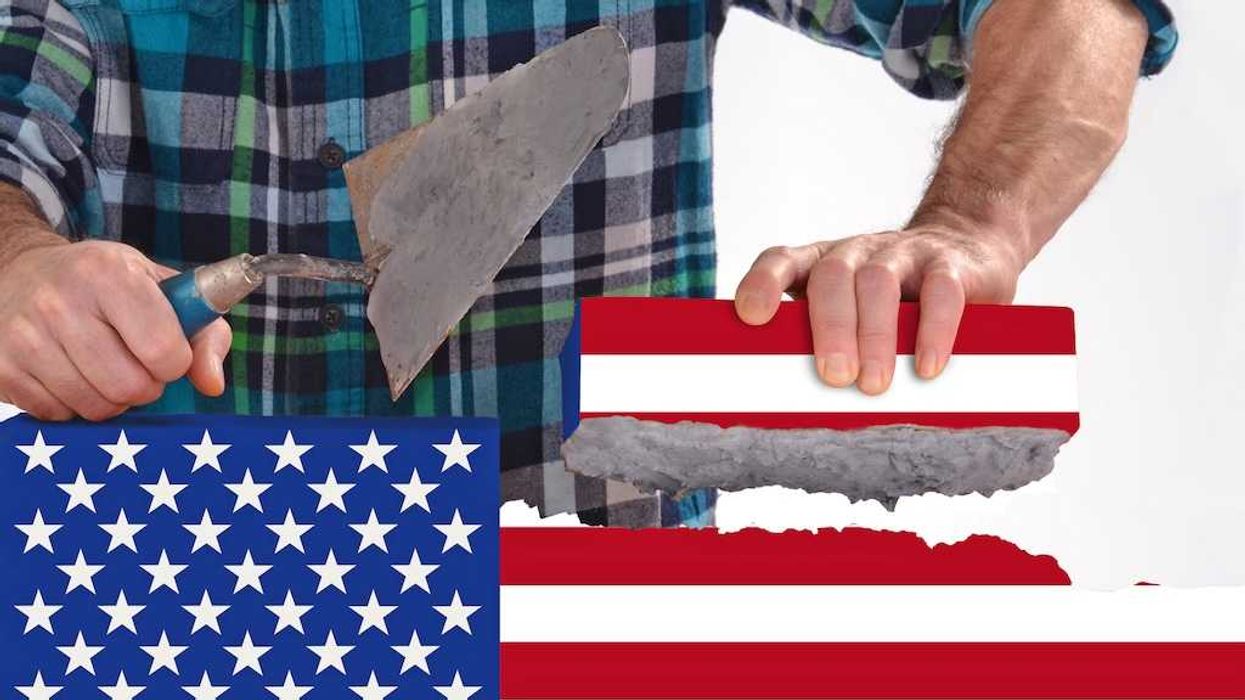
“For many, the American dream has become a nightmare,” Sen. Bernie Sanders (I-Vt.) has said, capturing a sentiment that has become common on the political left and across modern culture.
That line now travels far beyond politics. Scroll social media for five minutes, and you’ll see the same message repeated in endless variations: Owning a home is impossible. Raising a family is irresponsible. Work doesn’t pay. The system is rigged. The future is closed.
The American dream was never a promise of ease or comfort by age 25. It was an invitation to build something meaningful over time through responsibility and perseverance.
This message is everywhere, and it is doing real damage.
Harder lives, false conclusions
Life has become harder in tangible ways. Housing costs have surged. College has grown bloated and expensive. Inflation punished families already living close to the margins. Young adults feel delayed, uncertain, and anxious about the future.
Those frustrations are real. The conclusion being pushed alongside them is not.
The lie is not that things are harder. The lie is that effort no longer matters.
That lie spreads quickly online because it feels validating. A 30-second video declaring the system broken beyond repair asks nothing of the viewer except agreement. Building a life requires patience, sacrifice, and time. One goes viral. The other happens quietly.
Much of this shift comes from where young Americans now form their beliefs. For many in Generation Z, ideas about money, marriage, and the future are no longer shaped primarily by parents, churches, employers, or local communities. They are shaped by algorithm-driven platforms like TikTok and X, where extremity is rewarded with attention.
In those spaces, online figures routinely dismiss the American dream as a scam and portray starting a family as a trap rather than a source of meaning or stability. Cynicism is marketed as realism. Detachment is framed as wisdom. A generation looking for guidance is taught to expect failure before it ever tries.
Why despair is profitable
This narrative didn’t arise by accident. It feeds on real pain, but it’s also profitable. Political movements gain leverage by convincing voters that only sweeping control from the top can fix a hopeless system. Media companies thrive on pessimism because fear keeps people watching. Online grievance entrepreneurs build massive followings by telling young people that nothing they do will ever be enough.
If Americans stop believing they can build a future, someone else will gladly build power over them.
History keeps disproving this story.
Tell the generation that survived the Great Depression that the American dream was dead. Tell the men who returned from World War II, many wounded and broke, who used the GI Bill to buy homes and start families, that the climb was too steep. Tell the children of factory workers who grew up without air conditioning, college degrees, or safety nets — but still built middle-class lives through work and sacrifice — that the odds were unfair.
Tell the families of the 1950s and 1960s who lived modestly, saved slowly, and delayed gratification for decades that life was easy. Tell the Americans who endured oil crises, layoffs, and double-digit inflation in the 1970s and early 1980s that the system was designed for their comfort.
The dream was never easy
Life has never been easy. The climb has always been steep. The American dream was never built on convenience. It was built on resilience.
The truth is less dramatic — and far more hopeful. The American dream didn’t disappear. It changed shape.
It was never a promise of ease or comfort by age 25. It was an invitation to build something meaningful over time through responsibility and perseverance. For generations, it rested on a simple foundation: Work hard, form families, contribute locally, and invest in something bigger than yourself.
That path was never easy. What changed is not the dream, but our tolerance for effort and our patience for delayed reward.
The quiet math of real life
Despite the noise, the American dream remains visible in places social media rarely celebrates. It shows up in the quiet math of real life.
Research from the Institute for Family Studies finds that stably married Americans approaching retirement hold, on average, more than $640,000 in household assets, compared with roughly $167,000 for divorced or never-married adults — even after accounting for age, education, and race. That gap reflects decades of shared sacrifice, income pooling, planning, and commitment.
These stories don’t trend online. They play out quietly every day.
Ironically, many of the loudest voices declaring the dream dead are doing quite well selling that message. Entire online brands are built on telling people that life is impossible — while generating substantial revenue and influence in the process. Despair has become an industry.
RELATED: Christmas is worth celebrating, even if your family is fractured
 Chris Ratcliffe/Bloomberg via Getty Images
What truly threatens the American dream is not capitalism, competition, or even inequality. It’s a culture that encourages permanent adolescence. A culture that treats commitment as a burden, delays adulthood indefinitely, and then wonders why people feel anxious and untethered.
The American dream doesn’t die because life is hard. It dies when people are convinced that hard things aren’t worth doing.
Too many young Americans are told that marriage can wait, children are optional, faith is outdated, and roots are restrictive. They’re promised freedom through detachment and fulfillment through endless choice — then wake up years later with more options than ever and less meaning than expected.
Builders still have the advantage
This isn’t a policy argument. It’s a cultural one. No law can manufacture purpose. No program can force optimism. But a nation that teaches its citizens the dream is dead shouldn’t be surprised when fewer people try to live it.
The American dream has always belonged to builders of families, businesses, and communities. It never belonged to those waiting for perfect conditions or guaranteed outcomes.
The American dream isn’t dead. But telling Americans that it is has become fashionable, profitable, and politically useful.
The question is whether we continue to accept that story — or choose, once again, to build.
Here’s What Trump Means By Calling For ‘Peace Through Strength’

 Peace through strength, defined by ‘hard-nosed realism’ over the ‘utopian idealism’ of a bygone era, is poised to yield both a popular and durable American defense policy.
The party that made life more expensive wants credit for noticing
Having identified a problem they created, Democrats are now blaming “affordability” on Republicans. It is a striking display of audacity — the very definition of chutzpah.
For more than a year, Democrats have struggled to find a message that resonates because they keep recycling losing ones. They have lashed out at immigration enforcement —storming ICE facilities, attacking ICE officers, and defending violent illegal aliens.
Democrats are now left with a single strategy: campaigning on the consequences of their own incompetence and hoping voters forget who caused them.
They voted for the largest tax increase in U.S. history by opposing the extension of the 2017 tax rates under the Tax Cuts and Jobs Act.
They continue to cling to climate alarmism even as the rest of the world moves on.
They remain soft on crime, opposing President Trump’s deployment of the National Guard in cities where criminals run rampant and law-abiding citizens live in fear.
And in a final act of desperation, they triggered the longest federal government shutdown in history — before caving and achieving nothing.
Same issues. Same failure to connect.
The results speak for themselves. Democrats’ favorability sits at an abysmal 32.5%, well below Republicans’ 38.2% and far below President Trump’s 43.8%.
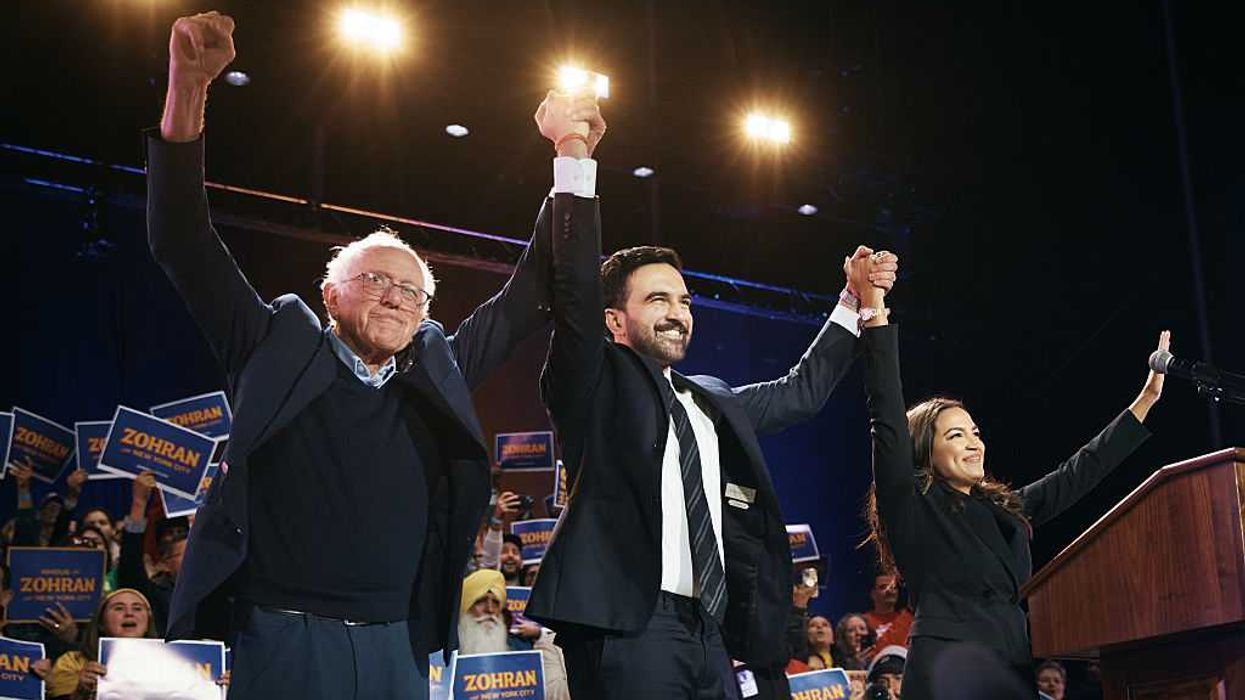
Then came Zohran Mamdani, the neophyte New York Democratic Socialist who toppled Democrats’ old guard in consecutive elections — first Mayor Eric Adams, then former Gov. Andrew Cuomo. Mamdani did what Democrats have always done: promise voters lots of free stuff. Only he did it on a far grander scale — buses, housing, child care, grocery stores.
Faced with his success, Democrats opted for the familiar response: If you can’t beat ’em, join ’em. They sanitized Mamdani’s socialism, rebranded it as “affordability,” and declared it their new cause.
That affordability is now Democrats’ issue should surprise no one. After all, they caused the crisis they now loudly lament.
Start with New York City, where affordability has collapsed most dramatically. According to Visual Capitalist’s ranking of America’s least affordable cities, Manhattan is No. 1, Brooklyn ranks sixth, and Queens seventh. In fact, the top 10 least affordable cities are overwhelmingly governed by Democrats and located in Democrat-dominated states: New York, Hawaii, California, and Massachusetts. By contrast, nine of the 10 most affordable cities are in Republican-dominated states.
The reasons are no mystery. They are the left’s preferred policies: high taxes that drive up the cost of living and chase out taxpayers; rent control that discourages new construction and fuels homelessness; and excessive regulation and litigation that inflate the cost of everything they touch.
The same pattern holds at the state level. U.S. News and World Report lists the 10 least affordable states, and the top six are California, New Jersey, Hawaii, Massachusetts, Washington, and New York. Nine of the 10 are blue states. Florida — the lone red-state exception — also boasts the No. 1 economy, ranks second in education, levies no state income tax, and continues to attract new residents in large numbers. Meanwhile, all 10 of the most affordable states are Republican-led.
RELATED: The socialist spell: Why modern minds keep falling for an old lie
 Photo by Chip Somodevilla/Getty Images
What about inflation? Isn’t that a national problem?
Yes, but inflation didn’t materialize out of thin air. It began under the Biden administration, reaching a 40-year high of 9.1% in June 2022. CPI-U inflation was just 1.4% when Biden took office in January 2021. By March, it had nearly doubled. By June, it had surged to 5.4%. By December, it hit 7%. A year later, it still stood at 6.5%. Inflation did not fall below 3% until July 2024 — the 43rd month of Biden’s presidency.
Excessive Democrat spending fueled this surge. From fiscal years 2021 through 2024, the Congressional Budget Office shows cumulative deficits of $8.9 trillion, driven by roughly $8 trillion in spending above the pre-pandemic baseline. The only reason Democrats didn’t spend more is that members of their own party balked.
Inflation works like weight gain: it comes on fast and comes off slowly. Even when the rate of inflation declines, prices remain higher. There is no economic Ozempic. Americans are still paying the price for four years of Democratic fiscal gluttony.
None of this has stopped Democrats from claiming “affordability” as their issue — or from demanding more of the same policies that caused the crisis in the first place: higher spending, higher taxes, and more regulation.
Stripped of winning ideas, Democrats are now left with a single strategy: campaigning on the consequences of their own incompetence and hoping voters forget who caused them.





