Category: The American Spectator
Tom Steyer’s Affordable Energy Promises to California Are Unaffordable
Tom Steyer, the billionaire climate activist running for California governor, promises to cut electric bills by 25 percent by breaking…
It Is Not Time to PAUSE Immigration, Again
Doing the right thing in the wrong way can be a costly initiative, indeed — especially when Congress gets involved….
The socialist spell: Why modern minds keep falling for an old lie

What draws people to socialism?
Even after nearly two centuries of ruin brought to those societies that have adopted this governing system, the appeal still remains. Most Western countries have a thriving socialist party occupying portions of the government, including the United States with the Democratic Socialists of America.
The promises of socialists made in today’s media landscape are closely analogous to the serpent’s promises in the Garden of Eden.
Worse still, the DSA experienced a huge win in New York City with the election of outspoken socialist Zohran Mamdani and came close to beating the Republican candidate with another socialist in a special election in Tennessee in December.
Then, of course, there are the legions of leftist online content creators indoctrinating millions of users with socialist messaging.
Is it historical ignorance with the Cold War increasingly far behind us? Is it the leftist teachers simply passing over the horrific genocides of communist leaders like Mao Zedong, Joseph Stalin, or Pol Pot and ignoring the ongoing calamities of Cuba, Venezuela, North Korea, and other socialist backwaters? Is it simply the promise of free stuff? Is it the envy of billionaire elites who seem to wield omnipotent power?
The socialist paradox
No doubt, ignorance, greed, envy, and boredom all play a significant role in the elevation of socialists.
This is why most opponents of socialism generally push back by attempting to teach people about the endless failures of socialism, the basic laws of economics, and the immorality and destructiveness of confiscating property and denying citizens their constitutional freedoms.
Clearly, this approach has not been successful with this latest crop of socialists who now make up a large portion of the Millennial and Gen Z cohorts.
It could just be that human nature is such that it is always vulnerable to toxic ideas like socialism, and digital technology has made this problem even more challenging. After all, the promises of socialists made in today’s media landscape are closely analogous to the serpent’s promises in the Garden of Eden: Do this one thing — i.e., eat this fruit, vote and campaign for this socialist — and you will have everything you want.
Or, more likely, it could be that conservatives are misunderstanding the issue altogether.
Rather than view socialism as an ideology, a movement, or a moral failing inherent in human nature, it would be better to see socialism as a reaction to all these things.
At its core, socialism is what happens when a person consciously rejects political reasoning, morality, and complex abstractions, all in favor of a strictly materialist and existentialist approach to life.
Orwell and the socialist mind
An illustration of this phenomenon comes from the great 20th century writer George Orwell, who unintentionally captures the socialist mind in his personal account of the Spanish Civil War, “Homage to Catalonia.”
Despite being known as a fierce critic of totalitarian surveillance states like the Soviet Union, Orwell himself was an ardent socialist throughout his life. In fact, he was so committed to socialism that he went to Catalonia to fight a war on behalf of the Trotskyist Workers’ Party of Marxist Unification.
His stated goal was not necessarily to write a full account of the Spanish Civil War (though he did), but first and foremost to kill fascists.
RELATED: A socialist New York isn’t just a local problem. It’s a national emergency.
 natasaadzic/iStock/Getty Images Plus
What is most surprising about “Homage to Catalonia” is just how little Orwell actually writes about socialism itself. He spends many pages describing the size of rats, the scarcity of tobacco, and the convoluted squabbling between various anarchist, communist, and socialist factions, yet almost nothing about why he is actually fighting in a foreign civil war.
In one of the middle chapters, almost in passing, he devotes a precious few paragraphs on the matter, citing his sympathy with the laborers in their hope of realizing true equality: “The thing that attracts ordinary men to Socialism and makes them willing to risk their skins for it, the ‘mystique’ of Socialism, is the idea of equality; to the vast majority of people Socialism means a classless society, or it means nothing at all.”
Sadly, Orwell quickly follows this reflection with the immediate reality of his situation, “I was hardly conscious of the changes that were occurring in my own mind. Like everyone about me I was chiefly conscious of boredom, heat, cold, dirt, lice, privation, and occasional danger.”
Naturally, these concerns are what make up the bulk of his book.
At no point in Orwell’s narrative does his joy rise above the creature comforts of cigarettes, wine, food, sleep, and personal cleanliness, nor does his sorrow go much beyond beyond the deprivation thereof. Any hope he might have that transcends this narrow worldview — i.e., virtue, ethics, greater truth, life after death (Orwell survives a shot through the neck), or even winning the war — is completely absent.
Orwell is just there, living his life and fighting an enemy. Even though he is aware of the atrocities of the socialist militias — like destroying churches and killing innocent priests and nuns — he hardly thinks about it. Even though he throws a bomb into enemy lines and inflicts a slow and painful death on a fascist soldier, he is more annoyed at the man’s screaming than he is perturbed at the fact that he just killed a man in cold blood for a dubious cause.
Obviously, Orwell was not too dim-witted to think of these matters, nor is it because he was some kind of true believer blinded by misleading propaganda, nor was he a sociopath.
Instead, he has committed to a mode of behavior and thought that negates all moral rationality. His socialism simply does not touch on anything beyond the next meal, the next bus to work, the next cup of coffee, the next nice-sounding idea.
Acting as a socialist only means doing what the other socialists seem to be doing, whether that means joining a protest, fighting in a civil war, or voting for a DSA candidate.
Although some of this mode of behavior betrays a deep streak of nihilism, the socialists themselves never reflect on anything long enough to realize it. For all the observations Orwell makes, with his characteristic wryness, none of it ever leads to a deeper conclusion about his situation.
Much of his general attitude could be summed up with the empty platitude, “It is what it is.” Readers can also find this kind of hopeless shrug in the endings of Orwell’s novels “Animal Farm” and “1984,” where the antagonists triumph and all the efforts of the protagonists prove to be futile as well as pointless.
RELATED: The complete failure of ‘1984’
 Mininyx Doodle/iStock/Getty Images Plus
Based on the account given in “Homage to Catalonia,” the biggest precondition that leads to this mindlessness is modernity’s systemic atomization and subsequent loneliness.
Throughout his narrative, Orwell has no real friends about which to speak — yet he does somehow drag his wife to Barcelona while he fights with the Workers’ Party of Marxist Unification. True, he notes with fondness how everyone addresses each other as “comrade,” as well as substituting the formal “usted” (Spanish for “you”) for the informal “tu.”
Yet, this belies the indifference he ultimately has for these men suffering and dying senselessly. This community of soldiers in the trenches — the one example that Orwell can point to as true socialism in practice — is almost entirely superficial. Years later, he still cannot see this and even feels glad for the experience of stinking and starving in trenches with his socialist “comrades” for so many months.
Humanize before you catechize
In light of all this, it should be clear that mere apologetics for free-market capitalism, liberal democratic republicanism, and Christian communitarianism will fall on deaf ears, for the socialists both then and now.
A catchy slogan, a photogenic demagogue, an attractive vibe will win over otherwise intelligent people and lead them down a dark path that allows no light to come in.
In order to bring them back from this path, conservatives and other anti-socialists need to appreciate the content of their worldview (or lack thereof) along with the modern context of today’s postmodern consumerist culture that have made friendship, depth, and moments of quiet reflection next to impossible.
Once they recognize this, they will finally understand that more education and fewer affordability crises will not fix the problem of socialism’s growing popularity. Instead, they will have to meaningfully connect with these people, pull them away from the sources of malaise, and patiently fill up what has been hollowed out.
People must be humanized before they are catechized.
Even though this is a much bigger project, it is a more effective and fulfilling one. One can speculate what would have happened if Orwell found religion and joined a church instead of finding socialism and joining the Workers’ Party of Marxist Unification. Perhaps his eventual novels criticizing Russian communism would have lacked the same insights.
Or, perhaps his cynicism and recklessness would have turned to hope and wisdom, and he could have offered a better way forward to those who fall under the spell of socialism instead of dreaming up horrific depictions of socialism’s excesses.
This Christmas season, Middle East Christians are under threat

Last December, my country finally threw off the chains of a hated, despotic regime. For many Syrians, it was a moment filled with hope — the belief that decades of repression had given way to a chance for renewal. Yet by March 2025, that hope had begun to fade. Parts of the country slipped into chaos. Videos circulated on social media and WhatsApp showing armed Islamist militias attacking civilian Christians, Druze, and anyone they branded as “infidels.”
Homes were burned. Entire families were killed. The first wave of violence was expanding and closing in on Christian communities of Suwayda in southern Syria, where many of my family members live.
While Israel has faced a campaign of withering international criticism, American Catholics and evangelicals are hearing very little about the plight of Christians from Egypt to Iran.
Then the killing stopped. It wasn’t widely publicized, but Israel — Syria’s southern neighbor — stepped in to prevent a massacre. Decisive military action stopped the slaughter of men, women, and children — our own relatives — in Suwayda.
For Arab Christians who have lived through so much war and persecution, it was a moment of relief but also a reminder of how little the world seems to care. When Christians are murdered in the Middle East, it rarely makes headlines.
As we come into the Christmas season and a new year, Christians are vanishing under Islamist violence and official repression.
In Lebanon, Hezbollah’s control and Iranian power have sent the Christian population into a tailspin. In Iraq, the number of Christians has dwindled to just over 100,000 faithful from over one million barely a decade ago. Even in small pockets of Christian life, supposed “safe havens” like Ain Kawa in Erbil, Iraq, Christians survive only because local authorities offer protection. From Sudan to Syria, ancient Christian communities have collapsed in just a generation.
The cradle of Christianity, with few exceptions, has become a region where believers cannot worship or gather without threats to our lives. Intervention from Israel helped prevent a massacre of Christian communities in Suwayda. But the world needs to pay attention to protect the Christians of the Arab world.
Western interest in the Middle East has mostly focused on Hamas’ brutal attacks on Israel in 2023 and Israel’s counteroffensive in Gaza. While Israel has faced a campaign of withering international criticism, American Catholics and evangelicals are hearing very little about the plight of Christians from Egypt to Iran. Legacy media ignores them. TikTok algorithms suppress them.
It is perverse that right now — with Christian communities across the Middle East facing extinction — prominent voices like Tucker Carlson and Nick Fuentes are ostracizing Christian Zionism as “a heresy.” In fact, Israel is the best friend Christians in the Middle East can hope to have. Alone in the region, Israel hosts a growing Christian population; alone in the region, Israel has intervened time and again to save Christian communities from eradication.
RELATED: The real question isn’t war or peace — it’s which century we choose
 Photo by AHMAD AL-RUBAYE/AFP via Getty Images
Our brethren in Syria and across the Middle East need our help this year more than ever before. Where churches are destroyed and believers persecuted, American Christians must pay attention, pray, and speak out.
More than that — contra Carlson — let us reach beyond our community. We can and must bring together a coalition of conscience in defense of persecuted minorities abroad, including human rights NGOs, brave anti-Islamist Muslims, and friendly governments in the region.
As Christmas approaches, the Christians of the Arab world are desperately calling for our help. This season, let us answer them.
Editor’s note: This article was originally published by RealClearPolitics and made available via RealClearWire.
’50 high-quality sons’: Chinese men are siring US citizen ‘mega-families’ via surrogacy: Report

Chinese elites are reportedly building “mega-families” by commissioning U.S. surrogates to produce for them scores of American-born children. This practice, which has apparently encouraged the growth of a secondary industry of accommodation, has prompted concerns about underregulation of the surrogacy industry as well as about birthright citizenship.
A recent Wall Street Journal report detailed multiple cases where affluent individuals in communist China — where surrogacy is illegal — have shelled out millions for U.S.-based surrogates to “help them build families of jaw-dropping size.”
At a cost of up to $200,000 per child, they can reportedly send their genetic material abroad, have their babies carried to term, delivered, cared for, and ultimately shipped back.
Xu Bo, an anti-feminist billionaire in the gaming industry, reportedly told an American family court judge in 2023 that he hoped to have 20 boys born in the U.S. through surrogacy, with the hope that they could one day take over his business. At the time, several of his surrogate-born children — whom he had yet to meet — were being raised by nannies in California.
A social media account operated by Xu noted in a message reviewed by the Journal that he hoped to have “50 high-quality sons,” and Xu’s company has since bragged that Xu has supposedly paid to sire over 100 children through surrogacy in the United States.
Wang Huiwu, the CEO of Sichuan-based education group XJ International Holdings, has fathered 10 girls through American surrogates using the eggs he purchased for at least $6,000 a pop from models, a musician, and others, the Journal reported. Wang apparently wants girls, as he figures they could one day marry world leaders.
Xu, Wang, and other elites in the adversarial nation who are similarly motivated to commission armies of children with American citizenship apparently don’t have to step foot in the United States to start or complete the process.
At a cost of up to $200,000 per child, they can reportedly send their genetic material abroad, have their babies carried to term, delivered, cared for, and ultimately shipped back. Agencies, law firms, and nanny services have emerged to help accommodate the growing foreign demand.
RELATED: Buying fatherhood: The devastating toll of our rent-a-womb society
 Photo by: BSIP/Universal Images Group via Getty Images
Nathan Zhang, the CEO of IVF USA, told the Journal that whereas his clientele were historically parents trying to bypass China’s one-child policy, he has begun to see an increasing number of “crazy rich” clients who are paying for dozens or even hundreds of U.S.-born babies with the aim of “forging an unstoppable family dynasty.”
Zhang indicated that he rejected one Chinese businessman as a client who sought over 200 children via surrogates after he proved unable to account for how he might raise them all. Not all such requests, however, are turned down.
The Journal cited, for instance, the case of a California surrogacy agency whose owner confirmed the fulfillment of an order for a Chinese individual seeking 100 children in recent years.
While industry groups apparently recommend that agencies and IVF clinics refrain from working with parents seeking more than two simultaneous surrogacies, such recommendations often go unheeded, fueling concerns among critics over the industry’s lack of oversight.
A study published last year in the peer-reviewed journal Fertility and Sterility noted that international gestational surrogacy has grown greatly over the past two decades — of the 40,177 embryo transfers to a prospective mother in the U.S. from 2014 to 2020, 32% were for foreigners.
Foreign intended parents “were more likely to be male sex (41.3% vs. 19.6%), older than 42 years (33.9% vs. 26.2%), and identify as Asian race (65.6% vs. 16.5%),” the study said.
Of all the international parents siring children in the U.S. through surrogacy during the six-year window, 41.7% were from China.
The study stressed that “given that individuals are increasingly traveling to the U.S. for this care, it is imperative to understand the trends and outcomes of international gestational surrogacy in the U.S.”
According to Emma Waters, a policy analyst for the Center for Technology and the Human Person at the Heritage Foundation, international commercial surrogacy is a “situation of immigration fraud as well as a national security risk.”
After all, Chinese men — the cohort most commonly exploiting the system — can deploy their U.S.-born, China-raised, and Chinese Communist Party-influenced children to advance Beijing’s interests in the United States.
Last month, Sen. Rick Scott (R-Fla.) introduced the Stopping Adversarial Foreign Exploitation of Kids in Domestic Surrogacy Act with the aim of preventing adversarial nations, including China, from using American surrogates to obtain U.S. citizenship for their children.
“America’s surrogacy system is meant to help individuals build families — it should never be the avenue to allow abuse, neglect, or deceit of innocent women and babies,” Scott said. “And it’s terrifying that this might be at the hands of foreign adversaries with the sole intent of having a child that is a U.S. citizen.”
The U.S. Supreme Court agreed earlier this month to hear arguments for and against President Donald Trump’s order to end birthright citizenship. Success on the part of the president may serve to devalue Chinese elites’ breeding scheme.
Like Blaze News? Bypass the censors, sign up for our newsletters, and get stories like this direct to your inbox. Sign up here!
The pernicious myth that America doesn’t win wars
False narratives have a way of being taken as fact in popular understanding. After years of repetition, these statements calcify into articles of faith, not only going unchallenged, but having any counterarguments met with incredulity, as though the person making the alternative case must be uninformed or unaware of the established consensus. Many people simply accept these narratives and form worldviews based on them, denying the reality that, if the underlying assumption is wrong, then so are the decisions that flow from it.
One narrative that has taken hold among many since the humiliating end to the war in Afghanistan is that the U.S. military doesn’t win wars, or that it hasn’t since the end of World War II. This critique of the armed forces, foreign policy, or use of force has become an ironclad truth among many who use it as a starting point to advocate their own preferred change.
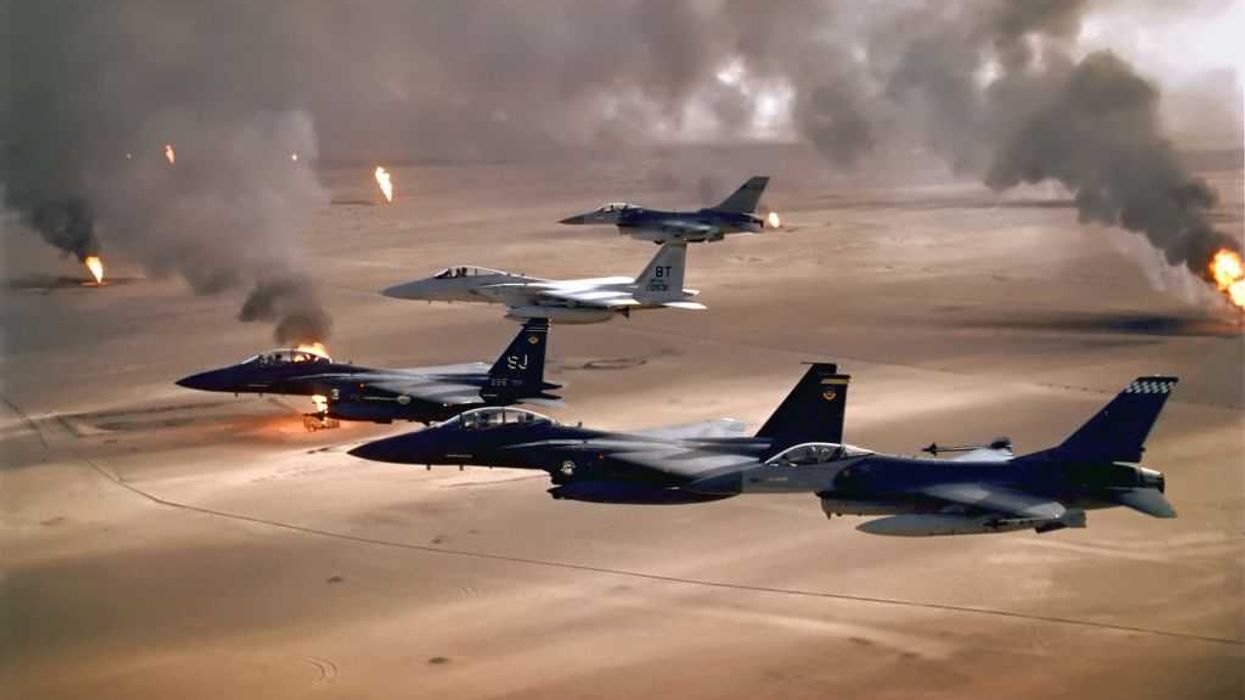
The United States military has had plenty of successes since World War II and, in fact, has suffered only a small handful of definitive losses in that time.
Advocates of War Secretary Pete Hegseth’s vision for the military have echoed it: “The military had grown weak and woke, so we need to change the culture, ignore or at least diminish adherence to legal restraints, and remake the composition of the military.” Restrainers, isolationists, and America Firsters have joined the chorus: “America has given up blood and treasure on stupid wars in which we were failures.”
There is only one problem with this understanding, and more importantly, its use as a baseline from which to derive policy prescriptions — it isn’t true at all.
Ignorance of war
It reflects a misunderstanding of how America has used force and what we have and haven’t achieved. And unlike many misunderstandings about American defense, this one isn’t solely by those with little familiarity with what the military does; the view has taken hold among many who should know better. There are several reasons for belief in the fallacy.
First, there is ignorance of what a war is, or at least not having a common definition of it.
For the pedants, one could point out that the United States has not been at war, by strict definition, since 1945. However, this isn’t relevant to the topic at hand because if the United States has not fought a war since 1945, then by this definition, we also haven’t lost one. In fact, the United States has declared war many times: the War of 1812, the Mexican-American War, the Spanish-American War, and the World Wars, yet we have engaged in armed conflict significantly more often than that.
So for the purposes of this debate, we can reflect upon the United States using force to achieve foreign policy objectives. With this more expansive definition, then Grenada is just as much of a war as World War II (although the latter certainly is a source of more pride than the former).
Second, there is ignorance of the number of conflicts in which the United States has been involved. Americans tend to have short memories and often pay less attention to events beyond the water’s edge. Many are largely ignorant of ongoing, smaller operations being conducted in their name. (Remember the shocked response to the Niger incident when many people, including congressional leaders, announced their ignorance of U.S. presence there?)
This phenomenon is exacerbated by the passage of time. How many Americans are aware of our involvement in the Dominican Civil War in 1965? Or the various conflicts that made up the Banana Wars?
RELATED: Turns out that Hegseth’s ‘kill them all’ line was another media invention
 Photo by ANDREW CABALLERO-REYNOLDS / AFP via Getty Images
Third, there is ignorance or misunderstanding of the outcome of those wars. Our perspective has been skewed, likely due to the recent history of the embarrassing and self-inflicted defeat in Afghanistan, the messy and confusing nature of the war in Iraq, and the historic examples of very clearly defined wars with obviously complete victories.
There was no ambiguity in the World Wars. The United States went to war with an adversary nation state (or coalition of them), fought their uniformed militaries, and ended these with a formal surrender ceremony abroad and victory parades at home. But this is not the norm, neither for American military intervention nor for conflict in general.
Most of American military history does not look like these examples — conflicts that are large in scale, discrete in time, and definitive in outcome. Some of our previous interventions have been short in duration and were clear victories but smaller in scale (e.g., Grenada and Panama). Some have been clear victories but incremental, fought sporadically with fits and starts and over the course of years, if not decades (e.g., the several smaller conflicts that are often lumped together under the umbrella of the Indian Wars).
Win, lose, draw
But then there is another category — one in which the conflict results in a seemingly less satisfying but mostly successful result, sometimes after a series of stupid and costly errors and sometimes after years of grinding conflict that ends gradually rather than with a dramatic ceremony.
The Korean War, often described as a “draw” because the border between North and South Korea remains today where it was before the beginning of the war, had moments of highs and lows, periods where it seemed nothing could prevent a U.S.-led total victory — only to see the multinational force squander its advantage (e.g., reaching the Yalu River) and moments where all seemed lost, only to escape from the jaws of defeat through audacity and courage (e.g., Chosin Reservoir, Pusan, Inchon).
When President Truman committed U.S. forces as part of the U.N. mission to respond to communist aggression, the stated intent was to assist the Republic of Korea in repelling the invasion and to maintain its independence. South Korea still exists to this day. The combined communist forces of the PRK and CCP were prevented from achieving their aims by American military power.
We have a much more recent (and undoubtedly more controversial) example of a misunderstood success. Many of those who ballyhoo about America not winning wars point not only to the failure in Afghanistan but also to the recent war in Iraq. The Iraq War was many things — initially fought with great tactical and operational brilliance, then sinking into lethargic and incompetent counterinsurgency, then adapting to local power structures, and of course, initiated under pretenses we now know to be incorrect. But it was not, despite the ironclad popular perception, a military failure.
The military set out, with the invasion of 2003, to defeat the combined forces of the Iraqi Army and Republican Guard and remove the Ba’athist government from power. We achieved that goal. Once in control of Baghdad, the U.S. faced a new threat — one of a growing and complex insurgency that we had failed to anticipate. American forces under Ricardo Sanchez, and continuing under George Casey, seemed perplexed and frustrated by a conflict they had not come prepared to fight, nor that they adapted to. For years, despite the insistence of many military and political leaders, the war was not going our way as American casualties increased month after month.
But by 2008, the Sahwa — the movement of Sunni tribal militias aligning with the U.S.-led coalition and the government in Baghdad — and the American efforts to adapt to a more effective counterinsurgency strategy were turning the tide, to the point that by 2010, the violence in Iraq had largely subsided.
The government the United States helped bring about in Baghdad to replace Saddam Hussein endures to this day but not without difficulties. In his 2005 “National Strategy for Victory in Iraq,” George W. Bush defined victory in the long term as an Iraq that is “peaceful, united, stable, and secure, well-integrated into the international community, and a full partner in the global war on terrorism.” By continuing to maintain a relationship with Iraq, we are helping shape this long-term result, just as we did as we helped postwar Germany and Korea maintain security and political stability.
Due to the oppressive steps of a flawed prime minister, American desire to recede from presence and oversight in Iraq, and a compounding effect of spillover from the Syrian Civil War, there was the need for further American assistance in defeating the threat from ISIS, but defeat them we did — another success for the American military.
The Iraqi government also has close relationships with our Iranian regional rivals, as many of the local Arab countries do based on proximity. But just as the need for the 2nd and 3rd Punic Wars does not change the fact the 1st Punic War was a Roman victory, the war against ISIS does not change the fact that the United States accomplished the goal of deposing and replacing Saddam Hussein. Likewise the fact that the Soviet Union gained influence over Eastern Europe does not change the fact that World War II ended in a definitive defeat of the Nazis.
What does victory look like?
None of that changes a separate question, however — whether the war was worth it. But that was a political decision and one that does not negate the truth that the U.S. military first defeated the Iraqi military in a decisive win and then quelled a grinding insurgency in a less decisive way.
Just because a victory isn’t total doesn’t mean that the military fighting it lost. The War of 1812 was a victory, despite the fact the U.S. failed to achieve its maximalist goals of incorporating Canada but did achieve the goal for which the war was fought — rejecting British attempts to deny American sovereignty. World War II was a victory, despite the fact it set conditions for the Cold War and communist oppression. Korea was a victory, despite the fact we did not unify the Koreas under the democratic South. And Iraq was a victory — a poorly decided, stupidly managed, and possibly counterproductive long-term victory.
RELATED: Trump forced allies to pay up — and it worked
 Photo by Pier Marco Tacca/Getty Images
When viewed in this way, the United States military has had plenty of successes since World War II and, in fact, has suffered only a small handful of definitive losses in that time — Vietnam, Iran (Operation Eagle Claw), Somalia (1993), and Afghanistan — with the temporal proximity of the latter and the fact that two of these were also America’s longest conflicts, helping to warp the public’s understanding of our military effectiveness.
None of this is to say that America should not take a harsh look at our recent military efforts and seek continuous improvement. Grenada, as I have mentioned, was a victory but an incredibly embarrassing one that was likely only successful because we fought a backwater Caribbean country with a population of less than 100,000. The hard lessons learned by examining the disasters, mistakes, and close calls from Operation Urgent Fury helped reform the military into the globally dominant force that defeated the world’s fourth largest army in 100 hours less than a decade later.
Americans should not look at our military through rose-colored glasses, chest thumping as we chant “USA” and insisting that no other force can land a glove on us. But neither should we allow the false narrative of failure to take hold. We should be clear-eyed about what our military has accomplished, can accomplish, and the costs, risks, and potential gains in using force. Armed conflict will remain a necessary tool for the United States. We need to adapt our military to meet and defeat the challenges of the future, and we need to balance and incorporate military power into our global strategies appropriately — but that will not happen if we do it based on an incorrect understanding of the past.
Editor’s note: This article was originally published by RealClearDefense and made available via RealClearWire.
The Foreign Policy Winners and Losers of 2025

The first year of the second Donald Trump presidential term has been a carnival of outrages and delights. Historians will struggle to make sense of the whirlwind of activity around the Oval Office, but some big events are already clear. The year has had some big winners, including:
The post The Foreign Policy Winners and Losers of 2025 appeared first on .
It’s Not About the Guns: The Wrong Lesson From the Bondi Beach Attack
It may be too early for an in-depth analysis of the horrific attack on a Hanukkah gathering at Australia’s famous…
Spite Repaid with Spite: The Metaphysical Roots of the Academic Massacre at Brown and MIT
While many in the media and beyond tried to explain the deadly violence at Brown University and MIT through external…